• About

Three Worlds One Vision

~ Guyana – Brazil – USA

Three Worlds One Vision

Category Archives: Poetry

“American Sonnet for My Past and Future Assassin” by African American Poet Terrance Hayes

19 Sunday Jul 2020

Posted by Rosaliene Bacchus in Poetry, United States

≈ 36 Comments

Tags

African American poet, America’s violent racism, American Sonnets for My Past and Future Assassin (2018) by Terrance Hayes

My Poetry Corner July 2020 features sonnet 13 from the poetry collection American Sonnets for My Past and Future Assassin (2018) by African American poet Terrance Hayes. (Note: The following excerpts of poems are all sourced from this collection.) Born in 1971 in Columbia, South Carolina, Hayes is a national award-winning poet and university professor. After receiving his MFA from the University of Pittsburgh in 1997, he taught in Japan, Ohio, and Louisiana before returning to the University of Pittsburgh where he worked for several years. In Pittsburgh, he gained local fame as co-director of the Center for African American Poetry and Poetics.

Hayes moved on to New York University to take up his current post of Professor of English. In 2017, he was elected a Chancellor of the Academy of American Poets and now serves as an ex-officio member of the Academy’s Board of Directors. The divorced father of two children resides in New York City.

Hayes’ featured sonnet 13 is one of seventy freestyle sonnets, all bearing the same title and length of fourteen lines required for the poetic form. Written during the first two hundred days of the Trump presidency, the sonnets in this poetry collection are mostly political poems about life, love, and death of black men—haunted and hunted by violent racism.

In his 2018 interview for the Poets & Writers Magazine, Hayes tells interviewer Hanif Abdurraqib why he chose the sonnet: “How can I write a traditional love poem to someone or something I don’t deem worthy of my love? I just don’t know what other form would be able to hold this particular moment.”

He further expands on his poetic choice during his interview for The White Review Magazine in January 2019. In trying to express all the complications of love and politics, “I have to change my mind, because it’s a sonnet, because of the volta,” he tells interviewer Rachel Long. “Otherwise, it’s just a box. Something has to give. So whatever I go in with, I have to come out with something new.”

In sonnet 7, the poet alerts (lines 1/2//13/14):

I lock you in an American sonnet that is part prison,
Part panic closet, a little room in a house set aflame.
[…]
Voltas of acoustics, instincts & metaphor. It is not enough
To love you. It is not enough to want you destroyed.

In the following eight sonnet, the poet pour[s] a pinch of serious poison and merciful panic into [the] river for assassins like James Earl Ray, Dylann Roof, and others named in the poem. On the volta (lines 11-14), he then affirms:

Love trumps power or blood to trump power
Beauty trumps power or blood to trump power
The names alive are like the names in the graves

In the featured thirteenth sonnet on my Poetry Corner July 2020, Hayes describes all the ways in which the black male is silenced and erased by violent racism.

The earth of my nigga eyes are assassinated.
The deep well of my nigga throat is assassinated.
The tender bells of my nigga testicles are gone.
You assassinate the sound of our bullshit & blissfulness.

Hayes commentary on Trump’s rise to the presidency in sonnet 26 (lines 1-4) resounds loudly today:

America, you just wanted change is all, a return
To the kind of awe experienced after beholding a reign
Of gold. A leader whose metallic narcissism is a reflection
Of your own…

He asks in sonnet 30 (lines 4-6):

Is this a mandate for whiteness, virility, sovereignty,
Stupidity, an idiot’s threats & gangsta narcissisms threading
Every shabby sentence his trumpet constructs?

“…I ain’t mad at you, / Assassin,” Hayes writes in sonnet 53 (lines 12-14). “It’s not the bad people who are brave / I fear, it’s the good people who are afraid.” (Emphasis mine)

To read the complete featured thirteenth sonnet, “American Sonnet for My Past and Future Assassin,” and learn more about the work of the poet Terrance Hayes, go to my Poetry Corner July 2020.

“Negridians” by Afro-Brazilian Poet Lívia Natália de Souza

21 Sunday Jun 2020

Posted by Rosaliene Bacchus in Brazil, Poetry

≈ 28 Comments

Tags

Afro-Brazilian poet Lívia Natália de Souza, Bahia/Brazil, Poem “Negridians” (Negridianos) by Lívia Natália de Souza, Poem “Square Dance” (Quadrilha) by Lívia Natália de Souza, Police brutality, Racism in Brazil

Afro-Brazilian Poet Lívia Natália de Souza
Photo Credit: Gazeta Online – Brazil

My Poetry Corner June 2020 features the poem “Negridians” (Negridianos) from the poetry collection Currents and other marine studies (Correntezas e outros estudos marinhos) by Lívia Natália de Souza, an Afro-Brazilian poet and university professor. Born in 1979 in Salvador, Bahia, Northeast Brazil, Lívia Natália earned her Bachelor’s degree in Literature at the Federal University of Bahia in 2002. She further earned a Master’s degree (2005) and Doctorate (2008) in Theories and Criticism of Literature and Culture at the same institution where she lectures in Literary Theory. She also coordinates and teaches Literary Creation Workshops and works in projects for children at risk.

Lívia Natália’s debut poetry collection, Black water (Água negra), published in Salvador in 2011, received the Capital Bank Culture and Art-Poetry Award. In her poem “Asé” from that collection, the poet describes herself in terms of her African roots and connection with the natural world.

I am a black tree of gnarled root.
I am a river of muddy and calm profundity.
I am the arrow and its range before the scream.
And also the fire, the salt of the waters, the storm
and the iron of the weapons.

During the poet’s 2016 interview with SciELO, a São Paulo-based online forum, Lívia Natália admitted that racism influenced her work. “Racism in [Brazil], which calls itself a racial democracy, structures all relationships,” she said. “When I enter a room, not just a woman enters, a black woman enters and people read me with the racism machine assembled, even if that person is not a racist.” She added: “Racism is present from the moment I open my eyes to the moment that I close them. And…it’s present in my dreams, my nightmares.”

When speaking about violence in Brazil, the poet noted: “A black man or a black woman has to be in a combat position 24 hours a day, because when we sleep, the racist who lives inside people appears to accuse us of something.”

The poet shared her own experience with Bahia’s military police (MP) in February 2016 when they censored her short poem, “Quadrilha,” selected for the project “Poetry in the Streets” and featured on a billboard in Ilhéus—a city in Bahia’s southern coastal region popular with tourists for its cultural heritage and beaches. Bahia’s Police Association called for its removal for “inciting prejudices and intolerance against the military police.” When news spread among the police force nationwide, the poet received rape and death threats.

Inspired by Carlos Drummond’s poem of the same name, Lívia Natália’s version of life’s “Square Dance” of human relationships is one of two lives interrupted by police brutality.

Maria did not love João.
Only worshipped his dark feet.
When João died,
murdered by the MP,
Maria kept all his shoes.

In killing João, the police did not only take João’s life. They also destroyed Maria’s hoped-for relationship with her beloved, leaving her only with memories of times spent together square dancing.

In the featured poem, “Negridians,” the poet explores the black and white divide that, far too often, ends in lives interrupted by police brutality. The poet describes this global divide—a meridian she calls negridian—in the first stanza.

There is an invisible line,
raging twilight dividing the current.
Something that distinguishes my blackness from your white flesh
on a map where I do not have dominion.

As a black woman, the poet has no power over the space the dominant white population has assigned her and other blacks. She expands on the effects of the imposed confinement and oppression in the second stanza.

My negritude navigates in the riffraff,
in the shadows where light does not wander,
and the line imposes itself powerful,
oppressing my black soul,
curly with folds.

The spaces in which blacks are forced to live are not conducive for developing their full potential as human beings. Though she does not mention the police, their powerful role of control can be inferred in the third verse.

In the third and final stanza, Lívia Natália notes that, while the negridianal meridian is invisible, blacks feel in the flesh the consequences of overstepping the boundaries imposed by the dominant white elite. Pain is interwoven between the verses. And anger, too.

There is a negridianal meridian in our lives,
destroying them in a treacherous manner,
the line is indeed invisible:
but burns on the backs
in blood-red tracks,
the track-blade of these absurd lines that you draw
while I don’t see them.

To read the featured poem in its original Portuguese and to learn more about the work of Lívia Natália de Souza, go to my Poetry Corner June 2020.

“for the mothers who did the best they could” – Poem by Caribbean-American Poet Aja Monet

10 Sunday May 2020

Posted by Rosaliene Bacchus in Poetry

≈ 37 Comments

Tags

Caribbean woman in the diaspora, Caribbean-American poet Aja Monet, Mother’s Day dedication, Poem “for the mothers who did the best they could” by Aja Monet, Poetry Collection My Mother Was a Freedom Fighter by Aja Monet (USA 2017), Single working mothers

Caribbean-American Poet Aja Monet
Photo Credit: gal-dem magazine


My Poetry Corner May 2020 features the poem “for the mothers who did the best they could” from the poetry collection, My Mother Was a Freedom Fighter (USA, 2017), by Caribbean-American poet Aja Monet. Born in 1987 in Brooklyn, New York, to Cuban and Jamaican immigrants, Monet is a cofounder of Smoke Signals Studio, a political safe-haven for artists and organizers in Little Haiti, Miami. She facilitates a workshop “Voices: Poetry for the People” in collaboration with Community Justice Project and Dream Defenders. She currently lives in Miami, Florida.

Monet’s mother raised her and two siblings with little help from their absentee father. In the “Author’s Note” of her poetry collection, Monet notes: My mother was a freedom fighter and so were her mother and her mother’s mother. I witness their movements in this world and it informs my own, their labor to love and live freely, their joy and their pain, the magic and madness… I dream of a world where no mother regrets, no mother resents, no mother buries her child.  Continue reading →

“Advice for Countries, Advanced, Developing and Falling: A Call and Response” – Poem by U.S. Poet Laureate Joy Harjo

05 Sunday Apr 2020

Posted by Rosaliene Bacchus in Poetry, United States

≈ 50 Comments

Tags

2019 United States Poet Laureate Joy Harjo, An American Sunrise: Poems by Joy Harjo, Native American poet, Poem “Advice for Countries Advanced Developing and Falling: A Call and Response” by Joy Harjo

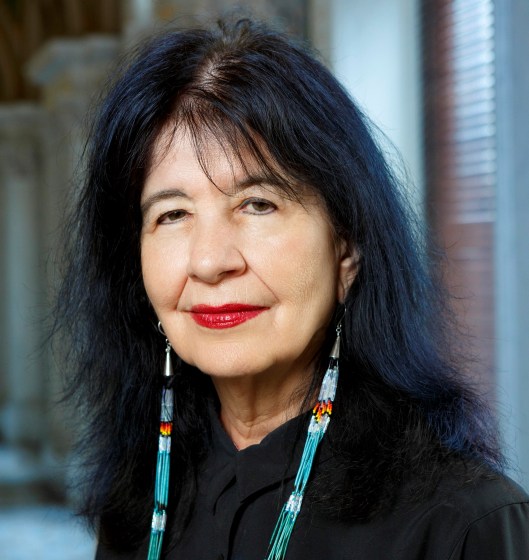
2019 United States Poet Laureate Joy Harjo
Photo Credit: Joy Harjo Official Website (Photo by Shawn Miller)


My Poetry Corner April 2020 features the poem “Advice for Countries, Advanced, Developing and Falling: A Call and Response” from the poetry collection An American Sunrise: Poems by Joy Harjo, Poet Laureate of the United States. (Note: The following excerpts of poems are all sourced from this collection.)

Born in 1951 in Tulsa, Oklahoma, the first of four siblings, Joy Harjo is a poet, musician, playwright, and author of the Muscogee (Creek) Nation. Her father was Muscogee (Creek) Nation and her mother of mixed ancestry of Cherokee, French, and Irish. Her mother exposed her to poetry at an early age, but painting was her first love.

My mother was a songwriter and singer, Harjo relates in her poem “Washing My Mother’s Body.” My mother’s gifts were trampled by economic necessity and emotional imprisonment. // My father was a dancer, a rhythm keeper. His ancestors were orators, painters, tribal chiefs, stomp dancers, preachers, and speakers… All his relatively short life he looked for a vision or song to counter the heartache of history. Her father’s drinking and abuse ended their marriage.

At sixteen years of age, Harjo’s abusive and violent stepfather kicked her out of their home. She moved to Santa Fe, New Mexico, where she received her high school education at the Institute of American Indian Arts. After graduation, she returned to Oklahoma, gave birth to a son, and returned to New Mexico to pursue a life as an artist. In 1973, as a second-year undergraduate at the University of New Mexico, she discovered poetry. After earning her BA in 1976, she moved to Iowa to obtain an MFA at the University of Iowa Writers’ Workshop.

“After all the abuse I had been through, I saw [poetry] as a way to transform what is harsh into something nourishing,” Harjo said, during an interview with Santa Barbara Poet Laureate Laure-Anne Bosselaar in January 2020. “I had found something in poetry not found in painting that was so compelling. I could write about Native women, fighting for our rights in over 500 tribal nations.” Continue reading →

“Certainty” by Brazilian Poet Carlos Machado

17 Monday Feb 2020

Posted by Rosaliene Bacchus in Brazil, Poetry

≈ 25 Comments

Tags

Bahia/Brazil, Brazilian poet Carlos Machado, Poem “Certo” (Certainty) by Carlos Machado, Poetry collection Pássaro de Vidro by Carlos Machado, São Paulo/Brazil, The uncertainty of life

My Poetry Corner February 2020 features the poem “Certainty” (Certo) from the poetry collection Glass Bird (Pássaro de Vidro) by Carlos Machado, a Brazilian poet and journalist. Born in 1951 in Muritiba, Bahia, Northeast Brazil, Machado earned his bachelor’s degree in mechanical engineering at the Federal University of Bahia. He studied journalism at the Faculty of Cásper Libero in São Paulo, where he lives since 1980. He is the creator and editor of the fortnightly bulletin, poesia.net, dedicated mainly to the promotion of contemporary Brazilian poets.

Machado’s debut poetry collection, Glass Bird (Pássaro de Vidro), published in São Paulo in 2006, was well received by literary critics. From the first verse of his poem “Anatomies,” from the same collection, I glean that the glass bird reveals both faces of the human character: on one side, our obscure dreams and aspirations; on the other side, the things with which we surround ourselves.

anatomy of things

to strip bare
the glass bird
and see on its side
hidden from view
the other side
of its image
 

In his poem, “Things” (As Coisas), from his collection Blunt Scissors (Tesoura Cega, 2015), Machado looks at the things we accumulate to define who we are as individuals within society. Things have no say in our lives, the poet observes. They don’t have desires or power. Regardless of the value we bestow on them, they are all equal – all indifferent to humanity’s fate.

Things don’t have guilt.
They are only witnesses
of our comedies. 

Things don’t embrace causes.
It is useless to accuse them
of any inclination,
loyalty or felony. Continue reading →

“My Mother’s Blues” – Poem by British-Caribbean Poet Malika Booker

19 Sunday Jan 2020

Posted by Rosaliene Bacchus in Poetry

≈ 44 Comments

Tags

British-Caribbean poet Malika Booker, Poem “My Mother’s Blues” by Malika Booker, Poetry Collection Pepper Seed by Malika Booker (2013), The Caribbean Woman

British-Caribbean Poet Malika Booker
Photo Credit: University of Leeds Poetry Centre


My Poetry Corner January 2020 features the poem “My Mother’s Blues” from the poetry collection, Pepper Seed, by British-Caribbean poet Malika Booker. Born in 1970 in London, UK, to a Guyanese father and Grenadian mother, she grew up in Guyana. At eleven years, she returned to the UK with her parents where she still lives. In June 2019, she received the Cholmondeley Award for her outstanding contribution to poetry.

Booker began writing and performing poetry while studying anthropology at Goldsmiths, University of London, where she also earned her Master of Arts degree. In 2001, she founded Malika’s Poetry Kitchen to create a nourishing and encouraging community of writers dedicated to developing their writing craft.

Finding publishers for black poetic voices took time. Her chapbook, Breadfruit, came out in 2007. It took another six years for the publication of her poetry collection, Pepper Seed (Peepal Tree Press, 2013). Well received by British literary circles, it was shortlisted for the 2014 Seamus Heaney Centre prize for best first full collection published in the UK and Ireland, as well as the OCM Bocas poetry prize.

As a survivor of a verbally abusive paternal grandmother and her own broken family, Booker opens a window to the raw, hot pepper seed of Caribbean rum culture—legacy of the British colonial sugar plantation economy. Faced with sexual promiscuity, sexual abuse, and domestic violence, the three generations of women in Pepper Seed are hardened to survive the blows. This is evident in Booker’s six-part long poem “Red Ants Bite.” Booker expresses only love for her grandmother, even though she put this hard thing deep inside me.

I tried to make her love me,
but her mouth was brutal,
like hard-wire brush, it scraped me, 

took skin off my bones, made me bleed
where no one could see,
so I’d shrink, a tiny rocking foetus.

Hardened by sugar plantation life, Booker’s grandmother was equally brutal to her daughters and only daughter-in-law.

My father was her everything,
my brother her world.
her daughters reaped zigar.

In part six, the poet gives voice to her deceased grandmother in response to her question: Granny, what I do to you, eh? 

I lived till me turn one hundred and one,
live through back-break in backra sun.
I was a slave baby mixed with plantation white.
This creamy skin draw buckman, blackman,

coolieman, like prize. And if you did hear sweet talk,
if you did see how much fine fuck I get.
I
s hard life, hard, hard life and only one son I bear.
My mother tell me to kill di girl child dem –  

[…] 

I was the lone woman every man want to advantage,
I had was to sharpen meh mouth like razor blade,
turn red in seconds till bad word spill blood.
Scunt-hole child, you want sorry? 

[…]

I toughen you soffi-ness, mek man can’t fuck you
easy so. So fuck off, leave the dead some peace.

The way the Caribbean woman is shaped, moulded and made hard to deal with she man full of rum and carnival, unfolds in Booker’s three-part poem “Warning”:

Some great grandmother told her daughter,
Never let no man hit you and sleep,
pepper the food, boil hot water and throw,
use knife and make clean cut down there,
use cutlass and chop, then go police.

Booker didn’t realize how much her grandmother’s warning had toughened her until the night she invited a male friend, too drunk to drive, to sleep over.

I felt something in his look, he and I
alone in that room, and my blood raised up.
My pores swelled, I went to the kitchen,
took down that knife, marched upstairs,
told him, I cutting it off if you lose your mind.
Don’t think it and if you do, don’t sleep. 

In “Waiting for Father,” the poet describes her father as a flamboyant cockerel parading in sunshine with his floozies. His shameless infidelity made my mother stony, a martyr for her kids, brittle and bitter, till my stepdad unbricked her wall… 

In her 2018 conversation with British writer Hannah Silva, Booker relates how she struggled to write “My Mother’s Blues,” the final poem in the collection, in which she taps into her mother’s pain. It took her twenty-six drafts to figure it out. In presenting the poem to an audience, she came to realize its importance as a mother’s collective experience.

My mother knows pain
a sorrowful gospel type of pain – 

a slowly losing her eyesight,
eye-drops every night pain, 

a headache worrying for her children overseas,
praying for their safety pain,

a stare through each night, eyes blackening,
hope they are alright pain. 

Yes, my mother knows pain. 

Booker’s litany of pain goes on; pain that resonates deeply within me. It’s a pain without end, even when death beckons: it’s a don’t worry I go soon be dead and gone / and then you go miss me pain, the poet writes.

To read the complete featured poem and learn more about the work of Malika Booker, go to my Poetry Corner January 2020.

“Confession” – Poem by Tunisian American Poet Leila Chatti

15 Sunday Dec 2019

Posted by Rosaliene Bacchus in Poetry

≈ 37 Comments

Tags

“Confession” by Leila Chatti, Female Muslim poet, Halal If You Hear Me: BreakBeat Poets Vol. 3 edited by Fatimah Asghar and Safia Elhillo, Mary Mother of Jesus, Tunisian American Poet

Tunisian American Poet Leila Chatti
Photo Credit: Leila Chatti Website


My Poetry Corner December 2019 features the poem “Confession” by Tunisian American poet and educator Leila Chatti, published in the anthology of poetry Halal If You Hear Me: BreakBeat Poets Vol. 3, edited by Fatimah Asghar and Safia Elhillo.

Born in 1990 in Oakland, California, Leila Chatti is one of four children of a Tunisian father and American mother. Her parents met when her father came to the United States to study for his PhD. Her father, the only one of seven children to leave Tunisia, maintained a close relationship with relatives by having his American-born family spend the summers with them.

Raised a Muslim by her father, Chatti began fasting for Ramadan at seven years old. Her experiences associated with fasting—hunger, restraint, obedience, resilience, lack—played a significant role in shaping the person she has become. In her poem, “Fasting in Tunis,” she recalls:

My God taught me hunger
is a gift, it sweetens
the meal. All day, I have gone without
because I know at the end I will
eat and be satisfied. In this way,
my desire is bearable. Continue reading →

“Silent Warrior” by Indigenous Brazilian Poet Márcia Wayna Kambeba

17 Sunday Nov 2019

Posted by Rosaliene Bacchus in Brazil, Poetry

≈ 54 Comments

Tags

Amazonas/Brazil, Belém/Pará/Brazil, Destruction of Amazon Rainforest, Indigenous Brazilian poet Márcia Wayna Kambeba, Poem “Silêncio Guerreiro” (Silent Warrior) by Márcia Wayna Kambeba, Poetry collection Ay Kakyri Tama – Eu Moro Na Cidade by Márcia Wayna Kambeba, Rights of Indigenous Peoples

Márcia Wayna Kambeba – Indigenous Poet – Belém – Pará – Brazil
Photo Credit: Brazilian Women’s Magazine Seja Extraordinária


My Poetry Corner November 2019 features the poem “Silent Warrior” (Silêncio Guerreiro) by Márcia Wayna Kambeba, the artistic name of Márcia Vieira da Silva, an indigenous Brazilian poet, geographer, performer, and activist for indigenous rights. Born in 1979 in the village of Belém do Solimões in the northern Brazilian state of Pará, she is of Omágua Kambeba ethnicity. At eight years, she moved with her family to São Paulo de Olivença—once the largest settlement of the Kambeba people—in Amazonas. Today, she lives in the city of Belém, capital of Pará.

In the opening stanza of the title poem—written in Tupi followed by its translation in Portuguese—of her poetry collection, Ay Kakyri Tama – Eu Moro na Cidade (Ay Kakyri Tama – I Live in the City), she writes:

I live in the city
This city is also our village
We do not erase our ancestral culture
Come white man, let us dance our ritual.

Influenced by her grandmother, a teacher and poet, Márcia Wayna began writing her first poems at twelve years. She earned a bachelor’s degree in geography at the Amazonas State University in Manaus. In 2012, she received her master’s degree at the Amazonas Federal University. For her dissertation, she documented the history of the Omágua Kambeba people from the sixteenth to the twenty-first century, examining the relationship between territory, identity, and ethnicity. Her poetry collection, self-published in 2018, is the transformation of her dissertation to inform others about the invisible life of indigenous peoples.

Continue reading →

“A Simple Man” – Poem by Caribbean Poet Ian McDonald

13 Sunday Oct 2019

Posted by Rosaliene Bacchus in Poetry

≈ 44 Comments

Tags

Caribbean poet Ian McDonald, Georgetown/Guyana, Poem “A Simple Man” by Ian McDonald, Trinidad/Caribbean Island

Front Cover: People of Guyana by Ian McDonald and Peter Jailall
Photo Credit: MiddleRoad Publishers/Canada


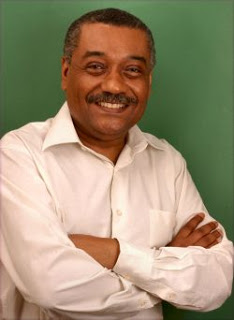
My Poetry Corner October 2019 features the poem “A Simple Man” by Ian McDonald from the joint poetry collection, People of Guyana, by Ian McDonald and Peter Jailall. Born in the Caribbean island of Trinidad in 1933, Ian McDonald is a poet, novelist, dramatist, and non-fiction writer. After moving to then British Guiana in 1955, he made his home there. Today, he lives partly in his adopted homeland and partly in Canada.

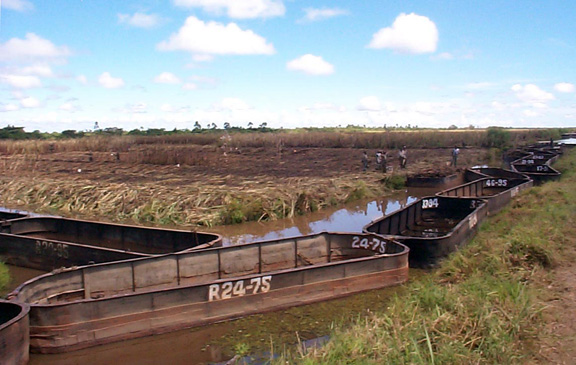
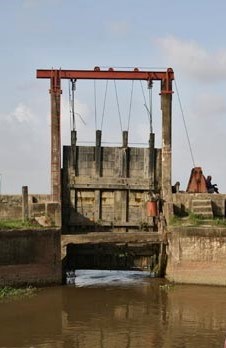
Born into a white family of power and privilege, the young Ian fell in love with literature and writing as a schoolboy. In 1955, after graduating from Cambridge University in England with a Bachelor’s Honors Degree in History, he began working with Bookers Ltd., then owners of the British Guiana sugar estates. When the company was nationalized in 1976, McDonald remained as the Administrative Director of the newly formed Guyana Sugar Corporation until his retirement in 1999.

On one of those days while working with Guyana’s sugar estates, McDonald visited Betty, a former sugarcane laborer, “an old woman in a run-down logie room,” to get details for her resettlement. In his heart-wrenching poem, “Betty,” the poet captures her long life of deprivation, forgotten by society.

she said her life was nothing to her
she said all women’s lives were as nothing
no one had been pleased when she was born
she was sure of that boys were princes 

Once married, she had been abandoned by her husband for another woman, eventually ending up “with old women in this place.” Betty didn’t want to move. They were the only people she knew. Continue reading →

“Mexican Heaven” – Poem by Mexican American Poet José Olivarez

15 Sunday Sep 2019

Posted by Rosaliene Bacchus in Poetry, United States

≈ 39 Comments

Tags

American anti-immigrant environment, “Mexican Heaven” by José Olivarez, Citizen Illegal Poetry Collection by José Olivarez, Mexican American Poet, Young Chicago Authors (YCA)

Front Cover: Poetry Collection, Citizen Illegal by José Olivarez


My Poetry Corner September 2019 features the poem “Mexican Heaven” from the poetry collection Citizen Illegal (Haymarket Books, 2018) by José Olivarez, a poet, teacher, and poetry slam performer. Born in Calumet City on the south side of Chicago, Illinois, he is the son of Mexican immigrants. Despite all the odds, he earned his Bachelor of Arts degree from Harvard University.

Olivarez’s first contact with poetry occurred through his high school’s poetry slam team. Their poetry had a profound impact on him. In a conversation with Jessica Hopper in July 2018, Olivarez said, “It made me feel like I could question more.” For the first time, he saw a way of becoming his true self, other than the reserved person everyone wanted him to be.

In his poem, “I Tried to Be a Good Mexican Son,” he shares his parents’ disappointment that he didn’t become a doctor, lawyer, or businessman.

I even went to college. But i studied African American studies which is not
The Law or The Medicine or The Business. my mom still loved me.
[…]
i tried to be a good Mexican son. Went to a good college & learned depression isn’t just for white people…
Continue reading →

← Older posts
Newer posts →

Subscribe

  • RSS - Posts
  • RSS - Comments

Archives

  • January 2026
  • November 2025
  • October 2025
  • September 2025
  • August 2025
  • July 2025
  • June 2025
  • May 2025
  • April 2025
  • March 2025
  • February 2025
  • January 2025
  • December 2024
  • November 2024
  • October 2024
  • September 2024
  • August 2024
  • July 2024
  • June 2024
  • May 2024
  • April 2024
  • March 2024
  • February 2024
  • January 2024
  • December 2023
  • November 2023
  • October 2023
  • September 2023
  • August 2023
  • July 2023
  • June 2023
  • May 2023
  • April 2023
  • March 2023
  • February 2023
  • January 2023
  • December 2022
  • November 2022
  • October 2022
  • September 2022
  • August 2022
  • July 2022
  • June 2022
  • May 2022
  • April 2022
  • March 2022
  • February 2022
  • January 2022
  • December 2021
  • November 2021
  • October 2021
  • September 2021
  • August 2021
  • July 2021
  • June 2021
  • May 2021
  • April 2021
  • March 2021
  • February 2021
  • January 2021
  • December 2020
  • November 2020
  • October 2020
  • September 2020
  • August 2020
  • July 2020
  • June 2020
  • May 2020
  • April 2020
  • March 2020
  • February 2020
  • January 2020
  • December 2019
  • November 2019
  • October 2019
  • September 2019
  • August 2019
  • July 2019
  • June 2019
  • May 2019
  • March 2019
  • February 2019
  • January 2019
  • December 2018
  • November 2018
  • October 2018
  • September 2018
  • August 2018
  • July 2018
  • June 2018
  • May 2018
  • April 2018
  • March 2018
  • February 2018
  • January 2018
  • December 2017
  • November 2017
  • October 2017
  • September 2017
  • August 2017
  • July 2017
  • June 2017
  • May 2017
  • April 2017
  • March 2017
  • February 2017
  • January 2017
  • December 2016
  • November 2016
  • October 2016
  • September 2016
  • August 2016
  • July 2016
  • June 2016
  • May 2016
  • April 2016
  • March 2016
  • January 2016

Categories

  • About Me
  • Anthropogenic Climate Disruption
  • Brazil
  • Economy and Finance
  • Family Life
  • Festivals
  • Guyana
  • Health Issues
  • Human Behavior
  • Immigrants
  • Nature and the Environment
  • People
  • Philosophy
  • Poetry
  • Poetry by Rosaliene Bacchus
  • Recommended Reading
  • Relationships
  • Religion
  • Religion & Spirituality
  • Reviews – The Twisted Circle: A Novel by Rosaliene Bacchus
  • Reviews – Under the Tamarind Tree: A Novel by Rosaliene Bacchus
  • Save Our Children
  • Social Injustice
  • Technology
  • The Twisted Circle: A Novel by Rosaliene Bacchus
  • The Writer's Life
  • Uncategorized
  • Under the Tamarind Tree: A Novel by Rosaliene Bacchus
  • United States
  • Urban Violence
  • Women Issues
  • Working Life

Blogroll

  • Angela Consolo Mankiewicz
  • Caribbean Book Blog
  • Dan McNay
  • Dr. Gerald Stein
  • Foreign Policy Association
  • Guyanese Online
  • Writer's Digest
  • WritersMarket: Where & How to Sell What You Write

Meta

  • Create account
  • Log in
  • Entries feed
  • Comments feed
  • WordPress.com

Enter your email address to subscribe to this blog and receive notifications of new posts by email.

Join 3,233 other subscribers

Blog at WordPress.com.

Privacy & Cookies: This site uses cookies. By continuing to use this website, you agree to their use.
To find out more, including how to control cookies, see here: Cookie Policy
  • Subscribe Subscribed
    • Three Worlds One Vision
    • Join 3,233 other subscribers
    • Already have a WordPress.com account? Log in now.
    • Three Worlds One Vision
    • Subscribe Subscribed
    • Sign up
    • Log in
    • Report this content
    • View site in Reader
    • Manage subscriptions
    • Collapse this bar
 

Loading Comments...