“Immigrant Song” – Poem by Korean-American Poet Sun Yung Shin

Tags

, , , ,

Happy Fourth of July America

My Poetry Corner July 2017 features the poem “Immigrant Song” by Sun Yung Shin, a Korean-American poet, writer, and educator. Born in Seoul, South Korea, she was one year old when an American couple adopted her. Raised in Chicago, she later moved to Minneapolis where she earned a BA in English from Macalester College and a Master’s Degree in Education from the University of St. Thomas. She teaches at Macalester College and lives with her husband and their two children. 

When asked about her relationship with the English language in an interview with Lightsey Darst for Minnesota Artists (January 2016), Sun Yung Shin said that strangers often question her ability to speak English without a “foreign” accent. Her fluency and sense of belonging as an Asian American offend them.

Shin’s opening verses in “Immigrant Song” from her poetry collection, Skirt Full of Black (winner of the 2007 Asian American Literary Award for Poetry), express the restraints she faces to achieve her full potential as a human being. Continue reading

Father said…

Tags

, , , , , ,

Father with Baby Daughter - A girl's first love is her Daddy

Father said not to worry about anything.
He was working to provide for my needs.
And I believed him.

Father said he would never let anyone hurt me.
He was there to protect me, Mother, and my brother Paul.
And I believed him.

Father said not to worry about climate change;
the science is still debatable.
And I believed him.

Father said the abortion of an unborn child is an abomination.
Life is sacred. Only God can take a life.
And I believed him. Continue reading

Climate Change & the Water Cycle

Tags

, , , , ,

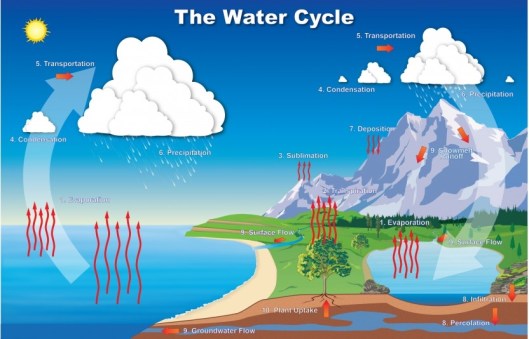
The Water Cycle

As a geographer and former high school geography teacher, I must confess that I take some scientific facts for granted, such as climate and the water cycle. A recent post “Climate Science Meets a Stubborn Obstacle: Students” by fellow blogger Robert Vella brought to my attention the challenges some of our high school science teachers face in regions of America where climate change denial creates havoc in the minds of our youth.

When your father has raised you to believe that the coal they once mined, or still mine, can in no way affect our climate, it’s difficult to have an open mind to scientific consensus on the issue.

Geography lessons in high school expanded my curious mind to our relationship with our world: land, oceans, atmosphere, and all the in-between. When taking a climatology course at university, I found myself at a disadvantage for having chosen to study art instead of physics in high school. I had lots of catching up to do. Our course in biogeography alerted me to the ways that we humans are degrading our ecosystems. Those were the days before the Internet and Wikipedia. Continue reading

Patativa do Assaré: Brazil’s Popular Oral Poet

Tags

, , , , , , ,

Patativa do Assare seated in front of his hut in Assare - Ceara - Brazil

My Poetry Corner June 2017 features the poem “The Peasant Farmer and the Factory Worker” (O Agregado e o Operário) by Antônio Gonçalves da Silva, known as Patativa do Assaré (1909-2002), a popular Brazilian oral poet, improviser of oral verse, composer, singer, and guitar player.

The son of poor peasant farmers eking out a subsistence livelihood in the semi-arid hinterlands, known as the sertão, of the Northeast State of Ceará, Patativa began working at an early age on his family’s small plot of land. At the age of four, he lost his sight in one eye due to lack of medical assistance. With his father’s death four years later, he had to work as a farmhand to help his family, leaving him no time to attend school. During his six months of formal education, he learned to read and write.

God was his Master; Nature was his teacher.

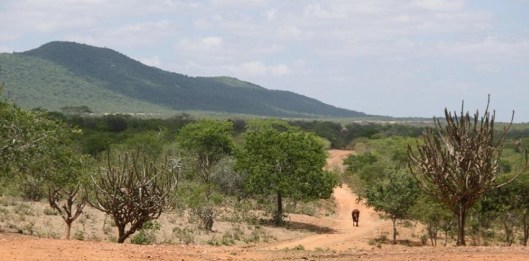
Sertao Nordestino - Northeast Brazil (2)Sertão Nordestino – Northeast Brazil  [Photo Credit: poesiafaclube.com]
 

I was born listening to songs
of birds in my mountain terrain
and seeing wonderful marvels
that the beautiful woodlands enclose.
That is where I grew up
watching and learning
from the book of nature
where God is most visible
the heart most sensitive
and life has more purity.
Continue reading

“Destination” – Poem by Guyanese-Canadian Poet Janet Naidu

Tags

, , , , , ,

East Indian Indentured Laborers

In commemoration of the centennial of the abolition of Indian Indentureship on March 12, 1917, my Poetry Corner May 2017 features the poem “Destination” by Janet Naidu, a Guyanese-born poet, writer, social activist, and life-skills coach. She migrated to Canada in 1975, at the age of twenty-two, where she obtained a BA in Political Science and Caribbean Studies from the University of Toronto and, later in life, an LLB from the University of London (UK).

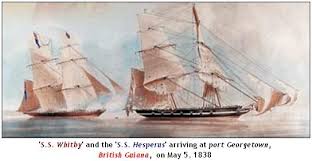
With the abolition of slavery in 1834 and the end of the apprenticeship scheme in 1838, the mass exodus of ex-slaves from plantations across the British Empire created a dire need for a regular and reliable supply of labor. On May 5, 1838, the first group of about 400 Indian indentured laborers, on a five-year contract, arrived in British Guiana on the sailing ships, Whitby and Hesperus. By 1917, their numbers totaled over 238,000 Indians, comprising 42 percent of the colony’s population. Only 65,538 returned to India on terminating their contract. Janet Naidu’s grandparents from Tamil Nadu were among those who arrived on the SS Ganges on November 8, 1915.

Sailships Whitby and Hesperus arriving at Port Georgetown - British Guiana - May 5, 1838

Born in the village of Covent Garden, East Bank Demerara, Naidu was the seventh of eight children. Like his parents, her father was a cane cutter. Her mother sold home-grown, green vegetables in the market.

In “Destination” from her poetry collection, Rainwater (2005), Naidu conjures the immigrants’ fearsome voyage across the ocean for an unknown destination. Continue reading

Mother of All Bombs

Tags

, ,

Mother of All Bombs


I am Mother.
Created by Father.
A complex scientific birthing process, they say.
I weighed over twenty-one thousand pounds at birth.
Father spared no expense;
he happily paid the $314 million.

I carried you for nine months
in the womb, my child.
I almost lost you, you know.
They closed the clinic
where I used to get healthcare.

I am Mother.
Created by Father.
My over-pressure waves obliterate
everything & everyone within a one-mile radius.
Look at me with awe & trepidation.
I am Death.

Where is Father?
I am cold & hungry, Mother.
He abandoned us, my child—
to pursue his dreams
of dominating the world.

I am Mother.
Created by Father.
He dropped me from the sky
to plummet to the earth.
My body detonated into gazillion atoms.
My soul became a black hole.

I am beautiful.
I am strong.
I am invincible.
Created in Father’s image.
I am Mother of All Bombs.
Continue reading

The Lies We Tell Ourselves

Tags

, , , , , ,

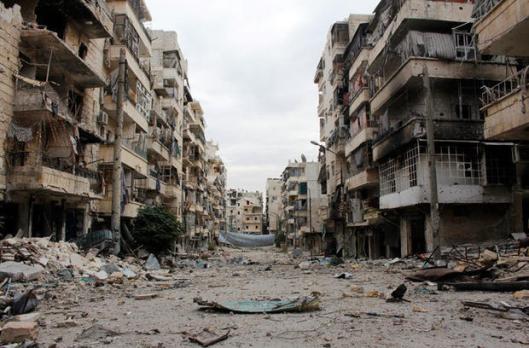
Bombed-out Street in Aleppo - Syria

On Thursday night, April 3rd, our president unilaterally and without congressional approval launched 59 Tomahawk cruise missiles on a Syrian airbase, the alleged site of a chemical attack that targeted innocent civilians. The dust had not yet settled. No United Nations investigation of the heinous crime was conducted to determine the type of chemical weapons used and the perpetrators. But we – the defenders of democracy, peace, freedom, and humanitarianism – know, beyond all doubt, that Syria’s brutal dictator was responsible.

After killing innocent children and beautiful babies, Syrian President Bashar al-Assad had to be sent a strong message. Military power is strength. Money is no problem. Continue reading

“The Statutes of Man” by Brazilian Poet Thiago de Mello

Tags

, , ,

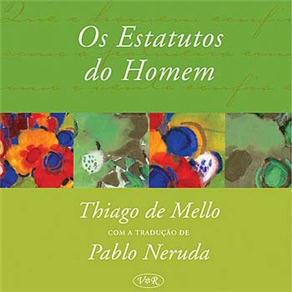
book-cover-the-statutes-of-man-by-thiago-de-mello-translated-by-pablo-neruda

Book Cover: Os Estatutos do Homem (The Statutes of Man) by Thiago de Mello
Photo Credit: Casas Bahia, Brazil


My Poetry Corner March 2017 features the poem “The Statutes of Man” (Os Estatutos do Homem) by Brazilian poet Thiago de Mello, born in 1926 in the State of Amazonas of Northern Brazil.

Growing up among Brazil’s exploited working class, Thiago de Mello devoted his poetry to addressing freedom, human dignity, and other social causes. When the military coup occurred in Brazil in 1964, he was the Cultural Attaché at the Brazilian Embassy in Santiago, Chile (1961-1964), where he became close friends with Pablo Neruda. He responded to the junta’s repressive, extra-constitutional decrees with his most famous poem, “The Statutes of Man.”

After resigning his overseas post and returning to Brazil, he was exiled in 1968 for denouncing the oppressive military dictatorship government (1964-1985). During his nine years in exile, he lived in Chile, Argentina, Portugal, France, and Germany. Continue reading

“The Place of No Dreams” – Poem by Caribbean-American Poet Lauren K. Alleyne

Tags

, , , , ,

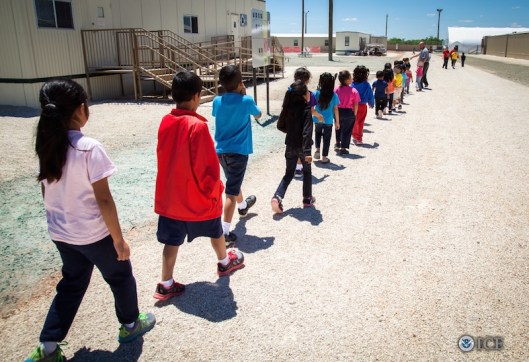
immigrant-children-at-dilley-detention-center-july-2015


My Poetry Corner February 2017 features the poem “The Place of No Dreams” by Lauren K. Alleyne, a Caribbean-American poet born in the twin-island nation of Trinidad & Tobago. She is an Associate Professor of English at James Madison University and Assistant Director of the Furious Flower Poetry Center.

Armed with her dreams and a scholarship from St. Francis College in Brooklyn Heights, Lauren Alleyne left home in 1997 for New York City. After completing a Bachelor of Arts in English Literature, she pursued a Masters of Arts in English and Creative Writing at Iowa State University, graduating in 2002. Three years later, while working for her Master of Fine Arts in Creative Writing (Poetry), she also earned a Graduate Certificate in Feminist, Gender, and Sexuality Studies from Cornell University.

Her poems and essays, published in several journals and anthologies, have gained several prizes and awards. Her first collection of poetry, Difficult Fruit, was published by Peepal Tree Press in 2014. Continue reading

Passage from Warrior of the Light: A Manual by Paulo Coelho

Tags

, , ,

warrior-of-the-light

My Poetry Corner January 2017 features a passage from Warrior of the Light: A Manual by Brazilian lyricist and novelist, Paulo Coelho, born in 1947 in Rio de Janeiro, Southeast Brazil. While Coelho’s background as a songwriter endows his prose with an engaging lyricism, the featured work is not a poem.

Warrior of the Light: A Manual, published in 1997, is written in the form of short philosophical passages. Drawing on his own life experiences and ancient Eastern wisdom, Coelho invites each one of us to become a Warrior of the Light: someone capable of understanding the miracle of life, of fighting to the last for something he believes in.

This is not a normal year. We must prepare ourselves to enter the battlefield to defend our civil and human rights under threat.

Every Warrior of the light has felt afraid of going into battle.
Continue reading