The Embodied Soul

Tags

, , , , , ,

ImageJ=1.31o min=0.0 max=65535.0

On September 11, 2001, a group of Islamic extremists struck America’s major financial center in New York. Since then, we have embarked on a “War on Terror” that has morphed into an assault on all Muslims, except for allied Muslim nations. This past week, our endless war of terror has pivoted to Jerusalem, the holy city of three of the world’s major religions by number of followers (World Atlas) – Christianity (2.22 billion), Islam (1.6 billion), and Judaism (13.9 million).

Within this context, I share with you in the first of a three-part series my synopsis of Reza Aslan’s book, God: A Human History. Like the author, I have “no interest in trying to prove the existence or nonexistence of God for the simple reason that no proof exists either way.” Whether you believe in one God or many gods or no god at all, I would like you to consider Aslan’s bold assertion that “it is we who have fashioned God in our image, not the other way around.”

In “Part One: The Embodied Soul,” Aslan investigates the origin of our belief in a soul, a byword for “spiritual essence” or “mind.” It’s a journey back in time to the emergence of our primitive ancestors, Homo sapiens (the wise human) – the “historical” Adam and Eve. According to archaeological records, Homo sapiens first appeared during the Lower Paleolithic Period, between 2.5 million and 200,000 years ago. Remains unearthed in burial mounds indicate that they buried their dead together with artifacts that must have been precious to them. Continue reading

“People Help the People” by Birdy

Tags

, , , ,

Feeding the poor and homeless on Thanksgiving Day - Downtown Los Angeles - California - USA

In keeping with my end-of-year tradition, I feature a song on my Poetry Corner December 2017. I struggled for a week to find a suitable song for surviving the relentless Twitter storm and assault on our lives. My older son came to the rescue with the suggestion of the song, “People Help the People” by Birdy, a young British musician, singer, and songwriter.

Written by Simon Aldred – a guitarist and singer-songwriter who started the British folk-rock band Cherry Ghost in 2005 – the song was first released in their debut album in July 2007. It won Aldred the prestigious Ivor Novello Award in musical achievement for Best Contemporary Song.

Birdy’s rendition of the song, released as a single in October 2011, reached the top charts in the UK and across Europe. Though only fourteen years old at the time, Birdy brings a soulfulness to Aldred’s lyrics that touches the heart. Continue reading

Trump: China not to blame for US trade deficit

Tags

, , ,

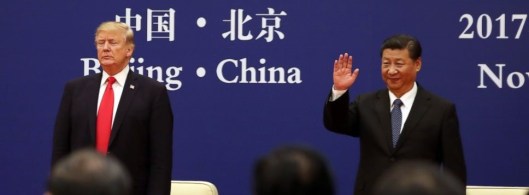
US President Donald Trump with Chinese President Xi Jinping - Beijing - China - 9 November 2017

While watching BBC World News America on Thursday, November 9, 2017, I was surprised to hear our president say that he doesn’t blame China for America’s trade deficit with that country. This change of tone occurred during his recent state visit to China.

With President Xi Jinping by his side, President Trump told business leaders inside Beijing’s Great Hall of the People: “I don’t blame China. After all, who can blame a country for being able to take advantage of another country for the sake of its citizens?” [Read the complete news report at BBC Online News.]

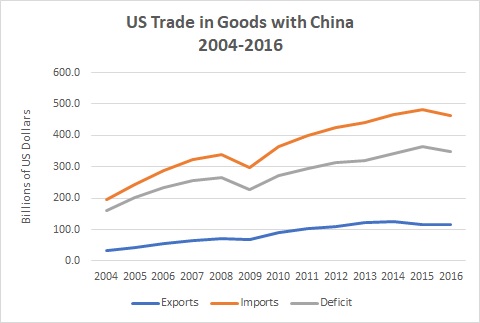
While still describing the relationship as “very unfair” and “one-sided,” Trump blamed past US administrations for allowing our trade deficit with China to grow. As indicated in the chart below, showing US Trade in Goods with China 2004-2016, the trade deficit with China was US$266.3 billion (2008) at the end of the Bush administration. It ballooned by 30.3 percent to US$347 billion during the Obama administration (2009-2016).

US Trade in Goods with China 2004-2016
US Trade in Goods with China 2004-2016 prepared by Rosaliene Bacchus
Data Source: US Foreign Trade Statistics


On November 9, according to a press release from the US Department of Commerce, America’s trade delegation signed approximately a quarter trillion dollars (US$250 billion) in deals between private US businesses and Chinese entities. The deals signed included shale gas, liquefied natural gas, and aviation projects. Among American executives present at the signing ceremony were representatives from General Motors, GE, Boeing, Caterpillar, Dow Chemical, and Goldman Sachs.

Secretary of Commerce Wilbur Ross expects these deals to bring thousands of new jobs to America. “American businesses are the most innovative in the world, and, when given access, can compete with anyone,” he said. “I believe these deals can provide a solid foundation for a stronger relationship that is more free, fair, and reciprocal between the U.S. and China.”

Descriptions of each deal can be viewed HERE (pdf file). Some of these deals are only memoranda of understanding, making them non-binding agreements that may end up being just Christmas tree decorations. Time will tell which deals bear real fruit. For jobless Americans who are hurting, the sooner the better.

CAPTIONED PHOTO
US President Donald Trump with Chinese President Xi Jinping
Beijing, China – November 9, 2017
Source: ABC News (Associated Press)

“Let Me Try Again” – Poem by Immigrant Salvadoran Poet Javier Zamora

Tags

, , , ,

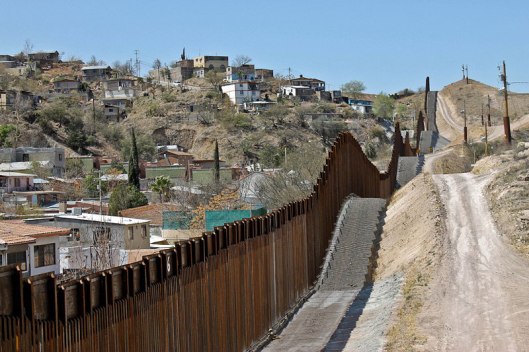
Border Wall Nogales Mexico Arizona USA

U.S. Border Wall at Nogales, Mexico

My Poetry Corner October 2017 features the poem “Let Me Try Again” by Javier Zamora, an immigrant Salvadoran poet and educator who lives in Northern California. Born in 1990 in a small fishing town in El Salvador, he was a year old when his eighteen-year-old father fled the Civil War (1980-1992). Four years later, his mother joined his father, leaving him with his grandparents. At nine years old, unaccompanied by a family member and under the charge of other undocumented immigrants, ‘Javiercito’ made the treacherous journey to reunite with his parents in the United States.

In “The Shatter of Birds,” dedicated to Abuelita (granny), Zamora recalls her pain at losing him.

Javiercito, you’re leaving me tomorrow
when our tortilla-and-milk breaths will whisper
te amo. When I’ll pray the sun won’t devour
your northbound steps. I’m giving you this conch
swallowed with this delta’s waves
and the sound of sand absorbing.

[…]

There’s no autumn here. When you mist
into tomorrow’s dawns, at the shore
of somewhere, listen to this conch.
Don’t lose me. 

Zamora’s abuelos (grandparents) warn him not tell anyone of his departure. In “Kite Flying,” his elation overrides their fears.

I’m going to see my parents.
(I’m going to see my parents!)
On the last day of school, I’ll tell
only my closest friends I’m flying
to where people drink cold milk
and put strawberries in their cereal,
I’ll eat strawberries all the time
and get so tall I’ll start playing basketball. 

In addition to letters and phone calls, Zamoro and his parents kept in touch by exchanging cassette-tapes. Listening to their tapes brought heartbreak. His poem “Cassette-tape” recreates the disjointedness of time and his trauma in crossing into Mexico without them. For two months, he lost touch with them.

To cross México we’re packed in boats
20 aboard, 18 hours straight to Oaxaca.
Throw up and gasoline keep us up. At 5 a.m.
we get to shore, we run to the trucks, cops
rob us down the road—without handcuffs,
our guide gets in their Fords and we know
it’s all been planned. Not one peso left
so we get desperate—Diosito, forgive us
for hiding in trailers. We sleep in Nogales till
our third try when finally, I meet Papá Javi.

In the featured poem, “Let Me Try Again,” Zamora relives their first failed attempt to cross the Sonoran Desert in Arizona. By then, their numbers had dwindled. In the desert, even the animals struggle to survive.

I could bore you with the sunset, the way
water tasted after so many days without it,
the trees, the breed of dogs, but I can’t
say there were forty people when we found

the ranch with the thin white man, his dogs,
and his shotgun. Until this 5 a.m., I hadn’t
or couldn’t remember there were only five,
or seven, people—

not forty. We’d separated by the palo verdes.
We meaning: an eighteen-year-old ex-gangster,
a mom with her thirteen-year-old, and me.
Four people. Not forty. The rest . . . the rest,

I don’t know. They weren’t there when
the thin white man let us drink from a hose
while pointing his shotgun. In Spanish
he told us if run away, dogs trained attack
.

In high school, after a visiting poet introduced him to the work of the Chilean poet Pablo Neruda, Zamora found release from his traumatic memories in poetry. By the age of twenty-one, he knew he wanted to be a poet. On completing his BA in history at the University of California, Berkeley, he pursued an MFA at the New York University. A Wallace Stegner Fellowship in Poetry at Stanford University soon followed.

Zamora’s first poetry collection, Unaccompanied, was published this October amid uncertainty about his fate as an alien with Temporary Protected Status which comes up for renewal in 2018. Like the DACA (Deferred Action for Childhood Arrivals) “Dreamers,” his future rests in the hands of President Trump.

His status makes it difficult to visit his native land. “It’s traumatic to talk to those left behind,” he confesses in an essay published in Granta Online Edition, December 2016.  “It’s a burden to communicate over the phone. To write. To text. To Facebook message.”

In his poem “El Salvador,” the young poet speaks of the violence that never ended and of his longing to see his grandmother again. 

but if I don’t brush Abuelita’s hair, wash her pots and pans,
I cry. Like tonight, when I wish you made it
easier to love you, Salvador. Make it easier
to never have to risk our lives.

To read the complete featured poem and learn more about Javier Zamora, his work, and honors, go to my Poetry Corner October 2017.


The Climate Swerve: Reflections on Mind, Hope and Survival with Robert Jay Lifton and Bill Moyers

Tags

, , , , , , ,

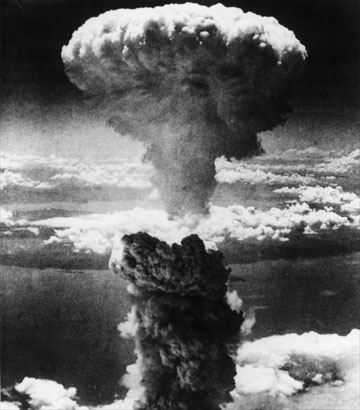
Atomic bomb mushroom cloud over Nagasaki - Japan

Dotard & Rocket Man
play nuclear war games
while Frankenstorms rage.


Bill Moyers, managing editor of Moyers & Company and BillMoyers.com, recently sat down with 91-year-old Robert Jay Lifton, a renowned American psychiatrist and historian. They talked about his just published book, The Climate Swerve: Reflections of Mind, Hope, and Survival. Lifton borrowed the term “swerve” from Harvard humanities professor Stephen Greenblatt who used the term to describe a major historical change in human consciousness. Lifton has turned his attention to climate change, which, he says, “presents us with what may be the most demanding and unique psychological task ever required of humankind.”

I share with you some excerpts from Lifton’s responses to Moyers during the interview. Continue reading

“Sadness has no end” by Brazilian Poet Eli Macuxi

Tags

, , ,

Cereia by Carmezia Emiliano - Indigenous Macuxi - Roraima - Brazil

My Poetry Corner September 2017 features the poem “Sadness has no end” (Tristeza não tem fim) by Brazilian poet and educator Elisangela Martins, who self-identifies as Eli Macuxi or Elimacuxi. She teaches history and art criticism at the Federal University of Roraima located in Boa Vista, capital of the state.

Fascinated by verse since childhood, Elimacuxi began writing poetry in fifth grade. At fifteen, she dreamed of having her work read and studied by others. “But the desire was totally blunted by the pessimistic awareness of reality,” confides the poet on her blog. “I was a skinny teenager, without luck of getting a job, studying at a night school on the periphery, ‘daughter of a drunkie,’ with lots of younger siblings. To be a writer? Poet? It was laughable.”

While she earned her Bachelor’s degree and then Masters in History, her love for poetry never waned. In 2013, she published her first poetry collection, Love For Those Who Hate (Amor Para Quem Odeia), which portrays love in its various forms of human experience. Continue reading

“Eyes of Liberty” – Poem by Jamaican Rastafarian Poet Mutabaruka

Tags

, , , ,

Mutabaruka - Jamaican Rastafari Dub Poet

My Poetry Corner August 2017 features the poem “Eyes of Liberty” by Mutabaruka, a Jamaican Rastafarian dub poet, musician, actor, educator, and talk-show host. Born Allan Hope in December 1952, he grew up in Kingston, Jamaica, where he trained as an electrician at the Kingston Technical High School. Marcus Garvey’s son, a teacher at the trade school, influenced his world view and awakened his Black awareness.

As an adolescent, Mutabaruka identified with the Black Power Movement of the late 1960s and early 1970s that swept across the Caribbean. His poems became a means to changing the political system in Jamaica.

“Because they say that the pen is mightier than the sword, in that case it was a gun! So we used the pen instead of turning toward this what dem call revolution that was in we that was fashioned and shaped in us,” Mutabaruka told his audience at a book signing in San Francisco in April 2005. Continue reading

Guyana ties the knot with ExxonMobil

Tags

, , , , , , ,

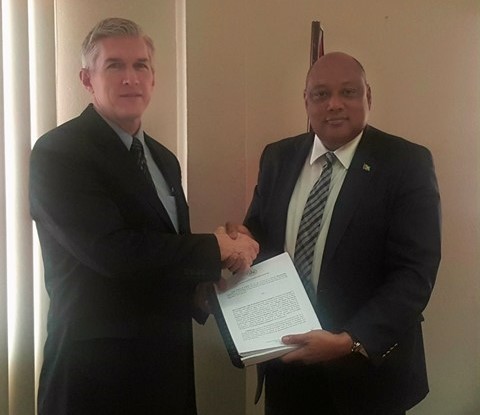
ExxonMobil Country Manager receives Production License from Guyana Minister of Natural Resources - 15 June 2017

ExxonMobil Country Manager Rod Henson receives Production License
from Minister of Natural Resources Raphael Trotman
Georgetown – Guyana – June 15, 2017
Photo Credit: Guyana Ministry of Natural Resources

On June 15, 2017, Guyana tied the knot with ExxonMobil with the signing of a production license for the extraction of oil and natural gas, located offshore the Caribbean/South American nation with a population of 800,000 people. With this license, together with the Environmental Permit granted on June 1st, ExxonMobil will proceed with the Liza Phase 1 development. Located 120 miles offshore in an area known as the Stabroek Block, the Liza field development includes a subsea production system and a floating production, storage and offloading (FPSO) vessel designed to produce up to 120,000 barrels of oil per day. Exxon and its partners plan to begin production by 2020.

ExxonMobil’s press release on June 16th states: “Phase 1 is expected to cost just over $4.4 billion, which includes a lease capitalization cost of approximately $1.2 billion for the FPSO facility, and will develop approximately 450 million barrels of oil.

It is a marriage of unequal partners. ExxonMobil’s profit margin in 2016 is more than twice that of Guyana’s GDP of US$3.5 billion for the same year. With the assistance of local and foreign experts in the industry, the Guyana government has reviewed the Production Sharing Agreement (PSA), signed in 1999 when exploration began under the former leftist Guyana government. Continue reading

America’s Clean Energy Momentum: How’s your state doing?

Tags

, , , , , , ,

UCS - Clean Energy is Sweeping the Nation

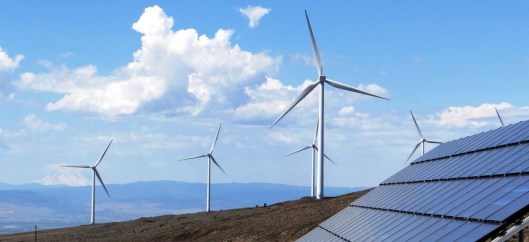
The news is good. Despite our pro-fossil-fuel administration of climate change deniers, the use of renewal energy is growing across the United States. So says the Union of Concerned Scientists (UCS) in their report Clean Energy Momentum: Ranking State Progress released in April 2017.

Across America, the growth of wind and solar power generation is impressive. Over the past decade, wind power expanded more than tenfold, supplying energy to more than 20 million households in 41 states. Since 2011, solar power has sprinted ahead with more than 900 percent in growth. In 2016, two million more households now use solar-powered electricity.

That’s not all. Investments in energy efficiency, over the last 25 years, have reduced our need for constructing more than 300 large carbon-emitting power plants. Last year alone, we saved a year’s worth of electricity usage of 20 million households. Continue reading