• About

Three Worlds One Vision

~ Guyana – Brazil – USA

Three Worlds One Vision

Author Archives: Rosaliene Bacchus

“Destination” – Poem by Guyanese-Canadian Poet Janet Naidu

01 Monday May 2017

Posted by Rosaliene Bacchus in Guyana, Immigrants, Poetry

≈ 26 Comments

Tags

"Destination" by Janet Naidu, "New System of Slavery", Guyanese-Canadian Poet, Immigrants, Indian indentured laborers, Indian Indentureship in Guyana 1838-1917, Sugar plantations in Guyana

East Indian Indentured Laborers

In commemoration of the centennial of the abolition of Indian Indentureship on March 12, 1917, my Poetry Corner May 2017 features the poem “Destination” by Janet Naidu, a Guyanese-born poet, writer, social activist, and life-skills coach. She migrated to Canada in 1975, at the age of twenty-two, where she obtained a BA in Political Science and Caribbean Studies from the University of Toronto and, later in life, an LLB from the University of London (UK).

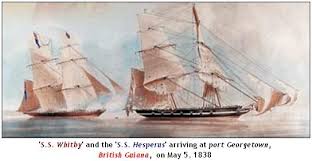
With the abolition of slavery in 1834 and the end of the apprenticeship scheme in 1838, the mass exodus of ex-slaves from plantations across the British Empire created a dire need for a regular and reliable supply of labor. On May 5, 1838, the first group of about 400 Indian indentured laborers, on a five-year contract, arrived in British Guiana on the sailing ships, Whitby and Hesperus. By 1917, their numbers totaled over 238,000 Indians, comprising 42 percent of the colony’s population. Only 65,538 returned to India on terminating their contract. Janet Naidu’s grandparents from Tamil Nadu were among those who arrived on the SS Ganges on November 8, 1915.

Sailships Whitby and Hesperus arriving at Port Georgetown - British Guiana - May 5, 1838

Born in the village of Covent Garden, East Bank Demerara, Naidu was the seventh of eight children. Like his parents, her father was a cane cutter. Her mother sold home-grown, green vegetables in the market.

In “Destination” from her poetry collection, Rainwater (2005), Naidu conjures the immigrants’ fearsome voyage across the ocean for an unknown destination. Continue reading →

Mother of All Bombs

16 Sunday Apr 2017

Posted by Rosaliene Bacchus in Poetry by Rosaliene Bacchus, United States

≈ 25 Comments

Tags

Mother of All Bombs (MOAB), Planned Parenthood, Reproductive healthcare

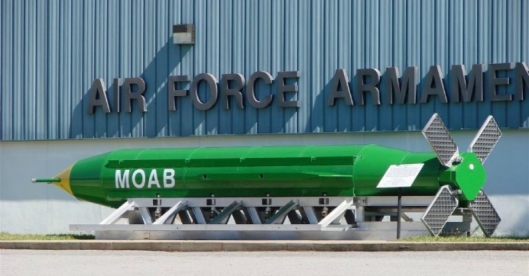
Mother of All Bombs


I am Mother.
Created by Father.
A complex scientific birthing process, they say.
I weighed over twenty-one thousand pounds at birth.
Father spared no expense;
he happily paid the $314 million.

I carried you for nine months
in the womb, my child.
I almost lost you, you know.
They closed the clinic
where I used to get healthcare.

I am Mother.
Created by Father.
My over-pressure waves obliterate
everything & everyone within a one-mile radius.
Look at me with awe & trepidation.
I am Death.

Where is Father?
I am cold & hungry, Mother.
He abandoned us, my child—
to pursue his dreams
of dominating the world.

I am Mother.
Created by Father.
He dropped me from the sky
to plummet to the earth.
My body detonated into gazillion atoms.
My soul became a black hole.

I am beautiful.
I am strong.
I am invincible.
Created in Father’s image.
I am Mother of All Bombs.
Continue reading →

The Lies We Tell Ourselves

09 Sunday Apr 2017

Posted by Rosaliene Bacchus in United States

≈ 29 Comments

Tags

Capitalism run amok, European Refugee Crisis, Humanitarianism, Raytheon Tomahawk Cruise Missiles, Syria, Syrian Children Refugees, Warfare

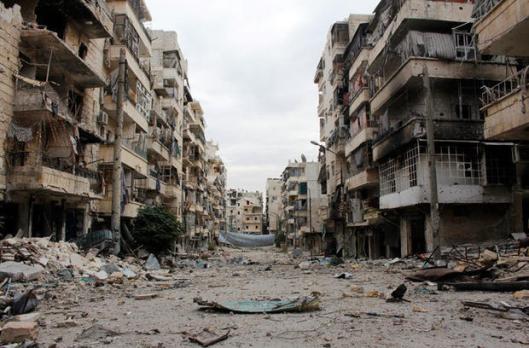
Bombed-out Street in Aleppo - Syria

On Thursday night, April 3rd, our president unilaterally and without congressional approval launched 59 Tomahawk cruise missiles on a Syrian airbase, the alleged site of a chemical attack that targeted innocent civilians. The dust had not yet settled. No United Nations investigation of the heinous crime was conducted to determine the type of chemical weapons used and the perpetrators. But we – the defenders of democracy, peace, freedom, and humanitarianism – know, beyond all doubt, that Syria’s brutal dictator was responsible.

After killing innocent children and beautiful babies, Syrian President Bashar al-Assad had to be sent a strong message. Military power is strength. Money is no problem. Continue reading →

“The Statutes of Man” by Brazilian Poet Thiago de Mello

05 Sunday Mar 2017

Posted by Rosaliene Bacchus in Poetry

≈ 29 Comments

Tags

Brazilian Poet Thiago de Mello, Manaus/Brazil, Os Estatutos do Homem, The Statutes of Man

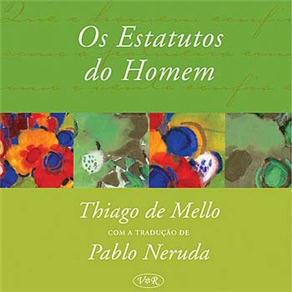
book-cover-the-statutes-of-man-by-thiago-de-mello-translated-by-pablo-neruda

Book Cover: Os Estatutos do Homem (The Statutes of Man) by Thiago de Mello
Photo Credit: Casas Bahia, Brazil


My Poetry Corner March 2017 features the poem “The Statutes of Man” (Os Estatutos do Homem) by Brazilian poet Thiago de Mello, born in 1926 in the State of Amazonas of Northern Brazil.

Growing up among Brazil’s exploited working class, Thiago de Mello devoted his poetry to addressing freedom, human dignity, and other social causes. When the military coup occurred in Brazil in 1964, he was the Cultural Attaché at the Brazilian Embassy in Santiago, Chile (1961-1964), where he became close friends with Pablo Neruda. He responded to the junta’s repressive, extra-constitutional decrees with his most famous poem, “The Statutes of Man.”

After resigning his overseas post and returning to Brazil, he was exiled in 1968 for denouncing the oppressive military dictatorship government (1964-1985). During his nine years in exile, he lived in Chile, Argentina, Portugal, France, and Germany. Continue reading →

“The Place of No Dreams” – Poem by Caribbean-American Poet Lauren K. Alleyne

05 Sunday Feb 2017

Posted by Rosaliene Bacchus in Poetry

≈ 18 Comments

Tags

American Immigrant Family Detention Centers, “The Place of No Dreams” by Lauren K. Alleyne, Caribbean-American Poet, Difficult Fruit by Lauren K. Alleyne, Overcoming adversity, Power of imagination

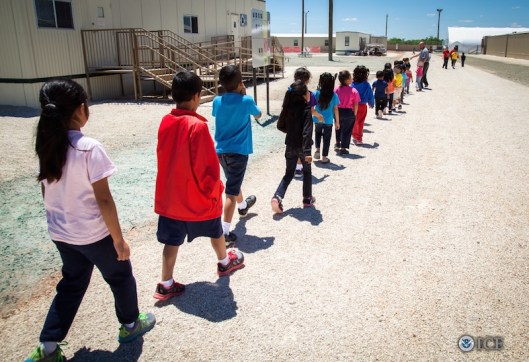
immigrant-children-at-dilley-detention-center-july-2015


My Poetry Corner February 2017 features the poem “The Place of No Dreams” by Lauren K. Alleyne, a Caribbean-American poet born in the twin-island nation of Trinidad & Tobago. She is an Associate Professor of English at James Madison University and Assistant Director of the Furious Flower Poetry Center.

Armed with her dreams and a scholarship from St. Francis College in Brooklyn Heights, Lauren Alleyne left home in 1997 for New York City. After completing a Bachelor of Arts in English Literature, she pursued a Masters of Arts in English and Creative Writing at Iowa State University, graduating in 2002. Three years later, while working for her Master of Fine Arts in Creative Writing (Poetry), she also earned a Graduate Certificate in Feminist, Gender, and Sexuality Studies from Cornell University.

Her poems and essays, published in several journals and anthologies, have gained several prizes and awards. Her first collection of poetry, Difficult Fruit, was published by Peepal Tree Press in 2014. Continue reading →

Passage from Warrior of the Light: A Manual by Paulo Coelho

08 Sunday Jan 2017

Posted by Rosaliene Bacchus in Poetry

≈ 22 Comments

Tags

Brazilian lyricist & novelist Paulo Coelho, Preparing for life's battles, Rio de Janeiro/Brazil, Warrior of the Light: A Manual

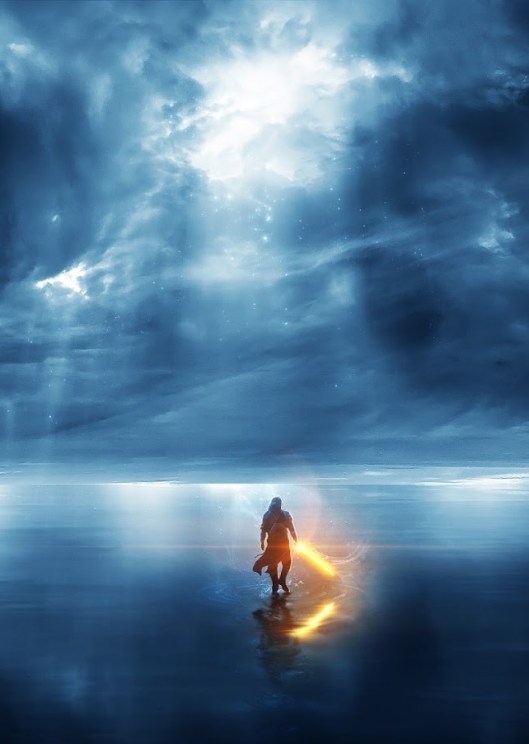
warrior-of-the-light

My Poetry Corner January 2017 features a passage from Warrior of the Light: A Manual by Brazilian lyricist and novelist, Paulo Coelho, born in 1947 in Rio de Janeiro, Southeast Brazil. While Coelho’s background as a songwriter endows his prose with an engaging lyricism, the featured work is not a poem.

Warrior of the Light: A Manual, published in 1997, is written in the form of short philosophical passages. Drawing on his own life experiences and ancient Eastern wisdom, Coelho invites each one of us to become a Warrior of the Light: someone capable of understanding the miracle of life, of fighting to the last for something he believes in.

This is not a normal year. We must prepare ourselves to enter the battlefield to defend our civil and human rights under threat.

Every Warrior of the light has felt afraid of going into battle.
Continue reading →

Year 2016: Reflections

01 Sunday Jan 2017

Posted by Rosaliene Bacchus in United States

≈ 35 Comments

Tags

California, Facing adversity, Family, U.S. politics, U.S. Wars of Terror, Year 2016

happy-new-year-2017


Year 2016 began with the death of my friend and neighbor Benny on January 4. Every day, I looked out onto our desolate courtyard. Gone were the moments spent with Benny, his wife, and their nature-loving daughter.

I wasn’t alone in my grief. In the Middle East where our endless wars of terror ground on without mercy, death was everywhere. No family was spared. Collective grief saturated the air. Wailing mothers shattered the light. Traumatized orphaned children roamed the rubble of a stolen future.

How many more people must lose their homes, their livelihoods, and their loved ones for our freedom, comfort, and security? What are the consequences for the pain we inflict with impunity on women, children, and other civilians? Where is our moral compass?

The disintegration of my son’s marriage came two days after the news of Benny’s death. After my emotional struggle to let go of my son, his sudden return home disrupted the space (emotional and physical) I had created for myself in his absence. Watching my son’s battle to realign his life, while still clinging to his love for his estranged wife, frittered away at my inner peace.

During our 2016 U.S. presidential campaign, I observed the disintegration of our two-party political system. Both parties were in crisis. My disappointment at having my favored candidate lose the nomination for the Democratic Party shattered my hope for meaningful change. Whichever presidential candidate won the top post meant a loss for we the people.

The discovery of cancer cells in one of her lungs turned the life of a close friend on its head and threw mine off balance. Over the months that followed, experimental and other treatments didn’t prevent the spread of the cancerous cells to other areas of her body. Cancer sucked the joy from the time we spent together.

During his bid for the presidency, the Republican candidate unleashed cancerous cells of bigotry, hatred, misogyny, and xenophobia. This virulent cancer infected the heart and lungs of our nation. Millions of Americans can’t breathe under oppressive police force and an economic system that puts profits before people.

While we fought each other over our perceived differences and imagined threats, Year 2016 was the hottest year since NASA started recording global temperatures 136 years ago. In California, we entered our sixth year of drought. We also battled 7,200 wildfires that burned almost 570,000 acres across the state. Ice sheets on land and sea continued to melt at rates faster than those predicted by our climate scientists.

Thanks to my sons, supportive neighbors, and friends, I have survived the dark days of Year 2016. I send out a big ‘thank you’ to my blogger friends who brightened my days and buoyed up my belief in our human capacity for compassion and love for the other. Working together, we the people have won many battles in Year 2016 across America and worldwide against powerful transnational corporations who put their profits before life. We cannot give up.


Draining the Swamp

18 Sunday Dec 2016

Posted by Rosaliene Bacchus in Social Injustice, United States

≈ 39 Comments

Tags

American politics, Lynching of African Americans, Make America White Again, Native American Genocide, Toxic Lake Okeechobee, Triangle Shirtwaist Factory Fire, Wounded Knee Massacre

draining-toxic-lake-okeechobee-florida

Draining Toxic Lake Okeechobee – Florida – USA
Photo Credit: The Weather Channel (Joe Raedle/Getty Images)


Metaphors are important tools in a writer’s word-box. “Draining the swamp” is a powerful metaphor put to excellent use by our President-elect during his campaign for our nation’s top post. He has promised to rid our government of entrenched cronies who only serve their own self-interests and those of their masters and facilitators. We-the-people can drown in the swamp for all they care.

As our President-elect begins draining the swamp, he has skimmed only the surface scum and dead leaves and, based on his latest selections for his cabinet and other top administration posts, has made room for more toxic detritus.

The swamp extends across America. In some places, it’s dense and putrid with the carcasses upon which we have built our nation. Are we ready to drain the swamp? Some among us want to make America white again. When was that? Was that after we had decimated the Native Indian populations who inhabited these lands thousands of years before the white man’s arrival? Their carcasses rest at the bottom of the swamp.

wounded-knee-massacre-north-dakota-29-december-1890

Wounded Knee Massacre – North Dakota – December 29, 1890
Photo Credit: Wikipedia


What about the African slaves and their descendants whose forced labor built this nation? Their carcasses form another layer in the bottom of the swamp.

lynching-in-omaha-nebraska-1919

Lynching of African American in Omaha – Nebraska – 1919
Photo Credit: Daily Kos


What about the successive waves of black, brown, white, and yellow immigrants who labored under inhumane conditions to fuel our industrial revolution? Their carcasses intermingle below the surface of the swamp.

triangle-shirtwaist-factory-fire-new-york-city-25-march-1911

Triangle Shirtwaist Factory Fire – New York City – March 25, 1911
Photo Credit: NYU/STERN Center for Business & Human Rights


It’s easy to skim the surface of the swamp of toxic algae and decaying vegetation. Are we ready to go deeper? Are we ready to drain the swamp?

Are we ready to face our barbarity and callousness towards those we have deemed a threat, worthless, inferior, or dispensable?

Are we ready to ratify that all men and women are created equal and deserve the same treatment and opportunities for their growth and prosperity?

Are we ready to let go of our selfish desires and work together to save ourselves from becoming yet another layer of the swamp?

Draining the swamp will be tough and soul-searching work. It will test the human capacity for openness, forgiveness, sharing, kindness, compassion, and love. It will require a collective effort.

Are you ready to join me in draining the swamp?

“If I Had A Hammer” by Pete Seeger & Lee Hays

04 Sunday Dec 2016

Posted by Rosaliene Bacchus in Poetry, Uncategorized

≈ 27 Comments

Tags

2016 Nobel Prize for Literature, Bob Dylan, Georgetown/Guyana, Lee Hays, Love trumps hate, Pete Seeger, Peter Paul & Mary, Social struggle for justice and freedom, Trini Lopez

us-post-election-2016-stop-hate-crimes-against-muslims

U.S. Post-Election 2016 – Stop Hate Crimes – Muslim Lives Matter
Photo Credit: Quartz.com


In keeping with my end-of-year tradition, I feature a song on my Poetry Corner December 2016. Bob Dylan’s award of the 2016 Nobel Prize in Literature prompted my choice. In the uncanny way that our memory weaves songs and events into our lived experiences, the song “If I Had A Hammer” forced its way to the frontline and hammered for attention. I discovered that Bob Dylan didn’t write this song. We owe this tribute to America’s folk singers and social activists Pete Seeger and Lee Hays who wrote and recorded it in 1949.

If I had a hammer
I’d hammer in the morning
I’d hammer in the evening
All over this land
I’d hammer out danger
I’d hammer out a warning
I’d hammer out love between
My brothers and my sisters
All over this land

Owing to the political controversy surrounding the lyrics and Seeger’s connection with the Communist Party, the song disappeared from public radio and TV. But folk songs with an enduring message never die.

During the Civil Rights Movement and anti-Vietnam War rallies of the 1960s, the song surfaced anew. With a new melody and the harmonized voices of the folk singing trio, Peter, Paul & Mary, the song soared to the #10 position of the top charts in October 1962. Eleven months later, the Latin-tempo rendition by Trini Lopez catapulted the song to #3.

I was a kid when the song hit the top charts in my home-town Georgetown in what was then British Guiana. With its feisty beat and repetitive lyrics, the song became an instant hit among us kids. We banged out the rhythm with sticks on pots and other makeshift drums.

It’s the hammer of justice
It’s the bell of freedom
It’s a song about love between
My brothers and my sisters
All over this land

The years leading up to our country’s independence from Great Britain in May 1966 were dark days in our small world on the shores of South America. On winning the 1961 General Elections, the East Indian left-wing socialist party gained the right to lead the colony to independence. This development troubled Uncle Sam. After Fidel Castro had seized power in Cuba, the Americans feared the spread of communism in their backyard. Those were the days of Cold War I.

With financial support from Uncle Sam, the opposition parties incited demonstrations and strikes across the country. The fire that razed the capital’s commercial district on February 16, 1962, was just the beginning of the racial/ethnic struggle between the leadership of the majority black and East Indian populations for supremacy in the emerging nation.

Today in America, our President-elect has unleashed the demons of bigotry, misogyny, and xenophobia all over this land. The struggle continues. Once again, we must hammer out our need for justice, freedom, and love.

See the complete song “If I Had A Hammer,” learn more about Pete Seeger and Lee Hays, and listen to Trini Lopez’s rendition of the song at my Poetry Corner December 2016.

Our Sacred Responsibility as Human Beings

27 Sunday Nov 2016

Posted by Rosaliene Bacchus in Nature and the Environment, United States

≈ 16 Comments

Tags

Global Alliance for the Rights of Nature, Indigenous Environmental Network (IEN), Indigenous Rights, Native American Tom Goldtooth, Our sacred responsibility to Nature, Standing Rock North Dakota Resistance

protestors-at-standing-rock-north-dakota-access-pipeline-september-2016

Protesters demonstrate against the Dakota Access oil pipeline near the Standing Rock Sioux reservation
North Dakota – United States – September 9, 2016
Photo Credit: Andrew Cullen / Reuters


My third quote for the ‘Three Quotes for Three Days’ challenge – an invitation from British author and blogger Frank Parker – comes from Tom Goldtooth, a Native American environmental leader and executive director of the Indigenous Environmental Network (IEN) since 1996. It’s an excerpt from his keynote address, “The Sacredness of Mother Earth,” at the Bioneers National Conference held on October 18-20, 2013.

The European concept of the natural world which has become a dominant concept worldwide – where knowledge and culture are property, with the attitude that commodities are to be exploited freely and bought and sold at will – has resulted in disharmony between beings and the natural world, as well as the current environmental crisis threatening all life. This concept is totally incompatible with the traditional indigenous worldview… Our sacred responsibility is to safeguard and protect this world. Human beings are not separate from the natural world but were created to live in an integral relationship with it. That’s what we have to offer. Continue reading →

← Older posts
Newer posts →

Subscribe

  • RSS - Posts
  • RSS - Comments

Archives

  • March 2026
  • February 2026
  • January 2026
  • November 2025
  • October 2025
  • September 2025
  • August 2025
  • July 2025
  • June 2025
  • May 2025
  • April 2025
  • March 2025
  • February 2025
  • January 2025
  • December 2024
  • November 2024
  • October 2024
  • September 2024
  • August 2024
  • July 2024
  • June 2024
  • May 2024
  • April 2024
  • March 2024
  • February 2024
  • January 2024
  • December 2023
  • November 2023
  • October 2023
  • September 2023
  • August 2023
  • July 2023
  • June 2023
  • May 2023
  • April 2023
  • March 2023
  • February 2023
  • January 2023
  • December 2022
  • November 2022
  • October 2022
  • September 2022
  • August 2022
  • July 2022
  • June 2022
  • May 2022
  • April 2022
  • March 2022
  • February 2022
  • January 2022
  • December 2021
  • November 2021
  • October 2021
  • September 2021
  • August 2021
  • July 2021
  • June 2021
  • May 2021
  • April 2021
  • March 2021
  • February 2021
  • January 2021
  • December 2020
  • November 2020
  • October 2020
  • September 2020
  • August 2020
  • July 2020
  • June 2020
  • May 2020
  • April 2020
  • March 2020
  • February 2020
  • January 2020
  • December 2019
  • November 2019
  • October 2019
  • September 2019
  • August 2019
  • July 2019
  • June 2019
  • May 2019
  • March 2019
  • February 2019
  • January 2019
  • December 2018
  • November 2018
  • October 2018
  • September 2018
  • August 2018
  • July 2018
  • June 2018
  • May 2018
  • April 2018
  • March 2018
  • February 2018
  • January 2018
  • December 2017
  • November 2017
  • October 2017
  • September 2017
  • August 2017
  • July 2017
  • June 2017
  • May 2017
  • April 2017
  • March 2017
  • February 2017
  • January 2017
  • December 2016
  • November 2016
  • October 2016
  • September 2016
  • August 2016
  • July 2016
  • June 2016
  • May 2016
  • April 2016
  • March 2016
  • January 2016

Categories

  • About Me
  • Anthropogenic Climate Disruption
  • Brazil
  • Economy and Finance
  • Family Life
  • Festivals
  • Guyana
  • Health Issues
  • Human Behavior
  • Immigrants
  • Nature and the Environment
  • People
  • Philosophy
  • Poetry
  • Poetry by Rosaliene Bacchus
  • Recommended Reading
  • Relationships
  • Religion
  • Religion & Spirituality
  • Reviews – The Twisted Circle: A Novel by Rosaliene Bacchus
  • Reviews – Under the Tamarind Tree: A Novel by Rosaliene Bacchus
  • Save Our Children
  • Social Injustice
  • Technology
  • The Twisted Circle: A Novel by Rosaliene Bacchus
  • The Writer's Life
  • Uncategorized
  • Under the Tamarind Tree: A Novel by Rosaliene Bacchus
  • United States
  • Urban Violence
  • Women Issues
  • Working Life

Blogroll

  • Angela Consolo Mankiewicz
  • Caribbean Book Blog
  • Dan McNay
  • Dr. Gerald Stein
  • Foreign Policy Association
  • Guyanese Online
  • Writer's Digest
  • WritersMarket: Where & How to Sell What You Write

Meta

  • Create account
  • Log in
  • Entries feed
  • Comments feed
  • WordPress.com

Enter your email address to subscribe to this blog and receive notifications of new posts by email.

Join 3,232 other subscribers

Create a free website or blog at WordPress.com.

Privacy & Cookies: This site uses cookies. By continuing to use this website, you agree to their use.
To find out more, including how to control cookies, see here: Cookie Policy
  • Subscribe Subscribed
    • Three Worlds One Vision
    • Join 3,232 other subscribers
    • Already have a WordPress.com account? Log in now.
    • Three Worlds One Vision
    • Subscribe Subscribed
    • Sign up
    • Log in
    • Report this content
    • View site in Reader
    • Manage subscriptions
    • Collapse this bar
 

Loading Comments...