“A Report to the Academy: The Modern Caribbean” – Poem by Trinidadian Poet Raymond Ramcharitar

Tags

, , , , , ,

Front Cover of the Poetry Collection Modern, Age, &c by Raymond Ramcharitar [Photo of Sculpture by Winslow Craig]

My Poetry Corner November 2021 features Part 1 from the four-part, long poem “A Report to the Academy: The Modern Caribbean” from the poetry collection, Modern, Age, &c, by the Caribbean journalist, poet, and cultural critic Raymond Ramcharitar. Born in Trinidad, he studied at the University of the West Indies, St. Augustine Campus, where he earned his Bachelor of Science in Economics (1991), Masters in Literature in English (2002), and Doctorate in Cultural History (2007).

After completing his doctorate, Ramcharitar received three overseas fellowships: Post-Doctoral Fellow at the Warwick University, UK (2008); Visiting Scholar at New College, University of Toronto, Canada (2010); and Poetry Fellow at the Bread Loaf Writers’ Conference at Middlebury College, Vermont, USA (2011). He currently lives in Trinidad where he is a communications consultant for the ANSA McAL Group of Companies.

In speaking of his third poetry collection, Modern, Age, &c (Peepal Tree Press, UK, 2020), the poet said that he balanced the book among three themes: political (Modern), personal (Age), and the whimsical (&c). The tone varies from sardonic, to satiric, to lyrical.

“Modern is about the malaise: the diseases of our time: depression, anxiety, isolation—The broader themes of loss, disintegration,” the poet said. As he recently turned fifty, Age is his way to examine the shredding of the social contract. “I started to look back to find the threads that hold me together, as a parent, a man,” he said. “And try to find where everything changed: the plan for utopia, or progress, when did it become a tweet, or post on Facebook or Instagram?”

Continue reading →
More Praise for The Twisted Circle: A Novel

Tags

5.0 out of 5 Stars: A young nun’s journey through the minefields of politics, poverty, and the Roman Catholic Church

The Twisted Circle is rich and vivid with the descriptions of people, places, geography, and unfortunately the politics of Rosaliene Bacchus’ native Guyana during the tumultuous Seventies and Eighties. Told from the vantage point of a young nun and schoolteacher, Sister Barbara, serving in a rural, poverty-stricken area, this novel also renders the very fabric of the Roman Catholic Church and exposes behind the scenes interpersonal relationships which at times are as dirty and vicious as the period of political turmoil. Rosaliene’s characters are as well-fleshed out as her descriptions. I highly recommend this novel.

~ AMAZON REVIEW, NOVEMBER 10, 2021, BY DON MILLER, AN AMERICAN INDIE AUTHOR OF SEVERAL BOOKS. DON LIVES IN SOUTH CAROLINA, USA.

The Writer’s Life: Killing Your Darlings

Tags

, , , , ,

Photo by Iamngakan eka on Pexels.com

When I finished my first complete draft of The Twisted Circle: A Novel in 2016, the total word count of 92,602 had exceeded the desired 80,000 words that literary agents and publishers require for newbie authors. Subsequent revisions in tightening sentences and scenes did not achieve the magical number. In 2017, I took the undesirable and difficult step of removing a beloved minor character. This is known as ‘killing your darlings.’

Over the years, the phrase ‘to kill your darlings’ has been attributed to many famous writers: Oscar Wilde, G.K. Chesterton, and William Faulkner. But many literary scholars credit British writer and University of Cambridge Professor Sir Arthur Quiller-Couch. In his 1916 book On the Art of Writing, he recommended writers to “murder your darlings.”

After spending over a month researching details of her background, I killed off Sylvia Flores since her character played a negligible role in my story’s main plot line. It hurt. This fictional character was my way of memorializing a Filipino woman whose tragic, premature death in Guyana’s northwest rainforest region has stayed with me after all these years.

The real-life woman was the wife of the Filipino resident doctor in charge of the Mabaruma Hospital at the time I lived and worked in the region. Owing to the isolation of the region and lack of proper medical facilities, Guyanese doctors then and now avoid the post like a death trap for their medical career.

Continue reading →

Thought for Today: Climate Science Denial

Tags

, ,

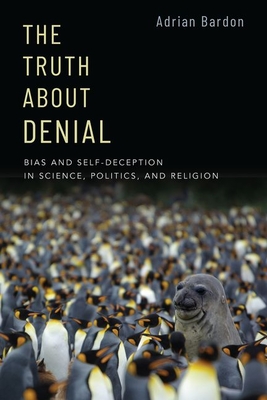
Front Cover: The Truth About Denial: Bias and Self-Deception in Science, Politics, and Religion by Adrian Bardon

The climate change issue is a perfect storm for conservative personality and conservative ideology. It is a form of impact science that represents a massive threat to the existing social and economic order, and in so doing, incidentally threatens demographic identity groups invested in the status quo. Solutions will require massive government intervention, the prospect of which is particularly threatening to the especially individualistic, small-government aspects of American conservative ideology.

Excerpt from “Science Denial” (Chapter 2, p.109), The Truth About Denial: Bias and Self-Deception in Science, Politics, and Religion by Adrian Bardon, Oxford University Press, New York, USA, 2020.

CHECK OUT: The Yahoo News/YouGov survey on U.S. climate change attitudes conducted online from October 19 to 21, 2021.


DR. ADRIAN BARDON is a professor of philosophy at Wake Forest University, North Carolina, where he teaches courses on political philosophy, philosophy of religion, philosophy of space and time, and the history of philosophy. He is the author of A Brief History of the Philosophy of Time (OUP 2013), as well as numerous scholarly articles on time, perception, politics, and the history of philosophy.

Forest Spirits or Bush Spirits of Guyana’s Indigenous Peoples

Tags

, , , , , , , ,

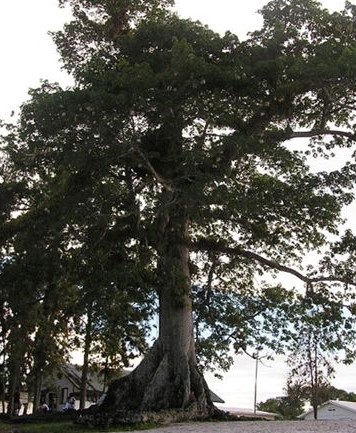
Silk Cotton Tree – Santa Mission Indigenous Settlement – Guyana

On October 8, 2021, President Joe Biden signed a presidential proclamation declaring October 11th as a national holiday in celebration of Indigenous Peoples’ Day. Does this mean that we will no longer remember this day as Columbus Day? Growing up in what was then British Guiana, I was taught to regard the Genoan explorer Christopher Columbus (1451-1506) as a hero. During his four voyages to the New World, he explored a vast area of the Caribbean Region that he called the West Indies. The gentle and kindhearted indigenous Arawak peoples who first welcomed Columbus and his crew knew not the misery that this encounter would later unleash upon their world.

Based on what Columbus told Peter Martyr, who recorded his voyages, Martyr wrote: “They seeme to live in that golden worlde of the which olde writers speake so much, wherein menne lived simply and innocently without enforcement of lawes, without quarreling, judges and libelles, content onely to satisfie nature, without further vexation for knowledge of things to come.” [As quoted by Edmund S. Morgan in his article “Columbus’ Confusion About the New World”]

Not until his third voyage (1498-1500) did Columbus sight the coastline of Guiana but made no attempt at landing. The Dutch, the first to settle Guiana, referred to this forbidding region of dense tropical rainforest, stretching between the Orinoco and Amazon Rivers on the South American mainland, as “The Wild Coast.” After two centuries of Dutch rule (1600s to 1803) and another century of British rule, the indigenous peoples of then British Guiana, called Amerindians, had lost sovereignty over their territories. Beginning in 1902, the British forced them into reservations.

Continue reading →

The Twisted Circle: Latest News

Tags

I am pleased to announce that The Twisted Circle: A Novel is now also available as an eBook at the booksellers listed below:

Rosaliene’s Shop at Lulu (Both Print & Ebook)

Amazon (Both Print & Ebook)

Barnes and Noble (Both Print & Ebook)

BAM! Books a Million (Print Only)

Book Depository (Print Only)

IndieBound (Print Only)

Rakuten Kobo (Ebook Only)

Thought for Today: For how much longer?

Tags

, , , , ,

Photo by Anni Roenkae on Pexels.com

We humans have re-created the surface of our planet in our own image. Then, for control of the masses by a few, we have constructed multiple realities of what it means to be a human. To further manipulate and distort facts and reality, we have entered what some regard as “the post-truth age.” With the aid of algorithms, disinformation whips across social media networks like hurricane force winds, rupturing human interactions within the physical spaces we share. For how much longer can our communities withstand this mounting chaos without implosion?

“That Moment an Enormous Tail” by Brazilian Poet Alice Sant’Anna

Tags

, , , ,

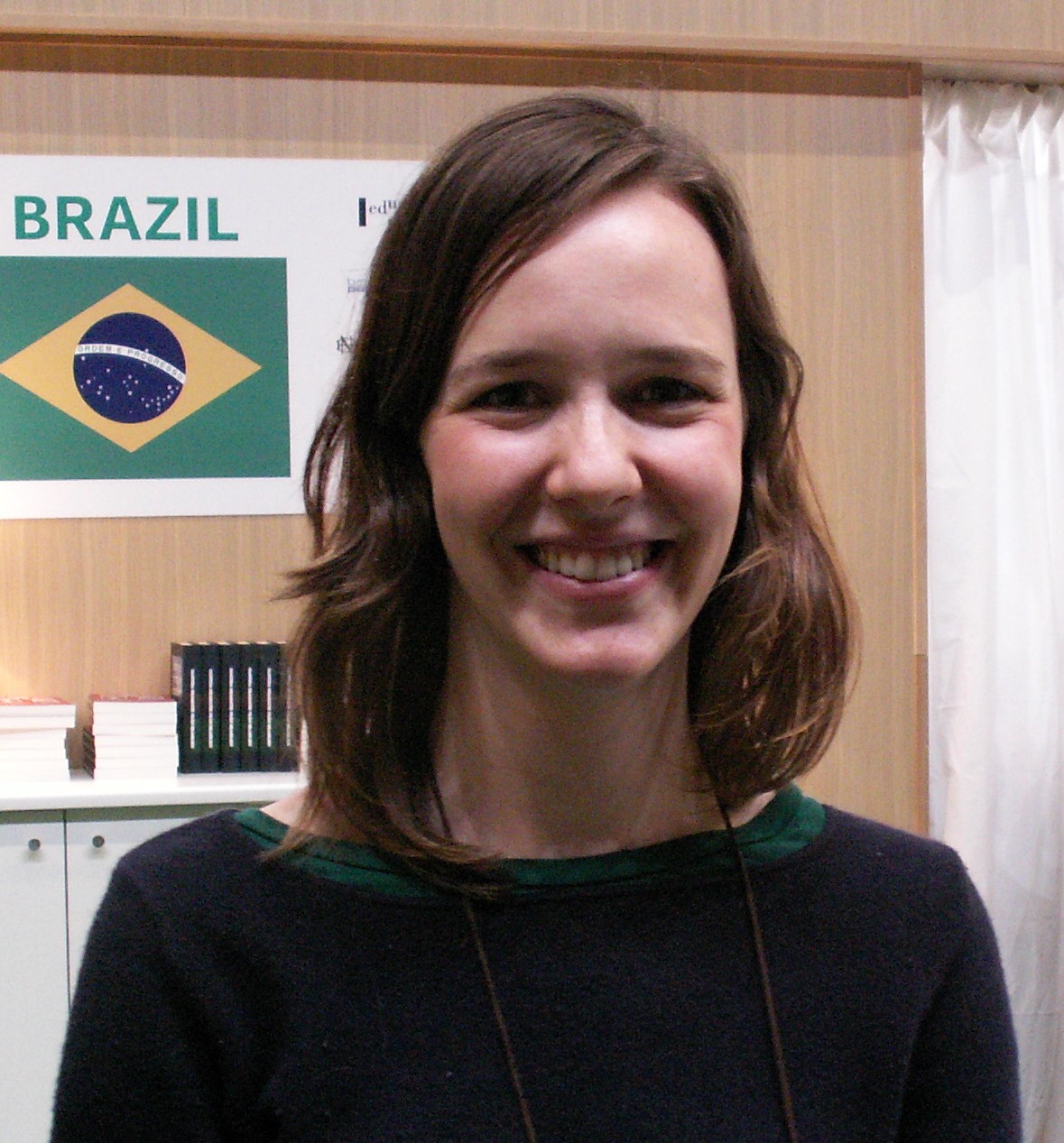
Brazilian Poet Alice Sant’Anna

My Poetry Corner September 2021 features the poem “That Moment an Enormous Tail” (Um Enorme Rabo de Baleia) from the poetry collection Tail of the Whale (Rabo de Baleia) by Brazilian poet Alice Sant’Anna. Born in 1988 in the city of Rio de Janeiro, Alice grew up in a very artistic home: Her father was a photographer; her mother was a fashion producer. As a child, she learned to play several musical instruments. Then, at fifteen years old, her artistic future veered toward poetry. Such was the impact after she read the poetry of Brazil’s “marginal generation” poet Ana Cristina César (1952-1983).

During the 1970s the “marginal generation” poets published their books independently, earning the title “marginal.” Following the oral tradition, their poetry used a colloquial and informal style.  

Sant’Anna credits her experience of studying abroad in learning “how to be alone, in silence,” critical for her creative process. Her first trip abroad was to New Zealand where she spent a semester as a sixteen-year-old high school student. There, she began writing poetry while adapting to life in a very small town.

As a twenty-year-old undergraduate in journalism at the Pontifical Catholic University (PUC) of Rio de Janeiro, Sant’Anna published her first book of poetry. In 2009, a year before her graduation, she went to Paris for a semester, providing an impetus for working on her second book, Tail of the Whale (Rabo de Baleia).

In 2013, the year she earned her Masters’ Degree in Literature and Culture at PUC, Sant’Anna’s poetry collection was published to great acclaim, winning the APCA Poetry Prize from the São Paulo Art Critics Association. The collection was published in English in 2016 with translation by Tiffany Higgins, an award-winning American poet and translator.

Continue reading →

Breaking Free…

Tags

, , , , , , , , , , ,

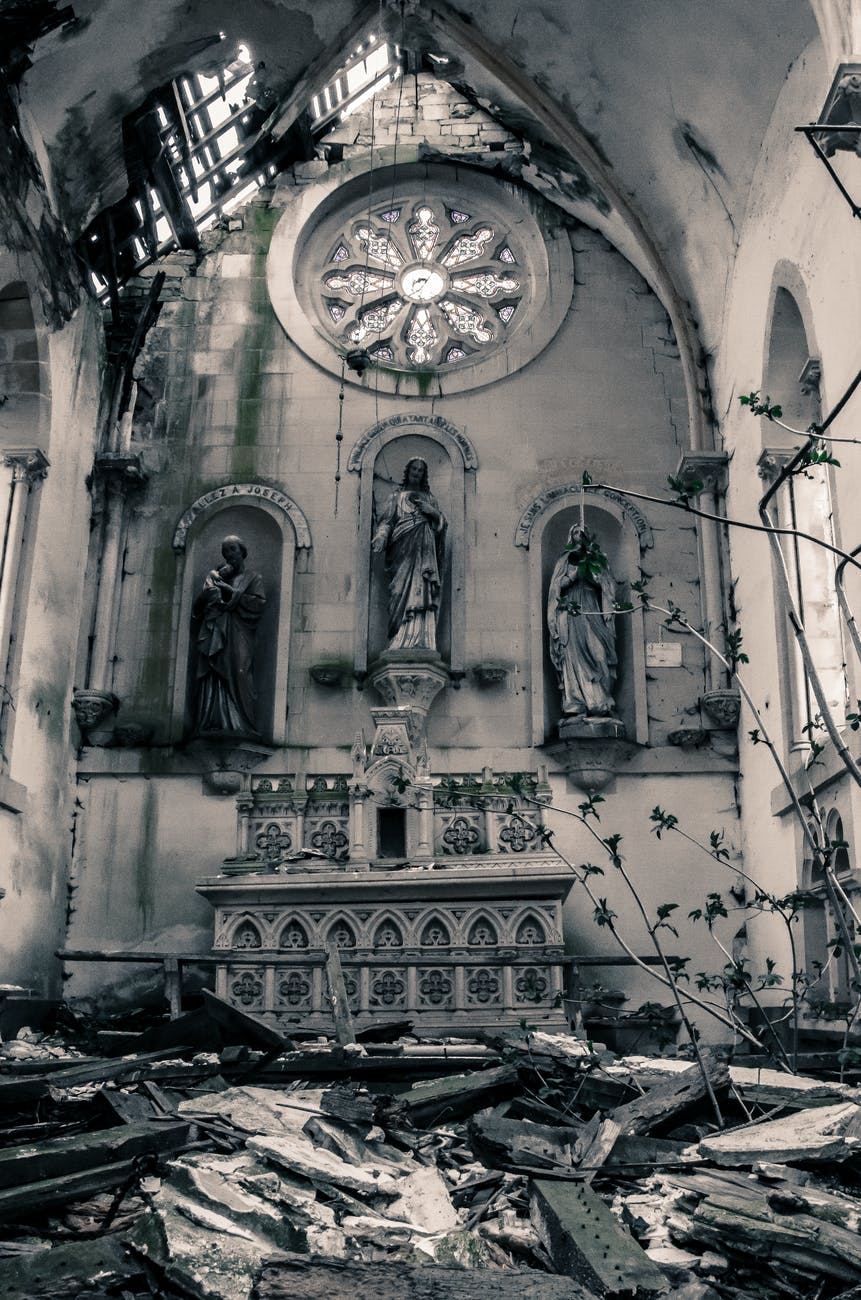
Photo by @seb on Pexels.com

Breaking free from the Roman Catholic Church did not happen overnight. The fear of Hell, embedded since childhood, is a powerful force. I began questioning the Church’s religious teachings and practices during my seven years in the convent. A beginners’ course in Anthropology, taken as a final year university undergraduate, led me to reconsider the nature of being human and our roles as male and female. I recall having an epiphany about the need to change the rules regarding the Church’s Sacrament of Matrimony that was out of touch with our times.

After leaving the convent, I began exploring other religions and spiritual teachings in search of a more expansive vision of The Divine. Having grown up among Hindus, I was aware that they believe in reincarnation after death. The Buddhists, too, I discovered, also embrace reincarnation. The thought of being born again in what I’ve experienced as a violent and unjust world did not appeal to me.

During the year I worked at the University of Guyana Library, a librarian recommended that I read Reincarnation & Karma by Edgar Cayce (1877-1945). The American psychic struck me as authentic. Instead of condemnation to Hell for eternity, reincarnation gives our soul several chances to make up for mistakes made, wrongs committed. Justice beyond the grave. I began looking at my life and our world with different lenses. Who did I wrong or hurt in past lives?

I was pregnant with our second child when my husband and I joined the Transcendental Meditation (TM) movement started by Maharishi Mahesh Yogi in India. Since receiving my mantra from our certified Guyanese TM teacher, I continue to practice the daily mantra meditation. With varying degrees of success over the years, I have used the technique not only as a form of awareness and stress relief, but also to access a higher state of consciousness.

My break with the Catholic Church occurred about a year and a half after we migrated to Brazil. That’s about ten years after leaving the convent. South America’s largest country and economy also held the top-ranking position as the country with the world’s largest Catholic population. The poverty I witnessed every day on the streets of Fortaleza, capital of the Northeastern State of Ceará, shocked me. Though Guyana was numbered among the poorest countries on the continent, I had never seen hordes of children, including toddlers, roaming the streets in search of food. Where was the Catholic Church? What were they doing to address the poverty and destitution in their midst?

I could not identify with such a Church.

Continue reading →

Book Review: The Twisted Circle — Fake Flamenco

Tags

Read Rosaliene Bacchus’ second novel The Twisted Circle when you have a completely free weekend, because you may not be able to put it down. Set in a tropical Guyana, South America, the story based on the country’s history follows a Catholic nun about to take her vows who teaches in a rural school. The […]

Book Review: The Twisted Circle — Fake Flamenco

Rebecca Cuningham is a writer and poet. Supergringa: A Spain Travel Memoir is her debut book-length work. She lives in Madison, Wisconsin with her husband and child.