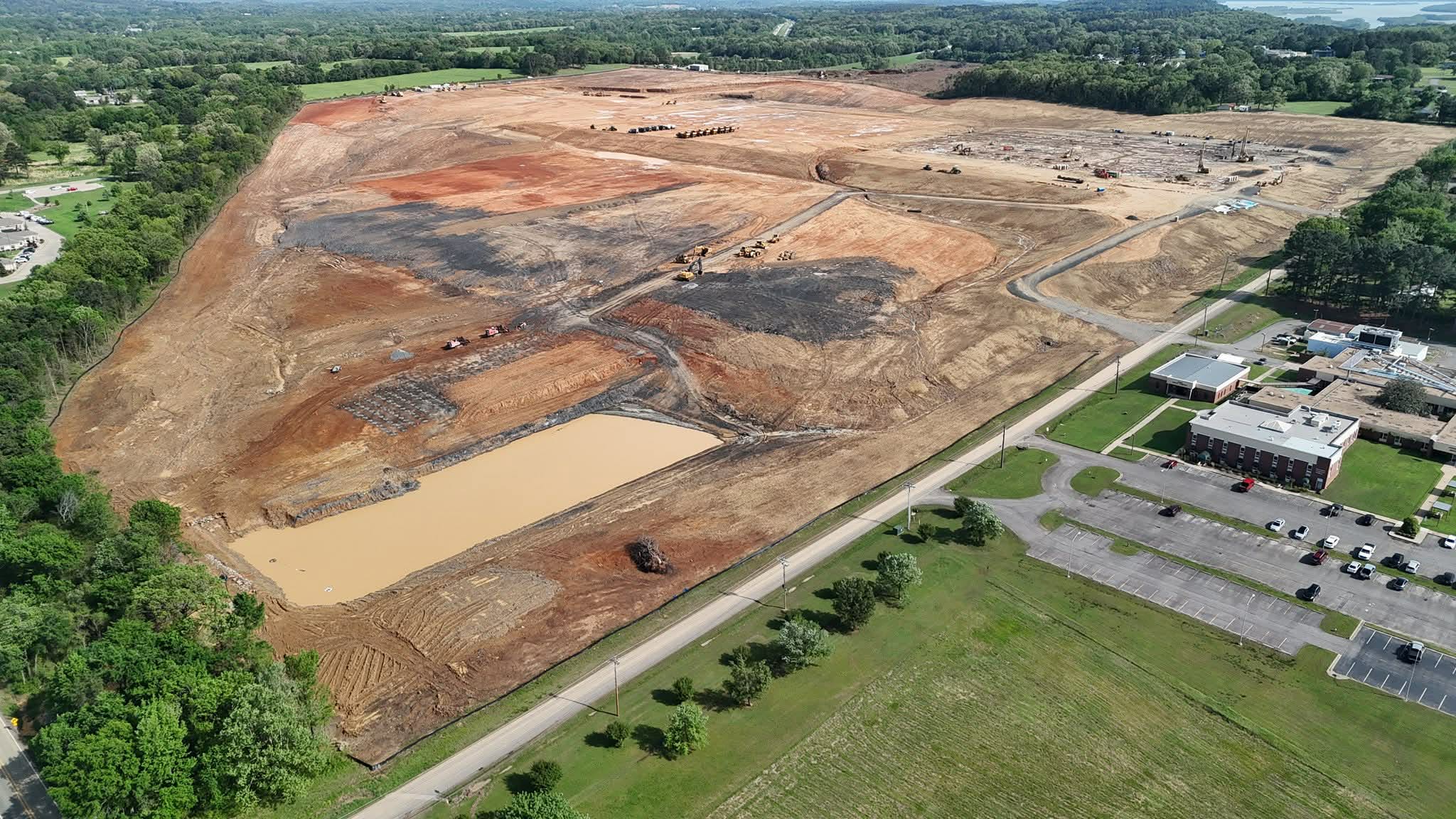
Aerial view of large-scale land clearing for a data center campus adjacent to a residential neighborhood – Clarksville – Arkansas – USA Photo Credit: Brochovich Data Center (submitted by community member)
AI is no ethereal entity that lives in “the cloud.” It is a machine that lives in an AI Data Center. Not just one data center, but several data centers across our nation. Over 4,000 data centers operate in the USA. Many of them were built before generative AI came on the scene and captured our imagination with its superpower to create text, images, art, video, and sound in response to our instructions. We never questioned the origin of its source material. But that’s another story. My focus here is on the AI Data Center.
AI Data Centers that power your favorite chatbot—OpenAI ChatGPT, Google Gemini, or Anthropic Claude—are massive structures. What’s more troubling is that these centers need vast expanses of land, as well as lots of energy, and water to power their AI machines. With lots of money to be made during the generative AI boom, data centers are sprouting up everywhere across the United States. Your community could be their next target.
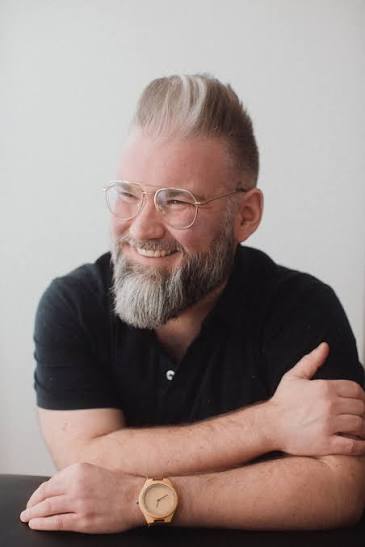
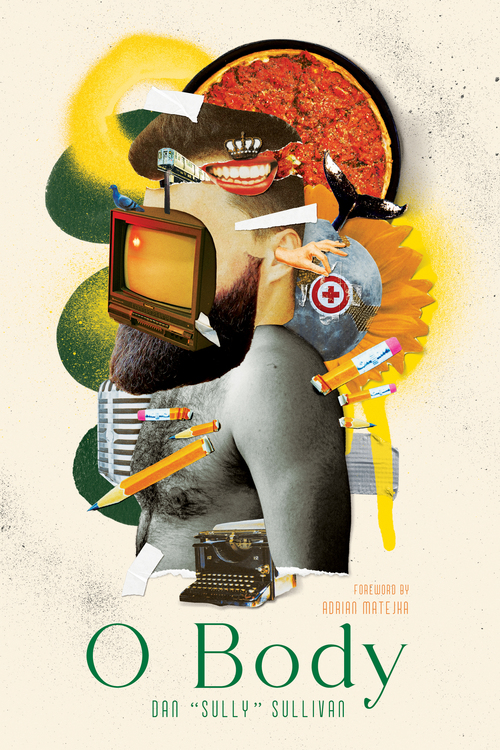
American Poet Dan “Sully” Sullivan Photo Credit: Sullivan and Sullivan Studio, Poet’s Official Website Front Cover – Poetry Collection O Body by Dan “Sully” Sullivan Photo Credit: Haymarket Books
My Poetry Corner July 2026 features the poem “Watch” from the poetry collection O Body (Haymarket Books, 2023) by Dan “Sully” Sullivan, an American poet and educator based in Bloomington, Indiana, with nearly two decades of experience in Open Mic Poetry performance and teaching. Born in Chicago, Illinois, he earned an MFA and MA in English Literature and Creative Writing from Indiana University (2016-2019). Since 2019, he holds the position of Student Support & Registration Representative – Advance College Project at the university.
O Body, Sully’s second full-length poetry collection, delves into questions of masculinity, fatherhood, home, and learning to live in and love one’s own body.
We learn in “Wave Built in the Form of Prayer” that the speaker/poet is on the heavy side (pp. 13-14):
I get this gravity from my mom’s side. My father was always thin & I don’t mean to speak of him like he’s dead—he’s not thin anymore. I know the earth pulls us closer as we age, but his softer body does not make me think of tombs. I think of passage & mirrors.
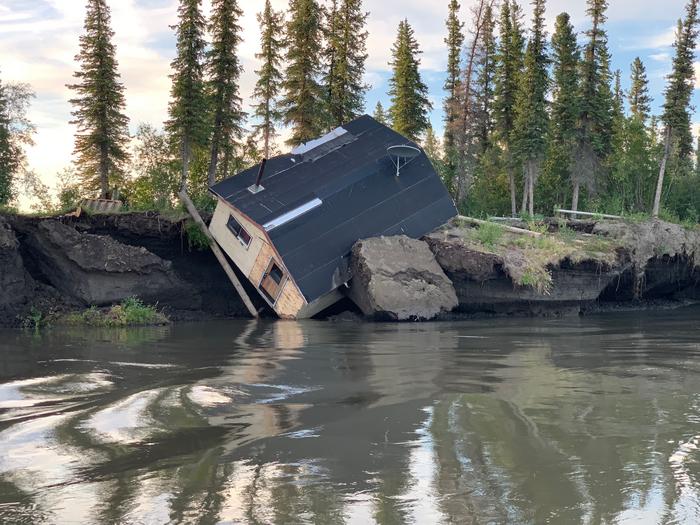
Infrastructure in permafrost areas is threatened by riverbank erosion, Mackenzie River Delta, Canada Photo Credit: Bioengineer Magazine, January 16, 2025
This is the sixth article in my series about our changing Earth from interviews with Native Americans shared in We Are the Middle of Forever: Indigenous Voices from Turtle Island on the Changing Earth, edited by Dahr Jamail and Stan Rushworth (USA 2022). My presentation does not follow the order of the interviews.
#6: Dr. Kyle Powys Whyte (Potawatomi) (Chapter 6, pp. 73-95)
Kyle Powys Whyte, PhD is an enrolled member of the Citizen Potawatomi Nation. A faculty member of the University of Michigan, Illinois, he is a George Willis Pack Professor at the School for Environment and Sustainability (SEAS). He is founding Faculty Director of the Tishman Center for Social Justice and the Environment, Principal Investigator of the Environmental Justice & Humanities Hub, co-Principal Investigator of the Global Center for Climate Change and Transboundary Waters, Faculty Associate of Native American Studies, Principal Investigator of the Secretariat for the Pathways Alliance for Change and Transformation, STRIDE Committee member, affiliate Professor of Philosophy, and Senior Fellow in the Michigan Society of Fellows.
His primary research addresses moral and political issues concerning climate policy and Indigenous peoples and the ethics of cooperative relationships between Indigenous peoples and climate science organizations. His articles have appeared in journals such as Climatic Change, Sustainability Science, Environmental Justice, Hypatia, Ecological Processes, Synthese, Human Ecology, Journal of Global Ethics, American Journal of Bioethics, Journal of Agricultural & Environmental Ethics, Ethics, Policy & Environment, and Ethics & the Environment.
Dahr and Stan asked Kyle to address the following:
How humanity got to this climate crisis and what’s connected to it.
How the sense of panic in societies around the world might be differentiated from a sense of urgency.
How we might comport ourselves as members of the larger world society to meet the situation before us.