More Praise for The Twisted Circle: A Novel

Tags

5.0 out of 5 Stars – A Tangled Web

This captivating novel throws the reader into the backroom dealings of a place of true believers: a convent in Guyana of four decades past. We soon discover that religious faith is not a guarantee of noble character.

Rosaliene Bacchus, a Guyanese native and herself a former nun, knows the tropical and impoverished locale from the inside. Here are souls no different and no more psychologically settled than those of us not privy to what it is like to live within a community of women devoted to God. Sexism, racial prejudice, the Sisters’ unfulfilled dreams, and political unrest further complicate their earnest attempt to serve others and fulfill the tenants of their faith. Nor does the author fence the reader off from the challenges of celibacy.

Rosaliene Bacchus set herself a considerable task. She offers us three principal dramatic settings: the convent, a public school where her protagonist teaches, and the outer world of Catholic Priests, indigenous peoples, and government officials. Once the reader becomes familiar with the many characters, the novel’s action moves swiftly.

I am grateful to the author for an enlightening and enjoyable experience. May she go from strength to strength.

Amazon Review by American Reader Tod Verklärung, posted on December 11, 2021.
“Song of the Earth” – Poem by Brazilian Poet Cora Coralina

Tags

, , ,

Brazilian Poet Cora Coralina
Photo: Association of the House of Cora Coralina

My Poetry Corner December 2021 features the poem “Song of the Earth” (O Cântico da Terra) from the 1965 debut poetry collection The Alleyways of Goiás and More Stories (Poemas dos Becos de Goiás e Estórias Mais) by one of Brazil’s great twentieth-century poets, known by her pen name, Cora Coralina (1889-1985).

Born in the small town of Goiás Velho, then the capital of Brazil’s Center-West State of Goiás, Cora Coralina (named Ana Lins dos Guimarães Peixoto) was the third of four daughters. Her father, a High Court judge, died shortly after her birth. In her poem, “My Childhood (Freudian),” she writes:

I was sad, nervous and ugly.
Yellow, with a pale face.
Limp legs, falling down carelessly.
Those who saw me like that – said:
“This girl is the living image
of the old sick father.”
Continue reading

Guyana: Dolling Up for the Year-End Festivities

Tags

, , , ,

Photo by Inga Seliverstova on Pexels.com

December was the most hectic month for my stay-at-home working Mom. As a sought-after dressmaker among middle-class women in the capital, Georgetown, Mom had little time for Christmas shopping, home decoration, and preparation of our traditional Christmas dinner specialties. Guyanese love to party. The Christmas and year-end festivities meant parties galore: office parties, nightclub parties, and house parties. The greatest fete of all was the Old Year’s Night Ball to welcome in the New Year with a bang.

As early as October, to ensure that their dresses were done on time, Mom’s clients who had several functions to attend would start bringing in their dress materials. For the Old Year’s Night Ball, no expense was spared when choosing the best imported fabrics. Clients could select designs from fashion magazines—JC Penney, McCall’s, Sears, and Vogue—Mom made available. A few clients brought clippings of photos from women’s magazines featuring the rich and famous. At the time, Audrey Hepburn, Elizabeth Taylor, and Jacqueline Kennedy were the rave. I enjoyed a front seat view of the woman’s world of dolling up for parties and other social events to attract a mate or to hold onto your man or husband.

I was a thirteen-year-old teenager in high school when Mom began sewing for three attractive working-class women of Portuguese descent. All in their twenties, the three friends worked in the office wing of Bookers Guiana General Store. To protect their identity, I’ll call them Catherine, Marcella, and Yvette. Catherine was the most beautiful with hair and features to rival those of the French actress Catherine Deneuve. Yvette had muscular shoulders and arms from playing tennis at a competitive level. Marcella was a dark-haired beauty like the American actress Rita Morena in West Side Story (1961).

Continue reading

More Praise for The Twisted Circle: A Novel

Tags

There is no betrayal quite like religious betrayal, and there is no circadian cycle quite like this twisted circle. What makes [The Twisted Circle] more poignant is knowing the author draws from some of her own experience having been in a religious Catholic community for seven years. The novel is written in a fast pace that carries the reader along places, encounters, and historical events around the 70’s and 80’s in Guyana where the author was born. Read more at “The Books of 2021.”

R.H. (RUSTY) FOERGER is a Canadian award-winning retired fire office and former lay pastor, teacher, missionary, and mentor for over 33 years. He blogs at "More Enigma Than Dogma."

“A Report to the Academy: The Modern Caribbean” – Poem by Trinidadian Poet Raymond Ramcharitar

Tags

, , , , , ,

Front Cover of the Poetry Collection Modern, Age, &c by Raymond Ramcharitar [Photo of Sculpture by Winslow Craig]

My Poetry Corner November 2021 features Part 1 from the four-part, long poem “A Report to the Academy: The Modern Caribbean” from the poetry collection, Modern, Age, &c, by the Caribbean journalist, poet, and cultural critic Raymond Ramcharitar. Born in Trinidad, he studied at the University of the West Indies, St. Augustine Campus, where he earned his Bachelor of Science in Economics (1991), Masters in Literature in English (2002), and Doctorate in Cultural History (2007).

After completing his doctorate, Ramcharitar received three overseas fellowships: Post-Doctoral Fellow at the Warwick University, UK (2008); Visiting Scholar at New College, University of Toronto, Canada (2010); and Poetry Fellow at the Bread Loaf Writers’ Conference at Middlebury College, Vermont, USA (2011). He currently lives in Trinidad where he is a communications consultant for the ANSA McAL Group of Companies.

In speaking of his third poetry collection, Modern, Age, &c (Peepal Tree Press, UK, 2020), the poet said that he balanced the book among three themes: political (Modern), personal (Age), and the whimsical (&c). The tone varies from sardonic, to satiric, to lyrical.

Modern is about the malaise: the diseases of our time: depression, anxiety, isolation—The broader themes of loss, disintegration,” the poet said. As he recently turned fifty, Age is his way to examine the shredding of the social contract. “I started to look back to find the threads that hold me together, as a parent, a man,” he said. “And try to find where everything changed: the plan for utopia, or progress, when did it become a tweet, or post on Facebook or Instagram?”

Continue reading

More Praise for The Twisted Circle: A Novel

Tags

5.0 out of 5 Stars: A young nun’s journey through the minefields of politics, poverty, and the Roman Catholic Church

The Twisted Circle is rich and vivid with the descriptions of people, places, geography, and unfortunately the politics of Rosaliene Bacchus’ native Guyana during the tumultuous Seventies and Eighties. Told from the vantage point of a young nun and schoolteacher, Sister Barbara, serving in a rural, poverty-stricken area, this novel also renders the very fabric of the Roman Catholic Church and exposes behind the scenes interpersonal relationships which at times are as dirty and vicious as the period of political turmoil. Rosaliene’s characters are as well-fleshed out as her descriptions. I highly recommend this novel.

~ AMAZON REVIEW, NOVEMBER 10, 2021, BY DON MILLER, AN AMERICAN INDIE AUTHOR OF SEVERAL BOOKS. DON LIVES IN SOUTH CAROLINA, USA.

The Writer’s Life: Killing Your Darlings

Tags

, , , , ,

Photo by Iamngakan eka on Pexels.com

When I finished my first complete draft of The Twisted Circle: A Novel in 2016, the total word count of 92,602 had exceeded the desired 80,000 words that literary agents and publishers require for newbie authors. Subsequent revisions in tightening sentences and scenes did not achieve the magical number. In 2017, I took the undesirable and difficult step of removing a beloved minor character. This is known as ‘killing your darlings.’

Over the years, the phrase ‘to kill your darlings’ has been attributed to many famous writers: Oscar Wilde, G.K. Chesterton, and William Faulkner. But many literary scholars credit British writer and University of Cambridge Professor Sir Arthur Quiller-Couch. In his 1916 book On the Art of Writing, he recommended writers to “murder your darlings.”

After spending over a month researching details of her background, I killed off Sylvia Flores since her character played a negligible role in my story’s main plot line. It hurt. This fictional character was my way of memorializing a Filipino woman whose tragic, premature death in Guyana’s northwest rainforest region has stayed with me after all these years.

The real-life woman was the wife of the Filipino resident doctor in charge of the Mabaruma Hospital at the time I lived and worked in the region. Owing to the isolation of the region and lack of proper medical facilities, Guyanese doctors then and now avoid the post like a death trap for their medical career.

Continue reading

Thought for Today: Climate Science Denial

Tags

, ,

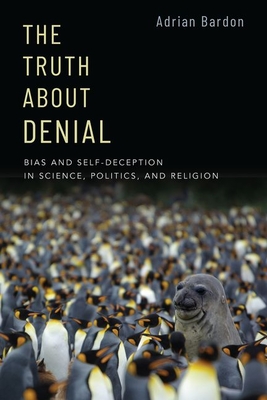
Front Cover: The Truth About Denial: Bias and Self-Deception in Science, Politics, and Religion by Adrian Bardon

The climate change issue is a perfect storm for conservative personality and conservative ideology. It is a form of impact science that represents a massive threat to the existing social and economic order, and in so doing, incidentally threatens demographic identity groups invested in the status quo. Solutions will require massive government intervention, the prospect of which is particularly threatening to the especially individualistic, small-government aspects of American conservative ideology.

Excerpt from “Science Denial” (Chapter 2, p.109), The Truth About Denial: Bias and Self-Deception in Science, Politics, and Religion by Adrian Bardon, Oxford University Press, New York, USA, 2020.

CHECK OUT: The Yahoo News/YouGov survey on U.S. climate change attitudes conducted online from October 19 to 21, 2021.


DR. ADRIAN BARDON is a professor of philosophy at Wake Forest University, North Carolina, where he teaches courses on political philosophy, philosophy of religion, philosophy of space and time, and the history of philosophy. He is the author of A Brief History of the Philosophy of Time (OUP 2013), as well as numerous scholarly articles on time, perception, politics, and the history of philosophy.

Forest Spirits or Bush Spirits of Guyana’s Indigenous Peoples

Tags

, , , , , , , ,

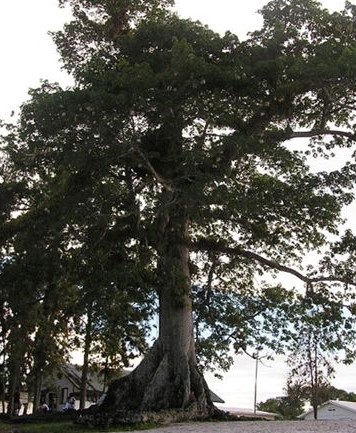
Silk Cotton Tree – Santa Mission Indigenous Settlement – Guyana

On October 8, 2021, President Joe Biden signed a presidential proclamation declaring October 11th as a national holiday in celebration of Indigenous Peoples’ Day. Does this mean that we will no longer remember this day as Columbus Day? Growing up in what was then British Guiana, I was taught to regard the Genoan explorer Christopher Columbus (1451-1506) as a hero. During his four voyages to the New World, he explored a vast area of the Caribbean Region that he called the West Indies. The gentle and kindhearted indigenous Arawak peoples who first welcomed Columbus and his crew knew not the misery that this encounter would later unleash upon their world.

Based on what Columbus told Peter Martyr, who recorded his voyages, Martyr wrote: “They seeme to live in that golden worlde of the which olde writers speake so much, wherein menne lived simply and innocently without enforcement of lawes, without quarreling, judges and libelles, content onely to satisfie nature, without further vexation for knowledge of things to come.” [As quoted by Edmund S. Morgan in his article “Columbus’ Confusion About the New World”]

Not until his third voyage (1498-1500) did Columbus sight the coastline of Guiana but made no attempt at landing. The Dutch, the first to settle Guiana, referred to this forbidding region of dense tropical rainforest, stretching between the Orinoco and Amazon Rivers on the South American mainland, as “The Wild Coast.” After two centuries of Dutch rule (1600s to 1803) and another century of British rule, the indigenous peoples of then British Guiana, called Amerindians, had lost sovereignty over their territories. Beginning in 1902, the British forced them into reservations.

Continue reading

The Twisted Circle: Latest News

Tags

I am pleased to announce that The Twisted Circle: A Novel is now also available as an eBook at the booksellers listed below:

Rosaliene’s Shop at Lulu (Both Print & Ebook)

Amazon (Both Print & Ebook)

Barnes and Noble (Both Print & Ebook)

BAM! Books a Million (Print Only)

Book Depository (Print Only)

IndieBound (Print Only)

Rakuten Kobo (Ebook Only)