• About

Three Worlds One Vision

~ Guyana – Brazil – USA

Three Worlds One Vision

Category Archives: Poetry

“Eyes of Liberty” – Poem by Jamaican Rastafarian Poet Mutabaruka

01 Tuesday Aug 2017

Posted by Rosaliene Bacchus in Poetry

≈ 28 Comments

Tags

“Eyes of Liberty” by Mutabaruka, Black Power Movement in the Caribbean, Jamaican Rastafarian dub poet, Mutabaruka, Rastafarianism

Mutabaruka - Jamaican Rastafari Dub Poet

My Poetry Corner August 2017 features the poem “Eyes of Liberty” by Mutabaruka, a Jamaican Rastafarian dub poet, musician, actor, educator, and talk-show host. Born Allan Hope in December 1952, he grew up in Kingston, Jamaica, where he trained as an electrician at the Kingston Technical High School. Marcus Garvey’s son, a teacher at the trade school, influenced his world view and awakened his Black awareness.

As an adolescent, Mutabaruka identified with the Black Power Movement of the late 1960s and early 1970s that swept across the Caribbean. His poems became a means to changing the political system in Jamaica.

“Because they say that the pen is mightier than the sword, in that case it was a gun! So we used the pen instead of turning toward this what dem call revolution that was in we that was fashioned and shaped in us,” Mutabaruka told his audience at a book signing in San Francisco in April 2005. Continue reading →

“Immigrant Song” – Poem by Korean-American Poet Sun Yung Shin

02 Sunday Jul 2017

Posted by Rosaliene Bacchus in Immigrants, Poetry, United States

≈ 47 Comments

Tags

"Immigrant Song" by Sun Yung Shin, Asian American, Fourth of July, Korean-American poet, Life in America

Happy Fourth of July America

My Poetry Corner July 2017 features the poem “Immigrant Song” by Sun Yung Shin, a Korean-American poet, writer, and educator. Born in Seoul, South Korea, she was one year old when an American couple adopted her. Raised in Chicago, she later moved to Minneapolis where she earned a BA in English from Macalester College and a Master’s Degree in Education from the University of St. Thomas. She teaches at Macalester College and lives with her husband and their two children. 

When asked about her relationship with the English language in an interview with Lightsey Darst for Minnesota Artists (January 2016), Sun Yung Shin said that strangers often question her ability to speak English without a “foreign” accent. Her fluency and sense of belonging as an Asian American offend them.

Shin’s opening verses in “Immigrant Song” from her poetry collection, Skirt Full of Black (winner of the 2007 Asian American Literary Award for Poetry), express the restraints she faces to achieve her full potential as a human being. Continue reading →

Patativa do Assaré: Brazil’s Popular Oral Poet

04 Sunday Jun 2017

Posted by Rosaliene Bacchus in Brazil, Poetry

≈ 35 Comments

Tags

Agricultural workers, Brazilian Oral Poet Patativa do Assaré, Ceará/Brazil, Landless peasant farmers, O Agregado e o Operário, Sertão Nordestino/Northeast Brazil, The Peasant Farmer and the Factory Worker, Workers Rights

Patativa do Assare seated in front of his hut in Assare - Ceara - Brazil

My Poetry Corner June 2017 features the poem “The Peasant Farmer and the Factory Worker” (O Agregado e o Operário) by Antônio Gonçalves da Silva, known as Patativa do Assaré (1909-2002), a popular Brazilian oral poet, improviser of oral verse, composer, singer, and guitar player.

The son of poor peasant farmers eking out a subsistence livelihood in the semi-arid hinterlands, known as the sertão, of the Northeast State of Ceará, Patativa began working at an early age on his family’s small plot of land. At the age of four, he lost his sight in one eye due to lack of medical assistance. With his father’s death four years later, he had to work as a farmhand to help his family, leaving him no time to attend school. During his six months of formal education, he learned to read and write.

God was his Master; Nature was his teacher.

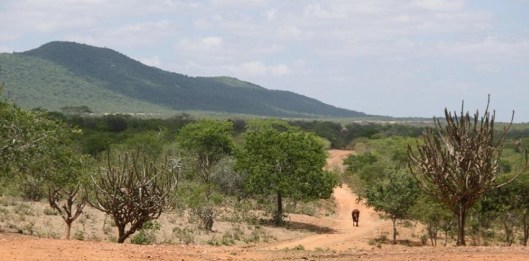
Sertao Nordestino - Northeast Brazil (2)Sertão Nordestino – Northeast Brazil  [Photo Credit: poesiafaclube.com]
 

I was born listening to songs
of birds in my mountain terrain
and seeing wonderful marvels
that the beautiful woodlands enclose.
That is where I grew up
watching and learning
from the book of nature
where God is most visible
the heart most sensitive
and life has more purity.
Continue reading →

“Destination” – Poem by Guyanese-Canadian Poet Janet Naidu

01 Monday May 2017

Posted by Rosaliene Bacchus in Guyana, Immigrants, Poetry

≈ 26 Comments

Tags

"Destination" by Janet Naidu, "New System of Slavery", Guyanese-Canadian Poet, Immigrants, Indian indentured laborers, Indian Indentureship in Guyana 1838-1917, Sugar plantations in Guyana

East Indian Indentured Laborers

In commemoration of the centennial of the abolition of Indian Indentureship on March 12, 1917, my Poetry Corner May 2017 features the poem “Destination” by Janet Naidu, a Guyanese-born poet, writer, social activist, and life-skills coach. She migrated to Canada in 1975, at the age of twenty-two, where she obtained a BA in Political Science and Caribbean Studies from the University of Toronto and, later in life, an LLB from the University of London (UK).

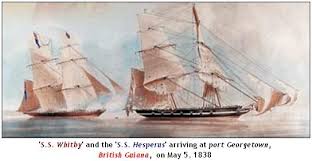
With the abolition of slavery in 1834 and the end of the apprenticeship scheme in 1838, the mass exodus of ex-slaves from plantations across the British Empire created a dire need for a regular and reliable supply of labor. On May 5, 1838, the first group of about 400 Indian indentured laborers, on a five-year contract, arrived in British Guiana on the sailing ships, Whitby and Hesperus. By 1917, their numbers totaled over 238,000 Indians, comprising 42 percent of the colony’s population. Only 65,538 returned to India on terminating their contract. Janet Naidu’s grandparents from Tamil Nadu were among those who arrived on the SS Ganges on November 8, 1915.

Sailships Whitby and Hesperus arriving at Port Georgetown - British Guiana - May 5, 1838

Born in the village of Covent Garden, East Bank Demerara, Naidu was the seventh of eight children. Like his parents, her father was a cane cutter. Her mother sold home-grown, green vegetables in the market.

In “Destination” from her poetry collection, Rainwater (2005), Naidu conjures the immigrants’ fearsome voyage across the ocean for an unknown destination. Continue reading →

“The Statutes of Man” by Brazilian Poet Thiago de Mello

05 Sunday Mar 2017

Posted by Rosaliene Bacchus in Poetry

≈ 29 Comments

Tags

Brazilian Poet Thiago de Mello, Manaus/Brazil, Os Estatutos do Homem, The Statutes of Man

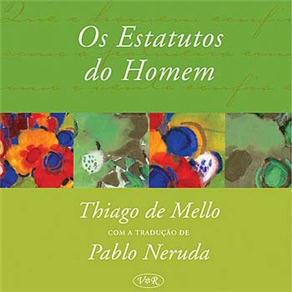
book-cover-the-statutes-of-man-by-thiago-de-mello-translated-by-pablo-neruda

Book Cover: Os Estatutos do Homem (The Statutes of Man) by Thiago de Mello
Photo Credit: Casas Bahia, Brazil


My Poetry Corner March 2017 features the poem “The Statutes of Man” (Os Estatutos do Homem) by Brazilian poet Thiago de Mello, born in 1926 in the State of Amazonas of Northern Brazil.

Growing up among Brazil’s exploited working class, Thiago de Mello devoted his poetry to addressing freedom, human dignity, and other social causes. When the military coup occurred in Brazil in 1964, he was the Cultural Attaché at the Brazilian Embassy in Santiago, Chile (1961-1964), where he became close friends with Pablo Neruda. He responded to the junta’s repressive, extra-constitutional decrees with his most famous poem, “The Statutes of Man.”

After resigning his overseas post and returning to Brazil, he was exiled in 1968 for denouncing the oppressive military dictatorship government (1964-1985). During his nine years in exile, he lived in Chile, Argentina, Portugal, France, and Germany. Continue reading →

“The Place of No Dreams” – Poem by Caribbean-American Poet Lauren K. Alleyne

05 Sunday Feb 2017

Posted by Rosaliene Bacchus in Poetry

≈ 18 Comments

Tags

American Immigrant Family Detention Centers, “The Place of No Dreams” by Lauren K. Alleyne, Caribbean-American Poet, Difficult Fruit by Lauren K. Alleyne, Overcoming adversity, Power of imagination

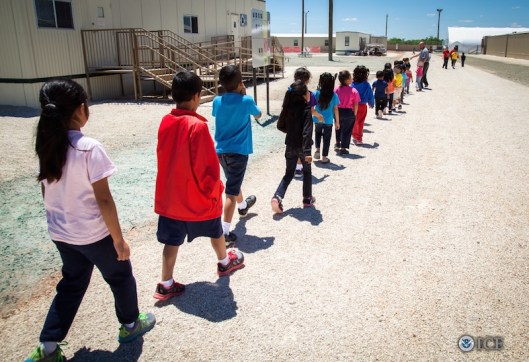
immigrant-children-at-dilley-detention-center-july-2015


My Poetry Corner February 2017 features the poem “The Place of No Dreams” by Lauren K. Alleyne, a Caribbean-American poet born in the twin-island nation of Trinidad & Tobago. She is an Associate Professor of English at James Madison University and Assistant Director of the Furious Flower Poetry Center.

Armed with her dreams and a scholarship from St. Francis College in Brooklyn Heights, Lauren Alleyne left home in 1997 for New York City. After completing a Bachelor of Arts in English Literature, she pursued a Masters of Arts in English and Creative Writing at Iowa State University, graduating in 2002. Three years later, while working for her Master of Fine Arts in Creative Writing (Poetry), she also earned a Graduate Certificate in Feminist, Gender, and Sexuality Studies from Cornell University.

Her poems and essays, published in several journals and anthologies, have gained several prizes and awards. Her first collection of poetry, Difficult Fruit, was published by Peepal Tree Press in 2014. Continue reading →

Passage from Warrior of the Light: A Manual by Paulo Coelho

08 Sunday Jan 2017

Posted by Rosaliene Bacchus in Poetry

≈ 22 Comments

Tags

Brazilian lyricist & novelist Paulo Coelho, Preparing for life's battles, Rio de Janeiro/Brazil, Warrior of the Light: A Manual

warrior-of-the-light

My Poetry Corner January 2017 features a passage from Warrior of the Light: A Manual by Brazilian lyricist and novelist, Paulo Coelho, born in 1947 in Rio de Janeiro, Southeast Brazil. While Coelho’s background as a songwriter endows his prose with an engaging lyricism, the featured work is not a poem.

Warrior of the Light: A Manual, published in 1997, is written in the form of short philosophical passages. Drawing on his own life experiences and ancient Eastern wisdom, Coelho invites each one of us to become a Warrior of the Light: someone capable of understanding the miracle of life, of fighting to the last for something he believes in.

This is not a normal year. We must prepare ourselves to enter the battlefield to defend our civil and human rights under threat.

Every Warrior of the light has felt afraid of going into battle.
Continue reading →

“If I Had A Hammer” by Pete Seeger & Lee Hays

04 Sunday Dec 2016

Posted by Rosaliene Bacchus in Poetry, Uncategorized

≈ 27 Comments

Tags

2016 Nobel Prize for Literature, Bob Dylan, Georgetown/Guyana, Lee Hays, Love trumps hate, Pete Seeger, Peter Paul & Mary, Social struggle for justice and freedom, Trini Lopez

us-post-election-2016-stop-hate-crimes-against-muslims

U.S. Post-Election 2016 – Stop Hate Crimes – Muslim Lives Matter
Photo Credit: Quartz.com


In keeping with my end-of-year tradition, I feature a song on my Poetry Corner December 2016. Bob Dylan’s award of the 2016 Nobel Prize in Literature prompted my choice. In the uncanny way that our memory weaves songs and events into our lived experiences, the song “If I Had A Hammer” forced its way to the frontline and hammered for attention. I discovered that Bob Dylan didn’t write this song. We owe this tribute to America’s folk singers and social activists Pete Seeger and Lee Hays who wrote and recorded it in 1949.

If I had a hammer
I’d hammer in the morning
I’d hammer in the evening
All over this land
I’d hammer out danger
I’d hammer out a warning
I’d hammer out love between
My brothers and my sisters
All over this land

Owing to the political controversy surrounding the lyrics and Seeger’s connection with the Communist Party, the song disappeared from public radio and TV. But folk songs with an enduring message never die.

During the Civil Rights Movement and anti-Vietnam War rallies of the 1960s, the song surfaced anew. With a new melody and the harmonized voices of the folk singing trio, Peter, Paul & Mary, the song soared to the #10 position of the top charts in October 1962. Eleven months later, the Latin-tempo rendition by Trini Lopez catapulted the song to #3.

I was a kid when the song hit the top charts in my home-town Georgetown in what was then British Guiana. With its feisty beat and repetitive lyrics, the song became an instant hit among us kids. We banged out the rhythm with sticks on pots and other makeshift drums.

It’s the hammer of justice
It’s the bell of freedom
It’s a song about love between
My brothers and my sisters
All over this land

The years leading up to our country’s independence from Great Britain in May 1966 were dark days in our small world on the shores of South America. On winning the 1961 General Elections, the East Indian left-wing socialist party gained the right to lead the colony to independence. This development troubled Uncle Sam. After Fidel Castro had seized power in Cuba, the Americans feared the spread of communism in their backyard. Those were the days of Cold War I.

With financial support from Uncle Sam, the opposition parties incited demonstrations and strikes across the country. The fire that razed the capital’s commercial district on February 16, 1962, was just the beginning of the racial/ethnic struggle between the leadership of the majority black and East Indian populations for supremacy in the emerging nation.

Today in America, our President-elect has unleashed the demons of bigotry, misogyny, and xenophobia all over this land. The struggle continues. Once again, we must hammer out our need for justice, freedom, and love.

See the complete song “If I Had A Hammer,” learn more about Pete Seeger and Lee Hays, and listen to Trini Lopez’s rendition of the song at my Poetry Corner December 2016.

On Gratitude by Brazilian Poet Maria Cristina Gama de Figueiredo

06 Sunday Nov 2016

Posted by Rosaliene Bacchus in Poetry

≈ 15 Comments

Tags

Brazilian Poet Maria Cristina Gama de Figueiredo, Everything is nature, Gratitude, Nature is life, Sergipe/Brazil

cavalo-pavao-oil-painting-by-maria-cristina-gama-de-figueiredo-1998

Cavalo Pavão (Peacock Horse) 1998
Oil Painting by Maria Cristina Gama de Figeiredo
Photo Credit: CristinaGamaEscritora Blogspot


My Poetry Corner November 2016 features a poem on gratitude by Brazilian poet, painter, and philosopher Maria Cristina Gama de Figueiredo (1964-2010), born in Aracaju, the capital of Sergipe in Northeast Brazil.

Very little about the life of the poet is available online. She died at the relatively young age of forty-six years. Newspaper articles about her passing don’t state the cause of death. Her producer for more than twelve years defined her “as a restless soul who managed to transform her pain into art.” Was her pain emotional, physical, or both? I don’t know.

The journalist and historian Luiz Antonio Barreto (Sergipe/Brazil, 1944-2012) noted that Maria Cristina Gama always stood out for her irreverent and strong personality revealed in her writings, by thinking of poetry “with reflection that goes beyond language to become an instrument that art brings to the cultural dialogue of peoples.”

Continue reading →

“The Body Politic” – Poem by Caribbean Poet Nicholas Damion Alexander

02 Sunday Oct 2016

Posted by Rosaliene Bacchus in Poetry

≈ 16 Comments

Tags

Caribbean Poet, Jamaican Poet Nicholas Damion Alexander, Systemic Racism, The body politic, War on Terror

racism-is-systemic

Systemic Racism
Source: Common Dreams


My Poetry Corner October 2016 features the poem “The Body Politic” by Nicholas Damion Alexander, poet and teacher of English and Philosophy from the Caribbean island of Jamaica.

Alexander’s work first caught my attention with “My Mother’s Salt” published in the anthology of 100 Calabash Poets, So Much Things To Say (Akashic Books, 2014). In the first of four stanzas, we learn that the poet is of mixed ethnicity – union of a black mother and white father that brought diversity to their lives.

My mother cooked with salt,
flavoring our lives
with the spice of her choice…
A white grain from the sea
that added new worlds of taste
to children made of mixed spices.

But the union of the poet’s parents did not endure. In “The Love of a Father,” Alexander confesses that, with the passage of time, he has come to love his father more. (In the excerpt below, her refers to the poet’s mother.) Continue reading →

← Older posts
Newer posts →

Subscribe

  • RSS - Posts
  • RSS - Comments

Archives

  • January 2026
  • November 2025
  • October 2025
  • September 2025
  • August 2025
  • July 2025
  • June 2025
  • May 2025
  • April 2025
  • March 2025
  • February 2025
  • January 2025
  • December 2024
  • November 2024
  • October 2024
  • September 2024
  • August 2024
  • July 2024
  • June 2024
  • May 2024
  • April 2024
  • March 2024
  • February 2024
  • January 2024
  • December 2023
  • November 2023
  • October 2023
  • September 2023
  • August 2023
  • July 2023
  • June 2023
  • May 2023
  • April 2023
  • March 2023
  • February 2023
  • January 2023
  • December 2022
  • November 2022
  • October 2022
  • September 2022
  • August 2022
  • July 2022
  • June 2022
  • May 2022
  • April 2022
  • March 2022
  • February 2022
  • January 2022
  • December 2021
  • November 2021
  • October 2021
  • September 2021
  • August 2021
  • July 2021
  • June 2021
  • May 2021
  • April 2021
  • March 2021
  • February 2021
  • January 2021
  • December 2020
  • November 2020
  • October 2020
  • September 2020
  • August 2020
  • July 2020
  • June 2020
  • May 2020
  • April 2020
  • March 2020
  • February 2020
  • January 2020
  • December 2019
  • November 2019
  • October 2019
  • September 2019
  • August 2019
  • July 2019
  • June 2019
  • May 2019
  • March 2019
  • February 2019
  • January 2019
  • December 2018
  • November 2018
  • October 2018
  • September 2018
  • August 2018
  • July 2018
  • June 2018
  • May 2018
  • April 2018
  • March 2018
  • February 2018
  • January 2018
  • December 2017
  • November 2017
  • October 2017
  • September 2017
  • August 2017
  • July 2017
  • June 2017
  • May 2017
  • April 2017
  • March 2017
  • February 2017
  • January 2017
  • December 2016
  • November 2016
  • October 2016
  • September 2016
  • August 2016
  • July 2016
  • June 2016
  • May 2016
  • April 2016
  • March 2016
  • January 2016

Categories

  • About Me
  • Anthropogenic Climate Disruption
  • Brazil
  • Economy and Finance
  • Family Life
  • Festivals
  • Guyana
  • Health Issues
  • Human Behavior
  • Immigrants
  • Nature and the Environment
  • People
  • Philosophy
  • Poetry
  • Poetry by Rosaliene Bacchus
  • Recommended Reading
  • Relationships
  • Religion
  • Religion & Spirituality
  • Reviews – The Twisted Circle: A Novel by Rosaliene Bacchus
  • Reviews – Under the Tamarind Tree: A Novel by Rosaliene Bacchus
  • Save Our Children
  • Social Injustice
  • Technology
  • The Twisted Circle: A Novel by Rosaliene Bacchus
  • The Writer's Life
  • Uncategorized
  • Under the Tamarind Tree: A Novel by Rosaliene Bacchus
  • United States
  • Urban Violence
  • Women Issues
  • Working Life

Blogroll

  • Angela Consolo Mankiewicz
  • Caribbean Book Blog
  • Dan McNay
  • Dr. Gerald Stein
  • Foreign Policy Association
  • Guyanese Online
  • Writer's Digest
  • WritersMarket: Where & How to Sell What You Write

Meta

  • Create account
  • Log in
  • Entries feed
  • Comments feed
  • WordPress.com

Enter your email address to subscribe to this blog and receive notifications of new posts by email.

Join 3,233 other subscribers

Blog at WordPress.com.

Privacy & Cookies: This site uses cookies. By continuing to use this website, you agree to their use.
To find out more, including how to control cookies, see here: Cookie Policy
  • Subscribe Subscribed
    • Three Worlds One Vision
    • Join 3,233 other subscribers
    • Already have a WordPress.com account? Log in now.
    • Three Worlds One Vision
    • Subscribe Subscribed
    • Sign up
    • Log in
    • Report this content
    • View site in Reader
    • Manage subscriptions
    • Collapse this bar
 

Loading Comments...