• About

Three Worlds One Vision

~ Guyana – Brazil – USA

Three Worlds One Vision

Category Archives: Poetry

“The Leash” – Poem by Ada Limón

03 Sunday Mar 2019

Posted by Rosaliene Bacchus in Poetry

≈ 37 Comments

Tags

America’s National Anthem, American poet Ada Limón, “The Leash” by Ada Limón, Infertility, The Carrying: Poems by Ada Limón (2018), Womanhood/Motherhood

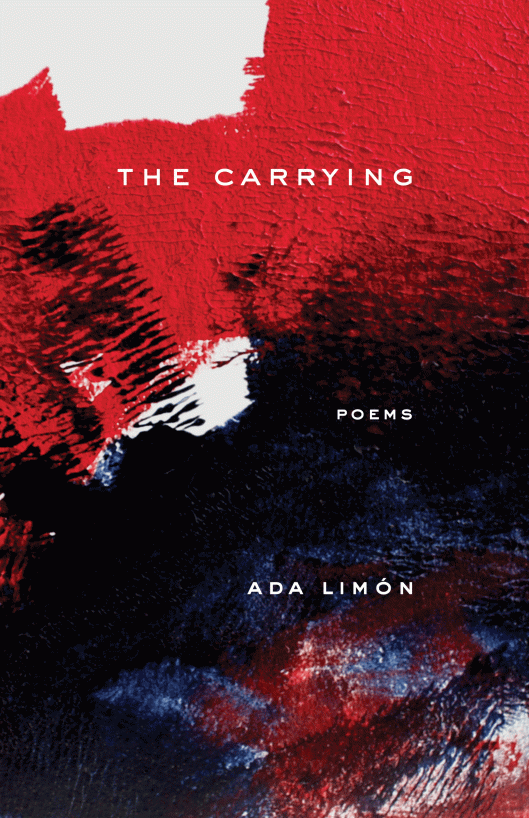
Front Cover The Carrying: Poems by Ada Limón
Milkweed Editions – Minnesota/USA – August 2018
Photo Credit: Ada Limón


My Poetry Corner March 2019 features the poem “The Leash” from the poetry collection, The Carrying: Poems, by Ada Limón. Native of Sonoma, California, Limón is a poet, writer, and teacher. After earning an MFA in creative writing from the University of New York, she spent the next ten years working for various magazines, such as Martha Stewart Living, GQ, and Travel + Living. In 2011, she moved to Lexington, Kentucky, to be close to her now-husband, Lucas, a business owner in the horse racing industry. In addition to working as a freelance writer, she serves on the faculty of the low-residency MFA program at Queens University of Charlotte (NC) and the online and summer programs for the Provincetown Fine Arts Work Center (MA).

In an interview with the Lexington Herald-Leader magazine (August 2018), Limón says that The Carrying, her fifth book of poetry, “is incredibly personal. It’s more political than my other books… It deals with the body, with fertility. It also deals with what it is to do the day-to-day work of surviving.”

In her poem, “The Vulture & The Body,” she shares her struggle with infertility. In coming to terms with the failure of fertility treatment, she asks:

What if, instead of carrying
a child, I am supposed to carry grief? Continue reading →

“There are Many Traps in the World” by Brazilian Poet Ferreira Gullar

03 Sunday Feb 2019

Posted by Rosaliene Bacchus in Poetry

≈ 44 Comments

Tags

Brazil Military Dictatorship (1964-1987), Brazilian poet Ferreira Gullar (1930-2016), Inequality, Jeff Bezos, No Mundo Há Muitas Armadilhas (There are Many Traps in the World) by Ferreira Gullar, Oppression and Injustice, Poema Sujo (Dirty Poem) by Ferreira Gullar, São Luís/Maranhão/Northeast Brazil

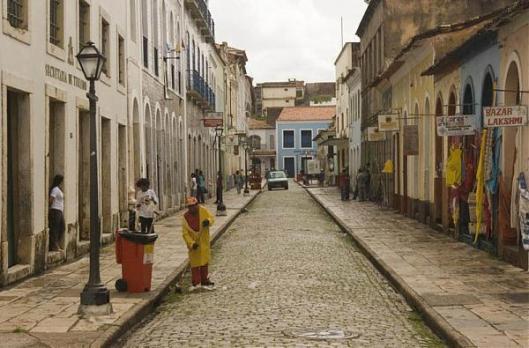
Historical Center of São Luís – Maranhão – Brazil
UNESCO World Heritage Site: Portuguese colonial architecture
Photo Credit: Kamaleao


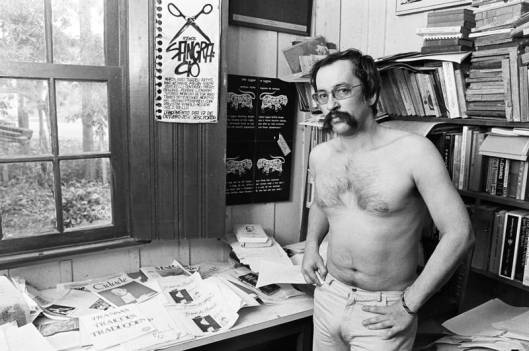
My Poetry Corner February 2019 features the poem “There are Many Traps in the World” (No Mundo Há Muitas Armadilhas) by Ferreira Gullar (1930-2016), a Brazilian poet, playwright, art critic, and essayist. Born in São Luís, capital of the northeastern state of Maranhão, he was the fourth child of eleven siblings of a poor, working-class family.

As a young man, while earning a living as a radio announcer and editor of literary magazines, Gullar frequented poetry readings and devoured books of poetry by the best of Brazilian and foreign poets. At nineteen, he published his first poetry collection. But he saw no future in his suffocating, small-town life in the impoverished northeast region. He fled to Rio de Janeiro in the early 1950s, where he worked as a journalist for magazines and newspapers.

Beginning in 1962, his work reflected his concern about combating oppression and social injustice. After becoming a member of the communist party, he joined the struggle against the military dictatorship (1964-1985). Following his arrest and imprisonment in 1968, he went into exile in 1971. For the next six years, he lived in Moscow, Santiago, and Buenos Aires. In Buenos Aires in 1975, fearful for his safety in the wake of Argentina’s military takeover (1976-1983), he wrote his best-known work, “Dirty Poem” (Poema Sujo).

Ferreira Gullar among millions of students and other demonstrators gathered to protest against military dictatorship – Rio de Janeiro – Brazil – June 26, 1968
Photo Credit: Folha de São Paulo


In the opening stanza of the featured poem, “There are Many Traps in the World,” Gullar makes a simple declaration:

There are many traps in the world
and what is a trap could be a refuge
and what is a refuge could be a trap 

Some traps that we humans perceive as refuge come to mind: religion, cults, Facebook, and narcotic drugs. Continue reading →

“Unwritten Poem” – Poem by Barbados’ First Poet Laureate Esther Phillips

06 Sunday Jan 2019

Posted by Rosaliene Bacchus in Poetry

≈ 39 Comments

Tags

“Unwritten Poem” by Esther Phillips, Barbados/Caribbean Region, Barbados’ First Poet Laureate Esther Phillips, Caribbean Poetry, Human Relationships, Mother/Son-in-law relationship, The Stone Gatherer by Esther Phillips

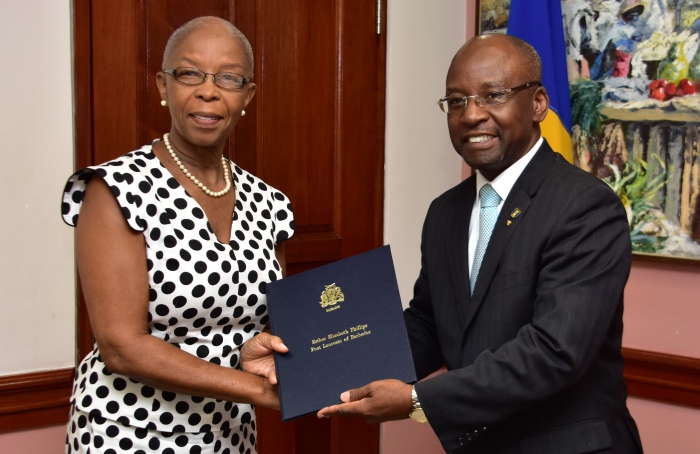
minister of culture appoints poet esther phillips as barbados' first poet laureate - february 2018

Minister of Culture appoints Poet Esther Phillips as Barbados’ first Poet Laureate – February 2018
Photo Credit: Barbados Government Information Services


My Poetry Corner January 2019 features the poem “Unwritten Poem” from the poetry collection, The Stone Gatherer, by Esther Phillips, a poet and educator born in Barbados, where she still resides. In February 2018, she was appointed the first Poet Laureate of the Caribbean island-nation.

After attending the Barbados Community College at the University of the West Indies Cave Hill Campus, she won a James Michener fellowship to the University of Miami where, in 1999, she gained an MFA degree in Creative Writing. Her poetry collection/thesis won the Alfred Boas Poetry Prize of the Academy of American Poets.

In 2001, she won the leading Barbadian Frank Collymore Literary Endowment Award. Years later, the third of her three well-received poetry collections, Leaving Atlantis (2015), won the Governor General’s Award for Literary Excellence.

Phillips is a Sunday columnist of the Nation newspaper and editor of Bim: Arts for the 21st Century, a 2007 revival of the seminal Caribbean literary and arts magazine, first published in 1942. In 2012, she formed Writers Ink Inc. and, together with its members, the Bim Literary Festival & Book Fair. Continue reading →

“Humanity” by Afro-Brazilian Writer & Poet Carolina Maria de Jesus

04 Sunday Nov 2018

Posted by Rosaliene Bacchus in Brazil, Poetry

≈ 72 Comments

Tags

Afro-Brazilian writer & poet, Carolina Maria de Jesus, Child of the Dark by Carolina Maria de Jesus, Favela de Canindé/São Paulo, Minas Gerais/Brazil, Poem “Humanity” by Carolina Maria de Jesus, Poema “Humanidade” por Carolina Maria de Jesus, Quarto de Despejo (Trash Room) by Carolina Maria de Jesus, São Paulo/Brazil

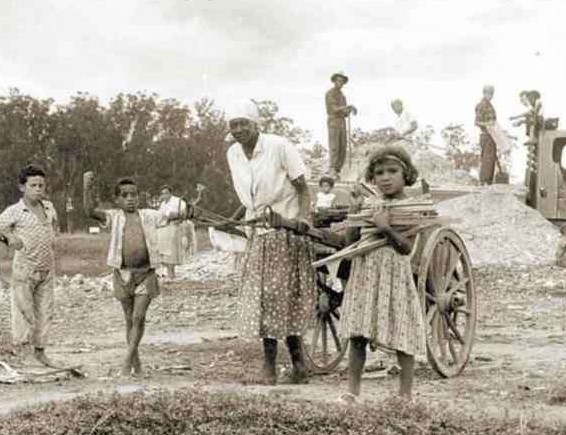
Carolina Maria de Jesus - Favela of Caninde - Sao Paulo - Before publication of first book

Carolina Maria de Jesus with cart – Favela of Canindé – São Paulo (circa 1958)
Photo Credit: Jornal Estado de Minas (Collection Audálio Dantas)


My Poetry Corner November 2018 features the poem “Humanity” (Humanidade) by Afro-Brazilian writer and poet, Carolina Maria de Jesus (1914-1977), born in a rural community in Minas Gerais, Southeast Brazil.

An illegitimate child of a sharecropping family, Carolina was treated as an outcast. After just two years in primary school, when she learned to read and write, she developed a love for reading. She dreamed of becoming a writer.

“The book…fascinates me,” de Jesus writes in My Strange Diary (Meu Estranho Diário). “I was raised in the world. Without maternal guidance. But books guided my thinking. Avoiding the abysses that we encounter in life. Blessed the time I spent reading. I came to the conclusion that it’s the poor who must read. Because the book, it’s the compass that we have to guide man into the future…”

In 1930, de Jesus moved with her family to the State of São Paulo, where she worked as a washerwoman and, later, as a housemaid. After her mother’s death in 1937, she moved to the state capital, an industrial megalopolis. In 1948, she became pregnant for a Portuguese sailor. After he abandoned her, she moved to the favela (slum) of Canindé. Two other children followed, for different fathers.

De Jesus eked out a living: working as a housemaid and scavenging for paper and scrap metal around Canindé. An independent woman, she refused to marry because of the domestic violence she witnessed around her. Writing on blank pages of used notebooks she found in trash cans, she began recording her day-to-day existence as one of society’s “discarded” and marginalized people.

In her first entry, she writes: “July 15, 1955. The birthday of my daughter Vera Eunice [born 1953]. I wanted to buy a pair of shoes for her, but the price of food keeps us from realizing our desires. Actually we are slaves to the cost of living…”
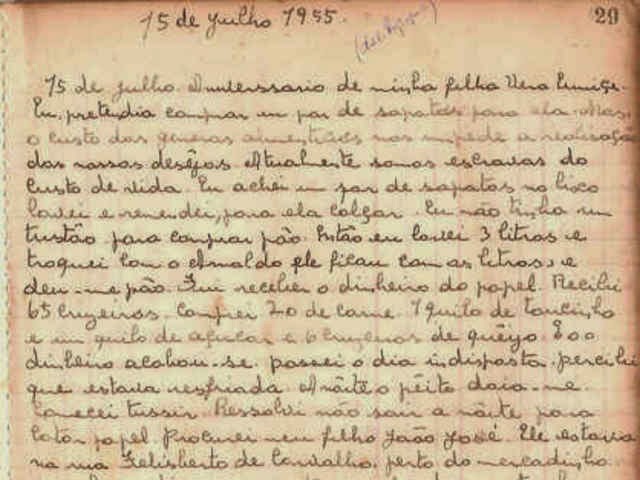
Carolina Maria de Jesus - Manuscript 15 July 1955

Carolina Maria de Jesus – Manuscript of Journal – July 15, 1955
Photo Credit: Templo Cultural Delfos


Her stories, poems, and journal entries describe her struggle to rise above poverty and the ever-present specter of hunger. She calls attention to the social problems they face—prostitution, adultery, incest, alcoholism, physical violence, and foul language—and the consequences in their lives. She writes of the racial injustice and discrimination heaped on the poor and blacks in the favelas. She notes the empty promises made by politicians.

In an untitled poem from her journal, de Jesus requests:

Don’t say that I was trash,
that I lived on the margin of life.
Say that I was looking for work,
but I was always slighted.
Tell the Brazilian people
that my dream was to be a writer,
but I did not have money
to pay for a publisher.

A breakthrough came in 1958 when Carolina de Jesus met the young journalist, Audálio Dantas, during his visit to the favela for an assignment. On learning about her journal, he recognized its uniqueness and sociological importance. Through Dantas’ influence, edited excerpts were published in a magazine. Their popularity among readers led to the publication of her journal in 1960 as a book titled, Quarto de Despejo (Trash Room).
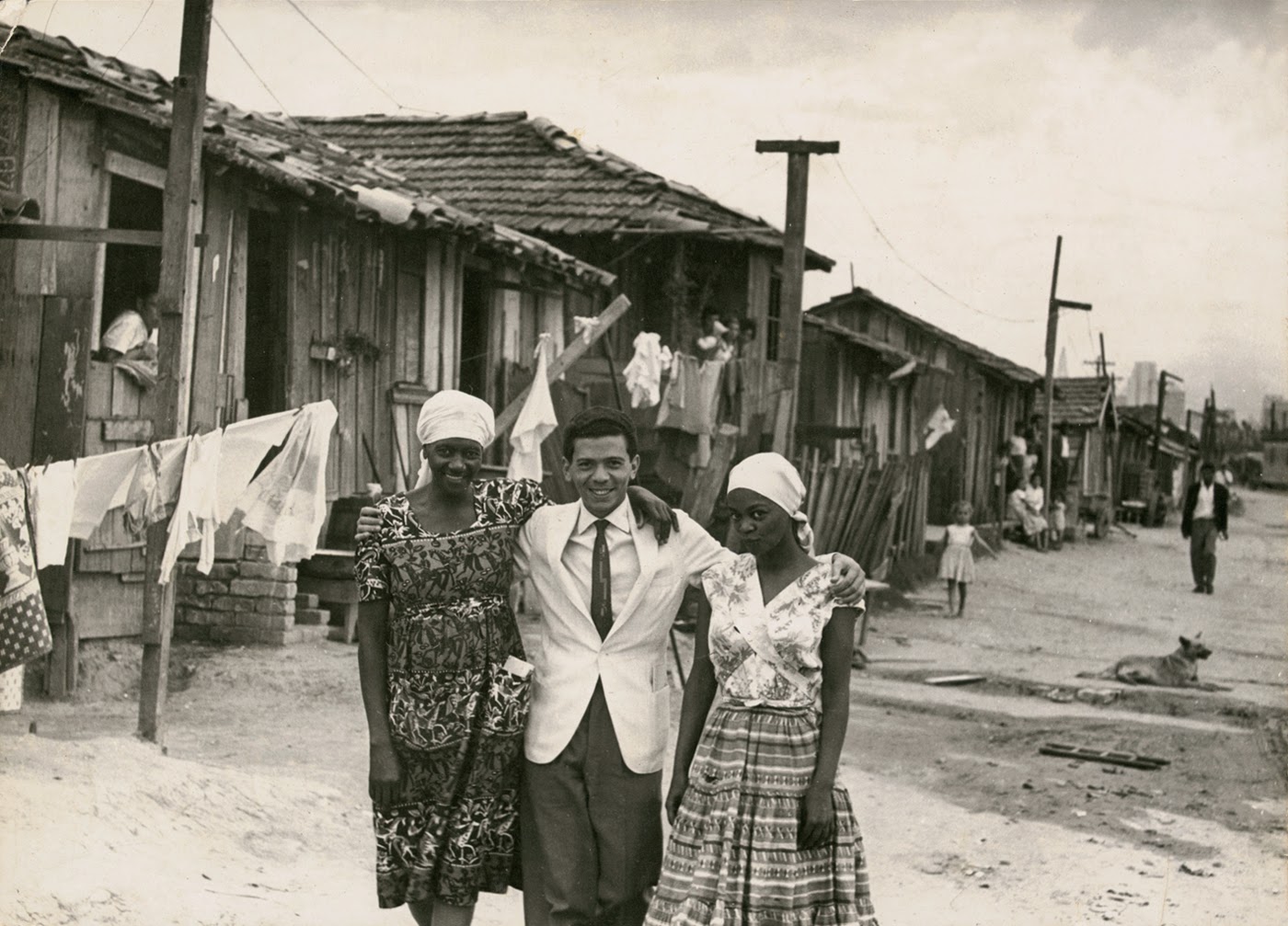
Carolina Maria de Jesus, Audálio Dantas e Ruth de Souza na Favela do Canindé. São Paulo, 1961

From left to right: Carolina Maria de Jesus, Journalist Audálio Dantas, and Actress Ruth de Souza – Favela of Canindé – São Paulo – 1961
Photo Credit: Collection Audálio Dantas


When asked about the idea for the name of her book, de Jesus told the interviewer: “In 1948, when they began to demolish one-story houses to construct apartment buildings, we, the poor, that lived in collective housing units, were trashed and we began living under bridges. That’s why I call the favela the trash room for a city. We, the poor, are old junk.”

Trash Room became an instant bestseller, selling 10,000 copies within the first three days and 90,000 more copies over the next six months. The English version, Child of the Dark, followed in 1962. The book soon drew international attention. But, to the Brazilian literary elite, it lacked linguistic quality. Three more books published in the 1960s received little attention.
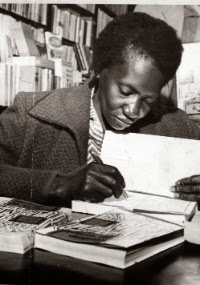
Carolina Maria de Jesus durante noite de autógrafos do lançamento de seu livro Quarto de Despejo, São Paulo, em 1960.

Carolina Maria de Jesus signing her book Quarto de Despejo – São Paulo – 1960
Photo Credit: Templo Cultural Delfos


In her poem, “Many fled on seeing me,” published posthumously (1996) in Personal Anthology, a poetry collection, de Jesus laments:

It was paper I collected
To pay for my living
And in the trash I found books to read
How many things I wanted to do
I was hindered by prejudice
When I die I want to be born again
In a country where blacks predominate

With her book royalties, Carolina de Jesus bought a house in a middle-class neighborhood. Admiration turned to envy. Some accused her of being ambitious and uncharitable.

The featured poem, “Humanity,” published posthumously in My Strange Diary, is composed of four stanzas with a rhyme scheme aabccb. De Jesus expresses her disillusions with humankind: the perversity, wickedness, greed, tyrannical…egoists, and hypocrisy.

After knowing humanity
its perversities
its ambitions
I have been getting older
and losing
the illusions

[…]

When I die…
I don’t want to be born again
It’s horrible, to endure humanity
that has a noble appearance
that conceals
its worst qualities

Unable to adjust to life among the middle-class, de Jesus moved to the countryside where she lived in poverty until the end of her life. Her passing in 1977 went virtually unnoticed. She left behind more than 5,000 handwritten pages that contained seven novels, over 60 texts of chronicles, fables, autobiography and stories, over 100 poems, and four plays.

To read the featured poem in its original Portuguese and learn more about the work of Carolina Maria de Jesus, go to my Poetry Corner November 2018.

NOTE: All translations from Portuguese to English done by Rosaliene Bacchus.


“Clan” – Poem by Jamaica-born Colin Channer

30 Sunday Sep 2018

Posted by Rosaliene Bacchus in Poetry

≈ 39 Comments

Tags

“Clan” by Colin Channer, Father-son relationship, Fatherhood, Jamaica Constabulary Force, Jamaica/Caribbean Region, Jamaica’s Morant Bay Rebellion 1865, Novelist and Poet Colin Channer, Police violence, Providential by Colin Channer, The policeman

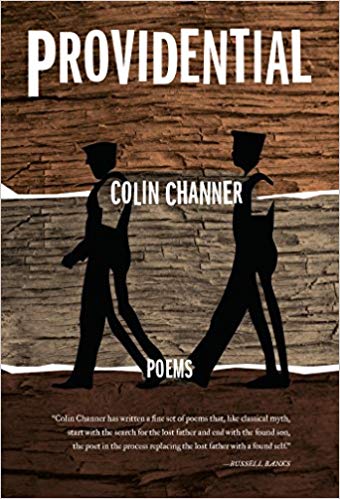
Front Cover - Providential - Poems by Colin Channer

Front Cover: Providential: Poems by Colin Channer
Photo Credit: Akashic Books


My Poetry Corner October 2018 features the poem “Clan” from the poetry collection, Providential, by Colin Channer, a novelist and poet born in Kingston, Jamaica. At eighteen, upon completion of high school, he migrated to New York to pursue a career in journalism. He earned a B.A. in Media Communications from Hunter College of the City University of New York. Father of two, he currently lives in New England.

When Channer was six years old, his father, a policeman, left the family, forcing his mother to work two jobs. After her daytime job as a pharmacist at a local hospital, she worked nights in a drugstore. Channer’s collection explores the violence of policing that ruined his father, their fractured relationship, and the challenges of being a better father to his own teenage son.

Channer’s teenage years contrasts with that of his American-born son. In his poem “Mimic,” he observes his son, born with the ears of a mimic: 

Makonnen, Brooklyn teenager
with Antillean roots
replanted in Rhode Island,
a state petiter than the country
where my navel string was cut.

After guiding his son through the roots of the civil war in Liberia – founded on the coast of Guinea / by ex-chattel – Channer reflects on his kinsmen in Jamaica.

How they discuss a slaughter
with ease, by rote,
never as something spectacular,
absurd. And I belong to them,
on two sides, for generations,
by blood. 

My kinsmen aren’t poets.
They’re cops. Continue reading →

“Mary Comes Down” – Poem by Jeannine M Pitas

02 Sunday Sep 2018

Posted by Rosaliene Bacchus in Poetry

≈ 30 Comments

Tags

American poet Jeannine M Pitas, “Mary Comes Down” by Jeannine M Pitas, Immigrants, Mary Mother of Jesus, Migrant and refugee women, Thank You For Dreaming by Jeannine M Pitas (2018), US Immigration

Immigrant Women in Line for Inspection at Ellis Island - New York

Photo Credit: The Newberry Digital Collections for the Classroom


My Poetry Corner September 2018 features the poem “Mary Comes Down” from the poetry collection Thank You For Dreaming by Jeannine M. Pitas. Native of Buffalo, New York, Pitas is a poet, writer, teacher, and Spanish-English literary translator. She holds a PhD in Comparative Literature from the University of Toronto, Canada. She currently lives in Dubuque, Iowa, where she is an Assistant Professor of English and Spanish at the University of Dubuque.

Pitas dedicates the poems in this collection “to those who dream.” She writes in her poem, “thank you for dreaming”:

you have made it to this adopted country
with your heart intact
and you will use it to find people
like you, once silenced –
touched and held
by your dreams

In “Just after my mother tells me she voted for Trump,” Pitas questions her mother’s xenophobia. Had her mother forgotten that she had sent Jeannine to Polish Saturday School and that Jeannine’s Polish great-grandmother had refused to speak English?

America First, American carnage, make America
great again, pass the ban, build the wall,
Mama, Mamusia, tell me –
Where on earth do you think we came from?
Who the hell can we say we are?

Rejecting the divisive politics of xenophobia and hate, Pitas seeks connection with the Other. “I want to touch your life with mine,” she repeats twice in her poem, “To an Immigrant.” Continue reading →

“International Congress of Fear” by Brazilian Poet Carlos Drummond de Andrade

05 Sunday Aug 2018

Posted by Rosaliene Bacchus in Brazil, Poetry

≈ 25 Comments

Tags

Brazilian poet, In the Middle of the Road (No Meio do Caminho) by Carlos Drummond de Andrade, International Congress of Fear (Congresso Internacional do Medo) by Carlos Drummond de Andrade, Living in fear, Minas Gerais/Brazil, Square Dance (Quadrilha) by Carlos Drummond de Andrade, War on Terror

Statue of Carlos Drummond de Andrade - Copacabana - Rio de Janeiro

Bronze Statue of Carlos Drummond de Andrade – Copacabana – Rio de Janeiro – Brazil
Photo Credit: Viagens Vamos Nessa! (Alexandre Macieira/Riotur)


My Poetry Corner August 2018 features the poem “International Congress of Fear” (Congresso Internacional do Medo) by Brazilian poet, journalist, and literary critic Carlos Drummond de Andrade (1902-1987), born in Itabira in Minas Gerais, Southeast Brazil. Considered one of the most influential Brazilian poets of the twentieth century, Drummond remains well-loved by the people for his humility and concern with the plight of modern man and struggle for freedom and dignity. 

Home of Carlos Drummond de Andrade - Itabira - Minas Gerais - Brazil

Home of Carlos Drummond de Andrade – Itabira – Minas Gerais – Brazil
Photo Credit: Passeios.org


At nineteen, Drummond began his writing career as a columnist for the Diário de Minas newspaper. At his parents’ insistence, he qualified as a pharmacist in 1925 but never practiced the profession. Instead, he cofounded a literary journal and joined the Brazilian Modernist movement. After entering the public service in 1934, he was transferred to Rio de Janeiro where he worked in the Ministry of Education & Public Health, then the National Historical and Artistic Heritage Service. Continue reading →

“Broken System” – Spoken Word Poem by Guyanese Poet Renata Burnette

01 Sunday Jul 2018

Posted by Rosaliene Bacchus in Poetry

≈ 36 Comments

Tags

Domestic violence, Georgetown/Guyana, Guyanese Poet Renata Burnette, Guyanese Spoken Word Poet, Sexual harassment

houston-home-50

Victim of domestic violence with her mother – Guyana


My Poetry Corner July 2018 features the spoken word poem, “Broken System,” by young Guyanese poet Renata Burnette. Residing in the capital, Georgetown, she is a second-year undergraduate at the University of Guyana, pursuing a degree in Communications.

Renata’s poetry calls attention to the daily struggles and issues of young Guyanese, especially those in their late teens and twenties. She gained national attention in August 2016 with her poem, “Dear Mr. President,” expressing her challenges in finding a job as an undergraduate.

In “Broken System,” published on Guyana’s Independence Day, May 26, 2018, the poet portrays a system that offers little to no protection to the country’s vulnerable youth.

We have 15-year-old girls being gang raped; boys being caught in the wrong place at the wrong time. Just children running away from their homes because the ones that are supposed to be protecting them, they’re now physically and sexually abusing them… These children, they have no faith in us because we have failed them…

Renata observes that the justice system fails these abused children by either condemning them to the juvenile penitentiary or returning them to their abusers. Further on, she raises the issue of drug dealing and the difficulty of finding work, even for someone with higher education.

So how do we fix the system, the same system that’s putting away our young men for selling or smoking weed, but we’re yet to curb the increase of lung cancer disease that’s mainly caused by tobacco smoking, also known as cigarette smoking. So what do we do? We put a warning label on the pack and just hope that it stops… And even when I graduate from one of the highest institutions in the land, they cannot guarantee me a job…with or without this degree. And you want to know why our young people are out here selling weed. Food for thought. Stay woke. See, plugs make more money than teachers make on their government salaries.

Without a pause, Renata addresses sexual harassment. No subject is taboo for our young poet.

And if you’re a woman in today’s society then sexual harassment is something that you’re almost guaranteed. It’s like a rite of passage, so be careful. Don’t wear anything loose, don’t appear to be too revealing, because when the man across the street shouts for you, calling you every single thing except your name, you better look… But really and truly all our tongues burn to say is just stay away from me. But we’re too scared because our system is broken; it’s backwards…

The system also fails victims of domestic violence. The police, the poet notes, not only show up until after the attack, but there’s also no justice for the woman.

And even though she’s the victim, there would be no justice for he [the abuser] knows people in high positions. You know, that can make a police report disappear regardless of how he acts. Those kind-a people in authority that have a knack for sweeping every single thing under the mat…

Like a maestro conducting an orchestra, the young poet controls the rising and falling rhythm with expressive hands. Without a script. Giving voice to the voiceless.

On America’s Independence Day, I offer these closing words of insight from our young Guyanese spoken word poet (emphasis mine):

If history has proven anything, it’s that the truth would always survive and, if needs be, it would bleed through crooked lines.

You can watch Renata Burnette’s performance on YouTube. For my complete transcript of “Broken System” and to learn more about the poet, go to my Poetry Corner July 2018.

CAPTIONED PHOTO
Victim of domestic violence with her mother, Guyana
In 2013, Natasha Houston’s husband killed their two children, slashed her arm and hand, then killed himself.
Photo Credit: WGVU News

“american child” – Poem by normal

03 Sunday Jun 2018

Posted by Rosaliene Bacchus in Poetry, United States

≈ 36 Comments

Tags

American Child by normal (2001), American poet normal, Blood on the Floor by normal (1999), Mass shootings

Four-year-old American child learns to us a machine gun

Four-year-old American child – in the age of the National Rifle Association – learns to use a machine gun
Photo Credit: ABC News Video (January 2014)


My Poetry Corner June 2018 features an excerpt from the poem “american child” by normal. Raised in Passaic, New Jersey, normal is a poet and registered nurse now retired and living in Saugerties, New York.

As a young poet in the early 1960s, he began reading his work at the Rafio Café in Greenwich Village, frequented by Beat poets and writers. Among the poets who influenced normal’s sensibilities is the American poet, e.e. cummings (1894-1962), whose use of low-case letters and minimal punctuation he emulates.

The following excerpts come from normal’s chapbooks, Blood on the Floor (1999) and American Child (2001).

His poem “blood on the floor” brings to mind America’s powerlessness to end mass shootings, stealing the future of our children.

don’t slip
there is blood on the floor.

blood of apathy
blood of the dispassionate
the ignoring
blood of those numbed by dumb
life
blood of those who pretend it
never happens / the cheerfully
humbled who go about it all
smiling.

Meanwhile, the raindrops are loaded / with the eyes of children.

The featured poem, “american child,” portrays Americans in all our glory and shame. Penned on Labor Day 2000, the poem begins with the plight of the American worker.

i am the child of america
the sierra madres are bleeding
i am america
the mad & the magnate marry
the factory wolf howls
i am america
the mantra rumbles with the kinds & the cripples.

Trappings of American life ring through the verses: dinty moore stew, soup kitchens, porno talkshows, paparazzi, honkytonk queen, sams club, home depot, tickertape parade, flophouse, and more.

Four stanzas speak of “death to” individuals, special groups, historical events, and man-made systems. Among the targets are lewis & clark, manifest destiny, trail of tears & of schemes, and the american dream. The poet also boots the capitalist, communist, anarchist, antichrist, and atheist. (I would like to add racist and misogynist.)

Apart from lewis & clark, normal mentions several other personalities that make up the American character: joe dimaggio, thomas jefferson, geronimo, benedict arnold, einstein, and chief joseph. (No shout out to Frederick Douglass or Martin Luther King?)   

In the following stanza, the poet captures the schizoid character of the American child and his impact on the world:

i am beauty
i am invention
i am wonder
i am the united fruit company
i am promontory point pikes peak & mai lie
i am the glory
i am the savior
i am the black tide of the acid sky

(mai lie instead of My Lai reframes the massacre in Vietnam.)

[…]

fool / genius // the kind of heaven & hell // the arithmetic eyes of the bureaucrat robot

Yet, for all his flaws, the American child is a fighter and survivor in a crazy world, as normal concludes in his final verses.

i am the feral infant dancing on the freakstage / of the final sunset // i am the child of america.

Much has changed over the past seventeen plus years since normal’s portrayal of the American child. How could he have foreseen Presidents Barack Obama and Donald Trump? I live in hope that an American child – rising from a bloody school floor; less feral and more inclusive – has now embarked on the path to the presidency.

To read the excerpt from the featured poem and learn more about the work of normal, go to my Poetry Corner June 2018.


“Poems for the Men of Our Time” by Brazilian Poet Hilda Hilst

06 Sunday May 2018

Posted by Rosaliene Bacchus in Poetry

≈ 30 Comments

Tags

“Poemas aos Homens do Nosso Tempo” por Hilda Hilst, “Poems for the Men of Our Time” by Hilda Hilst, Brazilian poet, Father-daughter relationship, Hilda Hilst Institute, São Paulo/Brazil

Entrance to Hilda Hilst Institute - Casa do Sol - Campinas - Sao Paulo - Brazil

Entrance to Hilda Hilst Institute – Casa do Sol – Campinas – São Paulo – Brazil


My Poetry Corner May 2018 features an excerpt from “Poems for the Men of Our Time” (Poemas aos Homens do Nosso Tempo) by Brazilian poet, playwright, and novelist Hilda Hilst (1930-2004), born in Jaú in the interior of São Paulo, Southeast Brazil. Soon after her birth, her mother moved with her to Santos, a coastal city and port. Her father wanted a lover, not a wife. Having a girl child was “bad luck,” he told her mother. Hilda grew up determined to prove him wrong.

Hilda was seven years old when her mother revealed the truth: Her father suffered from paranoid schizophrenia. Her father’s mental illness and his frequent internment over the years, until his death in 1966, had a profound effect on her poetry and fiction which often drew upon themes of intimacy and insanity with elements of magical realism.

I initiated dialogue a thousand times. It is hopeless.
I prepare and accept myself
Flesh and spirit undone. We could try,
My father, the unequal and tortured poem,
And embrace each other in silence. In secret.
~ Final stanza, “Of the joyful and very unhappy love – 1,” Exercises by Hilda Hilst, 2001.

Though her first love was poetry, like her father, Hilst followed her mother’s advice and studied law at the University of São Paulo (1948-1952). During this period, she published her first two poetry collections (1950 & 1951). After working for a year at an attorney’s office in São Paulo, she abandoned law for the writer’s life. Continue reading →

← Older posts
Newer posts →

Subscribe

  • RSS - Posts
  • RSS - Comments

Archives

  • May 2026
  • April 2026
  • March 2026
  • February 2026
  • January 2026
  • November 2025
  • October 2025
  • September 2025
  • August 2025
  • July 2025
  • June 2025
  • May 2025
  • April 2025
  • March 2025
  • February 2025
  • January 2025
  • December 2024
  • November 2024
  • October 2024
  • September 2024
  • August 2024
  • July 2024
  • June 2024
  • May 2024
  • April 2024
  • March 2024
  • February 2024
  • January 2024
  • December 2023
  • November 2023
  • October 2023
  • September 2023
  • August 2023
  • July 2023
  • June 2023
  • May 2023
  • April 2023
  • March 2023
  • February 2023
  • January 2023
  • December 2022
  • November 2022
  • October 2022
  • September 2022
  • August 2022
  • July 2022
  • June 2022
  • May 2022
  • April 2022
  • March 2022
  • February 2022
  • January 2022
  • December 2021
  • November 2021
  • October 2021
  • September 2021
  • August 2021
  • July 2021
  • June 2021
  • May 2021
  • April 2021
  • March 2021
  • February 2021
  • January 2021
  • December 2020
  • November 2020
  • October 2020
  • September 2020
  • August 2020
  • July 2020
  • June 2020
  • May 2020
  • April 2020
  • March 2020
  • February 2020
  • January 2020
  • December 2019
  • November 2019
  • October 2019
  • September 2019
  • August 2019
  • July 2019
  • June 2019
  • May 2019
  • March 2019
  • February 2019
  • January 2019
  • December 2018
  • November 2018
  • October 2018
  • September 2018
  • August 2018
  • July 2018
  • June 2018
  • May 2018
  • April 2018
  • March 2018
  • February 2018
  • January 2018
  • December 2017
  • November 2017
  • October 2017
  • September 2017
  • August 2017
  • July 2017
  • June 2017
  • May 2017
  • April 2017
  • March 2017
  • February 2017
  • January 2017
  • December 2016
  • November 2016
  • October 2016
  • September 2016
  • August 2016
  • July 2016
  • June 2016
  • May 2016
  • April 2016
  • March 2016
  • January 2016

Categories

  • About Me
  • Anthropogenic Climate Disruption
  • Brazil
  • Economy and Finance
  • Family Life
  • Festivals
  • Guyana
  • Health Issues
  • Human Behavior
  • Immigrants
  • Nature and the Environment
  • People
  • Philosophy
  • Poetry
  • Poetry by Rosaliene Bacchus
  • Recommended Reading
  • Relationships
  • Religion
  • Religion & Spirituality
  • Reviews – The Twisted Circle: A Novel by Rosaliene Bacchus
  • Reviews – Under the Tamarind Tree: A Novel by Rosaliene Bacchus
  • Save Our Children
  • Social Injustice
  • Technology
  • The Twisted Circle: A Novel by Rosaliene Bacchus
  • The Writer's Life
  • Uncategorized
  • Under the Tamarind Tree: A Novel by Rosaliene Bacchus
  • United States
  • Urban Violence
  • Women Issues
  • Working Life

Blogroll

  • Angela Consolo Mankiewicz
  • Caribbean Book Blog
  • Dan McNay
  • Dr. Gerald Stein
  • Foreign Policy Association
  • Guyanese Online
  • Writer's Digest
  • WritersMarket: Where & How to Sell What You Write

Meta

  • Create account
  • Log in
  • Entries feed
  • Comments feed
  • WordPress.com

Enter your email address to subscribe to this blog and receive notifications of new posts by email.

Join 3,177 other subscribers

Create a free website or blog at WordPress.com.

Privacy & Cookies: This site uses cookies. By continuing to use this website, you agree to their use.
To find out more, including how to control cookies, see here: Cookie Policy
  • Subscribe Subscribed
    • Three Worlds One Vision
    • Join 3,177 other subscribers
    • Already have a WordPress.com account? Log in now.
    • Three Worlds One Vision
    • Subscribe Subscribed
    • Sign up
    • Log in
    • Report this content
    • View site in Reader
    • Manage subscriptions
    • Collapse this bar

Loading Comments...