• About

Three Worlds One Vision

~ Guyana – Brazil – USA

Three Worlds One Vision

Category Archives: Poetry

“Mary Comes Down” – Poem by Jeannine M Pitas

02 Sunday Sep 2018

Posted by Rosaliene Bacchus in Poetry

≈ 30 Comments

Tags

American poet Jeannine M Pitas, “Mary Comes Down” by Jeannine M Pitas, Immigrants, Mary Mother of Jesus, Migrant and refugee women, Thank You For Dreaming by Jeannine M Pitas (2018), US Immigration

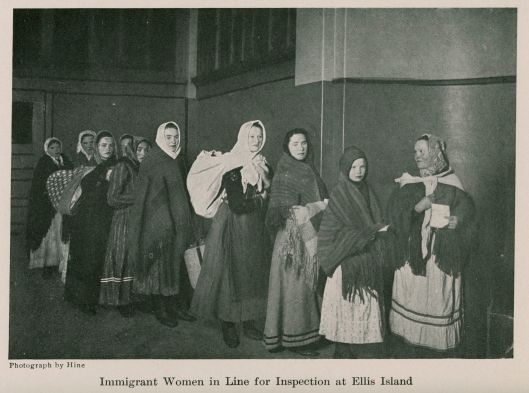
Immigrant Women in Line for Inspection at Ellis Island - New York

Photo Credit: The Newberry Digital Collections for the Classroom


My Poetry Corner September 2018 features the poem “Mary Comes Down” from the poetry collection Thank You For Dreaming by Jeannine M. Pitas. Native of Buffalo, New York, Pitas is a poet, writer, teacher, and Spanish-English literary translator. She holds a PhD in Comparative Literature from the University of Toronto, Canada. She currently lives in Dubuque, Iowa, where she is an Assistant Professor of English and Spanish at the University of Dubuque.

Pitas dedicates the poems in this collection “to those who dream.” She writes in her poem, “thank you for dreaming”:

you have made it to this adopted country
with your heart intact
and you will use it to find people
like you, once silenced –
touched and held
by your dreams

In “Just after my mother tells me she voted for Trump,” Pitas questions her mother’s xenophobia. Had her mother forgotten that she had sent Jeannine to Polish Saturday School and that Jeannine’s Polish great-grandmother had refused to speak English?

America First, American carnage, make America
great again, pass the ban, build the wall,
Mama, Mamusia, tell me –
Where on earth do you think we came from?
Who the hell can we say we are?

Rejecting the divisive politics of xenophobia and hate, Pitas seeks connection with the Other. “I want to touch your life with mine,” she repeats twice in her poem, “To an Immigrant.” Continue reading →

“International Congress of Fear” by Brazilian Poet Carlos Drummond de Andrade

05 Sunday Aug 2018

Posted by Rosaliene Bacchus in Brazil, Poetry

≈ 25 Comments

Tags

Brazilian poet, In the Middle of the Road (No Meio do Caminho) by Carlos Drummond de Andrade, International Congress of Fear (Congresso Internacional do Medo) by Carlos Drummond de Andrade, Living in fear, Minas Gerais/Brazil, Square Dance (Quadrilha) by Carlos Drummond de Andrade, War on Terror

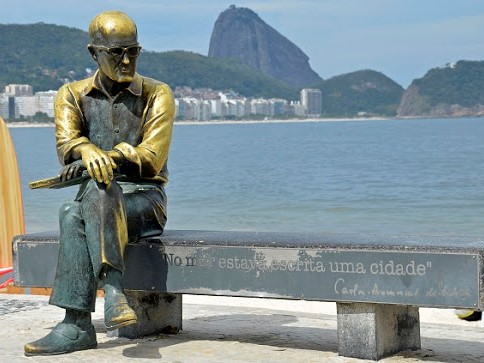
Statue of Carlos Drummond de Andrade - Copacabana - Rio de Janeiro

Bronze Statue of Carlos Drummond de Andrade – Copacabana – Rio de Janeiro – Brazil
Photo Credit: Viagens Vamos Nessa! (Alexandre Macieira/Riotur)


My Poetry Corner August 2018 features the poem “International Congress of Fear” (Congresso Internacional do Medo) by Brazilian poet, journalist, and literary critic Carlos Drummond de Andrade (1902-1987), born in Itabira in Minas Gerais, Southeast Brazil. Considered one of the most influential Brazilian poets of the twentieth century, Drummond remains well-loved by the people for his humility and concern with the plight of modern man and struggle for freedom and dignity. 

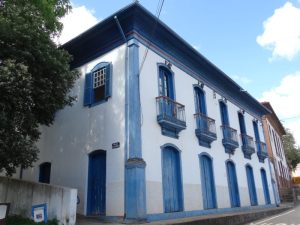
Home of Carlos Drummond de Andrade - Itabira - Minas Gerais - Brazil

Home of Carlos Drummond de Andrade – Itabira – Minas Gerais – Brazil
Photo Credit: Passeios.org


At nineteen, Drummond began his writing career as a columnist for the Diário de Minas newspaper. At his parents’ insistence, he qualified as a pharmacist in 1925 but never practiced the profession. Instead, he cofounded a literary journal and joined the Brazilian Modernist movement. After entering the public service in 1934, he was transferred to Rio de Janeiro where he worked in the Ministry of Education & Public Health, then the National Historical and Artistic Heritage Service. Continue reading →

“Broken System” – Spoken Word Poem by Guyanese Poet Renata Burnette

01 Sunday Jul 2018

Posted by Rosaliene Bacchus in Poetry

≈ 36 Comments

Tags

Domestic violence, Georgetown/Guyana, Guyanese Poet Renata Burnette, Guyanese Spoken Word Poet, Sexual harassment

houston-home-50

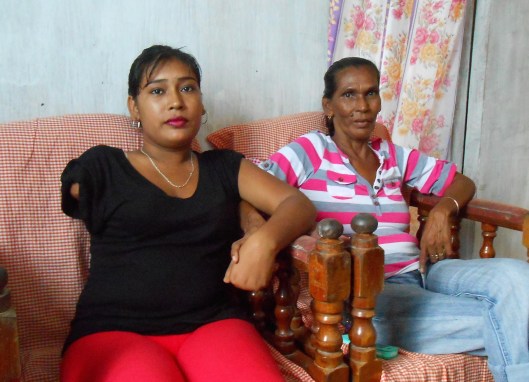
Victim of domestic violence with her mother – Guyana


My Poetry Corner July 2018 features the spoken word poem, “Broken System,” by young Guyanese poet Renata Burnette. Residing in the capital, Georgetown, she is a second-year undergraduate at the University of Guyana, pursuing a degree in Communications.

Renata’s poetry calls attention to the daily struggles and issues of young Guyanese, especially those in their late teens and twenties. She gained national attention in August 2016 with her poem, “Dear Mr. President,” expressing her challenges in finding a job as an undergraduate.

In “Broken System,” published on Guyana’s Independence Day, May 26, 2018, the poet portrays a system that offers little to no protection to the country’s vulnerable youth.

We have 15-year-old girls being gang raped; boys being caught in the wrong place at the wrong time. Just children running away from their homes because the ones that are supposed to be protecting them, they’re now physically and sexually abusing them… These children, they have no faith in us because we have failed them…

Renata observes that the justice system fails these abused children by either condemning them to the juvenile penitentiary or returning them to their abusers. Further on, she raises the issue of drug dealing and the difficulty of finding work, even for someone with higher education.

So how do we fix the system, the same system that’s putting away our young men for selling or smoking weed, but we’re yet to curb the increase of lung cancer disease that’s mainly caused by tobacco smoking, also known as cigarette smoking. So what do we do? We put a warning label on the pack and just hope that it stops… And even when I graduate from one of the highest institutions in the land, they cannot guarantee me a job…with or without this degree. And you want to know why our young people are out here selling weed. Food for thought. Stay woke. See, plugs make more money than teachers make on their government salaries.

Without a pause, Renata addresses sexual harassment. No subject is taboo for our young poet.

And if you’re a woman in today’s society then sexual harassment is something that you’re almost guaranteed. It’s like a rite of passage, so be careful. Don’t wear anything loose, don’t appear to be too revealing, because when the man across the street shouts for you, calling you every single thing except your name, you better look… But really and truly all our tongues burn to say is just stay away from me. But we’re too scared because our system is broken; it’s backwards…

The system also fails victims of domestic violence. The police, the poet notes, not only show up until after the attack, but there’s also no justice for the woman.

And even though she’s the victim, there would be no justice for he [the abuser] knows people in high positions. You know, that can make a police report disappear regardless of how he acts. Those kind-a people in authority that have a knack for sweeping every single thing under the mat…

Like a maestro conducting an orchestra, the young poet controls the rising and falling rhythm with expressive hands. Without a script. Giving voice to the voiceless.

On America’s Independence Day, I offer these closing words of insight from our young Guyanese spoken word poet (emphasis mine):

If history has proven anything, it’s that the truth would always survive and, if needs be, it would bleed through crooked lines.

You can watch Renata Burnette’s performance on YouTube. For my complete transcript of “Broken System” and to learn more about the poet, go to my Poetry Corner July 2018.

CAPTIONED PHOTO
Victim of domestic violence with her mother, Guyana
In 2013, Natasha Houston’s husband killed their two children, slashed her arm and hand, then killed himself.
Photo Credit: WGVU News

“american child” – Poem by normal

03 Sunday Jun 2018

Posted by Rosaliene Bacchus in Poetry, United States

≈ 36 Comments

Tags

American Child by normal (2001), American poet normal, Blood on the Floor by normal (1999), Mass shootings

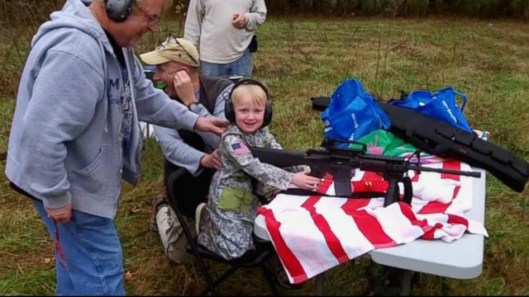
Four-year-old American child learns to us a machine gun

Four-year-old American child – in the age of the National Rifle Association – learns to use a machine gun
Photo Credit: ABC News Video (January 2014)


My Poetry Corner June 2018 features an excerpt from the poem “american child” by normal. Raised in Passaic, New Jersey, normal is a poet and registered nurse now retired and living in Saugerties, New York.

As a young poet in the early 1960s, he began reading his work at the Rafio Café in Greenwich Village, frequented by Beat poets and writers. Among the poets who influenced normal’s sensibilities is the American poet, e.e. cummings (1894-1962), whose use of low-case letters and minimal punctuation he emulates.

The following excerpts come from normal’s chapbooks, Blood on the Floor (1999) and American Child (2001).

His poem “blood on the floor” brings to mind America’s powerlessness to end mass shootings, stealing the future of our children.

don’t slip
there is blood on the floor.

blood of apathy
blood of the dispassionate
the ignoring
blood of those numbed by dumb
life
blood of those who pretend it
never happens / the cheerfully
humbled who go about it all
smiling.

Meanwhile, the raindrops are loaded / with the eyes of children.

The featured poem, “american child,” portrays Americans in all our glory and shame. Penned on Labor Day 2000, the poem begins with the plight of the American worker.

i am the child of america
the sierra madres are bleeding
i am america
the mad & the magnate marry
the factory wolf howls
i am america
the mantra rumbles with the kinds & the cripples.

Trappings of American life ring through the verses: dinty moore stew, soup kitchens, porno talkshows, paparazzi, honkytonk queen, sams club, home depot, tickertape parade, flophouse, and more.

Four stanzas speak of “death to” individuals, special groups, historical events, and man-made systems. Among the targets are lewis & clark, manifest destiny, trail of tears & of schemes, and the american dream. The poet also boots the capitalist, communist, anarchist, antichrist, and atheist. (I would like to add racist and misogynist.)

Apart from lewis & clark, normal mentions several other personalities that make up the American character: joe dimaggio, thomas jefferson, geronimo, benedict arnold, einstein, and chief joseph. (No shout out to Frederick Douglass or Martin Luther King?)   

In the following stanza, the poet captures the schizoid character of the American child and his impact on the world:

i am beauty
i am invention
i am wonder
i am the united fruit company
i am promontory point pikes peak & mai lie
i am the glory
i am the savior
i am the black tide of the acid sky

(mai lie instead of My Lai reframes the massacre in Vietnam.)

[…]

fool / genius // the kind of heaven & hell // the arithmetic eyes of the bureaucrat robot

Yet, for all his flaws, the American child is a fighter and survivor in a crazy world, as normal concludes in his final verses.

i am the feral infant dancing on the freakstage / of the final sunset // i am the child of america.

Much has changed over the past seventeen plus years since normal’s portrayal of the American child. How could he have foreseen Presidents Barack Obama and Donald Trump? I live in hope that an American child – rising from a bloody school floor; less feral and more inclusive – has now embarked on the path to the presidency.

To read the excerpt from the featured poem and learn more about the work of normal, go to my Poetry Corner June 2018.


“Poems for the Men of Our Time” by Brazilian Poet Hilda Hilst

06 Sunday May 2018

Posted by Rosaliene Bacchus in Poetry

≈ 30 Comments

Tags

“Poemas aos Homens do Nosso Tempo” por Hilda Hilst, “Poems for the Men of Our Time” by Hilda Hilst, Brazilian poet, Father-daughter relationship, Hilda Hilst Institute, São Paulo/Brazil

Entrance to Hilda Hilst Institute - Casa do Sol - Campinas - Sao Paulo - Brazil

Entrance to Hilda Hilst Institute – Casa do Sol – Campinas – São Paulo – Brazil


My Poetry Corner May 2018 features an excerpt from “Poems for the Men of Our Time” (Poemas aos Homens do Nosso Tempo) by Brazilian poet, playwright, and novelist Hilda Hilst (1930-2004), born in Jaú in the interior of São Paulo, Southeast Brazil. Soon after her birth, her mother moved with her to Santos, a coastal city and port. Her father wanted a lover, not a wife. Having a girl child was “bad luck,” he told her mother. Hilda grew up determined to prove him wrong.

Hilda was seven years old when her mother revealed the truth: Her father suffered from paranoid schizophrenia. Her father’s mental illness and his frequent internment over the years, until his death in 1966, had a profound effect on her poetry and fiction which often drew upon themes of intimacy and insanity with elements of magical realism.

I initiated dialogue a thousand times. It is hopeless.
I prepare and accept myself
Flesh and spirit undone. We could try,
My father, the unequal and tortured poem,
And embrace each other in silence. In secret.
~ Final stanza, “Of the joyful and very unhappy love – 1,” Exercises by Hilda Hilst, 2001.

Though her first love was poetry, like her father, Hilst followed her mother’s advice and studied law at the University of São Paulo (1948-1952). During this period, she published her first two poetry collections (1950 & 1951). After working for a year at an attorney’s office in São Paulo, she abandoned law for the writer’s life. Continue reading →

“This is My Meditation” – Poem by Guyanese-born Author & Poet Sir Wilson Harris

01 Sunday Apr 2018

Posted by Rosaliene Bacchus in Poetry

≈ 22 Comments

Tags

Abandonment by God, “Bookers Guiana”, Church & State, Georgetown/Guyana, Guyanese-born Author & Poet Sir Wilson Harris, Poem “This is My Meditation” by Sir Wilson Harris, Pre-Columbian Art by Aubrey Williams, Unanswered prayer, Waiting on God

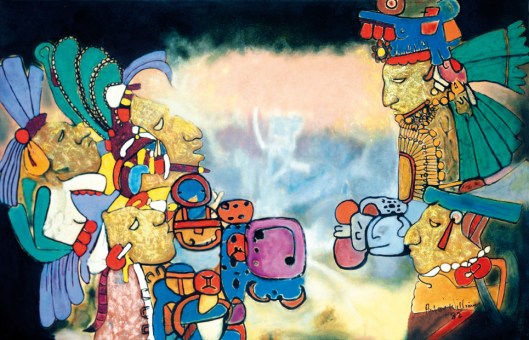
Dawn and Evening Star, Olmec Maya Series by Guyanese-born Artist Aubrey Williams, 1982

Dawn & Evening Star, Olmec Maya Series (1982) by Guyanese-born Artist Aubrey Williams
Source: October Gallery


On March 8th, Guyana’s illustrious literary writer, Sir Wilson Harris, died at the age of ninety-six in England where he had lived since 1959. Born in 1921 in New Amsterdam, British Guiana (now Guyana), Harris began his writing career as a poet, obtaining exposure through the colony’s literary magazine, Kyk-over-Al. My Poetry Corner April 2018 features one of these poems, “This is My Meditation,” published in 1947. Since I couldn’t find the original title of this poem, I’ve used the opening words as a substitute.

When he was two years old, Harris lost his father, “a well-off insurance businessman with a chauffeur-driven car.” His mother moved to the capital, Georgetown, and remarried. Six years later, tragedy struck again. His stepfather disappeared; believed drowned in the Interior.

“At almost the same time, I saw a beggar on a street corner, with holes in his face,” Harris tells Maya Jaggi (The Guardian, December 2006). “I came home and couldn’t eat – I never forgot that man.”

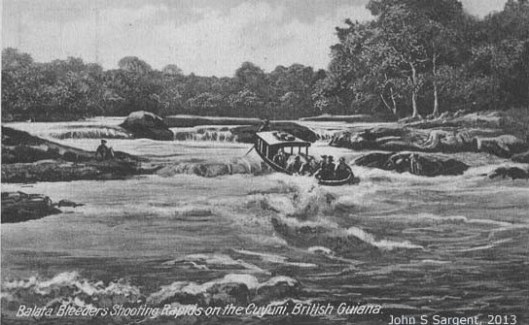
After completing his studies at Queen’s College, the prestigious secondary school for boys in Georgetown, Harris trained in land surveying and geomorphology. Beginning in 1942, his work as a government surveyor, charting the great rivers of the colony’s interior rainforest and savanna regions, changed his vision of man’s relation to the planet.

balata_bleeders_shooting_rapids_on_the_cuyuni,_british_guiana_c1908

Balata Bleeders Shooting Rapids on the Cuyuni River, Interior of British Guiana (c.1908)
Source: Overtown Miscellany UK/John S Sargent


“The shock of contrasts in river, forest, waterfall had registered very deeply in my psyche,” Harris tells Fred D’Aguiar (Bomb Magazine, January 2003). “So deeply that to find oneself without a tongue was to learn of a music that was wordless, to descent into varying structures upon parallel branches of reality, branches that were rooted in a stem of meaning for which no absolute existed.”

Of equal importance was his discovery of pre-Columbian myth and history gained through his contacts with the indigenous peoples in the region.

In his poem, “This is My Meditation,” the young poet calls out what he sees as the cruelty of the Christian God in the treatment of His beloved son, Jesus, left alone to suffer the painful and humiliating death by crucifixion. Continue reading →

“Theology of Junk” by Brazilian Poet Manoel de Barros

04 Sunday Feb 2018

Posted by Rosaliene Bacchus in Poetry

≈ 40 Comments

Tags

About Scrap Metal, Brazilian poet Manoel de Barros, Pantanal/Mato Grosso do Sul/Brazil, Teologia do Traste por Manoel de Barros, Theology of Junk by Manoel de Barros

Giant Water Lily - Victoria Amazonia - Pantanal - Mato Grosso do Sul - Brazil

Giant water lily, Victoria Amazonica – Pantanal – Mato Grosso do Sul – Center-West Brazil
Photo Credit: Andre Dib/WWF


My Poetry Corner February 2018 features the poem “Theology of Junk” (Teologia do Traste) by Brazilian poet, lawyer, and farmer Manoel de Barros (1916-2014). Born in Cuiába, Mato Grosso, he was a year old when his father decided to start a cattle ranch in Pantanal, the world’s largest wetland area, in Mato Grosso do Sul. The young Manoel grew up playing in the yard, between the pens and the “unimportant things” that would influence his poetry.

In “Manoel by Manoel,” he describes his childhood experience:

… I used to play pretending that stone
was lizard. That a can was a ship. That the sloth was a
little problematic creature and equal to a young grasshopper.
I grew up playing on the ground, among ants. Of a
childhood free and without comparisons. I had more
communion with things than with comparison.

When he moved to the city to go to school, Manoel found it a strange and complicated world. In the countryside, they had to make their own toys: small bone animals, sock balls, tin can cars. In “About Scrap Metal,” from his book Memories Invented for Children (2006), he observes:

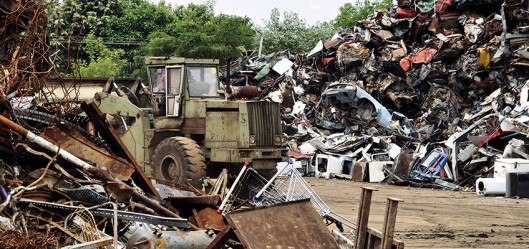
I saw that everything that man makes becomes scrap metal: bicycle, plane, automobile. What doesn’t become scrap is only bird, tree, frog, stone. Even a spaceship becomes scrap metal. Now I think a white swamp heron is more beautiful than a spaceship. I beg your pardon for committing this truth.

Great uses for scrap metal
Photo Credit: Premier Metal Buyers

  Continue reading →

“People Help the People” by Birdy

03 Sunday Dec 2017

Posted by Rosaliene Bacchus in Poetry

≈ 29 Comments

Tags

“People Help the People”, British singer-songwriter Birdy, British singer-songwriter Simon Aldred, Fabric of human existence, Relationships

Feeding the poor and homeless on Thanksgiving Day - Downtown Los Angeles - California - USA

In keeping with my end-of-year tradition, I feature a song on my Poetry Corner December 2017. I struggled for a week to find a suitable song for surviving the relentless Twitter storm and assault on our lives. My older son came to the rescue with the suggestion of the song, “People Help the People” by Birdy, a young British musician, singer, and songwriter.

Written by Simon Aldred – a guitarist and singer-songwriter who started the British folk-rock band Cherry Ghost in 2005 – the song was first released in their debut album in July 2007. It won Aldred the prestigious Ivor Novello Award in musical achievement for Best Contemporary Song.

Birdy’s rendition of the song, released as a single in October 2011, reached the top charts in the UK and across Europe. Though only fourteen years old at the time, Birdy brings a soulfulness to Aldred’s lyrics that touches the heart. Continue reading →

“Let Me Try Again” – Poem by Immigrant Salvadoran Poet Javier Zamora

08 Sunday Oct 2017

Posted by Rosaliene Bacchus in Poetry

≈ 29 Comments

Tags

"The Dreamers", “Let Me Try Again” by Javier Zamora, Deferred Action for Childhood Arrivals (DACA), Immigrant Salvadoran Poet, Temporary Protected Status (TPS)

Border Wall Nogales Mexico Arizona USA

U.S. Border Wall at Nogales, Mexico

My Poetry Corner October 2017 features the poem “Let Me Try Again” by Javier Zamora, an immigrant Salvadoran poet and educator who lives in Northern California. Born in 1990 in a small fishing town in El Salvador, he was a year old when his eighteen-year-old father fled the Civil War (1980-1992). Four years later, his mother joined his father, leaving him with his grandparents. At nine years old, unaccompanied by a family member and under the charge of other undocumented immigrants, ‘Javiercito’ made the treacherous journey to reunite with his parents in the United States.

In “The Shatter of Birds,” dedicated to Abuelita (granny), Zamora recalls her pain at losing him.

Javiercito, you’re leaving me tomorrow
when our tortilla-and-milk breaths will whisper
te amo. When I’ll pray the sun won’t devour
your northbound steps. I’m giving you this conch
swallowed with this delta’s waves
and the sound of sand absorbing.

[…]

There’s no autumn here. When you mist
into tomorrow’s dawns, at the shore
of somewhere, listen to this conch.
Don’t lose me. 

Zamora’s abuelos (grandparents) warn him not tell anyone of his departure. In “Kite Flying,” his elation overrides their fears.

I’m going to see my parents.
(I’m going to see my parents!)
On the last day of school, I’ll tell
only my closest friends I’m flying
to where people drink cold milk
and put strawberries in their cereal,
I’ll eat strawberries all the time
and get so tall I’ll start playing basketball. 

In addition to letters and phone calls, Zamoro and his parents kept in touch by exchanging cassette-tapes. Listening to their tapes brought heartbreak. His poem “Cassette-tape” recreates the disjointedness of time and his trauma in crossing into Mexico without them. For two months, he lost touch with them.

To cross México we’re packed in boats
20 aboard, 18 hours straight to Oaxaca.
Throw up and gasoline keep us up. At 5 a.m.
we get to shore, we run to the trucks, cops
rob us down the road—without handcuffs,
our guide gets in their Fords and we know
it’s all been planned. Not one peso left
so we get desperate—Diosito, forgive us
for hiding in trailers. We sleep in Nogales till
our third try when finally, I meet Papá Javi.

In the featured poem, “Let Me Try Again,” Zamora relives their first failed attempt to cross the Sonoran Desert in Arizona. By then, their numbers had dwindled. In the desert, even the animals struggle to survive.

I could bore you with the sunset, the way
water tasted after so many days without it,
the trees, the breed of dogs, but I can’t
say there were forty people when we found

the ranch with the thin white man, his dogs,
and his shotgun. Until this 5 a.m., I hadn’t
or couldn’t remember there were only five,
or seven, people—

not forty. We’d separated by the palo verdes.
We meaning: an eighteen-year-old ex-gangster,
a mom with her thirteen-year-old, and me.
Four people. Not forty. The rest . . . the rest,

I don’t know. They weren’t there when
the thin white man let us drink from a hose
while pointing his shotgun. In Spanish
he told us if run away, dogs trained attack
.

In high school, after a visiting poet introduced him to the work of the Chilean poet Pablo Neruda, Zamora found release from his traumatic memories in poetry. By the age of twenty-one, he knew he wanted to be a poet. On completing his BA in history at the University of California, Berkeley, he pursued an MFA at the New York University. A Wallace Stegner Fellowship in Poetry at Stanford University soon followed.

Zamora’s first poetry collection, Unaccompanied, was published this October amid uncertainty about his fate as an alien with Temporary Protected Status which comes up for renewal in 2018. Like the DACA (Deferred Action for Childhood Arrivals) “Dreamers,” his future rests in the hands of President Trump.

His status makes it difficult to visit his native land. “It’s traumatic to talk to those left behind,” he confesses in an essay published in Granta Online Edition, December 2016.  “It’s a burden to communicate over the phone. To write. To text. To Facebook message.”

In his poem “El Salvador,” the young poet speaks of the violence that never ended and of his longing to see his grandmother again. 

but if I don’t brush Abuelita’s hair, wash her pots and pans,
I cry. Like tonight, when I wish you made it
easier to love you, Salvador. Make it easier
to never have to risk our lives.

To read the complete featured poem and learn more about Javier Zamora, his work, and honors, go to my Poetry Corner October 2017.

“Sadness has no end” by Brazilian Poet Eli Macuxi

03 Sunday Sep 2017

Posted by Rosaliene Bacchus in Brazil, Poetry

≈ 29 Comments

Tags

"Sadness has no end", “Tristeza não tem fim”, Brazilian Poet Eli Macuxi, Roraima/Brazil

Cereia by Carmezia Emiliano - Indigenous Macuxi - Roraima - Brazil

My Poetry Corner September 2017 features the poem “Sadness has no end” (Tristeza não tem fim) by Brazilian poet and educator Elisangela Martins, who self-identifies as Eli Macuxi or Elimacuxi. She teaches history and art criticism at the Federal University of Roraima located in Boa Vista, capital of the state.

Fascinated by verse since childhood, Elimacuxi began writing poetry in fifth grade. At fifteen, she dreamed of having her work read and studied by others. “But the desire was totally blunted by the pessimistic awareness of reality,” confides the poet on her blog. “I was a skinny teenager, without luck of getting a job, studying at a night school on the periphery, ‘daughter of a drunkie,’ with lots of younger siblings. To be a writer? Poet? It was laughable.”

While she earned her Bachelor’s degree and then Masters in History, her love for poetry never waned. In 2013, she published her first poetry collection, Love For Those Who Hate (Amor Para Quem Odeia), which portrays love in its various forms of human experience. Continue reading →

← Older posts
Newer posts →

Subscribe

  • RSS - Posts
  • RSS - Comments

Archives

  • January 2026
  • November 2025
  • October 2025
  • September 2025
  • August 2025
  • July 2025
  • June 2025
  • May 2025
  • April 2025
  • March 2025
  • February 2025
  • January 2025
  • December 2024
  • November 2024
  • October 2024
  • September 2024
  • August 2024
  • July 2024
  • June 2024
  • May 2024
  • April 2024
  • March 2024
  • February 2024
  • January 2024
  • December 2023
  • November 2023
  • October 2023
  • September 2023
  • August 2023
  • July 2023
  • June 2023
  • May 2023
  • April 2023
  • March 2023
  • February 2023
  • January 2023
  • December 2022
  • November 2022
  • October 2022
  • September 2022
  • August 2022
  • July 2022
  • June 2022
  • May 2022
  • April 2022
  • March 2022
  • February 2022
  • January 2022
  • December 2021
  • November 2021
  • October 2021
  • September 2021
  • August 2021
  • July 2021
  • June 2021
  • May 2021
  • April 2021
  • March 2021
  • February 2021
  • January 2021
  • December 2020
  • November 2020
  • October 2020
  • September 2020
  • August 2020
  • July 2020
  • June 2020
  • May 2020
  • April 2020
  • March 2020
  • February 2020
  • January 2020
  • December 2019
  • November 2019
  • October 2019
  • September 2019
  • August 2019
  • July 2019
  • June 2019
  • May 2019
  • March 2019
  • February 2019
  • January 2019
  • December 2018
  • November 2018
  • October 2018
  • September 2018
  • August 2018
  • July 2018
  • June 2018
  • May 2018
  • April 2018
  • March 2018
  • February 2018
  • January 2018
  • December 2017
  • November 2017
  • October 2017
  • September 2017
  • August 2017
  • July 2017
  • June 2017
  • May 2017
  • April 2017
  • March 2017
  • February 2017
  • January 2017
  • December 2016
  • November 2016
  • October 2016
  • September 2016
  • August 2016
  • July 2016
  • June 2016
  • May 2016
  • April 2016
  • March 2016
  • January 2016

Categories

  • About Me
  • Anthropogenic Climate Disruption
  • Brazil
  • Economy and Finance
  • Family Life
  • Festivals
  • Guyana
  • Health Issues
  • Human Behavior
  • Immigrants
  • Nature and the Environment
  • People
  • Philosophy
  • Poetry
  • Poetry by Rosaliene Bacchus
  • Recommended Reading
  • Relationships
  • Religion
  • Religion & Spirituality
  • Reviews – The Twisted Circle: A Novel by Rosaliene Bacchus
  • Reviews – Under the Tamarind Tree: A Novel by Rosaliene Bacchus
  • Save Our Children
  • Social Injustice
  • Technology
  • The Twisted Circle: A Novel by Rosaliene Bacchus
  • The Writer's Life
  • Uncategorized
  • Under the Tamarind Tree: A Novel by Rosaliene Bacchus
  • United States
  • Urban Violence
  • Women Issues
  • Working Life

Blogroll

  • Angela Consolo Mankiewicz
  • Caribbean Book Blog
  • Dan McNay
  • Dr. Gerald Stein
  • Foreign Policy Association
  • Guyanese Online
  • Writer's Digest
  • WritersMarket: Where & How to Sell What You Write

Meta

  • Create account
  • Log in
  • Entries feed
  • Comments feed
  • WordPress.com

Enter your email address to subscribe to this blog and receive notifications of new posts by email.

Join 3,233 other subscribers

Create a free website or blog at WordPress.com.

Privacy & Cookies: This site uses cookies. By continuing to use this website, you agree to their use.
To find out more, including how to control cookies, see here: Cookie Policy
  • Subscribe Subscribed
    • Three Worlds One Vision
    • Join 3,233 other subscribers
    • Already have a WordPress.com account? Log in now.
    • Three Worlds One Vision
    • Subscribe Subscribed
    • Sign up
    • Log in
    • Report this content
    • View site in Reader
    • Manage subscriptions
    • Collapse this bar
 

Loading Comments...