• About

Three Worlds One Vision

~ Guyana – Brazil – USA

Three Worlds One Vision

Category Archives: Guyana

“The Punt Trench” – Poem by Guyanese-Canadian Author Ken Puddicombe

16 Sunday Aug 2020

Posted by Rosaliene Bacchus in Guyana, Poetry

≈ 41 Comments

Tags

Guyanese-Canadian Author Ken Puddicombe, Immigrant nostalgia for the old country, Poem “The Punt Trench” by Ken Puddicombe, Poetry Collection Unfathomable And Other Poems by Ken Puddicombe (Canada 2020)
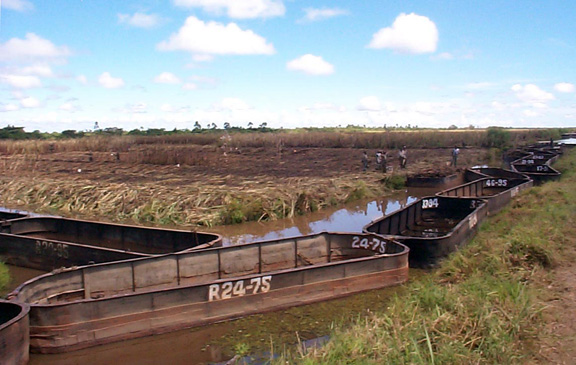
Punts to be loaded with cut sugar cane – Sugar Estate in Guyana

My Poetry Corner August 2020 features the poem “The Punt Trench” from the first poetry collection, Unfathomable And Other Poems (2020), by Guyanese-Canadian author Ken Puddicombe. Since retiring from his accounting work, Puddicombe has been pursuing his love of writing. To date, he has published two novels and a short story collection.

His poetry collection is filled with nostalgia of his boyhood days in Guyana. As an immigrant living in Canada since 1971, he writes in “Nostalgic”:

Immigrants.
As they grow older, the yearning
For a return to the old country increases.
Memories plague them, of a childhood in a familiar spot.
Any little incident will send their senses reeling and take
them back in time and place.

The punt trench is a recurring memory in Puddicombe’s poems. For readers unfamiliar with Guyana’s coastal lowlands of sugar cane fields crisscrossed by canals or trenches, a legacy of Dutch colonizers (1648-1814), a punt or cane-punt is a flat-bottomed iron barge for transporting harvested canes along the system of canals or punt trenches from field to factory. About 20 feet long, 8 feet wide, and 3 or 4 feet deep, the punt is drawn by a mule (in the early days) or tractor, attached by a long chain, moving along the punt-trench earth dam or unsurfaced road. The punt trench also serves as a drainage canal during low tides and periods of flooding, controlled by kokers or sluices.
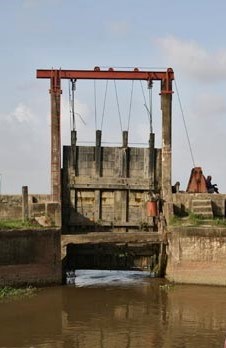
Seawall with Koker or Sluice – Guyana
 

Puddicombe’s memories of the punt trench are somber and haunting. The title poem, “Unfathomable,” the longest narrative poem with seventeen stanzas, recounts the tale of the unfathomable death of his playful and daring friend—crushed between two punts moving along in a convoy on their way to the sugar factory.

The punts in the mule-train linked
With short lengths of chain hooked
Into metal clasps welded at the front
And rear of each craft. Six mules up front
Kept the convoy moving, each animal
Bound to a punt by a length of chain.

Lincoln was clinging to the connecting
Chain between two punts in the middle
Of the convoy, hanging on for a ride,
When the distance narrowed swiftly
Between the punts.

“Drowning” describes the time the author/poet almost lost his life in the cocoa-brown waters of the punt trench. Though he could not swim like the older boys, he plunged into the deep / Murky, swirling pit of the Punt Trench, made murkier still when his feet stirred up the mud and silt at the bottom of the trench.

On his first return visit to Guyana in 1987 after a sixteen-year absence, Puddicombe questions whether one could ever really go back to a time and place long gone. In his poem, “Middle Road,” the street where he had once lived, he finds The bridge over the Punt Trench where / I fell into the water now collapsed, the Trench / Filled in with debris.

In the featured poem, “The Punt Trench,” he reflects on the changes over time in four stanzas, each beginning with a different theme: Memory, Despair, Change, and Hope. His Memory of the punt trench as Fast moving torrential / Waves flashing through / The Koker to the raging Atlantic is no more. Instead, he feels only despair.  

Despair.
The Punt Trench is a dumping
Ground filled with debris and
Castoffs. Empty shell of a car.
Rusting frame of a bicycle. Bags of
Garbage piled in mounds. A dog’s bloated
Carcass. Tall paragrass and wild eddo bush
Reaching to the sky.

The punt trench, once a haunting memory of youthful joy and dread, is now a symbol of the decay of a neighborhood and of a nation; of promises not yet realized. It is not the change promised by the founding leaders of the independent nation.

Change.
From the Koker in Public Road
All the way to the Backdam
The Punt Trench is now Independence
Boulevard. Every time the breeze zips
Across from the north-east,
It reeks and fills my
Nostrils. Repulsive
Odours.

Only birdsong brings the poet Hope that Life goes on!

As the author and poet acknowledges in “You Can Never Go Back,” the final poem in the collection, the places of his idyllic youth have changed or no longer exist. People are no longer the same. Yet…some among us grasp a dream of returning to a time we consider our days of glory. Life goes on, for better or for worse, with or without us.

To read the complete featured poem, “The Punt Trench,” and learn more about the work of Ken Puddicombe, go to my Poetry Corner August 2020.
11 September 2001: “Guyanese Roll Call” by Peter Jailall

08 Sunday Sep 2019

Posted by Rosaliene Bacchus in Guyana, Poetry, United States

≈ 25 Comments

Tags

11 September 2001, “Guyanese Roll Call” by Peter Jailall, Guyanese-Canadian Poet Peter Jailall, Terrorist attack on World Trade Center in New York

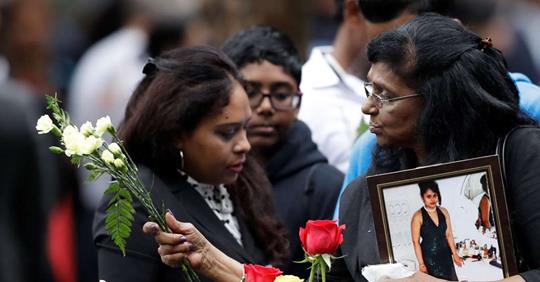
Caribbean immigrants remember loved ones at the 9/11 memorial on September 11, 2018
Photo Credit: News Americas


On September 11, we will remember all those we have lost on that ill-fated day when a terrorist attack on the World Trade Center in New York City turned the world-famous landmark into rubble.

I was living in Brazil when the tragedy occurred, sending a tsunami across the world. More than ninety other nations also lost loved ones that day, including three Brazilian-Americans and twenty-six Guyanese-Americans.

In his poem, “Guyanese Roll Call,” Guyanese-Canadian poet Peter Jailall remembers his twenty-six countrymen and women who died on that day. Their American Dream had been suddenly cut short.

Listen to our roll call
Of those who died
On that dreadful September day,
Following their American Dream: 

Patrick Adams
Leslie Arnold Austin
Rudy Bacchus
Kris Romeo Bishundauth
Pamela Boyce
Annette Datarom
Babita Guman
Nizam Hafiz
Ricknauth Jhagganauth
Charles Gregory Jolin
Bowanie Devi Kemraj
Sarab Khan
Amerdauth Luchman
Shevonne Meutis
Narendra Nath
Marcus Neblett
Hardai Parbhu
Ameena Rasool
Shiv Sankar
Sita Sewnarine
Karini Singh
Rosham Singh
Astrid Sohan
Joyce Stanton
Patricia Staton
Vanava Thompson 

These are our dedicated,
Hard-working country people,
Who travelled from South to North
To savour just a small bite
Of the Big Apple. 

We will always remember them.

Source: Poetry Collection, People of Guyana by Ian McDonald and Peter Jailall, MiddleRoad Publishers, Canada, 2018.


While violent anti-immigrant activism spread across America, let us remember that Guyanese and other Caribbean immigrant families also share our nation’s grief for loved ones lost on September 11, 2001.


Peter Jailall is a teacher, poet, and storyteller. He has published five books of poetry. In 2011, he received the Marty’s Award for Established Literary Arts in Mississauga, Ontario, where he lives. Since his retirement, Jailall has conducted workshops on Poetry Writing in schools across Guyana and Canada.

Divisive Racist Politics: Will America Survive?

21 Sunday Jul 2019

Posted by Rosaliene Bacchus in Guyana, United States

≈ 64 Comments

Tags

America's Refugee Debacle, Divisive racist politics, ExxonMobil/Guyana, Guyana’s Constitutional Crisis 2019, Politics, The One Percent, Under the Tamarind Tree: A Novel by Rosaliene Bacchus, US President "Send Her Back" Rally, Will America Survive?, Will Guyana Survive? by Sara Bharrat

“Send Her Back” – US President’s Campaign Rally – North Carolina/USA – July 17, 2019
Photo Credit: HuffPost, YouTube Video


I know about divisive racist politics. I have experienced it up close in Guyana, the land of my birth—one of the “shithole countries” that our president loves to denigrate. Divisive racist politics has crippled my birthplace over the past fifty-three years since its birth as an independent nation. As a multiracial woman, I know firsthand the ways in which hate, rancor, fear, and distrust can splinter families, communities, and relationships in public spaces, such as our schools and workplaces.

Caught up in what Guyanese call “the racial disturbances”—during the years leading up to independence in May 1966, between the two major population groups of descendants of African slaves and Indian indentured laborers—I became a marginalized citizen. Beginning in adolescence, I learned to navigate the racial minefields, to dodge and take the blows.

In my debut novel, Under the Tamarind Tree, to be released in the coming months, I tackle the roots of Guyana’s divisive racist politics and its impact on the lives of my racially diverse characters. You can learn more about my motivations for setting out on this literary journey in my article “The Making of Under the Tamarind Tree.”

While the chant rose to “send her back,” during a recent presidential campaign rally, America’s transnational corporations are sucking Earth’s natural resources from all those “broken and crime infested places from which they [non-white immigrants] came.”

Continue reading →

“This is the Dark Time My Love” by Guyanese Poet Martin Carter

30 Sunday Jun 2019

Posted by Rosaliene Bacchus in Guyana, Poetry

≈ 43 Comments

Tags

Authoritarian government, “This is the Dark Time My Love” by Martin Carter, Dr. Cheddi Jagan, Forbes Burnham, Fr. Bernard Darke SJ, Guyanese Poet Martin Carter, Poems of Resistance from British Guiana by Martin Carter, Racial and ethnic divisive politics, Suspension of the British Guiana Constitution 1953, Working class oppression

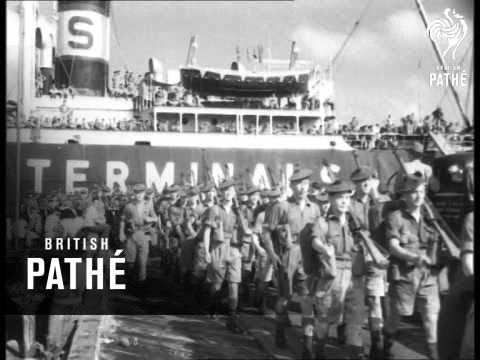
British soldiers arrive in Georgetown – British Guiana – October 9, 1953
Photo Credit: Stabroek News (Photo British Pathé)


My Poetry Corner July 2019 features the poem “This is the Dark Time My Love” by Guyanese poet Martin Carter (1927-1997) from his poetry collection, Poems of Resistance from British Guiana (London 1954). Following the suspension of the British Guiana Constitution in 1953, the poet-politician composed the poems in this collection during his three-month detention, together with other political leaders, by the British Army.

For readers unfamiliar with Guyana’s history, a former British colony until May 26, 1966, slavery ended in 1834. Indentured laborers began arriving from India in 1838 and continued until 1917. Other immigrant workers came from Portuguese Madeira (1835-1882) and China (1853-1879). The population of the colony in the mid-1950s was about 450,000 people (UN estimate).

Born in 1927 in Georgetown, the capital of then British Guiana, to middle class parents of African, Indian, and European ancestry, the young Martin grows up with an appreciation for literature, poetry, and philosophy. After attending the colony’s prestigious Queen’s College, for boys only, he gains entry to the civil service, working first at the post office, then later as the secretary of the superintendent of prisons.

Aware of the oppression and despair of the sugarcane workers who toil under harsh conditions on the British-owned sugar plantations, Carter joins the political struggle for self-governance. In “Looking at Your Hands” (1), he affirms his solidarity with the plantation workers in their shared struggle under British rule. 

No!
I will not still my voice!
I have
too much to claim –
[…]
you must know
I do not sleep to dream
but dream to change the world.
  Continue reading →

“Revolutionary Suicide”: Remembering the Jonestown Massacre

18 Sunday Nov 2018

Posted by Rosaliene Bacchus in Guyana, Human Behavior, United States

≈ 44 Comments

Tags

Children of Jonestown, Jonestown/Guyana, Mass-murder-suicide, Peoples Temple Agricultural Project/Guyana, Peoples Temple Church, Reverend Jim Jones, Revolutionary Suicide, Youth Climate Activists

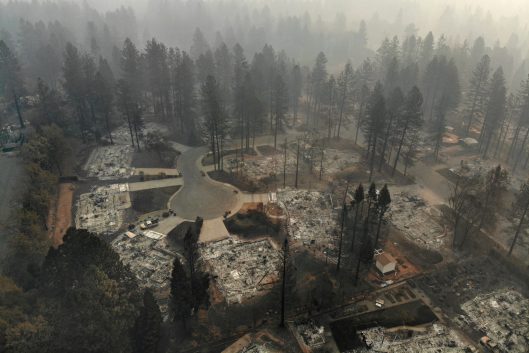
Aerial view of Paradise off of Clark Road – Camp Fire, Northern California
November 15, 2018
Photo Credit: San Francisco Examiner (Carolyn Cole/Los Angeles Times)


As California burns and super-storms ravage our southern and eastern coastal states, I’ve been thinking a lot about the Reverend Jim Jones and the People’s Temple. Today, November 18th, is the fortieth anniversary of the mass murder-suicide of 916 Americans at the People’s Temple Agricultural Project at Jonestown in the northwest forested region of Guyana.

The 276 dead American children had no choice.

Teacher with Children Singing – Jonestown – Guyana
Photo Credit: California Digital Library


Victim of his own megalomania and alternate reality, the Pentecostal leader coerced his followers into ingesting cyanide-laced, grape-flavored Flavor Aid.

“Revolutionary suicide,” the Reverend Jim Jones called his final, defiant act. Continue reading →

A Troublesome Man by Stella Bagot

19 Sunday Aug 2018

Posted by Rosaliene Bacchus in Guyana, Recommended Reading

≈ 40 Comments

Tags

Biographer Stella Bagot, Bookers British Guiana, Dartmouth Village/Essequibo Coast/Guyana, Life of Dr. Ptolemy Alexander Reid, Prime Minister of Guyana 1980-1984, Tuskegee School of Veterinary Medicine in Alabama/USA

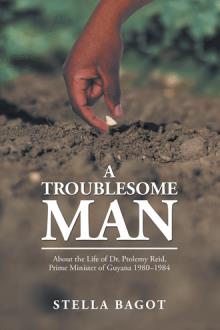
Front Cover - A Troublesome Man by Stella Bagot

Front Cover of A Troublesome Man by Stella Bagot


In her authorized biography, A Troublesome Man: About the life of Dr. Ptolemy Reid, Prime Minister of Guyana, 1980-1984, Stella Bagot records Dr. Reid’s account of his journey from childhood to his entrance into political life. It’s an engaging and inspiring story of a poor village boy who, with determination and persistence, overcame the obstacles along each step of his journey.

Ptolemy was born on May 8, 1918, the youngest of five siblings, in Dartmouth Village on the Essequibo Coast of then British Guiana. He lost his father to pneumonia when he was ten years old. To contribute to the family’s income, he worked on their farm plot, in the sugarcane fields, and with local fishermen. His school attendance suffered.

On completing primary school at sixteen, Ptolemy pursued employment as a pupil teacher. Five years later, he took two years off to earn his teacher’s certificate at the Government Training Center in Georgetown, the capital. Over the following eight years, he gained the reputation as a strict and proficient teacher at the Dartmouth Anglican village school. Continue reading →

Guyana ties the knot with ExxonMobil

23 Sunday Jul 2017

Posted by Rosaliene Bacchus in Guyana

≈ 42 Comments

Tags

Extractive Industries Transparency Initiative (EITI), ExxonMobil, Guyana-ExxonMobil Profit Sharing Agreement (PSA), Guyana’s oil and natural gas development, Oil and natural gas industry, Petroleum (Exploration & Production) Act, Sovereign Wealth Fund (SWF), US Energy Governance & Capacity Initiative

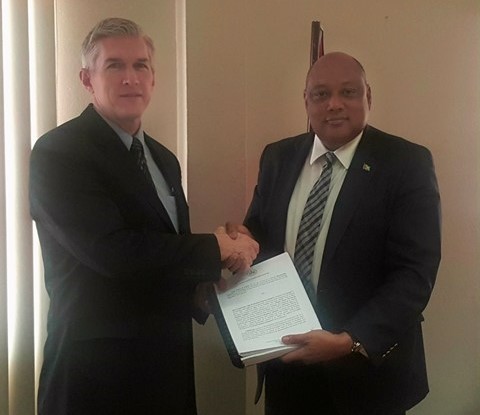
ExxonMobil Country Manager receives Production License from Guyana Minister of Natural Resources - 15 June 2017

ExxonMobil Country Manager Rod Henson receives Production License
from Minister of Natural Resources Raphael Trotman
Georgetown – Guyana – June 15, 2017
Photo Credit: Guyana Ministry of Natural Resources

On June 15, 2017, Guyana tied the knot with ExxonMobil with the signing of a production license for the extraction of oil and natural gas, located offshore the Caribbean/South American nation with a population of 800,000 people. With this license, together with the Environmental Permit granted on June 1st, ExxonMobil will proceed with the Liza Phase 1 development. Located 120 miles offshore in an area known as the Stabroek Block, the Liza field development includes a subsea production system and a floating production, storage and offloading (FPSO) vessel designed to produce up to 120,000 barrels of oil per day. Exxon and its partners plan to begin production by 2020.

ExxonMobil’s press release on June 16th states: “Phase 1 is expected to cost just over $4.4 billion, which includes a lease capitalization cost of approximately $1.2 billion for the FPSO facility, and will develop approximately 450 million barrels of oil.

It is a marriage of unequal partners. ExxonMobil’s profit margin in 2016 is more than twice that of Guyana’s GDP of US$3.5 billion for the same year. With the assistance of local and foreign experts in the industry, the Guyana government has reviewed the Production Sharing Agreement (PSA), signed in 1999 when exploration began under the former leftist Guyana government. Continue reading →

“Destination” – Poem by Guyanese-Canadian Poet Janet Naidu

01 Monday May 2017

Posted by Rosaliene Bacchus in Guyana, Immigrants, Poetry

≈ 26 Comments

Tags

"Destination" by Janet Naidu, "New System of Slavery", Guyanese-Canadian Poet, Immigrants, Indian indentured laborers, Indian Indentureship in Guyana 1838-1917, Sugar plantations in Guyana

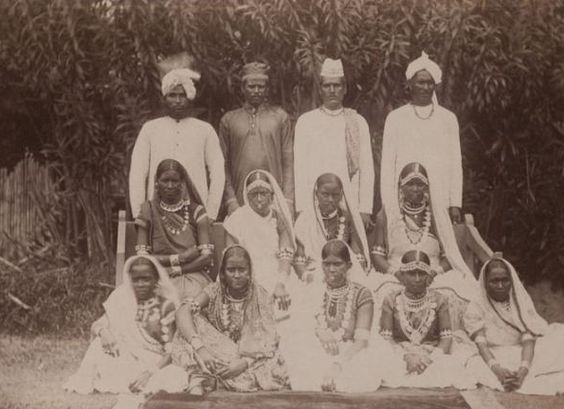
East Indian Indentured Laborers

In commemoration of the centennial of the abolition of Indian Indentureship on March 12, 1917, my Poetry Corner May 2017 features the poem “Destination” by Janet Naidu, a Guyanese-born poet, writer, social activist, and life-skills coach. She migrated to Canada in 1975, at the age of twenty-two, where she obtained a BA in Political Science and Caribbean Studies from the University of Toronto and, later in life, an LLB from the University of London (UK).

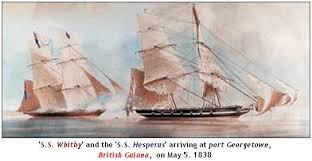
With the abolition of slavery in 1834 and the end of the apprenticeship scheme in 1838, the mass exodus of ex-slaves from plantations across the British Empire created a dire need for a regular and reliable supply of labor. On May 5, 1838, the first group of about 400 Indian indentured laborers, on a five-year contract, arrived in British Guiana on the sailing ships, Whitby and Hesperus. By 1917, their numbers totaled over 238,000 Indians, comprising 42 percent of the colony’s population. Only 65,538 returned to India on terminating their contract. Janet Naidu’s grandparents from Tamil Nadu were among those who arrived on the SS Ganges on November 8, 1915.

Sailships Whitby and Hesperus arriving at Port Georgetown - British Guiana - May 5, 1838

Born in the village of Covent Garden, East Bank Demerara, Naidu was the seventh of eight children. Like his parents, her father was a cane cutter. Her mother sold home-grown, green vegetables in the market.

In “Destination” from her poetry collection, Rainwater (2005), Naidu conjures the immigrants’ fearsome voyage across the ocean for an unknown destination. Continue reading →

“Sugar” – Poem by Guyanese Poet Ruel Johnson

04 Monday Apr 2016

Posted by Rosaliene Bacchus in Guyana, People

≈ 15 Comments

Tags

Cane sugar, East Indians in Guyana, Guyana Fiftieth Independence Anniversary, Guyana sugar industry, Guyanese poet Ruel Johnson, Sugar cane workers

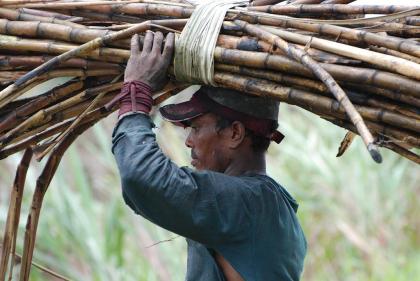
East Indian Cane Cutter - Guyana - Photo by John Gimlette

East Indian Cane cutter – Guyana
Photo by John Gimlette (2013)

In honor of Guyana’s fiftieth Independence anniversary on May 26th, my Poetry Corner April 2016 features an excerpt from the poem “Sugar” by Guyanese poet and award-winning short story writer Ruel Johnson. His work largely focuses on social and political issues facing Guyana. In the long, multi-sectional featured poem, he addresses the legacy of colonialism on the enduring divide between the two major ethnic populations: the descendants of African slaves and East Indian indentured laborers.

In section 1—stalk, Johnson recalls his boyhood days growing up in the capital. Sugarcane was a sweet treat. His imagery of his mother whacking the stalk along the joints with her best knife takes us into the canefields. The sweet juice comes at a great price. Continue reading →

Newer posts →

Subscribe

  • RSS - Posts
  • RSS - Comments

Archives

  • November 2025
  • October 2025
  • September 2025
  • August 2025
  • July 2025
  • June 2025
  • May 2025
  • April 2025
  • March 2025
  • February 2025
  • January 2025
  • December 2024
  • November 2024
  • October 2024
  • September 2024
  • August 2024
  • July 2024
  • June 2024
  • May 2024
  • April 2024
  • March 2024
  • February 2024
  • January 2024
  • December 2023
  • November 2023
  • October 2023
  • September 2023
  • August 2023
  • July 2023
  • June 2023
  • May 2023
  • April 2023
  • March 2023
  • February 2023
  • January 2023
  • December 2022
  • November 2022
  • October 2022
  • September 2022
  • August 2022
  • July 2022
  • June 2022
  • May 2022
  • April 2022
  • March 2022
  • February 2022
  • January 2022
  • December 2021
  • November 2021
  • October 2021
  • September 2021
  • August 2021
  • July 2021
  • June 2021
  • May 2021
  • April 2021
  • March 2021
  • February 2021
  • January 2021
  • December 2020
  • November 2020
  • October 2020
  • September 2020
  • August 2020
  • July 2020
  • June 2020
  • May 2020
  • April 2020
  • March 2020
  • February 2020
  • January 2020
  • December 2019
  • November 2019
  • October 2019
  • September 2019
  • August 2019
  • July 2019
  • June 2019
  • May 2019
  • March 2019
  • February 2019
  • January 2019
  • December 2018
  • November 2018
  • October 2018
  • September 2018
  • August 2018
  • July 2018
  • June 2018
  • May 2018
  • April 2018
  • March 2018
  • February 2018
  • January 2018
  • December 2017
  • November 2017
  • October 2017
  • September 2017
  • August 2017
  • July 2017
  • June 2017
  • May 2017
  • April 2017
  • March 2017
  • February 2017
  • January 2017
  • December 2016
  • November 2016
  • October 2016
  • September 2016
  • August 2016
  • July 2016
  • June 2016
  • May 2016
  • April 2016
  • March 2016
  • January 2016

Categories

  • About Me
  • Anthropogenic Climate Disruption
  • Brazil
  • Economy and Finance
  • Family Life
  • Festivals
  • Guyana
  • Health Issues
  • Human Behavior
  • Immigrants
  • Nature and the Environment
  • People
  • Philosophy
  • Poetry
  • Poetry by Rosaliene Bacchus
  • Recommended Reading
  • Relationships
  • Religion
  • Religion & Spirituality
  • Reviews – The Twisted Circle: A Novel by Rosaliene Bacchus
  • Reviews – Under the Tamarind Tree: A Novel by Rosaliene Bacchus
  • Save Our Children
  • Social Injustice
  • Technology
  • The Twisted Circle: A Novel by Rosaliene Bacchus
  • The Writer's Life
  • Uncategorized
  • Under the Tamarind Tree: A Novel by Rosaliene Bacchus
  • United States
  • Urban Violence
  • Women Issues
  • Working Life

Blogroll

  • Angela Consolo Mankiewicz
  • Caribbean Book Blog
  • Dan McNay
  • Dr. Gerald Stein
  • Foreign Policy Association
  • Guyanese Online
  • Writer's Digest
  • WritersMarket: Where & How to Sell What You Write

Meta

  • Create account
  • Log in
  • Entries feed
  • Comments feed
  • WordPress.com

Enter your email address to subscribe to this blog and receive notifications of new posts by email.

Join 3,231 other subscribers

Create a free website or blog at WordPress.com.

Privacy & Cookies: This site uses cookies. By continuing to use this website, you agree to their use.
To find out more, including how to control cookies, see here: Cookie Policy
  • Subscribe Subscribed
    • Three Worlds One Vision
    • Join 3,231 other subscribers
    • Already have a WordPress.com account? Log in now.
    • Three Worlds One Vision
    • Subscribe Subscribed
    • Sign up
    • Log in
    • Report this content
    • View site in Reader
    • Manage subscriptions
    • Collapse this bar
 

Loading Comments...