• About

Three Worlds One Vision

~ Guyana – Brazil – USA

Three Worlds One Vision

Author Archives: Rosaliene Bacchus

“Revolutionary Suicide”: Remembering the Jonestown Massacre

18 Sunday Nov 2018

Posted by Rosaliene Bacchus in Guyana, Human Behavior, United States

≈ 44 Comments

Tags

Children of Jonestown, Jonestown/Guyana, Mass-murder-suicide, Peoples Temple Agricultural Project/Guyana, Peoples Temple Church, Reverend Jim Jones, Revolutionary Suicide, Youth Climate Activists

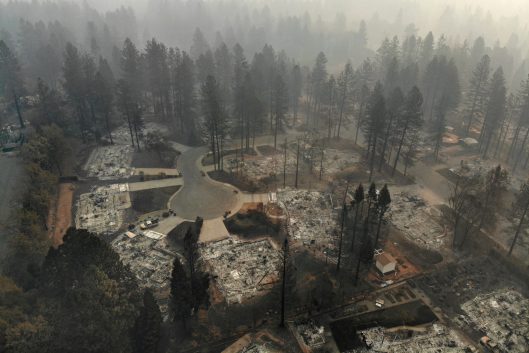
Aerial view of Paradise off of Clark Road – Camp Fire, Northern California
November 15, 2018
Photo Credit: San Francisco Examiner (Carolyn Cole/Los Angeles Times)


As California burns and super-storms ravage our southern and eastern coastal states, I’ve been thinking a lot about the Reverend Jim Jones and the People’s Temple. Today, November 18th, is the fortieth anniversary of the mass murder-suicide of 916 Americans at the People’s Temple Agricultural Project at Jonestown in the northwest forested region of Guyana.

The 276 dead American children had no choice.

Teacher with Children Singing – Jonestown – Guyana
Photo Credit: California Digital Library


Victim of his own megalomania and alternate reality, the Pentecostal leader coerced his followers into ingesting cyanide-laced, grape-flavored Flavor Aid.

“Revolutionary suicide,” the Reverend Jim Jones called his final, defiant act. Continue reading →

We want our country back

11 Sunday Nov 2018

Posted by Rosaliene Bacchus in Poetry by Rosaliene Bacchus, United States

≈ 51 Comments

Tags

Charlottesville/Virginia, Displaced peoples, Divisiveness in America, Fear and hate in America, Honduran migrants, Make America Great Again, Pittsburgh Synagogue Shooting, We reap what we sow, White nationalists

White NATIONALISTS in Charlottesville – Virginia – August 2017
Photo Credit: Vox (Samuel Corum/Anadolu Agency)

We want our country back
rile white nationalists
goose-stepping through the streets
of Americaville
waving tiki torches
emboldened and blinded
by their chosen fuhrer
ruling in the White House.

Homo sapiens. Wise man. Where is the wisdom, our superior intelligence, when we know not that we know not? How soon we forget that we live on the ancestral lands of conquered Native Americans: over 500 tribes occupying these lands for more than 15,000 years. How soon we forget that the good life we have enjoyed for generations has come with the sacrifice of non-white bodies to the gods of greed, plunder, and dispossession. Continue reading →

“Humanity” by Afro-Brazilian Writer & Poet Carolina Maria de Jesus

04 Sunday Nov 2018

Posted by Rosaliene Bacchus in Brazil, Poetry

≈ 72 Comments

Tags

Afro-Brazilian writer & poet, Carolina Maria de Jesus, Child of the Dark by Carolina Maria de Jesus, Favela de Canindé/São Paulo, Minas Gerais/Brazil, Poem “Humanity” by Carolina Maria de Jesus, Poema “Humanidade” por Carolina Maria de Jesus, Quarto de Despejo (Trash Room) by Carolina Maria de Jesus, São Paulo/Brazil

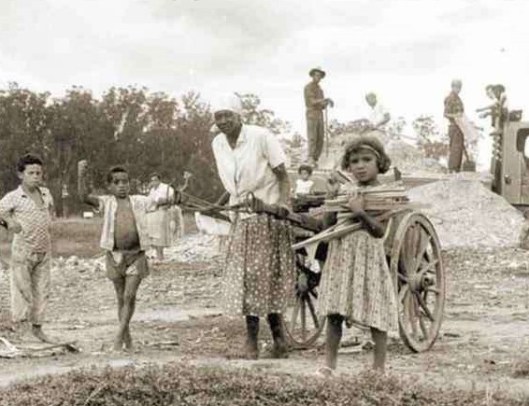
Carolina Maria de Jesus - Favela of Caninde - Sao Paulo - Before publication of first book

Carolina Maria de Jesus with cart – Favela of Canindé – São Paulo (circa 1958)
Photo Credit: Jornal Estado de Minas (Collection Audálio Dantas)


My Poetry Corner November 2018 features the poem “Humanity” (Humanidade) by Afro-Brazilian writer and poet, Carolina Maria de Jesus (1914-1977), born in a rural community in Minas Gerais, Southeast Brazil.

An illegitimate child of a sharecropping family, Carolina was treated as an outcast. After just two years in primary school, when she learned to read and write, she developed a love for reading. She dreamed of becoming a writer.

“The book…fascinates me,” de Jesus writes in My Strange Diary (Meu Estranho Diário). “I was raised in the world. Without maternal guidance. But books guided my thinking. Avoiding the abysses that we encounter in life. Blessed the time I spent reading. I came to the conclusion that it’s the poor who must read. Because the book, it’s the compass that we have to guide man into the future…”

In 1930, de Jesus moved with her family to the State of São Paulo, where she worked as a washerwoman and, later, as a housemaid. After her mother’s death in 1937, she moved to the state capital, an industrial megalopolis. In 1948, she became pregnant for a Portuguese sailor. After he abandoned her, she moved to the favela (slum) of Canindé. Two other children followed, for different fathers.

De Jesus eked out a living: working as a housemaid and scavenging for paper and scrap metal around Canindé. An independent woman, she refused to marry because of the domestic violence she witnessed around her. Writing on blank pages of used notebooks she found in trash cans, she began recording her day-to-day existence as one of society’s “discarded” and marginalized people.

In her first entry, she writes: “July 15, 1955. The birthday of my daughter Vera Eunice [born 1953]. I wanted to buy a pair of shoes for her, but the price of food keeps us from realizing our desires. Actually we are slaves to the cost of living…”
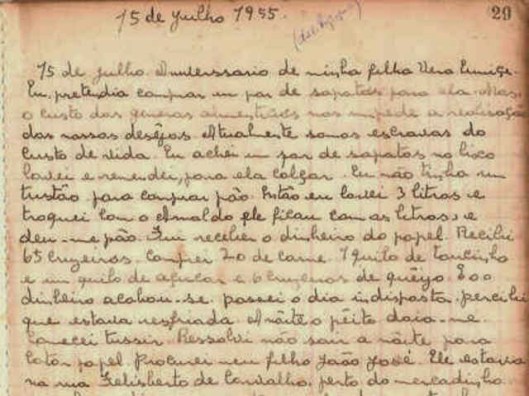
Carolina Maria de Jesus - Manuscript 15 July 1955

Carolina Maria de Jesus – Manuscript of Journal – July 15, 1955
Photo Credit: Templo Cultural Delfos


Her stories, poems, and journal entries describe her struggle to rise above poverty and the ever-present specter of hunger. She calls attention to the social problems they face—prostitution, adultery, incest, alcoholism, physical violence, and foul language—and the consequences in their lives. She writes of the racial injustice and discrimination heaped on the poor and blacks in the favelas. She notes the empty promises made by politicians.

In an untitled poem from her journal, de Jesus requests:

Don’t say that I was trash,
that I lived on the margin of life.
Say that I was looking for work,
but I was always slighted.
Tell the Brazilian people
that my dream was to be a writer,
but I did not have money
to pay for a publisher.

A breakthrough came in 1958 when Carolina de Jesus met the young journalist, Audálio Dantas, during his visit to the favela for an assignment. On learning about her journal, he recognized its uniqueness and sociological importance. Through Dantas’ influence, edited excerpts were published in a magazine. Their popularity among readers led to the publication of her journal in 1960 as a book titled, Quarto de Despejo (Trash Room).

Carolina Maria de Jesus, Audálio Dantas e Ruth de Souza na Favela do Canindé. São Paulo, 1961

From left to right: Carolina Maria de Jesus, Journalist Audálio Dantas, and Actress Ruth de Souza – Favela of Canindé – São Paulo – 1961
Photo Credit: Collection Audálio Dantas


When asked about the idea for the name of her book, de Jesus told the interviewer: “In 1948, when they began to demolish one-story houses to construct apartment buildings, we, the poor, that lived in collective housing units, were trashed and we began living under bridges. That’s why I call the favela the trash room for a city. We, the poor, are old junk.”

Trash Room became an instant bestseller, selling 10,000 copies within the first three days and 90,000 more copies over the next six months. The English version, Child of the Dark, followed in 1962. The book soon drew international attention. But, to the Brazilian literary elite, it lacked linguistic quality. Three more books published in the 1960s received little attention.
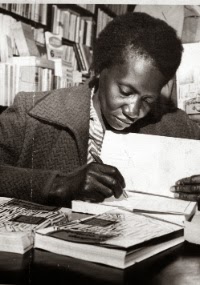
Carolina Maria de Jesus durante noite de autógrafos do lançamento de seu livro Quarto de Despejo, São Paulo, em 1960.

Carolina Maria de Jesus signing her book Quarto de Despejo – São Paulo – 1960
Photo Credit: Templo Cultural Delfos


In her poem, “Many fled on seeing me,” published posthumously (1996) in Personal Anthology, a poetry collection, de Jesus laments:

It was paper I collected
To pay for my living
And in the trash I found books to read
How many things I wanted to do
I was hindered by prejudice
When I die I want to be born again
In a country where blacks predominate

With her book royalties, Carolina de Jesus bought a house in a middle-class neighborhood. Admiration turned to envy. Some accused her of being ambitious and uncharitable.

The featured poem, “Humanity,” published posthumously in My Strange Diary, is composed of four stanzas with a rhyme scheme aabccb. De Jesus expresses her disillusions with humankind: the perversity, wickedness, greed, tyrannical…egoists, and hypocrisy.

After knowing humanity
its perversities
its ambitions
I have been getting older
and losing
the illusions

[…]

When I die…
I don’t want to be born again
It’s horrible, to endure humanity
that has a noble appearance
that conceals
its worst qualities

Unable to adjust to life among the middle-class, de Jesus moved to the countryside where she lived in poverty until the end of her life. Her passing in 1977 went virtually unnoticed. She left behind more than 5,000 handwritten pages that contained seven novels, over 60 texts of chronicles, fables, autobiography and stories, over 100 poems, and four plays.

To read the featured poem in its original Portuguese and learn more about the work of Carolina Maria de Jesus, go to my Poetry Corner November 2018.

NOTE: All translations from Portuguese to English done by Rosaliene Bacchus.


“Male and female He created them”

14 Sunday Oct 2018

Posted by Rosaliene Bacchus in Human Behavior, Social Injustice, United States

≈ 39 Comments

Tags

Brett Kavanaugh, Christine Blasey Ford, Creation accounts in the Bible, Equal Rights Amendment (ERA), Equal rights for girls and women, International Day of the Girl Child, Sexual assault, Sexual predators, U.S. Supreme Court

Brett Kavanaugh sworn in to the US Supreme Court - 6 October 2018

Brett Kavanaugh sworn in to the U.S. Supreme Court – October 6, 2018
Photo Credit: The Press Democrat


Despite sexual assault allegations, on October 6, 2018, Brett Kavanaugh was sworn in to the U.S. Supreme Court. His contentious nomination process before the male-dominated Senate Committee hammered home the gnawing reality: Women have yet to achieve equal footing with men under our legal system.

To achieve what may have been a lifelong ambition, Kavanaugh exposed his “two spirited daughters” to the public bashing of his integrity. Has he used the sexual allegations – which he has denied with tears and anger – as a teaching moment for his ten- and thirteen-year old daughters? Has he considered the possibility that his daughters could one day suffer the same trauma as his accuser, Christine Blasey Ford?

Ford did not tell her parents what had happened that summer day while she was out with trusted friends. Like so many of us born female, she kept the sexual assault a secret. Continue reading →

“Clan” – Poem by Jamaica-born Colin Channer

30 Sunday Sep 2018

Posted by Rosaliene Bacchus in Poetry

≈ 39 Comments

Tags

“Clan” by Colin Channer, Father-son relationship, Fatherhood, Jamaica Constabulary Force, Jamaica/Caribbean Region, Jamaica’s Morant Bay Rebellion 1865, Novelist and Poet Colin Channer, Police violence, Providential by Colin Channer, The policeman

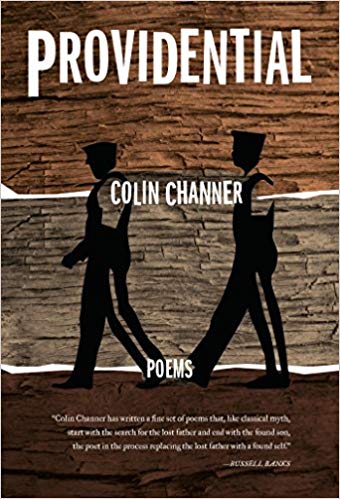
Front Cover - Providential - Poems by Colin Channer

Front Cover: Providential: Poems by Colin Channer
Photo Credit: Akashic Books


My Poetry Corner October 2018 features the poem “Clan” from the poetry collection, Providential, by Colin Channer, a novelist and poet born in Kingston, Jamaica. At eighteen, upon completion of high school, he migrated to New York to pursue a career in journalism. He earned a B.A. in Media Communications from Hunter College of the City University of New York. Father of two, he currently lives in New England.

When Channer was six years old, his father, a policeman, left the family, forcing his mother to work two jobs. After her daytime job as a pharmacist at a local hospital, she worked nights in a drugstore. Channer’s collection explores the violence of policing that ruined his father, their fractured relationship, and the challenges of being a better father to his own teenage son.

Channer’s teenage years contrasts with that of his American-born son. In his poem “Mimic,” he observes his son, born with the ears of a mimic: 

Makonnen, Brooklyn teenager
with Antillean roots
replanted in Rhode Island,
a state petiter than the country
where my navel string was cut.

After guiding his son through the roots of the civil war in Liberia – founded on the coast of Guinea / by ex-chattel – Channer reflects on his kinsmen in Jamaica.

How they discuss a slaughter
with ease, by rote,
never as something spectacular,
absurd. And I belong to them,
on two sides, for generations,
by blood. 

My kinsmen aren’t poets.
They’re cops. Continue reading →

Why should I care about rising sea levels?

16 Sunday Sep 2018

Posted by Rosaliene Bacchus in Anthropogenic Climate Disruption, United States

≈ 49 Comments

Tags

Chronic coastal flooding, Coastal real estate market, Global warming, High-risk coastal cities, Sea level rise, Underwater: Rising Seas Chronic Floods and the Implications for US Coastal Real Estate June 2018

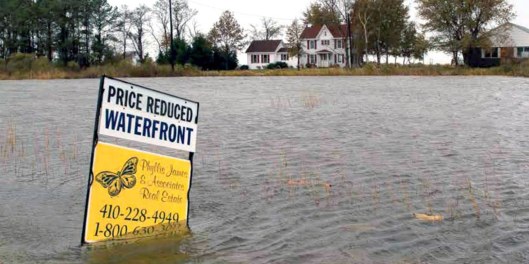
Price Reduced Waterfront Property

Price Reduced Waterfront Property – East Coast USA
Photo Credit: Union of Concerned Scientists (UCS) June 2018 Report


On September 14th, Hurricane Florence hit the North Carolina coast. With warmer oceans driven by climate change, the massive, slow-moving storm dumped more than 20 inches of rain on its arrival. The storm surge reached levels of 9 to 13 feet. Hundreds of inundated home owners may never recover from the damages.

Ten years ago, on September 15, 2008, another kind of disaster struck our nation with the collapse of Lehman Brothers and the insurance giant AIG. The worst financial crisis since the Great Depression sent rogue waves across our nation and worldwide. The fallout—foreclosures, shrinking home values, and millions of job losses—battered Americans.

With rising sea levels—the result of ongoing heating of our oceans and atmosphere—another massive, slow-moving crisis is brewing. Hundreds of thousands of coastal properties will increasingly face chronic high-tide flooding. Their falling property values will threaten local and regional real estate markets that could cascade nationwide into a coastal real estate bust. Continue reading →

“Mary Comes Down” – Poem by Jeannine M Pitas

02 Sunday Sep 2018

Posted by Rosaliene Bacchus in Poetry

≈ 30 Comments

Tags

American poet Jeannine M Pitas, “Mary Comes Down” by Jeannine M Pitas, Immigrants, Mary Mother of Jesus, Migrant and refugee women, Thank You For Dreaming by Jeannine M Pitas (2018), US Immigration

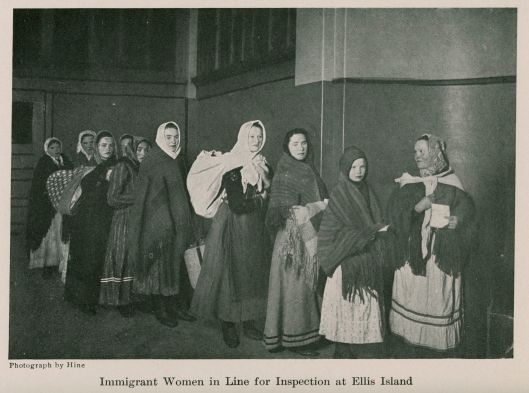
Immigrant Women in Line for Inspection at Ellis Island - New York

Photo Credit: The Newberry Digital Collections for the Classroom


My Poetry Corner September 2018 features the poem “Mary Comes Down” from the poetry collection Thank You For Dreaming by Jeannine M. Pitas. Native of Buffalo, New York, Pitas is a poet, writer, teacher, and Spanish-English literary translator. She holds a PhD in Comparative Literature from the University of Toronto, Canada. She currently lives in Dubuque, Iowa, where she is an Assistant Professor of English and Spanish at the University of Dubuque.

Pitas dedicates the poems in this collection “to those who dream.” She writes in her poem, “thank you for dreaming”:

you have made it to this adopted country
with your heart intact
and you will use it to find people
like you, once silenced –
touched and held
by your dreams

In “Just after my mother tells me she voted for Trump,” Pitas questions her mother’s xenophobia. Had her mother forgotten that she had sent Jeannine to Polish Saturday School and that Jeannine’s Polish great-grandmother had refused to speak English?

America First, American carnage, make America
great again, pass the ban, build the wall,
Mama, Mamusia, tell me –
Where on earth do you think we came from?
Who the hell can we say we are?

Rejecting the divisive politics of xenophobia and hate, Pitas seeks connection with the Other. “I want to touch your life with mine,” she repeats twice in her poem, “To an Immigrant.” Continue reading →

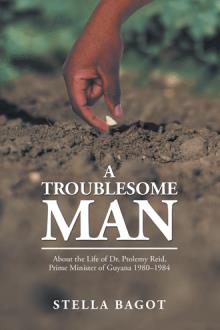
A Troublesome Man by Stella Bagot

19 Sunday Aug 2018

Posted by Rosaliene Bacchus in Guyana, Recommended Reading

≈ 40 Comments

Tags

Biographer Stella Bagot, Bookers British Guiana, Dartmouth Village/Essequibo Coast/Guyana, Life of Dr. Ptolemy Alexander Reid, Prime Minister of Guyana 1980-1984, Tuskegee School of Veterinary Medicine in Alabama/USA

Front Cover - A Troublesome Man by Stella Bagot

Front Cover of A Troublesome Man by Stella Bagot


In her authorized biography, A Troublesome Man: About the life of Dr. Ptolemy Reid, Prime Minister of Guyana, 1980-1984, Stella Bagot records Dr. Reid’s account of his journey from childhood to his entrance into political life. It’s an engaging and inspiring story of a poor village boy who, with determination and persistence, overcame the obstacles along each step of his journey.

Ptolemy was born on May 8, 1918, the youngest of five siblings, in Dartmouth Village on the Essequibo Coast of then British Guiana. He lost his father to pneumonia when he was ten years old. To contribute to the family’s income, he worked on their farm plot, in the sugarcane fields, and with local fishermen. His school attendance suffered.

On completing primary school at sixteen, Ptolemy pursued employment as a pupil teacher. Five years later, he took two years off to earn his teacher’s certificate at the Government Training Center in Georgetown, the capital. Over the following eight years, he gained the reputation as a strict and proficient teacher at the Dartmouth Anglican village school. Continue reading →

“Hothouse Earth”

12 Sunday Aug 2018

Posted by Rosaliene Bacchus in Anthropogenic Climate Disruption

≈ 59 Comments

Tags

2018 Report: Indicators of Climate Change in California, California fire season, California wildfires, Carr and Mendocino Comples Fires in Northern California, Climate Change, Heat stress, Hothouse Earth, Report Indicators of Climate Change in California May 2018, Trajectories of the Earth System in the Anthropocene August 2018

Mendocino Complex Fire August 2018 - Northern California - USA

Mendocino Complex Fire now largest fire in California history – August 2018 – California/USA
Photo Credit: ABC News (Noah Berger/AFP)


In Southern California, we’re experiencing temperatures of 88 to 98 degrees Fahrenheit. At our local garden center two Saturdays ago, around ten o’clock, I had to seek shelter from the Sun. Heat stress aborted my fun-time outdoors while selecting succulent plants. Then, the following week, I suffered another episode of heat stress at the hair salon. The air-condition system in the one-story, flat-roof building wasn’t up to the task.

The danger is far greater in areas where firefighters battle to contain ferocious wildfires. The Carr and Mendocino Complex Fires in Northern California have together burned more than 486,000 acres of land and destroyed 1,828 structures. Hundreds more structures are damaged or under threat. Only 51 percent of the wildfires is contained. The California Fire Department expects to contain the Mendocino Complex Fire by September 1st. Continue reading →

“International Congress of Fear” by Brazilian Poet Carlos Drummond de Andrade

05 Sunday Aug 2018

Posted by Rosaliene Bacchus in Brazil, Poetry

≈ 25 Comments

Tags

Brazilian poet, In the Middle of the Road (No Meio do Caminho) by Carlos Drummond de Andrade, International Congress of Fear (Congresso Internacional do Medo) by Carlos Drummond de Andrade, Living in fear, Minas Gerais/Brazil, Square Dance (Quadrilha) by Carlos Drummond de Andrade, War on Terror

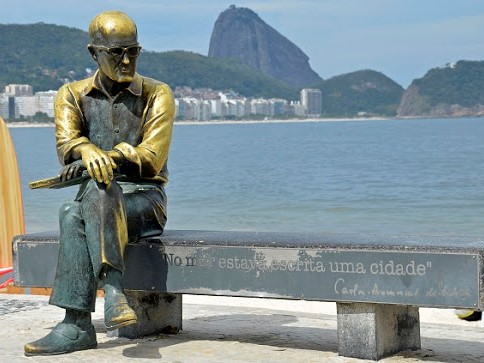
Statue of Carlos Drummond de Andrade - Copacabana - Rio de Janeiro

Bronze Statue of Carlos Drummond de Andrade – Copacabana – Rio de Janeiro – Brazil
Photo Credit: Viagens Vamos Nessa! (Alexandre Macieira/Riotur)


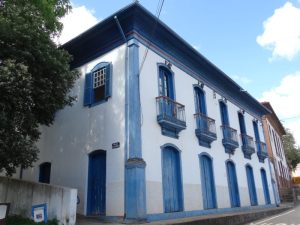
My Poetry Corner August 2018 features the poem “International Congress of Fear” (Congresso Internacional do Medo) by Brazilian poet, journalist, and literary critic Carlos Drummond de Andrade (1902-1987), born in Itabira in Minas Gerais, Southeast Brazil. Considered one of the most influential Brazilian poets of the twentieth century, Drummond remains well-loved by the people for his humility and concern with the plight of modern man and struggle for freedom and dignity. 

Home of Carlos Drummond de Andrade - Itabira - Minas Gerais - Brazil

Home of Carlos Drummond de Andrade – Itabira – Minas Gerais – Brazil
Photo Credit: Passeios.org


At nineteen, Drummond began his writing career as a columnist for the Diário de Minas newspaper. At his parents’ insistence, he qualified as a pharmacist in 1925 but never practiced the profession. Instead, he cofounded a literary journal and joined the Brazilian Modernist movement. After entering the public service in 1934, he was transferred to Rio de Janeiro where he worked in the Ministry of Education & Public Health, then the National Historical and Artistic Heritage Service. Continue reading →

← Older posts
Newer posts →

Subscribe

  • RSS - Posts
  • RSS - Comments

Archives

  • March 2026
  • February 2026
  • January 2026
  • November 2025
  • October 2025
  • September 2025
  • August 2025
  • July 2025
  • June 2025
  • May 2025
  • April 2025
  • March 2025
  • February 2025
  • January 2025
  • December 2024
  • November 2024
  • October 2024
  • September 2024
  • August 2024
  • July 2024
  • June 2024
  • May 2024
  • April 2024
  • March 2024
  • February 2024
  • January 2024
  • December 2023
  • November 2023
  • October 2023
  • September 2023
  • August 2023
  • July 2023
  • June 2023
  • May 2023
  • April 2023
  • March 2023
  • February 2023
  • January 2023
  • December 2022
  • November 2022
  • October 2022
  • September 2022
  • August 2022
  • July 2022
  • June 2022
  • May 2022
  • April 2022
  • March 2022
  • February 2022
  • January 2022
  • December 2021
  • November 2021
  • October 2021
  • September 2021
  • August 2021
  • July 2021
  • June 2021
  • May 2021
  • April 2021
  • March 2021
  • February 2021
  • January 2021
  • December 2020
  • November 2020
  • October 2020
  • September 2020
  • August 2020
  • July 2020
  • June 2020
  • May 2020
  • April 2020
  • March 2020
  • February 2020
  • January 2020
  • December 2019
  • November 2019
  • October 2019
  • September 2019
  • August 2019
  • July 2019
  • June 2019
  • May 2019
  • March 2019
  • February 2019
  • January 2019
  • December 2018
  • November 2018
  • October 2018
  • September 2018
  • August 2018
  • July 2018
  • June 2018
  • May 2018
  • April 2018
  • March 2018
  • February 2018
  • January 2018
  • December 2017
  • November 2017
  • October 2017
  • September 2017
  • August 2017
  • July 2017
  • June 2017
  • May 2017
  • April 2017
  • March 2017
  • February 2017
  • January 2017
  • December 2016
  • November 2016
  • October 2016
  • September 2016
  • August 2016
  • July 2016
  • June 2016
  • May 2016
  • April 2016
  • March 2016
  • January 2016

Categories

  • About Me
  • Anthropogenic Climate Disruption
  • Brazil
  • Economy and Finance
  • Family Life
  • Festivals
  • Guyana
  • Health Issues
  • Human Behavior
  • Immigrants
  • Nature and the Environment
  • People
  • Philosophy
  • Poetry
  • Poetry by Rosaliene Bacchus
  • Recommended Reading
  • Relationships
  • Religion
  • Religion & Spirituality
  • Reviews – The Twisted Circle: A Novel by Rosaliene Bacchus
  • Reviews – Under the Tamarind Tree: A Novel by Rosaliene Bacchus
  • Save Our Children
  • Social Injustice
  • Technology
  • The Twisted Circle: A Novel by Rosaliene Bacchus
  • The Writer's Life
  • Uncategorized
  • Under the Tamarind Tree: A Novel by Rosaliene Bacchus
  • United States
  • Urban Violence
  • Women Issues
  • Working Life

Blogroll

  • Angela Consolo Mankiewicz
  • Caribbean Book Blog
  • Dan McNay
  • Dr. Gerald Stein
  • Foreign Policy Association
  • Guyanese Online
  • Writer's Digest
  • WritersMarket: Where & How to Sell What You Write

Meta

  • Create account
  • Log in
  • Entries feed
  • Comments feed
  • WordPress.com

Enter your email address to subscribe to this blog and receive notifications of new posts by email.

Join 3,089 other subscribers

Blog at WordPress.com.

Privacy & Cookies: This site uses cookies. By continuing to use this website, you agree to their use.
To find out more, including how to control cookies, see here: Cookie Policy
  • Subscribe Subscribed
    • Three Worlds One Vision
    • Join 3,089 other subscribers
    • Already have a WordPress.com account? Log in now.
    • Three Worlds One Vision
    • Subscribe Subscribed
    • Sign up
    • Log in
    • Report this content
    • View site in Reader
    • Manage subscriptions
    • Collapse this bar
 

Loading Comments...