• About

Three Worlds One Vision

~ Guyana – Brazil – USA

Three Worlds One Vision

Author Archives: Rosaliene Bacchus

“My Mother’s Blues” – Poem by British-Caribbean Poet Malika Booker

19 Sunday Jan 2020

Posted by Rosaliene Bacchus in Poetry

≈ 44 Comments

Tags

British-Caribbean poet Malika Booker, Poem “My Mother’s Blues” by Malika Booker, Poetry Collection Pepper Seed by Malika Booker (2013), The Caribbean Woman

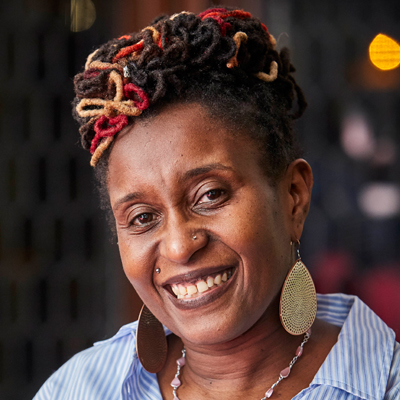
British-Caribbean Poet Malika Booker
Photo Credit: University of Leeds Poetry Centre


My Poetry Corner January 2020 features the poem “My Mother’s Blues” from the poetry collection, Pepper Seed, by British-Caribbean poet Malika Booker. Born in 1970 in London, UK, to a Guyanese father and Grenadian mother, she grew up in Guyana. At eleven years, she returned to the UK with her parents where she still lives. In June 2019, she received the Cholmondeley Award for her outstanding contribution to poetry.

Booker began writing and performing poetry while studying anthropology at Goldsmiths, University of London, where she also earned her Master of Arts degree. In 2001, she founded Malika’s Poetry Kitchen to create a nourishing and encouraging community of writers dedicated to developing their writing craft.

Finding publishers for black poetic voices took time. Her chapbook, Breadfruit, came out in 2007. It took another six years for the publication of her poetry collection, Pepper Seed (Peepal Tree Press, 2013). Well received by British literary circles, it was shortlisted for the 2014 Seamus Heaney Centre prize for best first full collection published in the UK and Ireland, as well as the OCM Bocas poetry prize.

As a survivor of a verbally abusive paternal grandmother and her own broken family, Booker opens a window to the raw, hot pepper seed of Caribbean rum culture—legacy of the British colonial sugar plantation economy. Faced with sexual promiscuity, sexual abuse, and domestic violence, the three generations of women in Pepper Seed are hardened to survive the blows. This is evident in Booker’s six-part long poem “Red Ants Bite.” Booker expresses only love for her grandmother, even though she put this hard thing deep inside me.

I tried to make her love me,
but her mouth was brutal,
like hard-wire brush, it scraped me, 

took skin off my bones, made me bleed
where no one could see,
so I’d shrink, a tiny rocking foetus.

Hardened by sugar plantation life, Booker’s grandmother was equally brutal to her daughters and only daughter-in-law.

My father was her everything,
my brother her world.
her daughters reaped zigar.

In part six, the poet gives voice to her deceased grandmother in response to her question: Granny, what I do to you, eh? 

I lived till me turn one hundred and one,
live through back-break in backra sun.
I was a slave baby mixed with plantation white.
This creamy skin draw buckman, blackman,

coolieman, like prize. And if you did hear sweet talk,
if you did see how much fine fuck I get.
I
s hard life, hard, hard life and only one son I bear.
My mother tell me to kill di girl child dem –  

[…] 

I was the lone woman every man want to advantage,
I had was to sharpen meh mouth like razor blade,
turn red in seconds till bad word spill blood.
Scunt-hole child, you want sorry? 

[…]

I toughen you soffi-ness, mek man can’t fuck you
easy so. So fuck off, leave the dead some peace.

The way the Caribbean woman is shaped, moulded and made hard to deal with she man full of rum and carnival, unfolds in Booker’s three-part poem “Warning”:

Some great grandmother told her daughter,
Never let no man hit you and sleep,
pepper the food, boil hot water and throw,
use knife and make clean cut down there,
use cutlass and chop, then go police.

Booker didn’t realize how much her grandmother’s warning had toughened her until the night she invited a male friend, too drunk to drive, to sleep over.

I felt something in his look, he and I
alone in that room, and my blood raised up.
My pores swelled, I went to the kitchen,
took down that knife, marched upstairs,
told him, I cutting it off if you lose your mind.
Don’t think it and if you do, don’t sleep. 

In “Waiting for Father,” the poet describes her father as a flamboyant cockerel parading in sunshine with his floozies. His shameless infidelity made my mother stony, a martyr for her kids, brittle and bitter, till my stepdad unbricked her wall… 

In her 2018 conversation with British writer Hannah Silva, Booker relates how she struggled to write “My Mother’s Blues,” the final poem in the collection, in which she taps into her mother’s pain. It took her twenty-six drafts to figure it out. In presenting the poem to an audience, she came to realize its importance as a mother’s collective experience.

My mother knows pain
a sorrowful gospel type of pain – 

a slowly losing her eyesight,
eye-drops every night pain, 

a headache worrying for her children overseas,
praying for their safety pain,

a stare through each night, eyes blackening,
hope they are alright pain. 

Yes, my mother knows pain. 

Booker’s litany of pain goes on; pain that resonates deeply within me. It’s a pain without end, even when death beckons: it’s a don’t worry I go soon be dead and gone / and then you go miss me pain, the poet writes.

To read the complete featured poem and learn more about the work of Malika Booker, go to my Poetry Corner January 2020.

Only Oil Matters to the Empire

12 Sunday Jan 2020

Posted by Rosaliene Bacchus in United States

≈ 54 Comments

Tags

ExxonMobil/Guyana, Fossil fuel industry, Gary Girdhari’s letter to Kaieteur News 01/07/20, Guyana’s Oil Reserves, Middle East Oil, No to War in Iran, The Empire & Oil

Oil drives our global economies. Oil is power. Oil fuels the Empire. Iraq and Iran together produce 8.3 million billion barrels a day of the liquid gold (figures from Offshore-Technology). Their joint oil reserves amount to 300,903 million barrels (figures from World Atlas). While the world’s largest oil producer with 12 mbbl barrels/day, the United States has only 39,230 million barrels of oil reserves. Venezuela tops the list with 300,878 million barrels. It’s no accident that the Empire is embedded in the Middle East. Controlling access to all that oil is vital to its continued survival.

Guyana will soon be part of that blessed-accursed herd of oil producing nations. With six billion barrels, and climbing, of oil reserves, Guyana now overtakes Venezuela in the overheated top seat. As a small country with racial divisive politics, the developing CARICOM member nation is easy prey for the Empire. It’s also corrupted at its core—the scourge of former colonial territories rich in natural resources. Trapped under the claws of the Eagle since its conception, the country is now secure in its nest.

In his letter to the editor of Guyana’s Kaieteur News on January 7, 2020, Dr. Gary Girdhari expresses misgivings about the legacy of oil giants in oil producing countries, even within their own home countries.

Guyana’s leaders, he writes, “ignore elemental facts, namely, in Africa, Yemen, Iraq, Afghanistan, and elsewhere where oil wealth is secured in the pockets of Big Oil and a select few government officials and their cronies; and where inequality and extreme poverty spiral downwards.” 

Dr. Girdhari shares my concern about the impact of the fossil fuel industry on Earth’s environment and climate. He reminds the Guyanese people: “The International Press is replete with information regarding fossil fuel and its ruination to the environment – regarding carbon emission, depletion of the ozone layer, and extreme climate change. Already the world is witnessing the effects of permafrost melting in the Arctic and deforestation in Brazil and Africa. The tipping point is approaching sooner than we think.” 

I don’t share his hope “for total disbandment of oil in Guyana…and that good environmentally-friendly judgement triumphs.” I believe that it’s too late in the game. Guyana is already in the pockets of ExxonMobil and other players in the fossil fuel industry. 

To the Empire, only oil matters. It is prepared to use severe economic sanctions and military force to secure and control Earth’s oil reserves. Our lives—we the people of Earth—don’t matter. Let the trees burn. Let the ice caps melt. Let the wildlife die.

The Empire began 2020 with an act of war against Iran and Iraq. Warfare is Big Business. Warfare is barbaric. Warfare is self-destructive: It turns our young men into killers of innocent women, children, and babies. Heroes for the Empire.

I say NO to war with Iran. I say NO to the never-ending wars of the Empire. I say NO to more failed sovereign states. I say NO to ‘rubblized’ cities and uprooted broken families. I say NO to ecocide.

I say YES to ending our dependency on fossil fuels. I say YES to the Green New Deal.


Catching up…

08 Wednesday Jan 2020

Posted by Rosaliene Bacchus in Reviews - Under the Tamarind Tree: A Novel by Rosaliene Bacchus

≈ 21 Comments

Tags

American bilingual writer Rebecca Cuningham, Praise for Under the Tamarind Tree: A Novel


I’m finally catching up after a year-end, ten-day break. No TV. No Internet.  My son, an independent contractor, decided that the December holiday season was the best time for him to tackle the flooring of our rental apartment that was in critical need of repair and renovation.

What a jolt to return to the drums of war with Iran! I missed sharing my year-end reflections, now rendered meaningless in the face of such reckless decision-making. In this New Year 2020, I wish that saner minds will prevail across our nation and worldwide.

During my absence from WordPress, I missed the following praise for Under the Tamarind Tree: A Novel, posted on my blog on December 28, 2019, by American bilingual writer Rebecca Cuningham, blogging at Fake Flamenco:

Characters extremely compelling.

Rosaliene, I’ve read your novel! I learned so much about Guyana; history, culture, language, food, and the ethnic backgrounds of the country. I felt I was learning deep culture from an expert and that my time reading was a journey. The characters were extremely compelling. The years leading up to independence from Britain are so momentous and full of tension. What a surprise ending and it also seemed right. Thank you for the education and the well crafted story.

Read more PRAISE FOR UNDER THE TAMARIND TREE: A NOVEL at my writer’s website, rosalienebacchus.com.


Dear Reader, my debut novel, Under the Tamarind Tree, is available at Rosaliene’s Store on Lulu.com and other book retailers at Amazon, BAM! Book-A-Million, Barnes and Noble, Book Depository, and Indie Bound.
Learn more about Under the Tamarind Tree at Rosaliene’s writer’s website.

“Confession” – Poem by Tunisian American Poet Leila Chatti

15 Sunday Dec 2019

Posted by Rosaliene Bacchus in Poetry

≈ 37 Comments

Tags

“Confession” by Leila Chatti, Female Muslim poet, Halal If You Hear Me: BreakBeat Poets Vol. 3 edited by Fatimah Asghar and Safia Elhillo, Mary Mother of Jesus, Tunisian American Poet

Tunisian American Poet Leila Chatti
Photo Credit: Leila Chatti Website


My Poetry Corner December 2019 features the poem “Confession” by Tunisian American poet and educator Leila Chatti, published in the anthology of poetry Halal If You Hear Me: BreakBeat Poets Vol. 3, edited by Fatimah Asghar and Safia Elhillo.

Born in 1990 in Oakland, California, Leila Chatti is one of four children of a Tunisian father and American mother. Her parents met when her father came to the United States to study for his PhD. Her father, the only one of seven children to leave Tunisia, maintained a close relationship with relatives by having his American-born family spend the summers with them.

Raised a Muslim by her father, Chatti began fasting for Ramadan at seven years old. Her experiences associated with fasting—hunger, restraint, obedience, resilience, lack—played a significant role in shaping the person she has become. In her poem, “Fasting in Tunis,” she recalls:

My God taught me hunger
is a gift, it sweetens
the meal. All day, I have gone without
because I know at the end I will
eat and be satisfied. In this way,
my desire is bearable. Continue reading →

“Silent Warrior” by Indigenous Brazilian Poet Márcia Wayna Kambeba

17 Sunday Nov 2019

Posted by Rosaliene Bacchus in Brazil, Poetry

≈ 54 Comments

Tags

Amazonas/Brazil, Belém/Pará/Brazil, Destruction of Amazon Rainforest, Indigenous Brazilian poet Márcia Wayna Kambeba, Poem “Silêncio Guerreiro” (Silent Warrior) by Márcia Wayna Kambeba, Poetry collection Ay Kakyri Tama – Eu Moro Na Cidade by Márcia Wayna Kambeba, Rights of Indigenous Peoples

Márcia Wayna Kambeba – Indigenous Poet – Belém – Pará – Brazil
Photo Credit: Brazilian Women’s Magazine Seja Extraordinária


My Poetry Corner November 2019 features the poem “Silent Warrior” (Silêncio Guerreiro) by Márcia Wayna Kambeba, the artistic name of Márcia Vieira da Silva, an indigenous Brazilian poet, geographer, performer, and activist for indigenous rights. Born in 1979 in the village of Belém do Solimões in the northern Brazilian state of Pará, she is of Omágua Kambeba ethnicity. At eight years, she moved with her family to São Paulo de Olivença—once the largest settlement of the Kambeba people—in Amazonas. Today, she lives in the city of Belém, capital of Pará.

In the opening stanza of the title poem—written in Tupi followed by its translation in Portuguese—of her poetry collection, Ay Kakyri Tama – Eu Moro na Cidade (Ay Kakyri Tama – I Live in the City), she writes:

I live in the city
This city is also our village
We do not erase our ancestral culture
Come white man, let us dance our ritual.

Influenced by her grandmother, a teacher and poet, Márcia Wayna began writing her first poems at twelve years. She earned a bachelor’s degree in geography at the Amazonas State University in Manaus. In 2012, she received her master’s degree at the Amazonas Federal University. For her dissertation, she documented the history of the Omágua Kambeba people from the sixteenth to the twenty-first century, examining the relationship between territory, identity, and ethnicity. Her poetry collection, self-published in 2018, is the transformation of her dissertation to inform others about the invisible life of indigenous peoples.

Continue reading →

Under the Tamarind Tree: Book Review by Robert A. Vella

13 Wednesday Nov 2019

Posted by Rosaliene Bacchus in Reviews - Under the Tamarind Tree: A Novel by Rosaliene Bacchus

≈ 39 Comments

Tags

Book Review: Under the Tamarind Tree, SciFi Author Robert A Vella, The Secular Jurist


A gripping page-turner that will tug hard on your heartstrings


Robert A. Vella, science fiction author of The Martian Patriarch (2012), has posted a review of my novel, Under the Tamarind Tree, on his blog, The Secular Jurist.

Under the Tamarind Tree by Rosaliene Bacchus is a fictional story centered on a young man in British Guyana from 1950 to the nation’s independence in the late 1960s.  The two-decade long tale of his life is highlighted with haunting memories of his childhood, captivating family intrigue exquisitely unwound by the author, and touching marital troubles all told within the context of a culturally diverse country torn by political and ethnic strife.  It’s a gripping page-turner that will tug hard on your heartstrings.

The story moves along briskly from scene to scene and is delightfully filled with tactile samplings of Guyanese culture particularly its lifestyles, cuisine, and colloquial speech.  Reading it brought the activities, tastes, sounds, and even the climate and geography of the country vividly to my mind.  It was almost like being there.  This quality of the novel cannot be understated and it is the most essential component of the story.

Continue reading at The Secular Jurist WordPress blog


Dear Reader, my debut novel, Under the Tamarind Tree, is available at Rosaliene’s Store on Lulu.com and other book retailers at Amazon, BAM! Book-A-Million, Barnes and Noble, Book Depository, and Indie Bound.

Learn more about Under the Tamarind Tree at Rosaliene’s writer’s website.

World Scientists’ Warning of a Climate Emergency

10 Sunday Nov 2019

Posted by Rosaliene Bacchus in Anthropogenic Climate Disruption

≈ 63 Comments

Tags

Alliance of World Scientists, American Institute of Biological Sciences (BioScience), Changes in global human activities (1979-2019), Climate emergency, Climatic response to global human activities (1979-2019), Critical steps to reduce worst effects of climate change, World Scientists’ Warning of Climate Emergency (Nov/2019)

Cartoon: We are Destroying Earth
Photo Credit: Union of Concerned Scientists/Justin Bilicki


On November 5, 2019 more than 11,000 scientists from 153 countries signed a declaration, published in the journal of the American Institute of Biological Sciences, that states “clearly and unequivocally that planet Earth is facing a climate emergency.” Though scientists began alerting world leaders forty years ago about global warming, greenhouse gas emissions continue to soar.

In an effort to expand our understanding of the climate emergency, the scientists have prepared several graphics of the vital signs of climate change over the last forty years.

The climate crisis is closely linked to excessive consumption of the wealthy lifestyle.

The 15 charts in Figure 1 depict the changes in global human activities from 1979 to the present:

01. Human population
02. Total fertility rate
03. Ruminant livestock (cattle)
04. Per capita meat production
05. World GDP (Gross Domestic Product)
06. Global tree cover loss
07. Brazilian Amazon Forest loss
08. Energy consumption (oil, coal, gas, solar/wind)
09. Air transport (by number of passengers)
10. Total institutional fossil fuel assets divested
11. CO2 (carbon dioxide) emissions
12. Per capita CO2 (carbon dioxide) emissions
13. Greenhouse gas emissions covered by carbon pricing
14. Carbon price
15. Fossil fuel subsidies

The 14 charts in Figure 2 depict the climatic response time series for the same period, 1979 to the present:

01. Carbon dioxide in atmosphere
02. Methane in atmosphere
03. Nitrous oxide in atmosphere
04. Surface temperature change
05. Minimum Arctic sea ice
06. Greenland ice mass change
07. Antarctica ice mass change
08. Glacial thickness change
09. Ocean heat content change
10. Ocean acidity
11. Sea level change
12. Area burned in the United States
13. Extreme weather/climate/hydro events
14. Annual losses due to weather/climate/hydro events Continue reading →

Lessons from Nature: Adapting to Change

03 Sunday Nov 2019

Posted by Rosaliene Bacchus in Nature and the Environment

≈ 69 Comments

Tags

Adapting to Change, California wildfires, Climate Crisis, Ecological Crisis, Georgetown/Guyana, Lessons from Nature, Succulent plants

Section of my succulent garden


The succulent plants in my garden brighten my life. During humanity’s mad dash towards the abyss, their quiet dynamic presence calm my troubled mind. Under California’s scorching sunshine that set dry brush ablaze, my succulent plants have found a way to survive the extreme heat. Some change color; others become more compact in form.

“Flap Jack” or Paddle Plant – Parent plant under heat stress

“Flap Jack” or Paddle Plant – Area of little direct sunlight
Grown from cuttings from parent plant


Given their amazing ability to propagate from cuttings, I’ve planted succulents in several garden plots of our apartment complex. I marvel at their adaptation to different soil quality and amount of sunlight.

Aeonium “Mint Saucer” – Area with full sunlight

Aeonium “Mint Saucer” – Little sunlight during early morning


The adverse effects of our climate and ecological crises will intensify in the years ahead. It’s already happening here in California. People who have lost their homes in areas ravaged by wildfires must now question the viability of staying and rebuilding. This is also the case for areas facing prolonged drought and frequent flooding.

My birthplace in Georgetown, Guyana, is also under threat. The Guyanese Online Blog recently posted a video (duration 2:04 minutes) demonstrating the gravity of the situation.

Source: Guyanese Online Blog


A time is coming—perhaps, sooner than we envisage—when people everywhere across our country and planet will be on the move. Pulling up our roots and resettling in different lands is nothing new for our species. But the climate and ecological changes already underway will demand much more of us.

Like the succulents, will our species adapt to surviving on less water, on less food? How will we adapt to living on a hotter planet?

Quote

Thought for Today: There is nothing weak about being honorable.

27 Sunday Oct 2019

Posted by Rosaliene Bacchus in People, United States

≈ 17 Comments

Tags

US Representative Elijah Cummings of Maryland


Excerpt from Former President Barack Obama’s Eulogy honoring Representative Elijah Cummings of Maryland:

[T]here is nothing weak about kindness and compassion. There is nothing weak about looking out for others. There is nothing weak about being honorable. You are not a sucker to have integrity and to treat others with respect…

“The cost of doing nothing isn’t nothing,” [Elijah] would say, and folks would remember why they entered into public service. “Our children are the living messengers we send to a future we will never see,” he would say, and he would remind all of us that our time is too short not to fight for what’s good and what is true and what is best in America.

Two hundred years to 300 years from now, [Elijah] would say, people will look back at this moment and they will ask the question “What did you do?” And hearing him, we would be reminded that it falls upon each of us to give voice to the voiceless, and comfort to the sick, and opportunity to those not born to it, and to preserve and nurture our democracy.

~ Read the complete text of Barack Obama’s Eulogy for Elijah Cummings, published in The Atlantic, October 25, 2019.

News Update ~ Under the Tamarind Tree: A Novel

24 Thursday Oct 2019

Posted by Rosaliene Bacchus in Under the Tamarind Tree: A Novel by Rosaliene Bacchus

≈ 16 Comments

Tags

Apple iBook Under the Tamarind Tree: A Novel by Rosaliene Bacchus


Readers who use the Apple iPhone or iPad can now buy the iBook version of Under the Tamarind Tree: A Novel by Rosaliene Bacchus.


Other News

I’ve recently received the following e-mail from a friend in Los Angeles who has been a great supporter of my work.

Under the Tamarind Tree
From: Eileen Xxxxxx (e-mail address)
To: rosalienebacchus
Date: Friday, October 18, 2019, 6:37 PM PDT

Hi Rose,
Based on your short story collection, I am really looking forward to reading your first novel!!!
Thanks for being the great writer that you are. I love your work!!
Wishing you the very best.
Eileen

Eileen is a retired public school teacher and private tutor.


Dear Reader, my debut novel, Under the Tamarind Tree, is now available at Rosaliene’s Store on Lulu.com and other book retailers at Amazon, BAM! Book-A-Million, Barnes and Noble, Book Depository, and Indie Bound.

Learn more about Under the Tamarind Tree at Rosaliene’s writer’s website.

← Older posts
Newer posts →

Subscribe

  • RSS - Posts
  • RSS - Comments

Archives

  • March 2026
  • February 2026
  • January 2026
  • November 2025
  • October 2025
  • September 2025
  • August 2025
  • July 2025
  • June 2025
  • May 2025
  • April 2025
  • March 2025
  • February 2025
  • January 2025
  • December 2024
  • November 2024
  • October 2024
  • September 2024
  • August 2024
  • July 2024
  • June 2024
  • May 2024
  • April 2024
  • March 2024
  • February 2024
  • January 2024
  • December 2023
  • November 2023
  • October 2023
  • September 2023
  • August 2023
  • July 2023
  • June 2023
  • May 2023
  • April 2023
  • March 2023
  • February 2023
  • January 2023
  • December 2022
  • November 2022
  • October 2022
  • September 2022
  • August 2022
  • July 2022
  • June 2022
  • May 2022
  • April 2022
  • March 2022
  • February 2022
  • January 2022
  • December 2021
  • November 2021
  • October 2021
  • September 2021
  • August 2021
  • July 2021
  • June 2021
  • May 2021
  • April 2021
  • March 2021
  • February 2021
  • January 2021
  • December 2020
  • November 2020
  • October 2020
  • September 2020
  • August 2020
  • July 2020
  • June 2020
  • May 2020
  • April 2020
  • March 2020
  • February 2020
  • January 2020
  • December 2019
  • November 2019
  • October 2019
  • September 2019
  • August 2019
  • July 2019
  • June 2019
  • May 2019
  • March 2019
  • February 2019
  • January 2019
  • December 2018
  • November 2018
  • October 2018
  • September 2018
  • August 2018
  • July 2018
  • June 2018
  • May 2018
  • April 2018
  • March 2018
  • February 2018
  • January 2018
  • December 2017
  • November 2017
  • October 2017
  • September 2017
  • August 2017
  • July 2017
  • June 2017
  • May 2017
  • April 2017
  • March 2017
  • February 2017
  • January 2017
  • December 2016
  • November 2016
  • October 2016
  • September 2016
  • August 2016
  • July 2016
  • June 2016
  • May 2016
  • April 2016
  • March 2016
  • January 2016

Categories

  • About Me
  • Anthropogenic Climate Disruption
  • Brazil
  • Economy and Finance
  • Family Life
  • Festivals
  • Guyana
  • Health Issues
  • Human Behavior
  • Immigrants
  • Nature and the Environment
  • People
  • Philosophy
  • Poetry
  • Poetry by Rosaliene Bacchus
  • Recommended Reading
  • Relationships
  • Religion
  • Religion & Spirituality
  • Reviews – The Twisted Circle: A Novel by Rosaliene Bacchus
  • Reviews – Under the Tamarind Tree: A Novel by Rosaliene Bacchus
  • Save Our Children
  • Social Injustice
  • Technology
  • The Twisted Circle: A Novel by Rosaliene Bacchus
  • The Writer's Life
  • Uncategorized
  • Under the Tamarind Tree: A Novel by Rosaliene Bacchus
  • United States
  • Urban Violence
  • Women Issues
  • Working Life

Blogroll

  • Angela Consolo Mankiewicz
  • Caribbean Book Blog
  • Dan McNay
  • Dr. Gerald Stein
  • Foreign Policy Association
  • Guyanese Online
  • Writer's Digest
  • WritersMarket: Where & How to Sell What You Write

Meta

  • Create account
  • Log in
  • Entries feed
  • Comments feed
  • WordPress.com

Enter your email address to subscribe to this blog and receive notifications of new posts by email.

Join 3,232 other subscribers

Blog at WordPress.com.

Privacy & Cookies: This site uses cookies. By continuing to use this website, you agree to their use.
To find out more, including how to control cookies, see here: Cookie Policy
  • Subscribe Subscribed
    • Three Worlds One Vision
    • Join 3,232 other subscribers
    • Already have a WordPress.com account? Log in now.
    • Three Worlds One Vision
    • Subscribe Subscribed
    • Sign up
    • Log in
    • Report this content
    • View site in Reader
    • Manage subscriptions
    • Collapse this bar
 

Loading Comments...