• About

Three Worlds One Vision

~ Guyana – Brazil – USA

Three Worlds One Vision

Author Archives: Rosaliene Bacchus

“Cruel Radiance” by Cambodian American Poet Monica Sok

11 Sunday Apr 2021

Posted by Rosaliene Bacchus in Poetry, United States

≈ 36 Comments

Tags

A Nail the Evening Hangs On by Monica Sok, Asian American poet, Cambodian American poet, Genocide survivors, Intergenerational trauma, Poem “Cruel Radiance” by Monica Sok

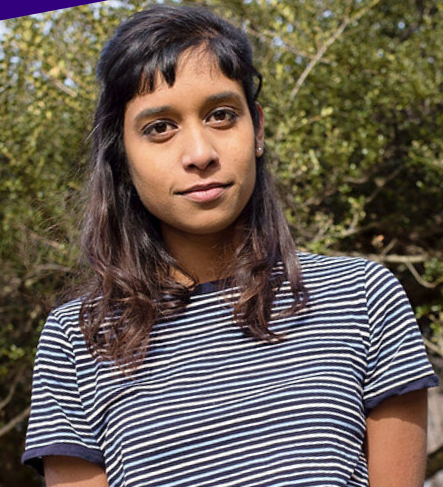
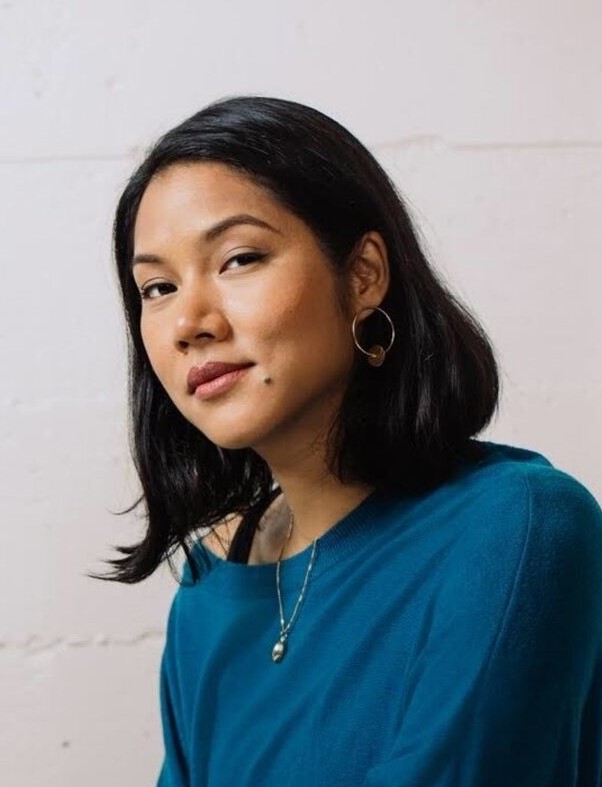
Cambodian American Poet Monica Sok
Photo Credit: The Chautauquan Daily

My Poetry Corner April 2021 features the poem “Cruel Radiance” from the debut poetry collection A Nail the Evening Hangs On (Copper Canyon Press, 2020) by Cambodian American poet Monica Sok. Born in 1990 in Lancaster, Pennsylvania, Sok is the daughter of refugees. She is a Jones Lecturer at Stanford University and teaches poetry to Southeast Asian youth at the Center for Empowering Refugees and Immigrants in Oakland, California.

Sok dedicates her poetry collection to her grandmother Bun Em who arrived in the USA in 1981, two years after escaping genocide under the Khmer Rouge regime with her four daughters and two sons. A master silk weaver, Bun Em’s loom, grief, joy, and perseverance infuse Sok’s real and imagined collective memory.

In “The Weaver,” Sok transforms her grandmother’s grief into nourishment for others around her. It made her happy / as she worked on silk dresses / and her hair never ran out. / Sometimes, when she was tired, / she’d tie it up / and let all the tired animals around her house / drink from her head. Her loom becomes an old friend and an ancestor she prays to in the poem “Ode to the Loom.” Her grief is re-imagined as nails falling like rain in the darkness, so that when her hair falls / not as rain does / but as nails the evening hangs on, / and her hands slip no longer / from silk but on walls in the dark / hall to her room…

As the daughter of genocide survivors, Sok grew up with familial silence. Her poems came out of silence, she told Danny Thanh Nguyen during an interview in May 2020. “I’m writing about the genocide, but I’m writing more about the inheritance of that trauma…. I had to give myself the permission to write the stories and I went into myth-making, tried to mythologize my family’s narratives.” But the narratives are not just about her family’s experience, she noted. Rather, she was working towards a collective history of all Cambodian families.

Continue reading →

Thought for Today: “The city isn’t really for you.”

28 Sunday Mar 2021

Posted by Rosaliene Bacchus in Human Behavior, Social Injustice, Urban Violence

≈ 45 Comments

Tags

Feminist City: Claiming Space in a Man-made World by Leslie Kern, Feminist Geography, Rape myths, Sarah Everard, Sexist myths, Women's Mental Safety Map

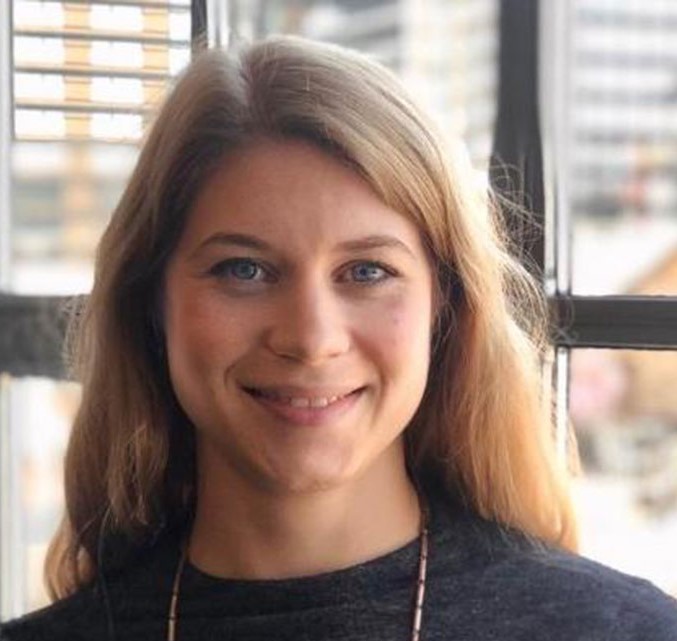
Sarah Everard – London – United Kingdom
Photo Credit: YorkMix – UK

Rape myths are a key component of what we now call “rape culture.” “What were you wearing?” and “why didn’t you report it?” are two classic rape myth questions that “Me Too” survivors face. Rape myths also have a geography. This gets embedded into the mental map of safety and danger that every woman carries in her mind. “What were you doing in that neighbourhood? At that bar? Waiting alone for a bus?” “Why were you walking alone at night?” “Why did you take a shortcut?” We anticipate these questions and they shape our mental maps as much as any actual threat. These sexist myths serve to remind us that we’re expected to limit our freedom to walk, work, have fun, and take up space in the city. They say: The city isn’t really for you.

Excerpt from Feminist City: Claiming Space in a Man-made World by Leslie Kern, Verso, London/UK and New York/USA, 2020. First published in Canada in 2019 by Between the Lines, Toronto, Canada.

On Wednesday, March 3, 2021, after leaving a friend’s house around 9:00 p.m., 33-year-old marketing executive Sarah Everard disappeared during her walk home in south London. Her remains were found seven days later in a large builder’s bag in a wooded area more than 50 miles from where she was last seen. The man charged with her kidnapping and murder is a 48-year-old Metropolitan Police officer.


Leslie Kern, an urban geographer, is an Associate Professor of Geography and Environment and Director of Women’s and Gender Studies at Mount Allison University in New Brunswick, Canada. She has a doctorate in gender, feminist, and women’s studies from York University in Toronto. She does research on gender and cities, gentrification, and environmental justice. She is the author of Sex and the Revitalized City: Gender, Condominium Development, and Urban Citizenship. Born in Toronto, Canada, she has also lived in London and New York City.

“The woman without a name” by Brazilian Poet Carlos Machado

21 Sunday Mar 2021

Posted by Rosaliene Bacchus in Brazil, Poetry

≈ 42 Comments

Tags

Bahia/Brazil, Brazilian poet Carlos Machado, Misogyny, Patriarchy, Poem “A mulher sem nome” (The woman without a name) by Carlos Machado, Violence against women, Women without a voice

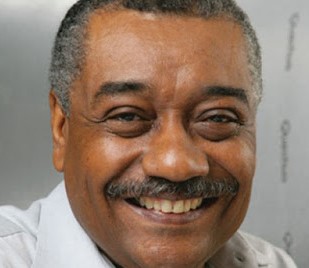
Brazilian Poet Carlos Machado
Photo Credit: Kultme, Sourced on Templo Cultural Delfos

My Poetry Corner March 2021 features the poem “The woman without a name” (A mulher sem nome) from the poetry collection Lot’s Wife (A mulher de Ló) by Carlos Machado, a Brazilian poet and journalist. Born in 1951 in Muritiba, Bahia, Northeast Brazil, Machado earned his bachelor’s degree in mechanical engineering at the Federal University of Bahia. He studied journalism at the Faculty of Cásper Libero in São Paulo, where he lived for forty years before returning to his home state of Bahia in 2020. He is the creator and editor of the fortnightly bulletin, poesia.net, in which he promotes contemporary Brazilian poets.

Machado’s poetry collection Lot’s Wife, published in 2018, reflects his deep concern for the condition of women. In support of the feminist movement, he is involved in studying the causes and means of combating the increasing incidents of violence against women in Brazil. The biblical story of Lot’s wife is a story of violence against a woman whose only crime was that of looking back.

For readers unfamiliar with the biblical story told in the Old Testament Book of Genesis, chapter 19, the God of Abraham destroys the towns of Sodom and Gomorrah for their sinful ways. Two angels warn Abraham’s nephew Lot, living in Sodom, of the coming cataclysm. They instruct him to flee with his family and not to look back until they had reached the next town. Only Lot’s wife and two daughters heed the warning. Other members of Lot’s extended family refuse to join them, declaring it fake news. We don’t know why Lot’s wife looks back as they leave Sodom. We know only that her punishment is immediate and severe: She is transformed into a pillar of salt. Silenced.

Continue reading →

Praise to the Women of Our World!

07 Sunday Mar 2021

Posted by Rosaliene Bacchus in Human Behavior, People

≈ 54 Comments

Tags

Choose to Challenge, International Women’s Day 2021, UN Map of Women in Politics 2020, Women empowerment, Women of the World

United Nations Map of Women in Politics 2020
Created by the Inter-Parliamentary Union (IPU) and UN Women, showing global rankings as of January 1, 2020
Source: UN Women

Praise to the women of our world on this International Women’s Day 2021!

Praise to the women of our world who grow and reap our food crops with little or no pay.

Praise to the women of our world in the health care services who risk their lives daily, fighting to save the lives of our loved ones stricken with COVID-19.

Praise to the women of our world left alone to care for children suffering from debilitating diseases and mental illness.

Praise to the women of our world who sacrifice their dreams and talents to raise their children or care for aging and sick parents.

Praise to the women of our world who struggle to eke out an existence doing low-paid essential work.

Praise to the women of our world who support, defend, uplift, and empower other women and girls.

Praise to the women of our world who, despite the challenges of married life, continue to hold their families together within a loving and nurturing environment.

Praise to the women of our world who work in all levels of our local and national government to bring about the changes we need for a more just and equitable world.

Continue reading →

The Writer’s Life: My Author’s Website

28 Sunday Feb 2021

Posted by Rosaliene Bacchus in The Writer's Life

≈ 64 Comments

Tags

Author Rosaliene Bacchus, Guyanese-Canadian Author Ken Puddicombe, The Author’s Website, Yahoo Small Business website design tools

Photo of Rosaliene with Gloria, Owner of Gloria’s Restaurant in West Los Angeles, California

I am no computer systems geek. So, imagine my consternation on January 25th when I received an email from Yahoo Small Business regarding the latest change in their webhosting services. Since 2007, I have been using their Yahoo SiteBuilder to power my business website, rosalienebacchus.com. The monthly fee for their webhosting services is a good fit for my super-tight budget. With the assistance of Richard Wagner’s book, Yahoo! SiteBuilder for Dummies, I managed to create and maintain my own website. Whatever it lacked in professional appearance, my website attracted numerous visitors for its rich content for those interested in doing business with the United States and Brazil.

Over the years, I survived the disruption and frustration of each upgrade to the Yahoo SiteBuilder editor. That is all in the past now. Beginning this coming March 31, Yahoo will discontinue support for the system powering my website. While I still clung to the old and familiar, the company had moved on to newer website creation tools. They are putting the old editor to rest. My website will become an orphan.

After D-Day, I will no longer be able to edit or update my website. “You must create a new website,” Yahoo informed me. They provided me with two options: make a new business website myself or use a team of experts to build my website. Neither option appealed to me.

After nine days of resisting the inevitable, I emailed Yahoo Small Business enquiring about maintaining my domain name and links to the vast content on my soon-to-be-orphaned website. Both needless concerns: I have received no response to date.

With trepidation a week later, I clicked the link provided to learn more about creating my own website. Fear of the unfamiliar is a terrible master. I can do this, I assured myself. Each breakthrough was cause for celebration. As I got better at creating new pages, I even had fun with the creative process. I had to let go of my international trade content and focus on creating an author’s website. For over six years now, I no longer provide international trade services. The time to move on had long passed.

On February 26th, carefully following Yahoo’s information guide, I successfully published my website using the same domain: www.rosalienebacchus.com. My new author’s website is filled with photographs and empty spaces. The website Menu is also not fixed, which I find a nuisance. My son, an electronic games designer, explained that these features facilitate viewing on the smaller laptops and smart phones.

My Home Page features my journey to becoming a writer as well as a link to an interview with Guyanese-Canadian author Ken Puddicombe in which I share my writing process. I hope that the reviews and praise provided on the page promoting my debut novel, Under the Tamarind Tree, will entice more readers to buy my book. For those readers wishing to learn more, my website also offers “Behind the Scenes” information about my debut novel.

Snapshots and links to my Short Stories, published on the Guyana Journal website, are also available for free reading. I have yet to determine how I will archive my monthly featured poets on my Poetry Corner. I am still in the learning process. Creating the dropdown box for “Behind the Scenes” was a major achievement. Yay!

Since I am not active on Facebook and LinkedIn, I would love to have visitors connect with me through My Blog, Three Worlds One Vision: Guyana~Brazil~USA.

I would love to get your feedback. My new author’s website is still a work in progress.

“Islands” – Poem by Barbadian Poet Edward Kamau Brathwaite

21 Sunday Feb 2021

Posted by Rosaliene Bacchus in Poetry

≈ 49 Comments

Tags

Afro-Caribbean history, Barbadian Poet Edward Kamau Brathwaite, Barbados/Caribbean Region, Caribbean Poetry, Islands (1969) by Edward Kamau Brathwaite, Jamaica/Caribbean Region, Masks (1968) by Edward Kamau Brathwaite, Poem “Islands” by Edward Kamau Brathwaite, Poetry Collection The Arrivants: A New World Trilogy (1973) by Edward Kamau Brathwaite, Rights of Passage (1967) by Edward Kamau Brathwaite, Slavery in the Caribbean

Barbadian Poet Edward Kamau Brathwaite
Photo by Beverly Brathwaite

My Poetry Corner February 2021 features the poem “Islands” from the poetry collection, The Arrivants: A New World Trilogy, by the Caribbean poet and historian Edward Kamau Brathwaite (1930-2020). Born in Bridgetown, Barbados, into a middle-class family, he won a British scholarship to Pembroke College, Cambridge. There he earned a bachelor’s degree in history in 1953 and gained a diploma in education the following year.

Brathwaite’s illusions of regarding himself as a British citizen were shattered on arrival in the Mother Country. He felt “rootless” and, like other British colonial West Indians of the time, he was ready to become an “Afro-Saxon.” This changed when he took a job as an Education Officer in Ghana, then the West African colony of the Gold Coast. For him, it was a spiritual homecoming. The eight years (1955 to 1962) that he spent travelling to villages across the country also expanded his thinking about history, culture, and ways of perceiving the world.

On returning to the Caribbean, he held teaching posts at the University of the West Indies, first in St. Lucia, and then in Kingston, Jamaica. While working in Jamaica, he began writing Rights of Passage, his first poetry collection, later published in 1967. Set in the Caribbean, the collection traces the movement of the black people’s dispossession of their African homeland, the sufferings of the Middle Passage and slavery, and struggle to find their footing in the new world and beyond. The people lament in “New World A-Comin’”:

 It will be a long time before we see
 this land again, these trees
 again, drifting inland with the sound
 of surf, smoke rising
 
 It will be a long time before we see
 these farms again, soft wet slow green
 again: Aburi, Akwamu,
 mist rising 
Continue reading →

Thought for Today: If Black women were free…

14 Sunday Feb 2021

Posted by Rosaliene Bacchus in Social Injustice, United States

≈ 39 Comments

Tags

Black feminists, Keeanga-Yamahtta Taylor, The Combahee River Collective Statement


The psychological toll of being a Black woman and the difficulties this presents in reaching political consciousness and doing political work can never be underestimated. There is a very low value placed upon Black women’s psyches in this society, which is both racist and sexist. […] If Black women were free, it would mean that everyone else would have to be free since our freedom would necessitate the destruction of all the systems of oppression.

Excerpt from “The Combahee River Collective Statement,” as fully published in How We Get Free: Black Feminism and The Combahee River Collective, edited by Keeanga-Yamahtta Taylor, Haymarket Books, Chicago/Illinois, USA, 2017. Her book received the 2018 Lambda Literary Award for LGBTQ Nonfiction.

The year 2017 marked the fortieth anniversary of the Combahee River Collective Statement, which introduced to the world terms such as “interlocking oppression” and “identity politics.” The Combahee River Collective (CRC) was a radical Black feminist organization formed in 1974, growing out of the antiracist and women’s liberation movements of the 1960s and 1970s. It was named after Harriet Tubman’s 1853 raid on the Combahee River in South Carolina that freed 750 enslaved people.


Keeanga-Yamahtta Taylor writes on Black politics, social movements, and racial inequality in the United States. Her book From #BlackLivesMatter to Black Liberation won the 2016 Lannan Cultural Freedom Award for an Especially Notable Book. Her articles have been published in Souls: A Critical Journal of Black Politics, Culture and Society, Jacobin, New Politics, The Guardian, In These Times, Black Agenda Report, Ms., International Socialist Review, and other publications. Taylor is Assistant Professor in the Department of African American Studies at Princeton University.

Climate Crisis Update – Part Two: NOAA National Climate Report 2020 & UNEP Emissions Gap Report 2020

07 Sunday Feb 2021

Posted by Rosaliene Bacchus in Anthropogenic Climate Disruption, United States

≈ 33 Comments

Tags

Global climate crisis, Net-zero emission goals by 2050, NOAA National Climate Report 2020, Paris Climate Agreement, U.S. 2020 Billion-Dollar Weather and Climate Disasters, UNEP Emissions Gap Report 2020

Continued from Part One: U.S. Re-engagement in a Warming World.

Map of U.S. 2020 Billion-Dollar Weather and Climate Disasters
Source: National Centers for Environmental Information – NOAA

According to the NOAA National Climate Report 2020, issued on January 12, 2021, last year was the most active wildfire year on record across the West. In California, thousands of firefighters battled five of the six largest wildfires in our state’s history. Nearly 10,000 fires burned over 4.2 million acres. The August Complex fire alone burned over 1 million acres, an area larger than the state of Rhode Island. In Colorado, three extensive wildfires, burning over 500,000 acres, also broke the state’s historical record.

For 2020, the average temperature of 54℉ (12.2℃) for the contiguous U.S. (CONUS) ranks as the fifth warmest year in the last 126 years on record. On August 16th, temperatures soared to 130℉ (54.4℃) in California’s Death Valley—the hottest CONUS temperature recorded in 2020. Most of the contiguous U.S. experienced above average temperatures. Ten states across the Southwest, Southeast, and East Coast had their second-warmest year on record.

East Coast residents also faced several record-breaking storm events. Thirty named storms formed in the Atlantic Ocean, breaking the record of 28 set in 2005. Tropical storms Cristobal, Marco, Laura, Delta, and Zeta made landfall in Louisiana, the most storms on record for any state in one year. Hurricane Laura generated a storm surge of over 17 feet (5.16 meters) above ground level, which would be the largest on record for Louisiana.

The Midwest was not spared. In August 2020, the region was hit by a historic derecho, a destructive thunderstorm complex. The derecho raced across the Central States, causing damages estimated at $11 billion, the costliest to hit the region in four decades.

Perhaps, like me, you have not yet experienced loss of property, livelihood, or a loved one due to some climate disaster. Yet, we the working people all suffer the consequences of the economic costs of these weather and climate disasters. America’s annual loss in 2020 exceeded $95 billion, the fourth highest cost on record. Twenty-two of these events caused losses amounting to more than $1 billion each, shattering yet another annual record of 16 events made in 2011 and 2017. The total cost of U.S. billion-dollar weather and climate disasters over the last five years (2016-2020) exceeds a record $600 billion.

Unless we change the way we live and work, these weather and climate disaster events will continue to intensify and cripple our state and local economies, already under stress due to the global COVID-19 pandemic. On the upside, the lockdown and reduced economic activities in the U.S. and worldwide have led to a drop in global greenhouse gas (GHG) emissions. But, it is just a short-term reduction.

At the time of completing their Emissions Gap Report 2020, released on December 9, 2020, the United Nations Environment Programme (UNEP) reported that 126 countries, covering just 51 percent of global GHG emissions have net-zero goals that are formally adopted, announced, or under consideration. If the U.S. adopts a net-zero GHG target, as announced by the Biden Administration, the share would increase to 63 percent.

Apart from the USA, only ten other G20 members have set net-zero emission goals by 2050: Argentina, Canada, China (before 2060), European Union, France, Japan, Mexico, South Africa, South Korea, and the United Kingdom. Based on pre-COVID-19 projections, only nine G20 members are on track to achieve their unconditional nationally determined contributions (NDCs).

Without a firm commitment to significantly reduce GHG emissions, as set out in the Paris Climate Agreement, we the people of Earth will face a temperature increase of at least 3℃ (37.4℉) by the end of this century.

As at October 2020, global COVID-19 fiscal spending continued to promote high-carbon economic production. In planning the recovery from COVID-19, governments worldwide have an opportunity to catalyze low-carbon lifestyle changes by disrupting entrenched practices. (Clearing forests to rear cattle for beef consumption comes to mind.) Based on UNEP’s consumption-based accounting, around two-thirds of global emissions are linked to private household activities. Moreover, the richest One Percent of the world’s population account for more than twice the combined share of emissions of the poorest 50 percent. The report further notes that our participation as members of civil society is essential to bring about wider changes in the social, cultural, political, and economic systems in which we live. We have to change our lifestyles if we are to bridge the emissions gap. (Emphasis is mine.)

Watch the UNEP’s video, “Emissions Gap: A Turning Point,” released on December 9, 2020 (duration 1:35 minutes):

Change is inevitable. More so when we set the change into motion. In 2020, COVID-19 forced us into lockdown mode, bringing the global economy to a standstill. In the USA, our inability as a nation to agree on a strategy to combat a highly contagious, mutating, deadly foe will cost us more lives. Our economic recovery will take longer. Meanwhile, time is running out on tackling a global climate crisis that is gathering force with each passing day. Staying safe in place may not be an option.

CLIMATE CRISIS UPDATE – PART ONE: U.S. RE-ENGAGEMENT IN A WARMING WORLD

31 Sunday Jan 2021

Posted by Rosaliene Bacchus in Anthropogenic Climate Disruption

≈ 42 Comments

Tags

Antarctic Thwaites Glacier, Arctic Sea Ice Year 2020 in Review, Climate Adaptation Summit (CAS) 2021, Global average surface temperature 2020, Global climate crisis, Global Landscapes Forum 2020, US President Biden’s Executive Order on Tackling the Climate Crisis at Home and Abroad, Year of Fire 2020

Source: NASA Goddard Earth Science Research

News from the White House made my day on Wednesday, January 27. Acknowledging that climate change is an existential threat, our President Joseph Biden signed an Executive Order on Tackling the Climate Crisis at Home and Abroad.

“It is the policy of my Administration that climate considerations shall be an essential element of United States foreign policy and national security,” said President Biden.

In his Administration’s commitment to addressing the global climate crisis, he also confirmed the appointment of former Secretary of State John Kerry as America’s first Special Presidential Envoy for Climate.

Another first will be the establishment of the White House Office of Domestic Climate Policy within the Executive Office of the President. Headed by the Assistant to the President and National Climate Advisor, the Climate Policy Office will coordinate the domestic policy-making process and monitor its implementation nationwide. The National Climate Adviser will also chair the National Climate Task Force that will be comprised of twenty-one members from across federal agencies and departments. With the creation of a Civilian Climate Corps Initiative, our youth—who were clamoring for urgent action before the pandemic drove them off the streets—will have the opportunity for training in conservation and climate resilience.

At last, a government-wide approach to addressing the climate crisis!

To achieve a sustainable clean energy economy and meet our commitment of net-zero carbon emissions by no later than 2050, our nation will need millions of construction, manufacturing, engineering, and skilled-trades workers to build new infrastructure.

President Biden noted: “Such jobs will bring opportunity to communities too often left behind—places that have suffered as a result of economic shifts and places that have suffered the most from persistent pollution, including low-income rural and urban communities, communities of color, and Native communities.”

It is my hope that the escalating evidence of Mother Nature’s fury will silence the voice of climate change deniers within the Biden Administration.

Continue reading →

“No Island Is an Island, & So Forth” by American Poet John Sibley Williams

17 Sunday Jan 2021

Posted by Rosaliene Bacchus in Poetry, United States

≈ 40 Comments

Tags

America’s violent history, As One Fire Consumes Another by John Sibley Williams, Racism in America, Storming of the United States Capitol 2021, White Privilege, White supremacists and white nationalists

American Poet John Sibley Williams
Photo Credit: Poet’s Website

My Poetry Corner January 2021 features the poem “No Island Is an Island, & So Forth” from the poetry collection As One Fire Consumes Another (2019) by John Sibley Williams, an award-winning poet, educator, and literary agent. Born in 1978 in Massachusetts, Williams earned his bachelor’s degree at the University at Albany in New York in 2003. Then in 2005, he received a Master of Fine Arts in Creative Writing from Rivier University in New Hampshire. He moved to Portland, Oregon, in 2009 where he earned a Master of Arts in Book Publishing from Portland State University. He lives in Portland with his partner and twin toddlers.

Williams’ poetry collection As One Fire Consumes Another comes at a critical time in American history with the empowerment of white supremacist and white nationalist groups. Framing his poems in column-like boxes, resembling coffins, the poet confronts the violent side of American history and bears witness as one fire consumes an unending series of fires in our homeland, on our southern border, and in distant lands. In an interview with Jeanne Huff of Idaho Press, Williams confessed that he struggled in exploring the extent of his “personal privilege as a white, CIS, able-bodied male whose labors and strains are so trifling compared to others.”

In the poem, “Everything Must Go,” a house is portrayed with ghost-white covering sheets and that new coffin smell. Its mossed gables are weighed down by a full century. Out-of-synch always with the dark drift of history, and hopeful that these are not self-repeating tragedies, the poet proposes that we must sell off what we fear owning. To remain silent is not atonement for our dark history.

We have become so numb to the cruelty we inflict on others with our unending wars that nothing stirs the / birds from our oak when we learn that six children were killed in Kabul, the poet observes in “When instinct matures into will.” The horizon sits / precisely where we left it. Fat with / faith. Fat, faithful, choosing what to / feel, feeling nothing.

Fire also rages in the homeland. The poem “A Gift of Violence,” in memory of the Charlottesville riots in August 2017, speaks of the racist hatred still alive across generations.

 Memories of burning buildings raw
 & righteous. A grandfather’s flames
 passed down, undimmed. A full set
 of knives in the drawer without time
 to blunt from underuse. A city never
 quite white enough. A city furiously
 lit by misremembered histories… 

Even Noah’s ark would not be big enough to un- / ruin, no flood more violent than our / own, the poet laments in “Dear Noah.” Like a ghost haunted by itself, / we move along old scars terrified of / what would happen if left to heal.

As a nation, we remain disunited and self-destructive. Call it by its true name: schism, the poet declares in “The Bones of Us.” Before we were a country of / burning buildings & protest & want, / we were the same. A shining city on / a shining hill raised on the silenced / bones of others.

In the featured poem, “No Island Is an Island, & So Forth,” the poet calls on white Americans to consider the role they all play in the hate and violence permeating our society. Holding on to illusions of bygone glories serve only to sever our body politic.

 Sign your name to ruined Civil War
 forts. Next time, use a Sharpie when
 listing your demands to god. Instead
 of touching forehead to ground as if
 in supplication/ecstasy/grief, set fire
 to the old battlefield & let the winds
 unsever your strings to the past. In
 dust & degrees, redraw boundaries.
 This is what happened & this might
 be what we let happen again… 

When Williams penned these words, did he envisage white insurrectionists carrying the Confederate Flag while they stormed Capitol Hill on January 6, 2021? They fashioned their strings to the past into a Jim Crow-styled noose to hang our Vice President who, they believed, had sold out their cause to hold onto political power.

 
 No island is an island; no body just a
 body, & so forth. When the South
 rises again, carry your father with the
 rebel flag tattoo to the window to
 watch the burning. Let the world
 laugh at itself. Break from tradition.
 To men who want & want & want,
 admit you’ve tried so hard not to be
 one of them.

Emboldened and incited by their leader in the White House, white supremacists and white nationalists among us have risen to prominence. To men who want & want & want there is no end to the burning. Fire consumes lives and livelihoods—black, brown, and white alike. No island is an island; no body just a / body, & so forth.

Only we can set ourselves free from the coffins, filled with hate and fear, that imprison our bodies and souls. Are we up to the task?

To read the complete featured poem, “No Island Is an Island, & So Forth,” and learn more about the work of the poet John Sibley Williams, go to my Poetry Corner January 2021.

← Older posts
Newer posts →

Subscribe

  • RSS - Posts
  • RSS - Comments

Archives

  • February 2026
  • January 2026
  • November 2025
  • October 2025
  • September 2025
  • August 2025
  • July 2025
  • June 2025
  • May 2025
  • April 2025
  • March 2025
  • February 2025
  • January 2025
  • December 2024
  • November 2024
  • October 2024
  • September 2024
  • August 2024
  • July 2024
  • June 2024
  • May 2024
  • April 2024
  • March 2024
  • February 2024
  • January 2024
  • December 2023
  • November 2023
  • October 2023
  • September 2023
  • August 2023
  • July 2023
  • June 2023
  • May 2023
  • April 2023
  • March 2023
  • February 2023
  • January 2023
  • December 2022
  • November 2022
  • October 2022
  • September 2022
  • August 2022
  • July 2022
  • June 2022
  • May 2022
  • April 2022
  • March 2022
  • February 2022
  • January 2022
  • December 2021
  • November 2021
  • October 2021
  • September 2021
  • August 2021
  • July 2021
  • June 2021
  • May 2021
  • April 2021
  • March 2021
  • February 2021
  • January 2021
  • December 2020
  • November 2020
  • October 2020
  • September 2020
  • August 2020
  • July 2020
  • June 2020
  • May 2020
  • April 2020
  • March 2020
  • February 2020
  • January 2020
  • December 2019
  • November 2019
  • October 2019
  • September 2019
  • August 2019
  • July 2019
  • June 2019
  • May 2019
  • March 2019
  • February 2019
  • January 2019
  • December 2018
  • November 2018
  • October 2018
  • September 2018
  • August 2018
  • July 2018
  • June 2018
  • May 2018
  • April 2018
  • March 2018
  • February 2018
  • January 2018
  • December 2017
  • November 2017
  • October 2017
  • September 2017
  • August 2017
  • July 2017
  • June 2017
  • May 2017
  • April 2017
  • March 2017
  • February 2017
  • January 2017
  • December 2016
  • November 2016
  • October 2016
  • September 2016
  • August 2016
  • July 2016
  • June 2016
  • May 2016
  • April 2016
  • March 2016
  • January 2016

Categories

  • About Me
  • Anthropogenic Climate Disruption
  • Brazil
  • Economy and Finance
  • Family Life
  • Festivals
  • Guyana
  • Health Issues
  • Human Behavior
  • Immigrants
  • Nature and the Environment
  • People
  • Philosophy
  • Poetry
  • Poetry by Rosaliene Bacchus
  • Recommended Reading
  • Relationships
  • Religion
  • Religion & Spirituality
  • Reviews – The Twisted Circle: A Novel by Rosaliene Bacchus
  • Reviews – Under the Tamarind Tree: A Novel by Rosaliene Bacchus
  • Save Our Children
  • Social Injustice
  • Technology
  • The Twisted Circle: A Novel by Rosaliene Bacchus
  • The Writer's Life
  • Uncategorized
  • Under the Tamarind Tree: A Novel by Rosaliene Bacchus
  • United States
  • Urban Violence
  • Women Issues
  • Working Life

Blogroll

  • Angela Consolo Mankiewicz
  • Caribbean Book Blog
  • Dan McNay
  • Dr. Gerald Stein
  • Foreign Policy Association
  • Guyanese Online
  • Writer's Digest
  • WritersMarket: Where & How to Sell What You Write

Meta

  • Create account
  • Log in
  • Entries feed
  • Comments feed
  • WordPress.com

Enter your email address to subscribe to this blog and receive notifications of new posts by email.

Join 3,230 other subscribers

Blog at WordPress.com.

Privacy & Cookies: This site uses cookies. By continuing to use this website, you agree to their use.
To find out more, including how to control cookies, see here: Cookie Policy
  • Subscribe Subscribed
    • Three Worlds One Vision
    • Join 3,230 other subscribers
    • Already have a WordPress.com account? Log in now.
    • Three Worlds One Vision
    • Subscribe Subscribed
    • Sign up
    • Log in
    • Report this content
    • View site in Reader
    • Manage subscriptions
    • Collapse this bar
 

Loading Comments...