
Tags
Behavioral Change, Extreme weather events, Indigenous knowledge and wisdom, Indigenous Voices, Sense of Permanence, The Changing Earth, Traditional Ecological Knowledge (TEK)
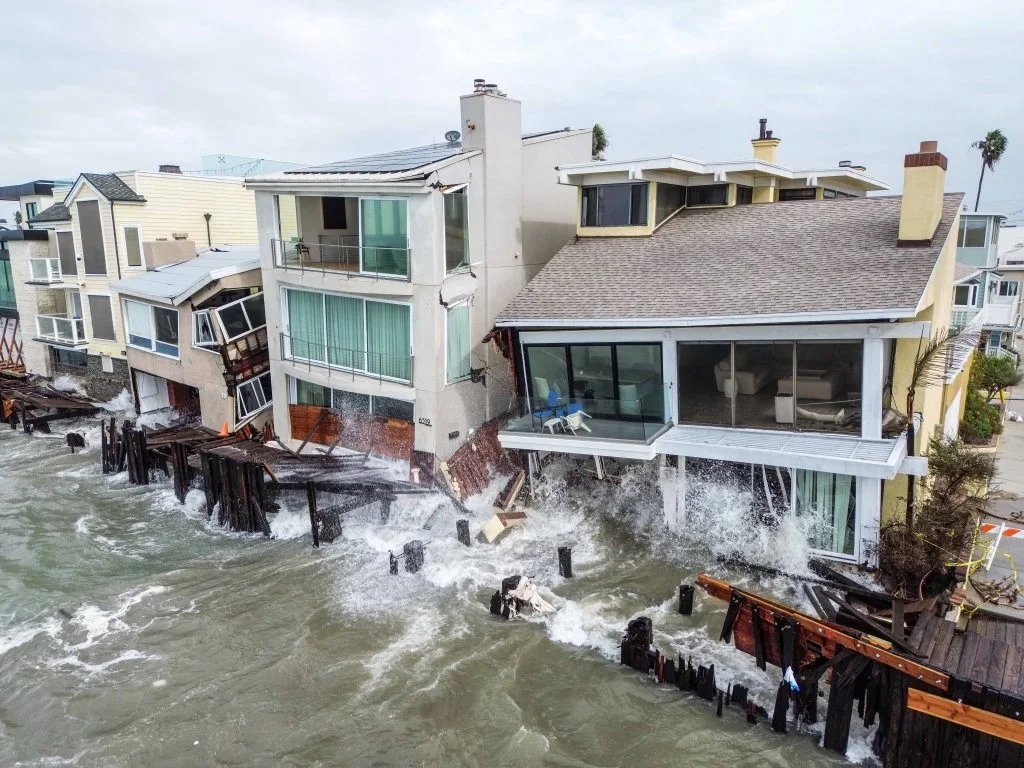
Photo Credit – Yahoo News (Jon Putman for CA Post)
This is the tenth article in my series about our changing Earth from interviews with Native Americans shared in We Are the Middle of Forever: Indigenous Voices from Turtle Island on the Changing Earth, edited by Dahr Jamail and Stan Rushworth (USA 2022). My presentation does not follow the order of the interviews.
#10: Gregg Castro (Salinan, Ohlone)
(Chapter 2, pp. 16-29)
Gregg Castro is a writer-activist within the California Indigenous community. As an archaeologist, he has worked to preserve his Ohlone and Salinan heritage for over three decades. Since his people have no reservation, nor federal or state or local recognition, they don’t exist as defined by the American culture around them. Thanks to his father, Gregg grew up in Northern California knowing who he was, but it wasn’t safe at that time to tell others, since it could cost them their life. When he learned in his San José school that the “Californian Indians” were all extinct, his father told him (p. 18): “Well, if you’re dead, they won’t try to kill you.”
The former tribal chair of the Salinan people, Gregg is an active participant in the Society for California Archaeology for over twenty-five years, advocating for respectful treatment of Indigenous sacred sites. He is also the co-chair of the Indian Advisory Board of the California Institute for Community, Art & Nature. As Cultural Director of the Association of Ramaytush Ohlone, he represents their San Francisco Peninsula homelands.
As a Native man, Gregg can sit on a mountainside and look back in time for at least 15,000 years and see his relatives and feel their presence. When he speaks, this presence is always with him. He calls it “a sense of permanence.”
When asked to speak about climate disruption and the surrounding society’s response, Gregg said (pp. 18-19):
Well, some of them think, ‘Oh, no, everything’s fine.’ They think their God is going to fix it for them, so they can do whatever they want. That’s a typical two-year-old, in a sandbox being a bully. And in their short understanding of their existence, their version of permanence is eternity to them… [but] it’s not eternity. Our stories tell us, very specifically tell us, there was a time before us. There was a time of Creation. There was a time when the first people, the real first people, were here taking care of the place, shaping it, forming it, taking care of it, to prepare it for us.
There are also other stories that don’t have happy endings, where various people failed in their responsibilities of taking care of the land. They did not survive.
Regarding the current environment and climate, Gregg said that their elders have been telling them for a long time that something’s wrong. They could see it in the landscape, the weather, the animals, the trees, and the atmosphere. But their warnings were ignored. Now, they don’t see a happy ending in sight. He added (p. 20):
We have end of the world stories. And it doesn’t end well. In some cases, it gets completely remade. The world survives, but everything in it does not. It gets transformed, and life begins anew, maybe with a whole new set of players who’ll get it right this time, and maybe they’ll survive…. I don’t think people understand the danger we’re in, and just how fragile the world is…. The world itself is not fragile; it’s fragile for people.
When asked how and why he thinks humanity has gotten to this point, Gregg said that we humans have an upside-down view of our place on Earth. We think of ourselves as the pinnacle of creation when, in fact, we are at the bottom. Across the billions of years of Earth’s pre-historic record, we are a mere blink in the eyes of time. To put it right side up again, he offered (p. 20):
Optimally, we have to disabuse ourselves of the idea of wealth. What does being wealthy really mean? We were incredibly wealthy before the Europeans showed up, because we had everything we needed. There was no homelessness. Nobody was starving. Everything was there for us, and we considered that to be wealth. A lot of wealth. Enough wealth.
Gregg is heartened by the shift among young people today regarding “radical wealth disparity,” their interest in “tiny houses,” and what is really needed for a good life. He’s concerned that this shift may not be fast enough. Our self-centric society, grounded in Western science, now looks to Traditional Ecological Knowledge (TEK) to provide the secret formula to save itself. He emphasized that TEK offers no formula (p. 21):
It’s a change of your entire life and outlook on the universe. It’s much more fundamental and transformative, and if they keep looking for a set of formulas, they’re never going to get it. That to me is the fundamental problem. They’re still trying to see the world with the very limited science that they have before them, that they worship.
Gregg pointed out that Indigenous ecological knowledge is based on the planet’s total interconnected system of life. On the other hand, Western science breaks things down into tiny components to understand it, losing touch with the whole system.
Moreover, unlike Indigenous philosophy that views all of creation as equal in value, Western cultures regard humans as the superior being. If we were indeed superior beings, Gregg noted, we wouldn’t be destroying everything. They believe, too, in the existence of the spirit that’s eternal and infinite. He reiterated (p. 23):
We’re a speck on the timeline in the world’s history, and as a society we just can’t grasp that perspective, and we refuse to, which is why we’re still doing stupid things. If we really understood this, we’d stop doing the silly things we’re doing now. And, we could stop this….
Yes, we could fix it, but are we going to?
In Native philosophy, the view of the world and our place in it come from a place of humility and gratefulness. Since we’ve done nothing to earn the gifts of the Earth, every moment of our life is a gift. From Gregg’s perspective, the climate crisis behaves like a nasty virus that is poisoning the entire system. Until we fix ourselves, we cannot fix our diseased society. We’re not going to fix anything, including the climate. Admitting that he’s more a realist than an optimistic, Gregg ended with this thought (p. 28):
Survival may not be what we think it is, but you know what? I’m not afraid of that anymore. I’m not afraid of that because that’s one of the gifts that I’ve learned over the years. And that’s what I would like to share with kids: Don’t be afraid. Don’t be afraid. You can be nervous, but don’t be afraid. That fear, that deep-seated fear, it just gets in the way. And if I can, I share with my kids and young people that ‘This too shall pass,’ and most important, that we don’t know what’s going to happen, but that in the moment, in this moment, there is something you can do. You do have control over you! That’s what the message is from our Creator and our ancestors, that ‘You can deal with you,’ and that’s all the control you really have, and that’s what your obligation is to think about, right here, right now.
Gregg made clear that taking control of ourself is a big package deal, since we also affect others by our choices and behavior. And, if we really care about the people in our lives, we will want our actions to affect them in a good way. That should be the basics of life.
Click on links below for previously featured interviews:
#1: Raquel Ramirez (Ho-Chunk, Ojibwe, Lenca) – Awareness
#2: Alexii Sigona (Amah Mutsun) – Stewardship
#3: Terri Delahanty (Cree) – Sacred Feminine and Sacred Masculine
#4: Shannon Rivers (Akimel O’otham) – Balance
#5: Lyla June Johnston (Diné [Navajo], Tsétsêhéstâhese [Cheyenne]) – Trust
#6: Dr. Kyle Powys Whyte (Potawatomi) – Kinship
#7: Marita Hacker (Hunkpapa, Norwegian) – Change
#8: Ilarion Merculieff (Unangan) – Living from the Heart
#9: Melissa K. Nelson, PhD (Anishinaabe, Métis, Norwegian [Turtle Mountain Chippewa]) – Dispelling Delusion with Alchemy


Clearly a man to listen to
LikeLiked by 3 people
I totally agree, Derrick.
LikeLiked by 2 people
I have at least written down the following sentence, Rosaliene,”You can deal with you” and that is all the control you have! Many thanks for this impressive post.
LikeLiked by 2 people
Definitely an important reminder, Martina, especially when those in power have declared the climate crisis as a hoax.
It’s my pleasure to share Gregg Castro’s vision and wisdom.
LikeLike
:):)
LikeLiked by 1 person
Why we refuse to listen to the people who are one with the land and why we refuse to listen to the science is no mystery. It is greed, it is selfishness and it is this feeling of superiority we have over everything around us. Capitalism, on its surface is not bad, but the fact that capitalism ensures there are winners and losers is the problem. Shopping as a hobby or pastime is the problem, spending a fortune to defeat your political foes is a problem, thinking we can direct or control nature is a problem. The only control we have is the control over ourselves and most folks refuse to exercise it. Humans are the virus…climate change is the Earth’s immune response, humility and awareness are the vaccines that most will never take. Have a good Sunday Rosaliene. Allan
LikeLiked by 3 people
Allan, you describe well humanity’s predicament. How true that some of us refuse to do what is within our reach–control over ourselves. They would rather hand over control to a cult or their tribe.
LikeLiked by 1 person
Yes, we are all in this together. I don’t buy exceptionalism or chosen people or superior beings or waiting for god to save us. Thanks for this poetic reminder of our interconnectedness.
LikeLiked by 2 people
Kim, it’s my pleasure in sharing Gregg’s vision and wisdom.
LikeLike
I’m glad, Rosaliene, that you continue to return to the ultra-important topic of climate change. I like what Gregg Castro has to say, including his thoughts on what wealth means (when one has enough why want more?) and on how humans are not the most important thing on Earth.
LikeLiked by 2 people
Thanks very much, Dave. While we humans focus on several other critical issues for our survival, the climate crisis intensifies with humanity’s incapacity to end our dependence on fossil fuels.
I also like the points you raised. An inner emptiness and feelings of grandeur lead to all kinds of abuses.
LikeLiked by 1 person
Thanks for sharing Gregg’s ancestral wisdom. How different to be rooted in eons of time and creation with an interconnected view of life. We are indeed silly and selfish children destroying our precious home in the pursuit of artificial wealth and comfort. I alternate between despair in seeing what we’re doing and solace that the Earth will rebalance and move on from the human age. Thanks for caring and sharing Rosaliene. 🙏🌎
LikeLiked by 1 person
My pleasure in sharing, Brad. Gregg’s indigenous sense of permanence was a new concept for me. Continuity of human existence through our ancestors gives meaning to my own presence in Earth’s past-present-future timeline.
In teaching children not to be afraid, Gregg is also calling us not to despair. Control what we can. Change our ways of being and doing. Be prepared for the next extreme weather event that strikes our neighborhood. Build a supportive community.
LikeLiked by 1 person
This is succinct and very true: “The world itself is not fragile; it’s fragile for people.”
LikeLiked by 1 person
Neil, we need to be reminded of certain truths that put our existence here on Planet Earth into perspective.
LikeLiked by 1 person
Powerful. Keep sharing, maybe more people will want to do something about this and try to get elected to make it happen.
LikeLiked by 1 person
Thanks very much, Tamara. Climate change may not have been a defining issue for the recent elections, but all the winners are aware that this existential crisis cannot be ignored.
LikeLike
Very true, even if they don’t admit it publicly.
LikeLiked by 1 person
I appreciate his straight forward assessment and share his view that we are in control of ourselves and how we act in this moment. More and more lately, I lean on the knowledge that I’m a speck in the universe and that my time here is a mere blip on the timeline. I remember that I’m connected to everyone and everything, and that gives me a sense of peace.
LikeLiked by 1 person
Thanks very much, Tracy. What a difference it would make to have people in power who hold these truths you mention as evident!
LikeLiked by 1 person
Thanks for sharing more Indigenous wisdom, Rosaliene! I’m not a science denier by any means but I agree with his assessment about Western science in that it tends to focus on small parts without connecting them to the bigger picture. Also, its reliance on money always makes me a bit skeptical of findings especially since, once again, they often aren’t viewed in a larger context.
LikeLiked by 1 person
My pleasure in sharing, Mara. Gregg makes clear that the difference in scientific methods can lead to different results and practices. I imagine that Western scientists will need to reconcile these different approaches when working together with Indigenous leaders in their field of study for better outcomes.
LikeLiked by 1 person
Fascinating! I know nothing of my ancestors, apart from a few names and dates gleaned from public records. Recently, during a meditation, I visited a landscape that felt like home! Was it something I’d read? Possibly: something about our ancestors being ahead of us; we think of them as being in the past but when I die I’ll be walking in the footsteps they left in the sand.
LikeLiked by 2 people
Ashley, I also found Gregg’s sense of permanence very fascinating. Thanks for sharing your recent experience during meditation. I recall having a dream of a foreign landscape that felt like home. I also know nothing about my ancestors. Unlike the Indigenous peoples of the Americas, I’m a newcomer to the lands I’ve occupied since birth. My ancestors are scattered across distant lands. I know not whose footsteps I’ll follow when I die.
LikeLiked by 1 person
Thank you for sharing thoughts of Gregg Castro. How sad that people would rather think the Native People in California are gone rather than learning from them how to treat the earth.
LikeLiked by 1 person
My pleasure in sharing, Rebecca. It’s sad, indeed.
LikeLiked by 1 person
Humanity is self-centered to the detriment of us all. Another important post, Rosaliene. Thank you for this insightful information.
LikeLiked by 1 person
Thanks very much, Mary. It would also seem that we are too self-centered to end our dependency on fossil fuels.
LikeLiked by 1 person
Thank you for sharing these many valuable insights. Even as an adolescent, I did not consider humans as superior to other beings. That idea never made sense to me. All life is connected and important. It gives me hope and satisfaction to believe life will continue- with or without people. Gregg’s insights about wealth nudge my awareness that I have too many possessions (even if many are secondhand from thrift stores). Possessions can be distractions from what matters most- relationships with others, including the earth.
LikeLiked by 1 person
My pleasure in sharing, JoAnna. You’re way ahead of so many of us, myself included. It’s taken me several years to appreciate that my physical being depends upon our planetary web of life. Since moving to my consumption-oriented adopted homeland, I’ve also accumulated lots of stuff. These days, I buy only the essentials and donate items I no longer use. If nothing else, the Covid-19 pandemic taught us what truly matters.
LikeLiked by 1 person
True about covid teaching us what matters.
LikeLiked by 1 person
It sure did.
LikeLiked by 1 person
Once again, an insightful piece of writing, Rosaliene: the distinction between permanence and the illusion that nothing will change gets me thinking. The most important piece of your writing is the closing message: we don’t need certainty about the future to act with care in the present. It’s that simple… yet, as we see around us, still so difficult in today’s world.
LikeLiked by 1 person
Thanks very much, Randall. Praise for the insights must go to Gregg Castro. His sense of permanence is thought-provoking. I agree that Gregg’s closing message to humanity is quite simple. Yet, as you say, it’s so difficult for us humans. This is especially true of those among us who have become accustomed to a lifestyle of abundance, comfort, and a sense of entitlement.
LikeLike
Thank you. Rosaliene, for addressing urgent environmental issues. A total disregard for the health of the environment has been the attitude of our current government. The US has overturned many laws written to preserve wilderness, to stop pollution of our land, air, and water and to preserve and protect national parks.
Instead of destroying our natural birthright, we should focus on undoing the harm already done.
Destroying the environment is theft of the legacy of future generations. We should learn to appreciate the traditional Native American respect for “Mother Earth.”
LikeLiked by 1 person
Cheryl, you sum up well the tragic state of affairs destroying our human habitats. The billionaire class benefiting from this destruction for profit believe that they will escape the consequences.
LikeLike
I agree, Rosaliene. How short-sighted and self-centered! In the long run, no one can escape the consequences of what is being done to the environment.
LikeLiked by 1 person
Thank you so much for sharing this, Rosaliene. 🙏
This tenth article really stayed with me. The opening photo of Tropical Storm Rachel in Long Beach is such a stark reminder of how much our Earth is changing.
I was deeply moved by Gregg Castro’s story — growing up knowing who he was, yet not being safe to say it, and being told in school that his people were extinct. His father’s words, “Well, if you’re dead, they won’t try to kill you,” are heartbreaking and powerful.
And yet, what stayed with me most was his “sense of permanence” — being able to sit on a mountainside and feel 15,000 years of his relatives and their presence with him. That is such a beautiful, grounding way to speak about belonging and survival.
Thank you for bringing these Indigenous voices forward with such care. I’m looking forward to reading the rest.
LikeLiked by 1 person
Rashid, thanks for sharing your thoughts. Gregg’s story of survival as an Indigenous person is truly heartbreaking. We who are newcomers to Turtle Island know nothing about his “sense of permanence.”
LikeLiked by 1 person