
Tags
Behavioral Change, Extreme weather events, Indigenous knowledge and wisdom, Indigenous Voices, Sense of Permanence, The Changing Earth, Traditional Ecological Knowledge (TEK)
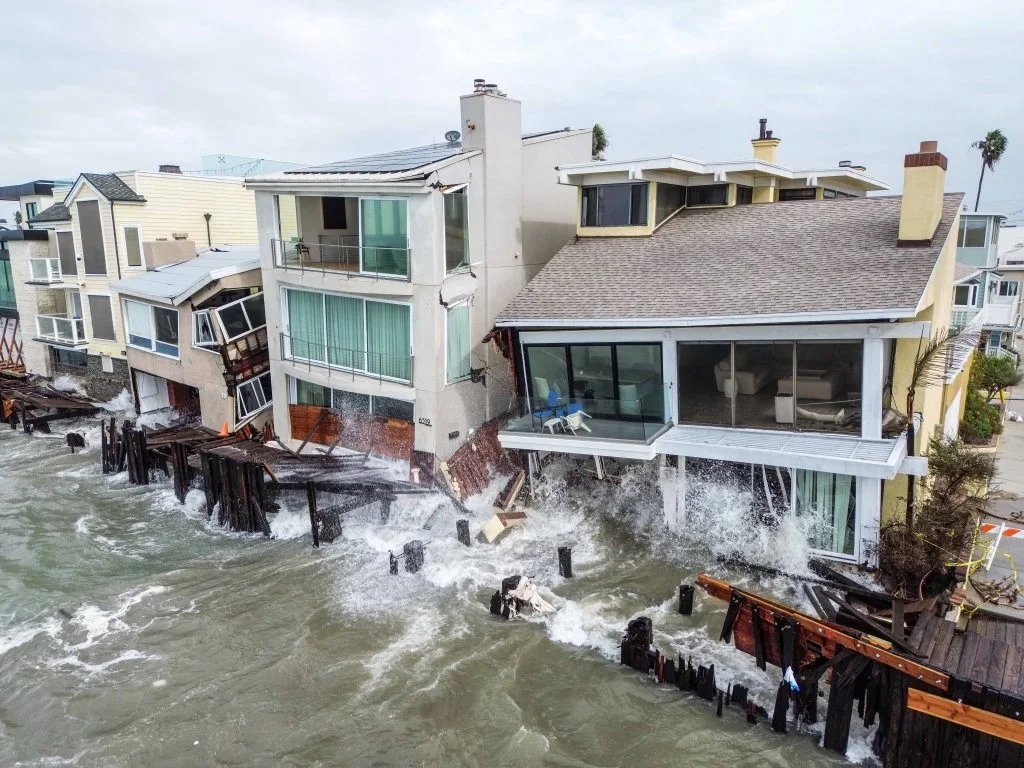
Photo Credit – Yahoo News (Jon Putman for CA Post)
This is the tenth article in my series about our changing Earth from interviews with Native Americans shared in We Are the Middle of Forever: Indigenous Voices from Turtle Island on the Changing Earth, edited by Dahr Jamail and Stan Rushworth (USA 2022). My presentation does not follow the order of the interviews.
#10: Gregg Castro (Salinan, Ohlone)
(Chapter 2, pp. 16-29)
Gregg Castro is a writer-activist within the California Indigenous community. As an archaeologist, he has worked to preserve his Ohlone and Salinan heritage for over three decades. Since his people have no reservation, nor federal or state or local recognition, they don’t exist as defined by the American culture around them. Thanks to his father, Gregg grew up in Northern California knowing who he was, but it wasn’t safe at that time to tell others, since it could cost them their life. When he learned in his San José school that the “Californian Indians” were all extinct, his father told him (p. 18): “Well, if you’re dead, they won’t try to kill you.”
The former tribal chair of the Salinan people, Gregg is an active participant in the Society for California Archaeology for over twenty-five years, advocating for respectful treatment of Indigenous sacred sites. He is also the co-chair of the Indian Advisory Board of the California Institute for Community, Art & Nature. As Cultural Director of the Association of Ramaytush Ohlone, he represents their San Francisco Peninsula homelands.
As a Native man, Gregg can sit on a mountainside and look back in time for at least 15,000 years and see his relatives and feel their presence. When he speaks, this presence is always with him. He calls it “a sense of permanence.”
When asked to speak about climate disruption and the surrounding society’s response, Gregg said (pp. 18-19):
Well, some of them think, ‘Oh, no, everything’s fine.’ They think their God is going to fix it for them, so they can do whatever they want. That’s a typical two-year-old, in a sandbox being a bully. And in their short understanding of their existence, their version of permanence is eternity to them… [but] it’s not eternity. Our stories tell us, very specifically tell us, there was a time before us. There was a time of Creation. There was a time when the first people, the real first people, were here taking care of the place, shaping it, forming it, taking care of it, to prepare it for us.
There are also other stories that don’t have happy endings, where various people failed in their responsibilities of taking care of the land. They did not survive.
Regarding the current environment and climate, Gregg said that their elders have been telling them for a long time that something’s wrong. They could see it in the landscape, the weather, the animals, the trees, and the atmosphere. But their warnings were ignored. Now, they don’t see a happy ending in sight. He added (p. 20):
We have end of the world stories. And it doesn’t end well. In some cases, it gets completely remade. The world survives, but everything in it does not. It gets transformed, and life begins anew, maybe with a whole new set of players who’ll get it right this time, and maybe they’ll survive…. I don’t think people understand the danger we’re in, and just how fragile the world is…. The world itself is not fragile; it’s fragile for people.
When asked how and why he thinks humanity has gotten to this point, Gregg said that we humans have an upside-down view of our place on Earth. We think of ourselves as the pinnacle of creation when, in fact, we are at the bottom. Across the billions of years of Earth’s pre-historic record, we are a mere blink in the eyes of time. To put it right side up again, he offered (p. 20):
Optimally, we have to disabuse ourselves of the idea of wealth. What does being wealthy really mean? We were incredibly wealthy before the Europeans showed up, because we had everything we needed. There was no homelessness. Nobody was starving. Everything was there for us, and we considered that to be wealth. A lot of wealth. Enough wealth.
Gregg is heartened by the shift among young people today regarding “radical wealth disparity,” their interest in “tiny houses,” and what is really needed for a good life. He’s concerned that this shift may not be fast enough. Our self-centric society, grounded in Western science, now looks to Traditional Ecological Knowledge (TEK) to provide the secret formula to save itself. He emphasized that TEK offers no formula (p. 21):
It’s a change of your entire life and outlook on the universe. It’s much more fundamental and transformative, and if they keep looking for a set of formulas, they’re never going to get it. That to me is the fundamental problem. They’re still trying to see the world with the very limited science that they have before them, that they worship.
Gregg pointed out that Indigenous ecological knowledge is based on the planet’s total interconnected system of life. On the other hand, Western science breaks things down into tiny components to understand it, losing touch with the whole system.
Moreover, unlike Indigenous philosophy that views all of creation as equal in value, Western cultures regard humans as the superior being. If we were indeed superior beings, Gregg noted, we wouldn’t be destroying everything. They believe, too, in the existence of the spirit that’s eternal and infinite. He reiterated (p. 23):
We’re a speck on the timeline in the world’s history, and as a society we just can’t grasp that perspective, and we refuse to, which is why we’re still doing stupid things. If we really understood this, we’d stop doing the silly things we’re doing now. And, we could stop this….
Yes, we could fix it, but are we going to?
In Native philosophy, the view of the world and our place in it come from a place of humility and gratefulness. Since we’ve done nothing to earn the gifts of the Earth, every moment of our life is a gift. From Gregg’s perspective, the climate crisis behaves like a nasty virus that is poisoning the entire system. Until we fix ourselves, we cannot fix our diseased society. We’re not going to fix anything, including the climate. Admitting that he’s more a realist than an optimistic, Gregg ended with this thought (p. 28):
Survival may not be what we think it is, but you know what? I’m not afraid of that anymore. I’m not afraid of that because that’s one of the gifts that I’ve learned over the years. And that’s what I would like to share with kids: Don’t be afraid. Don’t be afraid. You can be nervous, but don’t be afraid. That fear, that deep-seated fear, it just gets in the way. And if I can, I share with my kids and young people that ‘This too shall pass,’ and most important, that we don’t know what’s going to happen, but that in the moment, in this moment, there is something you can do. You do have control over you! That’s what the message is from our Creator and our ancestors, that ‘You can deal with you,’ and that’s all the control you really have, and that’s what your obligation is to think about, right here, right now.
Gregg made clear that taking control of ourself is a big package deal, since we also affect others by our choices and behavior. And, if we really care about the people in our lives, we will want our actions to affect them in a good way. That should be the basics of life.
Click on links below for previously featured interviews:
#1: Raquel Ramirez (Ho-Chunk, Ojibwe, Lenca) – Awareness
#2: Alexii Sigona (Amah Mutsun) – Stewardship
#3: Terri Delahanty (Cree) – Sacred Feminine and Sacred Masculine
#4: Shannon Rivers (Akimel O’otham) – Balance
#5: Lyla June Johnston (Diné [Navajo], Tsétsêhéstâhese [Cheyenne]) – Trust
#6: Dr. Kyle Powys Whyte (Potawatomi) – Kinship
#7: Marita Hacker (Hunkpapa, Norwegian) – Change
#8: Ilarion Merculieff (Unangan) – Living from the Heart
#9: Melissa K. Nelson, PhD (Anishinaabe, Métis, Norwegian [Turtle Mountain Chippewa]) – Dispelling Delusion with Alchemy

