11 September 2001: “Guyanese Roll Call” by Peter Jailall

Tags

, , ,

Caribbean immigrants remember loved ones at the 9/11 memorial on September 11, 2018
Photo Credit: News Americas


On September 11, we will remember all those we have lost on that ill-fated day when a terrorist attack on the World Trade Center in New York City turned the world-famous landmark into rubble.

I was living in Brazil when the tragedy occurred, sending a tsunami across the world. More than ninety other nations also lost loved ones that day, including three Brazilian-Americans and twenty-six Guyanese-Americans.

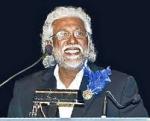
In his poem, “Guyanese Roll Call,” Guyanese-Canadian poet Peter Jailall remembers his twenty-six countrymen and women who died on that day. Their American Dream had been suddenly cut short.

Listen to our roll call
Of those who died
On that dreadful September day,
Following their American Dream: 

Patrick Adams
Leslie Arnold Austin
Rudy Bacchus
Kris Romeo Bishundauth
Pamela Boyce
Annette Datarom
Babita Guman
Nizam Hafiz
Ricknauth Jhagganauth
Charles Gregory Jolin
Bowanie Devi Kemraj
Sarab Khan
Amerdauth Luchman
Shevonne Meutis
Narendra Nath
Marcus Neblett
Hardai Parbhu
Ameena Rasool
Shiv Sankar
Sita Sewnarine
Karini Singh
Rosham Singh
Astrid Sohan
Joyce Stanton
Patricia Staton
Vanava Thompson 

These are our dedicated,
Hard-working country people,
Who travelled from South to North
To savour just a small bite
Of the Big Apple. 

We will always remember them.

Source: Poetry Collection, People of Guyana by Ian McDonald and Peter Jailall, MiddleRoad Publishers, Canada, 2018.


While violent anti-immigrant activism spread across America, let us remember that Guyanese and other Caribbean immigrant families also share our nation’s grief for loved ones lost on September 11, 2001.


Peter Jailall is a teacher, poet, and storyteller. He has published five books of poetry. In 2011, he received the Marty’s Award for Established Literary Arts in Mississauga, Ontario, where he lives. Since his retirement, Jailall has conducted workshops on Poetry Writing in schools across Guyana and Canada.

Under the Tamarind Tree – a Review by Trev Sue-A-Quan

Tags

, ,

Under the Tamarind Tree is a story of outsider influences. Richard Cheong, the main character, finds himself influenced by attitudes and events beyond his control. There is an outside child in the family – a boy whose very existence causes a divide between family members. Some are filled with resentment that this male child could be receiving financial benefits and privileges that are traditionally retained within a nuclear family. The animosity among some siblings leads to actions of a life-threatening nature. Richard himself perpetuates some of the conflicts by tenuously holding on to the glorious tradition of fathering a son of his own. With this objective entrenched in his mind, his wife Gloria gives birth to a fourth child but he dies at childbirth and this results in considerable friction within his family.

Through their ancestries, Richard and Gloria carry the customs and religious beliefs from five of the six peoples that constitute the country of Guyana. These diverse tenets lead to decisions by individuals that are difficult for even their closest loved ones to accept. A child’s wish to change religion brings intolerance from parents. The mother bearing an out-of-wedlock child is rejected by her family, while the sacredness of marriage is questioned when a partner feels that true love for an outsider overrules the stigma of adultery.

Adding to the contradictions among family members, the Cheongs find themselves caught in a greater conflict arising from the political changes leading to the country’s independence from Britain. The leaders of the political parties rally support based on racial and economic interests. Their influences result in some serious racial clashes between the people of African and East Indian heritage, representing the vast majority of the population. Even friends and family members of the Cheongs are instigators or perpetrators of violence, as well as being victims. Although standing as outsiders, Britain, as the presiding colonial power, and the United States, as the regional superpower, bring pressure to influence the direction that an independent Guyana would take, with determination that it should not become a country with a communist ideology.

Through these multiple influences, Richard and Gloria Cheong are challenged by both their individual set of values and the unfolding events that affect their family and business affairs. Under the Tamarind Tree weaves an intricate account of human interactions based on a personal, family-based, religious and national themes and is one with a uniquely Guyanese flavor.


Trev Sue-A-Quan was born in Georgetown, Guyana and attended Queen’s College. In 1969 he gained his Ph.D. degree in Chemical Engineering at the University of Birmingham, England. Besides his engineering career he has researched historical events related to Chinese immigration to Guyana. Based on his findings he has written three books describing the history of the Chinese Guyanese, covering their initial arrival as indentured laborers in the mid-19th century, their adaptation as residents in the new land and the experiences of their descendants as migrants to other countries. Trev now resides in Vancouver, Canada.
Learn More: Chinese in Guyana: Their Roots


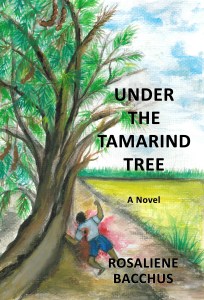
Dear Reader, my debut novel, Under the Tamarind Tree, is now available at Rosaliene’s Store on Lulu.com and other book retailers at Amazon, BAM! Book-A-Million, Barnes and Noble, Book Depository, and Indie Bound.
Learn more about Under the Tamarind Tree at Rosaliene’s writer’s website.

Mother forgive us. We know not what we do.

Tags

, , , , ,

Map of Active Fires in the Amazon Basin – Brazil – August 27, 2019
Photo Credit: BBC News


Brazil’s Amazon rainforest is under attack. So far this year, she has received nearly 75,000 stab wounds, setting the targeted areas ablaze. Seventy-five thousand! Her belching smoke trails turned daylight into darkness over Brazil’s largest city, some 1,677 miles away. How many trees and the non-human lives they sustain have we humans condemned to ashes? For what?

Some arsonists are loggers, raping the forest for more wood to feed global demand. Others want easy access to the mineral wealth—gold, diamonds, iron-ore, and bauxite. Most of them are land-grabbers. They covet the land for raising more cattle and expanding soybean cultivation for animal feed production. We are trading the Amazon rainforest to satiate our taste for beef.

The Amazon Basin, regarded as the ‘Lungs of Earth,’ absorbs about 25 percent of Earth’s total carbon dioxide emissions and releases oxygen into the atmosphere. What could go wrong? Continue reading

The Writer’s Life: Latest News

Tags

I’ve just received news that an excerpt of my novel, Under the Tamarind Tree, submitted for consideration, is featured today, August 25th, 2019, in The Writers’ Room section of the Stabroek News, Georgetown, Guyana. Also featured is an article titled, “Self-therapy,” about the author.

You can read the excerpt and article at the following link:
https://www.stabroeknews.com/sunday/the-writers-room/


UPDATE: MORE GOOD NEWS

I’ve now learned, through a Google Alert, that my novel is also now available on the following book sites:

Amazon
https://www.amazon.com/s?k=9781684706488&i=stripbooks&linkCode=qs

Barnes & Nobel
https://www.barnesandnoble.com/w/under-the-tamarind-tree-rosaliene-bacchus/1132984853?ean=9781684706488

BAM! Book-A-Million
https://www.booksamillion.com/product/9781684706488

Book Depository
https://www.bookdepository.com/Under-Tamarind-Tree-Rosaliene-Bacchus/9781684706488?ref=grid-view&qid=1566851557346&sr=1-3

Indie Bound: Community of Independent Local Bookstores
https://www.indiebound.org/book/9781684706488

Blessings galore in one day!!!

“Counter-narcissus” by Brazilian Poet Paulo Leminski

Tags

, , , ,

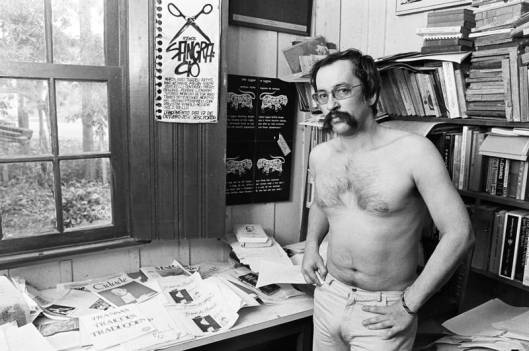
Brazilian Poet Paulo Leminski in his Study
Photo Credit: Veja Magazine, São Paulo/Brazil


My Poetry Corner August 2019 features the poem “Counter-narcissus” (Contranarciso) by Paulo Leminski (1944-1989), a Brazilian poet, translator, and biographer. He was born of humble origins in Curitiba, capital of the southern state of Paraná. His father was of Polish descent; his mother was a mixture of Portuguese, Black, and Native Indian. He publicly owned with pride, the derogatory labels of “polaco” and “negro mestiço.”

At the age of fourteen, with his parents’ approval, Paulo entered the Monastery of Saint Benedict in São Paulo. Within a year and a half, unable to cope with the disciplined lifestyle, he returned home. But his time spent among the monks wasn’t wasted. His studies exposed him to theology, philosophy, and Classical literature which demanded a knowledge of Latin and Greek. Later in life, Leminski applied the monks’ rigid and strenuous study routine to his work. Passionate about language, he became an autodidact polyglot fluent in six foreign languages.

Before the realization that poetry was his life, Paulo abandoned his undergraduate studies in literature and law after just a year, taught history and creative writing for a while, and later applied his writing skills as a journalist and advertising editor. Continue reading

Book Release – Under the Tamarind Tree: A Novel

Tags

, , , , , ,

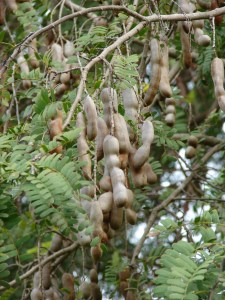
Tamarind Tree with Fruits
Photo Credit: Wikimedia Commons


The day is finally here. Today is the day I send my debut novel out into the world. It has been a long journey: four years in its conception and another five years in failing to find it a home. During the years of rejection from the guardians of the publishing world, I held onto the hope that Under the Tamarind Tree would enter the world when its time had come. Guyana, the setting for the novel, is now facing a constitutional crisis. In my adopted homeland, divisive racist politics is becoming the norm. Across our planet, gang violence and never-ending wars are driving families from their ancestral homes.

At the heart of Under the Tamarind Tree is the loss and pain that violence brings into our lives. In the United States, mass shootings by lone gunmen are devastating our communities, with little to no response from our law makers. The life of the protagonist, Richard Cheong, is changed forever when his younger brother, then eight years old, was shot to death under a tamarind tree. For Richard, the tamarind tree—a vengeful judge—becomes the personification of his guilt for not keeping his younger brother safe. His inconsolable mother’s death, shortly thereafter, had compounded his guilt. Her spirit haunted him.

Sometimes, she called out his name in the quiet of the night while he stretched out in his Berbice-chair listening to music. She often visited him in his dreams, drenched and shivering. Her chocolate-brown hair, caked with mud, draped down her back to her waist. She drowned him in her grief. (Prologue 1) Continue reading

Quote

Book Review: Under The Tamarind Tree by Rosaliene Bacchus — Ken Puddicombe -Writer

Tags

, , , , ,


Great news! I’ve received the first review of my debut novel, Under the Tamarind Tree, soon to be released. The reviewer, Guyana-born Ken Puddicombe, is the author of three historical novels Racing With the Rain (2012), Junta (2014), and Down Independence Boulevard & Other Stories (2017). He lives in Toronto, Canada, where he owns and runs a small press.

Do check out his review.

COVER ART BY GUYANESE-CANADIAN ARTIST JOAN BRYAN-MUSS


UNDER THE TAMARIND TREE Copyright 2019 By Rosaliene Bacchus 284 pgs Published by Lulu Press, Inc. USA Review by Ken Puddicombe The fruit of the Tamarind Tree holds a puzzling allure to people in the tropics, its tangy and acidic fruit devoured obsessively, even as it stimulates the taste buds with spasms of unpleasantness […]

via Book Review: Under The Tamarind Tree by Rosaliene Bacchus — Ken Puddicombe -Writer

Divisive Racist Politics: Will America Survive?

Tags

, , , , , , , , ,

“Send Her Back” – US President’s Campaign Rally – North Carolina/USA – July 17, 2019
Photo Credit: HuffPost, YouTube Video


I know about divisive racist politics. I have experienced it up close in Guyana, the land of my birth—one of the “shithole countries” that our president loves to denigrate. Divisive racist politics has crippled my birthplace over the past fifty-three years since its birth as an independent nation. As a multiracial woman, I know firsthand the ways in which hate, rancor, fear, and distrust can splinter families, communities, and relationships in public spaces, such as our schools and workplaces.

Caught up in what Guyanese call “the racial disturbances”—during the years leading up to independence in May 1966, between the two major population groups of descendants of African slaves and Indian indentured laborers—I became a marginalized citizen. Beginning in adolescence, I learned to navigate the racial minefields, to dodge and take the blows.

In my debut novel, Under the Tamarind Tree, to be released in the coming months, I tackle the roots of Guyana’s divisive racist politics and its impact on the lives of my racially diverse characters. You can learn more about my motivations for setting out on this literary journey in my article “The Making of Under the Tamarind Tree.”

While the chant rose to “send her back,” during a recent presidential campaign rally, America’s transnational corporations are sucking Earth’s natural resources from all those “broken and crime infested places from which they [non-white immigrants] came.”

Continue reading

Earth’s Climate Emergency: Break down the walls!

Tags

, , , , ,

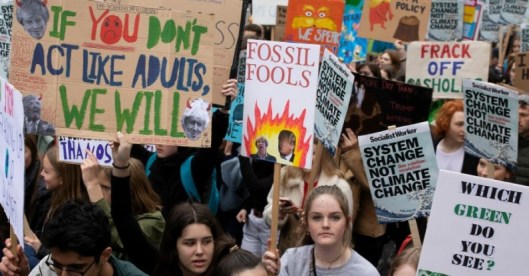
YouthStrike4Climate Student March – London, UK – April 12, 2019
Photo Credit: Common Dreams (Photo Dan Kitwood/Getty Images)


To those people who are still in denial that humanity faces a climate crisis that would most likely lead to the extinction of our species, not to mention most other species, I say, wake up to reality. We cannot afford to wait until reality strikes you in the groin or chest for us to take evasive action as a united nation.
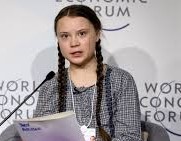
 

Greta Thunberg at the World Economic Forum 2019 – Davos, Switzerland
Watch Video: World Economic Forum, Published on January 25, 2019


Because we adults are asleep at the wheel, leadership in humanity’s existential crisis now falls upon our youth. After all, it’s their future that is at stake. Greta Thunberg, a fifteen-year-old Swedish student has had enough of the failure of world leaders to act. In her address to the ultra-rich gathered at the World Economic Forum in January 2019, she tells them:

“I want you to panic. I want you to feel the fear I feel every day. And then I want you to act. I want you to act as you would in a crisis. I want you to act as if our house is on fire. Because it is.”
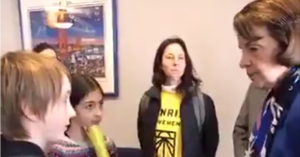
 

Senator Dianne Feinstein speaks with young activists of the Sunrise Movement
California Office, USA – February 22, 2019
Watch Video: Washington Post


Here in the world’s leading economy, our leadership is more concerned about preserving their self-interests, their political party, and the status quo. On February 22, 2019, when young activists of the Sunrise Movement visited the California office of Sen. Dianne Feinstein (D-CA) to ask her to vote for the Green New Deal, she was firm in rejecting their petition.

“We have our own Green New Deal,” Feinstein tells them. “I’ve been doing this for thirty years. I know what I’m doing. You come in here and you say it has to be my way or the highway. I don’t respond to that… I just won a big election.”
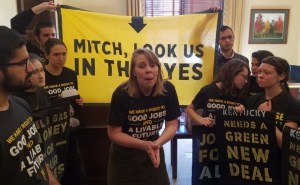
 

Youth climate activists during sit-in at Washington DC office of Senate Majority Leader Mitch McConnell – February 25, 2019
Photo Credit: Common Dreams (Photo Sunrise Movement)


The following Monday, February 25th, over 200 young members of the Sunrise Movement joined about twenty Kentucky high school students outside the Capitol Hill office of Senate Majority Leader Mitch McConnell (R-KY) to demonstrate their support for the Green New Deal. They failed to meet him. Instead, the Capitol Police arrested more than forty of them.

While there is yet no consensus on the Green New Deal—which right-wing commentators view as a socialist takeover of our economy—lawmakers in Washington DC are busy undoing decades of environmental protection regulations. Then, on June 20th, the New York State Assembly passed its own Green New Deal at the state level. Their aggressive Climate Leadership & Community Protection Act calls for net zero carbon emissions statewide by 2050.

On July 9th, our young climate activists gained another victory in their call for action. Sen. Bernie Sanders (I-VT), Rep. Earl Blumenauer (D-OR), and Rep. Alexandria Ocasio-Cortez (D-NY) announced the introduction of a resolution in Congress to declare that the climate emergency facing our planet demands a “national, social, industrial, and economic mobilization of the resources and labor of the United States” in order to “restore the climate for future generations.”

Over two dozen lawmakers, including most of the senators currently running for president, signed on as co-sponsors.

Blumenauer calls for a reality check. “To address the climate crisis, we must tell the truth about the nature of this threat,” he said in his statement.

“What we need now is Congressional leadership to stand up to the fossil fuel industry and tell them that their short-term profits are not more important than the future of the planet,” Sanders said. “Climate change is a national emergency, and I am proud to be introducing this resolution with my House and Senate colleagues.”

Working to solve the climate crisis will create tens of millions of union jobs, empower communities, and improve the quality of life for people across the globe,” Ocasio-Cortez added. 

Read the full Climate Emergency Resolution.

Bill Snape, senior counsel at the Center for Biological Diversity, supports the resolution. “With an unhinged climate denier in the White House, it’s on Congress to steer us away from climate suicide,” he said in a statement. “This resolution is a sane recognition that science says we need a massive transition away from the production and consumption of dirty fossil fuels.”

The time is now to break down the walls of partisanship, the walls of fear, the walls of ignorance, the walls of hatred and divisiveness, the walls of exclusion, the walls of separateness, the walls of inequality.

“Our house is on fire!” alerts the high school student Greta Thunberg.
“Let it burn!” says The Bully, sitting at the top of the world. “The oil is mine! All mine!”

“This is the Dark Time My Love” by Guyanese Poet Martin Carter

Tags

, , , , , , , , ,

British soldiers arrive in Georgetown – British Guiana – October 9, 1953
Photo Credit: Stabroek News (Photo British Pathé)


My Poetry Corner July 2019 features the poem “This is the Dark Time My Love” by Guyanese poet Martin Carter (1927-1997) from his poetry collection, Poems of Resistance from British Guiana (London 1954). Following the suspension of the British Guiana Constitution in 1953, the poet-politician composed the poems in this collection during his three-month detention, together with other political leaders, by the British Army.

For readers unfamiliar with Guyana’s history, a former British colony until May 26, 1966, slavery ended in 1834. Indentured laborers began arriving from India in 1838 and continued until 1917. Other immigrant workers came from Portuguese Madeira (1835-1882) and China (1853-1879). The population of the colony in the mid-1950s was about 450,000 people (UN estimate).

Born in 1927 in Georgetown, the capital of then British Guiana, to middle class parents of African, Indian, and European ancestry, the young Martin grows up with an appreciation for literature, poetry, and philosophy. After attending the colony’s prestigious Queen’s College, for boys only, he gains entry to the civil service, working first at the post office, then later as the secretary of the superintendent of prisons.

Aware of the oppression and despair of the sugarcane workers who toil under harsh conditions on the British-owned sugar plantations, Carter joins the political struggle for self-governance. In “Looking at Your Hands” (1), he affirms his solidarity with the plantation workers in their shared struggle under British rule. 

No!
I will not still my voice!
I have
too much to claim –
[…]
you must know
I do not sleep to dream
but dream to change the world.
  Continue reading