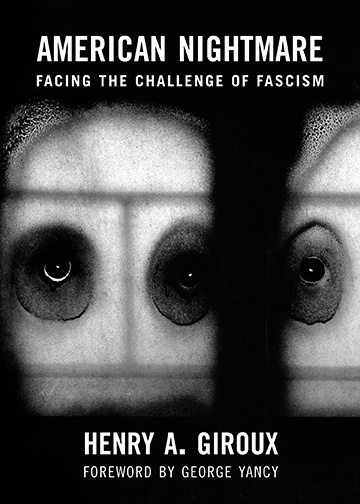
Front Cover: American Nightmare: Facing the Challenge of Fascism by Henry A Giroux
(City Lights/USA 2018)
American Nightmare: Facing the Challenge of Fascism by Henry A Giroux is a collection of essays that aim to shake up Americans to the growing threat of Trump’s authoritarianism to America’s democratic institutions. The author observes that “while the United States under Trump may not be an exact replica of Hitler’s Germany, the mobilizing ideas, policies, and ruthless social practices of fascism, wrapped in the flag and discourses of racial purity, ultra-nationalism, and militarism, are at the center of power in Trump’s United States.”
As defined by the Oxford Online Dictionary, fascism is “an authoritarian and nationalistic right-wing system of government and social organization.” To examine the echoes of fascism under Trump, Giroux refers to Robert O Paxton’s nine “mobilizing passions” of fascism described in his work, The Anatomy of Fascism (2004). These include:
sense of overwhelming crisis;
subordination of the individual to the group;
belief in victimization of one group to justify violence;
dread of group’s decline;
call for a purer community;
authority of a natural leader;
supremacy of leader’s instinct over reason;
beauty of violence and efficacy of the will for group’s success; and
right of chosen people to dominate others without restraint.
Atmospheric carbon dioxide continued its rapid rise in 2019, with the average for May peaking at 414.7 parts per million (ppm) at NOAA’s Mauna Loa Atmospheric Baseline Observatory.
The measurement is the highest seasonal peak recorded in 61 years of observations on top of Hawaii’s largest volcano and the seventh consecutive year of steep global increases in concentrations of carbon dioxide (CO2), according to data published June 4, 2019, by NOAA and Scripps Institution of Oceanography.
My Poetry Corner May 2019 features the poem “the woman is a construction” (a mulher é uma construção) from the poetry collection, a uterus is the size of a fist (um útero é do tamanho de um punho), by Angélica Freitas, a contemporary Brazilian poet and translator.
Born in Pelotas, Rio Grande do Sul, in 1973, the eldest of four siblings, Angélica Freitas began writing poetry at the age of nine, but her journey to finding herself as a poet took a long and circuitous route. Her discovery, at the age of fifteen, that she was gay made it difficult for her to fit in with her peers. Bullies found her an easy target. At nineteen, following her father’s death, she escaped to Glasgow with a Scottish girlfriend. After six months of washing dishes and cleaning restrooms, she returned to her family home.
Opting to study journalism at the Federal University of Rio Grande do Sul, Freitas moved to the capital, Porto Alegre, where she remained after graduation. There, she could be invisible. In her poem, “the pink book of the foolish heart,” she recalls:
I had a girlfriend
with super powers
of invisibility
and when I walked beside her
I was also invisible
In 2000, an unexpected acceptance as a trainee with OEstado de São Paulo newspapers led Freitas to the metropolis of São Paulo. She confesses that she wasn’t a good reporter, but that the experience exposed her to other realities of life. After four years of suffering to write with the rhythm of a daily newspapers, she left them for a slower paced work schedule at a telecommunications magazine. A career in journalism, she came to realize, wasn’t for her. What she desired above all was to write poetry.
Her life changed on a Saturday in 2005 when, during a period of depression, she decided to attend a poetry workshop conducted by Carlito Azevedo, a poet from Rio de Janeiro. Two years later, under his mentorship, she published her first collection of poetry. That same year, she moved to Argentina where she lived for two years with her girlfriend. For the first time, she became part of a feminist group. Living among them made her question her own condition as a woman. On her return to Brazil, she moved back to her hometown to work full-time as a poet and writer. Continue reading →
Front Cover: Fault Lines by Kendel Hippolyte Cover Art by Cecil Fevrier
My Poetry Corner April
2019 features the poem “Fault Lines” from the poetry collection, Fault Lines, by Kendel Hippolyte, a
poet, playwright, and director. Born in the Eastern Caribbean Island of St.
Lucia in 1952, he lived in Jamaica in the 1970s, where he explored his talents
in writing plays and poetry. After earning his bachelor’s degree in 1976 at the
University of the West Indies Mona campus, he returned to St. Lucia.
Four poetry collections have followed his first publication in 1980. Fault Lines – published by the UK publisher, Peepal Tree Press, in 2012 – won the 2013 OCM Bocas (Caribbean Literature) Prize for Poetry. In 2000, he was awarded the St. Lucia Medal of Merit for Contribution to the Arts.
Since retiring from teaching theater arts and literature at the Sir Arthur Lewis College (1992-2007), Hippolyte focuses on raising public awareness and contributing to solutions of critical social issues. A major Caribbean tourist destination, the island nation of an estimated 165,510 inhabitants (July 2018) is vulnerable to global capitalism and its ills of consumerism, drugs, crime, and violence.
Cruise ships at the Port of Castries – St. Lucia – Eastern Caribbean Photo Credit: St. Lucia Taxi & Tours
In his poem, “Paradise” (from the same collection), the poet laments in Caribbean English: “Every time this tourist ship name Paradise come dock in the harbor / you does realize we never going to make it.”
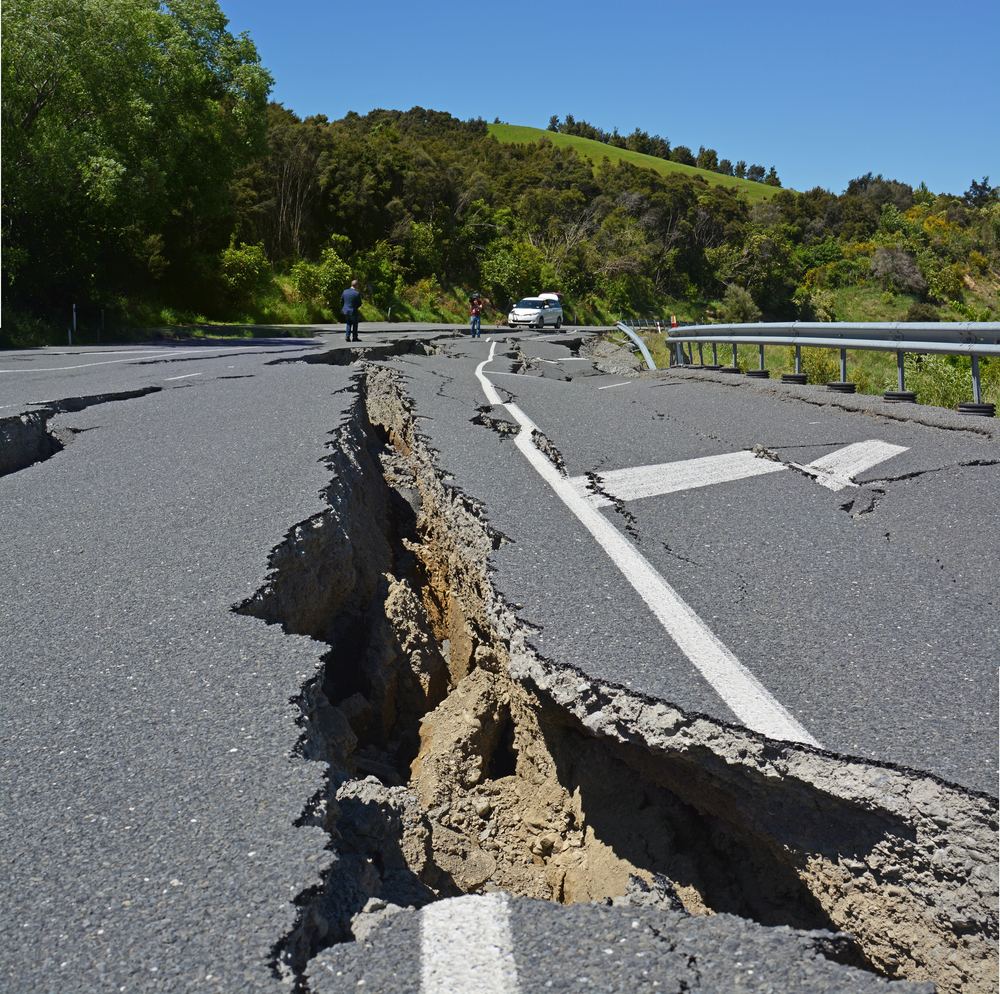
In “Fault Lines,” the collection’s titular poem, Hippolyte invites the reader to look beyond the natural beauty of the idyllic, island nation to the underlying fault lines that rupture its communities.
The lines appear on sidewalks and on streets just recently resurfaced,
on bridges and on buildings, the creases, cracks, accumulation;
the fractures of a thin, brittle civilization aging prematurely.
Earthquake rupture along freeway in Southern California – USA Photo Credit: HPCwire
For those of us who live along the geological fault lines on Earth’s surface, as in the Caribbean and in my home state of California, the fissures or cracks are warnings of mounting pressure beneath our feet. So, too, the fault lines that divide us. And there are many such lines, such as inequality and rising white nationalism.
The hand of something dying scrabbles these last messages everywhere,
a harsh cuneiform trying to break through surfaces into our understanding.
But we can barely read that ancient language now, of earth writing itself.
Yet, the poet says, we are blind to the signs everywhere of our undoing. We have failed to learn from the errors of past civilizations.
We walk between the lines, fill in the blank telling cracks, deconstruct, if need be,
our crumbling edifices breaking out in fault lines from trying to contain what we’ve become.
We humans have a way of creating alternate realities that fit our narratives about who we are as a species.
The hand is writing too on faces – lines of bewilderment, fear, guilt;
other unfinished lines trail off, coagulating red on bodies left as messages,
torsos punctuated with the exclamation marks of knife wounds, full stops of bullet holes;
final sentences marked on faces of those who used to be too young to kill or to be killed.
The imagery here is powerful. These are no longer cracks on our sidewalks, streets, bridges, and buildings. These are self-inflicted wounds, especially to our young people who die in mass shootings and in our war zones.
Something is desperately writing a threnodic poem to us, hoping we will read
the lines appearing on the sidewalks, streets, bridges, buildings, bodies, faces. But
we do not read – and what hope for a poem, like this one, struggling to translate,
with nothing but words, these dark fault lines of our disintegration into poetry?
Hippolyte makes clear that this is a poem of lamentation for a species that refuses to see the myriad “dark fault lines” that herald our disintegration as communities and nations. He holds out little hope that his poetic words would awaken us to action.
When the fault lines finally rupture and dislocate the earth beneath our feet, would it be too late for humankind to change its ways?
To read the featured poem and learn more about the work of Kendel Hippolyte, go
to my Poetry
Corner April 2019.
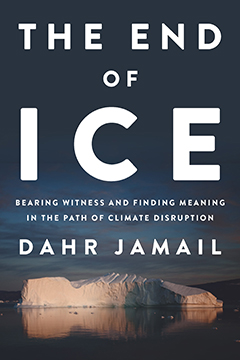
The End of Ice: Bearing Witness and Finding Meaning in the Path of Climate Disruption is a work of investigative journalism by Dahr Jamail, conducted during the period April 2016 to July 2017 on the front lines of human-caused climate disruption. Having lived in Alaska for ten years (1996-2006), Jamail had witnessed the dramatic impact of global warming on the glaciers there.
Jamail’s original aim was to alert readers about “the urgency of our planetary crisis through firsthand accounts of what is happening to the glaciers, forest, wildlife, coral reefs, and oceans, alongside data provided by leading scientists who study them.” His reporting took him to climate disruption hot spots in Alaska, California, Florida, and Montana in the United States; Palau in the Western Pacific Ocean; Great Barrier Reef, Australia; and the Amazon Forest in Manaus, Brazil. His grief at what was happening to nature made him realize that “only by having this intimacy with the natural world can we fully understand how dramatically our actions are impacting it.”
Below are excerpts of assessments expressed to the author by scientists and other professionals working on the front lines.
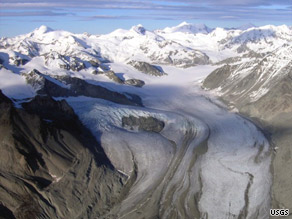
Gulkana Glacier – Alaska – USA Photo Credit: U.S. Geological Survey (USGS)
The magnitude of change in Alaska is easy to miss because Alaska is such
a massive state, and largely undeveloped. That is why you’ve had no idea that
Alaska’s glaciers are losing an estimated 75 billion tons of ice every year. ~ Dr. Mike Loso, a physical scientist
with the Wrangell-St. Elias National Park and Preserve, Alaska.
[The rate of melting of Montana’s glaciers]
is an explosion, a nuclear explosion of geologic change. This is unusual, it is
incredibly rapid and exceeds the ability for normal adaption. We’ve shoved it
into overdrive and taken our hands off the wheel.” ~ Dr. Dan
Farge, a U.S. Geological Survey (USGS) research ecologist and director of the
Climate Change in Mountain Ecosystems Project, Montana.
This last summer [2015], the Gulf [of Alaska]
warmed up 15℃ [59℉] warmer than normal in some areas… And it is now, overall,
5℃ [41℉] above normal in both the Gulf of Alaska and Bering Sea, and has been
all winter long. ~ Bruce
Wright, a senior scientist with the Aleutian Pribilof Islands Association
(APIA) and former section chief for the National Oceanic and Atmospheric
Administration (NOAA) for eleven years.
St. Paul Island – Pribilof Islands – Bering Sea – Alaska Photo Credit: St. Paul Island Tour
We hardly eat seals anymore, or the birds,
and people now get food stamps and social handouts and welfare and shop at the
store. When I grew up, we didn’t need any of that because we always had seals
and birds and fish to eat. If the fur seals aren’t here, neither will we be. ~Jason
Bourdukofsky Sr., the president of TDX, Alaska’s native corporation on St. Paul
Island, Pribilof Islands, Bering Sea.
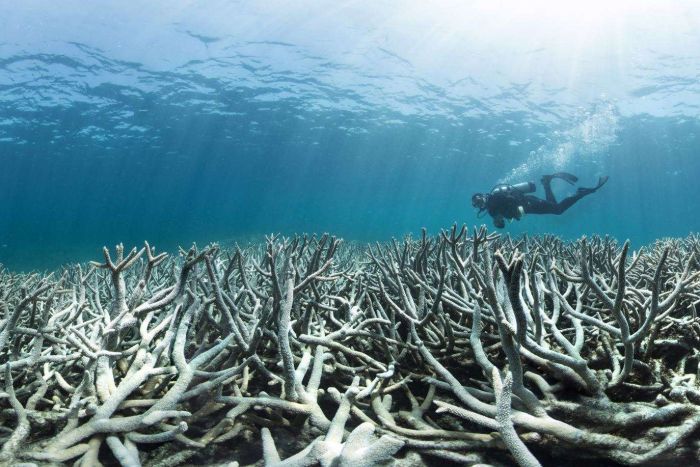
The warming [of the oceans] we’re seeing now
is happening far too fast to allow for [coral] evolution…. So what we’re seeing
now is death. That’s what [coral] bleaching is…. Right now the largest
ecosystem on Earth is undergoing its death throes and no one is there to watch
it. ~ Dr. Dean
Miller, a marine scientist and director of science and media for Great Barrier
Reef Legacy, Australia.
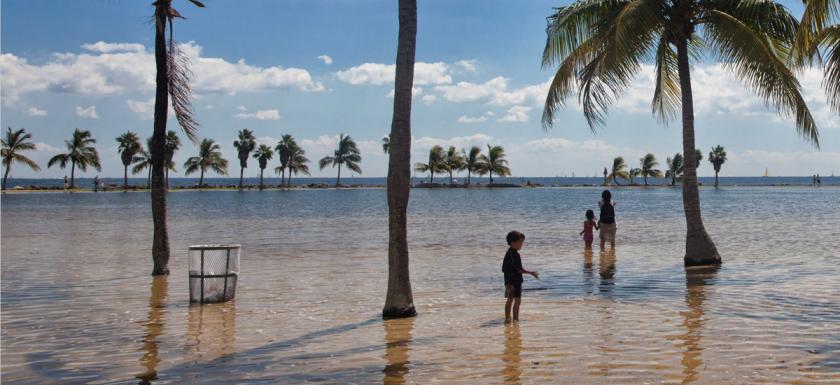
Even if your home [in South Florida] may be
elevated, all the infrastructure and freshwater and sewage treatment and
getting rid of the sewage…all of this infrastructure is critically vulnerable
to sea level rise. ~ Dr. Ben
Kirtman, one of the leading sea level experts in the world and program director
for the Climate and Environmental Hazards program at the University of Miami’s
Center for Computational Science.
Sea level rise is going to accelerate faster
than the models, and it’s not going to stop. So the government [of the State of
Florida] has to have a plan that includes buyouts. It’s cheaper to buy this
area [Coral Gables] out than it is to maintain the infrastructure. ~ Dr.
Harold Wanless, professor and chair of the Department of Geological Science,
University of Miami, Coral Gables campus.
You know what the burden is? It’s looking up
through the political hierarchy above me to the state legislature, to the
governor, U.S. Congress, U.S. Senate, the White House, and you ask, Who is
minding the shop? Who else knows what I know?… What kind of morality allows
them to ignore what is going to happen? ~ Dr.
Philip Stoddard, mayor of South Miami and a professor in the Department of
Biological Sciences, Florida International University.
We need to educate people about what is
really going on with climate disruption…. I made a personal decision to not
have kids, because I don’t have a future to offer them. I don’t think we are
going to win this battle. I think we are really done. ~ Dr. Rita
Mesquita, a biologist and researcher with Brazil’s National Institute of
Amazonian Research (INPA), Manaus, Amazonas.
The dire position we’re in now is solid
evidence of the fact that the predominant civilization does not have a handle
on all the interrelationships between humans and what we call the natural
world. If it did, we wouldn’t be facing this dire situation. ~ Stan
Rushworth, elder of Cherokee descent who has taught Native American literature
and critical thinking classes focused on Indigenous perspectives.
Jamail concludes that we are already facing mass extinction. We can’t remove the heat now stored in the oceans, yet we keep on pumping 40 billion tons of carbon dioxide into the atmosphere every year. Our future is uncertain. Writing this book was his attempt to bear witness to what we have done to the Earth. “I am committed in my bones to being with the Earth,” he writes, “no matter what, to the end.”
DAHR JAMAIL
Dahr Jamail, a reporter for Truthout, is the author of Beyond the Green Zone: Dispatches from an Unembedded Journalist in Occupied Iraq, The Will to Resist: Soldiers Who Refuse to Fight in Iraq and Afghanistan, and The Mass Destruction of Iraq: Disintegration of a Nation (co-authored with William Rivers Pitt). Over the past fifteen years, Jamail has also reported from Lebanon, Syria, Jordan, and Turkey. An accomplished mountaineer who has worked as a volunteer rescue ranger on Denali, Alaska, he won the Martha Gellhorn Prize for Journalism and is a 2018 winner of the Izzy Award for excellence in independent journalism. Jamail is also the recipient of the James Aronson Award for Social Justice Journalism, the Joe A. Callaway Award for Civic Courage, and five Project Censored Awards.
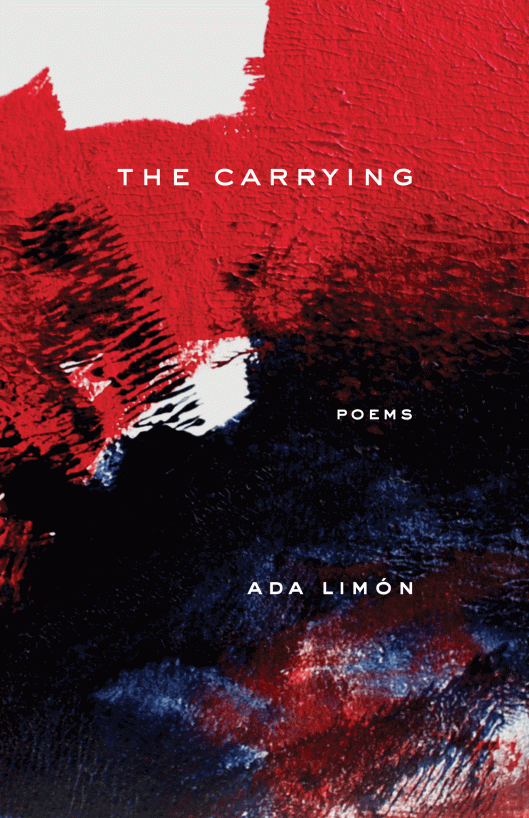
Front Cover The Carrying: Poems by Ada Limón Milkweed Editions – Minnesota/USA – August 2018 Photo Credit: Ada Limón
My Poetry Corner March 2019 features the poem “The Leash” from the poetry collection, The Carrying: Poems, by Ada Limón. Native of Sonoma, California, Limón is a poet, writer, and teacher. After earning an MFA in creative writing from the University of New York, she spent the next ten years working for various magazines, such as Martha Stewart Living, GQ, and Travel + Living. In 2011, she moved to Lexington, Kentucky, to be close to her now-husband, Lucas, a business owner in the horse racing industry. In addition to working as a freelance writer, she serves on the faculty of the low-residency MFA program at Queens University of Charlotte (NC) and the online and summer programs for the Provincetown Fine Arts Work Center (MA).
In an interview with the Lexington Herald-Leader magazine (August 2018), Limón says that The Carrying, her fifth book of poetry, “is incredibly personal. It’s more political than my other books… It deals with the body, with fertility. It also deals with what it is to do the day-to-day work of surviving.”
In her poem, “The Vulture & The Body,” she shares her struggle with infertility. In coming to terms with the failure of fertility treatment, she asks:
What if, instead of carrying a child, I am supposed to carry grief?Continue reading →
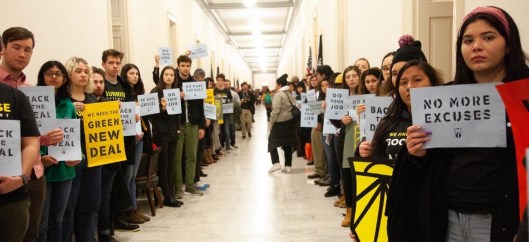
Sunrise Movement protesters outside then Rep. Nancy Pelosi’s Office – December 10, 2018
Photo Credit: Sunrise Movement
While our president is fixated on building a wall along our southern border to keep us safe from the invasion of “bad hombres,” he refuses to acknowledge our greatest existential threat: climate change disruption. Young climate change activists, clamoring for bold action, have found a champion in the newly elected Rep. Alexandria Ocasio-Cortez (D-New York). At twenty-nine years, she is the youngest member of the US House of Representatives.
On February 7, 2019, Rep. Ocasio-Cortez and Sen. Edward Markey (D-Massachusetts) introduced a nonbinding resolution that sets out the framework for the Green New Deal. The proposal has gathered 64 House and nine Senate Co-Sponsors, including presidential hopefuls Sen. Cory Booker, Sen. Kirsten Gillibrand, Sen. Kamala Harris, Sen. Bernie Sanders, and Sen. Elizabeth Warren. In an interview with Politico, House Speaker Nancy Pelosi (D-California), not present at the unveiling, referred to the proposal as a mere suggestion.
“It will be one of several or maybe many suggestions that we receive,” Pelosi said. “The green dream or whatever they call it, nobody knows what it is but they’re for it right?”
The Green New Deal Resolution – List of Co-Sponsors
Photo Credit: Sunrise Movement
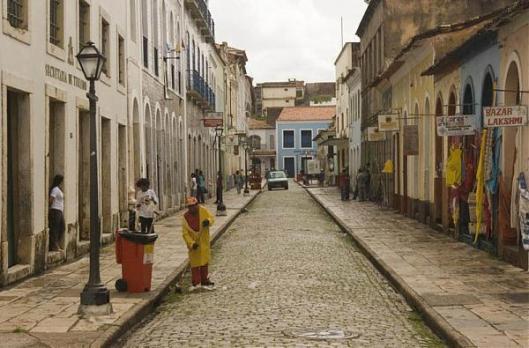
Historical Center of São Luís – Maranhão – Brazil
UNESCO World Heritage Site: Portuguese colonial architecture
Photo Credit: Kamaleao
My Poetry Corner February 2019 features the poem “There are Many Traps in the World” (No Mundo Há Muitas Armadilhas) by Ferreira Gullar (1930-2016), a Brazilian poet, playwright, art critic, and essayist. Born in São Luís, capital of the northeastern state of Maranhão, he was the fourth child of eleven siblings of a poor, working-class family.
As a young man, while earning a living as a radio announcer and editor of literary magazines, Gullar frequented poetry readings and devoured books of poetry by the best of Brazilian and foreign poets. At nineteen, he published his first poetry collection. But he saw no future in his suffocating, small-town life in the impoverished northeast region. He fled to Rio de Janeiro in the early 1950s, where he worked as a journalist for magazines and newspapers.
Beginning in 1962, his work reflected his concern about combating oppression and social injustice. After becoming a member of the communist party, he joined the struggle against the military dictatorship (1964-1985). Following his arrest and imprisonment in 1968, he went into exile in 1971. For the next six years, he lived in Moscow, Santiago, and Buenos Aires. In Buenos Aires in 1975, fearful for his safety in the wake of Argentina’s military takeover (1976-1983), he wrote his best-known work, “Dirty Poem” (Poema Sujo).
Ferreira Gullar among millions of students and other demonstrators gathered to protest against military dictatorship – Rio de Janeiro – Brazil – June 26, 1968
Photo Credit: Folha de São Paulo
In the opening stanza of the featured poem, “There are Many Traps in the World,” Gullar makes a simple declaration:
There are many traps in the world and what is a trap could be a refuge and what is a refuge could be a trap
Some traps that we humans perceive as refuge come to mind: religion, cults, Facebook, and narcotic drugs. Continue reading →
The Great Wall of China and Hadrian’s Wall
surviving projections of great power of ancient dynasties and empires
defense against barbarian attacks
breached by invaders and internal strife.
East Germany’s Berlin Wall of our times
projection of fear and intolerance
of the communist Soviet Union
defense against divergent policies
razed by cries for freedom and inclusion.
The USA-Mexico border wall
projection of fear and intolerance
defense against criminal invaders
withdrawal from global alliances
to stoke dispersion of moral decay.
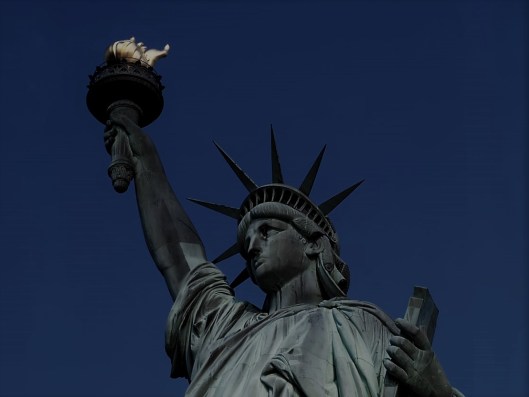
The flame of Lady Liberty sputters
a refuge no more for Earth’s dispossessed
freedom, inclusion, human dignity
hostages of cries for former glory
strangled in the empire’s fading light.
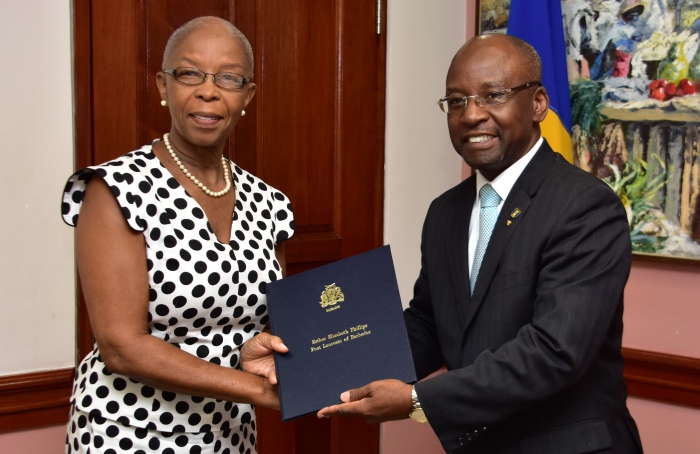
My Poetry Corner January 2019 features the poem “Unwritten Poem” from the poetry collection, The Stone Gatherer, by Esther Phillips, a poet and educator born in Barbados, where she still resides. In February 2018, she was appointed the first Poet Laureate of the Caribbean island-nation.
After attending the Barbados Community College at the University of the West Indies Cave Hill Campus, she won a James Michener fellowship to the University of Miami where, in 1999, she gained an MFA degree in Creative Writing. Her poetry collection/thesis won the Alfred Boas Poetry Prize of the Academy of American Poets.
In 2001, she won the leading Barbadian Frank Collymore Literary Endowment Award. Years later, the third of her three well-received poetry collections, Leaving Atlantis (2015), won the Governor General’s Award for Literary Excellence.
Phillips is a Sunday columnist of the Nation newspaper and editor of Bim: Arts for the 21st Century, a 2007 revival of the seminal Caribbean literary and arts magazine, first published in 1942. In 2012, she formed Writers Ink Inc. and, together with its members, the Bim Literary Festival & Book Fair.Continue reading →







 Three Worlds One Vision
