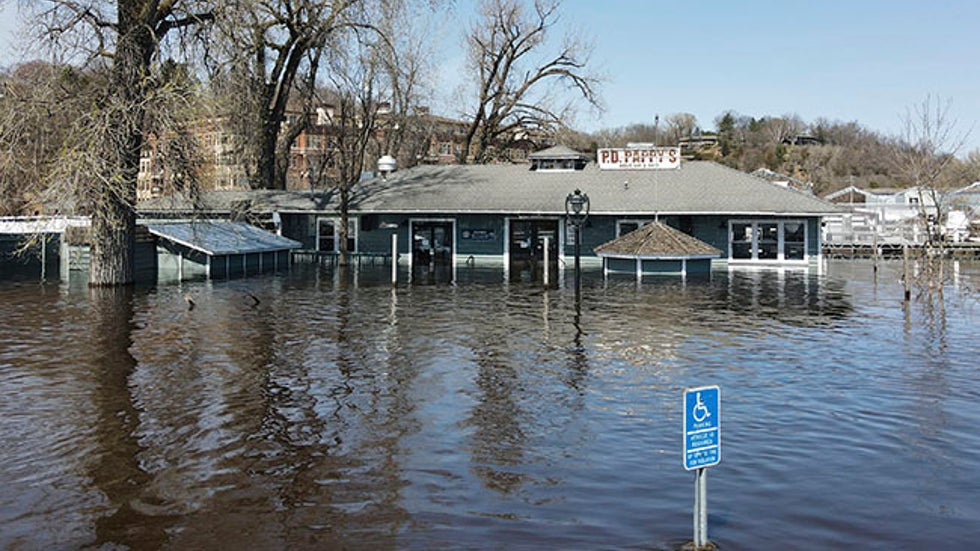
Flooding in the Upper Mississippi Valley – Stillwater – Minnesota – USA – April 18, 2023 Photo Credit: Weather Underground
This is the first in my series of reflections on the “c-o-s-m-o-s remedy” proposed in opposition to the “ideology of e-s-c-a-p-e” by Jem Bendell in Deep Adaptation: Navigating the Realities of Climate Chaos (UK/USA 2021).
In contrast to the habit of Entitlement in e-s-c-a-p-e ideology, which involves thinking ‘I expect more of what I like and to be helped to feel fine,’ Bendell proposes that Compassion, in this context, involves sensing that ‘I feel an active responsibility for any of my contribution to your suffering, without expecting to feel right, better or worse’ (p.146).
What is compassion?
In her book Atlas of the Heart: Mapping Meaningful Connection and the Language of Human Experience (USA 2021), American research professor Brené Brown defines compassion as “the daily practice of recognizing and accepting our shared humanity so that we treat ourselves and others with loving-kindness, and we take action in the face of suffering” (p. 118). Buddhist Zen Master Thich Nhat Hanh (1926-2022) describes it simply in Zen and the Art of Saving the Planet (USA 2021, p. 109): “Compassion is a powerful energy that allows us to do anything we can to help reduce the suffering around us.”
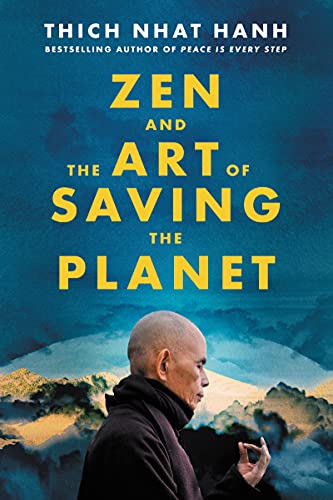
Front Cover: Zen and the Art of Saving the Planet by Thich Nhat Hanh Photo Credit: HarperCollins Publishers (USA, 2021)
If you want to save the planet and transform society, you need brotherhood and sisterhood; you need togetherness. Whenever we speak about the environment, or peace and social justice, we usually speak of non-violent actions or technological solutions, and we forget that the element of collaboration is crucial. Without it, we cannot do anything; we cannot save our planet. Technical solutions have to be supported by togetherness, understanding, and compassion.
In order to collaborate, we need to know how to listen deeply and how to speak skillfully, how to restore communication, and how to make communication easier so we can communicate with ourselves and with each other…. Restoring communication is an urgent practice. With good communication, harmony, understanding, and compassion become possible between individuals, different groups, and even nations.
Excerpt from Zen and the Art of Saving the Planet by Thich Nhat Hanh, Edited and With Commentary by Sister True Dedication, HarperCollins Publishers, New York, USA, 2021 (pp. 187-188).
THICH NHAT HANH (1926-2022) was a world-renowned Buddhist Zen master, poet, author, scholar, and activist for social change. He was nominated for the Nobel Peace Prize in 1967 by Dr. Martin Luther King Jr. He remains a preeminent figure in contemporary Buddhism, offering teachings that are both deeply rooted in ancient wisdom and accessible to all.
SISTER TRUE DEDICATION is a former journalist and monastic Dharma Teacher ordained by Thich Nhat Hanh.
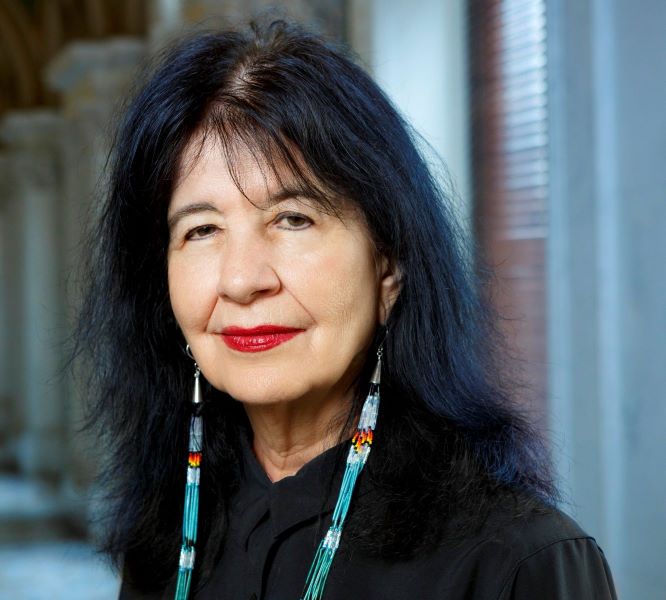
Native American Poet Laureate Joy Harjo 2019-2022 Photo Credit: Joy Harjo Official Website (Photo by Shawn Miller)
My Poetry Corner April 2023 features the poem “Bless This Land” from the poetry collection An American Sunrise by Joy Harjo, Poet Laureate of the United States 2019-2022. (The following excerpts of poems are all sourced from this collection.)
Born in 1951 in Tulsa, Oklahoma, the first of four siblings, Joy Harjo is a poet, musician, playwright, and author. Her father was Muscogee (Creek) Nation and her mother of mixed ancestry of Cherokee, French, and Irish. Her mother exposed her to poetry at an early age, but painting was her first love.
My mother was a songwriter and singer, Harjo relates in her poem “Washing My Mother’s Body.” My mother’s gifts were trampled by economic necessity and emotional imprisonment. // My father was a dancer, a rhythm keeper. His ancestors were orators, painters, tribal chiefs, stomp dancers, preachers, and speakers… All his relatively short life he looked for a vision or song to counter the heartache of history. Her father’s drinking and abuse ended their marriage.
At sixteen years of age, Harjo’s abusive and violent stepfather kicked her out of their home. She moved to Santa Fe, New Mexico, where she received her high school education at the Institute of American Indian Arts. After graduation, she returned to Oklahoma, gave birth to a son, and returned to New Mexico to pursue a life as an artist. After earning her BA at the University of New Mexico (UNM) in 1976, Harjo moved to Iowa where she completed an MFA in 1978 at the University of Iowa Writers’ Workshop.
In all the years during this life, my voice within has never fallen silent. Until now. It was an imperceptible change. The moment of realization came as a surprise, but I did not panic. Only an inner calmness.
No inner voice telling me I was not good enough. No inner voice telling me I had deserved every punishment suffered for one failure or the other. No inner voice telling me what I should or should not do. No inner voice criticizing my decisions and actions. No fictional or real-life character demanding to be heard.
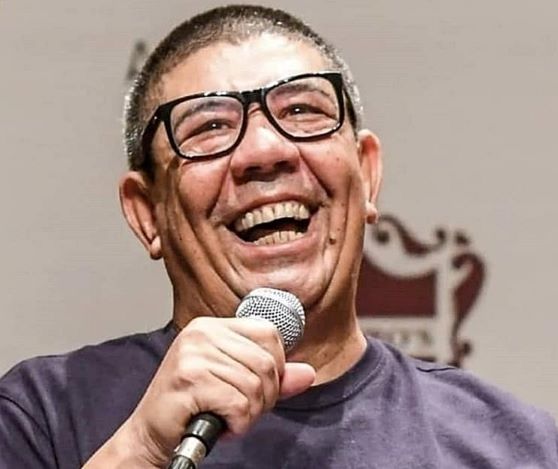
My Poetry Corner March 2023 features the poem “A Dream” (Um Sonho) by Brazilian poet, writer, and cultural agitator Sérgio Vaz from his 2007 poetry collection Stone Collector (Colecionador de Pedras). He is known across Brazil as the “Poet of the Periphery.” Born in 1964 in Ladainha in the interior of the southeastern State of Minas Gerais, he was five years old when he moved with his family to Taboão da Serra in the outskirts of the City of São Paulo where he completed high school.
With his father’s encouragement, Sérgio developed a reading habit from an early age. He grew up roaming the back streets of the city, observing its cultural roots, habits, and customs. After an invitation to write lyrics for friends who had a musical band, he began exploring poetry. During an interview with Katia Marko and Fabiana Reinholz for Brasil de Fato in November 2021, Sérgio said:
“Poetry for me is when it comes down from the pedestal and kisses the feet of the community. I had to take off that elegant outfit, that sophisticated word. Poetry presented itself like this, in a humble way for me, fighting against the [military] dictatorship [1964-1985], against tyranny. That’s how I became interested in poetry, knowing that it could be an instrument of struggle through words.”
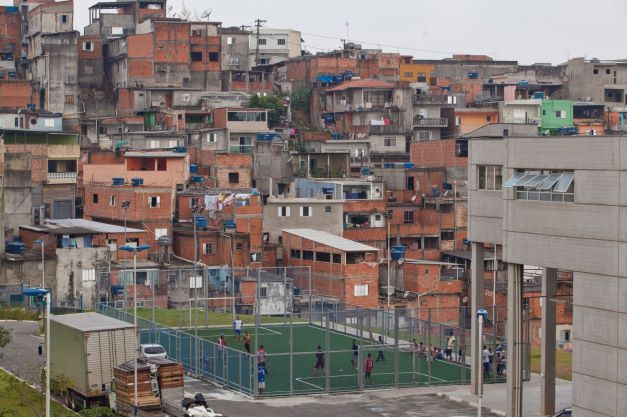
Taboão da Serra – Greater São Paulo – Brazil Photo Credit: Zé Barretta
During the same interview, Sérgio said that his poem, “Stubbornness” (Teimosia), defines him a lot because one must be stubborn to be Brazilian today.
It is of no use
should they break my legs
pierce my eyes
or talk behind my back.
What sustains my body
are my ideas.
Arms uncrossed,
I have a brain with wings
and I am all heart.
If they should forbid me to walk on water,
I swim over the land.
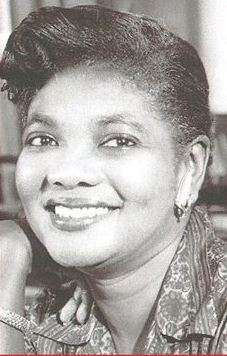
Radical social change is possible. I saw it unfold as a teenager growing up in Guyana, a former British colony caught in the tight grip of the rich and powerful white sugar plantation owners. Such change demands courage, persistence, and self-determination. It means pushing upstream against the flow, ignoring the voices of naysayers, and not succumbing to discouragement and hopelessness when faced with setbacks and defeats. Winifred Gaskin (1916-1977) was a woman who displayed such traits to the fullest measure.
Winifred was born of humble origins on May 10, 1916, into a world engulfed in the First World War (1914-1918). Born in the village of Buxton on the East Coast of Demerara, eleven miles (18 kilometers) from Georgetown, the capital, Winifred shared the indomitable spirit of her African slave ancestors. Seventy-six years earlier in 1840, a group of 128 ex-slaves had pooled their savings to buy an abandoned 500-acre cotton plantation, New Orange Nassau, for an inflated price of $50,000. They renamed it Buxton in honor of Thomas Fowell Buxton, an English parliamentarian and abolitionist.
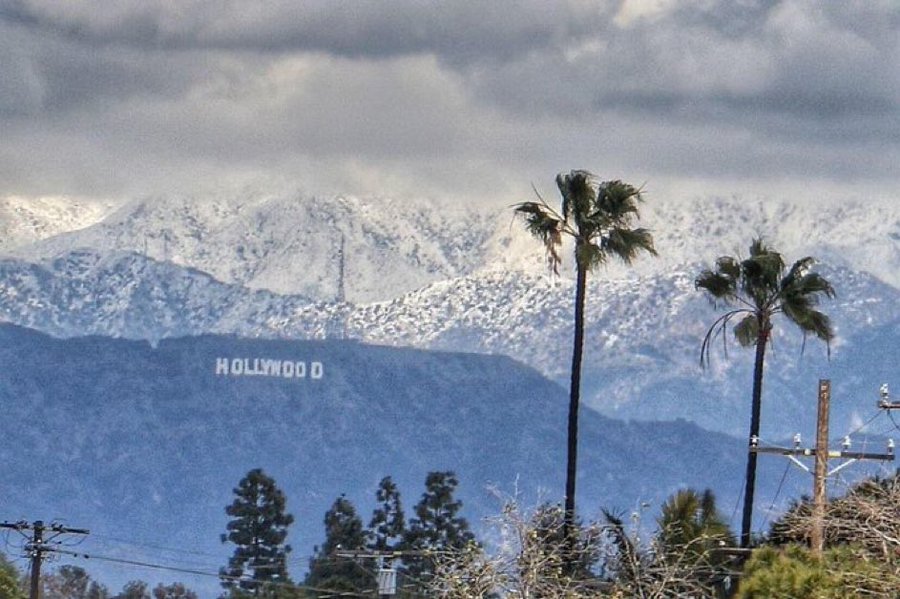
Snow-capped Santa Monica Mountains – Los Angeles – March 2, 2023 Photo Credit: Citizen Free Press
Forgive me, Mother Gaia. I come before you with my head bent in shame. How could I ever believe that it was okay for humanity to destroy so much life and treat Earth’s oceans and atmosphere as dumping grounds? I have pondered our beliefs that have brought our species to a global climate and ecological catastrophe: entitlement, surety or certainty, control, autonomy, progress, and exceptionalism. Jem Bendell refers to these assumptions as humanity’s e-s-c-a-p-e ideology. Our great human enterprise stands on pillars of The Dead. I share in the plunder. I must also share the guilt.
I hear you, Mother Gaia. Your signs of distress are everywhere, even in my home state of California. I admit that my way of being is detrimental to the preservation of our planet’s web of life. I know that a shift of being is essential. Am I up to the task? Destructive practices and attitudes have become second nature to me. Beliefs have become sacrosanct.
I have begun the work of letting go of my sense of entitlement and exceptionalism. I acknowledge that I hold no divine right of dominion over the non-human lives with whom I share this planet. As you have made clear, Mother Gaia, my well-being depends upon their well-being. When I harm the condor, the Monarch butterfly, and the great forests, I harm myself.
Through my succulent and vegetable garden, I work at reconnecting with other threads in nature’s web of life. In our chaotic world of conflicting interests and desires, the flowering trees and plants, birds, and butterflies bring joy to each new day. Not so, the caterpillars that gorged on the leaves of my young cucumber plants. My inner conflict got intense: This year, I will not be planting cucumbers. Then, there is a wild cat that roams our apartment complex at night, leaving unwelcome mounds of poop in my garden beds. I know, Mother Gaia, you never promised it would be easy.
When it comes to my consumption of durable and disposal goods, I adhere to a simple and frugal lifestyle. With adult children, I no longer contend with pressure to buy the latest stuff that kids and teenagers crave. Plastic products remain a challenge. They are everywhere, cajoling me with their convenience, durability, and usefulness. I struggle, in vain, for control, Mother Gaia.
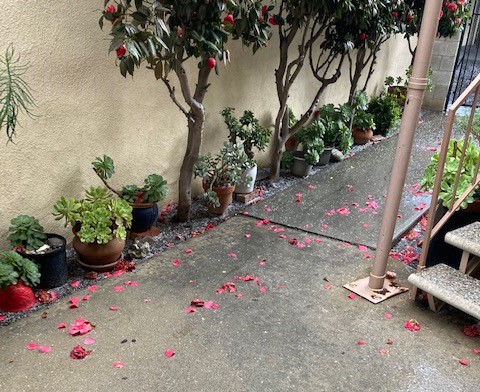
Our mistaken belief that humankind could control Nature and carve it into our own image has led us to existential crises. Extreme weather has become my new reality. Beginning on February 23rd, record-breaking severe winter storms struck our state. That afternoon shortly after 4:00 p.m., I was seated at my desk when I heard a strange pounding on the windowpane. Outside, hailstones the size of green peas littered the ground. I rushed outdoors to witness and record the rare event (see my photo below). Is this yet another sign of more extreme weather to come, Mother Gaia?
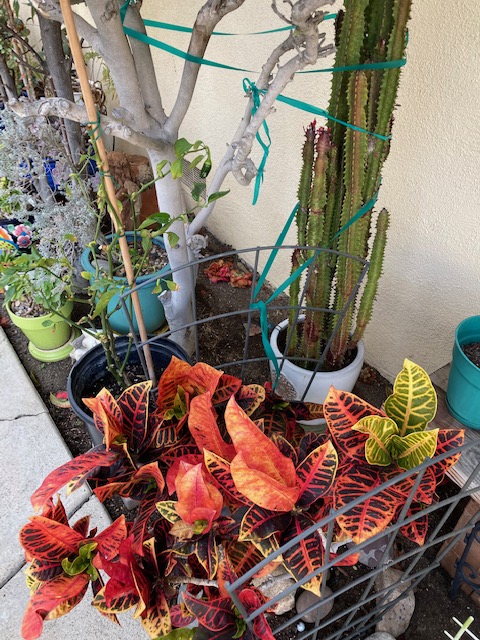
The storm brought destructive winds, much-needed rainfall, blizzards, and heavy snowfall, including low-elevation snow to areas unaccustomed to snow, like the Hollywood Sign on Mount Lee in the Santa Monica Mountains overlooking the City of Los Angeles. I give thanks that my garden suffered minor damage. The wind knocked over the potted Red Cactus and partly uprooted the Petra Croton plant from the ground. With warnings of another storm on the way, I secured both plants as best as I could (see photo below). Our apartment complex got off easy with just a little flooding. For how much longer will we escape Nature’s wrath, Mother Gaia?
Towns in the mountain regions have been hit hardest with record levels of up to ten feet deep of snowfall, trapping people in their homes. On March 1st, Governor Gavin Newsom declared a state of emergency in thirteen counties, including Los Angeles County. As temperatures have dropped by ten to twenty degrees Fahrenheit below normal for our area, I must be diligent in staying warm while still conserving on energy and gas usage. We have only ourselves to blame, Mother Gaia. We ignored your early warning signs of distress. We thought that we could keep on pumping our carbon waste into the atmosphere without adverse consequences.
Our destructive e-s-c-a-p-e narrative no longer works in favor of humankind, except for a tiny minority who profit from disaster and chaos. Until the day that they, too, will perish. We need a new narrative that recognizes our oneness with Nature’s web of life and with each other. Jem Bendell has proposed the c-o-s-m-o-s remedy: compassion, openness, serenity, mutuality, oneness, and solidarity. I will explore his proposed remedy over the next six months. I invite you to join me.
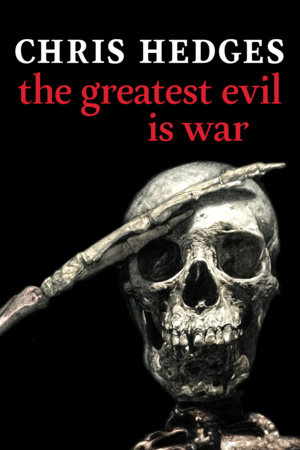
Front Cover: The Greatest Evil is War by Chris Hedges Photo Credit: Seven Stories Press (USA, 2022)
The crisis faced by combat veterans returning from war is not simply a struggle with trauma and alienation. It is often, for those who can slice through the suffering to self-awareness, an existential crisis. War exposes the lies we tell ourselves about ourselves. It rips open the hypocrisy of our religions and secular institutions. Those who return from war have learned something which is often incomprehensible to those who have stayed home. We are not a virtuous nation. God and fate have not blessed us above others. Victory is not assured. War is neither glorious nor noble. And we carry within us the capacity for evil we ascribe to those we fight.
Excerpt from The Greatest Evil is War by Chris Hedges, Seven Stories Press, New York, USA, 2022 (p. 77).
CHRIS HEDGES was a war correspondent for two decades in Central America, the Middle East, Africa, and the Balkans, including fifteen years with the New York Times, where he was awarded the Pulitzer Prize. He is the author of fourteen books, including War Is a Force That Gives Us Meaning and What Every Person Should Know About War. He holds a Master of Divinity from Harvard University and has taught at Columbia University, New York University, Princeton University, and the University of Toronto.
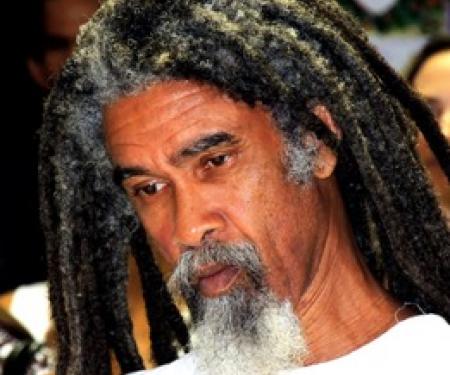
MyPoetry Corner February 2023 features the poem “Avocado” from the poetry collection Wordplanting by Kendel Hippolyte, published by Peepal Tree Press (UK, 2019). Born in 1952 in the Caribbean Island nation of St. Lucia, Hippolyte is a poet, playwright, and director. In the 1970s, he studied and lived in Jamaica where he earned a BA from the University of the West Indies in 1976.
He is the author of seven books of poetry. Fault Lines, published in 2012, won the OCM Bocas Prize in Poetry in 2013. In 2000, he received the St. Lucia Medal of Merit (Gold) for Contribution to the Arts. He lives in St. Lucia.
I do not usually feature very long poems, but Hippolyte’s fourteen-stanza poem “Avocado” captivated me with its compelling narrative, rich imagery, and Caribbean rhythm. As I question what will become of America with its deepening divide and a world seemingly hellbent on self-destruction, the first line drew me close. Attentive.
[Kindly note that Hippolyte is known for writing in Standard English (British spelling) as well as Caribbean English and Kweyol, his nation language.]

 Three Worlds One Vision
