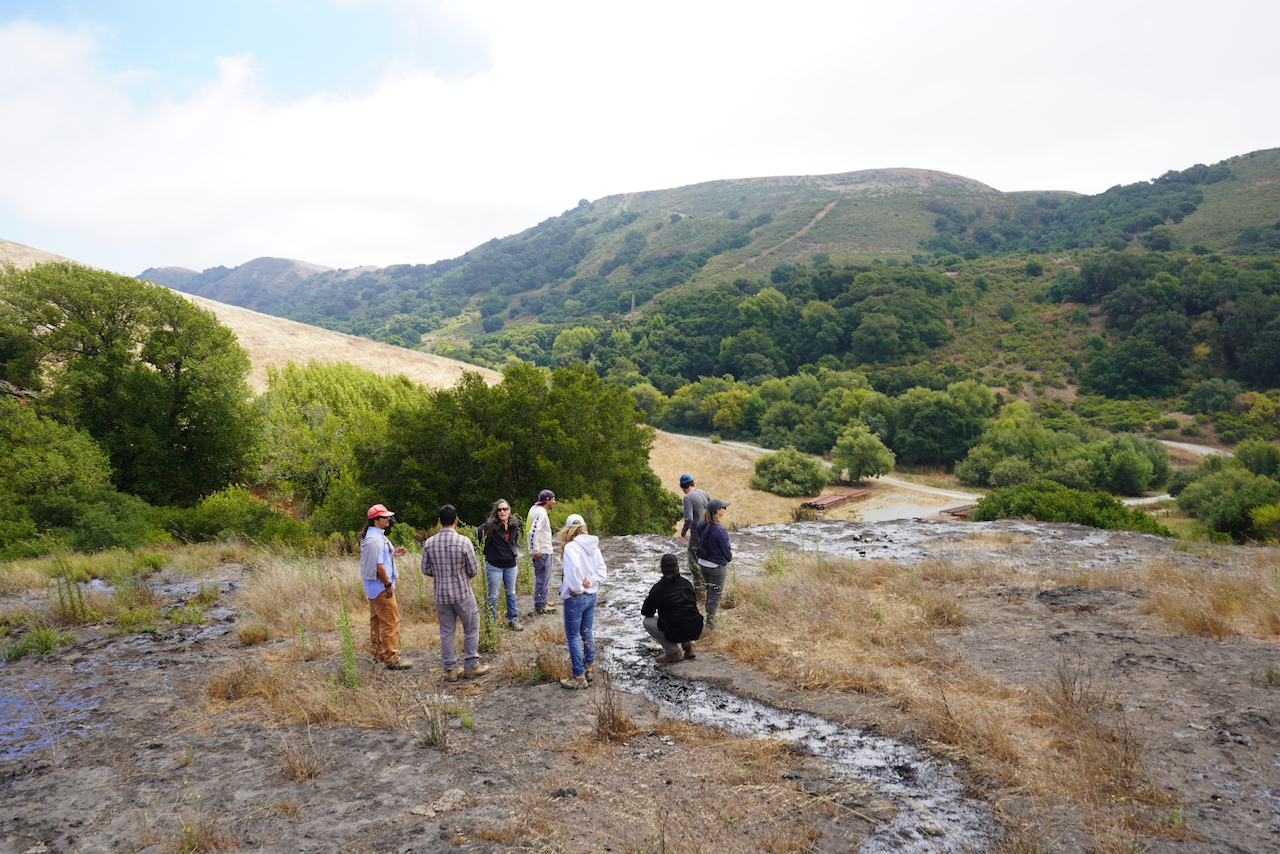
Natural Tar Springs at La Brea – Juristac Tribal Cultural Landscape – California/USA – January 2026 Photo Credit: Protect Juristac Website
This is the second article in my series about our changing Earth from interviews with Native Americans shared in We Are the Middle of Forever: Indigenous Voices from Turtle Island on the Changing Earth, edited by Dahr Jamail and Stan Rushworth (USA 2022). My presentation does not follow the order of the interviews.
This is the first article in my series about our changing Earth from interviews with Native Americans shared in We Are the Middle of Forever: Indigenous Voices from Turtle Island on the Changing Earth, edited by Dahr Jamail and Stan Rushworth (USA 2022). My presentation does not follow the order of the interviews.
Born on that memorable day of September 11, 2001, Raquel Ramirez is the youngest participant interviewed via Skype during the pandemic lockdown in midsummer 2020. She defines herself as an urban Native American, Ho-Chunk and Ojibwe, and other strong Native family roots. Growing up in California, she’s greatly influenced by the state’s indigenous cultures.
In addressing the crises we face on our changing Earth, Raquel considers awareness as a challenge to confront and overcome. Breaking free of ignorance in society and our own ignorance is, she acknowledges, an emotional and difficult process.
Awareness doesn’t just mean listening or hearing or recognizing. It is very much being present and being conscious of people beyond you!
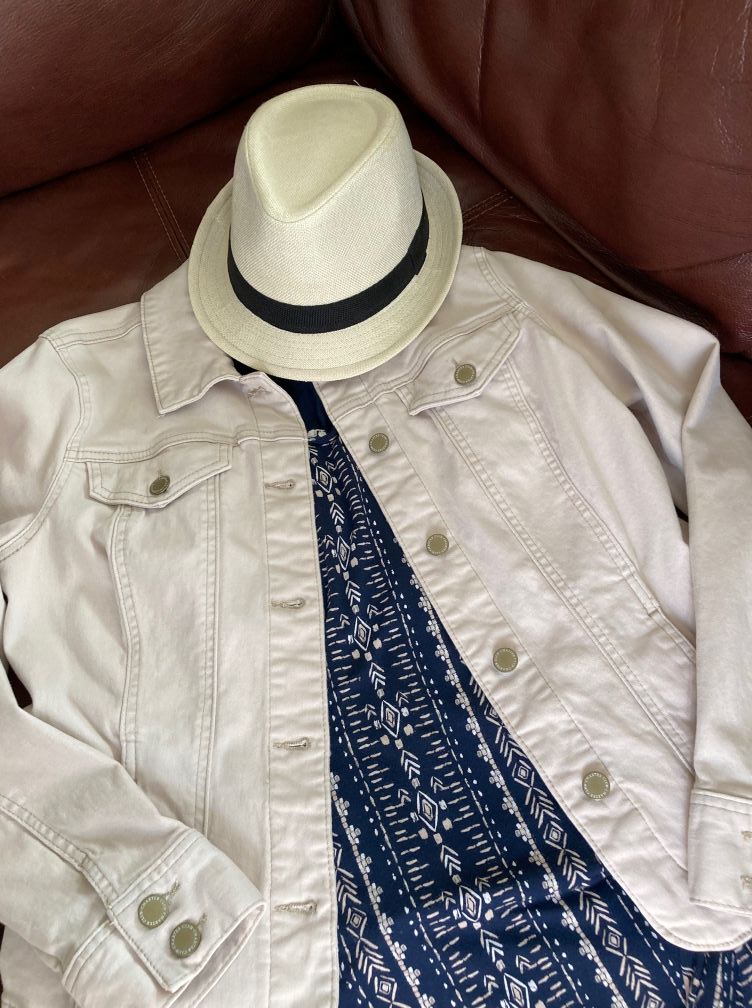
Rosaliene’s Outfit – Dress-Jacket-Hat – September 30, 2025
Since I had two medical appointments last week that consumed my writing time, I did not plan to publish a post today. I began writing this article in bed today at 7:11 a.m. As I stay up late on Saturday evenings for what I call my Movie Night, I usually sleep in until 9 o’clock on Sundays. Today, I woke up early and stayed in bed reflecting on life here in my adopted homeland. In my state of half-awake consciousness, I allowed my thoughts to flow freely. Incidents across space and time—spanning my life in Guyana, Brazil, and here in the United States—came and went.
I recalled shocking a group of black American businesswomen during a networking event held by the Black Business Association (BBA) in Los Angeles, of which I had been invited to become a member. At the time, I had just started my home-based, sole-proprietor business, promoting trade with Brazil. It was the year 2007. Not yet having lost my Brazilian jeito de ser or way of being, I was sharing with them the Brazilian way of doing business. I don’t recall what I said that day, but I remember well one of the women saying, with disdain in her voice: Are you trying to shock us?
Aeonium Mint 03/15/25Aeonium Mint Decapitated 04/12/25
Decapitated Life cycle interrupted Obstructing the path
I shouldn’t be surprised. After all, it was just a matter of time that a neighbor would complain to Management about a plant obstructing our sidewalk. It’s not the first time. On separate occasions, I’ve had two neighbors complain about a rosebush and potted palm getting in their way. Since then, I’m usually diligent in trimming excessive growth. This time, I couldn’t bring myself to cut back the glorious bloom of the Aeonium Mint invading our space.
With motherhood comes great responsibility to raise a child in the world without guarantees for their safety and growth
Decapitated for being different for obstructing the path of others by the bullies, the haters, the abductors the destroyers of lives In a natural world abounding with diversity
Rosaliene’s Garden: Bee visiting flowers of Aeonium Mint 04/27/25
The children of humankind nurse at the breasts of Mother Earth She gives freely to all for we are all worthy of her grace Such is the miracle of being
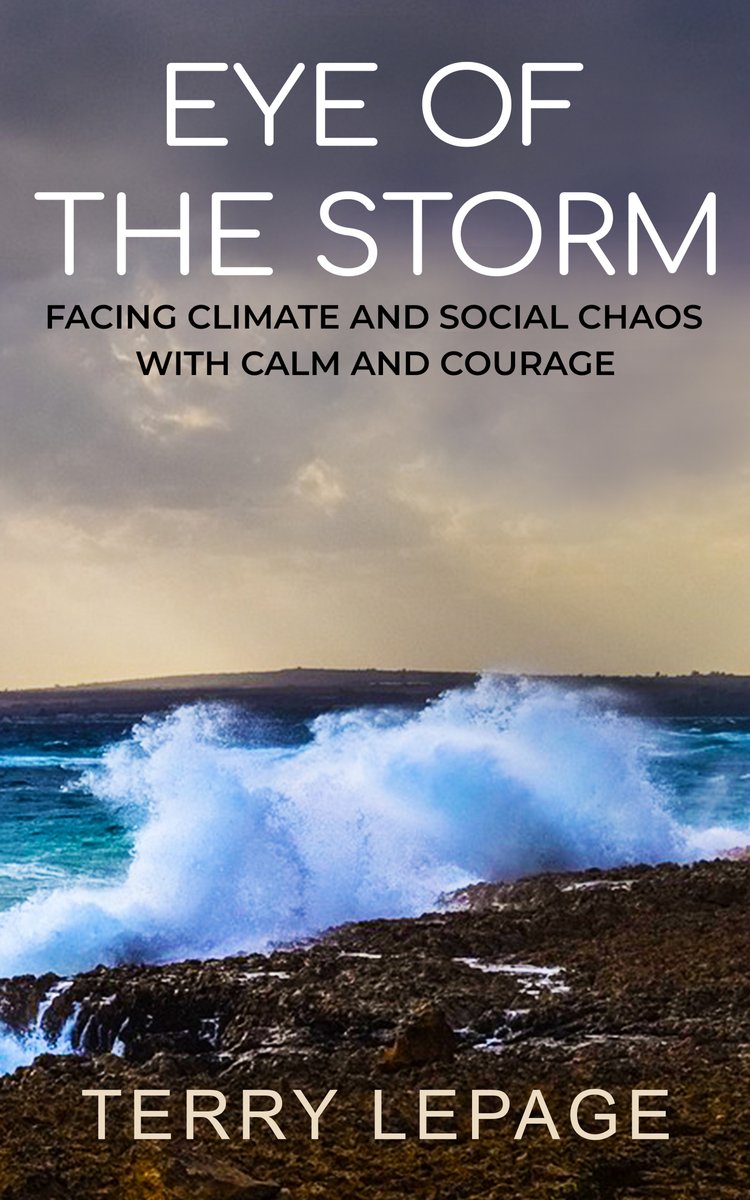
Front Cover: Eye of the Storm: Facing Climate and Social Chaos with Calm and Courage by Terry Lepage Photo Credit: Open Door Communication (USA, 2023)
[D]ue to the baked-in heating of the planet, we are experiencing ever-increasing regional catastrophes across the globe from storms, fires, floods, droughts, crop failures, and heat waves. A barrage of local, regional, and specific collapses on an uncertain time frame against a background of more general decline seems to be in store, rather than one grand collapse…. This is the storm we face.
Fear is contagious, calm is contagious, and courage is contagious. Those of us who have some idea of what is unfolding can prepare ourselves mentally, emotionally, and spiritually to be (as we are able) centers of calm, compassion, and courage. We can be ready to coach others to hold onto their values in hard times. Because we will have pre-processed some of the loss that others will deny for a while longer, we will be able to support them when they finally face what comes.
Excerpt from Eye of the Storm: Facing Climate and Social Chaos with Calm and Courage by Terry Lepage, Open Door Communication, California, USA, 2023 (pp. 11 & 12).
Terry LePage creates spaces for connection, healing, insight, and inspiration. With a PhD in chemistry and a Master of Divinity, she combines heart and head with her clear and insightful writing, speaking, and facilitation. She has worked as a research chemist, transitional minister, and hospice chaplain. She currently lives in Southern California and facilitates Nonviolent Communication practice groups, grief circles, and social justice groups both locally and for the international Deep Adaptation Forum.
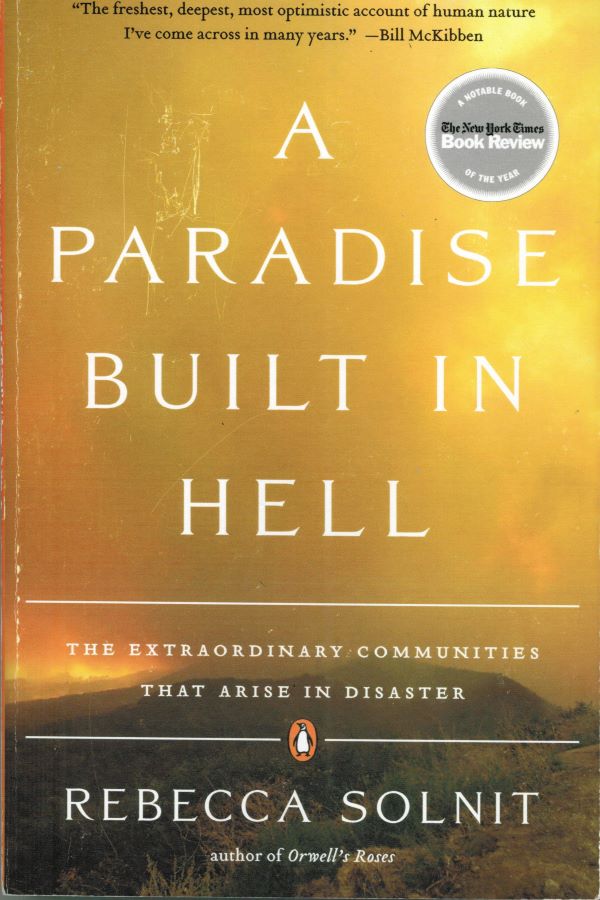
Front Cover: A Paradise Built in Hell: The Extraordinary Communities that Arise in Disaster by Rebecca Solnit Photo Credit: Penguin Books (USA, 2009)
Who are you? Who are we? The history of disaster demonstrates that most of us are social animals, hungry for connection, as well as for purpose and meaning. It also suggests that if this is who we are, then everyday life in most places is a disaster that disruptions sometimes give us a chance to change. They are a crack in the walls that ordinarily hem us in, and what floods in can be enormously destructive—or creative. Hierarchies and institutions are inadequate to these circumstances; they are often what fails in such crises. Civil society is what succeeds, not only in an emotional demonstration of altruism and mutual aid but also in a practical mustering of creativity and resources to meet the challenges.
Excerpt from “Epilogue: The Doorway in the Ruins,” A Paradise Built in Hell: The Extraordinary Communities that Arise in Disaster by Rebecca Solnit, Penguin Books, New York, USA, 2009 (p. 305).
The disasters covered in this book include: Earthquake San Francisco/California/USA (1906), Explosion Halifax/Nova Scotia/Canada (1917), The Blitz/London/UK (1940), Earthquake Mexico City/Mexico (1985), Bombing World Trade Center/New York/USA (2001), and Hurricane Katrina New Orleans/USA (2005).
REBECCA SOLNIT, writer, historian, and activist, is the author of more than twenty books on feminism, western and urban history, popular power, social change and insurrection, hope and catastrophe. Her books include Orwell’s Roses; Recollections of My Nonexistence; Hope in the Dark; Men Explain Things to Me; and A Field Guide to Getting Lost. A product of the California public education system from kindergarten to graduate school, she writes regularly for the Guardian, serves on the board of the climate group Oil Change International, and recently launched the climate project Not Too Late (nottoolateclimate.com).
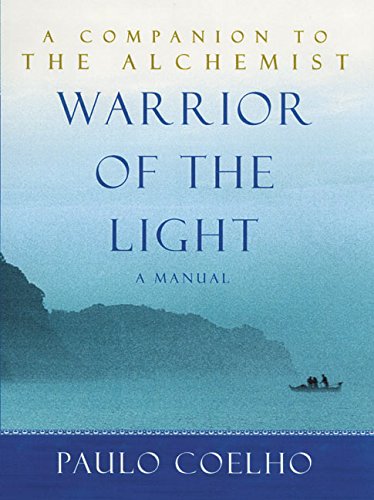
Front Cover – Warrior of the Light: A Manual by Paulo Coelho
“Hitler may have lost the war on the battlefield, but he ended up winning something too,” says Marek Halter, “because man in the twentieth century created the concentration camp and revived torture and taught his fellow men that it is possible to close their eyes to the misfortunes of others.”
Perhaps he is right: There are abandoned children, massacred civilians, innocent people imprisoned, lonely old people, drunks in the gutter, madmen in power.
But perhaps he isn’t right at all, for there are also Warriors of the Light.
And Warriors of the Light never accept what is unacceptable.
Excerpt from Warrior of the Light: A Manual by Paulo Coelho, Translated from the Portuguese by Margaret Jull Costa, HarperOne, New York, USA, 2003, p. 70.
PAULO COELHO, born in Rio de Janeiro in 1947, is a Brazilian lyricist and novelist, best known for his novel, The Alchemist (1988). His work has been published in more than 170 countries and translated into eighty languages. His books have had a life-enchanting impact on millions of people worldwide.
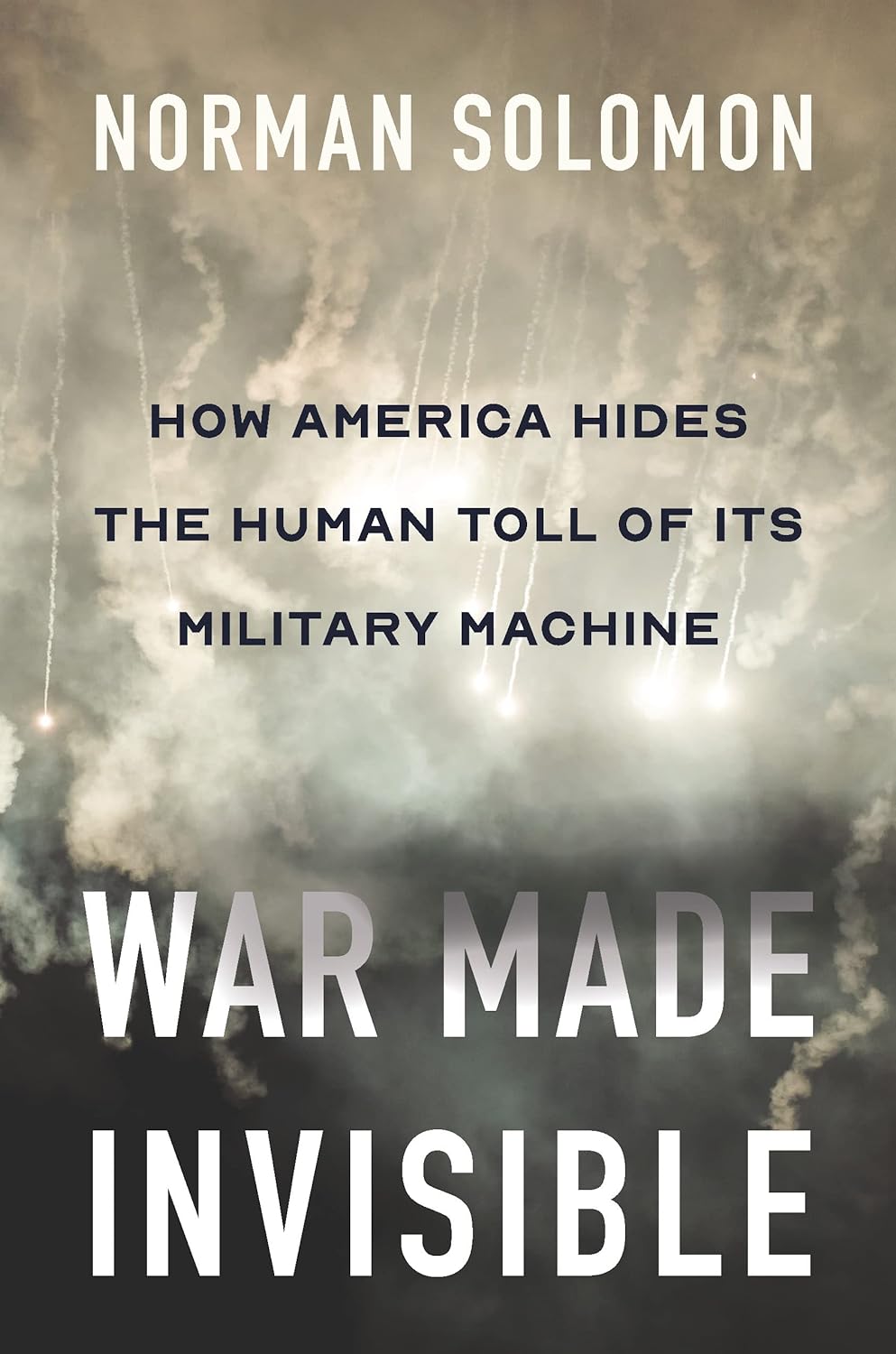
Front Cover: War Made Invisible: How America Hides the Human Toll of Its Military Machine by Norman Solomon
Frequent killing of civilians is inherent in the types of wars that the United States has waged in this century. Despite all the hype about precision weaponry, even its top-rated technologies are fallible. What’s more, they operate in flawed—and sometimes highly dysfunctional—contexts. Whether launching attacks from distant positions or directly deployed, American forces are far removed from the societies they seek to affect. Key dynamics include scant knowledge of language, ignorance of cultures, and unawareness of such matters as manipulation due to local rivalries.
When U.S. officials say that civilian deaths are merely accidental outcomes of the war effort, they don’t mention that such deaths are not only predictable—they’re also virtually inevitable as results of policy priorities. Presumptions of acceptability are hot-wired into the war machine. The lives taken, injuries inflicted, traumas caused, environmental devastation wrought, social decimation imposed—all scarcely rank as even secondary importance to the power centers in Washington.
Norman Solomon, War Made Invisible: How America Hides the Human Toll of Its Military Machine, The New Press, New York, USA, 2023, pp. 53-54.
NORMAN SOLOMON is an American journalist, media critic, author, and activist. He is the co-founder of the online organization RootsAction.org and executive director of the Institute for Public Accuracy, a consortium of policy researchers and analysts. His books include War Made Easy: How Presidents and Pundits Keep Spinning Us to Death (2006) and Made Love, Got War: Close Encounters with America’s Warfare State (2008). He lives in the San Francisco area in California.
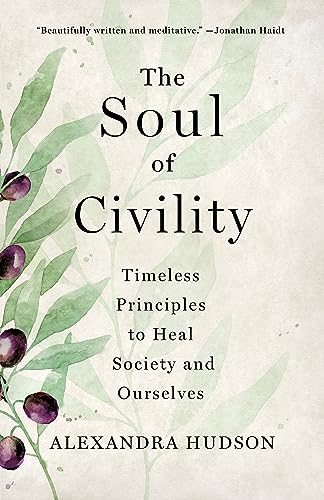
Front Cover: The Soul of Civility: Timeless Principles to Heal Society and Ourselves by Alexandra Hudson
Civility tempers and elevates the interactions between citizens, whether or not those citizens are public leaders. Civility begins with recognizing our shared humanity. It starts with seeing that we are more alike than unlike, and viewing our difference in light of our likeness. It starts in small ways, sowing seeds of the friendship and trust that ensure our civitas survives.
Deliberative democracy depends on the premise that people of goodwill can negotiate differences and work together in a productive way through rational—and civil—debate. Civility builds an active willingness to listen to others, to consider their point of view alongside our own, and to evaluate varying conceptions of “the good.” The civil citizen accepts that others have genuinely held moral positions, and that reasonable minds can disagree. These traits are equally essential for all positions along the political spectrum, and for our democracy, public leaders, and citizens alike.
~ Alexandra Hudson, The Soul of Civility: Timeless Principles to Heal Society and Ourselves, St. Martin’s Publishing Group, New York, USA, 2023, p. 257.
ALEXANDRA HUDSON is a writer, storyteller, and the founder of Civic Renaissance, a publication and intellectual community dedicated to reviving the wisdom of the past to help us lead richer lives in the present. She was named a 2019 Novak Journalism Fellow, and she contributes to Fox News, CBS News, The Wall Street Journal, USA Today, Time magazine, Politico magazine, and Newsweek. Her TV series, Storytelling and the Human Condition, was produced with The Great Courses and is available for streaming on Wondrium and Audible. Hudson earned a master’s degree in public policy at the London School of Economics as a Rotary Scholar. An adjunct professor at the Indiana University Lilly Family School of Philanthropy, she lives in Indianapolis with her husband and children.
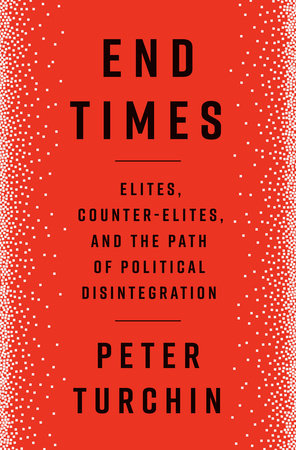
Front Cover: End Times: Elites, Counter-Elites, and the Path of Political Disintegration by Peter Turchin Photo Credit: Penguin Random House (2023)
To understand why Donald Trump became the forty-fifth president of the United States, we should also pay less attention to his personal qualities and maneuvers and more to the deep social forces that propelled him to the top. Trump was like a small boat caught on the crest of a mighty tidal wave. The two most important social forces that gave us the Trump presidency—and pushed America to the brink of state breakdown—are elite overproduction and popular immiseration….
[First, by 2016] a large proportion of Americans who felt left behind voted for an unlikely candidate—a billionaire. For many of them, this was not so much an endorsement of Trump as an expression of their discontent, shading into rage, against the ruling class.
Second, by 2016, the elite overproduction game had reached a bifurcation point where the rules of conduct in political campaigns had been tossed to the wind.
Excerpt from End Times: Elites, Counter-Elites, and the Path of Political Disintegration by Peter Turchin, Penguin Random House, New York, USA, 2023 (pp. 13-14).
Footnotes
Elite Overproduction occurs when the number of elites among the top One Percent far exceeds the number of available power positions.
Popular Immiseration occurs when workers face years of wage stagnation and decline while the rich get richer. In the USA, “deaths of despair” from suicide, alcoholism, and drug overdose spiked among the noncollege-educated during the period 2000 to 2016.
Peter Turchin is a project leader at the Complexity Science Hub Vienna, a research associate at the University of Oxford, and an emeritus professor at the University of Connecticut. Trained as a theoretical biologist, he is now working in the field of historical social science that he and his colleagues call cliodynamics. Currently, his main research effort is directed at coordinating CrisisDB, a massive historical database of societies sliding into crisis—and then emerging from it. His books include Ultrasociety (2016) and Ages of Discord (2016).





 Three Worlds One Vision