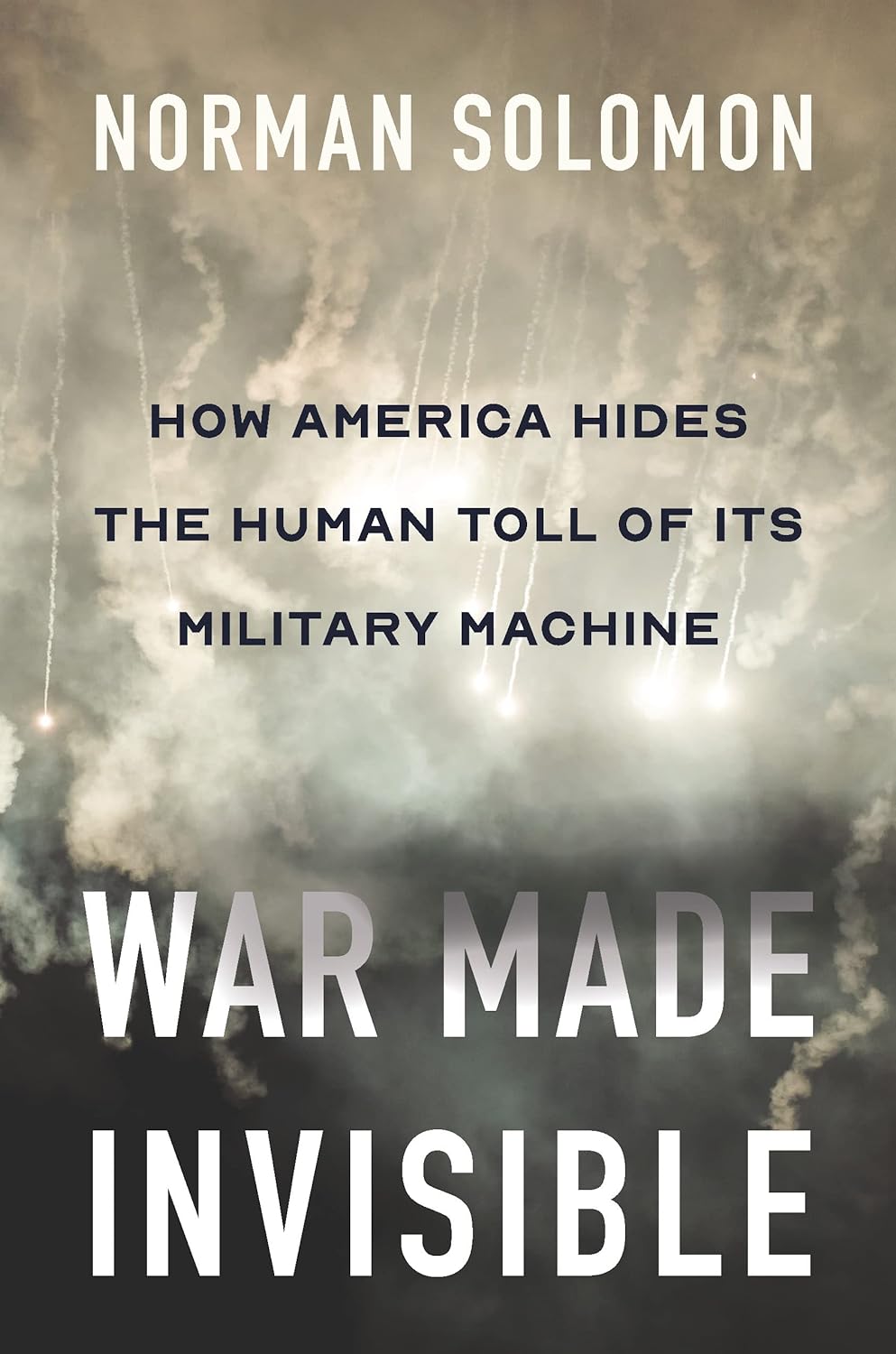
Front Cover: End Times: Elites, Counter-Elites, and the Path of Political Disintegration by Peter Turchin Photo Credit: Penguin Random House (2023)
To understand why Donald Trump became the forty-fifth president of the United States, we should also pay less attention to his personal qualities and maneuvers and more to the deep social forces that propelled him to the top. Trump was like a small boat caught on the crest of a mighty tidal wave. The two most important social forces that gave us the Trump presidency—and pushed America to the brink of state breakdown—are elite overproduction and popular immiseration….
[First, by 2016] a large proportion of Americans who felt left behind voted for an unlikely candidate—a billionaire. For many of them, this was not so much an endorsement of Trump as an expression of their discontent, shading into rage, against the ruling class.
Second, by 2016, the elite overproduction game had reached a bifurcation point where the rules of conduct in political campaigns had been tossed to the wind.
Excerpt from End Times: Elites, Counter-Elites, and the Path of Political Disintegration by Peter Turchin, Penguin Random House, New York, USA, 2023 (pp. 13-14).
Footnotes
Elite Overproduction occurs when the number of elites among the top One Percent far exceeds the number of available power positions.
Popular Immiseration occurs when workers face years of wage stagnation and decline while the rich get richer. In the USA, “deaths of despair” from suicide, alcoholism, and drug overdose spiked among the noncollege-educated during the period 2000 to 2016.
Peter Turchin is a project leader at the Complexity Science Hub Vienna, a research associate at the University of Oxford, and an emeritus professor at the University of Connecticut. Trained as a theoretical biologist, he is now working in the field of historical social science that he and his colleagues call cliodynamics. Currently, his main research effort is directed at coordinating CrisisDB, a massive historical database of societies sliding into crisis—and then emerging from it. His books include Ultrasociety (2016) and Ages of Discord (2016).
Two peoples Israelis & Palestinians Jews & Arabs Oppressor & Oppressed Trapped in an unending cycle of armed struggle Seventy-five years of violent co-existence over a piece of Earth they both call Home.
An eye for an eye The violence of men unleashed on the largest open-air prison in the world Thousands of women and children slaughtered Entire generations of families buried beneath the rubble No peace for either side until the other is exterminated.
“Ceasefire Now!” “Not in Our Name!” demand members of the Jewish Voice for Peace during sit-in protest at New York City’s Grand Central Station “Never again for anyone!” one sign read.
“No genocide in our name!” “Ceasefire Now!” demand members of the IfNotNow Movement American Jews for equality & justice A thriving future for all Palestinians & Israelis.
In Gaza, buried deep beneath the rubble, a baby cries.
Hurricane Idalia hits Florida with 125 mph winds – USA – August 30, 2023 Photo Credit: AP News (Photo/Daniel Kozin)
This is the sixth and final part of my series of reflections on the “c-o-s-m-o-s remedy” proposed in opposition to the “ideology of e-s-c-a-p-e” by Jem Bendell in Deep Adaptation: Navigating the Realities of Climate Chaos (UK/USA 2021).
In contrast to the habit of Exceptionalism in e-s-c-a-p-e ideology, which means assuming ‘I am annoyed in this world because much about it upsets me and so I believe I’m better and/or needed…,’ Bendell proposes that Solidarity involves acting from the part of you that knows ‘our common sadness and frustration arise from our mutual love for all life and motivate us towards fairness, justice and healing’ (p. 147).
Solidarity is defined as unity (as a group or class) that produces or is based on community of interests, objectives, and standards (Merriam-Webster Dictionary). As he so often does, Bendell calls us to look at the essence of what drives our shared sense of solidarity as a group or class.
For some unknown reason, I do not use the word ‘solidarity.’ Yet, I’m very familiar with the word since my childhood growing up in then British Guiana during the 1950s and 1960s. Whenever I hear the word, I immediately recall the song “Solidarity Forever” that played every day on our local radio stations. Though I don’t remember the verses, I can still sing the chorus:
Solidarity forever! Solidarity forever! Solidarity forever! For the Union makes us strong!
I later learned that it was the anthem of the workers’ unions, mainly the agricultural workers, who were fighting for better wages, workplace safety, and living conditions. Could it be that I associate the word with its negative images of danger to one’s safety?
In those early days of my youth, the managers and owners of the sugar plantations and factories across the colony were hostile towards striking workers. They were known to hire thugs to terrorize the workers on the picket line. To join picket lines in a show of solidarity came with the risk of losing one’s job, being beaten, teargassed, or even killed. Such risks did not change when we became an independent nation in May 1966.
Father Bernard Darke SJ (left) flees from armed thug (bottom right) – Guyana – July 14, 1979 Photo Credit: Wikipedia from Jesuits.org.uk
On Saturday morning, July 14, 1979, after celebrating Mass and having his breakfast, Father Bernard Darke SJ spent the morning marking examination papers at the Catholic high school where he taught the Scriptures and Mathematics. As Scouts Master, the British Jesuit priest also made plans with some of the scouts for their annual camp. At the request of the Editor of the Catholic Standard newspapers, he had his cameras with him to take photos of a political demonstration to be held outside the Magistrates’ Court.
During a period of civil rebellion against the dictatorship government, leading members of the opposition party Working People’s Alliance (WPA) had been arrested and charged with burning down the building housing the Ministry of National Development. As peaceful demonstrators marched along the street heading towards the court, Father Darke stood on the sidelines, in front of the school building, taking photographs.
The demonstrators were about 65 feet (20 meters) away from him when thugs, armed with wooden staves, cutlasses, and knives, charged into the picket line. The crowd scattered in all directions. Father Darke captured the confusion with his camera. Across the two-lane roadway, three men attacked the Assistant Editor of the Catholic Standard newspapers, who was covering the story. After receiving a blow to the head, the Assistant Editor fell to the ground, bleeding. In taking photos of the attack, Father Darke became the next target. He tried fleeing to safety, but the two cameras slung around his neck slowed him down. After beating him to the ground with wooden staves, one of the three assailants stabbed him in the back with an old bayonet. That evening, shortly after 6:00 p.m., he died in hospital from a ruptured lung.
Serving in the Guyana Mission since 1960, Father Bernard Darke SJ (1925-1979) was a quiet man who did not seek attention. He served in the Royal Navy during World War II and joined the Jesuit Order in 1946. His killing in broad daylight shook us all in the Catholic community.
Working for change in unjust social, economic, and political systems involves taking life-changing risks. Solidarity can come with a steep price. I don’t join picket lines or take part in mass public demonstrations. I lack such courage. I prefer to contribute in quiet ways: speaking out, making posters and banners, spreading awareness, listening to and engaging with others, and changing my behavior.
Solidarity in our fight to save Earth’s pollinators and other endangered species! Solidarity in our fight for clean air and clean water! Solidarity in our fight to end humanity’s dependence on fossil fuels! Solidarity makes us strong!
Flooding following Tropical Storm Hilary – Death Valley National Park – California/USA – August 2023 Photo Credit: USA National Park Service (NPS/ N. Bernard)
This is the fifth in my six-part series of reflections on the “c-o-s-m-o-s remedy” proposed in opposition to the “ideology of e-s-c-a-p-e” by Jem Bendell in Deep Adaptation: Navigating the Realities of Climate Chaos (UK/USA 2021).
In contrast to the habit of Progress in e-s-c-a-p-e ideology, which involves thinking and feeling that ‘the future must contain a legacy from me, or make sense to me now, because if not, then when I die, I would die even more…,’ Bendell proposes that Oneness awareness involves sensing ‘what is important is how I live more lovingly right here and now, without needing to believe that I matter or am improving’ (pp.146-147).
Oneness is defined as the quality or state or fact of being one: such as singleness, integrity/wholeness, harmony, identity, and unity/union (Merriam-Webster Dictionary). The oneness that Bendell refers to is much deeper in meaning: that feeling of interconnectedness that expands our awareness of the inherent goodness of all beings. We feel part of something greater. We see beauty everywhere, in everyone, and everything.
This is the fourth in my series of reflections on the “c-o-s-m-o-s remedy” proposed in opposition to the “ideology of e-s-c-a-p-e” by Jem Bendell in Deep Adaptation: Navigating the Realities of Climate Chaos (UK/USA 2021).
In contrast to the habit of Autonomy in e-s-c-a-p-e ideology, which involves thinking and feeling ‘I must be completely separate in my mind and being, because otherwise I would not exist…,’ Bendell proposes that Mutuality involves remembering ‘as this world has produced me and societies have shaped me, I will question all my understandings and ways of relating with others’ (p.146).
Mutuality is defined as a positive, interactive relationship between two or more individuals. There’s a sense of giving and receiving in a reciprocal way. It also involves acknowledging the sameness or equality in the other person, while appreciating the difference in the other’s experience. As Bendell notes, mutuality calls us to understand the other.
In his article “The Importance of Mutuality,” American psychotherapist Dr. Jason B. Fischer notes: “To cultivate mutuality in a relationship, we have two main choices. We can either transform the way another person feels about us (by relating to them in a new way) or we can transform the way we feel about them.”
Reflecting on my relationships over the years, including my failed marriage, I have not done so well when it comes to mutuality of shared feelings and wants. Only six relationships fall into that special category. Since I have no control over the way others feel or think of me, I worked at understanding the other’s position and needs. In the past, such relationships were only successful for as long as I was willing to give freely under the terms of the individual or group.
While relationships of mutuality are not common in my life, I have found other ways to collaborate with others who share mutual interests and goals. I struggle to understand the lack of respect, anger, hate, and violence towards the “other.” I struggle to understand the beliefs and stance of those who deny mounting evidence that humanity is facing a global climate and ecological existential crises.
Is understanding the “other” enough to narrow the divide?
Over twelve years ago—during a tough time juggling our family budget, following the 2007-2008 Global Financial Crisis—an angel entered my life. Angeletta (fictitious name), a neighbor’s eighteen-month-old daughter, came running towards me across the lawn with arms outstretched like a swan in flight. Without thinking, I dropped to my knees and held her to my heart, now light as a butterfly.
From a distance, Angeletta’s mother looked on without a word. During the month that followed, my little angel remained housebound. What had I done wrong? Had I overstepped my boundaries by hugging her child? Was the white American mother racist?
Distressed, I called my white American friend for counsel. “Take it easy,” my friend told me. “Some mothers are very possessive, especially with their first child.”
With respect for her mother’s stance, I never again hugged my darling Angeletta. From behind their closed grill door, she would call out to me by name every time she saw me. Over time, with mutual understanding and shared interests, her mother and I became friends. Angeletta became my gardening companion. I was saddened when they moved out-of-state.
Potential Record High Temperatures Across the South & Southeast – United States – June 2023 Source Map: Fox Weather
This is the third in my series of reflections on the “c-o-s-m-o-s remedy” proposed in opposition to the “ideology of e-s-c-a-p-e” by Jem Bendell in Deep Adaptation: Navigating the Realities of Climate Chaos (UK/USA 2021).
In contrast to the habit of Control in e-s-c-a-p-e ideology, which involves thinking ‘I will try to impose on you and everything, including myself, so I feel safer,’ Bendell proposes that Serenity involves the feeling that ‘I appreciate the dignity of you, myself and all life, however disturbing situations might seem’ (p.146).
Serenity is defined as the state of being calm, peaceful, and untroubled. A look at the day’s headlines suggest that we are more generally inclined to feel the very opposite: fear, dread, anguish, and anxiety. Desperate for control over our lives, we often place our faith in powerful men to save us from drowning. In America, we pass laws to restrict the rights of others for control over their bodies.
Since childhood, fear has been a constant companion. Such is the nature of domestic violence. All I could control was fear itself. In high school, I learned the “Serenity Prayer” asking God for the wisdom to know the difference between things I could and could not change, and the courage to change what was within my power to change. I did what I could to improve communication between my parents, with no observable change.
New York City blanketed in smoke from Canadian wildfires – USA – June 7, 2023
This is the second in my series of reflections on the “c-o-s-m-o-s remedy” proposed in opposition to the “ideology of e-s-c-a-p-e” by Jem Bendell in Deep Adaptation: Navigating the Realities of Climate Chaos (UK/USA 2021).
In contrast to the habit of Surety or Certainty in e-s-c-a-p-e ideology, which involves thinking ‘I will define you and everything in my experience so that I feel calmer,’ Bendell proposes that Openness wishes ‘I will keep returning to be curious about as much as I can, however unnerving’ (p.146).
What is the openness that Bendell refers to?
According to Psychology Today: “Openness to experience, or simply openness, is a basic personality trait denoting receptivity to new ideas and new experiences. It is one of the five core personality dimensions that drive behavior—known as the five-factor model of personality, or the Big 5. People with high levels of openness are more likely to seek out a variety of experiences, be comfortable with the unfamiliar, and pay attention to their inner feelings more than those who are less open to novelty. They tend to exhibit high levels of curiosity and often enjoy being surprised. People with low levels of openness prefer familiar routines, people, and ideas; they can be perceived as closed-minded.”
Flooding in the Upper Mississippi Valley – Stillwater – Minnesota – USA – April 18, 2023 Photo Credit: Weather Underground
This is the first in my series of reflections on the “c-o-s-m-o-s remedy” proposed in opposition to the “ideology of e-s-c-a-p-e” by Jem Bendell in Deep Adaptation: Navigating the Realities of Climate Chaos (UK/USA 2021).
In contrast to the habit of Entitlement in e-s-c-a-p-e ideology, which involves thinking ‘I expect more of what I like and to be helped to feel fine,’ Bendell proposes that Compassion, in this context, involves sensing that ‘I feel an active responsibility for any of my contribution to your suffering, without expecting to feel right, better or worse’ (p.146).
What is compassion?
In her book Atlas of the Heart: Mapping Meaningful Connection and the Language of Human Experience (USA 2021), American research professor Brené Brown defines compassion as “the daily practice of recognizing and accepting our shared humanity so that we treat ourselves and others with loving-kindness, and we take action in the face of suffering” (p. 118). Buddhist Zen Master Thich Nhat Hanh (1926-2022) describes it simply in Zen and the Art of Saving the Planet (USA 2021, p. 109): “Compassion is a powerful energy that allows us to do anything we can to help reduce the suffering around us.”
Front Cover: Zen and the Art of Saving the Planet by Thich Nhat Hanh Photo Credit: HarperCollins Publishers (USA, 2021)
If you want to save the planet and transform society, you need brotherhood and sisterhood; you need togetherness. Whenever we speak about the environment, or peace and social justice, we usually speak of non-violent actions or technological solutions, and we forget that the element of collaboration is crucial. Without it, we cannot do anything; we cannot save our planet. Technical solutions have to be supported by togetherness, understanding, and compassion.
In order to collaborate, we need to know how to listen deeply and how to speak skillfully, how to restore communication, and how to make communication easier so we can communicate with ourselves and with each other…. Restoring communication is an urgent practice. With good communication, harmony, understanding, and compassion become possible between individuals, different groups, and even nations.
Excerpt from Zen and the Art of Saving the Planet by Thich Nhat Hanh, Edited and With Commentary by Sister True Dedication, HarperCollins Publishers, New York, USA, 2021 (pp. 187-188).
THICH NHAT HANH (1926-2022) was a world-renowned Buddhist Zen master, poet, author, scholar, and activist for social change. He was nominated for the Nobel Peace Prize in 1967 by Dr. Martin Luther King Jr. He remains a preeminent figure in contemporary Buddhism, offering teachings that are both deeply rooted in ancient wisdom and accessible to all.
SISTER TRUE DEDICATION is a former journalist and monastic Dharma Teacher ordained by Thich Nhat Hanh.