
Tags
Caribbean Immigrant, Poem “Poodles and Sour Cream” by Cheryl Boyce-Taylor, Poetry Collection The Limitless Heart: New and Selected Poems (1997-2022) by Cheryl Boyce-Taylor, Queer Poet, Trinidad & Tobago / Caribbean, Trinidadian Poet Cheryl Boyce-Taylor, Women Issues
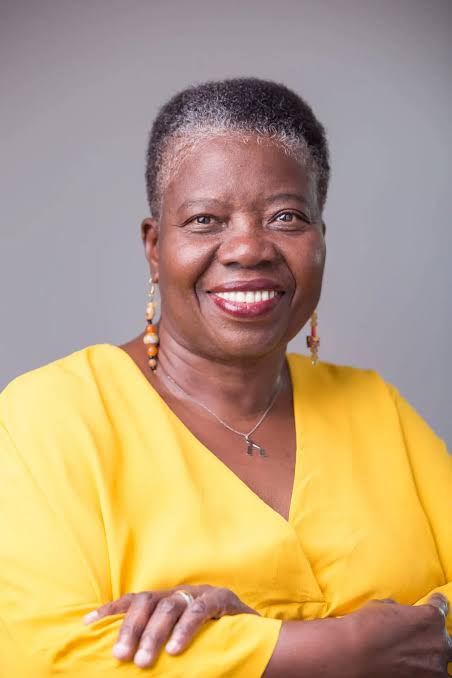
Photo Credit: Official Website (Dominique Sindayiganza)
My Poetry Corner November 2026 features the poem “Poodles and Sour Cream” from the award-winning poetry collection The Limitless Heart: New and Selected Poems (1997-2022) by Trinidadian poet Cheryl Boyce-Taylor. In this collection, representing seven books and thirty years as a poet, she shares her experiences of being a daughter, mother, and wife, and living as a queer woman. The poems about losing her son, hip-hop artiste Malik Izaak Taylor aka Phife Dawg of the group A Tribe Called Quest, are the most heartfelt in this collection. All excerpts of poems quoted below are from this collection.
Born on December 6, 1950, in Arima of the twin-island Caribbean nation of Trinidad & Tobago, Cheryl Boyce survived while her twin brother died in utero. She regards herself as Ibeji woman, from the African Yoruba language meaning “double birth.” The poet describes her birth in “Black” (p. 47):
she be a Black woman / born between a town’s whisper / and a slither moon // she be Ibeji woman / born in hard crop guava season / between calabash and casava / she be the dust of Arima mountains
After her parents’ marriage ended, due to her father’s alcohol drinking and infidelity, Cheryl was raised by her mother Elma who worked in various jobs in Arima: nursery school teacher, math tutor, milliner, and swim instructor. Her mother, who loved reciting poetry, passed on this love of poetry to her daughter.
At the age of thirteen, Cheryl’s mother sent her to the United States to live with her mother’s sister in St. Albans, Queens, New York. Her aunt provided shelter and education, but no affection or mothering. The homesick teenager begged to return to Trinidad. To her relief, her mother and brother joined her in New York eleven months later.
After completing high school, Cheryl Boyce earned an undergraduate degree at City College of New York in Theatre. She later earned a Master of Fine Arts (MFA) in Poetry from Stonecoast at the University of Southern Maine and a Master of Social Work (MSW) from Fordham University in New York City. In the poem “Zuihitsu on Eating Poems” (pp. 61-62), we learn:
At fourteen / I learn the ways of poetry / how it enters your heart then hands full frame […] At twenty / I fell out with my new husband of less than a year / my four-month-old son and I climbed into my mother’s bed she held us and read poems […] the husband calls and calls we do not answer / what holds me is this mystic doorway of words / and the rich hum of my mother’s voice in the living room of these poems
Learn more about zuihitsu here.
Like her mother, Cheryl Boyce-Taylor gave birth to twins. One died a few hours after birth. In the 1980s while raising her surviving son, Malik, she worked as a social worker in New York City and went to theater practice. The eight-part poem “In This Pure Light: Zuihitsu for a son” (pp. 75-79) offers snippets of the ups and downs of the lives of mother and son.
Part 1: October 2008, opens in a hospital waiting room. The mother agonizes while her son undergoes a kidney transplant. Her daughter-in-law is the donor.
Part 2: November 1970, returns to the son’s birth: your twin brother / gone to meet the breath of God / waiting in that field of light // son / you are my pillar tree wealth straw-broom looking glass wings scream temple…
Part 4: June 1985, exposes the mother’s carefully guarded secret: my son’s dad tells him I am a lesbian // he screams and cries roars his rage / earth hums with ache / one snapped tree broken at its center / he is fifteen my son a kiss slips from my palm / I fear this death more than I fear my own
In the Introduction to this collection (pp. 1-4), Boyce-Taylor tells us that, over the years, secrets revealed in some of her poems have hurt family members. “After my grandmother’s death, I realized that her family secrets were also mine to tell. Secrets can keep a woman from maturing and expanding. Healing and growth can only take place when secret wounds are uncovered and allowed to breathe.”
In the 31-line poem “Fare Left Unpaid, For Mom at twenty-two” (p. 125), the poet describes the physical abuse her mother suffered in silence:
Count the splinters on her legs / the bruises on her elbows […] count his curses / her screams / her house keys left behind […] and she never told how she held her tears / or about her broken tooth / or how she jumped out of the moving taxi / or the scratchy bushes where she hid…
More family secrets are revealed in the long poem “Moonflower” (pp. 82-85):
In four weeks mom you will be dead four years
what more shall I make of your secrets and the dried flower petals
left in the pocket of your good dress
once the full moon opened my father’s palm
released his umber-brown rage
on my eighth birthday daddy twisted my stepmother’s arm
right in front of me
she howled in pain then sent me to the store
[…]
back at home
when I told mom
she became an open bible
she became a crack in the back door
her family geography their dialect of sorrow
she became the bearer of her mother’s secrets and her mother and her
mother before her
The five-stanza featured poem “Poodles and Sour Cream” (p. 66) shares another kind of secret of a mother prepared to endure separation and humiliation to achieve a better life for herself and family. After arriving in New York City, the poet’s mother worked for three years as a live-in domestic while waiting for her green card. In her solitude, she cried every night for not being able to care for her own daughter. The following excerpt are the first three stanzas:
I am the third generation of daughters
whose mother worked as a domestic
in that Great Neck* house of poodles and sour cream
girls younger than me
called my mother by a nickname
Genie, what’s for breakfast
Genie, wash my hair
Genie, take my bike out
Genie, get my boots off
my mother who raised me to call elders
tanty, uncle, granny related or not
Tanty Evelyn, Tanty Vida, Uncle Dadoo, Uncle Horatio
even the bum with the limp was called Mister Broke-up-foot
*Great Neck is one of New York’s most affluent towns.
To read the complete featured poem “Poodles and Sour Cream” and learn more about the work of Trinidadian poet Cheryl Boyce-Taylor, go to my Poetry Corner November 2026.


What a life. Poetry a saving
LikeLike
Her heartache is palpable in these words. Thanks for introducing Cheryl Boyce. Maggie
LikeLike
Sons and daughters pay the price for the secrets of their elders long left hidden. Often they do not know why they suffer, they only know they do. I agree people have a right to their privacy, but not when it hurts so many others. She had a difficult life and her heartfelt poetry may help others understand. Have a good Sunday Rosalene. Allan
LikeLiked by 1 person
Cheryl Boyce-Taylor has had an interesting and challenging life, Rosaliene, and her poetry is excellent.
Writing candidly about family members, whether living or deceased, can be fraught — as is working for a spoiled, affluent family. I’ve been to Great Neck, and am happy to never return there. 🙂
LikeLiked by 2 people
These are very poignant poems, seemingly shaped by Cheryl’s challenging life.
LikeLike
I like the way in which she puts words together. She is a strong poet.
LikeLike
“Secrets can keep a woman from maturing and expanding. Healing and growth can only take place when secret wounds are uncovered and allowed to breathe.” YES to airing secrets we have no responsibility to carry. Thank you for this powerful collection, Rosaliene.
LikeLike