
Tags
Behavorial Changes, Dispelling Delusion with Alchemy, Extreme weather events, Indigenous knowledge and wisdom, Indigenous Voices, The Changing Earth, World Food Production in Peril
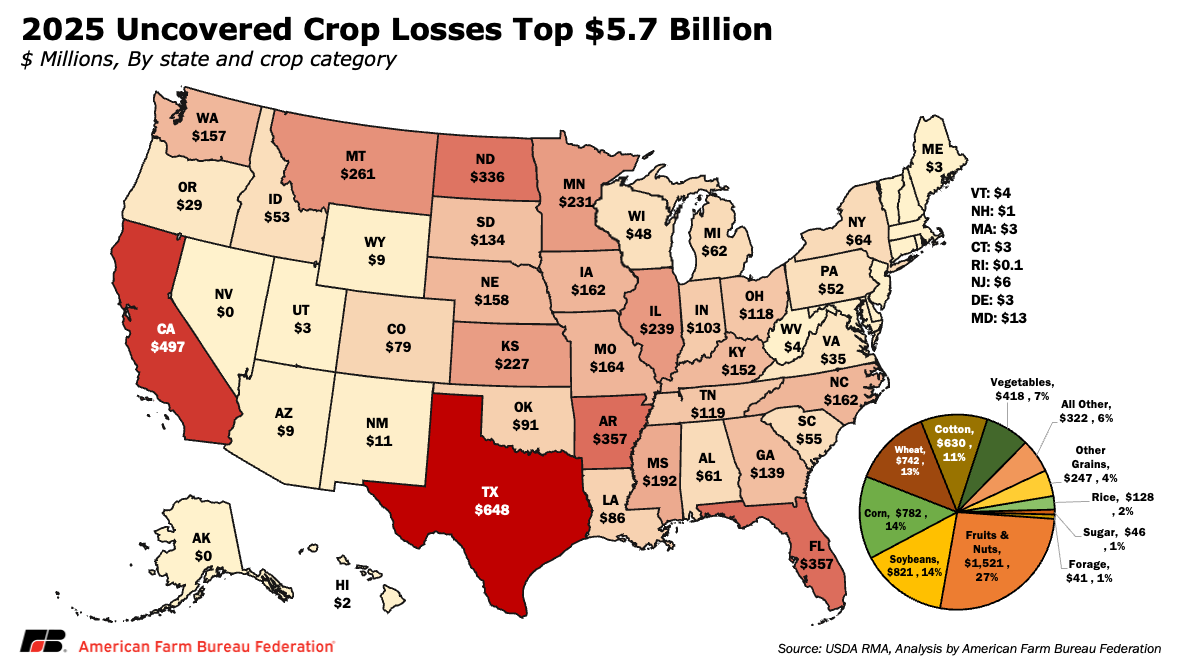
Photo Credit: American Farm Bureau Federation (AFBF)
This is the ninth article in my series about our changing Earth from interviews with Native Americans shared in We Are the Middle of Forever: Indigenous Voices from Turtle Island on the Changing Earth, edited by Dahr Jamail and Stan Rushworth (USA 2022). My presentation does not follow the order of the interviews.
#9: Melissa K. Nelson, PhD (Anishinaabe, Métis, Norwegian [Turtle Mountain Chippewa])
(Chapter 14, pp. 210-228)
Melissa K. Nelson, PhD is an ecologist, writer, editor, media-maker, and Indigenous scholar-activist. Of Anishinaabe, Métis, and Norwegian descent, she is a proud member of the Turtle Mountain Chippewa. After earning her BA in Ecology from the University of California, Santa Cruz, she obtained her PhD in Native American Environmental Studies from the University of California, Davis. She first served as Professor of American Indian Studies at San Francisco State University (2002-2020) before taking up her current position as Professor of Indigenous Sustainability at Arizona State University.
In 1993, Melissa became the first Native American executive director of The Cultural Conservancy (TCC), a nonprofit organization in San Francisco focused on Cultural preservation. She has spent the past 20 years as part of the Native American food movement and has been an international Indigenous food sovereignty activist.
Dahr and Stan asked Melissa to address how humans arrived at this point of converging crises—climate change, ecological disasters, and the COVID-19 pandemic (at the time of the interview)—how we could move forward in the best way possible, what stands in our way of moving forward, and how we might comport ourselves.
Melissa thinks that somewhere along the line of human evolution, our ego began to seek differences between us which led to competition and a comparison mentality. Based on their Indigenous traditions, she doesn’t believe that life is about competition (p. 211):
We know from our stories and our traditions that life is about cooperation. It’s about kinship. Yet the narrative of competition and individualism and one-upmanship became valorized in European sciences and the Renaissance, and the separate ‘knower’ that has destructively colonized the world and colonized our mind with fragmentation to think that we are individuals, we’re competitive, it’s either kill or be killed.
As she sees it, this led to a “survival of the fittest” mentality, and the idea that accumulating things somehow matters more than giving away and sharing with others. Spread through imperialism and colonization, this poisonous worldview infected us all, regardless of our color, creed, and religion. No one is immune. She explains (p. 212):
And that’s what I think we’re seeing right now… this gross accumulation at the cost of the environment, of the land, of forests, of species, of minerals in the Earth that are doing their job. The blood of Mother Earth is being mined and turned into plastics and products for human entertainment. It’s just completely backward. So we went wrong with this idea of accumulation, of personal gain, of hoarding, of competition, the greed of the acquisitive mind.
Melissa believes this needs to be rebalanced. We just need to look at what’s important for people. People love their families, partners, and friends. People love to share, give away, and benefit others. Most people feel that service, helping others is our real work. Most people know that giving, not taking, is what life is really about. She thinks that making this transformation in the world would entail going back to local traditions and supporting Indigenous sustainable ways of life. We can ally with Indigenous people within our communities in working towards that transformation in many ways (p. 214):
Helping with land rights, land reclamation, food sovereignty. We have a lot of solutions, like council-style consensus decision making, more women in power and in leadership positions, more youth in leadership positions. I think those are all ways we can help to restore and transform.
Because we all carry the seeds of greed, selfishness, and competition, Melissa warns that we must be vigilant in building immunity through love, bravery, respect, humility, truth, wisdom, and generosity. These cannot be empty words. Solidarity with others within our community keeps us accountable.
Melissa believes that people who are afraid to look at the truth of what was done to Native Americans are living a lie and a delusion. As she sees it, the task of dispelling these delusions lies with elders and educators. As a professor of American Indian studies for decades, she believes in directly addressing the genocide. When undertaken, it should be done without fear and with an open heart. She adds (p. 217):
This whole country is carrying this collective grief, and it’s about letting that grief be felt. That is part of the wound that [Native American clinical psychologist] Eduardo Duran calls the soul wound that is part of this nation. And until that soul wound is addressed, frankly, honestly, and openly, with studying genocide and the truth of what happened here, it’s going to be a trauma that is going to twist up our hearts and minds. Only in the sunlight of understanding can this wound begin to heal.
Melissa thinks that shame and guilt of descendants of early settlers is one of the reasons why the genocide of Indigenous peoples is not being studied. In her view, this wound drives the white supremacy that has plagued the United States since its inception. To overcome this resistance to talking about mistakes made in the past, she prefers to break down the word ‘mistake’ into its two key components ‘miss-take.’ In this way, the word takes on new meaning: we don’t look or see clearly. Shame from mistakes loses its power over us when we see that they occurred because we didn’t see something or someone correctly. She explains that this kind of openness requires being vulnerable and respectful (pp. 220-221):
It’s receiving the spirit of that tree or of that person and that energy holistically in our heart and our body and ourselves, not just with this idea I have in my head. So ‘miss-take’ really helps me understand perception, and understand respect, to try to get a clear perception of what’s going on rather than this idea that I have in my head. All those misconceptions and assumptions have to be peeled away so we can see the world fresh again.
Melissa raises the point about despondency and powerlessness, prevalent amidst the converging crises. Much like the belief that nothing can be done about the genocide of Indigenous peoples because it happened so long ago, many people feel that there’s nothing to be done about what is happening with the climate and ecological crises. All the more important for us to work collectively to accept responsibility, find solutions, and know that there’s work to be done where we can each make a difference.
Each person and community must find their own ways of contributing to healing the planet. For those people who like to-do lists and sincerely want guidance, Melissa tells them that sustainability starts with what we eat at breakfast. Where did the food come from? Every choice we make, every day, has an impact on our planet. Yet so many of us continue to make poor choices. Access and inequity are also part of this issue, as in the case of people who live in places with little food choices. She adds (p. 224):
There’s just not as much thought put into how we’re all interconnected and how ‘my’ actions affect people in my neighborhood and around the world. So education is certainly a key part of that, both formal and informal, and on the ground land-based education, which is really growing now in Canada.
Melissa notes that most people today have no idea where their food comes from, how to grow it, how to tend to it, or how to harvest it. She connects food to the climate-ecological crises when she says (pp. 224-225):
We all love food. We eat the environment every day. We eat the land every day. It’s our most intimate connection with the land, besides the air, but people don’t really see air as a thing because it’s invisible. But it’s the spirit of these things, and that is vital.
The transformation needed to survive these times is almost like becoming new human beings, Melissa admits. She doesn’t know whether this would be an evolution in physiology or consciousness. In response to Dahr’s suggestion that a sort of spiritual alchemical shift may be required, she agrees that we need ways of healing to feel what has happened to the planet, to Indigenous peoples, to people everywhere. Without that, it would be overwhelming (p.226):
It’s too scary. So we have to break down to break through, yet the breaking down is so frightening, we think we’re going to disappear.
Moreover, to promote alchemical change, forgiveness and reconciliation would have to be scaled up beyond the community level. She adds (p. 227):
And it is alchemical, literally. The chemicals in our bodies change when we are in that ‘fight or flight,’ or freeze, and in trauma and fear, and all the cortisol that goes with that. Then we break through, and the dopamine and serotonin and other chemicals flow through.
Whether through EMDR therapy, dream therapy, plant medicines, meditation, or other healing methods, our behavioral patterns are broken down to allow fresh insights to alchemically alter our ways of being and doing. She then wonders if there’s a synergy between global climate and our internal human climates (p. 227):
I’m thinking about how climate change is also about our own internal climates that have become out of balance; it’s kind of the mirror of human consciousness being like a climate in chaos. They are so interrelated.
From this perspective, the climate crisis mirrors what has been ongoing within humans in terms of the imbalance: flooding, droughts, wildfires, starvation, and migrations.
* * * * * *
From Melissa’s Indigenous worldview, humanity’s current converging climate and ecological crises are the culmination of the harm done to Indigenous peoples here on Turtle Island, across the Americas, and worldwide. As individuals, we know that our actions, for good or ill-will, have consequences. As I see it, the same is true for large scale acts of violence (I would include chattel slavery here), war, and genocide. Such traumatic events, some spanning several generations, ripple through time. They change the way we see ourselves, the way we treat others, and the way we treat the land that feeds us. If we can’t make a breakthrough beyond our false perceptions and delusions of supremacy, we are doomed to collapse in chaos.
Growing one’s own food is another story. Extreme weather conditions make it even more challenging. As an urban dweller for the past 39 years, I lost touch with growing food as my father did in Georgetown, Guyana. Growing food seemed so easy in those days, in the tropical climate with lots of sunshine, rainfall, and rich soil. My recent attempts here in Los Angeles have been limited, with little success. I have lots to learn.
My tiny vegetable and herb garden has suffered from the latest heat wave. I thank the gods that we began cooling down on Friday. Without pollinators, my three potted fruit trees—dwarf orange, lime, and guava—are healthy but have borne no fruit for several years now. For yet another year, my blossom-filled cucumber plants flirted with the rare pollinator to no avail. I doubt that I’ll try again next year. I do better with the eggplant that doesn’t need pollinators.
I have a new appreciation for the farmers who grow our food and the workers who harvest their produce. How are they coping with these extreme weather events? When I shop at my local supermarket, I’m aware of how pampered I am with such easy access to a wide variety of fresh food products and other food items. For how long will we urban dwellers continue to enjoy such ease in feeding ourselves?
Our farmers in the USA and worldwide are hurting. As shown in the captioned map of U.S. crop losses not covered by insurance, due to extreme weather events in 2025, topped US$5.7 billion. While Texas (US$648 million) and California (US$497 million) suffered the greatest uncovered losses, no state has been spared. An Interactive Global Map of Extreme Weather Impacts on Food Production for January 2023 to December 2025, available on Carbon Brief, shows the threat to food production worldwide.
Click on links below for previously featured interviews:
#1: Raquel Ramirez (Ho-Chunk, Ojibwe, Lenca) – Awareness
#2: Alexii Sigona (Amah Mutsun) – Stewardship
#3: Terri Delahanty (Cree) – Sacred Feminine and Sacred Masculine
#4: Shannon Rivers (Akimel O’otham) – Balance
#5: Lyla June Johnston (Diné [Navajo], Tsétsêhéstâhese [Cheyenne]) – Trust
#6: Dr. Kyle Powys Whyte (Potawatomi) – Kinship
#7: Marita Hacker (Hunkpapa, Norwegian) – Change
#8: Ilarion Merculieff (Unangan) – Living from the Heart


“Melissa believes this needs to be rebalanced. We just need to look at what’s important for people. People love their families, partners, and friends. People love to share, give away, and benefit others. Most people feel that service, helping others is our real work. Most people know that giving, not taking, is what life is really about. She thinks that making this transformation in the world would entail going back to local traditions and supporting Indigenous sustainable ways of life. We can ally with Indigenous people within our communities in working towards that transformation in many ways (p. 214):” This is just one of the important statements in this excellent article. I wonder if you have Seen David Olusoga’s eye opening two part series on England’s history of the slave trade?
LikeLike