
Tags
Beterverwagting/East Coast Demerara/Guyana, Colonialism, Indie-Author Rosaliene Bacchus, Magical Realism in Literary Fiction, Silk Cotton Tree, Under the Tamarind Tree: A Novel by Rosaliene Bacchus (USA 2019)
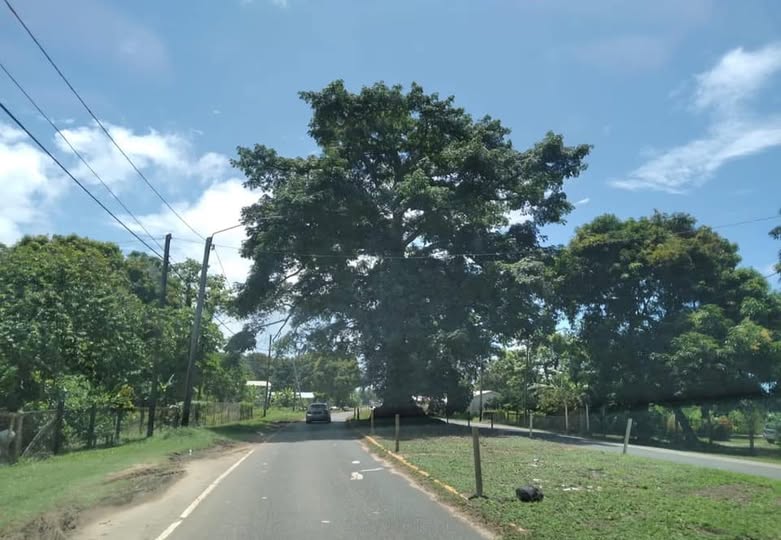
Mahaicony – East Coast Demerara – Guyana – Circa 1980s
Photo Credit: Natasha Smith-Thomas
I first learned about magical realism after completing the first draft of my debut novel. To my surprise, I discovered it has nothing to do with the kind of magic used in the Harry Potter series. Such magical characters, living in a world outside of our real world, relate to the fantasy genre. Rather, magical realism is an acceptable element of literary fiction used by award-winning authors like Gabriel García Márquez (One Hundred Years of Solitude, 1967); Isabel Allende (The House of Spirits, 1982), and Toni Morrison (Beloved, 1987). The more recent experimental novel, Lincoln in the Bardo by George Saunders, winner of the 2017 Booker Prize, also falls into this category of literary fiction.
These award-winning novels are all grounded in the real world. The magic refers to an extraordinary element in the story—from folklore, mythology, or the supernatural (such as ghosts or spirts)—described as a matter-of-fact occurrence. No explanation given. Some literary scholars have suggested that magical realism is a natural outcome of post-colonial writers seeking to make sense of two realities: the conquerors and the conquered. I don’t quite see it this way.
As I see it, during centuries of violent colonialism, the oppressed colonized peoples must’ve clung to their numerous ancestral gods and spirit beings, not only for fortitude but also to retain their humanity. In the final stanza of his long ten-stanza poem “I Come from the Nigger Yard,” from his 1954 poetry collection Poems of Resistance from British Guiana, Guyanese poet Martin Carter (1927-1997) writes:
I come from the nigger yard of yesterday
leaping from the oppressors’ hate
and the scorn of myself.
I come to the world with scars upon my soul
wounds on my body, fury in my hands
I turn to the histories of men and the lives of the peoples.
I examine the shower of sparks the wealth of the dreams.
I am pleased with the glories and sad with the sorrows
rich with the riches, poor with the loss.
From the nigger yard of yesterday I come with my burden.
To the world of to-morrow I turn with my strength.
The “nigger yard” of the protagonist Richard Cheong in my novel Under the Tamarind Tree, lies in his birthplace of Beterverwagting, a village on the East Coast Demerara, about ten miles from the capital of Georgetown. The name comes from the Dutch words “beter verwachting” which literally means “better expectation.” About 408 acres (165 hectares) in area, the land was owned by Baron Von Gronigen, said to be the last remaining Dutch plantation owner at the time.
After emancipation in 1834, the slaves in the area decided to buy the land. In 1840, after pooling their meager wages—given for safekeeping to one man who hid the Dutch guilders in a hole at the bottom of a tamarind tree—sixty-two ex-slaves purchased the land from the Baron. By then, the land had become unproductive. During Richard’s life, Beterverwagting was the feeder village for the adjacent sugar estate La Bonne Intention, then owned by a British company.
In the pre- and post-colonial world in which I grew up, the legacies of African slavery followed by indentureship still haunted us all. The ghosts of early white slave masters still roamed the land once occupied by cotton and sugar plantations. Even the giant silk cotton trees, known as the jumbie tree or Dutchman tree—are believed to house the spirits or jumbies of early Dutch colonizers. Those who dared to cut down the silk cotton tree in the captioned photo, to expand the road, lost their lives. Fear of the avenging Dutch spirit forced road builders to circumvent the tree.
During the years I lived in Guyana, I heard many first-hand stories from individuals who had seen a ghost or signs of its presence. When I worked at the University of Guyana Library (1979-1980), one of our librarians told us of her encounter with the ghost of a white man, dressed in the attire of the 1800s, outside the Ladies’ Restroom. A few students also reported similar encounters. We had no reason to doubt their stories. Imagine my trepidation whenever I had to check the two floors, filled with rows of bookshelves and large reading/working tables, at the end of the night shift.
One of my earliest childhood memories is of grandmother’s funeral. The woman who had raised Mother and her two younger siblings had passed away after years of some debilitating sickness. Whenever Mother took me on a visit, grandmother was always seated in a rocking chair in her dimly lit bedroom. In the days after her burial, Auntie Baby, Mother’s baby sister who was then living at her adopted parents’ house, told Mother of hearing grandmother’s rocking chair creak in the stillness of the night.
The familiar sound had unsettled Auntie Baby, a devout Catholic: “Why her spirit still around?”
Father, too, had his own encounters with those who had passed on. He told us kids about hearing someone call his name, while he lay reading in the drawing room at nighttime. Whoever had called out to him was nowhere in sight.
In my childhood innocence, I once asked our neighbor Auntie Katie why I couldn’t see spirits.
“Only children born with caul over their eyes can see spirits,” she told me.
While plotting my debut novel, Under the Tamarind Tree, I had no plans for including the ghost of the protagonist’s eight-year-old brother Eddie. When immersed in the creative process—”in the zone” as some writers call it—I’ve found that unexpected characters can appear from nowhere, demanding to be heard. I regard this occurrence as originating from my collective ancestral consciousness. I share below the excerpt from my novel during which Eddie’s ghost first makes his presence known to his older brother Richard.
The Setup:
At the end of an exhausting Easter Sunday picnic and kite flying, Richard reclined in his favorite lounge chair listening to a Frank Sinatra long-playing record. His wife Gloria and their three daughters have already gone to bed. His mind churned with his father-in-law’s latest interference in wanting a say in how he should spend his hard-earned lifetime savings.
Excerpt from the Unexpected Event (Chapter 9, p.44):
Frank Sinatra sang “Someone to Watch Over Me.”
Boysie.
So close to his ear he heard his childhood name whispered. It was Eddie’s voice. His eyes flashed open. He jerked upright, looked around. There was no one.
He lay back in the chair.
Is you Eddie? You haunting me now?
Is okay, Boysie, Eddie said. I watching over you.
Eddie’s voice startled me. I knew then that Richard’s guilt for his brother’s death had to be resolved through this direct contact with Eddie’s ghost. I know such guilt. My six-year-old brother could’ve died after being hit by a car while in my care. At the time, I must’ve been ten years old. Richard was thirteen.
When I submitted this chapter to my writers’ critique group, comprised mainly of white Americans—only myself and another woman were non-white—one of the members objected to Eddie’s ghost.
“This is not the critique group for ghost stories and fantasies,” Tod told me.
“It’s superstition,” said another male member. “God is dead. Death is the end.”
“Let’s see how the story evolves,” said the female leader of our group.
I made no objections. Perhaps Richard’s story would reveal the world, of the colonizer and colonized, in which I had grown up.
Then, I knew nothing about magical realism and, it would seem, neither did the other members of our group. A month later, before the beginning of our next meeting, Tod approached me with an apology.
“If Charles Dickens could have three ghosts in A Christmas Carol, who am I to object about your ghost?”
Eddie’s ghost, inspired by my mischievous six-year-old brother who almost died in my care, also became an important character in providing backstory for Richard’s contentious relationship with his oldest sister and antagonist, Mildred Gomes.
In storytelling, our fictional characters or beings from the Other Side can also become real and authentic to our readers. Just go with the flow.


A fine explanation of the genre through the story of your own creative process
LikeLiked by 2 people
Thanks very much, Derrick.
LikeLiked by 1 person
Your touching post, Rosaliene, takes me to places and situations I do not have to come to grips with and for which I am very thankful. All the best!
LikeLiked by 1 person
Thanks very much, Martina. All the best to you, too! ❤
LikeLiked by 1 person
The Turner House by Angela Flournoy is set in Detroit and a “haint” is part of the story (I had to look up the word “haint,” which is another word for spirit or ghost). I think we are richer for the intermingling of spirits–and poorer when we cannot allow for them.
LikeLiked by 1 person
Madeline, thanks for mentioning Flournoy’s novel. I was pleased to learn that The Turner House won several book awards. I wasn’t familiar with the word “haint,” but now know that it’s part of Southern folklore and is a mischievous and mean spirit.
LikeLike
Rosaliene, this post moved me deeply. It brought me into experiences I’ve thankfully never had to face myself — I’m grateful for that. Wishing you all the best
LikeLiked by 3 people
Thanks very much, Ravindra. The beauty in sharing our stories, across cultures, is that we can learn about the experiences of lives far removed from our own.
LikeLike
It must be hard having to express your creative writing to those who do not share the same upbringing Rosaliene. We are the sum of our experiences and imaginings and they should all be grateful for the variety each author provides. Happy Sunday. Allan
LikeLiked by 2 people
So true, Allan. It wasn’t easy being a part of an all-American writers’ critique group, but my novel became better as a result of their negative and positive insights.
LikeLiked by 1 person
Like you, I don’t see magical realism simply as a natural result of postcolonial writing, but rather as treating the scientifically impossible as everyday reality. Comparing this approach with the visual arts would be an interesting project.
LikeLiked by 3 people
Thanks very much, Friedrich. That would be an interesting project.
LikeLike
A compelling partly personal post, Rosaliene. Your definition of magic realism — the supernatural depicted as matter-of-fact occurrence — is about the best I’ve heard for that genre of literature.
LikeLiked by 3 people
Thanks very much, Dave. I can’t take credit for the matter-of-fact definition. That’s part of the description in the article “What is Magical Realism” by Michael Woodson, a senior editor at Writer’s Digest.
LikeLiked by 1 person
For your work to be likened in any way to that of Dickens is quite a compliment, Rosaliene. Keep writing!
LikeLiked by 2 people
Dr. Stein, I don’t believe that Tod was likening the quality of my work to that as Dickens. Regardless, I will keep writing.
LikeLiked by 2 people
I hadn’t heard the term magical realism before. Thanks for the introduction and backstory on the term and your book Rosaliene. The book sounds very interesting and poignant.
LikeLiked by 2 people
Brad, thanks very much about your kind remarks about my novel.
LikeLiked by 1 person
You’re most welcome.
LikeLiked by 1 person
Thank you for sharing this term, “magical realism”. There are many unexplainable things that happen in life, and I think those too fall in to that category. Hope your weekend is lovely!
LikeLiked by 2 people
My pleasure in sharing, Tamara. I agree about including the many unexplainable things that happen in our lives. Today, we’ve had an unusual and welcome rainy day.
LikeLiked by 1 person
Nice! I love that segue!
LikeLiked by 1 person
All good characters become real to the reader – whether they are from this life or the next, or some other… well done!
LikeLiked by 2 people
So true, Linda! Thanks very much 🙂
LikeLiked by 1 person
always a pleasure! x
LikeLiked by 1 person
Fascinating experiences and topic! I generally don’t read mysteries or ghost stories but do find it interesting when a ghost or something supernatural shows up in books like yours. Thank you for explaining magical realism. Your perspective makes sense to me. I remember being in the zone while writing my family history novel (for family). It’s an intriguing alternate consciousness when characters show up and guide us.
LikeLiked by 2 people
Thanks very much, JoAnna. The stories we tell are not only shaped by our personal experiences, but also by the culture(s) that nourish us. Isn’t it great when characters show up and guide us!?
LikeLiked by 1 person
It is great when the characters guide us! I’ve had this happen when painting a couple of times, too.
LikeLiked by 1 person
It’s amazing when that happens 🙂
LikeLiked by 1 person
Very creepy, not necessarily in a bad way, just… eerie!
LikeLiked by 2 people
Ilsa, I hope that doesn’t scare off some readers. Eddie’s ghost is harmless when compared with Richard’s father-in-law who is doing the colonial government’s dirty work in harassing innocent citizens.
LikeLiked by 1 person
Hi Rosaliene, it’s been quite a while since I visited blogs and this was a very good read, with a real magical thread running through it, making it engaging, enjoyable, mysterious, and relatable in terms of those unexplained events or “things that go bump in the night”! Thank you.
LikeLiked by 2 people
Thanks very much for dropping by, Steve. So glad that you found my post engaging.
LikeLike
Some people can’t imagine anything beyond what’s in front of them.
Glad you persevered!
J
LikeLiked by 1 person
Thanks very much, James.
LikeLiked by 1 person
Now I can put a name to those extraordinary elements that make stories so good and spooky. Very interesting how they are connected to colonialism but it makes sense when you think about it. I think your view of its meaning makes more sense.
LikeLiked by 2 people
Mara, it’s good to know that you appreciate the spooky elements in storytelling. Colonialism, which lasted for centuries, was a traumatic event for all its victims across Africa, the Americas, and the Caribbean Region. Its legacies still linger today.
LikeLiked by 2 people
I agree and would say colonialism’s destructive forces encompass the world.
LikeLiked by 1 person
They sure do, Mara.
LikeLiked by 1 person
Dear Rosaliene, what an inspiring article! The magical realism in storytelling fascinates me very much. Just like you do with your words, I try to capture the invisible and the deepest feelings of life through my art. The lines of the poem you shared show so much strength and emotion – thank you for sharing that with us! I am deeply touched that you follow my blog and read my posts. I am so happy to have you as a subscriber! Now I am very excited to visit your website rosalienebacchus.com and explore your world. Warmest regards, Nicole
LikeLiked by 1 person
Thanks very much, Nicole. It’s a pleasure to connect with you on WordPress. I look forward to seeing more of your art.
LikeLike
Thank you for this great explanation, Rosaliene. Isabel Allende uses it with such ease. Your post resonates with me because, as you probably know, Puerto Rico is rich in stories involving spirits and other elements of the supernatural, all of which are deeply connected to our colonial roots.
LikeLiked by 1 person
I agree, Edward, Allende does use the elements of magical realism with great ease and creates a powerful narrative. I’m glad that my post resonated with you. Our shared colonial roots–whether British, Dutch, French, or Spanish–spread across the entire Caribbean Region and beyond.
LikeLiked by 1 person
Indeed, and we’re still dealing with that terrible past. I still need to read her latest novel, My Name Is Emilia del Valle, but I’m sure she brings some of that magical realism to it.
LikeLiked by 1 person
Edward, thanks for that reminder about her latest novel that’s been on my To Read List. I see that the paperback edition is already available. Good.
LikeLiked by 1 person
You’re very welcome.
LikeLiked by 1 person
Magical realism, well described. I think it explains a lot of spiritual happenings that most European ancestry people don’t understand. I loved it in books by Latin American authors as well, like Isabel Allende.
LikeLiked by 1 person
Thanks very much, Rebecca. I’m so glad that you appreciate its usage among Latin American authors. It’s also used by Caribbean authors.
LikeLiked by 1 person
“When immersed in the creative process—”in the zone” as some writers call it—I’ve found that unexpected characters can appear from nowhere, demanding to be heard. I regard this occurrence as originating from my collective ancestral consciousness.” I love this for you and your process, Rosaliene. You are in touch with the elders and hear their guidance. P.S. That would have made me very jumpy to check those library stacks at the end of a night shift!
LikeLiked by 1 person
Thanks very much, Tracy. And then, I had to turn off the lights before descending the stairs.
LikeLiked by 1 person
Oh, my. No lights and stairs and possible ghosts?! That’s a lot!
LikeLiked by 1 person
I love this post and sharing of magical realism explained so well, Rosaliene! It’s fascinating to hear how your character and the next chapter evolved seemingly out of now where.
The poem was so gripping! xx
LikeLiked by 1 person
Thanks very much, Cindy. Eddie’s presence certainly changed the plot moving forward. During the creative process, I learned to go with the flow.
LikeLike
That’s an invaluable lesson~! x x
LikeLiked by 1 person
Sad to say, it’s not always easy to go with the flow in real life 😦
LikeLiked by 1 person
Never easy but necessary for our sanity! 💓
LikeLiked by 1 person
Both sides of my family claimed spiritual encounters, and continue today through the generations, including me. When it happens often, it’s a natural way to guide, forewarn, and comfort.
LikeLiked by 2 people
Thanks for sharing, Mary. When these incidents happen, I’ve also found that they are intended to guide, forewarn, or comfort.
LikeLiked by 1 person