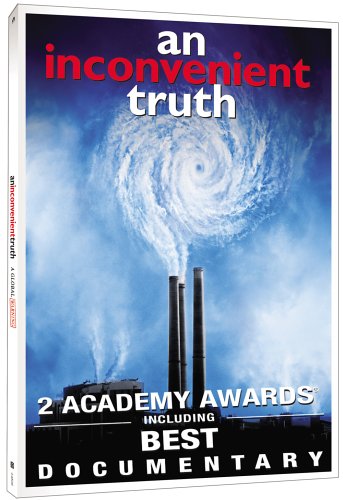
In her article “The State of the Earth 2022,” published on her blog Green Life Blue Water, American environment lawyer and author Pam Lazos provides an unsettling critique of where humanity stands when it comes to dealing with the inconvenient truth of our climate crisis and the threat to life as we know it on Planet Earth.
Not your typical Earth Day post
There are only two roads in life, growing and dying. Tolbert McCarroll, Notes from the Song of Life
After more than twenty-one months of managing my pandemic anxiety, I have come face-to-face with the enemy: Omicron. I had lowered my defenses. I counted on my anti-vax son (hereafter called Sonny) who works in home renovations to alert me when exposed to someone infected with the virus. He had done that in December 2020 when his cousin’s wife had contracted the virus. At the time, when he also became sick, he self-isolated in his then newly rented apartment, adjacent to ours. His older brother took care of his meals.
The Omicron variant is different. When Sonny returned home on Thursday, December 30, after completing a two-month home renovation project in Palm Springs, he was unaware of Omicron’s sneak attack. He complained of general muscle pain, not unusual in his line of construction work, and spent the evening resting. He did not mention having a fever. On New Year’s Eve, he and another cousin went to a house party to welcome the New Year with their friends.
On Monday, January 3, the cousin tested positive for the coronavirus. The next day, my firstborn and unvaccinated son, who has been working from home since the lockdown in March 2020, took in with flu symptoms. He decided to isolate in Sonny’s apartment with the hope that I would not get infected. Too late. My head cold and cough started the following day.
American National Youth Poet Laureate Amanda Gorman Photo by Danny Williams
My Poetry Corner January 2022 features the poem “The Miracle of Morning” from the poetry collection Call Us What We Carry: Poems (Penguin Random House, 2021) by African American poet Amanda Gorman, the youngest presidential inaugural poet in U.S. history. Born in 1998 in Los Angeles, California, she has an older brother and a twin sister. They were all raised by their single mother, a sixth grade English teacher at an inner-city public school. Born prematurely, the twins were diagnosed with a speech and auditory impediment. Some words, particularly those with an “r” sound, were hard for Gorman.
In a December 2021 interview, Gorman told Clint Smith of The Atlantic that it wasn’t until she was six or seven years old that she became aware of her speech impediment. “I was in and out of speech therapy for most of my life,” she said. “And what that did for me was force me to look at language, sounds, cadence, pronunciation actually as an access point of healing and recovery, because I was doing the work of learning English time and time again.”
Gorman started writing children’s stories from about age five. Her interest in poetry began in third grade. She found her voice as a young poet through working with WriteGirl, a Los Angeles based non-profit that assists teen girls to discover the power of their voice through writing. At sixteen years old, she became the 2014 Youth Poet Laureate of Los Angeles. The following year, she published her first book of poems, The One for Whom Food is Not Enough (Urban World LA, 2015).
Camellia plant outside my dining room window – Los Angeles – December 2021 Photo by Rosaliene Bacchus
What a year! With the global COVID-19 pandemic of 2020 still upending our lives, the year 2021 has taught me that, with constant adaptation to ever-changing conditions, I can endure. The coronavirus had already taken over 385,000 American lives when I watched in disbelief the live TV broadcast of the January 6th assault on the US Capitol building. Terrorism had come home to American soil. Future generations may come to regard that day as the meltdown of our global War on Terror.
Nature’s ever-mutating, coronavirus terrorist has thrown our divided forces into disarray. When you cannot see the enemy, you are unaware of any imminent danger of a stealth attack. Underestimating the strength of the enemy can also lead to defeat and possible death. Instead of confronting our common enemy, we have turned on each other. Unable to agree on proven scientific strategies of defense against this formidable foe, we have sustained thousands of casualties within our ranks, especially among our weakest and most vulnerable members.
As the mother of an anti-masker and anti-vaxxer, I have learned to stay afloat amidst the tsunami of distrust, disinformation, and conspiracy theories. A mother’s love should not be conditional. Our adult offspring should be free to make their own choices. To reduce my chances of contracting the virus and suffering from its worst effects, I got both doses of the vaccine and, more recently, the booster shot. I continue to wear my face mask in public indoor spaces and maintain the recommended six-foot distance from others outside my household, where possible. Overcoming my fear of contamination when using the bus is a work in progress.
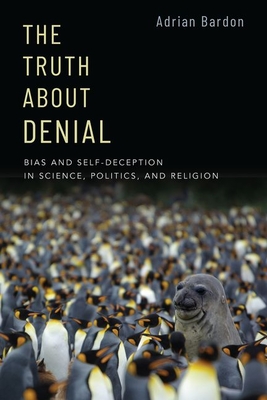
Front Cover: The Truth About Denial: Bias and Self-Deception in Science, Politics, and Religion by Adrian Bardon
The climate change issue is a perfect storm for conservative personality and conservative ideology. It is a form of impact science that represents a massive threat to the existing social and economic order, and in so doing, incidentally threatens demographic identity groups invested in the status quo. Solutions will require massive government intervention, the prospect of which is particularly threatening to the especially individualistic, small-government aspects of American conservative ideology.
Excerpt from “Science Denial” (Chapter 2, p.109), The Truth About Denial: Bias and Self-Deception in Science, Politics, and Religion by Adrian Bardon, Oxford University Press, New York, USA, 2020.
DR. ADRIAN BARDON is a professor of philosophy at Wake Forest University, North Carolina, where he teaches courses on political philosophy, philosophy of religion, philosophy of space and time, and the history of philosophy. He is the author of A Brief History of the Philosophy of Time (OUP 2013), as well as numerous scholarly articles on time, perception, politics, and the history of philosophy.
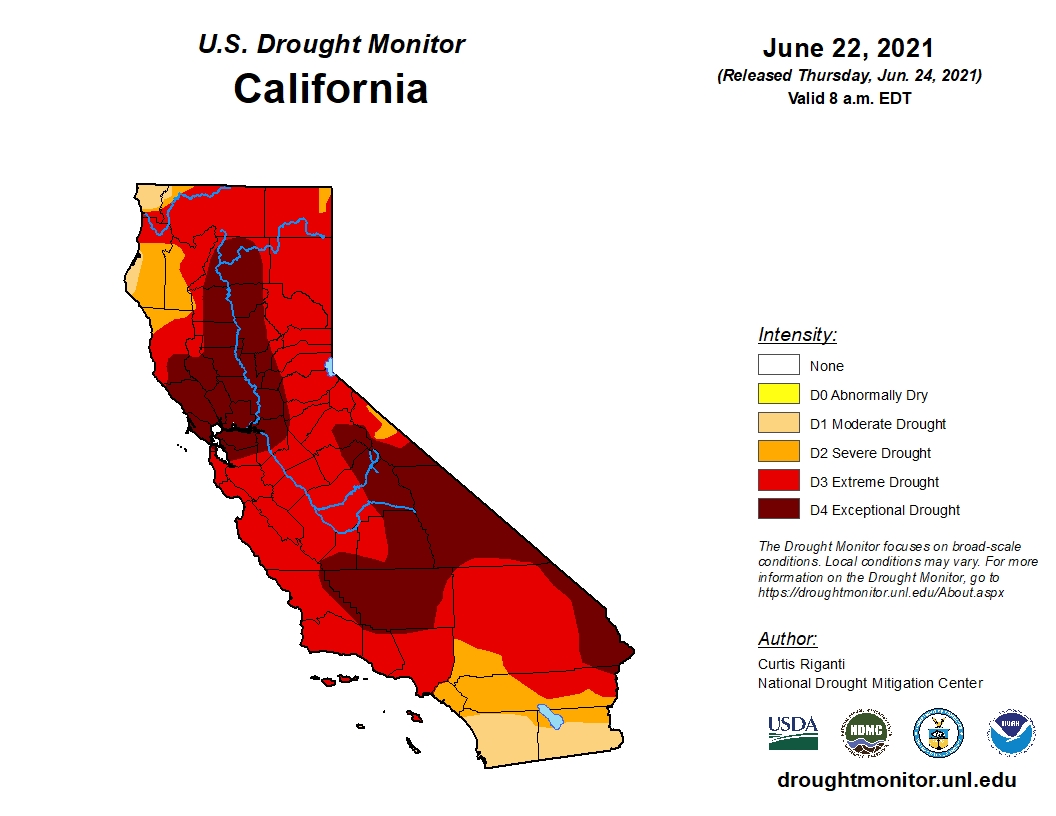
I was so consumed with the COVID-19 pandemic that I paid no attention to the lack of rainfall in the early months of 2020 and 2021. To tell the truth, I enjoyed the dry winter months. I got to spend more time gardening. Cold and damp days kill the joy of being outdoors. Then, on May 10, California Governor Newsom grabbed my attention when he placed 41 counties, 30 percent of our state’s population, under a drought state of emergency.
“With the reality of climate change abundantly clear in California, we’re taking urgent action to address acute water supply shortfalls in northern and central California while also building our water resilience to safeguard communities in the decades ahead,” said Governor Newsom. “We’re working with local officials and other partners to protect public health and safety and the environment, and call on all Californians to help meet this challenge by stepping up their efforts to save water.”
Learning that water storage in Lake Mead and Lake Powell has now fallen to about 35 percent of their capacity is also alarming. America’s two largest reservoirs, created by dams along the Colorado River, provide water to 40 million Americans and irrigation for more than 4 million acres of farmland across California and six other states—Arizona, Colorado, Nevada, New Mexico, Utah, and Wyoming. Twenty-nine Native American Tribes also depend upon theColorado River Basin for their water supply and preserving fish and wildlife habitats. The Bureau of Reclamation has forecast that the Lake Mead reservoir will hit a historic low of 1,065 feet by the end of 2021. The future of this reliable water resource is now at risk.
City of Los Angeles – California – USA Photo by Enric Cruz Lopez on Pexels.com
These past 15 months under lock-down, social distancing, and mask-wearing due to the COVID-19 pandemic have tested my mental and physical health. Weekends spent outdoors gardening have saved my sanity. To my knowledge, only five neighbors got sick with the coronavirus. None of them were hospitalized. I give thanks that they have all fully recovered.
I got my first dose of the Pfizer vaccine on February 25 and the second dose on March 18. Though the vaccine is now readily available to all Californians 12 years and over, my adult sons have yet to receive their first shot.
The County of Los Angeles is now dangling Vaccination Sweepstakes. Those who get vaccinated from June 11 to June 17 will have the chance to win a pair of Los Angeles Rams, Los Angeles Chargers or Los Angeles Clippers season tickets for next season. If you’re a resident of Los Angeles County, is 18 years or older, and is a football fan, now is your chance.
The State of California’s vaccine incentive program, Vax for the Win, is better yet! All Californians who have had at least one vaccine dose are automatically entered. On June 15, ten more winners will be selected to receive $1.5 million each. That’s not money to ignore in these harsh economic times. Since the program was launched, roughly 2 million people have reportedly taken the shot. As at June 11, our state has administered nearly 40 million vaccines. Over 70 percent of Californians 18 years and over have received at least one dose.
Front Cover: Demand the Impossible: A Radical Manifesto by Bill Ayers Photo Credit: Haymarket Books
Choosing hopefulness is holding out the possibility of change. It’s living with one foot in the mud and muck of the world as it is, while another foot strides forward toward a world that could be. Hope is never a matter of sitting down and waiting patiently; hope is nourished in action, and it assumes that we are—each and all of us—incomplete as human beings…. We can choose to see life as infused with the capacity to cherish happiness, to respect evidence and argument and reason, to uphold integrity, and to imagine a world more loving, more peaceful, more joyous, and more just than the one we were given—and we should.
Excerpt from Demand the Impossible: A Radical Manifesto by Bill Ayers, Haymarket Books, Chicago, Illinois, USA, 2016.
Bill Ayersis a social justice activist, teacher, and a retired distinguished professor of education and senior university scholar at the University of Illinois at Chicago. He is the author of two memoirs, Fugitive Days and Public Enemy.
Former Minneapolis Police Officer Derek Chauvin during trial for death of George Floyd Photo Credit: KTIV Television
Guilty. Guilty. Guilty.
On Tuesday, April 20, I was relieved when the jury declared Derek Chauvin guilty on all three counts for the death of George Floyd. Would the Floyd family have obtained justice without national and international outcry? However, there was no justice for George Floyd. Trading with a twenty-dollar counterfeit bill was all it took for his summary execution by a knee chokehold. The CEOs on Wall Street, who took down both the US and global financial systems and destroyed the lives of millions of workers and mortgage holders, were too BIG even for a trial much less the death penalty.
Considering that the police continue to kill blacks without due process, I think it foolhardy to believe that Chauvin’s guilty verdict is any sign of progress towards police reform. While institutionalized systemic racism persists, police killings of black and brown bodies will persist.
How complicit and guilty are we as a nation in the training given to our police force that has no qualms in eliminating black and brown offenders, however trivial their alleged crime?
Our centuries old, racist, social-economic system extends way beyond policing. This entrenched system determines where we live, the schools our children attend, our access to a healthy diet, the health care we receive, our exposure to toxic air and water, and much more. We need to address these inequities in our policies and actions to Restore our Earth, not just for a few but for the 99 Percent.
For how long can we continue to enjoy the benefits of an unjust and inequitable system and not share collective guilt?
Earth Day 2021 – Restore Our Earth Official Earth Day 2021 poster by Brazilian Street Artist Speto Photo Credit: Earth Day Official Website
April 22, 2021 is Earth Day. The theme this year is Restore Our Earth, an optimistic outlook given the ongoing challenges humanity faces with a climate emergency, now coupled with yet another year of a global pandemic.
“Restoring Our Earth is about solving climate change through the world’s natural systems, such as regenerative agriculture practices and reforestation, as well as through existing and safe technologies,” said Kathleen Rogers, President of EarthDay.org. “Restoring our planet will also require commitment of our world’s leaders to support climate literacy and civic skill building so that we can create a global engaged and active citizenry, a green consumer movement, and an economy that is just and equitable across all countries and across all demographics.”
There will be three days of climate action, beginning on Tuesday, April 20, with a global climate summit led by Earth Uprising. In the evening, the Hip Hop Caucus and its partners will present the “We Shall Breathe” virtual summit.
On April 21, Education International will lead the “Teach for the Planet: Global Education Summit.” It will be a multilingual virtual summit spanning several time zones. If we’re to solve the climate emergency, we must learn about it. We can’t build a sustainable environment without educating the next generation. That’s why EarthDay.org is spearheading a campaign to have “compulsory, assessed climate and environmental education with a strong civic engagement component in every school in the world.”
Do join me in signing the petition as an individual in support of universal climate literacy.
On the big day, Earth Day Live: Restore Our Earth will be streamed live beginning at 12:00 p.m. Eastern Time on April 22. You can tune in on EarthDay.org, Facebook, Twitter, Twitch, YouTube, and GEM-TV. For those of us who live on the Pacific Coast, this means tuning in earlier at 9:00 a.m. Pacific Time.
Joining forces with EarthDay.org, TED Countdown will premiere several original TED Talks during the livestream, providing additional top-tier content by climate leaders.
We can restore our Earth with reforestation. It’s one of the cheapest ways to sequester atmospheric carbon and tackle our climate emergency. But reforestation is not easy. It has its pitfalls. Learning from past failures, EarthDay.org developed The Canopy Project.
Human activities have destabilized Earth’s life systems. The signs are all around us. It’s time to restore the balance. Tune in to one of Earth Day’s events. Learn. Engage. Let’s make a difference. Act now.