My Poetry Corner December 2024 features the song “Peace / A Paz” sung by Brazilian sertaneja singer Daniel, born in Brotas, interior of the State of São Paulo. The song is the adaptation of Michael Jackson’s song “Heal the World” with Portuguese lyrics by Nando of the group Roupa Nova. While the adaptation emphasizes Jackson’s powerful message of healing the world and making it a better place, Nando also highlights the message of peace, unity, and hope.
Chorus: Only love can change what has already been done And the power of peace brings everyone together again Come, it’s time to light the flame of life And make the whole Earth happy
The lyrics of the song in English and its original Portuguese is available on my Poetry Corner December 2024.
May your holiday celebration be filled with peace, joy, and lots of laughter among your loved ones.
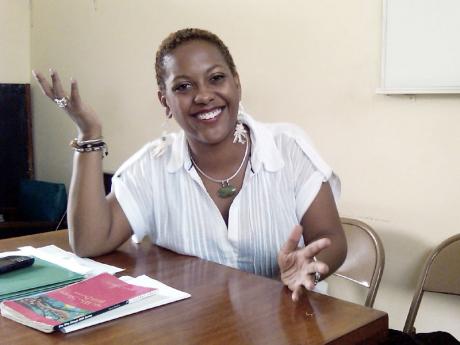
MyPoetry Corner November 2024 features the poem “Waiting for Rain (Again)” from the second poetry collection The Merchant of Feathers by Jamaican poet Tanya Shirley, published by Peepal Tree Press (UK, 2014). The collection was longlisted for the OCM Bocas Prize for Caribbean Literature. (All excerpts quoted are from this collection.)
Born in 1976 in the Caribbean Island nation of Jamaica, Tanya Shirley holds a BA (Honors) in English Literature from the University of the West Indies, Mona Campus, Jamaica. In 2000, she gained an MFA in Creative Writing from the University of Maryland, USA. For over fifteen years (2002-2018), she was an adjunct lecturer in English Literature at the University of the West Indies (Mona). She lives in Jamaica.
Who is the merchant of feathers? Why feathers? In the epigraph of her poem “The Merchant of Feathers III,” Shirley quotes Psalm 91, verse 4 (King James Bible) that speaks of God’s protection: He shall cover thee with his feathers, and under his wings shalt thou trust: His truth shall be thy shield and buckler.
But the merchant of feathers in Shirley’s poetry collection is not the Lord. As gleaned from the three poems bearing this title, it is the diversity of women from all walks of life who populate this collection. They are indomitable women who have learned to navigate the complexities of being female and have survived. As a woman, I can relate with their stories.
My Poetry Corner September 2024 features the poem “intolerance / intolerância” by Brazil’s young poet João Doederlein, writing under the pseudonym @akapoeta, from his bestselling debut poetry collection O Livro dos Ressignificados / The Book of Resignifications, published in 2017.
Born in 1996 in Brasília, the federal capital of Brazil, João began writing poetry at eleven years old. At fourteen, he started his first blog with his own texts. Then, two years later, he created an Instagram account where he began sharing his poems, together with his own illustrations.
While studying Advertising and Publicity at the University of Brasília (2015-2020), Doederlein created the Resignifications project in which he attributes new meanings to words. Based on the personal experiences of his generation, the poet, then nineteen years old, gave more weight to the objectivity of dictionaries with his poetic reinterpretations of nouns (n), adjectives (adj), and verbs (vt). In less than a year, his experiment spread across the internet, gaining thousands of followers on Facebook and Instagram.
Jamaican Poet Laureate Kwame Dawes (2024-2027) Photo Credit: Chris Abani / Poet’s Official Website
MyPoetry Corner August 2024 features the poem “Work” from the poetry collection Sturge Town by Jamaica’s Poet Laureate Kwame Dawes, published by Peepal Tree Press (UK, 2023). A writer of poetry, fiction, nonfiction, and plays, Dawes was born in Ghana in 1962. When he was nine years old, he moved with his family to his father’s ancestral home of Jamaica. He became a naturalized citizen, having spent most of his childhood and early adult life in the Caribbean Island nation. Since then, he has lived most of his adult life in the United States.
In his poetry collection Sturge Town, the then sixty-year-old poet reflects on his journey from his childhood in Ghana, through Jamaica, and on to South Carolina and Nebraska in the United States. The eighty-six poems offer a compassionate insight into history and identity, triumph and loss, joy and grief, love and relationships.
I connected with his loss and own mortality expressed in the poem “Condolence” (p. 66): Thrice this week, I send condolences to acquaintances / whose intimacy has grown the more by empathy – we are of an age / of sudden deaths, or the prolonged and painful passing of loved ones. / It is fall, and I know that we are all, in our small boxes, / dreading the dusk, knowing that trees turning orange and crimson, / will be, for years to come, the way we see our losses, / our complicated loves…
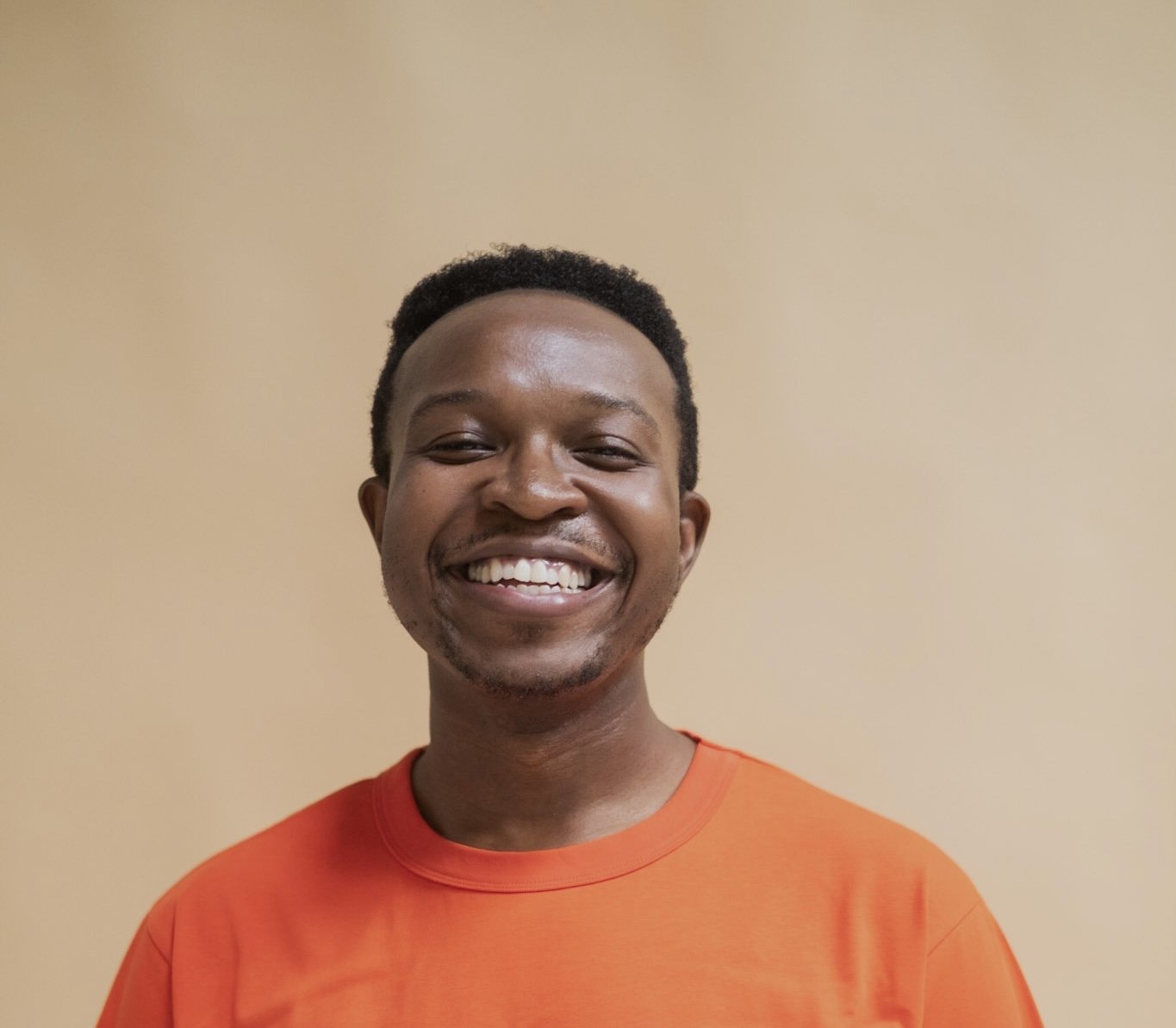
My Poetry Corner July 2024 features the poem “Nevertheless” from the debut poetry collection Tender Headed (USA, 2023) by Olatunde Osinaike, a poet, essayist, and software developer. The following excerpts of poems are all sourced from this collection, winner of the 2022 National Poetry Series.
Osinaike earned his BS in Engineering from Vanderbilt University (Tennessee) and his MS in Information Systems from Johns Hopkins University (Maryland). Originally from the West Side of Chicago (Illinois), he currently lives with his wife in Atlanta, the capital of Georgia.
How did a data scientist for the consulting firm Booz Allen Hamilton also become a poet? In an October 2023 interview for his alma mater, Vanderbilt University, Osinaike said: “I don’t think of the data science and the writing as different. You definitely use a lot of creativity in how you code. The best observations I ever got were in a technology forecasting class with Andy Van Schaack [associate professor of the practice of engineering management] my junior year at Vanderbilt. We talked about scenario analysis, convergent opinions. So, even if I’m looking at something under a microscope, I’m also thinking about the world around what I’m observing.”
Brazilian Poet Angélica Freitas Photo Credit: Dirk Skiba / Companhia das Letras, Brazil
In my Poetry Corner June 2024, featuring a Brazilian poet, I would like to call attention to a climate change disaster that struck the people of Porto Alegre, capital of Brazil’s southernmost state of Rio Grande do Sul.
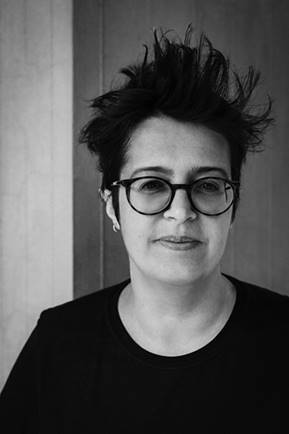
The contemporary poet and translator Angélica Freitas is no newcomer to my Poetry Corner. In May 2019, I featured her poem “the woman is a construction” from her poetry collection a uterus is the size of a fist / um útero é do tamanho de um punho (2012). This month’s featured poem “porto alegre, 2016” is from her third collection Songs of Torment /Canções de Atormentar (2020). In this collection, she takes a wider view of injustice, machismo, and her disillusion with the Brazilian dream that’s still out of reach for the majority.
Born in Pelotas, Rio Grande do Sul, in 1973, Angélica Freitas began writing poetry at the age of nine, but her journey to finding herself as a poet took a long and circuitous route. Her discovery, at fifteen years, that she was gay made it difficult to fit in with her peers. Bullies found her and easy target. Then, her father’s sudden death when she was eighteen upended her dream to study in Glasgow, where she spent six months with a Scottish girlfriend.
With her mother’s insistence that she earn a university degree, she opted to pursue a career in journalism at the Federal University of Rio Grande do Sul in Porto Alegre. She remained in the capital after graduation, where she could be invisible. In 2000, an unexpected acceptance as a trainee with O Estado de São Paulo, one of Brazil’s largest newspapers, led her to the metropolis of São Paulo.
Freitas confessed that she wasn’t a good reporter, but that the experience exposed her to the other realities of life. During a period of depression in 2005, she attended a poetry workshop conducted by Carlito Azevedo, a poet from Rio de Janeiro, that changed the course of her life. At 31 years old, she realized she was on the wrong path. During an interview for the Public Library of Paraná, she said:
“Okay, I want to write, but it’s not journalism, it’s poetry. You see, that was in my face the whole time. It was what I had been doing since I was little. So that’s it. Best to quit my job and dedicate myself to literature. I called my mother and said I was thinking about spending time in Pelotas. She supported me. Six months later, I resigned, handed over my apartment. Then I returned to Pelotas to organize and finish writing what became my first book, which was called Rilke shake.”
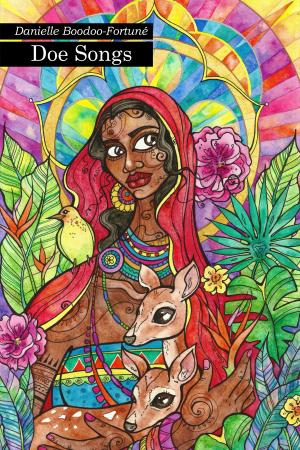
MyPoetry Corner May 2024 features the poem “To Enter My Mother’s House” from the debut poetry collection Doe Songs by poet and artist Danielle Boodoo-Fortuné, published by Peepal Tree Press (UK, 2018). The collection won the 2019 OCM Bocas Prize for Poetry.
Born in 1986 in the twin-island Caribbean nation of Trinidad & Tobago, Danielle Boodoo-Fortuné holds a Bachelor of Arts Degree in Literatures in English from the University of the West Indies, St. Augustine campus, where she later completed a Creative Writing Course in Poetry, taught by award-winning Trinidadian poet Jennifer Rahim (1963-2023).
Danielle was raised by her two grandmothers: Her maternal grandmother is of East Indian descent; her paternal grandmother is African and Chinese. One of her grandmothers was a secondary school English teacher who introduced her to reading and writing poetry at an early age. But it was not until joining Jennifer Rahim’s creative writing class that Danielle saw the power of poetry and committed to the craft.
“Poetry speaks not only of your brain and soul, but of your belly, your bones,” she said in a 2010 interview with Caribbean Literary Salon. “It is that bare truth and intensity that I love so much about poetry… the physicality of those simple words.”
My Poetry Corner April 2024 features the poem “Earth Crisis” from the poetry collection We Are Poetry: Lessons I Didn’t Learn in a Textbook (USA, 2022) by Kym Gordon Moore, an African American poet and marketing communications professional. The following excerpts of poems are all sourced from this collection.
Moore earned a Bachelor’s Degree in Criminal Justice and a Master of Business Administration degree with a concentration in Marketing. Born and raised in South Carolina, she now lives in Charlotte, North Carolina.
With over four decades as a writer and public speaker in marketing communications, Moore has become an advocate of using poetry in the fight against illiteracy and aliteracy among children and adults. She also mentors young and aspiring poets by identifying commonalities in their personal stories while exposing them to diverse opportunities that transform their experiences into creative development.
Moore’s latest book is not your regular collection of poetry. As noted on the back cover: “This book contains several components that serve as an academic complement giving creative insight into the poetry revolutionary movement. It functions as a dialogue engineer, designed to build and employ the application of poetry in the fight against illiteracy, functional illiteracy, aliteracy, and disparity.”
Brazilian Poet Mário Quintana (1966) Photo Credit: Correio da Manhã (Posted on Wikipedia)
My Poetry Corner March 2024 features the poem “Certainties / Certezas” by Brazilian poet, writer, and translator Mário Quintana (1906-1994). Known as the poet of “simple things,” Quintana shares his beliefs on love and friendship for making our lives worthwhile. Though unable to determine the publication date of this poem, I get the sense that it was written at a later stage in his life. In a change to my normal presentation, I intersperse excerpts of this poem with the poet’s lifelong journey to becoming a beloved and acclaimed poet in his state and across Brazil.
I don’t want someone who dies of love for me… I just need someone who lives for me, who wants to be with me, hugging me.
Born in the municipality of Alegrete in the southern state of Rio Grande do Sul, Quintana was the third child: a son of a pharmacist and grandson of doctors. At the age of seven, with the help of his parents, he learned to read using the local newspaper as a primer. His parents also initiated his studies in French and Spanish. After he completed elementary school in his hometown, his father enrolled him as a boarding student at the Military College in the state capital, Porto Alegre.
I don’t demand that someone loves me like I love them, I just want them to love me, no matter with what intensity. I don’t assume that everyone I like likes me…
Jamaican American Poet Geoffrey Philp Photo Credit: Vanessa Diaz / National Library of Jamaica
MyPoetry Corner February 2024 features the title poem “Archipelagos” from the poetry collection Archipelagos by poet and novelist Geoffrey Philp, published by Peepal Tree Press (UK, 2023). Born in 1958 in Kingston, Jamaica, Philp left the Caribbean Island nation in 1979 to attend the Miami Dade College in the United States. After graduation, he studied Caribbean, African, and African American literature. As a James Michener Fellow at the University of Miami, he studied poetry with Kamau Brathwaite and fiction with George Lamming.
Philp is the author of seven books of poetry, two books of short stories, a novel, and two children’s books. In 2022, he was awarded the Silver Musgrave Medal by the Institute of Jamaica for outstanding merit in literature. That same year, he also received the Marcus Garvey Award for Excellence in Education. A retired Miami Dade College professor, he lives in Miami, Florida.
The publisher Peepal Tree Press describes Philp’s poetry collection Archipelagos as “a call to arms that opens out the struggle for human survival in the epoch of the Anthropocene to remind us that this began not just in the factories of Europe but in the holds of the slave ships and plantations of the Caribbean…. Philp’s powerful and elegant poems span past and present and make it very clear that there cannot be a moral response to the climate crisis that is not also embedded in the struggle for social justice, for overcoming the malignancies of empire and colonialism and the power of global capitalism—the missions of the West that always had and still have at their heart the ideology of white supremacy and a capitalism endlessly voracious for the world’s human and natural resources.”