• About

Three Worlds One Vision

~ Guyana – Brazil – USA

Three Worlds One Vision

Category Archives: Brazil

“Humanity” by Afro-Brazilian Writer & Poet Carolina Maria de Jesus

04 Sunday Nov 2018

Posted by Rosaliene Bacchus in Brazil, Poetry

≈ 72 Comments

Tags

Afro-Brazilian writer & poet, Carolina Maria de Jesus, Child of the Dark by Carolina Maria de Jesus, Favela de Canindé/São Paulo, Minas Gerais/Brazil, Poem “Humanity” by Carolina Maria de Jesus, Poema “Humanidade” por Carolina Maria de Jesus, Quarto de Despejo (Trash Room) by Carolina Maria de Jesus, São Paulo/Brazil

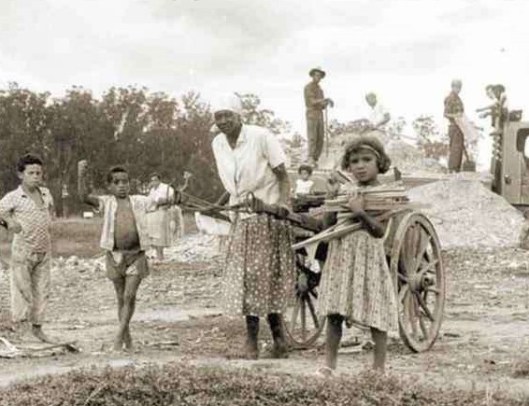
Carolina Maria de Jesus - Favela of Caninde - Sao Paulo - Before publication of first book

Carolina Maria de Jesus with cart – Favela of Canindé – São Paulo (circa 1958)
Photo Credit: Jornal Estado de Minas (Collection Audálio Dantas)


My Poetry Corner November 2018 features the poem “Humanity” (Humanidade) by Afro-Brazilian writer and poet, Carolina Maria de Jesus (1914-1977), born in a rural community in Minas Gerais, Southeast Brazil.

An illegitimate child of a sharecropping family, Carolina was treated as an outcast. After just two years in primary school, when she learned to read and write, she developed a love for reading. She dreamed of becoming a writer.

“The book…fascinates me,” de Jesus writes in My Strange Diary (Meu Estranho Diário). “I was raised in the world. Without maternal guidance. But books guided my thinking. Avoiding the abysses that we encounter in life. Blessed the time I spent reading. I came to the conclusion that it’s the poor who must read. Because the book, it’s the compass that we have to guide man into the future…”

In 1930, de Jesus moved with her family to the State of São Paulo, where she worked as a washerwoman and, later, as a housemaid. After her mother’s death in 1937, she moved to the state capital, an industrial megalopolis. In 1948, she became pregnant for a Portuguese sailor. After he abandoned her, she moved to the favela (slum) of Canindé. Two other children followed, for different fathers.

De Jesus eked out a living: working as a housemaid and scavenging for paper and scrap metal around Canindé. An independent woman, she refused to marry because of the domestic violence she witnessed around her. Writing on blank pages of used notebooks she found in trash cans, she began recording her day-to-day existence as one of society’s “discarded” and marginalized people.

In her first entry, she writes: “July 15, 1955. The birthday of my daughter Vera Eunice [born 1953]. I wanted to buy a pair of shoes for her, but the price of food keeps us from realizing our desires. Actually we are slaves to the cost of living…”
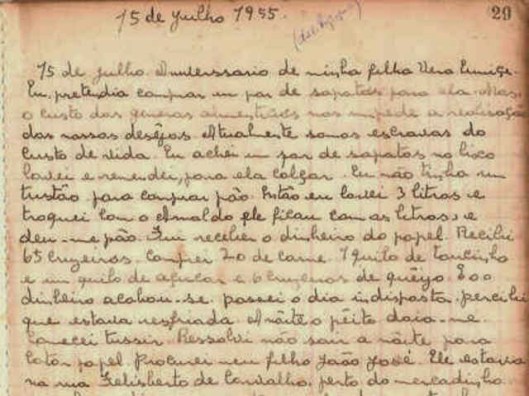
Carolina Maria de Jesus - Manuscript 15 July 1955

Carolina Maria de Jesus – Manuscript of Journal – July 15, 1955
Photo Credit: Templo Cultural Delfos


Her stories, poems, and journal entries describe her struggle to rise above poverty and the ever-present specter of hunger. She calls attention to the social problems they face—prostitution, adultery, incest, alcoholism, physical violence, and foul language—and the consequences in their lives. She writes of the racial injustice and discrimination heaped on the poor and blacks in the favelas. She notes the empty promises made by politicians.

In an untitled poem from her journal, de Jesus requests:

Don’t say that I was trash,
that I lived on the margin of life.
Say that I was looking for work,
but I was always slighted.
Tell the Brazilian people
that my dream was to be a writer,
but I did not have money
to pay for a publisher.

A breakthrough came in 1958 when Carolina de Jesus met the young journalist, Audálio Dantas, during his visit to the favela for an assignment. On learning about her journal, he recognized its uniqueness and sociological importance. Through Dantas’ influence, edited excerpts were published in a magazine. Their popularity among readers led to the publication of her journal in 1960 as a book titled, Quarto de Despejo (Trash Room).

Carolina Maria de Jesus, Audálio Dantas e Ruth de Souza na Favela do Canindé. São Paulo, 1961

From left to right: Carolina Maria de Jesus, Journalist Audálio Dantas, and Actress Ruth de Souza – Favela of Canindé – São Paulo – 1961
Photo Credit: Collection Audálio Dantas


When asked about the idea for the name of her book, de Jesus told the interviewer: “In 1948, when they began to demolish one-story houses to construct apartment buildings, we, the poor, that lived in collective housing units, were trashed and we began living under bridges. That’s why I call the favela the trash room for a city. We, the poor, are old junk.”

Trash Room became an instant bestseller, selling 10,000 copies within the first three days and 90,000 more copies over the next six months. The English version, Child of the Dark, followed in 1962. The book soon drew international attention. But, to the Brazilian literary elite, it lacked linguistic quality. Three more books published in the 1960s received little attention.
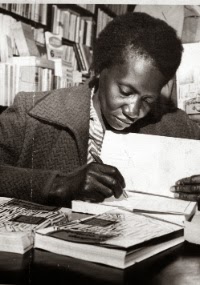
Carolina Maria de Jesus durante noite de autógrafos do lançamento de seu livro Quarto de Despejo, São Paulo, em 1960.

Carolina Maria de Jesus signing her book Quarto de Despejo – São Paulo – 1960
Photo Credit: Templo Cultural Delfos


In her poem, “Many fled on seeing me,” published posthumously (1996) in Personal Anthology, a poetry collection, de Jesus laments:

It was paper I collected
To pay for my living
And in the trash I found books to read
How many things I wanted to do
I was hindered by prejudice
When I die I want to be born again
In a country where blacks predominate

With her book royalties, Carolina de Jesus bought a house in a middle-class neighborhood. Admiration turned to envy. Some accused her of being ambitious and uncharitable.

The featured poem, “Humanity,” published posthumously in My Strange Diary, is composed of four stanzas with a rhyme scheme aabccb. De Jesus expresses her disillusions with humankind: the perversity, wickedness, greed, tyrannical…egoists, and hypocrisy.

After knowing humanity
its perversities
its ambitions
I have been getting older
and losing
the illusions

[…]

When I die…
I don’t want to be born again
It’s horrible, to endure humanity
that has a noble appearance
that conceals
its worst qualities

Unable to adjust to life among the middle-class, de Jesus moved to the countryside where she lived in poverty until the end of her life. Her passing in 1977 went virtually unnoticed. She left behind more than 5,000 handwritten pages that contained seven novels, over 60 texts of chronicles, fables, autobiography and stories, over 100 poems, and four plays.

To read the featured poem in its original Portuguese and learn more about the work of Carolina Maria de Jesus, go to my Poetry Corner November 2018.

NOTE: All translations from Portuguese to English done by Rosaliene Bacchus.


“International Congress of Fear” by Brazilian Poet Carlos Drummond de Andrade

05 Sunday Aug 2018

Posted by Rosaliene Bacchus in Brazil, Poetry

≈ 25 Comments

Tags

Brazilian poet, In the Middle of the Road (No Meio do Caminho) by Carlos Drummond de Andrade, International Congress of Fear (Congresso Internacional do Medo) by Carlos Drummond de Andrade, Living in fear, Minas Gerais/Brazil, Square Dance (Quadrilha) by Carlos Drummond de Andrade, War on Terror

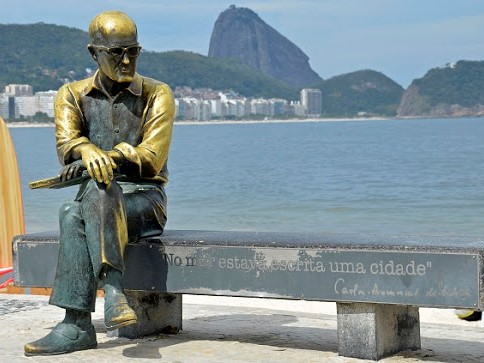
Statue of Carlos Drummond de Andrade - Copacabana - Rio de Janeiro

Bronze Statue of Carlos Drummond de Andrade – Copacabana – Rio de Janeiro – Brazil
Photo Credit: Viagens Vamos Nessa! (Alexandre Macieira/Riotur)


My Poetry Corner August 2018 features the poem “International Congress of Fear” (Congresso Internacional do Medo) by Brazilian poet, journalist, and literary critic Carlos Drummond de Andrade (1902-1987), born in Itabira in Minas Gerais, Southeast Brazil. Considered one of the most influential Brazilian poets of the twentieth century, Drummond remains well-loved by the people for his humility and concern with the plight of modern man and struggle for freedom and dignity. 

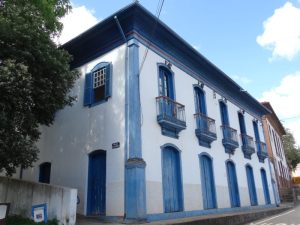
Home of Carlos Drummond de Andrade - Itabira - Minas Gerais - Brazil

Home of Carlos Drummond de Andrade – Itabira – Minas Gerais – Brazil
Photo Credit: Passeios.org


At nineteen, Drummond began his writing career as a columnist for the Diário de Minas newspaper. At his parents’ insistence, he qualified as a pharmacist in 1925 but never practiced the profession. Instead, he cofounded a literary journal and joined the Brazilian Modernist movement. After entering the public service in 1934, he was transferred to Rio de Janeiro where he worked in the Ministry of Education & Public Health, then the National Historical and Artistic Heritage Service. Continue reading →

“Sadness has no end” by Brazilian Poet Eli Macuxi

03 Sunday Sep 2017

Posted by Rosaliene Bacchus in Brazil, Poetry

≈ 29 Comments

Tags

"Sadness has no end", “Tristeza não tem fim”, Brazilian Poet Eli Macuxi, Roraima/Brazil

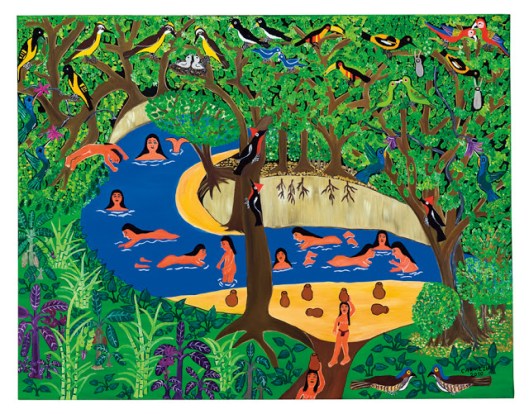
Cereia by Carmezia Emiliano - Indigenous Macuxi - Roraima - Brazil

My Poetry Corner September 2017 features the poem “Sadness has no end” (Tristeza não tem fim) by Brazilian poet and educator Elisangela Martins, who self-identifies as Eli Macuxi or Elimacuxi. She teaches history and art criticism at the Federal University of Roraima located in Boa Vista, capital of the state.

Fascinated by verse since childhood, Elimacuxi began writing poetry in fifth grade. At fifteen, she dreamed of having her work read and studied by others. “But the desire was totally blunted by the pessimistic awareness of reality,” confides the poet on her blog. “I was a skinny teenager, without luck of getting a job, studying at a night school on the periphery, ‘daughter of a drunkie,’ with lots of younger siblings. To be a writer? Poet? It was laughable.”

While she earned her Bachelor’s degree and then Masters in History, her love for poetry never waned. In 2013, she published her first poetry collection, Love For Those Who Hate (Amor Para Quem Odeia), which portrays love in its various forms of human experience. Continue reading →

Patativa do Assaré: Brazil’s Popular Oral Poet

04 Sunday Jun 2017

Posted by Rosaliene Bacchus in Brazil, Poetry

≈ 35 Comments

Tags

Agricultural workers, Brazilian Oral Poet Patativa do Assaré, Ceará/Brazil, Landless peasant farmers, O Agregado e o Operário, Sertão Nordestino/Northeast Brazil, The Peasant Farmer and the Factory Worker, Workers Rights

Patativa do Assare seated in front of his hut in Assare - Ceara - Brazil

My Poetry Corner June 2017 features the poem “The Peasant Farmer and the Factory Worker” (O Agregado e o Operário) by Antônio Gonçalves da Silva, known as Patativa do Assaré (1909-2002), a popular Brazilian oral poet, improviser of oral verse, composer, singer, and guitar player.

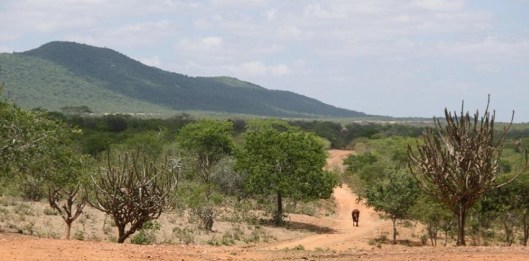
The son of poor peasant farmers eking out a subsistence livelihood in the semi-arid hinterlands, known as the sertão, of the Northeast State of Ceará, Patativa began working at an early age on his family’s small plot of land. At the age of four, he lost his sight in one eye due to lack of medical assistance. With his father’s death four years later, he had to work as a farmhand to help his family, leaving him no time to attend school. During his six months of formal education, he learned to read and write.

God was his Master; Nature was his teacher.

Sertao Nordestino - Northeast Brazil (2)Sertão Nordestino – Northeast Brazil  [Photo Credit: poesiafaclube.com]
 

I was born listening to songs
of birds in my mountain terrain
and seeing wonderful marvels
that the beautiful woodlands enclose.
That is where I grew up
watching and learning
from the book of nature
where God is most visible
the heart most sensitive
and life has more purity.
Continue reading →

“Sonnet of the Friend” by Brazilian Poet Vinicius de Moraes

07 Sunday Aug 2016

Posted by Rosaliene Bacchus in Brazil, Poetry

≈ 15 Comments

Tags

Bossa Nova, Brazilian Poet Vinicius de Moraes, Friendship poems, Garota de Ipanema, Love poems, Rio de Janeiro/Brazil

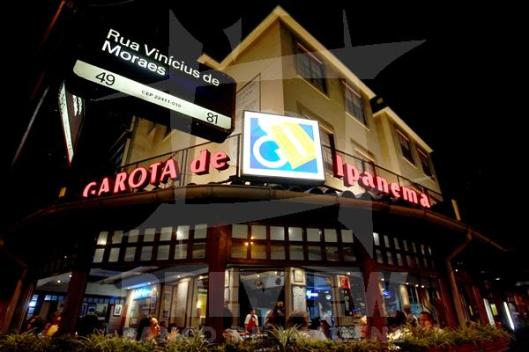
Garota de Ipanema Restaurant - Ipanema Beach - Rio de Janeiro - Brazil

Garota de Ipanema Restaurant – Ipanema Beach – Rio de Janeiro – Brazil
Photo Credit: The Real Rio de Janeiro Blog


My Poetry Corner August 2016, featuring the poem “Soneto do Amigo” (Sonnet of the Friend) by Brazilian poet Vinicius de Moraes (1913-1980), is dedicated to a dear friend who is facing a challenging period.

Born in the city of Rio de Janeiro, then the capital of Brazil until 1960, Vinicius de Moraes is the poet of love and passion. At twenty years, he published his first book of poetry. Two years later, his second collection won Brazil’s National Poetry Award. A diplomat during the period 1946 to 1969, he served in Los Angeles, Paris, and Montevideo. He married nine times and had five children.

Love is a memory
that time doesn’t kill,
the beloved song
happy and absurd…

[“A você, com amor” (To you, with love) by Vinicius de Moraes]

In the 1960s, Vinicius de Moraes contributed his talents as a lyricist and musician to the emergence of the bossa nova which incorporated elements of Brazilian samba and African American jazz. These musical collaborations gave birth to numerous classical Brazilian songs – the most famous being “Garota de Ipanema” (Girl from Ipanema) with Tom Jobim. Continue reading →

“Eden Hades” by Brazilian Poet Olga Savary

08 Sunday May 2016

Posted by Rosaliene Bacchus in Brazil, Poetry

≈ 15 Comments

Tags

Belém/Pará/Brazil, Brazilian Poet Olga Savary, Eden Hades by Olga Savary, Human Nature

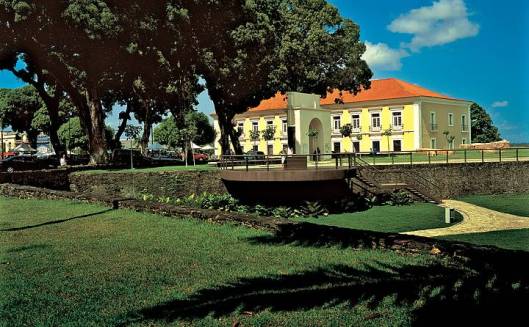
House of Eleven Windows - Historic Center - Belem - State of Para - Brazil

“House of Eleven Windows” – Historic Center – 18th Century Architecture
Former residence of a sugar plantation owner
Belém – State of Pará – Brazil
Photo Credit: Brazil Ministry of Tourism


My Poetry Corner May 2016 features the poem “Eden Hades” by Brazilian poet Olga Savary. Born in May 1933 in Belém, capital of the State of Pará in North Brazil, she was the only child of a Russian father and a Brazilian mother. After her parents separated in 1942, she moved with her mother to Rio de Janeiro.

With the publication of twelve books of her poetry, more than fifty translations of renowned foreign poets, and anthologies of North and Northeast Brazilian poets, Savary has an impressive body of literary work.

“Eden Hades” is the final poem in Savary’s collection of the same name, published in 1994. Like the Biblical Garden of Eden, her Eden is a garden providing three essential ingredients for life: water, sunlight, and fruit.

Water gardens satisfy our thirst
sunshine swollen in veins
hanging like mango

Our human nature sets us up for failure. With our needs fulfilled, we feel deserving and in control of our destiny. Then, forgetful of the reason for our existence and the natural laws governing our lives, we unleash insecurity and chaos.

and I was like the owner of a ship
arrogant, deserving. Just like
an open vowel, I opened doors for the sand
in sudden loss of memory.
Continue reading →

“The Pedagogy of Steel” by Brazilian Poet Pedro Tierra

31 Sunday Jan 2016

Posted by Rosaliene Bacchus in Brazil, Poetry

≈ 23 Comments

Tags

“A Pedagogia dos Aços” por Pedro Tierra, Brazil’s Landless Rural Workers Movement (MST), Brazilian Poet Pedro Tierra, Landless rural workers, Social injustice, Tocantins/Brazil, Workers struggle

Memorial of Massacre of Eldorado dos Carajas - 17 April 1996

Memorial of Massacre of Eldorado dos Carajás – Pará – Brazil
Photo Credit: Globo (Glauco Araújo)
Learn more about the Landless Rural Workers Movement (MST)


My Poetry Corner February 2016 features the poem “The Pedagogy of Steel” (A Pedagogia dos Aços) by Brazilian poet Pedro Tierra, pen name of Hamilton Pereira da Silva, a politician and Secretary of Culture in the Federal District.

Born in 1948 in Porto Nacional (Tocantins), Pedro Tierra abandoned his studies to join the resistance movement to overthrow the military dictatorship (1964-1985). In 1972, he was arrested and tortured for his subversive activities. During the five years he spent in prison, he lost several of his companions.

To survive and maintain his sanity, he began writing poetry. Adapting a Spanish pen name deterred exposure. He smuggled his poems to friends outside the prison, keeping them informed of life in captivity. Continue reading →

Newer posts →

Subscribe

  • RSS - Posts
  • RSS - Comments

Archives

  • June 2026
  • May 2026
  • April 2026
  • March 2026
  • February 2026
  • January 2026
  • November 2025
  • October 2025
  • September 2025
  • August 2025
  • July 2025
  • June 2025
  • May 2025
  • April 2025
  • March 2025
  • February 2025
  • January 2025
  • December 2024
  • November 2024
  • October 2024
  • September 2024
  • August 2024
  • July 2024
  • June 2024
  • May 2024
  • April 2024
  • March 2024
  • February 2024
  • January 2024
  • December 2023
  • November 2023
  • October 2023
  • September 2023
  • August 2023
  • July 2023
  • June 2023
  • May 2023
  • April 2023
  • March 2023
  • February 2023
  • January 2023
  • December 2022
  • November 2022
  • October 2022
  • September 2022
  • August 2022
  • July 2022
  • June 2022
  • May 2022
  • April 2022
  • March 2022
  • February 2022
  • January 2022
  • December 2021
  • November 2021
  • October 2021
  • September 2021
  • August 2021
  • July 2021
  • June 2021
  • May 2021
  • April 2021
  • March 2021
  • February 2021
  • January 2021
  • December 2020
  • November 2020
  • October 2020
  • September 2020
  • August 2020
  • July 2020
  • June 2020
  • May 2020
  • April 2020
  • March 2020
  • February 2020
  • January 2020
  • December 2019
  • November 2019
  • October 2019
  • September 2019
  • August 2019
  • July 2019
  • June 2019
  • May 2019
  • March 2019
  • February 2019
  • January 2019
  • December 2018
  • November 2018
  • October 2018
  • September 2018
  • August 2018
  • July 2018
  • June 2018
  • May 2018
  • April 2018
  • March 2018
  • February 2018
  • January 2018
  • December 2017
  • November 2017
  • October 2017
  • September 2017
  • August 2017
  • July 2017
  • June 2017
  • May 2017
  • April 2017
  • March 2017
  • February 2017
  • January 2017
  • December 2016
  • November 2016
  • October 2016
  • September 2016
  • August 2016
  • July 2016
  • June 2016
  • May 2016
  • April 2016
  • March 2016
  • January 2016

Categories

  • About Me
  • Anthropogenic Climate Disruption
  • Brazil
  • Economy and Finance
  • Family Life
  • Festivals
  • Guyana
  • Health Issues
  • Human Behavior
  • Immigrants
  • Nature and the Environment
  • People
  • Philosophy
  • Poetry
  • Poetry by Rosaliene Bacchus
  • Recommended Reading
  • Relationships
  • Religion
  • Religion & Spirituality
  • Reviews – The Twisted Circle: A Novel by Rosaliene Bacchus
  • Reviews – Under the Tamarind Tree: A Novel by Rosaliene Bacchus
  • Save Our Children
  • Social Injustice
  • Technology
  • The Twisted Circle: A Novel by Rosaliene Bacchus
  • The Writer's Life
  • Uncategorized
  • Under the Tamarind Tree: A Novel by Rosaliene Bacchus
  • United States
  • Urban Violence
  • Women Issues
  • Working Life

Blogroll

  • Angela Consolo Mankiewicz
  • Caribbean Book Blog
  • Dan McNay
  • Dr. Gerald Stein
  • Foreign Policy Association
  • Guyanese Online
  • Writer's Digest
  • WritersMarket: Where & How to Sell What You Write

Meta

  • Create account
  • Log in
  • Entries feed
  • Comments feed
  • WordPress.com

Enter your email address to subscribe to this blog and receive notifications of new posts by email.

Join 3,175 other subscribers

Create a free website or blog at WordPress.com.

Privacy & Cookies: This site uses cookies. By continuing to use this website, you agree to their use.
To find out more, including how to control cookies, see here: Cookie Policy
  • Subscribe Subscribed
    • Three Worlds One Vision
    • Join 3,175 other subscribers
    • Already have a WordPress.com account? Log in now.
    • Three Worlds One Vision
    • Subscribe Subscribed
    • Sign up
    • Log in
    • Report this content
    • View site in Reader
    • Manage subscriptions
    • Collapse this bar

Loading Comments...