Let’s have no illusions. We are in rough seas. A winter of global discontent is on the horizon. A cost-of-living crisis is raging. Trust is crumbling. Our planet is burning. People are hurting – with the most vulnerable suffering the most. The United Nations Charter and the ideals it represents are in jeopardy….”
We are gridlocked in colossal global dysfunction. The international community is not ready or willing to tackle the big dramatic challenges of our age. These crises threaten the very future of humanity and the fate of our planet….”
But the reality is that we live in a world where the logic of cooperation and dialogue is the only path forward. No power or group alone can call the shots. No major global challenge can be solved by a coalition of the willing. We need a coalition of the world.”
I highly recommend that you take the time to listen to Pakistan Prime Minister Muhammad Shehbaz Sharif’s address to the General Debate of the 77th Session of the United Nations General Assembly, September 23, 2022. What a “monsoon on steroids” has unleashed on the people of Pakistan will not stay in Pakistan.
The word “entitlement” did not enter my vocabulary until I arrived here in the United States. In Guyana, we used the word “spoilt/spoiled” to describe other kids and youth our age who believed that they deserved the biggest and the best of everything, and that the rules of good conduct did not apply to them. In Brazil, the Portuguese equivalent of entitlement translates as “to have the right of or as deserving of.” In Brazilian vernacular, the spoiled or entitled rich kid earns the label of “daddy’s son or daughter.” Entitlement takes on additional manifestations among white, rich, and male humans in the advanced rich economies: the right to the pursuit of happiness; the right not to feel emotional pain and suffering; the right to have one’s feelings heard and validated; and the right to have one’s basic needs met (Jem Bendell, pp. 125-127).
It would be great if we could all have our basic needs met and have a voice in issues that affect and govern our lives. Instead, the entitled few among us take a far greater share of Earth’s natural resources and offer little return for our collective human production. They also hold the power to silence our voices when we cry out against the extreme inequality and injustice. While the entitled rich and powerful get away with major crimes—including our current threat of omnicide—minority and poor populations face draconian punishment, even death, for simple infractions of the law.
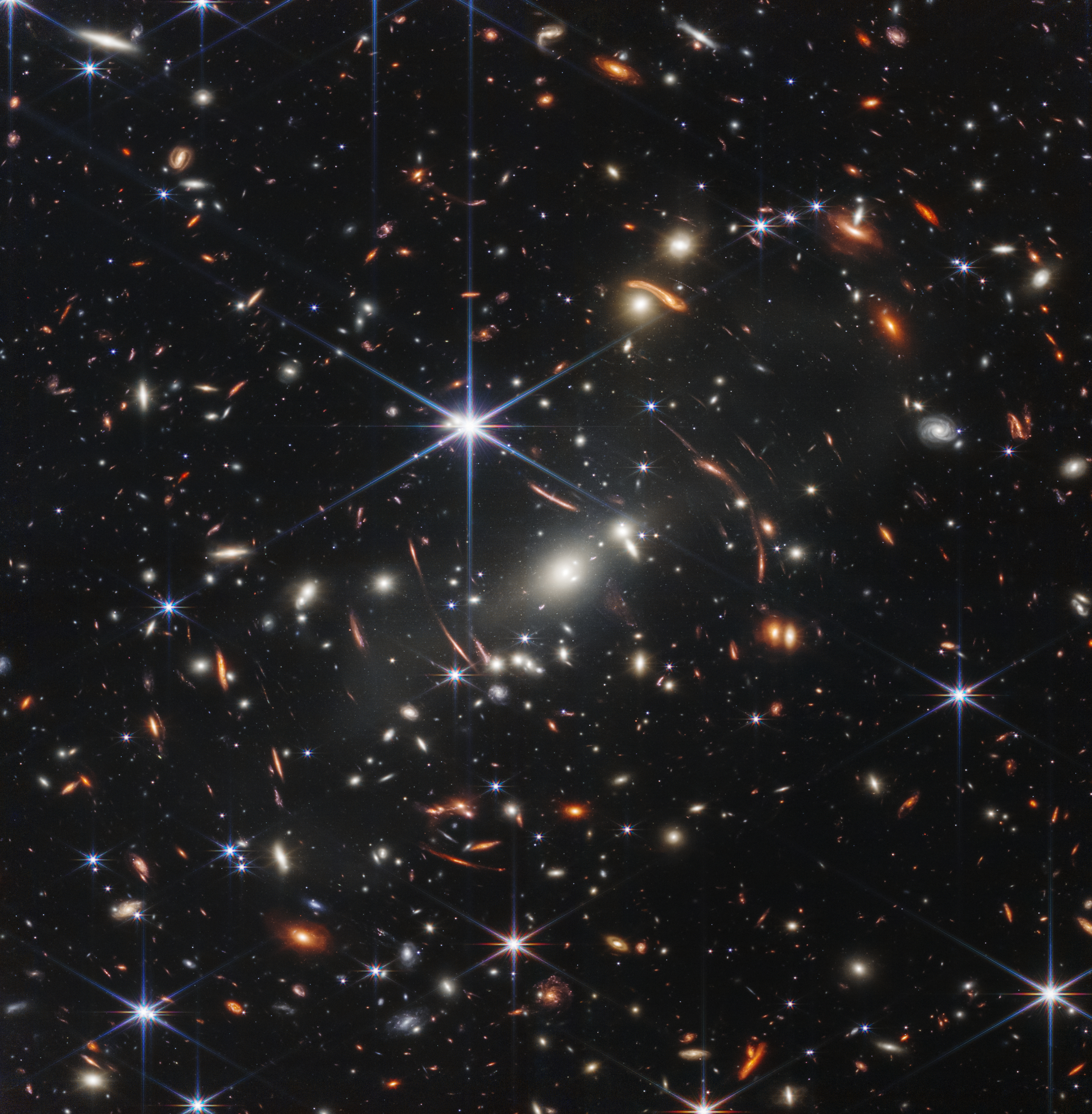
NASA James Webb Space Telescope – Deep Field Image SMACS 0723 – July 2022 Galaxy cluster as it appeared 4.6 billion years ago Photo Credit: Webb Telescope (NASA)
This is the first in the series of my reflections on the “shifts of being” proposed by Jem Bendell in Deep Adaptation: Navigating the Realities of Climate Chaos (UK/USA 2021).
On July 12, I watched in wonder at the first full-color images of Deep Field Image SMACS 0723 recorded by the NASA James Webb space telescope. I am nothing amidst the thousands of galaxies in just a tiny patch of our vast Universe. Among the estimated two trillion galaxies in the observable Universe, our own Milky Way Galaxy extends for about 100,000 light years across. Such vastness boggles my mind, considering that one light year covers 5.8 trillion miles (9.5 trillion kilometers). Located in the Orion Arm, our Sun is just one of 100 to 400 billion stars caught in its gravitational spiral.
Planet Earth, my home, is a mere rock revolving around a life-giving star. The more our space telescopes reveal the secrets of our Universe, the greater the mystery of the dark matter and dark energy that fill the emptiness of space. We humans are nothing but stardust. I am humbled.
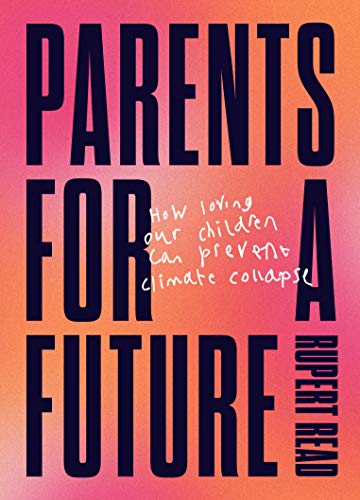
Front Cover: Parents For A Future: How Loving Our Children Can Prevent Climate Collapse by Rupert Read Photo Credit: Parents For A Future
I hope [parents for a future] will be fuelled by rage—the righteous rage that springs from love for their most vulnerable. Rage that the world has left it too late to enjoy a smooth transition to a system that can last…. I hope they’ll be honest and courageous enough to face the dreadful reality that things are going to get worse for our children for quite a long time to come even if we now truly do our best…. [Climate disasters] are coming; they are worsening. We can only seek to mitigate them in the true sense of that word. Which means adapting to what is here and what is coming in a manner that mitigates the force of the blow, shrinks as fast as possible the ongoing harm we are doing, and transforms our system to a better one: more local in its economics, more resilient, less materialistic, slower, more equal, more caring and relational, saner…. I hope that you, parents of the future, take it into your own hands, together, to change things in this way, in this direction. I hope that you won’t wait around for [governments] to fix things, but that you’ll get on with transforming your community, and what you can; because y(our) kids can’t wait.
Excerpt from “A Proposal: Parents For A Future” (p. 150), Parents For A Future: How Loving Our Children Can Prevent Climate Collapse by Rupert Read, UEA Publishing Project, University of East Anglia, Norwich, UK, 2021.
PROFESSOR RUPERT READ is based in the Philosophy Department at the University of East Anglia. He is widely known in the UK for getting the BBC (in 2018) to change its policy of featuring climate-deniers to ‘balance’ the facts when reporting on dangerous human-caused climate change. He has been a national spokesperson for Extinction Rebellion and for the Green Party, and was formerly a two-term elected Green Party local Councillor in Norwich. He is an expert on the Precautionary Principle, on which he has won AHRC grants and written reports for Parliamentarians. He is author of Philosophy for Life: Applying Philosophy in Politics and Culture (2007), This Civilisation is Finished: Conversations on the end of Empire and What Lies Beyond (2019), and Extinction Rebellion: Insights from the Inside (2020).
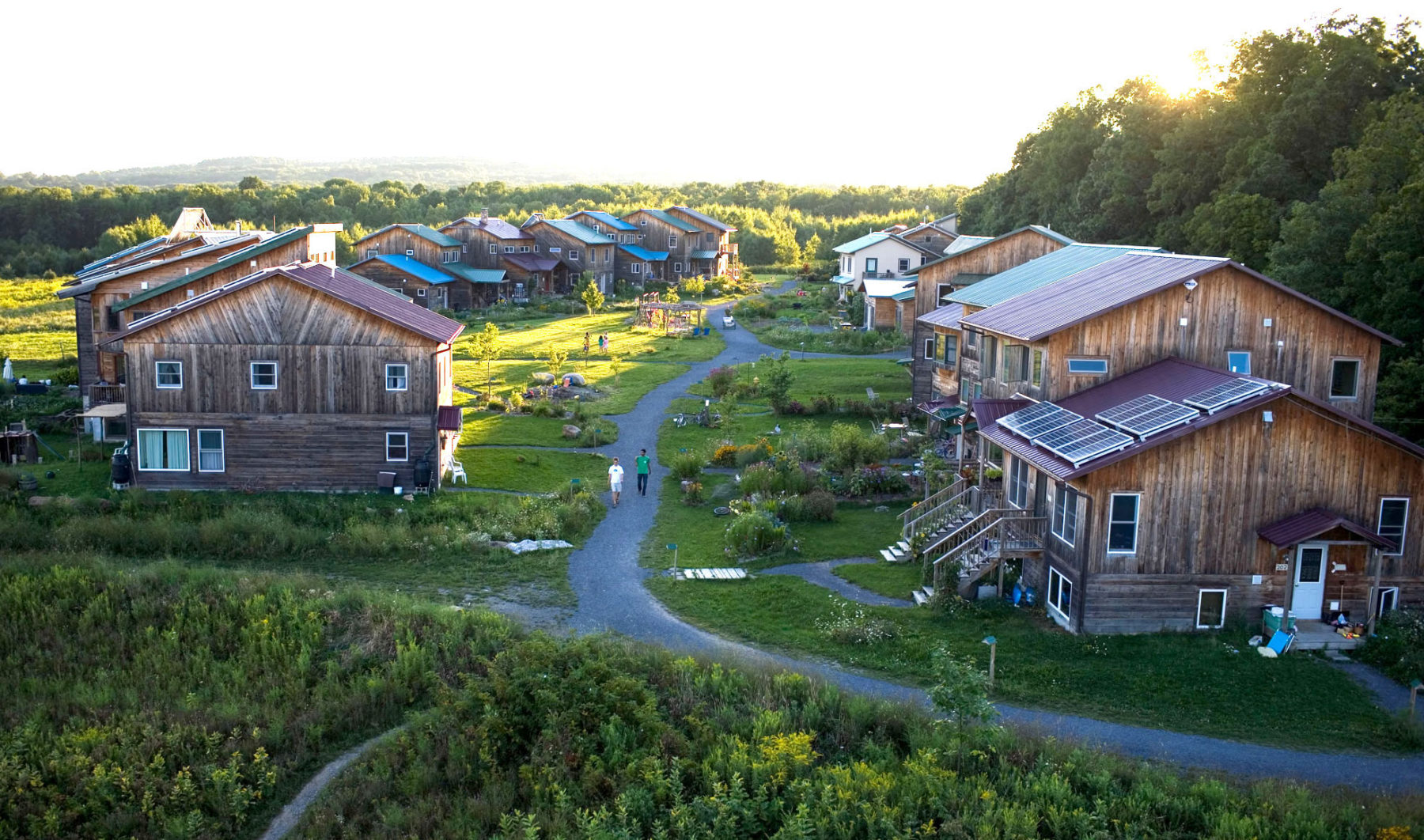
EcoVillage – Ithaca – New York – USA Photo Credit: EcoVillage Ithaca
This is Part III and final overview of the book, Deep Adaptation: Navigating the Realities of Climate Chaos, editors Jem Bendell & Rupert Read (UK/USA 2021). Part III explores some of the ‘shifts in doing’ that occur when people anticipate societal collapse. Here are the links to Part I: “Climate Chaos: Humanity’s Predicament” and Part II: Climate Chaos: “Shifts in Being.”
In his article “Leadership and Management in a Context of Deep Adaptation,” British leadership scholar Professor Jonathan Gosling observes that leadership in periods of collapsing social structures requires maturity to tolerate, contain, and transform anxiety in constructive ways. Leadership of adaptation helps us to reconcile with the situation, evaluate the risks, grieve when we suffer loss, weigh our shrinking options, and choose pragmatic and courageous change. Success relies upon collaboration, partnerships, sharing, and organization. Political, media, and business leaders must also play their part in facilitating the policies and strategies to support deep adaptation.
This is the second of a three-part series of overviews of the book, Deep Adaptation: Navigating the Realities of Climate Chaos, Edited by Jem Bendell & Rupert Read (UK/USA 2021). Here’s the link to Part I: “Climate Chaos: Humanity’s Predicament.”
Part II (chapters 4 to 8) of the book explores the ‘shifts in being’ that can occur and be supported in the event of a societal collapse due to the planetary climate and ecological crises. In Chapter 4, psychologist and co-founder of the Climate Psychology Alliance (CPA) Dr. Adrian Tait describes the ways in which psychotherapists are beginning to change in response to growing public distress, giving rise to the terms ‘climate-distress’ or ‘eco-distress.’
The CPA came into being in the United Kingdom during 2009-2012 following the mobilization of psychotherapists and academics in the field concerned about increasing evidence of climate and ecological destabilization due to human activities. The alliance has two main objectives:
To promote understanding of the way our minds work in preventing us from acting in the face of climate chaos, and
To develop support systems for those of us who are committed to persistent engagement in dealing with humanity’s predicament.
“Support is essential,” Dr. Tait notes. “If we have not been racked by grief over what is happening, then we are shutting its meaning out of our hearts and bodies. But if we remained immersed in grief alone, we would become part of the wreckage. The loss is continuous and mounting, which prevents us from moving on as in normal mourning. We need relief from the pain” (p.106).
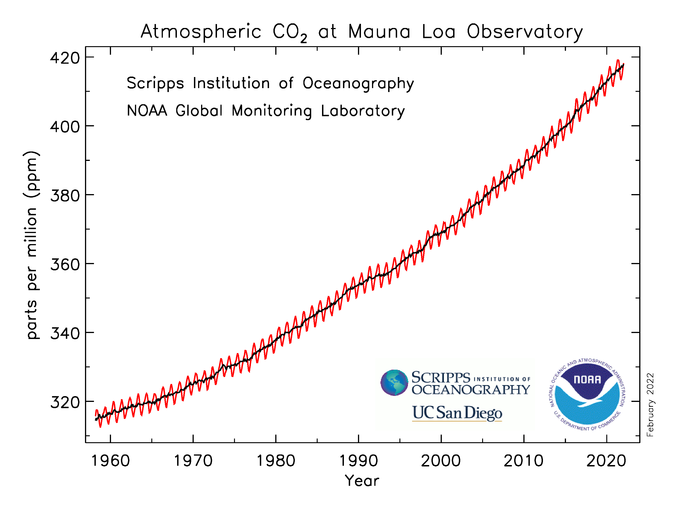
NOAA Atmospheric Carbon Dioxide at Mauna Loa Observatory 1960-2020 Source Credit: NOAA
We the inhabitants of Earth are in trouble. Serious trouble. Our failure, so far, to end our addiction to fossil fuels and change our consumption habits may well lead to societal collapse within our own lifetime. Such is humanity’s predicament.
In their book, Deep Adaptation: Navigating the Realities of Climate Chaos (UK & USA 2021), Editors Jem Bendell and Rupert Read present “an agenda and framework for responding to the potential, probable or inevitable collapse of industrial consumer societies, due to the direct and indirect impacts of human-caused climate change and environmental degradation.” (Introduction, p.2)
By ‘societal collapse’ they refer to an uneven ending of the consumer systems that make our lifestyles possible. These are systems that we take for granted: sustenance, shelter, health, security, pleasure, identity, and meaning. The term ‘collapse’ implies a permanent and total breakdown of these systems. There is no going back to the way things were before the breakdown. The word ‘deep’ takes us deeper into the causes and numerous ways in which we respond to catastrophe as individuals, organizations, and societies.
The Covid-19 global pandemic provided a preview of the vulnerability of our normal ways of life. Beyond the initial health crises, the pandemic triggered an ongoing series of cascading effects on our local and national economies—increasing joblessness, homelessness, and food insecurity. The domestic political upheaval continues to divide us. The disruption in our consumer and industrial supply chains plague us still.
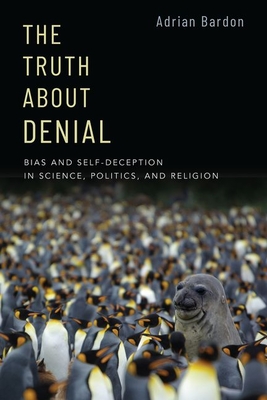
Front Cover: The Truth About Denial: Bias and Self-Deception in Science, Politics, and Religion by Adrian Bardon
The climate change issue is a perfect storm for conservative personality and conservative ideology. It is a form of impact science that represents a massive threat to the existing social and economic order, and in so doing, incidentally threatens demographic identity groups invested in the status quo. Solutions will require massive government intervention, the prospect of which is particularly threatening to the especially individualistic, small-government aspects of American conservative ideology.
Excerpt from “Science Denial” (Chapter 2, p.109), The Truth About Denial: Bias and Self-Deception in Science, Politics, and Religion by Adrian Bardon, Oxford University Press, New York, USA, 2020.
DR. ADRIAN BARDON is a professor of philosophy at Wake Forest University, North Carolina, where he teaches courses on political philosophy, philosophy of religion, philosophy of space and time, and the history of philosophy. He is the author of A Brief History of the Philosophy of Time (OUP 2013), as well as numerous scholarly articles on time, perception, politics, and the history of philosophy.
Some promises are made in good faith. Then, as often happens in our lives, another commitment that we consider more important or urgent sabotages our best intentions. This appears to be the case with pledges made by several of the 196 countries at the 2015 Climate Change Paris Agreement to lower their greenhouse gas emissions. What is alarming is that existing pledges, even if fully honored, fall short of attaining global net zero emissions by 2050. If we the people of Earth are to maintain habitable conditions for our species, we must get our priorities straight.
On May 18, 2021, the International Energy Agency (IEA), made up of 30 member countries and 8 association countries committed to shaping a secure and sustainable energy future for Earth’s inhabitants, released a special report that is intended to put us on track. Net Zero by 2050: A Roadmap for the Global Energy Sector is a comprehensive study of the way forward to a global Net-Zero Emissions Scenario (NZE) by 2050 with an emphasis on economic growth for all.
With just 29 years left for us to catch up, after decades on the path to planetary ruin, the NZE roadmap is no stroll along the beach or jog in the park. It calls for vast amounts of investment, innovation, implementation of skillful policy design, technology deployment, infrastructure building, international cooperation, and much more across all sectors. World War NZE 2050. A war for human survival. Success depends upon an unprecedented level of international cooperation.
According to the NOAA National Climate Report 2020, issued on January 12, 2021, last year was the most active wildfire year on record across the West. In California, thousands of firefighters battled five of the six largest wildfires in our state’s history. Nearly 10,000 fires burned over 4.2 million acres. The August Complex fire alone burned over 1 million acres, an area larger than the state of Rhode Island. In Colorado, three extensive wildfires, burning over 500,000 acres, also broke the state’s historical record.
For 2020, the average temperature of 54℉ (12.2℃) for the contiguous U.S. (CONUS) ranks as the fifth warmest year in the last 126 years on record. On August 16th, temperatures soared to 130℉ (54.4℃) in California’s Death Valley—the hottest CONUS temperature recorded in 2020. Most of the contiguous U.S. experienced above average temperatures. Ten states across the Southwest, Southeast, and East Coast had their second-warmest year on record.
East Coast residents also faced several record-breaking storm events. Thirty named storms formed in the Atlantic Ocean, breaking the record of 28 set in 2005. Tropical storms Cristobal, Marco, Laura, Delta, and Zeta made landfall in Louisiana, the most storms on record for any state in one year. Hurricane Laura generated a storm surge of over 17 feet (5.16 meters) above ground level, which would be the largest on record for Louisiana.
The Midwest was not spared. In August 2020, the region was hit by a historic derecho, a destructive thunderstorm complex. The derecho raced across the Central States, causing damages estimated at $11 billion, the costliest to hit the region in four decades.
Perhaps, like me, you have not yet experienced loss of property, livelihood, or a loved one due to some climate disaster. Yet, we the working people all suffer the consequences of the economic costs of these weather and climate disasters. America’s annual loss in 2020 exceeded $95 billion, the fourth highest cost on record. Twenty-two of these events caused losses amounting to more than $1 billion each, shattering yet another annual record of 16 events made in 2011 and 2017. The total cost of U.S. billion-dollar weather and climate disasters over the last five years (2016-2020) exceeds a record $600 billion.
Unless we change the way we live and work, these weather and climate disaster events will continue to intensify and cripple our state and local economies, already under stress due to the global COVID-19 pandemic. On the upside, the lockdown and reduced economic activities in the U.S. and worldwide have led to a drop in global greenhouse gas (GHG) emissions. But, it is just a short-term reduction.
At the time of completing their Emissions Gap Report 2020, released on December 9, 2020, the United Nations Environment Programme (UNEP) reported that 126 countries, covering just 51 percent of global GHG emissions have net-zero goals that are formally adopted, announced, or under consideration. If the U.S. adopts a net-zero GHG target, as announced by the Biden Administration, the share would increase to 63 percent.
Apart from the USA, only ten other G20 members have set net-zero emission goals by 2050: Argentina, Canada, China (before 2060), European Union, France, Japan, Mexico, South Africa, South Korea, and the United Kingdom. Based on pre-COVID-19 projections, only nine G20 members are on track to achieve their unconditional nationally determined contributions (NDCs).
Without a firm commitment to significantly reduce GHG emissions, as set out in the Paris Climate Agreement, we the people of Earth will face a temperature increase of at least 3℃ (37.4℉) by the end of this century.
As at October 2020, global COVID-19 fiscal spending continued to promote high-carbon economic production. In planning the recovery from COVID-19, governments worldwide have an opportunity to catalyze low-carbon lifestyle changes by disrupting entrenched practices. (Clearing forests to rear cattle for beef consumption comes to mind.) Based on UNEP’s consumption-based accounting, around two-thirds of global emissions are linked to private household activities. Moreover, the richest One Percent of the world’s population account for more than twice the combined share of emissions of the poorest 50 percent. The report further notes that our participation as members of civil society is essential to bring about wider changes in the social, cultural, political, and economic systems in which we live. We have to change our lifestyles if we are to bridge the emissions gap. (Emphasis is mine.)
Watch the UNEP’s video, “Emissions Gap: A Turning Point,” released on December 9, 2020 (duration 1:35 minutes):
Change is inevitable. More so when we set the change into motion. In 2020, COVID-19 forced us into lockdown mode, bringing the global economy to a standstill. In the USA, our inability as a nation to agree on a strategy to combat a highly contagious, mutating, deadly foe will cost us more lives. Our economic recovery will take longer. Meanwhile, time is running out on tackling a global climate crisis that is gathering force with each passing day. Staying safe in place may not be an option.