• About

Three Worlds One Vision

~ Guyana – Brazil – USA

Three Worlds One Vision

Author Archives: Rosaliene Bacchus

Thought for Today: Unintended Deaths

07 Sunday Apr 2024

Posted by Rosaliene Bacchus in Human Behavior, Recommended Reading, United States

≈ 65 Comments

Tags

Civilian Deaths of America’s Wars, USA Global War on Terror, War Made Invisible: How America Hides the Human Toll of Its Military Machine by Norman Solomon, Warfare
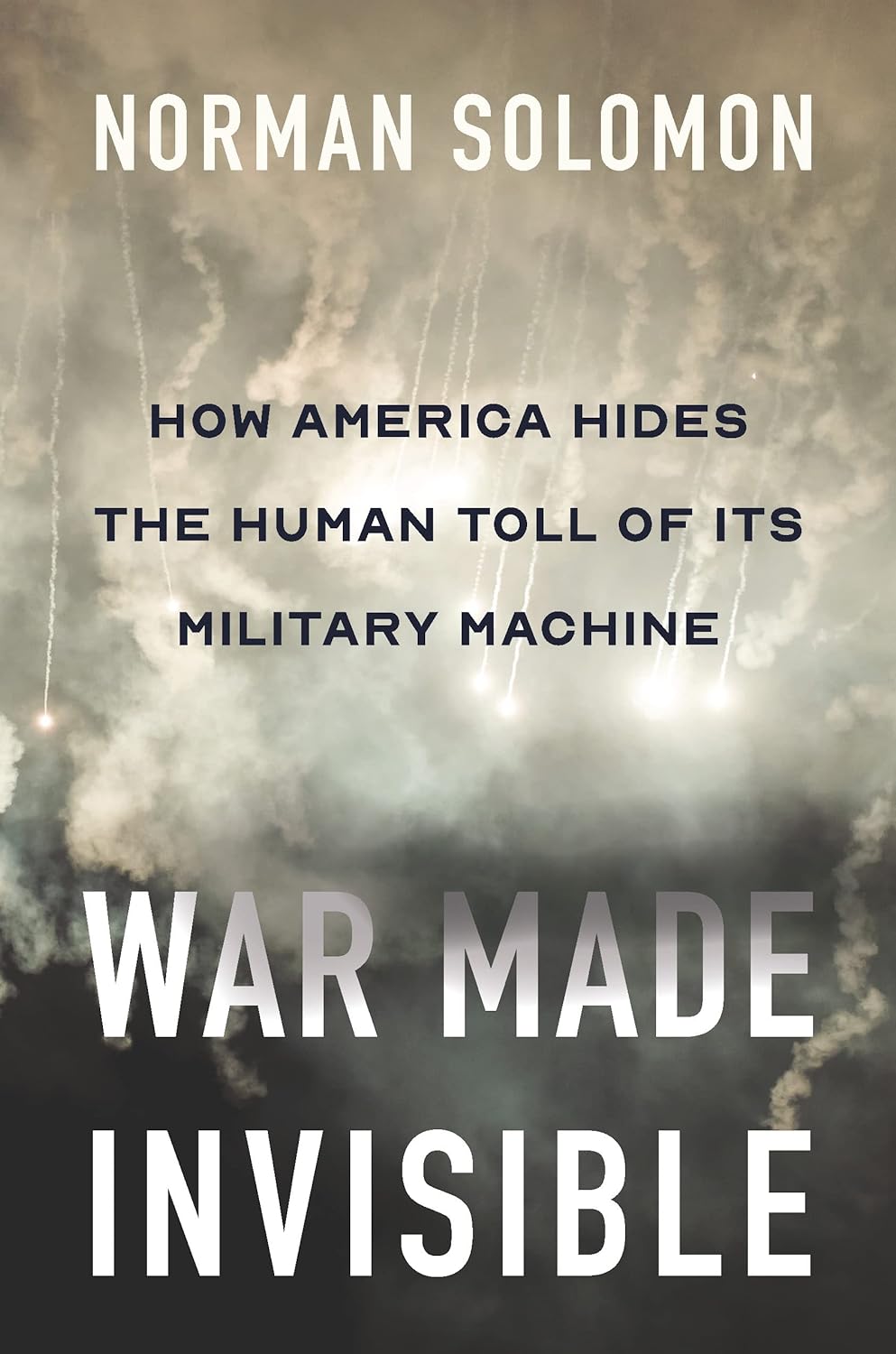
Front Cover: War Made Invisible: How America Hides the Human Toll of Its Military Machine by Norman Solomon

Frequent killing of civilians is inherent in the types of wars that the United States has waged in this century. Despite all the hype about precision weaponry, even its top-rated technologies are fallible. What’s more, they operate in flawed—and sometimes highly dysfunctional—contexts. Whether launching attacks from distant positions or directly deployed, American forces are far removed from the societies they seek to affect. Key dynamics include scant knowledge of language, ignorance of cultures, and unawareness of such matters as manipulation due to local rivalries.

When U.S. officials say that civilian deaths are merely accidental outcomes of the war effort, they don’t mention that such deaths are not only predictable—they’re also virtually inevitable as results of policy priorities. Presumptions of acceptability are hot-wired into the war machine. The lives taken, injuries inflicted, traumas caused, environmental devastation wrought, social decimation imposed—all scarcely rank as even secondary importance to the power centers in Washington.

Norman Solomon, War Made Invisible: How America Hides the Human Toll of Its Military Machine, The New Press, New York, USA, 2023, pp. 53-54.

NORMAN SOLOMON is an American journalist, media critic, author, and activist. He is the co-founder of the online organization RootsAction.org and executive director of the Institute for Public Accuracy, a consortium of policy researchers and analysts. His books include War Made Easy: How Presidents and Pundits Keep Spinning Us to Death (2006) and Made Love, Got War: Close Encounters with America’s Warfare State (2008). He lives in the San Francisco area in California.
The Writer’s Life: Challenge of re-creating an unrecorded life

24 Sunday Mar 2024

Posted by Rosaliene Bacchus in The Writer's Life, Women Issues

≈ 51 Comments

Tags

Bookers Guyana, British Guiana (Guyana)/South America, Cheddi and Janet Jagan, Descendant of East Indian indentured laborers, Guiana Agricultural Workers Union (GAWU), Guyana People’s Progressive Party (PPP), Guyana Women’s Progressive Organization (WPO), Kowsilla of Leonora (1920-1964), Sugar Plantation Leonora/British Guiana 1964

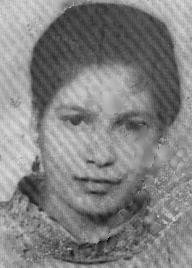
Kowsilla (1920-1964) – Leonora Village – British Guiana

Since I had already featured Kowsilla of Leonora on International Women’s Day in 2013, I had decided not to share her expanded portrait in Chapter Nine of my work in progress. I changed my mind the day that our former president and current presidential candidate called the black- and brown-skinned migrants/refugees at our southern border “animals.” “[They’re] poisoning the blood of our country,” he said on another occasion. His remarks hurt. It matters not that the blood of these people has fueled and continues to fuel our giant corporations worldwide. Kowsilla (1920-1964) was such a person.

Kowsilla’s abruptly shortened life was so inconsequential to the powerful British sugar producers that her ultimate sacrifice at Plantation Leonora only merited a brief description in our local newspapers. In recalling those early days of growing up in then British Guiana, I regard her as a worthy and memorable representative of the rural working-class women of her generation. With little information about her life, I took on the challenge of re-creating her story.

To tell her story, I turned to Kowsilla’s ancestral history as a descendant of Indian indentured laborers. I found Coolie Woman: The Odyssey of Indenture by Gaiutra Bahadur (The University of Chicago Press, 2014) an excellent resource. What strong and courageous women! I also considered the cultural norms of the rural East Indian population during Kowsilla’s early years.

I hope that I have done justice in re-creating her unrecorded life.

Continue reading →

Poem “Certainties” by Brazilian Poet Mário Quintana

17 Sunday Mar 2024

Posted by Rosaliene Bacchus in Brazil, Poetry

≈ 45 Comments

Tags

Brazilian Poet Mário Quintana, Brazilian Poet of “simple things”, Love and Friendship, Poem “Certainties” by Mário Quintana, Poema “Certezas” por Mário Quintana, Porto Alegre/Rio Grande do Sul/Brazil

Brazilian Poet Mário Quintana (1966)
Photo Credit: Correio da Manhã (Posted on Wikipedia)

My Poetry Corner March 2024 features the poem “Certainties / Certezas” by Brazilian poet, writer, and translator Mário Quintana (1906-1994). Known as the poet of “simple things,” Quintana shares his beliefs on love and friendship for making our lives worthwhile. Though unable to determine the publication date of this poem, I get the sense that it was written at a later stage in his life. In a change to my normal presentation, I intersperse excerpts of this poem with the poet’s lifelong journey to becoming a beloved and acclaimed poet in his state and across Brazil.

I don’t want someone who dies of love for me…
I just need someone who lives for me, who wants to be with me, hugging me.

Born in the municipality of Alegrete in the southern state of Rio Grande do Sul, Quintana was the third child: a son of a pharmacist and grandson of doctors. At the age of seven, with the help of his parents, he learned to read using the local newspaper as a primer. His parents also initiated his studies in French and Spanish. After he completed elementary school in his hometown, his father enrolled him as a boarding student at the Military College in the state capital, Porto Alegre.

I don’t demand that someone loves me like I love them, I just want them to love me, no matter with what intensity.
I don’t assume that everyone I like likes me…

Continue reading →

California: Winter Garden Highlights

10 Sunday Mar 2024

Posted by Rosaliene Bacchus in Nature and the Environment, United States

≈ 58 Comments

Tags

Aeonium succulents, Azalea flowering plant, Camellia trees, Foxtail Fern, Los Angeles/California, Purple Graptoveria Debbie, Succulent Garden Winter 2024

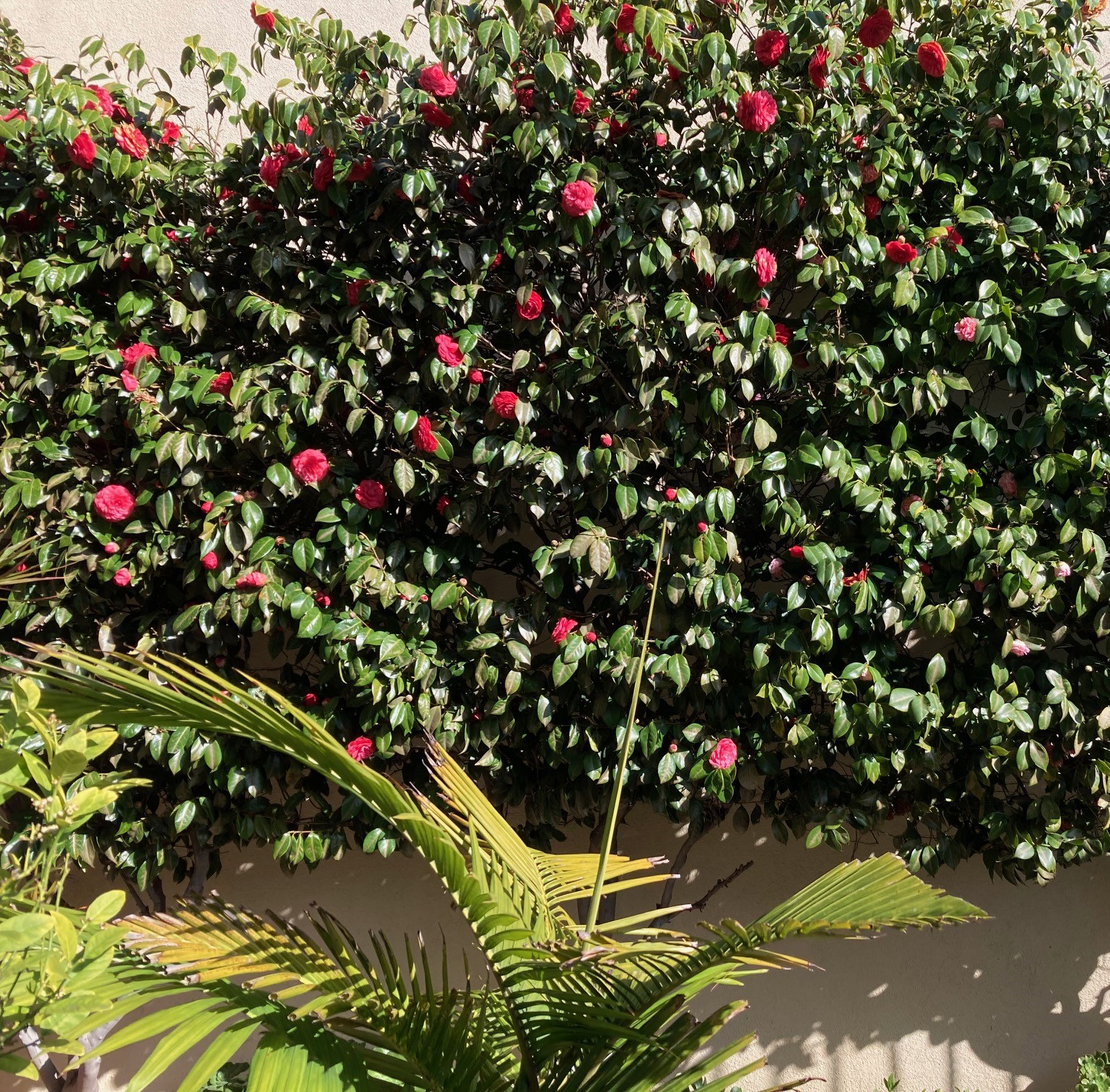
Camellia Trees – Winter 2024 – Los Angeles – Southern California

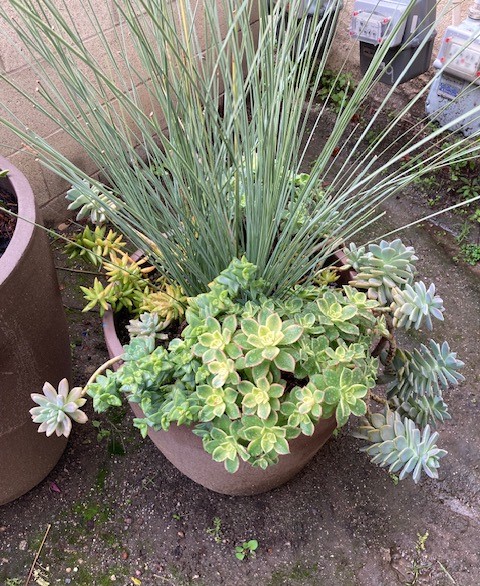
After the hottest year on record, we’ve had another unusually wet winter. Our garden turned a luxurious green with joy. Red camellias, in the captioned photo, blushed as we passed by on the way to and from the parking area. With a few exceptions, the succulent plants have also responded well to the soaking.

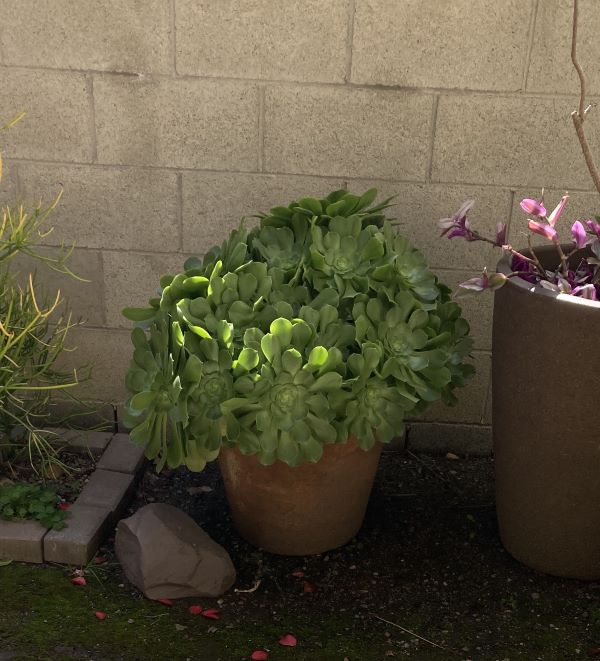
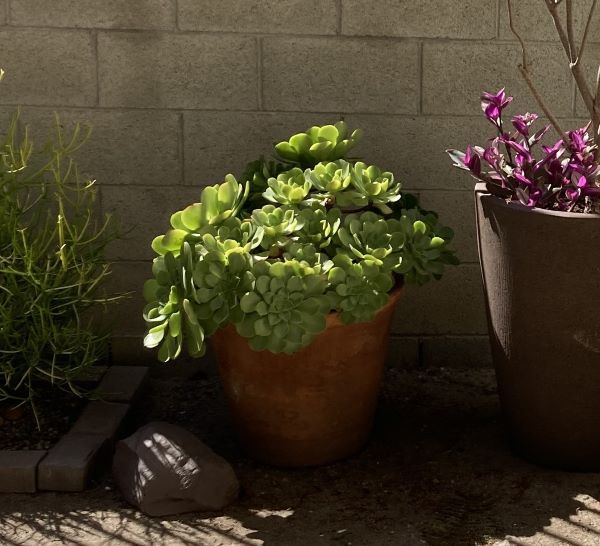
The growth of the potted Aeonium Mint, shown below, was impressive. Just two plants! Compare its growth since October 2023.

Aeonium Mint February 2024
Aeonium Mint October 2023

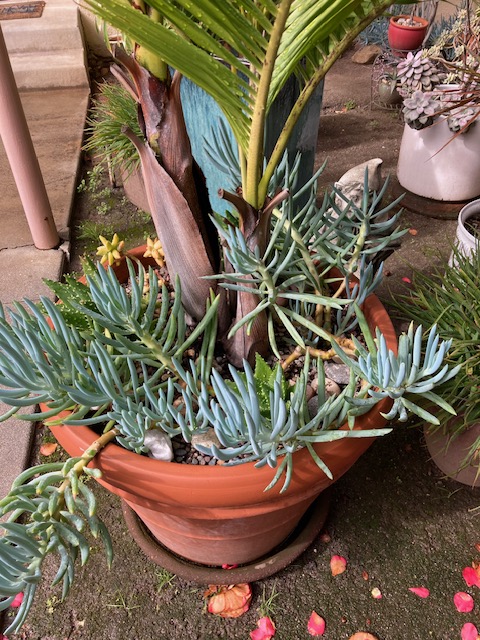
Other large potted plants in this open area, shown below, have also responded well to the drenching.

The Aeonium Kiwi, one of my favorite succulents, is also happy. Thankfully, the open area did not flood and drained well.

Continue reading →

Thought for Today: Civility and Tolerance

03 Sunday Mar 2024

Posted by Rosaliene Bacchus in Human Behavior

≈ 66 Comments

Tags

Civility and Tolerance, The Civil Citizen, The Soul of Civility: Timeless Principles to Heal Society and Ourselves by Alexandra Hudson

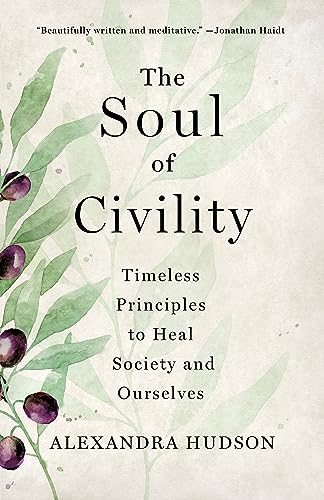
Front Cover: The Soul of Civility: Timeless Principles to Heal Society and Ourselves by Alexandra Hudson

Civility tempers and elevates the interactions between citizens, whether or not those citizens are public leaders. Civility begins with recognizing our shared humanity. It starts with seeing that we are more alike than unlike, and viewing our difference in light of our likeness. It starts in small ways, sowing seeds of the friendship and trust that ensure our civitas survives.

Deliberative democracy depends on the premise that people of goodwill can negotiate differences and work together in a productive way through rational—and civil—debate. Civility builds an active willingness to listen to others, to consider their point of view alongside our own, and to evaluate varying conceptions of “the good.” The civil citizen accepts that others have genuinely held moral positions, and that reasonable minds can disagree. These traits are equally essential for all positions along the political spectrum, and for our democracy, public leaders, and citizens alike.

~ Alexandra Hudson, The Soul of Civility: Timeless Principles to Heal Society and Ourselves, St. Martin’s Publishing Group, New York, USA, 2023, p. 257.

ALEXANDRA HUDSON is a writer, storyteller, and the founder of Civic Renaissance, a publication and intellectual community dedicated to reviving the wisdom of the past to help us lead richer lives in the present. She was named a 2019 Novak Journalism Fellow, and she contributes to Fox News, CBS News, The Wall Street Journal, USA Today, Time magazine, Politico magazine, and Newsweek. Her TV series, Storytelling and the Human Condition, was produced with The Great Courses and is available for streaming on Wondrium and Audible. Hudson earned a master’s degree in public policy at the London School of Economics as a Rotary Scholar. An adjunct professor at the Indiana University Lilly Family School of Philanthropy, she lives in Indianapolis with her husband and children.

The Writer’s Life: Looking at “the outsider” with an open mind

25 Sunday Feb 2024

Posted by Rosaliene Bacchus in The Writer's Life

≈ 58 Comments

Tags

British Guiana (Guyana)/South America, Cheddi Jagan (1918-1997), First Female Executive President of Guyana, Georgetown/Guyana, Guyana People’s Progressive Party (PPP), Guyana Women’s Progressive Organization (WPO), Janet Jagan nee Rosenberg (1920-2009), Women in politics

Janet Jagan nee Rosenberg – President of Guyana (1997-1999)

Since I’ve already posted Chapter Eight of my work in progress, featuring “Winifred Gaskin: A Political Woman,” I’m moving on to Chapter Nine that portrays another political woman and the first female president of Guyana (1997-1999): Janet Jagan nee Rosenberg. The white American-born wife of Cheddi Jagan—co-founder of the left-leaning People’s Progressive Party (PPP), Guyana’s first political party to garner massive support—was regarded as an “outsider” among the ruling British and local elite at the time.

When I started this book project, I did not plan on including Janet Jagan among the influential women in the formation of my social and political consciousness. As a young devout Christian, I viewed her not only as an outsider but also as a threat to religious education in our parochial schools. Though I did not share her communist ideology, I would be remiss in not acknowledging her influence in empowering Guyanese women to speak out against oppression and injustice by those holding power or authority within the home, workplace, and public spaces. In retrospect, she may well be the driving force for my rebellious attitude towards those in authority: A criticism I received from my religious superiors as a young Catholic nun.

As Cheddi’s wife and political partner, Janet’s remarkable journey is also an interesting case of what can be achieved when the male and female work together as equal partners. Here in the United States, we are still plagued by the patriarchal dominator model of organizing our society. As the world’s greatest democratic nation, we lag behind other countries, advanced and developing, in electing a woman for the top position as president. Since the 1872 elections, several American women have tried and failed. Isn’t it ironic that the first American woman to hold the position did so in a foreign country? Hillary Clinton came close in the 2016 elections. Does Nikki Haley stand a chance in 2024? We have no shortage of remarkable American-born women capable of leading our nation.

We left Guyana for Brazil in 1987 before the PPP returned to power in 1992, after spending 28 years in Parliament as the major opposition party. With her husband as Executive President, the 72-year-old Janet became First Lady of the Republic of Guyana. She was 77 years old when she was elected as Executive President, following Cheddi’s death.

Continue reading →

“Archipelagos” – Poem by Jamaican American Poet Geoffrey Philp

18 Sunday Feb 2024

Posted by Rosaliene Bacchus in Anthropogenic Climate Disruption, Poetry

≈ 45 Comments

Tags

Anthropocene, Capitalism, Climate Crisis in the Caribbean Region, Colonialism, Jamaica/Caribbean, Jamaican American Poet Geoffrey Philp, Poem “Archipelagos” by Geoffrey Philp, Poetry Collection Archipelagos by Geoffrey Philp (UK 2023)

Jamaican American Poet Geoffrey Philp
Photo Credit: Vanessa Diaz / National Library of Jamaica

My Poetry Corner February 2024 features the title poem “Archipelagos” from the poetry collection Archipelagos by poet and novelist Geoffrey Philp, published by Peepal Tree Press (UK, 2023). Born in 1958 in Kingston, Jamaica, Philp left the Caribbean Island nation in 1979 to attend the Miami Dade College in the United States. After graduation, he studied Caribbean, African, and African American literature. As a James Michener Fellow at the University of Miami, he studied poetry with Kamau Brathwaite and fiction with George Lamming.

Philp is the author of seven books of poetry, two books of short stories, a novel, and two children’s books. In 2022, he was awarded the Silver Musgrave Medal by the Institute of Jamaica for outstanding merit in literature. That same year, he also received the Marcus Garvey Award for Excellence in Education. A retired Miami Dade College professor, he lives in Miami, Florida.

The publisher Peepal Tree Press describes Philp’s poetry collection Archipelagos as “a call to arms that opens out the struggle for human survival in the epoch of the Anthropocene to remind us that this began not just in the factories of Europe but in the holds of the slave ships and plantations of the Caribbean…. Philp’s powerful and elegant poems span past and present and make it very clear that there cannot be a moral response to the climate crisis that is not also embedded in the struggle for social justice, for overcoming the malignancies of empire and colonialism and the power of global capitalism—the missions of the West that always had and still have at their heart the ideology of white supremacy and a capitalism endlessly voracious for the world’s human and natural resources.”

Continue reading →

We Can No Longer Have It All

11 Sunday Feb 2024

Posted by Rosaliene Bacchus in Anthropogenic Climate Disruption

≈ 86 Comments

Tags

Atmospheric CO² Jan 1959 – Jan 2024, City of Los Angeles/California, Climate Change, Climate Crisis, EU Copernicus Global Climate Highlights 2023, Fossil Fuel Emissions, NASA Goddard Institute for Space Studies (GISS), National Centers for Environmental Information (NCEI), NCEI/NOAA Annual 2023 Global Climate Report, NOAA Mauna Loa Observatory, NOAA/NASA 2023 Global Climate Media Briefing, Pineapple Express Atmospheric River, US 2023 Billion-Dollar Weather and Climate Disasters Map

Storm Damage from mudslide – Studio City – City of Los Angeles – Southern California – February 5, 2024
Photo Credit: David Crane / Associated Press

The sun is out again. Alleluia! Beginning last Sunday and throughout Monday, Tuesday, and Wednesday, the Pineapple Express atmospheric river unloaded its burden across California. Don’t get me wrong: We need the rain to replenish our state’s depleted reservoirs after years of drought. Is it asking too much not to have the rain all at once? Consider downtown Los Angeles. Within just four days, the area was drenched with more than 8 inches (20 cm) of rain. That’s more than half of the area’s normal annual rainfall of 14.25 inches (36 cm).

We were well warned ahead of the onslaught. To ensure our city had the required resources to respond to the storm’s impacts, on Monday, February 5th, our Mayor Karen Bass signed a Declaration of Local Emergency throughout the City of Los Angeles. Flooding, fallen trees, and hundreds of mudslides were merciless to everything and everyone in their path. I give thanks that our neighborhood was spared from such devastating blows. At our apartment complex, the lawn and garden plots are fully saturated. Some plants thrive in such weather. Others, like some of my succulents, not so much.

Extreme climate change events have become more frequent and severe. How the gods must laugh at human ineptitude in connecting the dots between our behavior and our environment! We can no longer have it all. Yet, we persist in our self-destructive ways of being and doing. Drill, Baby, Drill!

Continue reading →

Thought for Today: The Friction of Being Visible

04 Sunday Feb 2024

Posted by Rosaliene Bacchus in Relationships

≈ 62 Comments

Tags

Being visible, Inner & External Conflict, The Book of Awakening by Mark Nepo

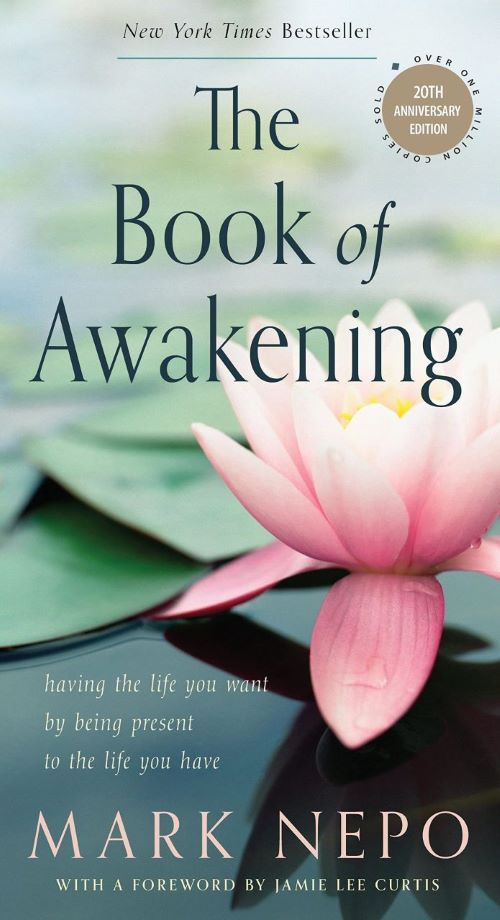
Front Cover: The Book of Awakening by Mark Nepo

Living through enough, we all come to this understanding, though it is difficult to accept: No matter what path we choose to honor, there will always be conflict to negotiate. If we choose to avoid all conflicts with others, we will eventually breed a poisonous conflict within ourselves. Likewise, if we manage to attend our inner lives, who we are will—sooner or later—create some discord with those who would rather have us be something else.

In effect, the cost of being who you are is that you can’t possibly meet everyone’s expectations, and so, there will, inevitably, be external conflict to deal with—the friction of being visible….

Mark Nepo, The Book of Awakening, Red Wheel Publishers, USA, 2020 Edition, Excerpt pp. 19-20.

MARK NEPO is a poet, teacher, storyteller, and “an eloquent spiritual teacher.” His #1 New York Times bestseller, The Book of Awakening, has inspired readers and seekers worldwide. He has published twenty-two books and recorded fifteen audio projects. In 2015, he received a Life-Achievement Award from AgeNation. In 2016, Watkins: Mind Body Spirit named him one of the 100 Most Spiritually Influential Living People. That same year, OWN also selected him as one of their SuperSoul 100—inspired leaders using their gifts and voices to elevate humanity. In 2017, he became a regular columnist for Spirituality & Health Magazine.

The Writer’s Life: How the Church and State shaped my young identity

28 Sunday Jan 2024

Posted by Rosaliene Bacchus in Guyana, Religion, The Writer's Life

≈ 58 Comments

Tags

British Guiana (Guyana)/South America, Cheddi Jagan (1918-1997), Cooperative Republic of Guyana (1970), Forbes Burnham (1923-1985), Georgetown/Guyana, Roman Catholic Church Second Vatican Council (1962-1965)

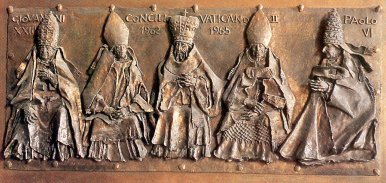
Second Vatican Council (1962-1965)
Photo Credit: Vatican Archives

In Chapter Seven of my work in progress, I tell two stories that played vital roles in shaping my young identity. These involved critical turning points within the Roman Catholic Church and the end days of European colonialism. What an interesting time to witness history in the making!

Beginning on October 11, 1962—after ninety-three years since the convocation of the First Vatican Council on December 8, 1869—between 2,000 and 2,500 Catholic cardinals, patriarchs, and bishops from all over the world, assisted by 460 theological experts, convened in Rome for the Second Vatican Council. For the first time, Protestants, Orthodox, and other non-Catholic observers were invited to assist. In attendance as observers were forty-two lay and religious men and women.

Meanwhile, in what was then British Guiana, our parents and grandparents were embroiled in the struggle for independence from Britain. Our country’s independence in May 1966 went way beyond constitutional change and self-governance. No longer socially inferior subjects of the former Mother Country, we the people also had to undergo the psychological process of “mental emancipation.” As I observed during my adolescence, the Church and State often disagreed on the means to achieve such profound changes of being and doing.

When I first drafted this chapter in 2017—yes, this project is years in the making—the MAGA administration of our 45th president held power in the White House. As I understood then, this rallying cry to “Make America Great Again” meant a return to the 1950s when the white male held power over non-white bodies and the female stayed at home to raise the family and serve her husband. I had visions of a return to life in colonial British Guiana. It meant a return, too, to my mother’s unhappy life as a stay-at-home working mother of five children and an abusive husband.

What a turn of events in the world’s richest and most powerful nation!

I imagine that this is not an easy time to be a young person in the United States. In addition to laws and regulations dictated by the Church and State, they must also contend with bullying and conspiracy theories on ubiquitous Social Media platforms. Added to that is gun violence in schools, colleges, and the public spaces where they socialize. For girls and young women, rights won by their mothers and grandmothers, through years of political activism, are being dismantled.

During my adolescent years, my steadfast faith in the teachings of the Catholic Church grounded me during those transformative years from a colonial country to a cooperative socialist republic. Moreover, as a young woman, I witnessed strong and courageous women lead the way forward. I feature three of these women in Chapters Eight to Ten.

Continue reading →
← Older posts
Newer posts →

Subscribe

  • RSS - Posts
  • RSS - Comments

Archives

  • March 2026
  • February 2026
  • January 2026
  • November 2025
  • October 2025
  • September 2025
  • August 2025
  • July 2025
  • June 2025
  • May 2025
  • April 2025
  • March 2025
  • February 2025
  • January 2025
  • December 2024
  • November 2024
  • October 2024
  • September 2024
  • August 2024
  • July 2024
  • June 2024
  • May 2024
  • April 2024
  • March 2024
  • February 2024
  • January 2024
  • December 2023
  • November 2023
  • October 2023
  • September 2023
  • August 2023
  • July 2023
  • June 2023
  • May 2023
  • April 2023
  • March 2023
  • February 2023
  • January 2023
  • December 2022
  • November 2022
  • October 2022
  • September 2022
  • August 2022
  • July 2022
  • June 2022
  • May 2022
  • April 2022
  • March 2022
  • February 2022
  • January 2022
  • December 2021
  • November 2021
  • October 2021
  • September 2021
  • August 2021
  • July 2021
  • June 2021
  • May 2021
  • April 2021
  • March 2021
  • February 2021
  • January 2021
  • December 2020
  • November 2020
  • October 2020
  • September 2020
  • August 2020
  • July 2020
  • June 2020
  • May 2020
  • April 2020
  • March 2020
  • February 2020
  • January 2020
  • December 2019
  • November 2019
  • October 2019
  • September 2019
  • August 2019
  • July 2019
  • June 2019
  • May 2019
  • March 2019
  • February 2019
  • January 2019
  • December 2018
  • November 2018
  • October 2018
  • September 2018
  • August 2018
  • July 2018
  • June 2018
  • May 2018
  • April 2018
  • March 2018
  • February 2018
  • January 2018
  • December 2017
  • November 2017
  • October 2017
  • September 2017
  • August 2017
  • July 2017
  • June 2017
  • May 2017
  • April 2017
  • March 2017
  • February 2017
  • January 2017
  • December 2016
  • November 2016
  • October 2016
  • September 2016
  • August 2016
  • July 2016
  • June 2016
  • May 2016
  • April 2016
  • March 2016
  • January 2016

Categories

  • About Me
  • Anthropogenic Climate Disruption
  • Brazil
  • Economy and Finance
  • Family Life
  • Festivals
  • Guyana
  • Health Issues
  • Human Behavior
  • Immigrants
  • Nature and the Environment
  • People
  • Philosophy
  • Poetry
  • Poetry by Rosaliene Bacchus
  • Recommended Reading
  • Relationships
  • Religion
  • Religion & Spirituality
  • Reviews – The Twisted Circle: A Novel by Rosaliene Bacchus
  • Reviews – Under the Tamarind Tree: A Novel by Rosaliene Bacchus
  • Save Our Children
  • Social Injustice
  • Technology
  • The Twisted Circle: A Novel by Rosaliene Bacchus
  • The Writer's Life
  • Uncategorized
  • Under the Tamarind Tree: A Novel by Rosaliene Bacchus
  • United States
  • Urban Violence
  • Women Issues
  • Working Life

Blogroll

  • Angela Consolo Mankiewicz
  • Caribbean Book Blog
  • Dan McNay
  • Dr. Gerald Stein
  • Foreign Policy Association
  • Guyanese Online
  • Writer's Digest
  • WritersMarket: Where & How to Sell What You Write

Meta

  • Create account
  • Log in
  • Entries feed
  • Comments feed
  • WordPress.com

Enter your email address to subscribe to this blog and receive notifications of new posts by email.

Join 3,087 other subscribers

Blog at WordPress.com.

Privacy & Cookies: This site uses cookies. By continuing to use this website, you agree to their use.
To find out more, including how to control cookies, see here: Cookie Policy
  • Subscribe Subscribed
    • Three Worlds One Vision
    • Join 3,087 other subscribers
    • Already have a WordPress.com account? Log in now.
    • Three Worlds One Vision
    • Subscribe Subscribed
    • Sign up
    • Log in
    • Report this content
    • View site in Reader
    • Manage subscriptions
    • Collapse this bar
 

Loading Comments...