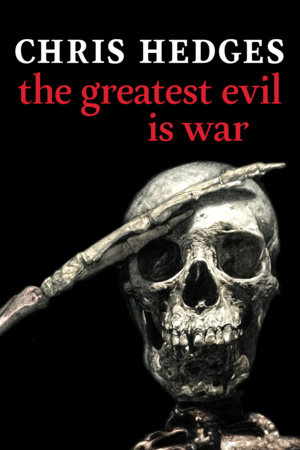
Front Cover: The Greatest Evil is War by Chris Hedges Photo Credit: Seven Stories Press (USA, 2022)
The crisis faced by combat veterans returning from war is not simply a struggle with trauma and alienation. It is often, for those who can slice through the suffering to self-awareness, an existential crisis. War exposes the lies we tell ourselves about ourselves. It rips open the hypocrisy of our religions and secular institutions. Those who return from war have learned something which is often incomprehensible to those who have stayed home. We are not a virtuous nation. God and fate have not blessed us above others. Victory is not assured. War is neither glorious nor noble. And we carry within us the capacity for evil we ascribe to those we fight.
Excerpt from The Greatest Evil is War by Chris Hedges, Seven Stories Press, New York, USA, 2022 (p. 77).
CHRIS HEDGES was a war correspondent for two decades in Central America, the Middle East, Africa, and the Balkans, including fifteen years with the New York Times, where he was awarded the Pulitzer Prize. He is the author of fourteen books, including War Is a Force That Gives Us Meaning and What Every Person Should Know About War. He holds a Master of Divinity from Harvard University and has taught at Columbia University, New York University, Princeton University, and the University of Toronto.
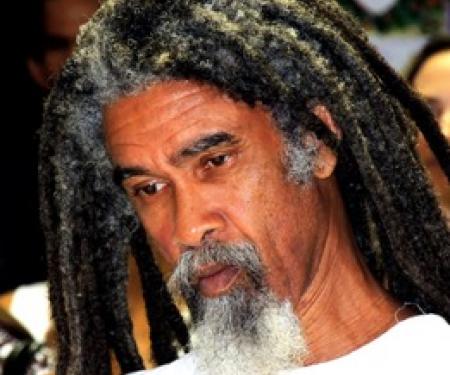
MyPoetry Corner February 2023 features the poem “Avocado” from the poetry collection Wordplanting by Kendel Hippolyte, published by Peepal Tree Press (UK, 2019). Born in 1952 in the Caribbean Island nation of St. Lucia, Hippolyte is a poet, playwright, and director. In the 1970s, he studied and lived in Jamaica where he earned a BA from the University of the West Indies in 1976.
He is the author of seven books of poetry. Fault Lines, published in 2012, won the OCM Bocas Prize in Poetry in 2013. In 2000, he received the St. Lucia Medal of Merit (Gold) for Contribution to the Arts. He lives in St. Lucia.
I do not usually feature very long poems, but Hippolyte’s fourteen-stanza poem “Avocado” captivated me with its compelling narrative, rich imagery, and Caribbean rhythm. As I question what will become of America with its deepening divide and a world seemingly hellbent on self-destruction, the first line drew me close. Attentive.
[Kindly note that Hippolyte is known for writing in Standard English (British spelling) as well as Caribbean English and Kweyol, his nation language.]
Jem Bendell uses the word “exceptionalism” in e-s-c-a-p-E ideology to describe two kinds of exceptionalism that cause him concern: firstly, that we and our kin are different and better, or at least more entitled than others and their kin; secondly, that humans are an exceptional species in natural history (Bendell, p. 135). He notes that, throughout history, we humans have acted as though our family, community, country, race, or religion are more important than others outside our sphere. These assumptions continue to create conflicts between us at home and worldwide. We rarely question our participation in systems of oppression and our complicity in the suffering they inflict on others. The degradation and destruction under colonialism of ‘ordinary’ humans and non-human lifeforms persist to this day.
Bendell observes that this exceptionalism also manifests in another detrimental way when people think that their difference as ‘exceptional’ beings will spare them from suffering the same fate as the rest of humanity. They act as though building bunkers, moving to New Zealand, buying farmlands, and such like, will give them an edge over the rest of us when catastrophe strikes. In this way, they lose opportunities for collaboration with ‘ordinary’ humans for solutions to our shared predicament.
The grandest exceptionalismis our story of humanity being separate, and completely different, from the natural world (Bendell, p. 137). This assumption is evident in some religions and in secular cultures. When we believe this to be true, we open the door to the destruction of non-human lifeforms and the natural world. Bendell invites us to answer the question ‘Why did humanity destroy so much life on earth?’
In the midst of our Christmas Day preparations, local meteorologists warned that a severe winter storm brewing over the Pacific Ocean was headed towards the U.S. West Coast. They described it as a densely saturated atmospheric river. Thanks to advanced technological methods for studying our atmosphere, we now know that the atmosphere can hold an entire river of water vapor. These rivers in the sky are about 250 to 375 miles wide and can be more than 1,000 miles long. That is an awful lot of water vapor. Californians living in high-risk zones for flooding and mudslides were put on high alert.
After seven months of mandated water rationing, due to California’s three-year drought conditions, I was elated about the news. My water-deprived plants would be happy. But the Sky God can be merciless or overzealous when answering our prayers for rain. Beginning on December 27, 2022, California was hit by wave after wave of intense storms that dumped more water than our outdated water infrastructure could handle. In the first week of the New Year, I braced myself for what the meteorologists described as a “bomb cyclone,” as shown in the captioned photo, captured by the National Oceanic and Atmospheric Administration (NOAA).
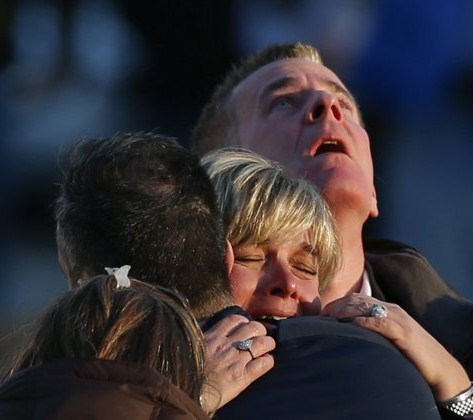
Who does not know the pain of loss? We call it grief. We call it bereavement.
The grandmother who loses her son to the coronavirus, leaving his wife and three kids behind, knows the pain of loss. The grandfather whose violent son-in-law takes the life of his daughter knows the pain of loss. The mother whose son takes his own life knows the pain of loss. The father whose daughter is killed during a police home raid knows the pain of loss. The wife who loses her husband of more than thirty years of marriage, after his long illness, knows the pain of loss. The husband who buries his wife killed during a mass shooting knows the pain of loss. The girl who loses her father during a bomb attack on their city knows the pain of loss. The boy who loses his mother following the birth of his baby sister knows the pain of loss.
We humans are all bound by the pain of our loss when a loved one dies or disappears from our lives. There is no escape.
As I struggle with another loss in my life, I hold onto the pain of loss I share with all of humanity. I know that I will rise once again above the pain.
Puerto Rican American Poet Martín Espada Photo Credit: Official Website
MyPoetry Corner January 2023 features the poem “Ode to the Soccer Ball Sailing Over a Barbed-Wire Fence” by Martín Espada from his poetry collection Floaters, winner of the 2021 National Book Award in poetry. Espada, a poet, editor, essayist, and translator, was born in Brooklyn, New York, in 1957 to a politically engaged Puerto Rican family.
After studying history at the University of Wisconsin-Madison, Espada earned his law degree from Northeastern University-Boston. For many years (1987-1993), he was a tenant lawyer and legal advocate for low-income, Spanish-speaking tenants in Chelsea, Massachusetts, a town across the Tobin Bridge from Boston. Today, he teaches poetry and English at the University of Massachusetts-Amherst.
Jem Bendell uses the word “progress” in e-s-c-a-P-e ideology to describe the assumption that material progress is possible and good for the advancement of human civilization. This assumption or narrative of progress, he argues, means that new technologies and ideas are given the benefit of the doubt, and the hidden or unforeseen costs of those ideas tend to be downplayed or fixed with even less tested ideas (Bendell, pp. 134-135). In prioritizing our drive for progress, we humans push ahead to use technologies that disrupt Earth’s natural systems and unravel the Web of Life upon which human societies depend. The Men of Progress reject any alternative way of organizing society that does not guarantee them material or financial gains. Capital accumulation reigns.
Without a doubt, I have benefited from humanity’s technological progress. Thanks to this progress, I enjoy a comfortable life with all my needs met for energy, food, shelter, and water. With just a click, I can connect with others worldwide. Motor vehicles, trains, and planes make getting together with loved ones so much easier and less time-consuming. Advances in medicine lengthen my lifespan. What is there not to love about human progress?
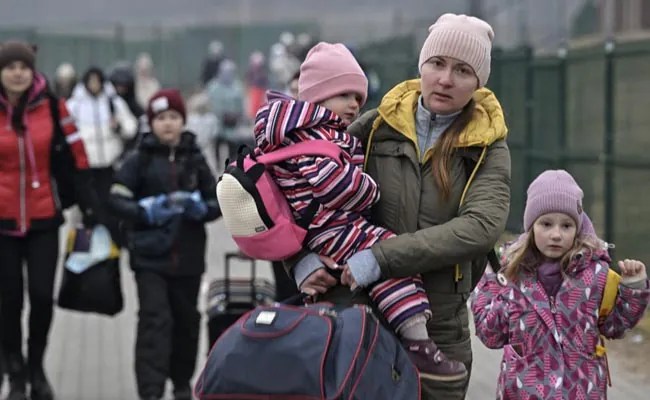
Mother and children flee war-torn Ukraine Photo Credit: NDTV
When measured by the word-count for my third book in progress, Year 2022 was not a productive one. All my efforts to refocus and get back on track produced only a rewrite of the Introduction and Chapter One. Two major events early in the year derailed my efforts: Russia’s invasion of Ukraine on February 24 and my reading of Deep Adaptation: Navigating the Realities of Climate Chaos (UK & USA 2021), edited by Jem Bendell and Rupert Read.
What is wrong with the Men in Power of our world!? How can we waste human energy and taxpayers’ money on war games when humanity is faced with an unraveling climate and ecological crisis? More than ever, our society needs more women in top decision-making positions worldwide. After all, we are the ones who suffer the most when calamity strikes our communities.
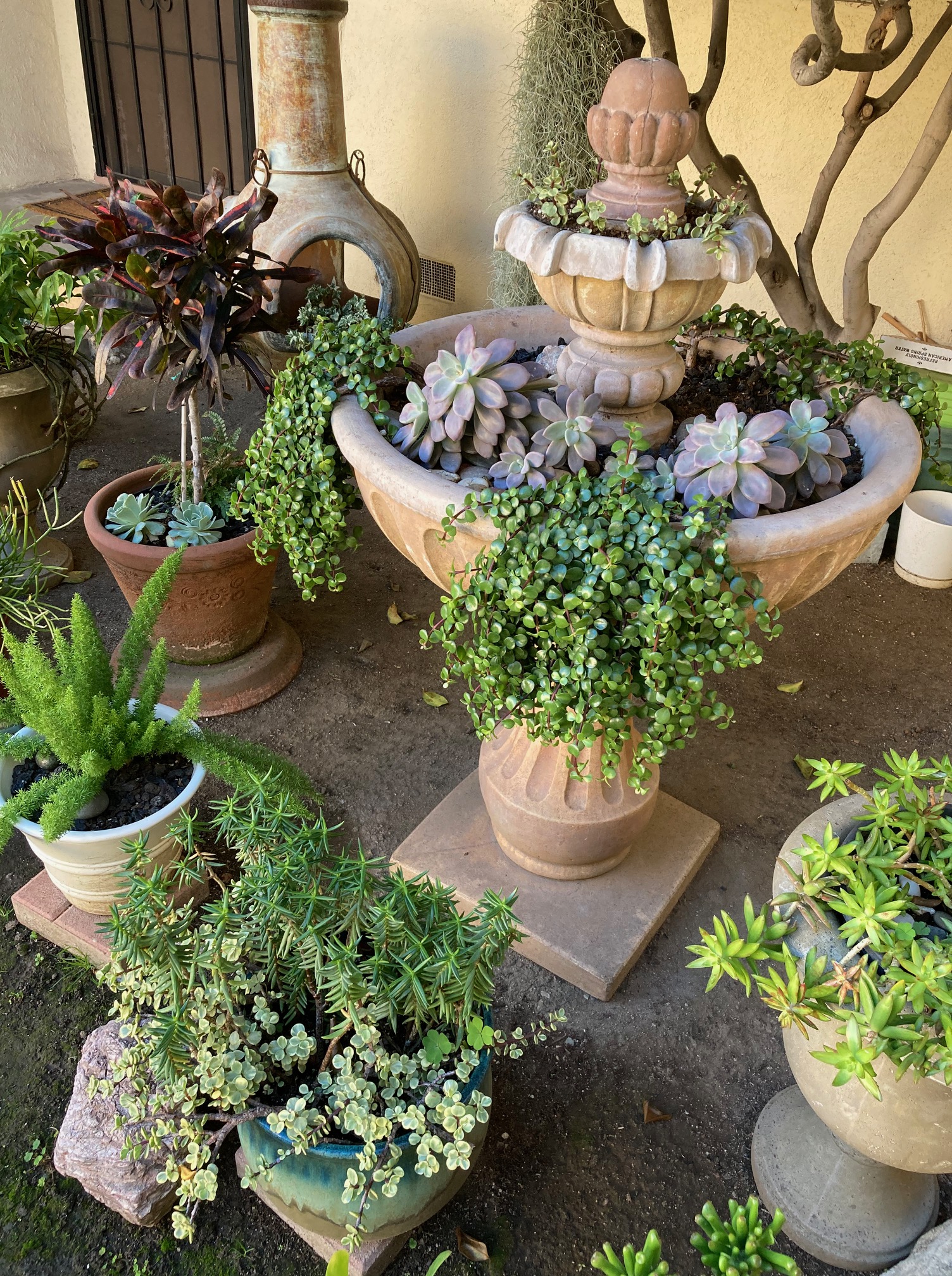
Rosaliene’s Succulent Garden – Los Angeles – Southern California – December 8, 2022
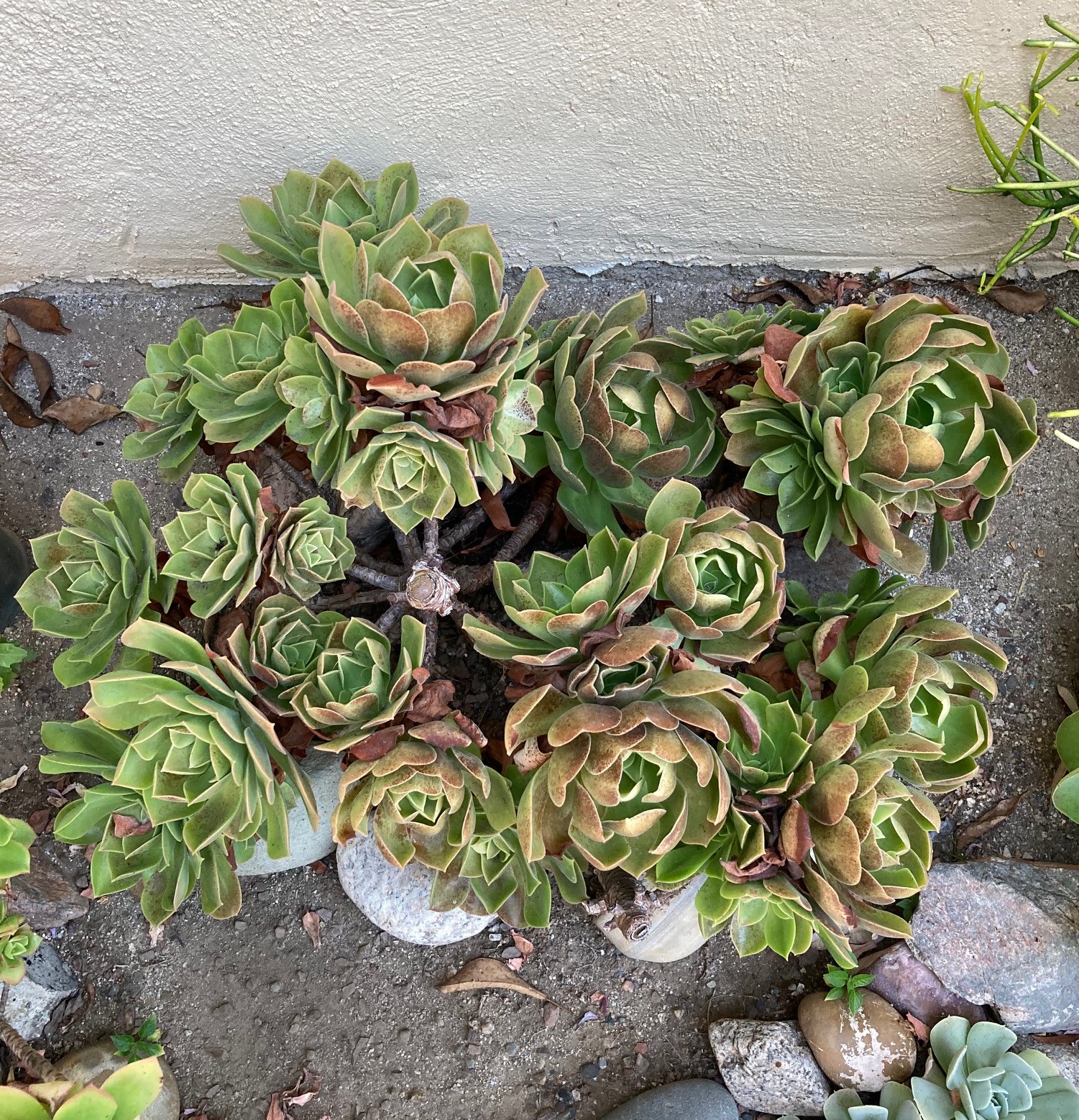
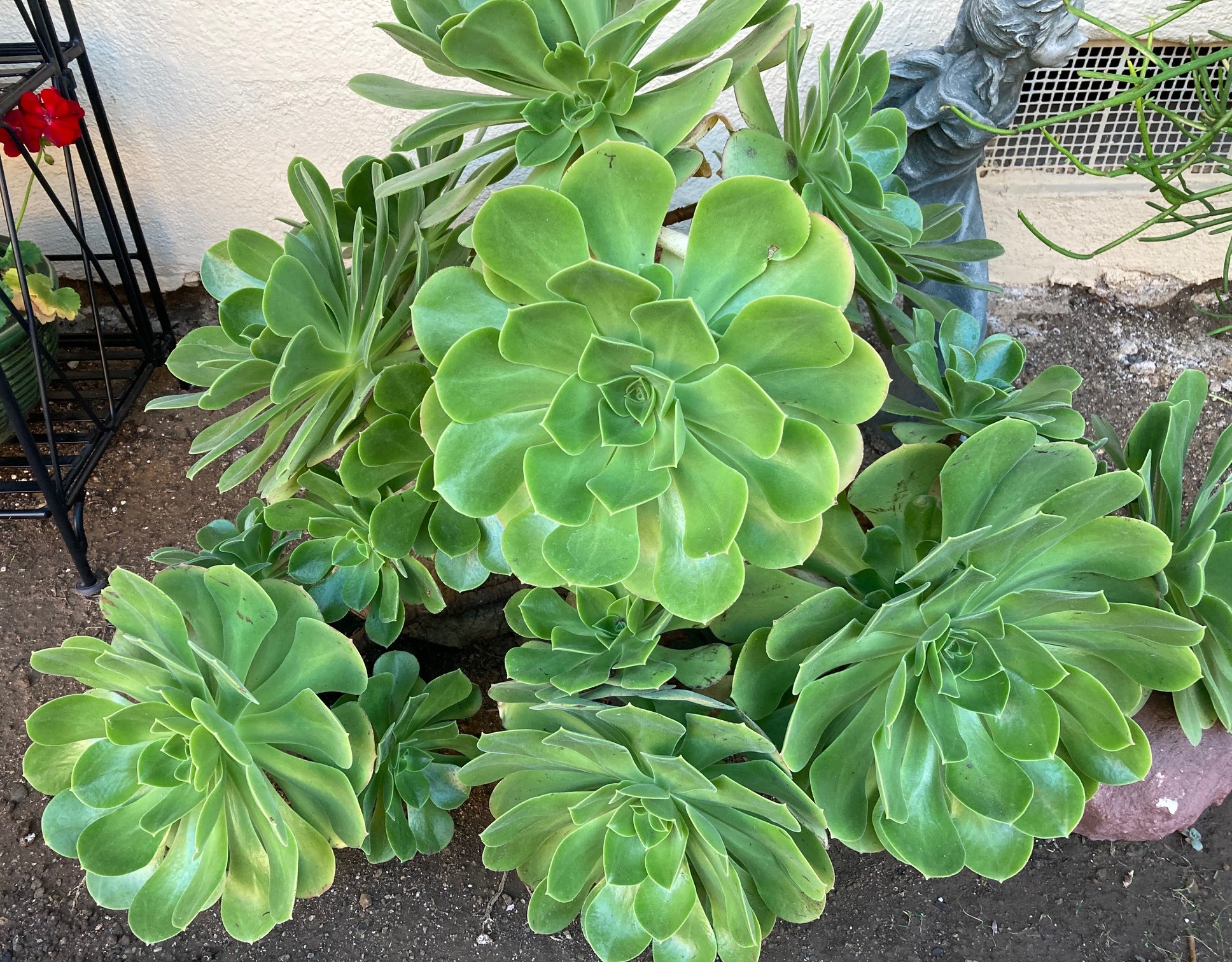
In August, I shared my challenge of “Creating a drought-resistant garden in The City of Angels.” By October, I completed the painful task of uprooting the plants struggling to adapt to our extreme heat and drought. I’m happy to report that most of the plants have adjusted well to once-a-week watering, a fifty percent reduction.
Not surprisingly, the Aeonium Mint succulent plants suffered the most. I uprooted three plants in areas where they faced over four hours of intense afternoon sunlight. What a difference from their cousin, shown on the right, that receives only a few hours of direct sun in the morning!
Aeonium Mint – Afternoon Sun – September 28Aeonium Mint – Morning Sun – September 28
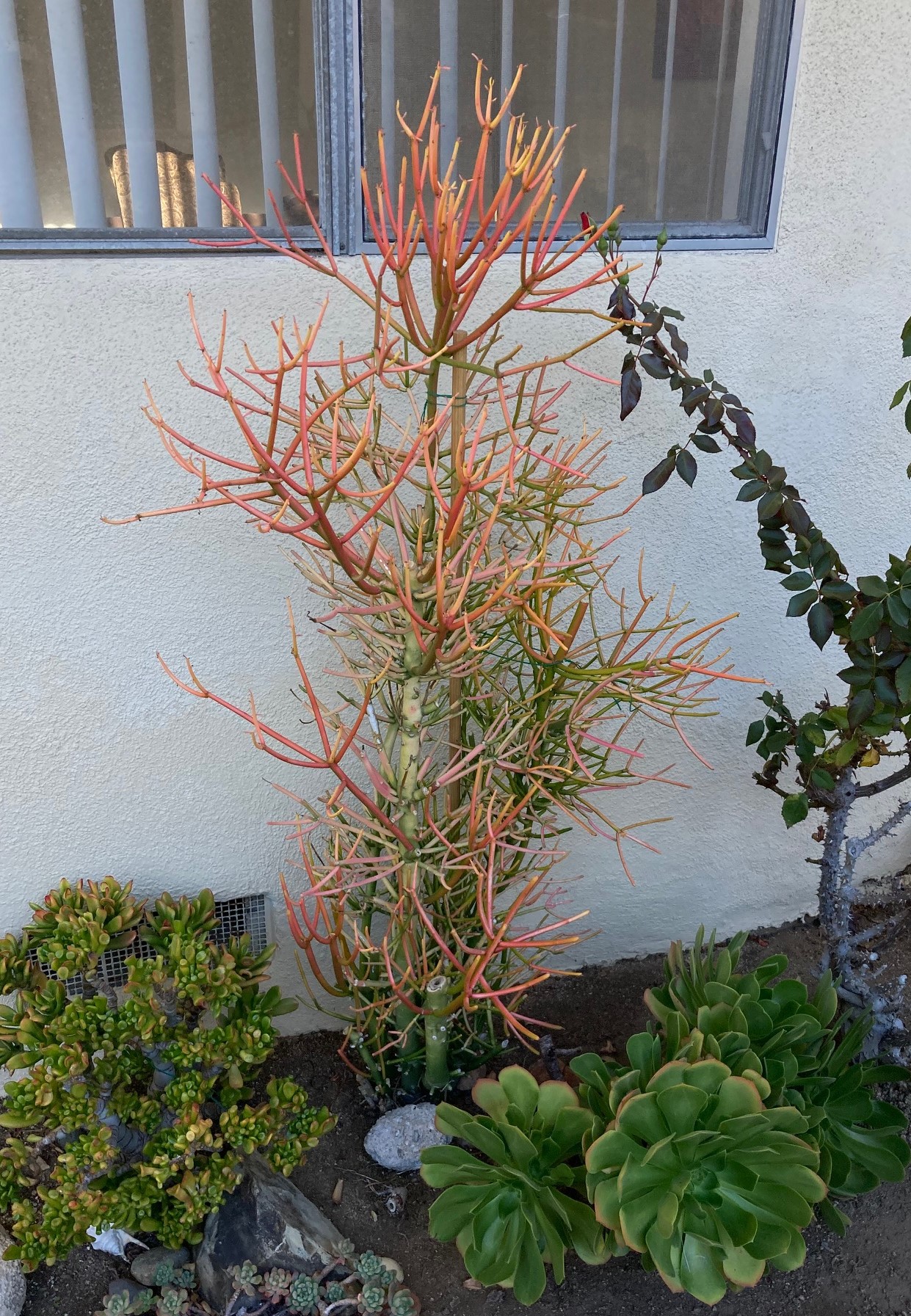
The expansive, five-foot-tall Pencil or Firestick plants have all partially collapsed. After cutting off the collapsed branches and trimming the fleshy stems, I fortified the remaining branches with wooden sticks, as shown in the photo below. The Firestick is my favorite succulent plant for adding height and color—red, orange, yellow, and green—to a succulent garden with few seasonal flowering plants.
Pencil or Firestick Succulent Plant – December 8
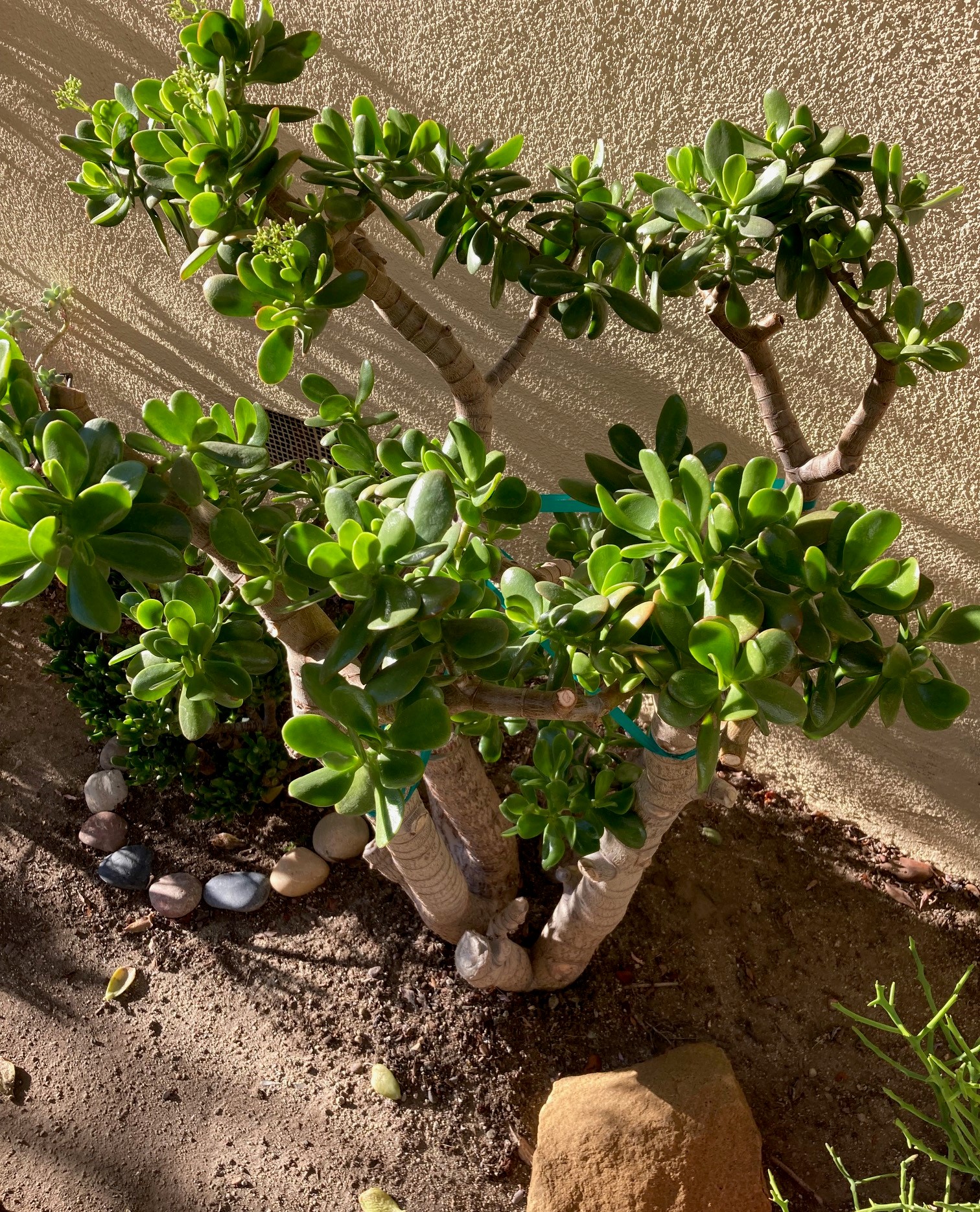
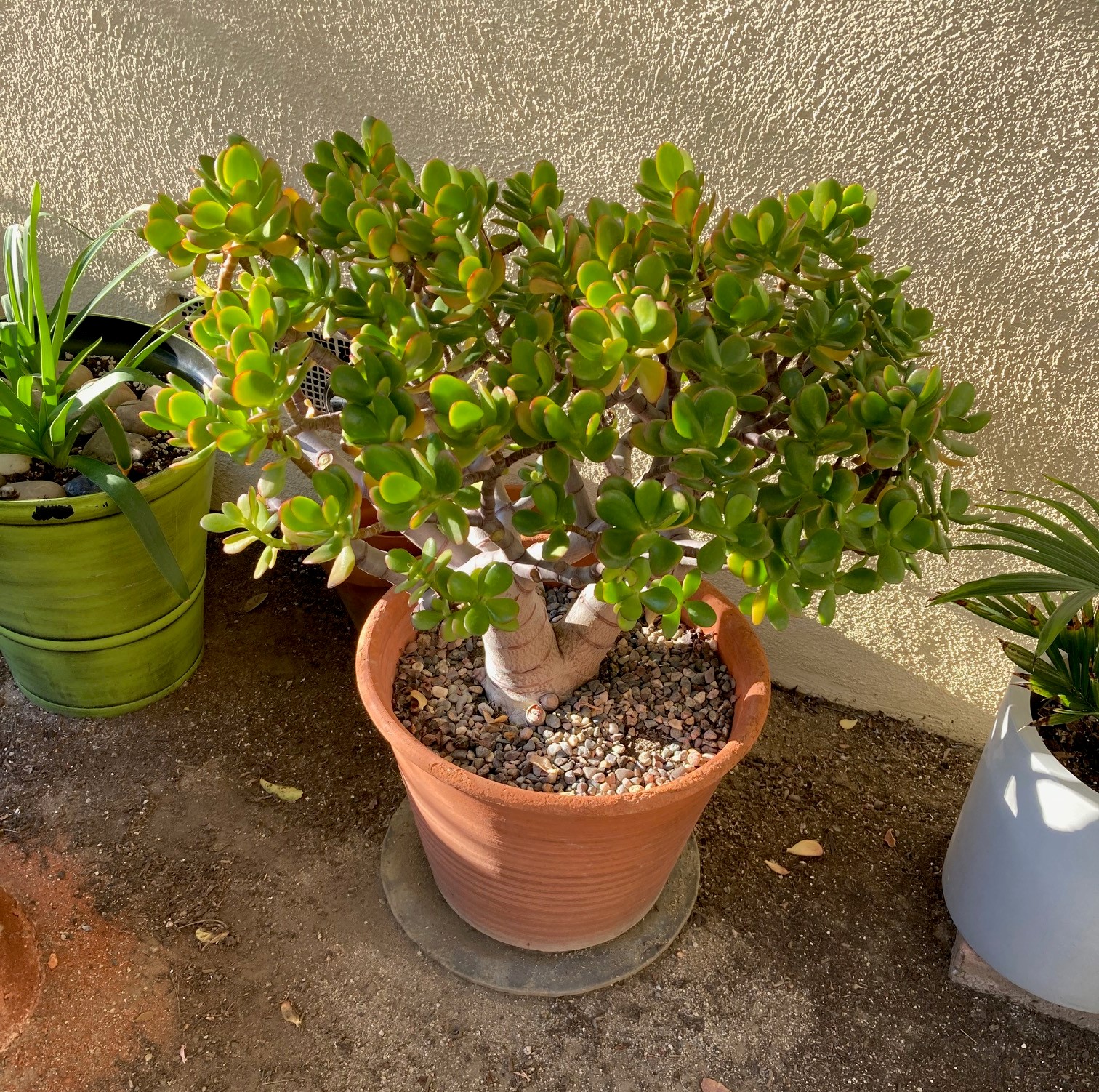
The ten-year-old, three-foot-tall jade plant, rooted in the ground, is also not happy with water rationing. On Thanksgiving Day, another branch collapsed. I sliced off the branch and did a general pruning to reduce the weight on the remaining branches. To prevent another collapse, I secured all the branches together with green ribbon, as pictured below. I’m considering the painful choice of cutting down the plant; I will wait and see if it recovers with less evaporation over the winter months.
The potted jade is doing very well. I marvel at the way plants adapt to the confining space. As shown in the photo to the right, the leaves with orange edges are much smaller than its all-green, earth-rooted relative.
Jade Plant – December 8Potted Jade Plant – December 8
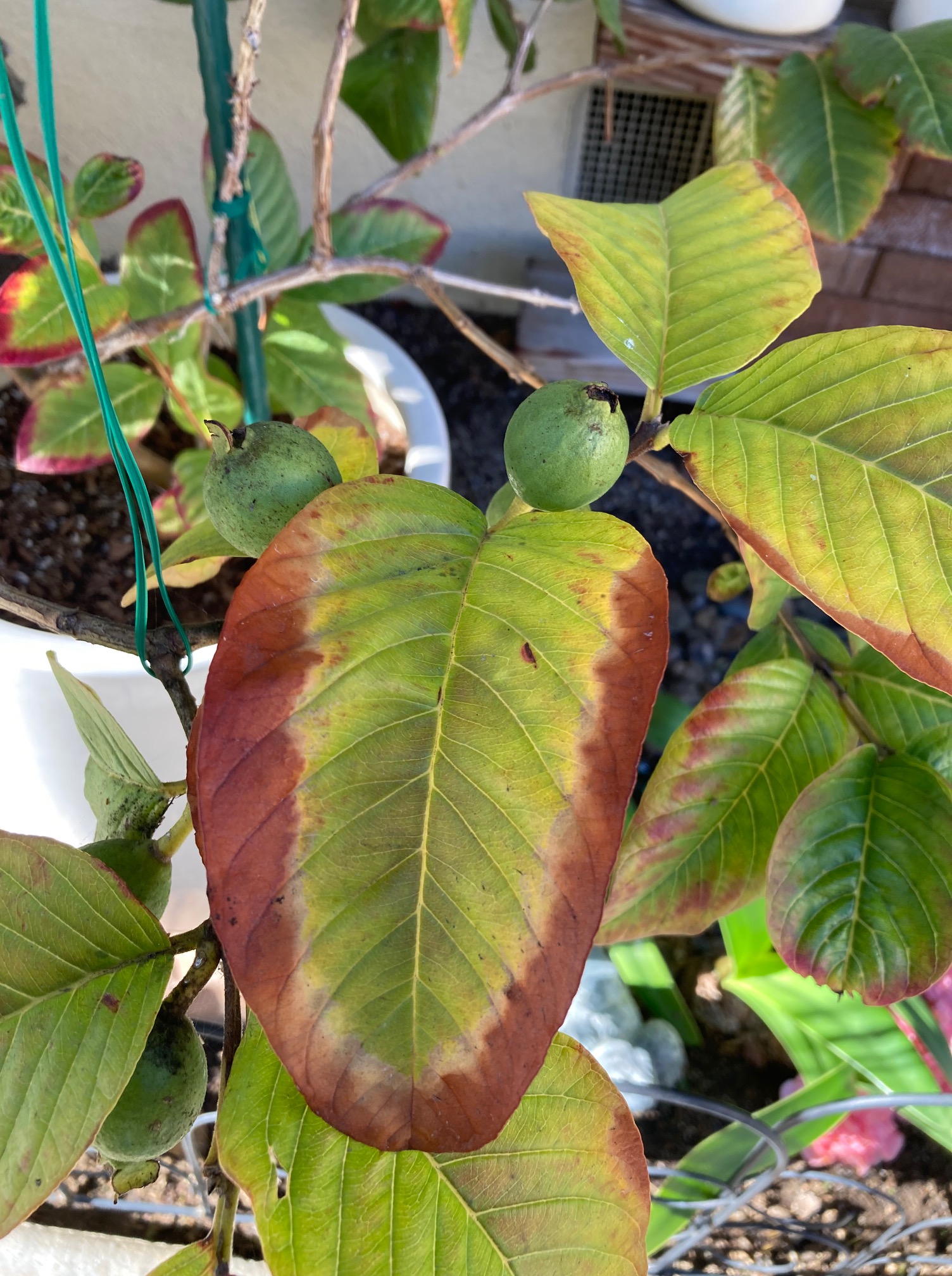
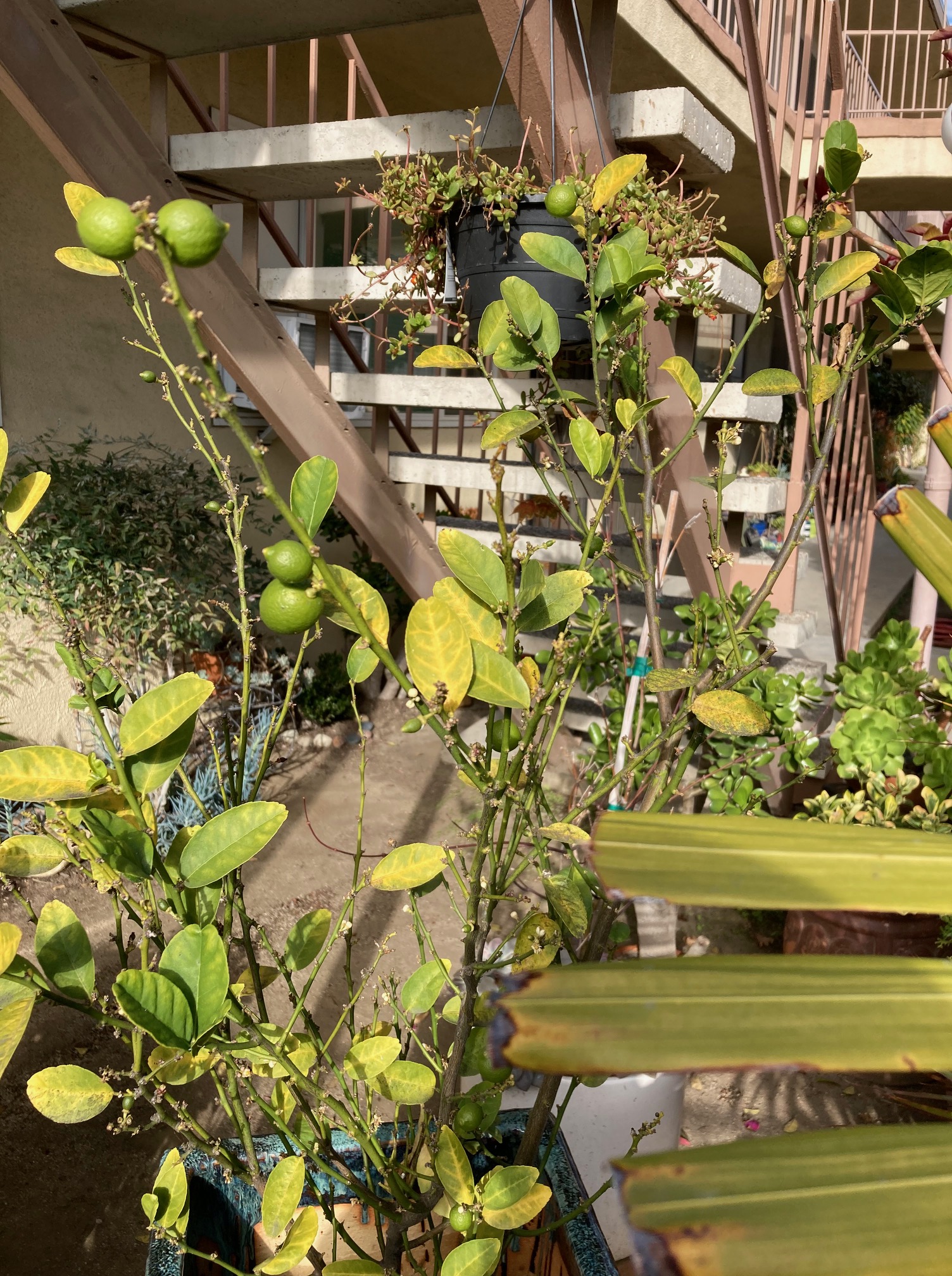
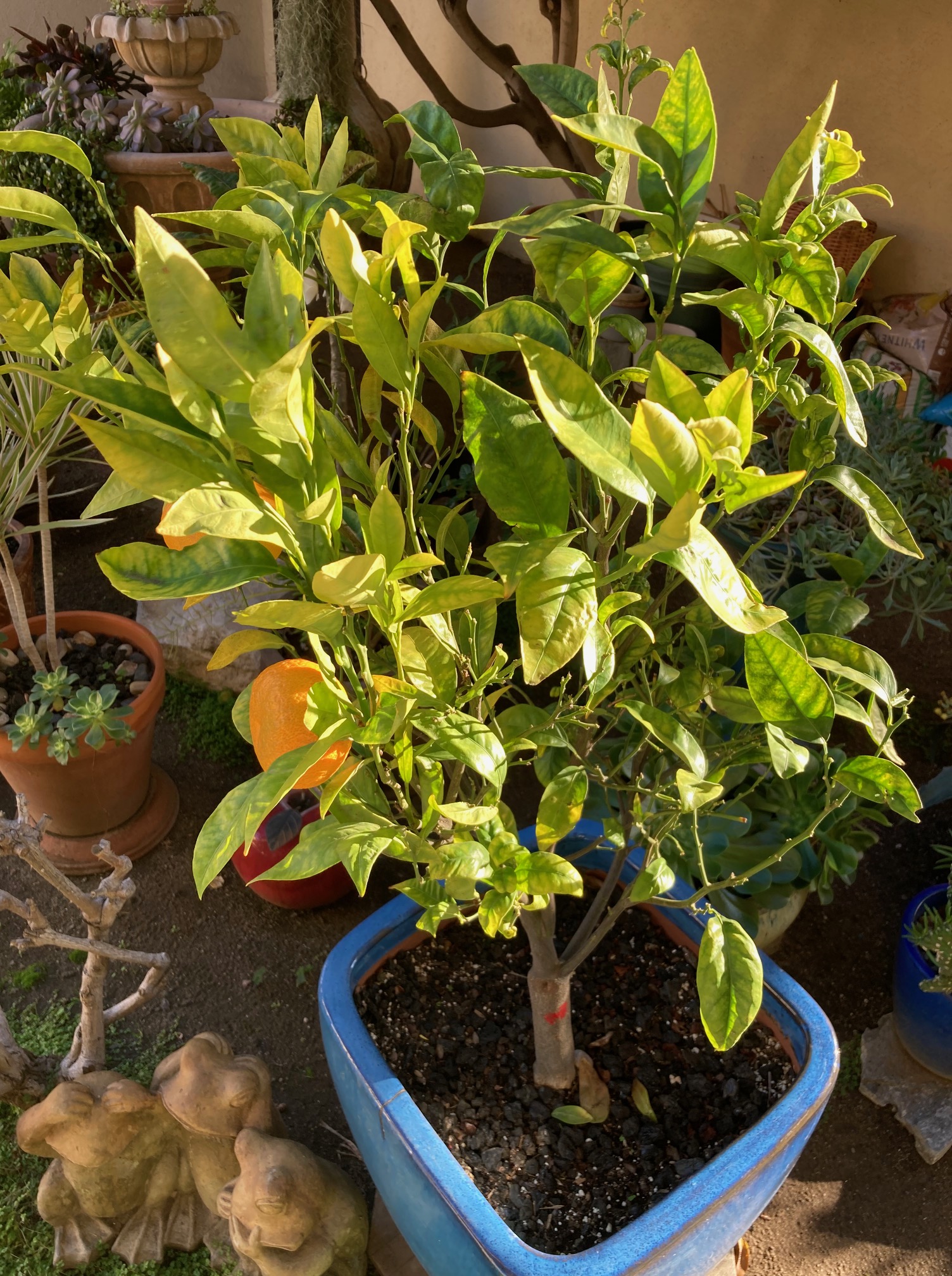
I reserve the gray water I save after domestic use for my son’s three potted fruit trees—guava, lime, and orange—as well as my vegetable plants. The infrequent visits of Mother Nature’s pollinators have been the greatest constraint for our dwarfed fruit trees. After several years of watching their blossoms fall from the stems, I was surprised this year to see the appearance of two oranges, five guavas, and several limes. The lime tree has shed most of its leaves following the drop in temperatures.
Potted Guava Tree – December 8Potted Lime Tree – December 8Potted Orange Tree – December 8
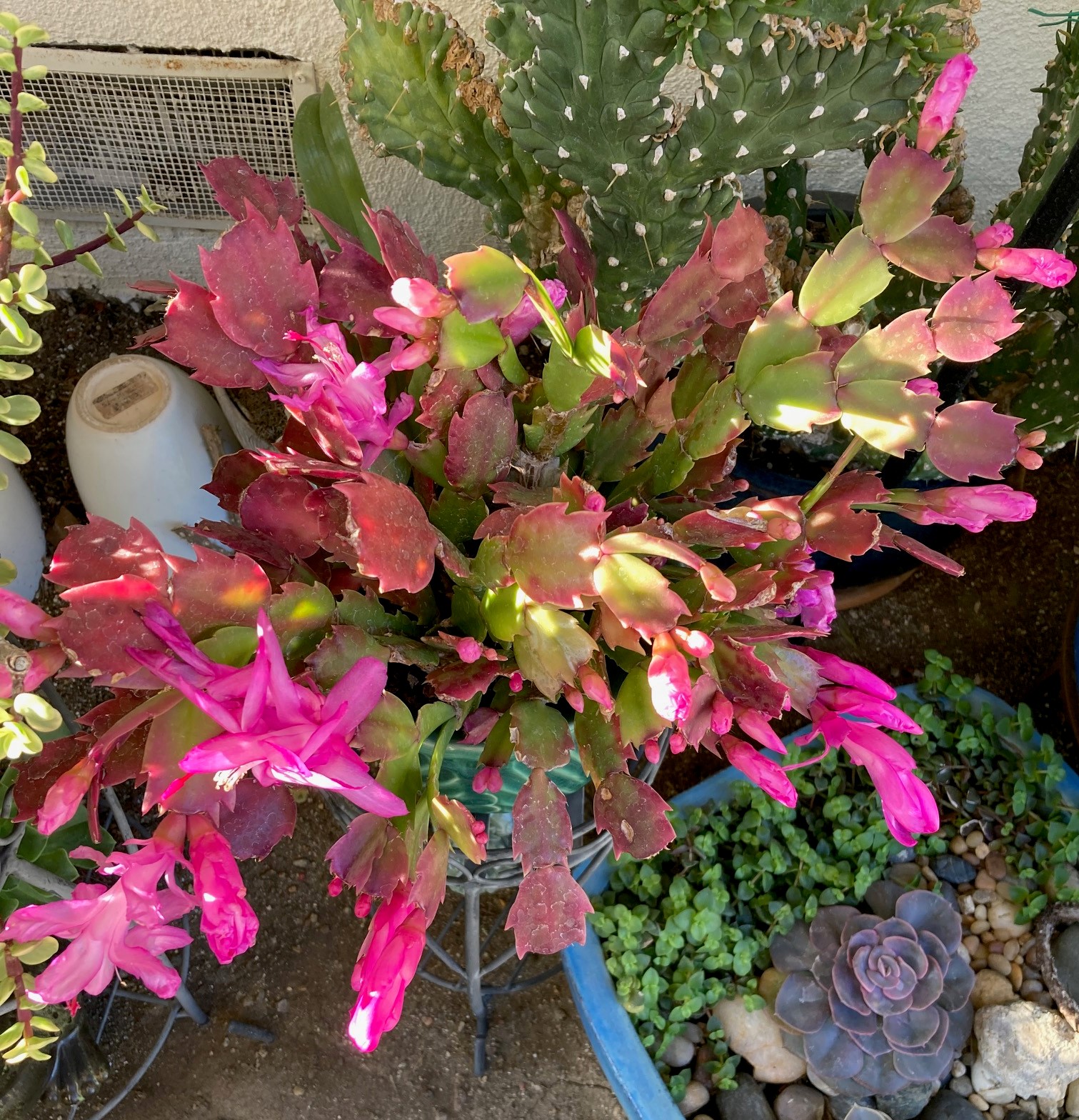
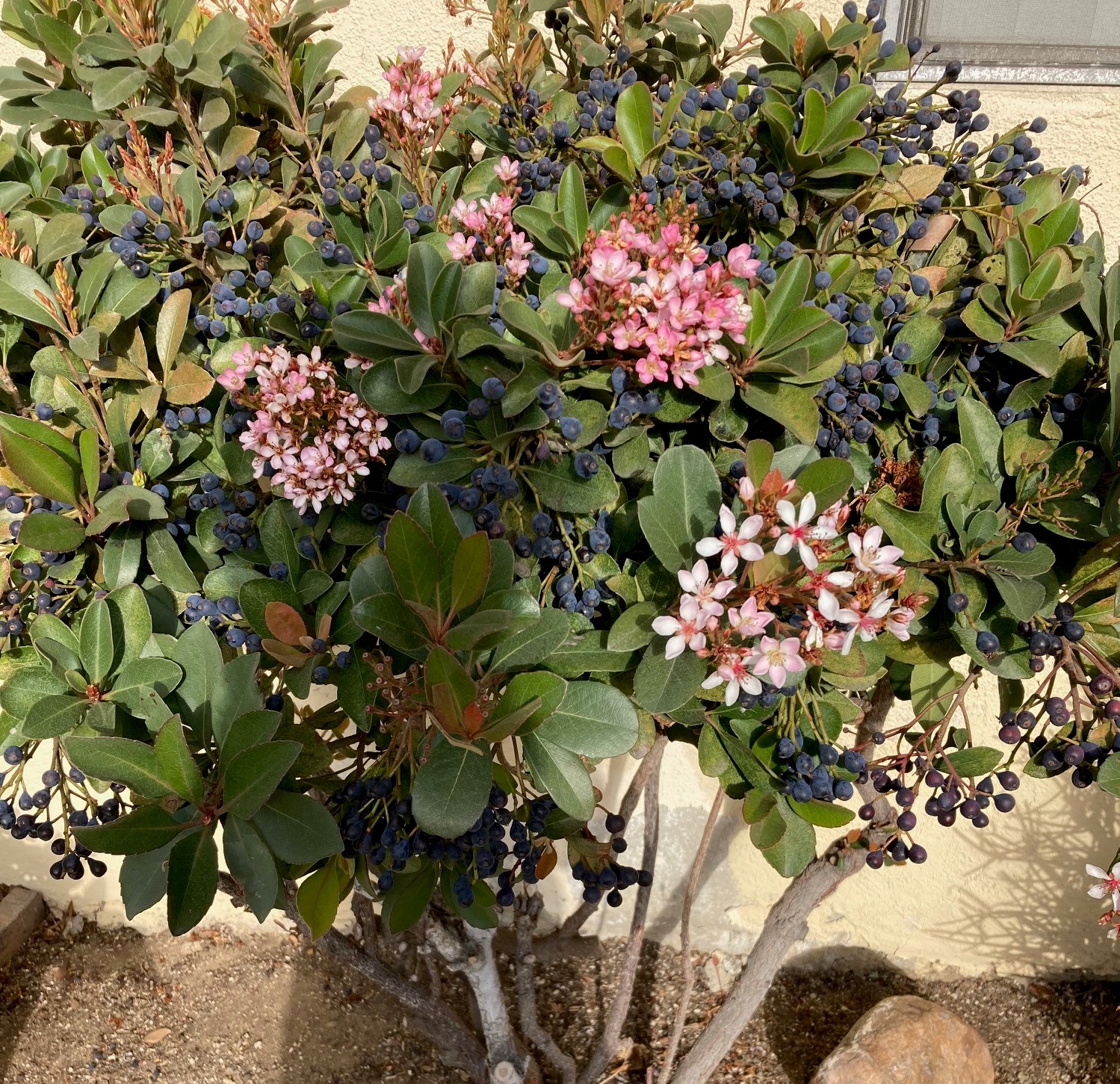
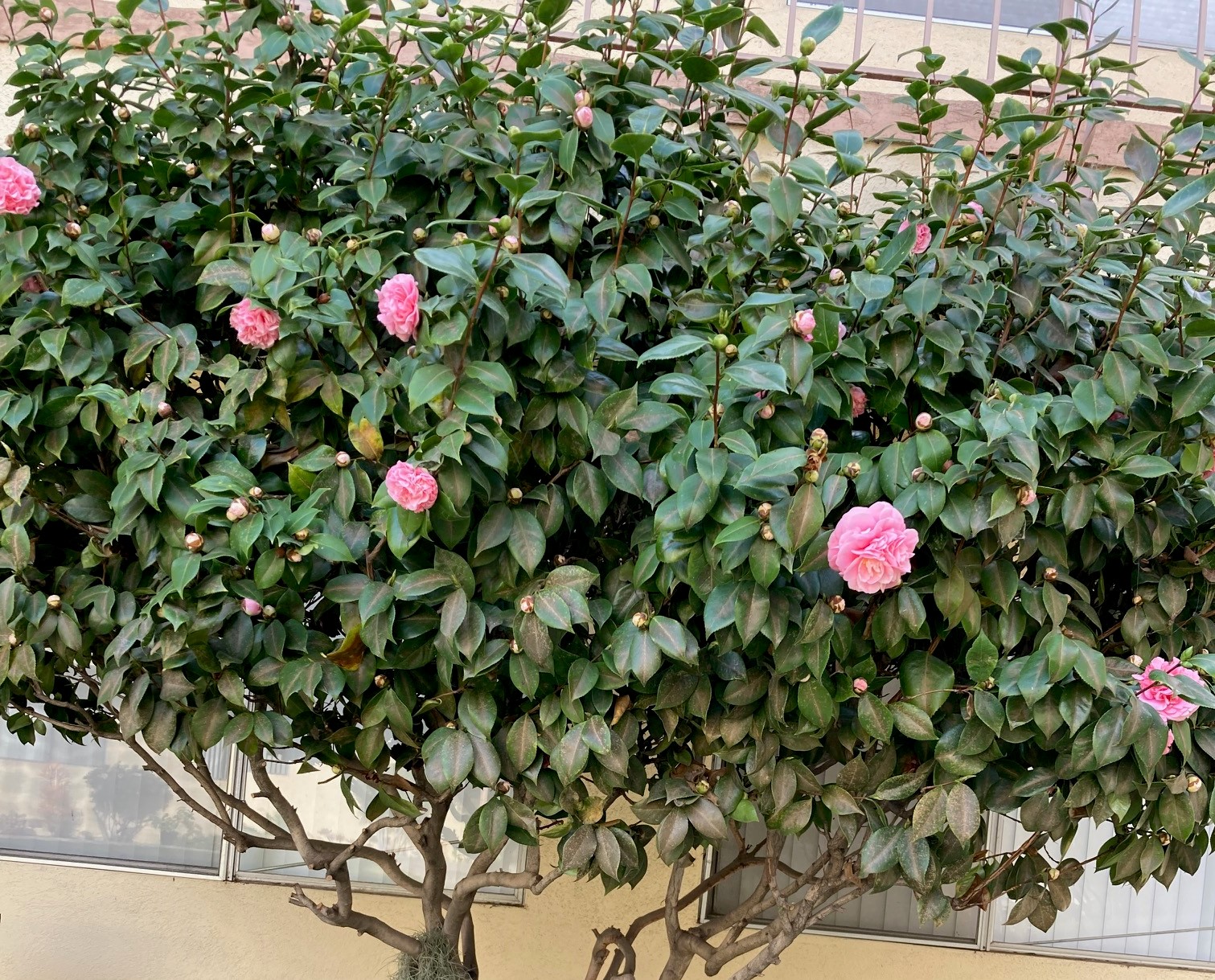
The Christmas Cactus is now in full bloom, adding color to my garden plot. But it’s the Camellia trees—now laden with buds and early flowers of pink, red and white—and an Indian Hawthorn shrub that steal the show at this time of the year. (All photos were taken on December 8.)
Christmas CactusIndian Hawthorn ShrubCamellia Tree
NOTE: The captioned photo is a section of our largest garden plot, located across from my apartment.
Jem Bendell uses the word “autonomy” in e-s-c-A-p-e ideology to describe the idea among the modern dominant culture that each of us is the separate autonomous origin of our awareness, values and decisions, and that it is good to become more autonomous (Bendell, p. 133). He asserts that this assumption is false. Instead, our ability to conceptualize, communicate, and perceive stimuli are built on social constructs and conditioning of our culture and upbringing. Even our free will is socially conditioned. We also cannot ignore the influence of human physiology in defining our nature of being.
I am one of those individuals who believe that I have the right to personal autonomy or self-determination, as I prefer to call it. Over the years, I have discovered that achieving self-determination has its limitations based not only on where one lives on this planet, but also on one’s gender, religion, race, income, and social status.
Earlier this year, millions of American women of childbearing age have lost their right to decide when to start a family, the spacing and size of their family, or not to have children at all. More recently in September, Iranian women took to the streets to protest morality police enforcement of hijab rules that endanger the lives of women who dare to expose their hair in public spaces.
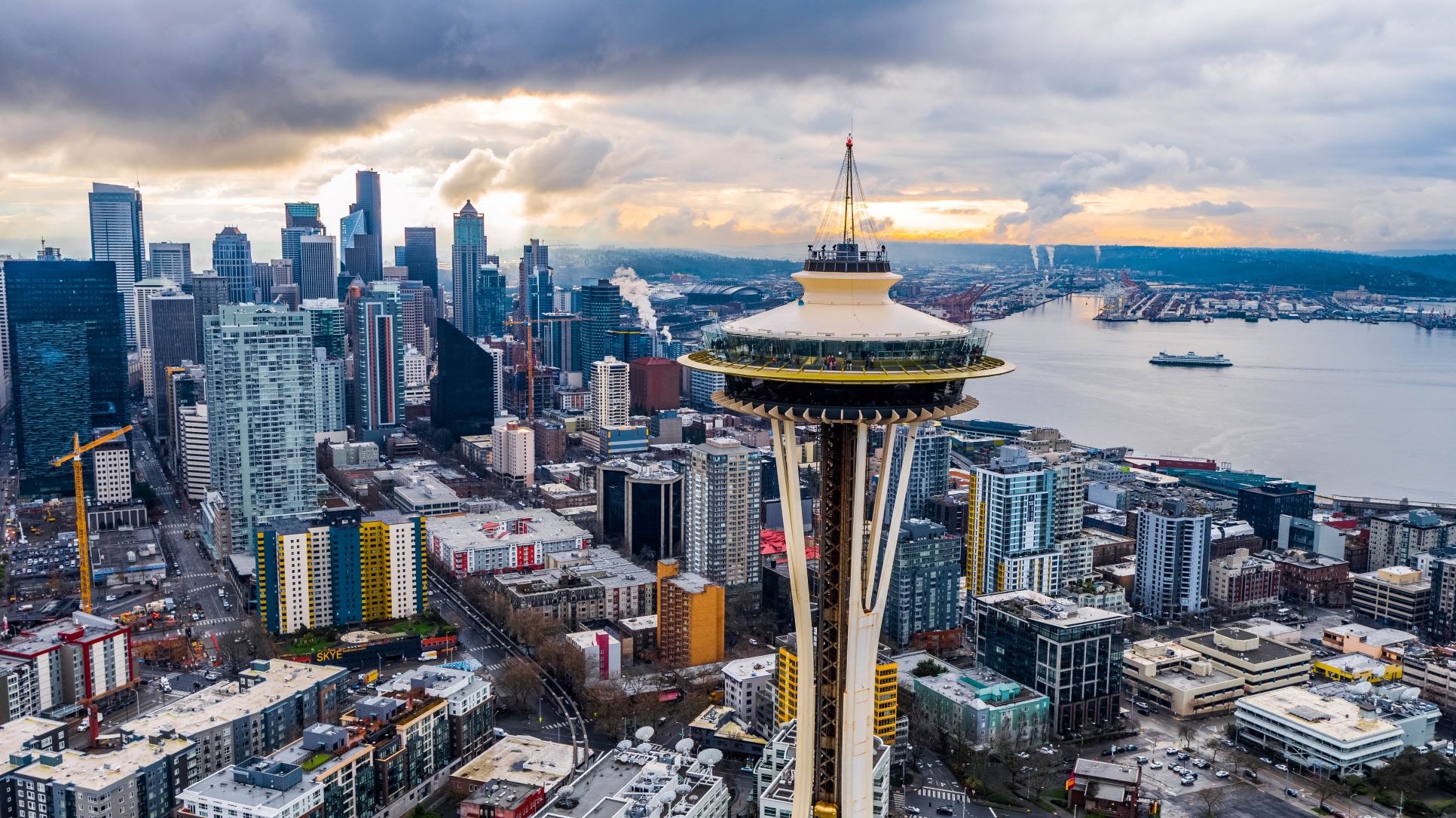
Autonomy based on developing one’s own individual self is a more complex concept that I have yet to fully grasp. This emphasis on individualism goes against my own view of our interdependence as a species within the web of life and dependence upon the contributions of others within society. On the other hand, I have learned from living within three distinct cultures—Guyanese (British Caribbean), Brazilian, and American—that social constructs and conditioning of our culture and upbringing do, indeed, influence our self-awareness and vision of the world.


 Three Worlds One Vision
