
Tags
American Poet, Living in a Fat Body, Male Body Image, O Body by Dan “Sully” Sullivan, Poem “Watch” by Dan “Sully” Sullivan
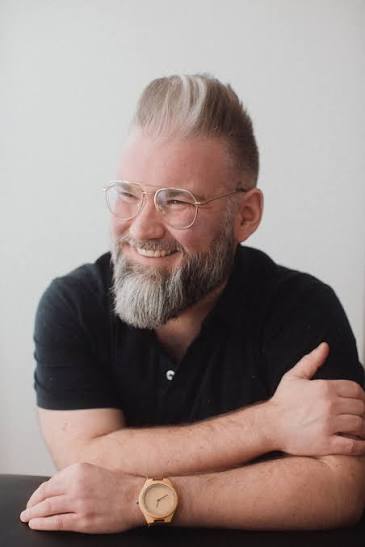

American Poet Dan “Sully” Sullivan
Photo Credit: Sullivan and Sullivan Studio, Poet’s Official Website
Front Cover – Poetry Collection O Body by Dan “Sully” Sullivan
Photo Credit: Haymarket Books
My Poetry Corner July 2026 features the poem “Watch” from the poetry collection O Body (Haymarket Books, 2023) by Dan “Sully” Sullivan, an American poet and educator based in Bloomington, Indiana, with nearly two decades of experience in Open Mic Poetry performance and teaching. Born in Chicago, Illinois, he earned an MFA and MA in English Literature and Creative Writing from Indiana University (2016-2019). Since 2019, he holds the position of Student Support & Registration Representative – Advance College Project at the university.
O Body, Sully’s second full-length poetry collection, delves into questions of masculinity, fatherhood, home, and learning to live in and love one’s own body.
We learn in “Wave Built in the Form of Prayer” that the speaker/poet is on the heavy side (pp. 13-14):
I get this gravity from my mom’s side. My father was always thin
& I don’t mean to speak of him like he’s dead—he’s not
thin anymore. I know the earth pulls us closer as we age, but his softer
body does not make me think of tombs. I think of passage & mirrors.
But this poem, as well as the collection, is also entwined with his relationship with his birthplace, Chicago, where he grew up and learned to be a man and navigate the world. Is it possible to separate our body, our being from the physical spaces that we occupy?
My relationship with my body/city has always been
complicated. I am never sure if it is mine….
I am on the outside & inside
simultaneously.
In “The Best Stories,” we learn that the speaker/poet was bullied in first grade (6 to 7 years old) for his fat body (pp.15-16):
I’m not sure when I first felt fat.
I do know that my first-grade teacher
told me to pull my shirt down
while reading out loud to the class
because my belly was hanging out.
Though he fought back against the bullies, the speaker/poet still carries a rage of those years. Loving a body ridiculed by others takes time.
… I know rage erupts
from large shadows in my gut.
Even today, as a man taking up space,
my rage is a child I struggle to know
how to hold….
Scattered throughout the collection are seven poems with the same title “On Looking at My Own Body.” The second poem expresses the speaker/poet’s discomfort with his body even in his wife’s presence (p. 18):
Whitney apologizes for posting a picture of me online without a shirt on as if she anticipates the way I wince when I catch myself on screen. I don’t want her to see me feeling unattractive…. It must be freeing for some folks not to think about their body when they walk into the office or a classroom or a bedroom. There is no easy way to feel uncomfortable….
In his fifth poem titled “On Looking at My Own Body,” the speaker/poet shares his story of losing 17 pounds over 14 months on a diet of smoothies and a strenuous exercise routine. But an 18-year-old student in his classroom is not at all impressed with his progress (p. 43):
[The student] pushes out I know YOU aren’t lifting as if I needed my own student pointing to my body with his words first thing on a Tuesday. No matter how much better this baby blue button-down fits than it did a week ago, language can always shape itself into funhouse mirrors.
The birth of his daughter opens the speaker/poet’s eyes to the patriarchal bias against the woman in the biblical New Testament. In the poem “House Built in the Form of Prayer,” he questions his own privilege as a person in a male body (p. 54):
… Mostly, I know of all the sons [Jesus] healed: the official’s boy in Galilee, the widow’s / in the book of Luke, then lepers, the deaf & blind. What miracles does Jesus do / for our daughters? I know what mothers do. I know the praise of strangers when I walk / the walk of grocery aisles with my daughter strapped in the cart— / what a good dad I must be, how present. How invisible it is when my wife shops for the same meals…. How often does / the bible use the word mother? What sacrifice. How do I use the word? / How is mother used? What answer. What saving grace. What act of noticing.
In the featured poem “Watch,” we accompany the speaker/poet as he navigates public spaces as a white male with a fat body (pp. 34-35):
Watch:
how, on your way in, the sweats you wear to meet unspoken dress codes draw glances.
how lobby small talk makes their eyes flit from your face to your shoulder to behind you,
how you might not even get that, like there’s someone more important on the room’s horizon.
how they see through you, despite any amount of body you have.
how people side-eye you on the treadmill then look away, quick.
how some guy opts for the next aisle over in the locker room like fat is infectious.
how your face undoes itself when it finally reaches the bathroom mirror.
how your shoulders unclench from their perceptive coils.
how you breathe when alone in your thoughts.
how your jaw eases when you get off your tenterhooks.
This invisibility, disconnection, and avoidance all change when he enters an empty pool. Gliding across the pool, he notices how the water responds to your gentle touch. Even when you push the water away, it still envelops you. He closes with the realization:
how it is just you, amassing the air you need.
how it is just you.
how everything here must move & then return.
In this moment, the rage of his inner bullied child is at peace. He finds acceptance of his body enveloped in the healing and life-giving water. He adapts his body/his being to the flow of life’s changes and challenges.
To read the complete featured poem “Watch” and learn more about the work of American poet Dan “Sully” Sullivan, go to my Poetry Corner July 2026.


the excerpts are interesting, thanks for sharing…
LikeLiked by 2 people
Thanks very much, fmd. My pleasure in sharing.
LikeLiked by 2 people
I hope his words help others be at peace with who they are. So many people judge others on a glimpse and never get to know the real person inside. Happy Sunday Rosaliene. Allan
LikeLiked by 3 people
Allan, that’s also my hope in sharing Sully’s poetry. I’m also guilty of judging others on a glimpse.
LikeLiked by 2 people
Interesting self-reflective poetry and poet, Rosaliene!
LikeLiked by 2 people
Thanks very much, Dave. The poet’s openness about male body image came as a surprise for me.
LikeLiked by 2 people
Yes, not the usual male-writer approach!
LikeLiked by 2 people
For sure!
LikeLiked by 2 people
When I saw the photo — before reading the post. I noticed two things. First, how sculpted Mr. Sullivan’s face, hair, and beard appear. Not unattractive, but drawing my attention. After reading the thoughtful poetry, I looked again. This time I saw Mr. Sullivan’s arms across his body, making me unable to see much of his chest and all that was lower. His words create more attention to his body than would otherwise occur, I imagine. In any case, his is a talented man who has nothing I could see to be concerned about in his body as it is, at least no more than most of the rest of us. Thanks to Mr. Sullivan and to your featuring him, Rosaliene.
LikeLiked by 2 people
Dr. Stein, thanks for sharing your observations of Sully’s latest photo. I assumed that readers would realize that his poetry collection was published in 2023 and covers his struggle with his weight since childhood. I did find an earlier photo of him when he carried a larger body size. I was happy to see that his regime for losing weight has paid off.
LikeLiked by 2 people
Interesting choice. I don’t often think of men being as concerned about being “fat” as women. Our culture seems to put more pressure on women to have bodies that look a certain way, and I’ve generally been ambivalent about mine. I appreciate the opportunity to consider this man’s perspective. (I also appreciate him bringing up men getting praise for parenting in public while women doing the same are taken for granted.) Bullying can have powerfully harmful effects. Water has powerfully healing effects. Water was our first environment and makes up most of our bodies.
LikeLiked by 3 people
JoAnna, I also found it interesting that men also feel the pressure, like women, for being overweight. Yes, I had to share that bit about men getting praise for parenting in public. The poet’s reflections on the healing power of water brought to mind Bruce Lee’s philosophy for his success as a martial artist: “Be like water, my friend.”
LikeLiked by 3 people
I did not know about Bruce Lee’s philosophy as a martial artist being such a tribute to water. It makes sense, though. Thank you!
LikeLiked by 2 people
🙂 ❤
LikeLiked by 2 people
A profoundly honest reflection
LikeLiked by 2 people
I thought so, too, Derrick.
LikeLiked by 2 people
Thanks for sharing this poet. As someone who has never had to struggle with weight gain (yet somehow convinced myself I was too large in places as a teenager), this is an interesting perspective. Our society not only promotes obesity but often makes unhealthy lifestyles inescapable. Also interesting how he talks about his body as if it isn’t his. I can relate to that for some reason.
LikeLiked by 2 people
I need to add that I don’t mean to suggest he is living an unhealthy lifestyle.
LikeLiked by 2 people
I appreciate your concern about being judgmental, Mara. Sully raised this issue in one of his poems “On Looking at My Own Body” (p.22) in which he tells the story of being approached by a man on the street asking for money who gets his attention by calling out to him as “hey big guy.”
He asks for two bucks & now I’m more aware of my own body than his situation…. Do you assume I spend too much time consuming? This is not about control…. I am a fractal composite of what I think you see. What are you thinking? From where I’m standing, how many shadows I cast depends on how much light there is.
LikeLiked by 2 people
Well, I’d say that’s a very bad marketing tactic on the guy looking for money. 🙂
LikeLiked by 2 people
😀
LikeLiked by 1 person
My pleasure in sharing, Mara. Thanks for the observation that he talks about his body as if it isn’t his. I find that distance is important when writing about oneself. Years back, I had a doctor insist that I lose ten pounds to bring down my bad cholesterol level. She considered me overweight for my height.
LikeLiked by 2 people
Being thin has it’s drawbacks like getting really cold in the winter. I hope you were able to lower your cholesterol level. Skinny people can have high cholesterol too.
LikeLiked by 1 person
It did drop, Mara, only to make a comeback years later 😦
LikeLiked by 2 people
Bummer. I’ve no doubt you’re living a very healthy lifestyle so maybe that will compensate.
LikeLiked by 2 people
The water doesn’t judge our size and shape. Glad he could feel peace for that moment. All of us open to loving ourselves despite our culture.
LikeLiked by 4 people
Water is sure forgiving that way, Rebecca. For some of us, learning to love ourselves as we are can take a lifetime.
LikeLiked by 2 people
Excellent! Thank you for the introduction. It looks like he is going to be at the Printers Row Lit Fest in Chicago this year, so hopefully I can see him read his poems.
LikeLiked by 2 people
My pleasure in sharing, Edward. It’s great that you’ll have an opportunity to see him read his poems.
LikeLiked by 2 people
Yes, now I’m looking forward to it.
LikeLiked by 2 people
Sully’s poem gives us much to think about, Rosaliene. I, like many others, identify with his words. I feel lightest in the pool, and I’d love to lose some weight.
LikeLiked by 2 people
Mary, lots of Americans are struggling with overweight. I’ve discovered that it’s not easy to lose weight when our metabolism slows down with aging.
LikeLiked by 1 person
It’s not often you hear men talking of body image. This is a wonderful testament to men’s issues with body image as well, Rosaliene. Thanks for sharing Dan “Sully” Sullivan’s work❣️
LikeLiked by 2 people
My pleasure in sharing, Cindy. I was also struck by Sully’s openness in sharing his journey of being a “big guy.”
LikeLiked by 2 people
Indeed such honest open sharing is always a gift❣️
LikeLiked by 2 people
Rosaliene, thank you for sharing this. Sully’s poem is about the weight of being watched. The glances. The side-eye. The way people see through you.
But then the pool. The water doesn’t judge. It doesn’t flinch. It holds you. It moves with you. And suddenly you’re just you again. Not on display. Not being measured. Just existing.
That’s what makes the ending so powerful. “how it is just you.” Not how others see you. Not the voices from first grade still echoing. Just you. Breathing. Moving. Real.
He’s writing about something so many people carry alone. The shame of taking up space. The relief of being in a place where your body is just your body. Where you belong.
Thank you for bringing his voice here. This matters.
LikeLiked by 2 people
My pleasure in sharing, Khadija. I appreciate that you’ve taken the time to read and sum up Sully’s poem in such a powerful and meaningful way.
LikeLiked by 2 people
It’s no fun being overweight no matter how hard you try. Glad Sully was able to share his feelings about his weight in his poems. Thank you Rosaliene for this post!
LikeLiked by 2 people
My pleasure in sharing, Cheryl. I agree that it’s no fun being overweight. It has been a constant struggle for my firstborn.
LikeLiked by 2 people
I have struggled with my weight since I was 12. Dieting for years slows digestion and makes everything more difficult.
LikeLiked by 2 people
Cheryl, we do the best we can and accept our limitations.
LikeLiked by 1 person