
Tags
Clock Time/Linear Time vs. Deep Time, Extreme weather events, Indigenous knowledge and wisdom, Indigenous Voices, Kinship Relationships, The Changing Earth
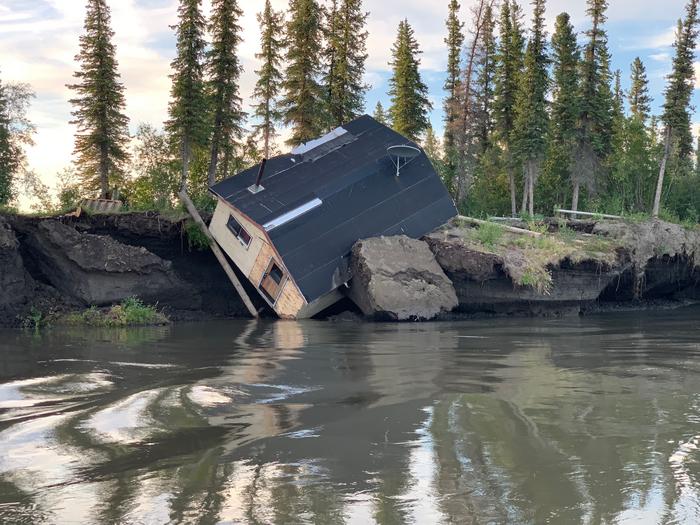
Photo Credit: Bioengineer Magazine, January 16, 2025
This is the sixth article in my series about our changing Earth from interviews with Native Americans shared in We Are the Middle of Forever: Indigenous Voices from Turtle Island on the Changing Earth, edited by Dahr Jamail and Stan Rushworth (USA 2022). My presentation does not follow the order of the interviews.
#6: Dr. Kyle Powys Whyte (Potawatomi)
(Chapter 6, pp. 73-95)
Kyle Powys Whyte, PhD is an enrolled member of the Citizen Potawatomi Nation. A faculty member of the University of Michigan, Illinois, he is a George Willis Pack Professor at the School for Environment and Sustainability (SEAS). He is founding Faculty Director of the Tishman Center for Social Justice and the Environment, Principal Investigator of the Environmental Justice & Humanities Hub, co-Principal Investigator of the Global Center for Climate Change and Transboundary Waters, Faculty Associate of Native American Studies, Principal Investigator of the Secretariat for the Pathways Alliance for Change and Transformation, STRIDE Committee member, affiliate Professor of Philosophy, and Senior Fellow in the Michigan Society of Fellows.
His primary research addresses moral and political issues concerning climate policy and Indigenous peoples and the ethics of cooperative relationships between Indigenous peoples and climate science organizations. His articles have appeared in journals such as Climatic Change, Sustainability Science, Environmental Justice, Hypatia, Ecological Processes, Synthese, Human Ecology, Journal of Global Ethics, American Journal of Bioethics, Journal of Agricultural & Environmental Ethics, Ethics, Policy & Environment, and Ethics & the Environment.
Dahr and Stan asked Kyle to address the following:
- How humanity got to this climate crisis and what’s connected to it.
- How the sense of panic in societies around the world might be differentiated from a sense of urgency.
- How we might comport ourselves as members of the larger world society to meet the situation before us.
Kyle first notes that when addressing problems and solutions for the crises we face, we end up harming vulnerable Indigenous people, people of color, and other disempowered groups. This, he claims, occurs when we fail to treat each other with reciprocity and value each other’s consent, essential for building trust. Reciprocity, consent, trust, transparency, and privacy or confidentiality are all qualities of building relationships with each other. These qualities are a key aspect to what Kyle calls a part of kinship. Regardless of the society we live in, there’s some degree of kinship.
He describes kinship this way (p. 75):
Kinship refers to relationships of mutual responsibility, where we care for each other, and we create bonds with each other that make it so that, regardless of what the law says, and regardless of how severe a problem is, or regardless of what our rights are, we have an abiding sense that we need to care for others (emphasis mine).
This responsibility for each other is not limited to human relationships but must also include non-living entities and systems. He reiterates that this shared responsibility will only work if each one of us has a profound respect for reciprocity, for consent, for trust, for transparency, and confidentiality.
Kyle argues that there’s a profound lack of kinship in our world today. He traces this decline to the impacts of the complex network of systems established by patriarchy, colonialism, capitalism, industrialization, and ableism. Locally and globally, these systems have disrespected, erased, and continue to ignore the importance of kinship.
For example, when addressing problems related to climate change, further problems emerge when proposed projects ignore consent from the local community. Numerous cases exist where a wind power or hydroelectric power project has harmed Indigenous people, creating widespread distrust.
To regenerate the kinship and reciprocity needed, Kyle points out the importance of considering the way we humans tell time. We tend to address climate change in terms of clock time or linear time. We speak about years, decades, and centuries. We speak about how the changes are occurring. Then, there’s the fact that the clock is ticking: we have two decades or only fifty years to act.
He takes issue with clock time and presents alternatives to telling time (pp. 80-82):
When you put a ticking clock on anything you do, it completely changes your approach to moral action, to action that promotes justice and equity. […] Can we actually talk about climate change through some other way?… For example, a lot of Indigenous people don’t necessarily look at today’s time as one century out of twenty or thirty centuries, in some precisely countable sense. We have a notion of deep time, the concept that today we’re just operating in what must be a smidgen of all of the time that ever existed. And what is important is that when we talk about deep time, when we talk about the fact that we’re currently living in a small period of time in relation to other eras, it gets us thinking about other things. […] Deep time is one way of telling time, and one of the things that it gets us out of is the panic that whatever is happening right now is completely unprecedented (emphasis mine).
Kinship is also another way of telling time, according to Kyle. For example, in a conflict between Native people, the conflict is resolved by considering an entire history of each of the people’s kinship relationships, both direct family and their societies. They can even go back centuries. This process reveals the different ways in which people are related and how the current conflict reflects a historical betrayal of some kind. He further expands this idea (p. 83):
This is not exclusively the realm of Native folks. What is important is that if kinship relationships are not just the responsibilities themselves, but are all the qualities that are attached to them, the reciprocity, the consent, the trust, and so on, then you can actually tell a whole history by looking at different areas of when there was an escalation of kinship or a de-escalation of kinship, when there was an expansion and the contraction of kinship.
In telling history in terms of kinship relationships, Kyle says, it’s no longer surprising when a wind power project is approved without the consent of people living on the land. Likewise, it may also help us to understand why people refuse to wear a mask during the COVID-19 pandemic, not only for their own safety but also to protect others more vulnerable.
Another way of telling time is through the seasons. Over time and generations, Indigenous people have gained knowledge of hundreds of human and non-human relationships and social activities during each season. Kyles explains this way of telling time alerts Native people to changes in the environment that require attention (pp. 84-85):
[Native people] don’t say that ‘During this season, this blossoms.’ […] They always talk about a social activity, and by social, I’m meaning human and nonhuman. They always talk about a social activity that has some importance. It could be cultural and it could be economic, so they talk about the relationship and the social mobilization that occurs along with it.
In this way, when you notice that seasonal relationships are not in line with society’s social activities, you know that a seasonal indicator is off. Then, it becomes essential to get together as a society to find out the cause. When a global response is required, Kyle cautions us to take everything into consideration. For example, we cannot decide to end the coal industry and ignore what would happen to the people working in that area.
For Kyle, the issue is not “How do I reduce my carbon footprint?” Rather, it’s “Do we have the kinship needed to properly respond as a society, so that we won’t mess each other up in the process?”
Kyle points out that Indigenous communities, repeatedly devastated during the last couple of hundreds of years, are still in the process of figuring out how to rebuild the fabric of their societies through networks of kinship relationships. He adds (p. 88):
When I advocate for tribal dignity, self-determination, it’s because I know that the families, or that my family, that my society, and some of the related communities, are really my best bet if I want to have that network of people that will give me the support that I need. And I know that my support of them will be meaningful to them.
Kyle notes that we shouldn’t pretend our freedom comes from our acts alone. The sooner we acknowledge that there are several other factors involved, the sooner we’ll understand our responsibilities towards others. No one individual has caused climate change or a public health crisis. Yet, the resulting effects challenge our conception of freedom, our wealth, our well-being, and our safety. Until we seriously reflect on how we got to this point, it’s extremely challenging to mobilize people to respond.
Collective action, Kyle points out, depends upon kinship relationships with others that don’t ignore the diverse contributions of others. We should also consider that what works for one community may not work for ours.
We also need to free ourselves from clock time that limits our vision to our own lifetime. This creates a sense of panic. Instead, we should be planning for the next three, four, seven generations, for the long term, and what it means to think about our kinship as transcending whatever we perceive to be our life.
[W]e need to think about what type of team we want to be part of. We want to figure out who the collective of people are that are meaningful to us, that are responsive to change, and think about what it means to build that kinship network (emphasis mine).
Kyle acknowledges that developing relationships is a slow process. There’s also a dark side to kinship. Oftentimes, the people we regard as our kin are the ones who are in the position to be the most abusive. Moreover, a nepotistic society is a type of kinship that is completely unbalanced. The challenges are many. We’re all learning how best to comport ourselves. Though we may not always succeed in gaining trust and consent to achieve a specific course of action, we must not forget that we’re all in this together for the long term.
* * * * * *
I know about the dark side of abusive relationships among my own kin. I also know firsthand about the power of non-familial kinship relationships. I experienced it after my ex-husband abandoned me and our two sons, then six and eight years old, in Brazil and returned to Guyana. Neighbors, teachers, and work colleagues rallied around us, offering support in a myriad of ways. More recently, I witnessed this power following the devastating January 2025 Palisades and Eaton Fires in Los Angeles County, when we Angelenos mobilized to provide for the immediate needs of thousands of families who were not only left homeless but also lost their possessions and memories.
I remain hopeful that, when another extreme weather event strikes again, the communities under attack will find strength and resilience within their kinship networks. As Kyle emphasizes during his interview with Kahr and Stan, the strength of those networks depends upon the work we put into developing our kinship relationships.
Click on links below for previously featured interviews:
#1: Raquel Ramirez (Ho-Chunk, Ojibwe, Lenca) – Awareness
#2: Alexii Sigona (Amah Mutsun) – Stewardship
#3: Terri Delahanty (Cree) – Sacred Feminine and Sacred Masculine
#4: Shannon Rivers (Akimel O’otham) – Balance
#5: Lyla June Johnston (Diné [Navajo], Tsétsêhéstâhese [Cheyenne]) – Trust
 Three Worlds One Vision
Excellent essay. It raises points and questions that aren’t discussed too much, generally speaking.
I guess I’m a pessimist when it comes to climate change. I doubt that humans ever will address the situation adequately.
LikeLiked by 1 person
Thanks very much, Neil. I share your view that our record in addressing this situation is inadequate. As I see it, this makes it all the more important to develop kinship networks that will help communities today and in the future to be resilient when societies collapse.
LikeLiked by 1 person
A good way of looking at it. If only, we could develop the kinship required to take action as a group. Alas, greed gets in the way all too often, as opposed to looking at this as an opportunity to grow. Happy Sunday Rosaliene. Allan
LikeLiked by 2 people
Allan, greed does get in the way of taking local and global action. Nevertheless, communities are already working at building more resilient communities for recovery from severe weather and other natural disasters, already threatening our communities. Check out the following link to learn about what we’re doing here in California: https://trackingcalifornia.org/projects/arc#gsc.tab=0. I signed up to receive regular updates. You most likely have similar projects in Alberta/Canada where you live.
LikeLiked by 1 person
So very profound. Interestingly, people address some of these truths in relation to the FIFA World Cup. Unfortunately Yeah, Another Blogger’s scepticism is probably valid
LikeLiked by 1 person
Derrick, Kyle’s vision is indeed very profound. As we work at transitioning to more sustainable forms of energy, we must also give attention to building kinship relationships and networks. See my response to Neil at “Yeah, Another Blogger” regarding his skepticism.
It’s interesting that you should mention the FIFA World Cup. While watching the quarter finals, I’m reminded of how much I miss the Brazilian people’s passion for football. It’s far more than a game. It’s part of their national identity and pride.
LikeLike
Yes. Agree with your response to Neil
LikeLiked by 1 person
Great and sobering post, Rosaliene. So true that people of color, lower-income communities, etc., are affected more by climate change — although climate change of course ultimately affects everyone.
LikeLiked by 1 person
Thanks very much, Dave. Climate change does ultimately affect everyone, but the billionaire class will insulate themselves from the worse outcomes in their private island mansions and luxury bunkers.
LikeLiked by 1 person
Very true, Rosaliene.
LikeLiked by 1 person
Thank you very much, Rosaliene, for this important post, which shows me that the societies have to work together in a much better way so that the best solutions for all may be found and not just for those, who manage in making a lot of money!
LikeLiked by 1 person
My pleasure, Martina. As we continue to face the fallout of relentless extreme weather events worldwide, we will be forced to come together for building resilience for our survival as a species.
LikeLiked by 1 person
👍🌻
LikeLiked by 1 person
Hear hear to that “we need to care for others” part. That’s where happiness and fulfillment comes in.
LikeLiked by 1 person
So very true, Ilsa. Sadly, we humans tend to forget this until disaster strikes close to home.
LikeLiked by 1 person
Yep! So true.
LikeLiked by 1 person
“He traces this decline to the impacts of the complex network of systems established by patriarchy, colonialism, capitalism, industrialization, and ableism. Locally and globally, these systems have disrespected, erased, and continue to ignore the importance of kinship.”
I’m always amazed and horribly dismayed at how humans have managed to almost irreversibly damaged our planet in a heartbeat of time. We are the most dangerous species on earth. We are also the most selfish and greedy.
We tell one another, “Don’t behave like an animal”, and yet animals treat one another better than we do. Sigh. We have so much to learn.
Honestly, when I hear that we may end up causing our own extinction, along with many other living creatures, sometimes my heart says “Good!”, for if we die off the planet will continue to go on, and with time will heal from most of what we inflicted upon it.
LikeLiked by 2 people
Tamara, as Kyle points out, when we look at the wider picture of deep time, our existence here on Planet Earth is truly only “a heartbeat of time,” as you say. I agree when you say that we are the most dangerous, selfish and greedy species on Earth. Our lifestyles and disregard for the environment and non-human life have upset the complex balance of Earth’s life-giving systems. We must now face the consequences. I believe that some of our species will survive but have no idea how they will adapt or mutate to a hostile environment of our own making.
LikeLike
Yes, exactly. We borrow this planet, we don’t own it, yet we act as though the resources are infinite and the earth can heal itself from everything. If there is an extinction of humans, we probably deserve what’s coming. We aren’t guaranteed a continuous existence here.
LikeLiked by 1 person
This excerpt feels especially important, Rosaliene, in terms of helping us see a path forward. Rethinking the passage of time is a big one. Personally, I find it so helpful to look at trees and remember how much they’ve already experienced to get to their size. Trees always, always calm my panic. And the absolute need for kinship, especially with those most affected by change is vital, which is something I greatly appreciated during my time as a young-at-heart with Sunrise Movement.
This line highlights the crucial need for education: “Until we seriously reflect on how we got to this point, it’s extremely challenging to mobilize people to respond.”
Thank you for this.
LikeLiked by 1 person
Tracy, I’m so glad that you also see the importance of Kyle’s vision. I share your feelings about trees that have survived for thousands of years. We not only owe our existence on this planet to our trees, but also have so much to learn from them.
How wonderful that you’ve had the opportunity to experience the power of kinship during your time with the Sunrise Movement. I believe that more movements like Sunrise will spring up and spread as our societies collapse in the not-so-distant future. Check out what we’re already doing here in California at https://trackingcalifornia.org/projects/arc#gsc.tab=0.
With climate change deniers at the helm of our federal government, disinformation and misinformation make national collective action almost impossible. Until disaster cripples our nation.
LikeLiked by 1 person
Trees are the very, very best. Thank you for sharing that link, it’s wonderful to see all those groups coming together to work toward community resiliency. I was glad to see the Central CA Environmental Justice Network hadn’t formed yet when I lived in the San Joaquin valley and worked with others to protect farmworkers from pesticides sprayed on grapes. We owe our existence to trees and farmworkers!
LikeLiked by 1 person
You’re welcome, Tracy. I’m sure that there are also similar programs set up in your state. Dealing with extreme weather events has become the norm across our nation. Yay to our farm workers!
LikeLike
I love this perspective of kinship, Rosaliene. Caring for one another and not putting our needs above everyone else is vital. And we are all connected.
LikeLiked by 2 people
Thanks very much, Mary. I do, too. The COVID-19 pandemic made it all too clear. How soon we forget the lessons learned.
LikeLiked by 1 person
Thanks for sharing more valuable Indigenous wisdom, Rosaliene. I’m always saying we need to take care of each other but Dr. Whyte gives us an idea of what this actually means.
LikeLiked by 2 people
My pleasure, Mara. It does help when someone like Dr. Whyte spells out what should be obvious to us as social beings whose survival depend upon the contributions of others. Individualism alienates us.
LikeLiked by 1 person
So true.
LikeLiked by 1 person
So important. Thank you Rosaliene.
LikeLiked by 2 people
Thanks very much, Cindy. My pleasure.
LikeLike
Yes, we need to believe we are on the same team and working together.
Ironically, kinship is also what makes the MAGA movement strong – they believe they’re all part of something. Unfortunately it’s something destructive rather than something good.
LikeLiked by 1 person
Sadly true, James. As Kyle also noted, not all kinship relationships work in our favor. All the more important when choosing a team.
LikeLiked by 1 person
Thanks for drawing attention to that, Rose!
And your own situation too.
Sometimes we form the best kinship with people we are just thrown together with. Animals help bring us together too. Look at how we respond to each other when cats and dogs are involved, for example!
Take care,
James
LikeLiked by 1 person
Thanks for presenting indigenous wisdom on how we must relate with reciprocity, consent, trust, transparency, and privacy or confidentiality with one another to move forward and heal the earth. We are not alone on this planet, we must relate with respect not only with other humans but with all the creatures who live here. I think that is central wisdom Euro-centric people have not yet understood. When we feel we as humans stand at the pinnacle of importance, rather than within one small part of the web of life, we do not understand our humble place in this world.
LikeLiked by 1 person
Rebecca, I wish I knew what it would take for us to understand that this Euro-centric vision is no longer sustainable.
LikeLiked by 1 person
I think traveling to see other ways of living is very helpful.
LikeLiked by 1 person
That would definitely make a difference, Rebecca.
LikeLiked by 1 person
Indigenous voices share wisdom and I appreciated how “time” is discussed in this interview. I often wonder how people who understand the mutual responsibility that we have with one another and so often fail to see it materialize continue to sow seeds of hope. I know there are many millions of people who understand kinship and work for unity and ecological balance, but the voices that seemingly don’t care do get awfully loud. This was a remarkable read, so thank you, Rosaliene.
LikeLiked by 1 person
Thanks very much, Debra. It’s so good to hear from you 🙂 It’s no accident that the minority of naysayers and deniers are given the microphone. Those who control the narrative of our world would like us to believe that the silent/voiceless majority are powerless to bring about change. Check out JoAnna’s “Good News Tuesday” posts that highlight a snippet of the positive changes and work of good people across our planet.
LikeLike
I haven’t consciously thought of kinship in these terms, but it’s extremely important. When I think about what it means to build a kinship network, I think, well, there’s my church in the next town over – made up mostly of people I have much in common with. But I don’t know many people in my neighborhood which is more rural than where we used to live. I agree that building kinship is a process, especially with my introvert leanings. We do need to be careful. We don’t have to agree on everything but do need to agree on certain key issues, like mutual responsibility and willingness to help others. We have to have some common ground. It’s interesting that there are people who help each other in crisis who are on opposite sides of the political spectrum. That gives me hope. Yep, it’s a process. Thank you for stimulating these thoughts which will hopefully lead to action.
LikeLiked by 1 person
My pleasure in sharing, JoAnna. I’ve also never thought of kinship in these terms. I’ve considered them more as support groups. Building kinship is a slow process that comes with its own challenges. One’s church would be a good place to start. Since I’m not a member of a church, I’ve focused on building caring relationships with my neighbors. Though we have a core group of long-term tenants, many others have left over the years.
Through email updates, I stay informed about our state’s recommendations and directives for building resilient communities across our state. I follow-up with whatever is within my reach. If you haven’t already done so, you can find out what your state is doing for building resilient communities at https://www.resilienceexchange.nc.gov/. Our federal government may have declared climate change a hoax, but state and local governments (regardless of their political affiliation) know the harsh reality of extreme weather events on their people and economies.
LikeLiked by 1 person
I’m glad you are building caring relationships with neighbors. Thank you for the link. I’ll go look at it now.
LikeLiked by 1 person
You’re welcome, JoAnna. I hope you find the platform informative and useful.
LikeLiked by 1 person
I completely agree with Kyle, and I think we are behaving disrespectfully towards nature. Industrialization definitely has something to do with that. As I read philosophy and what the Stoics and others said about our connection with nature as a whole, not just the environment but our human relationships, I have come to realize that we have lost something special with all of our technological advances.
LikeLiked by 1 person
Edward, you’re right that industrialization is only part of the story. In his article on “The Rise of Cheap Nature,” Jason W. Moore argues that the growth of capital ignores the greatest landscape revolution in human history – in terms of speed, scale, and scope – that occurred in the three centuries after 1450. I offer a summary of his article in my post “How the web of life became Cheap Nature.”
As I see it, our technological advances have placed more importance on tangible or external achievements at the expense of our intangible or spiritual development and connections with each other and the natural world.
LikeLiked by 1 person
Great summary! The book that I just read also mentions that time period—and the period before it—when Europeans cut down trees to expand their civilization. That is one of the reasons some of them argued that Native Americans were wasting opportunities because they were not doing the same, rather than realizing that the indigenous people were just protecting the environment and only using what was needed to sustain themselves and their families. I wholeheartedly agree with your last comment, and I’m realizing that now.
LikeLiked by 1 person
Thanks very much, Edward. Kyle made that observation during his interview with Dahr and Stan when he stated that the early United States settler power didn’t care about their stewardship in maintaining the landscape that not only created a sustainable economy but also protected a holistic conception of well-being (p. 78).
LikeLiked by 1 person
You’re welcome, Rosaliene. That observation is spot on. Too many experts are arriving at the same conclusions.
LikeLiked by 1 person
While that may be true, Edward, the fossil fuel industry is going full blast to create doubt to protect their profits.
LikeLiked by 1 person
Absolutely! No doubt about that.
LikeLiked by 1 person
The concept of kinship is such an important way to reframe current problems. Often times in the present, people immediately respond in the most helpful way for a particular crisis, but the underlying problems remain, and those who are the most at risk continue being just that.
I find it interesting and hopeful that many feminist theologians use the term the kin-ship of God, rather than the kingdom of God. They note that a “kingdom” is a top-down, usually patriarchal and hierarchical system, rather than one based on inclusivity and relationships as a “kin-ship” would be. Indeed, today’s problems have deep roots!
LikeLiked by 1 person
Julie, it’s true that we respond immediately when disaster strikes others in our communities or beyond. The case of Joplin/Missouri hit by an EF5 tornado in 2011 teaches us much more about ourselves. [If you would like to learn more, here’s a six-minute video about “Joplin’s Journey in Surviving Disaster Burnout.”] What we rarely learn is how the community hit comes together over years needed to rebuild their lives and community after the disaster.
Thanks for sharing about the feminist theologians’ use of the term kin-ship of God rather than the kingdom of God. They’re so spot on. Deep roots, indeed!
LikeLiked by 1 person