
Tags
Brazilian poet Cora Coralina, Goiás Velho/Goiás/Brazil, Learn to Live by Cora Coralina, Life Lessons, Saber Viver por Cora Coralina
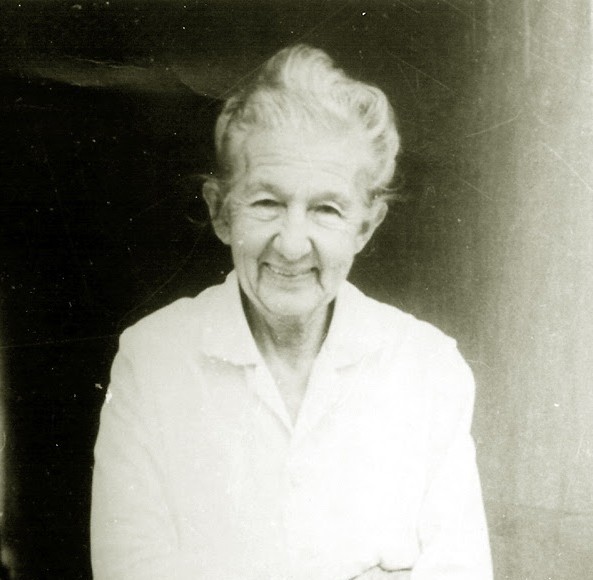
Photo Credit: Association of the House of Cora Coralina
In my Poetry Corner June 2026, I feature the poem “Learn to Live / Saber Viver” by one of Brazil’s great twentieth-century poets, known by her pen name, Cora Coralina (1889-1985). Baptized Ana Lins dos Guimarães Peixoto, the poet adopted the name at fifteen years old when she began writing her first poems. Cora comes from coração (heart) and Coralina from the red coralline algae: red heart.
I first featured this poem in April 2014. It soon became the topmost read post on my blog and retained that position for several years. The poet’s message is much needed in today’s upside-down world. Bear in mind that Cora Coralina lived through a turbulent period, both nationally and worldwide: two World Wars (1914-1918 & 1939-1945) and Brazil’s dictatorship (1964-1985). For those who have read my 2014 post, I offer new excerpts selected from her four poetry collections published during the period 1965 to 1985.
Born in the small town of Goiás Velho, then the capital of the State of Goiás, Aninha (as she was called) lost her father, a High Court judge, when she was a toddler. In her poem, “My Childhood,” we learn that she was not favored as the third of four daughters:
Among them, I always occupied the worst place. […] I grew up as a daughter without a father, / second-rate among my sisters. // I was sad, nervous, and ugly. / Yellowish, with a pale face. / With weak legs, falling over easily. / Those who saw me like that – said: / “This girl is the living image / of her sick old father.”
Aninha’s three years of primary school education were enough to ignite her love for reading and her imagination. At fifteen, she had her first short story published in the local newspaper under the pen name Cora Coralina. In “Autobiography,” she shares the difficulties she faced in pursuing her love of writing:
I was born to write, but the environment, time, people, and other factors have counteracted my life. / I am more of a confectioner and cook than a writer…. / I never received family encouragement to be a writer. / There was always, if not hostility, at least a determined reservation in my family towards this innate tendency of mine. […] The school of life supplemented the deficiencies of primary school that / destiny did not give me. / That is how I arrived at this [second] book without any references to mention.
As a young woman, her relationship with an older man, a divorcee and lawyer, caused a scandal. At twenty-two years old, defying her family’s objections to their relationship, they eloped and moved to the State of São Paulo. They had six children, two of whom died shortly after birth. But married life brought more restrictions, as her husband prevented her from publishing her stories. Such were the restrictions women faced during the 1900s. In her poem, “This is how I see life,” she writes:
I was born in harsh times
I accepted contradictions
struggles and hardships
as lessons of life
and they helped me
I learned to live.
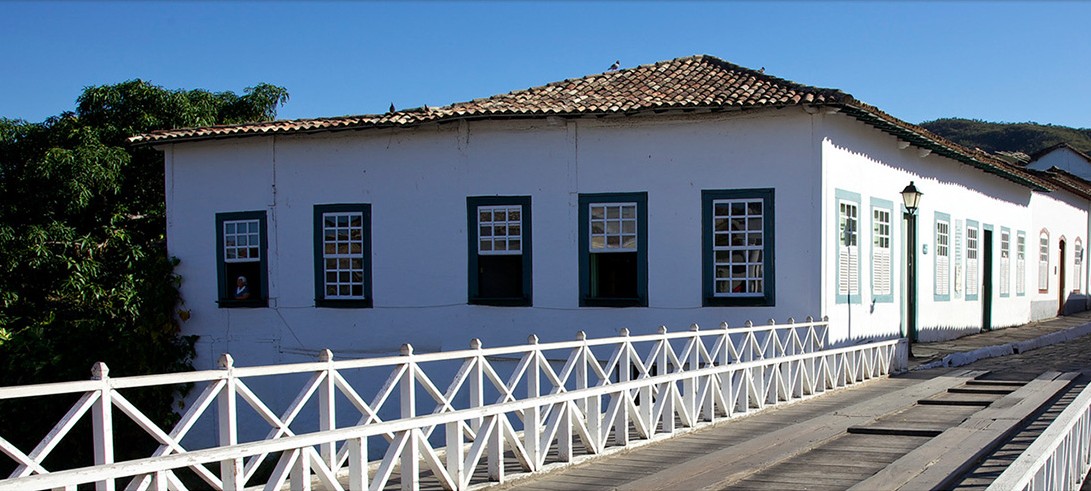
Photo Credit: Museu Cora Coralina
Widowed at forty-five years old, Cora Coralina lived in several cities across the State of São Paulo, working as a cook, bookseller, and even plowing land. Never giving up on her writing, she published articles in local newspapers. She was sixty-seven years old when she finally returned to her birthplace to inherit the family’s house and other assets. She decided to stay, supporting herself by selling her homemade sweet treats. In her poem, “Aninha and Her Stones,” she writes:
Recreate your life, always, always.
Remove the stones, plant rose bushes and make sweets.
Begin again.
Make of your meager life
a poem.
After learning to type at seventy years old, Cora Coralina compiled her first poetry collection into a book format, titled Poemas dos Becos de Goiás e Estórias Mais / The Alleyways of Goiás and More Stories, published five years later in 1965. At seventy-five years old, Aninha, the girl born to write, held her first printed book of poems in her hands. As she encourages the young men in “Aninha’s Offerings (to young men)”:
[Time] has taught me to love life.
To not give up the fight.
To start again after defeat.
To renounce negative words and thoughts.
To believe in human values.
To be optimistic.
Her second book followed in 1976. Then, in 1980, Brazil’s most influential poet at the time, Carlos Drummond de Andrade (1972-1987) discovered Cora’s poetry, spreading interest in her work across Brazil. Her authenticity as a poet spoke much louder than her poor grammar. Her third collection, published in 1983, was well received by literary critics and poetry lovers. Her fourth collection was released in 1985. That same year, at 96 years old, she died of pneumonia.
In the featured poem, “Saber Viver / Learn to Live,” Cora Coralina calls on us to reach out to others in need; to offer the smallest of human kindness. Only this, she says, gives meaning to our lives, however long we may live on this Earth.
I don’t know… If life is short
or too long for us
but I know that nothing we endure
makes sense, if we don’t touch people’s hearts.
[…]
And this is not something from another world.
It’s what gives meaning to life.
It’s what makes life
not short
not too long,
But it would be intense
True, pure…
While it lasts.
To read the complete featured poem “Learn to Live / Saber Viver” in English and the original Portuguese and learn more about the work and awards received by Brazilian poet Cora Coralina, go to my Poetry Corner June 2026.


Great poem
LikeLiked by 1 person
Stephen, I’m so glad you like my choice.
LikeLike
Ultimate wisdom for me: Recreate your life, always, always…..
Make of your meager life
a poem. (or a painting 😎). 👍🏿🌻🌞🥰
LikeLiked by 2 people
Words to live by, indeed, Friedrich. A painting works just as well as a poem 🙂 ❤
LikeLiked by 1 person
She lived a life, and when she could, got her wonderful poems published. A strong woman.
LikeLiked by 1 person
Diana, she was, for sure, a strong woman.
LikeLiked by 1 person
😀
LikeLiked by 1 person
Great post, Rosaliene! “Cora Coralina” obviously lived a long, fascinating, challenging life — and one always laments the restrictions put on women back then (and now). 😦
LikeLiked by 1 person
Thanks very much, Dave. The restrictions of her time definitely held her back. Yet, she endured, making her poetry even more authentic and meaningful.
LikeLiked by 1 person
Poetry from the heart. What a story, Rosaliene! Cora Coralina had a lot of reasons to give up, but she never did and kept recreating her life. Thanks for sharing. Allan
LikeLiked by 2 people
My pleasure in sharing, Allan. I admire her resilience.
LikeLiked by 1 person
I resonate with her message. Thank you for introducing me to her.
LikeLiked by 1 person
My pleasure, Madeline. I, too, resonate with her message.
LikeLike
I like to integrate poetry into my retreat and spiritual direction work, and I think Coralina’s words will add to the Adult Children of Alcoholics (ACA) retreat I will be co-facilitating in August. Her book is on the way. Thanks again.
LikeLiked by 1 person
How wonderful, Madeline! All the best as retreat co-facilitator. Which book did you order? I found a PDF copy of her second book, Meu Livro de Cordel / My Book of Simple Poems (1976), online at the following link:
Click to access Meu-livro-de-Cordel-Cora-Coralina.pdf
LikeLike
Our Library system did not have anything with just Coralina’s work, so I ordered this collection: Good night stories for rebel girls [new edition] : more than 100 tales of extraordinary women / Elena Favilli and Francesca Cavallo
LikeLiked by 1 person
Thanks for the info, Madeline. I’m not familiar with the book.
LikeLike
I will let you know how much of Coralina’s work is in it.
LikeLiked by 1 person
Thanks 🙂 ❤
LikeLike
Thanks for the PDF, Rosaliene
LikeLiked by 1 person
You’re welcome, Madeline.
LikeLike
Rosaliene, thank you for republishing this poet and her poetry. Who wouldn’t identify with her? Fabulous!
LikeLiked by 1 person
My pleasure in sharing, Mary. She was an amazing woman and poet.
LikeLiked by 1 person
She certainly surmounted adversity and made the best of her life.
LikeLiked by 1 person
She certainly did, Derrick.
LikeLiked by 1 person
I’m fascinated by her life and the way she confronted challenges. Thanks for sharing her inspiring work with us, Rosaliene!
LikeLiked by 1 person
My pleasure in sharing, Ada. She has so much to teach us in confronting life’s challenges.
LikeLiked by 1 person
Thanks again for sharing Cora Coralina’s work. Wonderful. 🤗💓
LikeLiked by 1 person
My pleasure, Ashley 🙂 So glad you’ve enjoyed her work.
LikeLike
I’d say by sharing her work, you have touched people’s hearts, Rosaliene. I’d also say she pretty much nails the meaning of life. Very inspiring words for a Monday. Thank you.
LikeLiked by 1 person
Thanks very much, Mara. Her life and poetry are inspirational for us all.
LikeLiked by 1 person
I never finish reading one of your posts without being inspired, Rosaliene. This one was especially perfect for days like these. Thank you so much for sharing it.
–Julie
LikeLiked by 2 people
Thanks very much, Julie. So glad that you found Cora Coralina’s poetry inspiring.
LikeLiked by 1 person
In spite of the challenges she faced early in life, Cora Coralina had a strong positive impact and continues to inspire us here through you. I’m thankful she was able to see her work published. She looks happy and kind in the photo. I wonder if she had someone special who encouraged her earlier in life or if it was her own spirit, her inner strength overcoming the challenges to be who she was meant to be. She teaches us that it’s never too late. Wonderful post, Rosaliene!
LikeLiked by 1 person
Thanks very much, JoAnna. She does look happy and kind in the photo: It’s my favorite photo of her. I didn’t come across any mention of someone special who encouraged her earlier in life, but, as I’ve learned as a former teacher, one small word of praise of a child’s talent can make a difference in their life. She was fortunate to have lived long enough to have her work published.
LikeLiked by 1 person
Oh, my. Cora Coralina knew how to put words together. This particularly resonates with me and I just might print it out and hang it on the wall:
Recreate your life, always, always.
Remove the stones, plant rose bushes and make sweets.
Begin again.
Make of your meager life
a poem.
LikeLiked by 1 person
Tracy, I’m so glad that Cora Coralina’s poetry resonated with you. I also find those verses very powerful and inspirational.
LikeLiked by 1 person
Thanks for presenting Cora Coralina. I like the poems you shared, especially the line, “Make of your meager life a poem.”
LikeLiked by 1 person
My pleasure, Rebecca. So glad that you like my selections of her poems. That’s a powerful line, indeed!
LikeLiked by 1 person
After such a rough childhood, she looks like she was such a sweet happy older woman.
LikeLiked by 3 people
It’s one of my favorite photos of her, Ilsa. It’s our attitude towards the roughness of life that makes all the difference as we age.
LikeLiked by 1 person
Yes! Well spoken, err… written. 🙂
LikeLiked by 1 person