• About

Three Worlds One Vision

~ Guyana – Brazil – USA

Three Worlds One Vision

Tag Archives: Georgetown/Guyana

The Writer’s Life: Looking at “the outsider” with an open mind

25 Sunday Feb 2024

Posted by Rosaliene Bacchus in The Writer's Life

≈ 58 Comments

Tags

British Guiana (Guyana)/South America, Cheddi Jagan (1918-1997), First Female Executive President of Guyana, Georgetown/Guyana, Guyana People’s Progressive Party (PPP), Guyana Women’s Progressive Organization (WPO), Janet Jagan nee Rosenberg (1920-2009), Women in politics
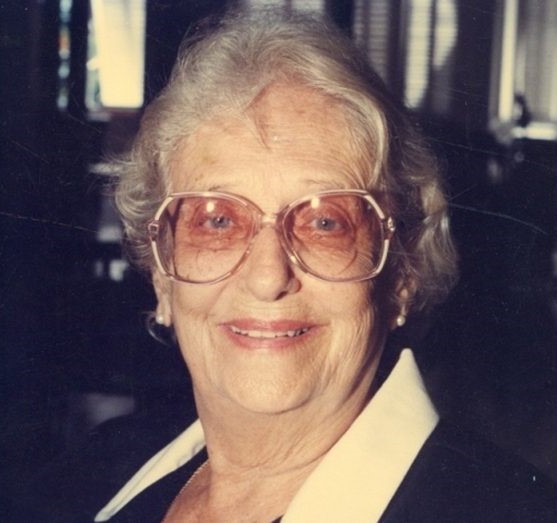
Janet Jagan nee Rosenberg – President of Guyana (1997-1999)

Since I’ve already posted Chapter Eight of my work in progress, featuring “Winifred Gaskin: A Political Woman,” I’m moving on to Chapter Nine that portrays another political woman and the first female president of Guyana (1997-1999): Janet Jagan nee Rosenberg. The white American-born wife of Cheddi Jagan—co-founder of the left-leaning People’s Progressive Party (PPP), Guyana’s first political party to garner massive support—was regarded as an “outsider” among the ruling British and local elite at the time.

When I started this book project, I did not plan on including Janet Jagan among the influential women in the formation of my social and political consciousness. As a young devout Christian, I viewed her not only as an outsider but also as a threat to religious education in our parochial schools. Though I did not share her communist ideology, I would be remiss in not acknowledging her influence in empowering Guyanese women to speak out against oppression and injustice by those holding power or authority within the home, workplace, and public spaces. In retrospect, she may well be the driving force for my rebellious attitude towards those in authority: A criticism I received from my religious superiors as a young Catholic nun.

As Cheddi’s wife and political partner, Janet’s remarkable journey is also an interesting case of what can be achieved when the male and female work together as equal partners. Here in the United States, we are still plagued by the patriarchal dominator model of organizing our society. As the world’s greatest democratic nation, we lag behind other countries, advanced and developing, in electing a woman for the top position as president. Since the 1872 elections, several American women have tried and failed. Isn’t it ironic that the first American woman to hold the position did so in a foreign country? Hillary Clinton came close in the 2016 elections. Does Nikki Haley stand a chance in 2024? We have no shortage of remarkable American-born women capable of leading our nation.

We left Guyana for Brazil in 1987 before the PPP returned to power in 1992, after spending 28 years in Parliament as the major opposition party. With her husband as Executive President, the 72-year-old Janet became First Lady of the Republic of Guyana. She was 77 years old when she was elected as Executive President, following Cheddi’s death.

Continue reading →

The Writer’s Life: How the Church and State shaped my young identity

28 Sunday Jan 2024

Posted by Rosaliene Bacchus in Guyana, Religion, The Writer's Life

≈ 58 Comments

Tags

British Guiana (Guyana)/South America, Cheddi Jagan (1918-1997), Cooperative Republic of Guyana (1970), Forbes Burnham (1923-1985), Georgetown/Guyana, Roman Catholic Church Second Vatican Council (1962-1965)

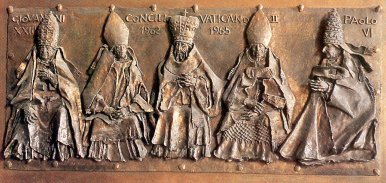
Second Vatican Council (1962-1965)
Photo Credit: Vatican Archives

In Chapter Seven of my work in progress, I tell two stories that played vital roles in shaping my young identity. These involved critical turning points within the Roman Catholic Church and the end days of European colonialism. What an interesting time to witness history in the making!

Beginning on October 11, 1962—after ninety-three years since the convocation of the First Vatican Council on December 8, 1869—between 2,000 and 2,500 Catholic cardinals, patriarchs, and bishops from all over the world, assisted by 460 theological experts, convened in Rome for the Second Vatican Council. For the first time, Protestants, Orthodox, and other non-Catholic observers were invited to assist. In attendance as observers were forty-two lay and religious men and women.

Meanwhile, in what was then British Guiana, our parents and grandparents were embroiled in the struggle for independence from Britain. Our country’s independence in May 1966 went way beyond constitutional change and self-governance. No longer socially inferior subjects of the former Mother Country, we the people also had to undergo the psychological process of “mental emancipation.” As I observed during my adolescence, the Church and State often disagreed on the means to achieve such profound changes of being and doing.

When I first drafted this chapter in 2017—yes, this project is years in the making—the MAGA administration of our 45th president held power in the White House. As I understood then, this rallying cry to “Make America Great Again” meant a return to the 1950s when the white male held power over non-white bodies and the female stayed at home to raise the family and serve her husband. I had visions of a return to life in colonial British Guiana. It meant a return, too, to my mother’s unhappy life as a stay-at-home working mother of five children and an abusive husband.

What a turn of events in the world’s richest and most powerful nation!

I imagine that this is not an easy time to be a young person in the United States. In addition to laws and regulations dictated by the Church and State, they must also contend with bullying and conspiracy theories on ubiquitous Social Media platforms. Added to that is gun violence in schools, colleges, and the public spaces where they socialize. For girls and young women, rights won by their mothers and grandmothers, through years of political activism, are being dismantled.

During my adolescent years, my steadfast faith in the teachings of the Catholic Church grounded me during those transformative years from a colonial country to a cooperative socialist republic. Moreover, as a young woman, I witnessed strong and courageous women lead the way forward. I feature three of these women in Chapters Eight to Ten.

Continue reading →

The Writer’s Life: Looking at oneself through the hourglass

03 Sunday Dec 2023

Posted by Rosaliene Bacchus in Religion & Spirituality, The Writer's Life, Women Issues

≈ 54 Comments

Tags

British Guiana (Guyana)/South America, Devout Christian, Georgetown/Guyana, My First Love

Closest resemblance to my handsome seminarian

In the last three chapters, I’ve shared the stories of three women who played important roles in shaping the person I would become: Mother, Auntie Katie, and Auntie Baby. In Chapter Six of my work in progress, I tell the story about the handsome, young seminarian who entered my life and changed its course: Michael (fictitious name), my first love. At thirteen years old when we first met, I had already developed a close relationship with Jesus, but it was Michael who set me on the path to the religious life.

My deepening relationship with Jesus was a well-guarded secret. To speak of my love for Jesus was out of the question. As I’ve mentioned in an earlier chapter, we were not a family of huggers and kissers. What’s more, those three little words “I love you” were not uttered among us.

For right or wrong, good or evil, truth or deception, I was shaped by the society that sustained me. During those early days of youthful innocence, our country was undergoing political, economic, and social upheavals that would later remold my self-identity.

Continue reading →

“Betty” – Poem by Caribbean Poet Ian McDonald

20 Sunday Aug 2023

Posted by Rosaliene Bacchus in Poetry

≈ 44 Comments

Tags

Bookers Guyana, Caribbean poet Ian McDonald, Georgetown/Guyana, Guyana Sugar Corporation (GuySuCo), Old Age, Poem “Betty” by Ian McDonald, Sugarcane Workers, Trinidad/Caribbean Island

Caribbean (Trinidad/Guyana) Poet Ian McDonald
Photo Credit: Peepal Tree Press Ltd.

My Poetry Corner August 2023 features the poem “Betty” by Ian McDonald from his poetry collection New and Collected Poems 1957-2017 (UK, 2018). Born in the Caribbean Island of Trinidad in 1933, Ian McDonald is a poet, novelist, dramatist, and non-fiction writer. After moving to then British Guiana in 1955, he made his home there until his eighties when he migrated to Canada to be close to his children and grandchildren.

Born into a white family of power and privilege, the young Ian fell in love with literature and writing as a schoolboy. In 1955, after graduating from Cambridge University in England with a Bachelor of Arts Honors Degree in History, he began working with Bookers Ltd., then owners of the British Guiana sugar estates/plantations, where he rose to the position of Director of Marketing & Administration. When the company was nationalized in 1976, McDonald remained as the Administrative Director of the newly formed Guyana Sugar Corporation (GuySuCo) until his retirement in 1999. Following his retirement, he spent the next eight years (2000-2007) as the CEO of the Sugar Association of the Caribbean, located in Georgetown, Guyana.

McDonald’s contributions to the development and promotion of Guyanese and Caribbean literature, theater, and sports are impressive and memorable. How did he ever find time to write poetry? In an article “A Love of Poetry” for the Guyana Chronicle in September 2014, he said of his writing process: “Occasionally a poem emerges in the consciousness fully formed and can be dislodged from there onto paper with a shake of the pen. Mostly what occurs is a sense of something needing to be said, a couple of lines in the head, perhaps just a phrase, and the accumulation of a poem begins and goes on with many fits and starts and adjustments, abandonments and reformulations….”

Continue reading →

Guyana: Dolling Up for the Year-End Festivities

05 Sunday Dec 2021

Posted by Rosaliene Bacchus in Festivals, Guyana, People

≈ 59 Comments

Tags

Dolling Up, Georgetown/Guyana, Old Year’s Night Ball, Stay-at-Home Working Mom, Year-End Festivities

Photo by Inga Seliverstova on Pexels.com

December was the most hectic month for my stay-at-home working Mom. As a sought-after dressmaker among middle-class women in the capital, Georgetown, Mom had little time for Christmas shopping, home decoration, and preparation of our traditional Christmas dinner specialties. Guyanese love to party. The Christmas and year-end festivities meant parties galore: office parties, nightclub parties, and house parties. The greatest fete of all was the Old Year’s Night Ball to welcome in the New Year with a bang.

As early as October, to ensure that their dresses were done on time, Mom’s clients who had several functions to attend would start bringing in their dress materials. For the Old Year’s Night Ball, no expense was spared when choosing the best imported fabrics. Clients could select designs from fashion magazines—JC Penney, McCall’s, Sears, and Vogue—Mom made available. A few clients brought clippings of photos from women’s magazines featuring the rich and famous. At the time, Audrey Hepburn, Elizabeth Taylor, and Jacqueline Kennedy were the rave. I enjoyed a front seat view of the woman’s world of dolling up for parties and other social events to attract a mate or to hold onto your man or husband.

I was a thirteen-year-old teenager in high school when Mom began sewing for three attractive working-class women of Portuguese descent. All in their twenties, the three friends worked in the office wing of Bookers Guiana General Store. To protect their identity, I’ll call them Catherine, Marcella, and Yvette. Catherine was the most beautiful with hair and features to rival those of the French actress Catherine Deneuve. Yvette had muscular shoulders and arms from playing tennis at a competitive level. Marcella was a dark-haired beauty like the American actress Rita Morena in West Side Story (1961).

Continue reading →

Lessons from Nature: Adapting to Change

03 Sunday Nov 2019

Posted by Rosaliene Bacchus in Nature and the Environment

≈ 69 Comments

Tags

Adapting to Change, California wildfires, Climate Crisis, Ecological Crisis, Georgetown/Guyana, Lessons from Nature, Succulent plants

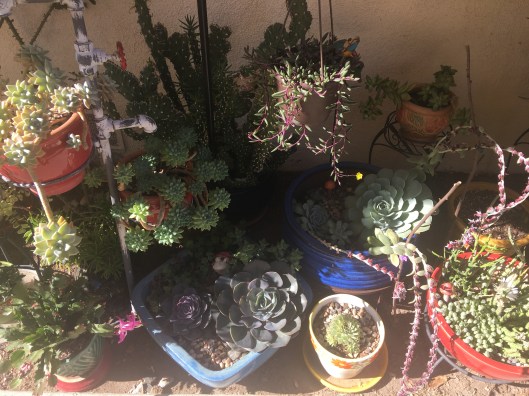
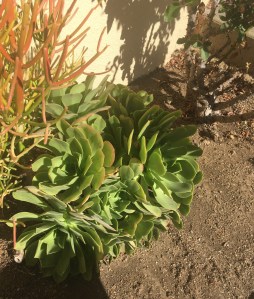
Section of my succulent garden


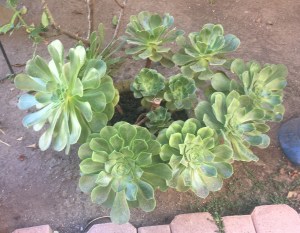
The succulent plants in my garden brighten my life. During humanity’s mad dash towards the abyss, their quiet dynamic presence calm my troubled mind. Under California’s scorching sunshine that set dry brush ablaze, my succulent plants have found a way to survive the extreme heat. Some change color; others become more compact in form.

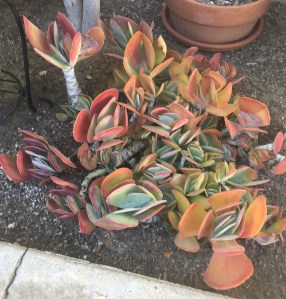
“Flap Jack” or Paddle Plant – Parent plant under heat stress

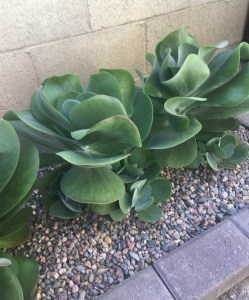
“Flap Jack” or Paddle Plant – Area of little direct sunlight
Grown from cuttings from parent plant


Given their amazing ability to propagate from cuttings, I’ve planted succulents in several garden plots of our apartment complex. I marvel at their adaptation to different soil quality and amount of sunlight.

Aeonium “Mint Saucer” – Area with full sunlight

Aeonium “Mint Saucer” – Little sunlight during early morning


The adverse effects of our climate and ecological crises will intensify in the years ahead. It’s already happening here in California. People who have lost their homes in areas ravaged by wildfires must now question the viability of staying and rebuilding. This is also the case for areas facing prolonged drought and frequent flooding.

My birthplace in Georgetown, Guyana, is also under threat. The Guyanese Online Blog recently posted a video (duration 2:04 minutes) demonstrating the gravity of the situation.

Source: Guyanese Online Blog


A time is coming—perhaps, sooner than we envisage—when people everywhere across our country and planet will be on the move. Pulling up our roots and resettling in different lands is nothing new for our species. But the climate and ecological changes already underway will demand much more of us.

Like the succulents, will our species adapt to surviving on less water, on less food? How will we adapt to living on a hotter planet?

“A Simple Man” – Poem by Caribbean Poet Ian McDonald

13 Sunday Oct 2019

Posted by Rosaliene Bacchus in Poetry

≈ 44 Comments

Tags

Caribbean poet Ian McDonald, Georgetown/Guyana, Poem “A Simple Man” by Ian McDonald, Trinidad/Caribbean Island

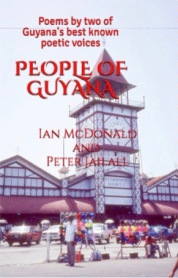
Front Cover: People of Guyana by Ian McDonald and Peter Jailall
Photo Credit: MiddleRoad Publishers/Canada


My Poetry Corner October 2019 features the poem “A Simple Man” by Ian McDonald from the joint poetry collection, People of Guyana, by Ian McDonald and Peter Jailall. Born in the Caribbean island of Trinidad in 1933, Ian McDonald is a poet, novelist, dramatist, and non-fiction writer. After moving to then British Guiana in 1955, he made his home there. Today, he lives partly in his adopted homeland and partly in Canada.

Born into a white family of power and privilege, the young Ian fell in love with literature and writing as a schoolboy. In 1955, after graduating from Cambridge University in England with a Bachelor’s Honors Degree in History, he began working with Bookers Ltd., then owners of the British Guiana sugar estates. When the company was nationalized in 1976, McDonald remained as the Administrative Director of the newly formed Guyana Sugar Corporation until his retirement in 1999.

On one of those days while working with Guyana’s sugar estates, McDonald visited Betty, a former sugarcane laborer, “an old woman in a run-down logie room,” to get details for her resettlement. In his heart-wrenching poem, “Betty,” the poet captures her long life of deprivation, forgotten by society.

she said her life was nothing to her
she said all women’s lives were as nothing
no one had been pleased when she was born
she was sure of that boys were princes 

Once married, she had been abandoned by her husband for another woman, eventually ending up “with old women in this place.” Betty didn’t want to move. They were the only people she knew. Continue reading →

“Broken System” – Spoken Word Poem by Guyanese Poet Renata Burnette

01 Sunday Jul 2018

Posted by Rosaliene Bacchus in Poetry

≈ 36 Comments

Tags

Domestic violence, Georgetown/Guyana, Guyanese Poet Renata Burnette, Guyanese Spoken Word Poet, Sexual harassment

houston-home-50

Victim of domestic violence with her mother – Guyana


My Poetry Corner July 2018 features the spoken word poem, “Broken System,” by young Guyanese poet Renata Burnette. Residing in the capital, Georgetown, she is a second-year undergraduate at the University of Guyana, pursuing a degree in Communications.

Renata’s poetry calls attention to the daily struggles and issues of young Guyanese, especially those in their late teens and twenties. She gained national attention in August 2016 with her poem, “Dear Mr. President,” expressing her challenges in finding a job as an undergraduate.

In “Broken System,” published on Guyana’s Independence Day, May 26, 2018, the poet portrays a system that offers little to no protection to the country’s vulnerable youth.

We have 15-year-old girls being gang raped; boys being caught in the wrong place at the wrong time. Just children running away from their homes because the ones that are supposed to be protecting them, they’re now physically and sexually abusing them… These children, they have no faith in us because we have failed them…

Renata observes that the justice system fails these abused children by either condemning them to the juvenile penitentiary or returning them to their abusers. Further on, she raises the issue of drug dealing and the difficulty of finding work, even for someone with higher education.

So how do we fix the system, the same system that’s putting away our young men for selling or smoking weed, but we’re yet to curb the increase of lung cancer disease that’s mainly caused by tobacco smoking, also known as cigarette smoking. So what do we do? We put a warning label on the pack and just hope that it stops… And even when I graduate from one of the highest institutions in the land, they cannot guarantee me a job…with or without this degree. And you want to know why our young people are out here selling weed. Food for thought. Stay woke. See, plugs make more money than teachers make on their government salaries.

Without a pause, Renata addresses sexual harassment. No subject is taboo for our young poet.

And if you’re a woman in today’s society then sexual harassment is something that you’re almost guaranteed. It’s like a rite of passage, so be careful. Don’t wear anything loose, don’t appear to be too revealing, because when the man across the street shouts for you, calling you every single thing except your name, you better look… But really and truly all our tongues burn to say is just stay away from me. But we’re too scared because our system is broken; it’s backwards…

The system also fails victims of domestic violence. The police, the poet notes, not only show up until after the attack, but there’s also no justice for the woman.

And even though she’s the victim, there would be no justice for he [the abuser] knows people in high positions. You know, that can make a police report disappear regardless of how he acts. Those kind-a people in authority that have a knack for sweeping every single thing under the mat…

Like a maestro conducting an orchestra, the young poet controls the rising and falling rhythm with expressive hands. Without a script. Giving voice to the voiceless.

On America’s Independence Day, I offer these closing words of insight from our young Guyanese spoken word poet (emphasis mine):

If history has proven anything, it’s that the truth would always survive and, if needs be, it would bleed through crooked lines.

You can watch Renata Burnette’s performance on YouTube. For my complete transcript of “Broken System” and to learn more about the poet, go to my Poetry Corner July 2018.

CAPTIONED PHOTO
Victim of domestic violence with her mother, Guyana
In 2013, Natasha Houston’s husband killed their two children, slashed her arm and hand, then killed himself.
Photo Credit: WGVU News

“This is My Meditation” – Poem by Guyanese-born Author & Poet Sir Wilson Harris

01 Sunday Apr 2018

Posted by Rosaliene Bacchus in Poetry

≈ 22 Comments

Tags

Abandonment by God, “Bookers Guiana”, Church & State, Georgetown/Guyana, Guyanese-born Author & Poet Sir Wilson Harris, Poem “This is My Meditation” by Sir Wilson Harris, Pre-Columbian Art by Aubrey Williams, Unanswered prayer, Waiting on God

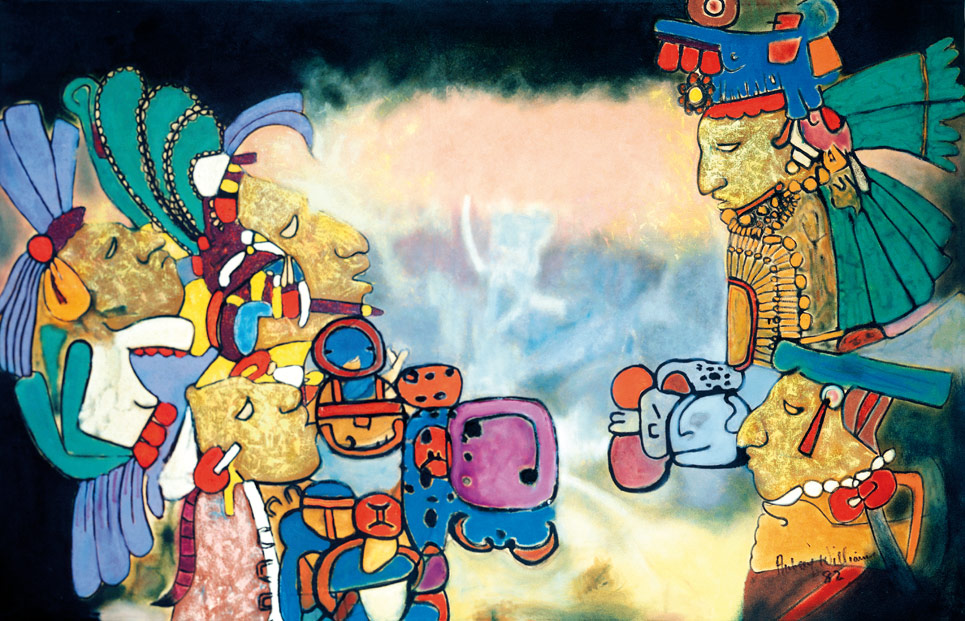
Dawn and Evening Star, Olmec Maya Series by Guyanese-born Artist Aubrey Williams, 1982

Dawn & Evening Star, Olmec Maya Series (1982) by Guyanese-born Artist Aubrey Williams
Source: October Gallery


On March 8th, Guyana’s illustrious literary writer, Sir Wilson Harris, died at the age of ninety-six in England where he had lived since 1959. Born in 1921 in New Amsterdam, British Guiana (now Guyana), Harris began his writing career as a poet, obtaining exposure through the colony’s literary magazine, Kyk-over-Al. My Poetry Corner April 2018 features one of these poems, “This is My Meditation,” published in 1947. Since I couldn’t find the original title of this poem, I’ve used the opening words as a substitute.

When he was two years old, Harris lost his father, “a well-off insurance businessman with a chauffeur-driven car.” His mother moved to the capital, Georgetown, and remarried. Six years later, tragedy struck again. His stepfather disappeared; believed drowned in the Interior.

“At almost the same time, I saw a beggar on a street corner, with holes in his face,” Harris tells Maya Jaggi (The Guardian, December 2006). “I came home and couldn’t eat – I never forgot that man.”

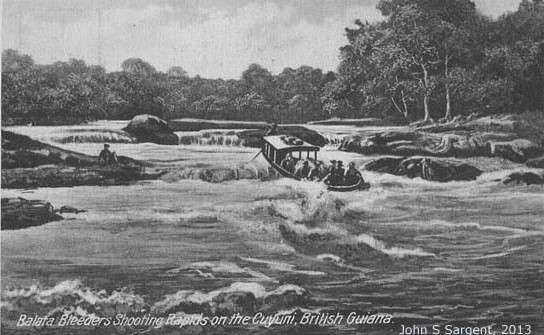
After completing his studies at Queen’s College, the prestigious secondary school for boys in Georgetown, Harris trained in land surveying and geomorphology. Beginning in 1942, his work as a government surveyor, charting the great rivers of the colony’s interior rainforest and savanna regions, changed his vision of man’s relation to the planet.

balata_bleeders_shooting_rapids_on_the_cuyuni,_british_guiana_c1908

Balata Bleeders Shooting Rapids on the Cuyuni River, Interior of British Guiana (c.1908)
Source: Overtown Miscellany UK/John S Sargent


“The shock of contrasts in river, forest, waterfall had registered very deeply in my psyche,” Harris tells Fred D’Aguiar (Bomb Magazine, January 2003). “So deeply that to find oneself without a tongue was to learn of a music that was wordless, to descent into varying structures upon parallel branches of reality, branches that were rooted in a stem of meaning for which no absolute existed.”

Of equal importance was his discovery of pre-Columbian myth and history gained through his contacts with the indigenous peoples in the region.

In his poem, “This is My Meditation,” the young poet calls out what he sees as the cruelty of the Christian God in the treatment of His beloved son, Jesus, left alone to suffer the painful and humiliating death by crucifixion. Continue reading →

“If I Had A Hammer” by Pete Seeger & Lee Hays

04 Sunday Dec 2016

Posted by Rosaliene Bacchus in Poetry, Uncategorized

≈ 27 Comments

Tags

2016 Nobel Prize for Literature, Bob Dylan, Georgetown/Guyana, Lee Hays, Love trumps hate, Pete Seeger, Peter Paul & Mary, Social struggle for justice and freedom, Trini Lopez

us-post-election-2016-stop-hate-crimes-against-muslims

U.S. Post-Election 2016 – Stop Hate Crimes – Muslim Lives Matter
Photo Credit: Quartz.com


In keeping with my end-of-year tradition, I feature a song on my Poetry Corner December 2016. Bob Dylan’s award of the 2016 Nobel Prize in Literature prompted my choice. In the uncanny way that our memory weaves songs and events into our lived experiences, the song “If I Had A Hammer” forced its way to the frontline and hammered for attention. I discovered that Bob Dylan didn’t write this song. We owe this tribute to America’s folk singers and social activists Pete Seeger and Lee Hays who wrote and recorded it in 1949.

If I had a hammer
I’d hammer in the morning
I’d hammer in the evening
All over this land
I’d hammer out danger
I’d hammer out a warning
I’d hammer out love between
My brothers and my sisters
All over this land

Owing to the political controversy surrounding the lyrics and Seeger’s connection with the Communist Party, the song disappeared from public radio and TV. But folk songs with an enduring message never die.

During the Civil Rights Movement and anti-Vietnam War rallies of the 1960s, the song surfaced anew. With a new melody and the harmonized voices of the folk singing trio, Peter, Paul & Mary, the song soared to the #10 position of the top charts in October 1962. Eleven months later, the Latin-tempo rendition by Trini Lopez catapulted the song to #3.

I was a kid when the song hit the top charts in my home-town Georgetown in what was then British Guiana. With its feisty beat and repetitive lyrics, the song became an instant hit among us kids. We banged out the rhythm with sticks on pots and other makeshift drums.

It’s the hammer of justice
It’s the bell of freedom
It’s a song about love between
My brothers and my sisters
All over this land

The years leading up to our country’s independence from Great Britain in May 1966 were dark days in our small world on the shores of South America. On winning the 1961 General Elections, the East Indian left-wing socialist party gained the right to lead the colony to independence. This development troubled Uncle Sam. After Fidel Castro had seized power in Cuba, the Americans feared the spread of communism in their backyard. Those were the days of Cold War I.

With financial support from Uncle Sam, the opposition parties incited demonstrations and strikes across the country. The fire that razed the capital’s commercial district on February 16, 1962, was just the beginning of the racial/ethnic struggle between the leadership of the majority black and East Indian populations for supremacy in the emerging nation.

Today in America, our President-elect has unleashed the demons of bigotry, misogyny, and xenophobia all over this land. The struggle continues. Once again, we must hammer out our need for justice, freedom, and love.

See the complete song “If I Had A Hammer,” learn more about Pete Seeger and Lee Hays, and listen to Trini Lopez’s rendition of the song at my Poetry Corner December 2016.

Subscribe

  • RSS - Posts
  • RSS - Comments

Archives

  • November 2025
  • October 2025
  • September 2025
  • August 2025
  • July 2025
  • June 2025
  • May 2025
  • April 2025
  • March 2025
  • February 2025
  • January 2025
  • December 2024
  • November 2024
  • October 2024
  • September 2024
  • August 2024
  • July 2024
  • June 2024
  • May 2024
  • April 2024
  • March 2024
  • February 2024
  • January 2024
  • December 2023
  • November 2023
  • October 2023
  • September 2023
  • August 2023
  • July 2023
  • June 2023
  • May 2023
  • April 2023
  • March 2023
  • February 2023
  • January 2023
  • December 2022
  • November 2022
  • October 2022
  • September 2022
  • August 2022
  • July 2022
  • June 2022
  • May 2022
  • April 2022
  • March 2022
  • February 2022
  • January 2022
  • December 2021
  • November 2021
  • October 2021
  • September 2021
  • August 2021
  • July 2021
  • June 2021
  • May 2021
  • April 2021
  • March 2021
  • February 2021
  • January 2021
  • December 2020
  • November 2020
  • October 2020
  • September 2020
  • August 2020
  • July 2020
  • June 2020
  • May 2020
  • April 2020
  • March 2020
  • February 2020
  • January 2020
  • December 2019
  • November 2019
  • October 2019
  • September 2019
  • August 2019
  • July 2019
  • June 2019
  • May 2019
  • March 2019
  • February 2019
  • January 2019
  • December 2018
  • November 2018
  • October 2018
  • September 2018
  • August 2018
  • July 2018
  • June 2018
  • May 2018
  • April 2018
  • March 2018
  • February 2018
  • January 2018
  • December 2017
  • November 2017
  • October 2017
  • September 2017
  • August 2017
  • July 2017
  • June 2017
  • May 2017
  • April 2017
  • March 2017
  • February 2017
  • January 2017
  • December 2016
  • November 2016
  • October 2016
  • September 2016
  • August 2016
  • July 2016
  • June 2016
  • May 2016
  • April 2016
  • March 2016
  • January 2016

Categories

  • About Me
  • Anthropogenic Climate Disruption
  • Brazil
  • Economy and Finance
  • Family Life
  • Festivals
  • Guyana
  • Health Issues
  • Human Behavior
  • Immigrants
  • Nature and the Environment
  • People
  • Philosophy
  • Poetry
  • Poetry by Rosaliene Bacchus
  • Recommended Reading
  • Relationships
  • Religion
  • Religion & Spirituality
  • Reviews – The Twisted Circle: A Novel by Rosaliene Bacchus
  • Reviews – Under the Tamarind Tree: A Novel by Rosaliene Bacchus
  • Save Our Children
  • Social Injustice
  • Technology
  • The Twisted Circle: A Novel by Rosaliene Bacchus
  • The Writer's Life
  • Uncategorized
  • Under the Tamarind Tree: A Novel by Rosaliene Bacchus
  • United States
  • Urban Violence
  • Women Issues
  • Working Life

Blogroll

  • Angela Consolo Mankiewicz
  • Caribbean Book Blog
  • Dan McNay
  • Dr. Gerald Stein
  • Foreign Policy Association
  • Guyanese Online
  • Writer's Digest
  • WritersMarket: Where & How to Sell What You Write

Meta

  • Create account
  • Log in
  • Entries feed
  • Comments feed
  • WordPress.com

Enter your email address to subscribe to this blog and receive notifications of new posts by email.

Join 3,231 other subscribers

Blog at WordPress.com.

Privacy & Cookies: This site uses cookies. By continuing to use this website, you agree to their use.
To find out more, including how to control cookies, see here: Cookie Policy
  • Subscribe Subscribed
    • Three Worlds One Vision
    • Join 3,231 other subscribers
    • Already have a WordPress.com account? Log in now.
    • Three Worlds One Vision
    • Subscribe Subscribed
    • Sign up
    • Log in
    • Report this content
    • View site in Reader
    • Manage subscriptions
    • Collapse this bar
 

Loading Comments...