The Writer’s Life: How the Church and State shaped my young identity

Tags

, , , , ,

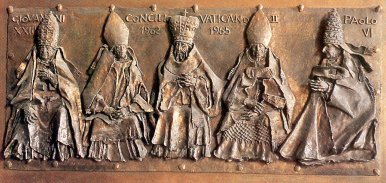
Second Vatican Council (1962-1965)
Photo Credit: Vatican Archives

In Chapter Seven of my work in progress, I tell two stories that played vital roles in shaping my young identity. These involved critical turning points within the Roman Catholic Church and the end days of European colonialism. What an interesting time to witness history in the making!

Beginning on October 11, 1962—after ninety-three years since the convocation of the First Vatican Council on December 8, 1869—between 2,000 and 2,500 Catholic cardinals, patriarchs, and bishops from all over the world, assisted by 460 theological experts, convened in Rome for the Second Vatican Council. For the first time, Protestants, Orthodox, and other non-Catholic observers were invited to assist. In attendance as observers were forty-two lay and religious men and women.

Meanwhile, in what was then British Guiana, our parents and grandparents were embroiled in the struggle for independence from Britain. Our country’s independence in May 1966 went way beyond constitutional change and self-governance. No longer socially inferior subjects of the former Mother Country, we the people also had to undergo the psychological process of “mental emancipation.” As I observed during my adolescence, the Church and State often disagreed on the means to achieve such profound changes of being and doing.

When I first drafted this chapter in 2017—yes, this project is years in the making—the MAGA administration of our 45th president held power in the White House. As I understood then, this rallying cry to “Make America Great Again” meant a return to the 1950s when the white male held power over non-white bodies and the female stayed at home to raise the family and serve her husband. I had visions of a return to life in colonial British Guiana. It meant a return, too, to my mother’s unhappy life as a stay-at-home working mother of five children and an abusive husband.

What a turn of events in the world’s richest and most powerful nation!

I imagine that this is not an easy time to be a young person in the United States. In addition to laws and regulations dictated by the Church and State, they must also contend with bullying and conspiracy theories on ubiquitous Social Media platforms. Added to that is gun violence in schools, colleges, and the public spaces where they socialize. For girls and young women, rights won by their mothers and grandmothers, through years of political activism, are being dismantled.

During my adolescent years, my steadfast faith in the teachings of the Catholic Church grounded me during those transformative years from a colonial country to a cooperative socialist republic. Moreover, as a young woman, I witnessed strong and courageous women lead the way forward. I feature three of these women in Chapters Eight to Ten.

Continue reading
“In a Time of Peace” – Poem by Ukrainian American Poet Ilya Kaminsky

Tags

, , ,

Ukrainian American Poet Ilya Kaminsky
Poet’s Official Website (Photo Courtesy Georgia Tech, 2022)

My Poetry Corner January 2024 features the poem “In a Time of Peace” from the poetry collection Deaf Republic (USA, 2019) by Ilya Kaminsky, an award-winning poet who was elected a Chancellor of the Academy of American Poets and inducted into the American Academy of Arts and Letters in January 2023. Such literary recognition earned him a position at the Lewis Center for the Art’s Program in Creative Writing at Princeton University in New Jersey, where he now lives with his wife.

Born in 1977 in Odessa—in what was then the Soviet Union, now Ukraine—he was sixteen years old when his family was granted political asylum in the United States, settling in Rochester, New York. He earned a Bachelor of Arts degree in political science at Georgetown University, Washington DC, and a Juris Doctor law degree at the University of California, Hastings College of Law (now UC Law San Francisco). After a career as a law clerk in San Francisco, the success of his debut poetry collection, Dancing in Odessa (2004), brought new opportunities of teaching creative writing and poetry in both undergraduate and MFA programs.

Kaminsky’s award-winning poetry collection Deaf Republic is structured as a two-act play set in the military occupied fictional town of Vasenka. The narrative begins with the tragic opening scene in “Gunshot.” While breaking up a protest, a soldier shoots and kills Petya, a young deaf boy enjoying a puppet show in the town’s square. The gunshot renders the entire town deaf (p. 11): The sound we do not hear lifts the gulls off the water.

In “Deafness, an Insurgency, Begins” (p. 14), the boy’s dead body still lies in the square. Our country woke up next morning and refused to hear soldiers. / In the name of Petya, we refuse…. / By eleven a.m., arrests begin. / Our hearing doesn’t weaken, but something silent in us strengthens…. // In the ears of the town, snow falls.

Continue reading

More Praise for The Twisted Circle: A Novel

Tags

,

Amazon Five Star Review: An excellent and important novel

“The Twisted Circle” by Rosaliene Bacchus is an exceptional and significant novel that left a lasting impression on me. Reading it was a delightful journey through an inspiring and thought-provoking narrative, characterized by fascinating characters, a meticulously researched plot, and a crucial story that demands attention.

The novel explores the heartbreaking plight of Sister Barbara, a young black nun ensnared in a vicious trap orchestrated by men in positions of authority. The narrative unveils the disturbing dynamics of power abuse and the insidious effects of gossip, skillfully portrayed through the malicious accusations of Sister Frances, an older white woman fueled by jealousy. The repercussions of gossip in a community are vividly depicted, along with the harsh reality that predators rarely transform into angels.

Set against the backdrop of the Catholic Church in the 1970s, the novel exposes an institution that shields its own, with devastating consequences for the innocent victims. Within this framework, misogyny, patriarchy, and racism are allowed to fester within the Church, where the priorities of man often overshadow the desires of God. The added complexities of political unrest and decades of colonialism contribute to the novel’s richness.

While initially challenged by the multitude of characters, their relationships, and backgrounds, perseverance is rewarded as clarity emerges. Unlike many novels, the strength and fluency of the writing improve with each turn of the page, creating a compelling narrative that captivated me.

The novel raises thought-provoking questions about the triumph of good over evil and the delicate balance between patient perseverance, saintly forgiveness, and the courage to confront and expose abuse and toxic harassment. The author skillfully weaves these questions together.

In conclusion, I immensely enjoyed “The Twisted Circle” and wholeheartedly recommend it to those seeking a powerful and immersive read. Rosaliene Bacchus has created a novel that not only entertains but also prompts reflection on the complexities of human nature and societal and religious institutions.

~ AMAZON REVIEW, JANUARY 12, 2024, BY DENZIL WALTON, A BRITISH-BELGIAN BLOGGER AT DISCOVERING BELGIUM. DENZIL LIVES IN BELGIUM WITH HIS WIFE, FOUR ADULT CHILDREN, AND TWO YOUNG GRANDCHILDREN.

Guyana’s Essequibo Region is safe…for now

Tags

, , , , , , , , ,

An update of events following my blog article, “Guyana-Venezuela Border Dispute: Mounting Tensions December 2023,” published on December 10, 2023

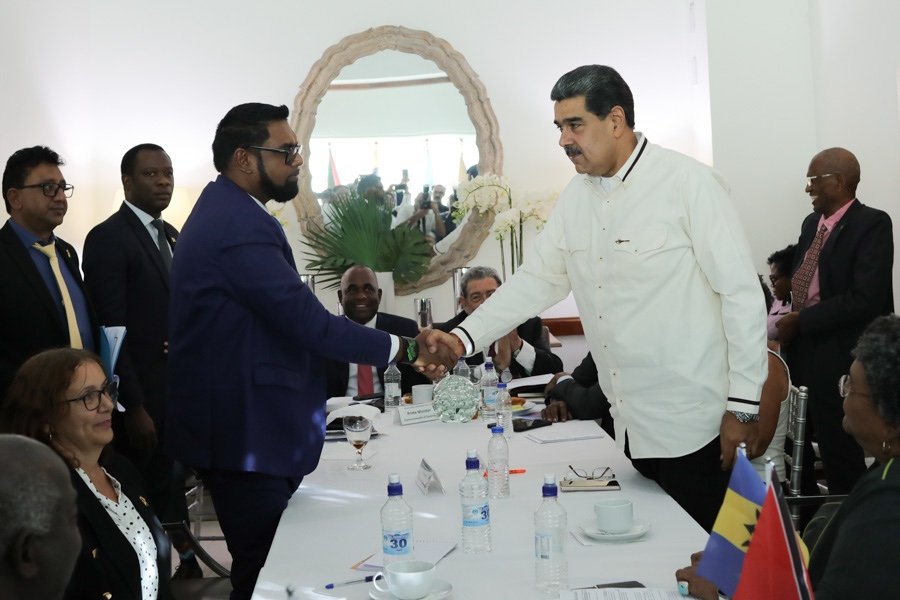
Guyanese President Irfaan Ali & Venezuelan President Nicolás Maduro – St. Vincent & the Grenadines – December 14, 2023
Photo Credit: Miraflores Palace/Reuters

What a relief! Venezuela did not invade Guyana’s Essequibo Region. After meeting with Guyanese President Irfaan Ali on December 14, 2023, in Argyle, Saint Vincent and the Grenadines, Venezuelan President Nicolás Maduro agreed not to threaten or use force against Guyana. In the Joint Declaration of Argyle for Dialogue and Peace, the two leaders “committed to the pursuance of good neighborliness, peaceful coexistence, and the unity of Latin America and the Caribbean.”

To clarify a sticking point for the two parties, the Declaration also noted:

“Noted Guyana’s assertion that it is committed to the process and procedures of the International Court of Justice for the resolution of the border controversy. Noted Venezuela’s assertion of its lack of consent and lack of recognition of the International Court of Justice and its jurisdiction in the border controversy.”

Guyana received lots of support from member nations of the Caribbean Community and Latin America. In addition to the Prime Minister of Saint Vincent and the Grenadines, the main Interlocutors at the meeting included the Personal Envoy of Brazil’s President Inácio Lula da Silva, Prime Minister of Dominica and Chairman of the Caribbean Community (CARICOM), President of the Community of Latin American and Caribbean States (CELAC). Also present were CARICOM Prime Ministers of The Bahamas, Barbados, Grenada, Saint Kitts and Nevis, Saint Lucia, and Trinidad & Tobago. Other Latin American participants represented Colombia and Honduras. Two representatives from the United Nations attended as Observers.

Pleased with the results of the meeting, President Maduro shared a copy of the Argyle Declaration on X, formerly Twitter, and added:

“Excellent day of dialogue! We did it!”

Continue reading

The Writer’s Life: Year 2023 in Review

Tags

, , , , , , , , ,

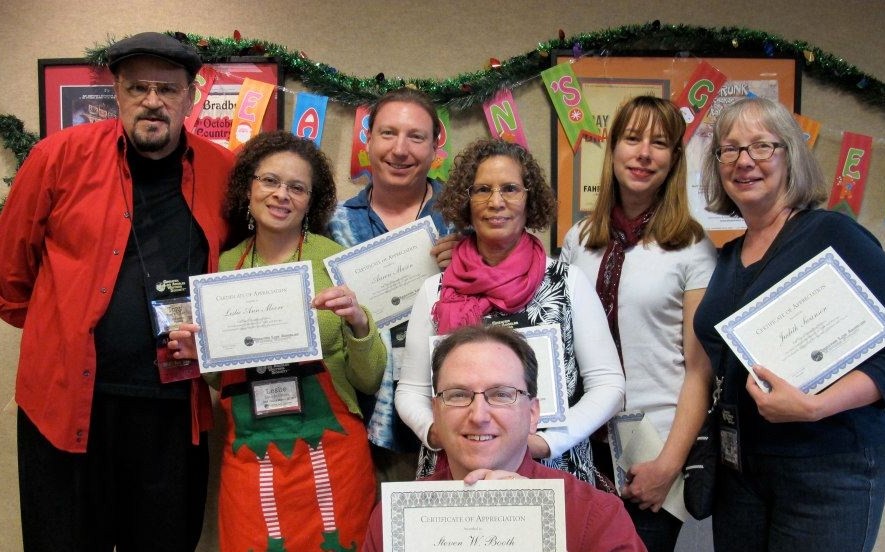
GLAWS 2012 Potluck Christmas Party
President Tony Todaro on the left. Hospitality Team Member Rosaliene in pink scarf.

I hate to admit it: I’m still recovering from the COVID-19 pandemic lockdown of 2020-2021. My writer’s life was disrupted and has never got back on track. I miss the monthly lunch meetings with our writers’ critique group. Long past resuscitation. What’s more, the Greater Los Angeles Writers Society (GLAWS), of which I was once an active member, continues to meet on the detestable Zoom. To make matters worse, the society’s co-founder and president, Tony Todaro, passed away in December 2023. It’s difficult to imagine GLAWS without him at its helm.

In July 2023, I lost another friend, Cyril Bryan, who also played an important role in my writer’s journey to publication. As the publisher of the Guyanese Online website/blog, Cyril promoted my blog articles, short stories, and novels, bringing my work to the attention of the Guyanese Diaspora worldwide. His invaluable contribution in connecting us and promoting Guyanese cultural events will be missed.

My personal loss is nothing compared to what families are facing in GAZA, Ukraine, Sudan, and other war-torn regions of our world. The plight of Palestinian women and mothers in GAZA was, and remains, my deepest sorrow in 2023. Their collective grief pierces the fabric of our interconnected consciousness. Such is the value of our lives to those who wield power in our world.

While the threat of a nuclear World War III lurks in the shadows, a planetary climate crisis and ecocide intensify with humanity’s inability to change course. The fossil fuel companies continue to use their political clout to forestall global efforts to reduce carbon emissions by 45 percent by 2030 and reach Net Zero by 2050. No doubt, they’ve got their escape survival plans ready for execution, when needed. The rest of us will be on our own.

Seven years are just around the corner. Already, 2023 was the hottest year in recorded history. It turns out that our planet is heating up at a faster pace than predicted by our climate change models. Last summer, staying cool demanded daily vigilance. This aging body of mine no longer copes with excessive heat like it used to.

Change is a constant in our lives. As occurred during the COVID-19 pandemic, some changes are very disruptive. In 2022, after reading Deep Adaptation: Navigating the Realities of Climate Chaos Edited by Jem Bendell & Rupert Read (UK/USA, 2021), I knew with terrifying clarity that a catastrophic change was already in motion. Dealing with such change would, indeed, demand a “deep adaptation,” unlike anything I’ve ever experienced. A shift in being.

Beginning in September 2022 and for ten months in 2023, as shared on my blog, I focused on the ideology that has led humanity on the path of environmental degradation and the remedy proposed by Jem Bendell. This shift in my way of being—still a work in progress—has amplified the way I see my interconnection with others and Mother Earth. My interactions with my blogger friends on WordPress are no longer the same. The stories I share are no longer the same.

I thank each one of you for the special gift you brought, and continue to bring, to my day. Without you, 2023 would’ve been filled only with isolation and grief. We may not agree on everything or share the same beliefs. Who does? There’s so much beauty in diversity. You give me hope that, together with those within our communities, we will overcome whatever comes.   

Thought for Today: An Unlikely President Trump

Tags

, , , ,

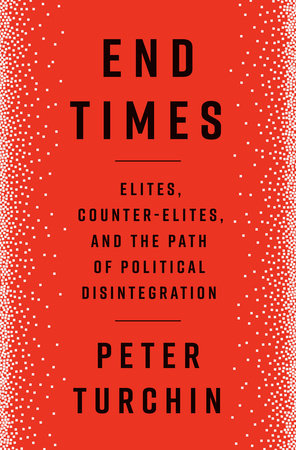
Front Cover: End Times: Elites, Counter-Elites, and the Path of Political Disintegration by Peter Turchin
Photo Credit: Penguin Random House (2023)

To understand why Donald Trump became the forty-fifth president of the United States, we should also pay less attention to his personal qualities and maneuvers and more to the deep social forces that propelled him to the top. Trump was like a small boat caught on the crest of a mighty tidal wave. The two most important social forces that gave us the Trump presidency—and pushed America to the brink of state breakdown—are elite overproduction and popular immiseration….

[First, by 2016] a large proportion of Americans who felt left behind voted for an unlikely candidate—a billionaire. For many of them, this was not so much an endorsement of Trump as an expression of their discontent, shading into rage, against the ruling class.

Second, by 2016, the elite overproduction game had reached a bifurcation point where the rules of conduct in political campaigns had been tossed to the wind.

Excerpt from End Times: Elites, Counter-Elites, and the Path of Political Disintegration by Peter Turchin, Penguin Random House, New York, USA, 2023 (pp. 13-14).

Footnotes

Elite Overproduction occurs when the number of elites among the top One Percent far exceeds the number of available power positions.

Popular Immiseration occurs when workers face years of wage stagnation and decline while the rich get richer. In the USA, “deaths of despair” from suicide, alcoholism, and drug overdose spiked among the noncollege-educated during the period 2000 to 2016.


Peter Turchin is a project leader at the Complexity Science Hub Vienna, a research associate at the University of Oxford, and an emeritus professor at the University of Connecticut. Trained as a theoretical biologist, he is now working in the field of historical social science that he and his colleagues call cliodynamics. Currently, his main research effort is directed at coordinating CrisisDB, a massive historical database of societies sliding into crisis—and then emerging from it. His books include Ultrasociety (2016) and Ages of Discord (2016).

Guyana-Venezuela Border Dispute: Mounting Tensions December 2023

Tags

, , , , , ,

Map of Guyana highlighting “Disputed Territory” (in salmon-pink) claimed by Venezuela
Source: Caracas Chronicles

Autocratic leaders can sometimes act in reckless ways to hold on to power. This appears to be the case with Venezuelan President Nicolás Maduro who is up for re-election in 2024. To rally supporters for his party, weakened by U.S. economic sanctions, he has reignited claims over the disputed Guayana Esequiba territory, an issue known to unite Venezuelans across political divides.

Last Sunday, December 3, 2023, President Maduro held a national consultative Referendum to determine the people’s position on Venezuela’s longstanding claim over Guyana’s Essequibo Region (see captioned Map of Guyana with highlighted disputed territory). In so doing, Maduro’s regime ignored the objections of Guyana’s leadership and the order issued by the International Court of Justice (ICJ) on December 1, 2023, to “refrain from taking any action which would modify the situation that currently prevails in the territory in dispute, whereby the Co-operative Republic of Guyana administers and exercises control over that area.”

The day after the Referendum, the president of the National Electoral Council announced overwhelming support for annexing Guayana Esequiba. The following results represent the percent of YES votes of the alleged 10.5 million participants (approximately 50 percent of the electorate) to five questions raised for their consideration:

  1. Do you reject the Paris Arbitral Award of 1899? – 97.99%
  2. Do you support the 1966 Geneva Agreement as the only valid legal instrument for resolving the controversy? – 98.26%
  3. Do you agree with Venezuela’s position of not recognizing the International Court of Territorial Justice as arbitrator? – 96.31%
  4. Do you oppose Guyana’s attempt to assert control over the [Atlantic] Ocean pending delimitation? – 96.34%
  5. Do you agree with the creation of the State of Guayana Esequiba and incorporating said state into the map of Venezuela’s territory? – 96.33%
Continue reading

The Writer’s Life: Looking at oneself through the hourglass

Tags

, , ,

Closest resemblance to my handsome seminarian

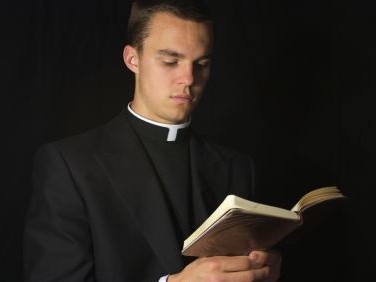
In the last three chapters, I’ve shared the stories of three women who played important roles in shaping the person I would become: Mother, Auntie Katie, and Auntie Baby. In Chapter Six of my work in progress, I tell the story about the handsome, young seminarian who entered my life and changed its course: Michael (fictitious name), my first love. At thirteen years old when we first met, I had already developed a close relationship with Jesus, but it was Michael who set me on the path to the religious life.

My deepening relationship with Jesus was a well-guarded secret. To speak of my love for Jesus was out of the question. As I’ve mentioned in an earlier chapter, we were not a family of huggers and kissers. What’s more, those three little words “I love you” were not uttered among us.

For right or wrong, good or evil, truth or deception, I was shaped by the society that sustained me. During those early days of youthful innocence, our country was undergoing political, economic, and social upheavals that would later remold my self-identity.

Continue reading

“The Orbis Spike, 1610” – Poem by Trinidadian Poet Jennifer Rahim

Tags

, , , , , ,

Trinidadian Poet Jennifer Rahim (1963-2023)
Photo Credit: Peepal Tree Press Ltd.

My Poetry Corner November 2023 features the poem “The Orbis Spike, 1610” by Jennifer Rahim from her poetry collection Sanctuaries of Invention (UK, 2021). Born in the Caribbean Island of Trinidad in 1963, Jennifer Rahim was an award-winning poet, fiction writer, and literary critic. She held a BA (1987) and PhD (1993) in English Literature, and an MA in Theology (2016). After joining the University of the West Indies, St. Augustine in 1997 as a lecturer in the Department of Liberal Arts, she went on to teach a range of courses at both undergraduate and postgraduate levels, including creative writing, literary criticism, and feminist theory. She died unexpectedly in March 2023, leaving behind a substantial body of published work.

Most of the poems in Rahim’s collection were written during the Covid-19 lockdown and a state of emergency in Trinidad. Her poems address the nature of time, place, and mass death. In “Gone Viral,” she notes in the opening lines (p. 18):

Some words return to haunt us at the root.
The world reels from an underrated flu – gone viral,
as when a presidential gaffe becomes a kind of math.
Exponential: Many people will die who have never died before.

She recalls, too, in the opening verse of “Survival” (p. 19):

Any number of days is one too many
when home is no safe haven against the death
that roams neighborhood streets,
coughs on a public bus,
reaches for toothpaste on a grocery shelf,
jogs by in less friendly parks. . . 
Continue reading

Thought for Today: A Great Nation

Tags

,

Photo Credit: Pexels, ArtHouse Studio

A great nation is like a great man:
When he makes a mistake, he realizes it.
Having realized it, he admits it.
Having admitted it, he corrects it.
He considers those who point out his faults
as his most benevolent teachers.
He thinks of his enemy
as the shadow that he himself casts.

Excerpt from Chapter 61 of Tao Te Ching by Lao-tzu, as translated by Stephen Mitchell, HarperPerennial, New York, USA, 1988.

Lao-tzu, a legendary ancient Chinese philosopher, is believed to have lived during the sixth century BCE. He is considered to be the founder of Taoism.