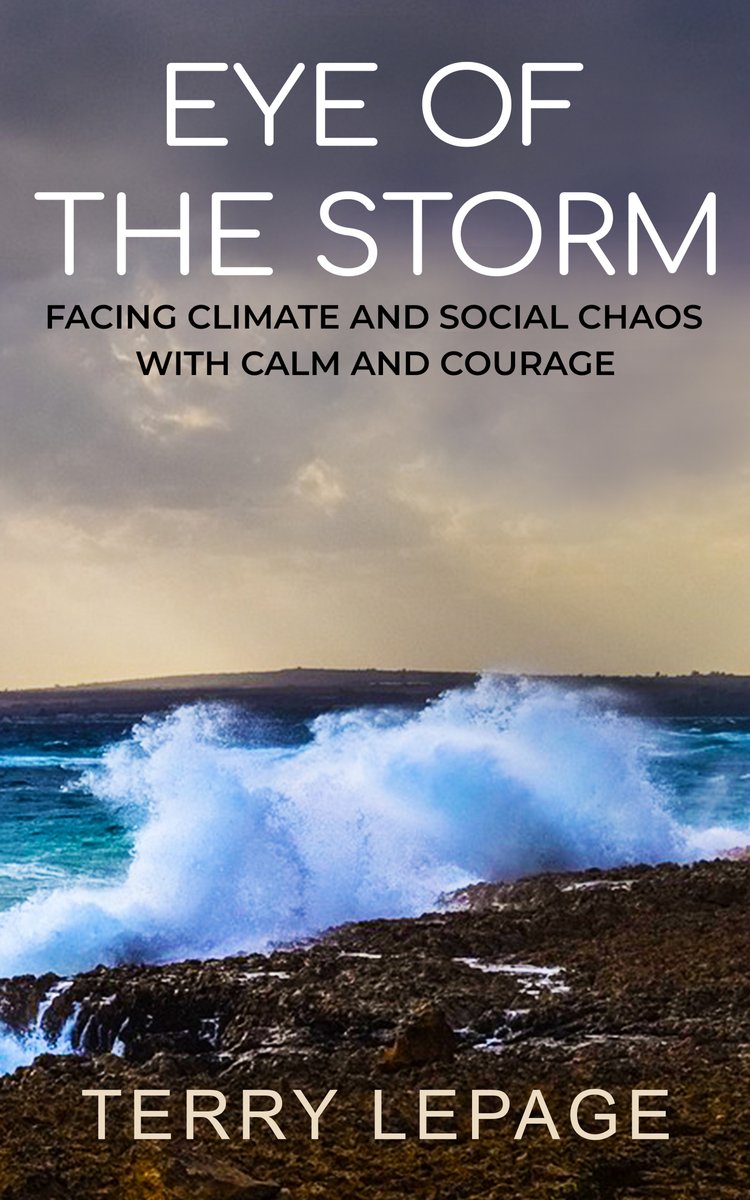
Front Cover: Eye of the Storm: Facing Climate and Social Chaos with Calm and Courage by Terry Lepage Photo Credit: Open Door Communication (USA, 2023)
[D]ue to the baked-in heating of the planet, we are experiencing ever-increasing regional catastrophes across the globe from storms, fires, floods, droughts, crop failures, and heat waves. A barrage of local, regional, and specific collapses on an uncertain time frame against a background of more general decline seems to be in store, rather than one grand collapse…. This is the storm we face.
Fear is contagious, calm is contagious, and courage is contagious. Those of us who have some idea of what is unfolding can prepare ourselves mentally, emotionally, and spiritually to be (as we are able) centers of calm, compassion, and courage. We can be ready to coach others to hold onto their values in hard times. Because we will have pre-processed some of the loss that others will deny for a while longer, we will be able to support them when they finally face what comes.
Excerpt from Eye of the Storm: Facing Climate and Social Chaos with Calm and Courage by Terry Lepage, Open Door Communication, California, USA, 2023 (pp. 11 & 12).
Terry LePage creates spaces for connection, healing, insight, and inspiration. With a PhD in chemistry and a Master of Divinity, she combines heart and head with her clear and insightful writing, speaking, and facilitation. She has worked as a research chemist, transitional minister, and hospice chaplain. She currently lives in Southern California and facilitates Nonviolent Communication practice groups, grief circles, and social justice groups both locally and for the international Deep Adaptation Forum.
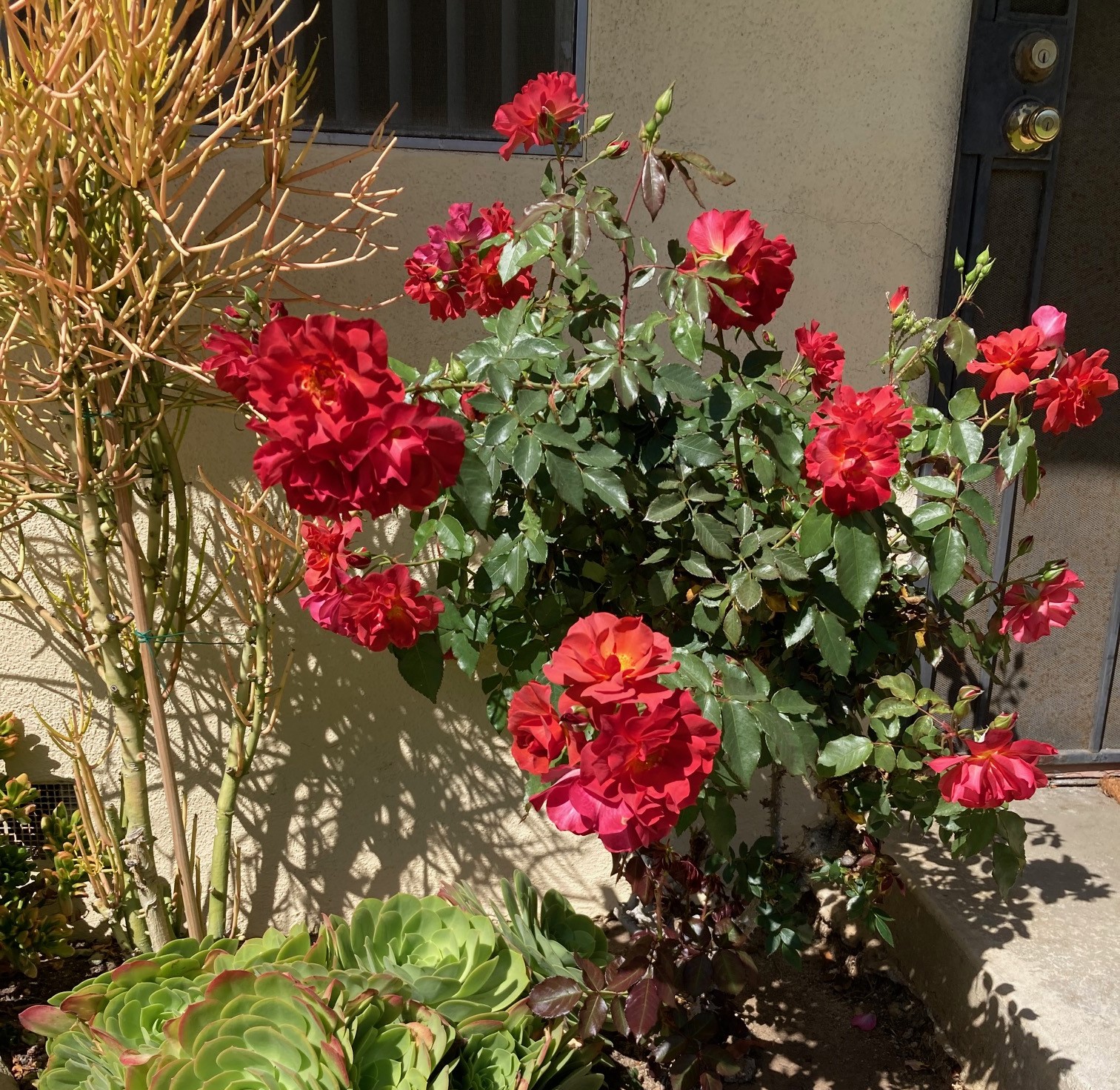
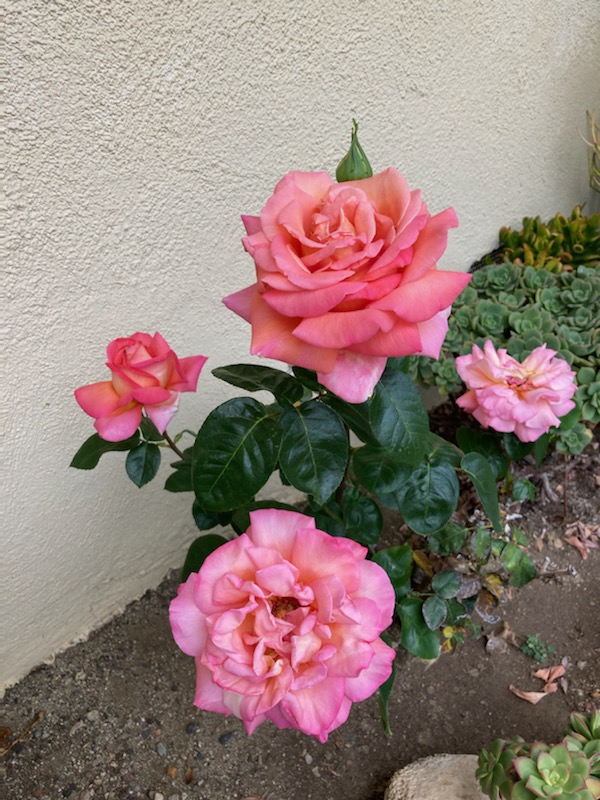
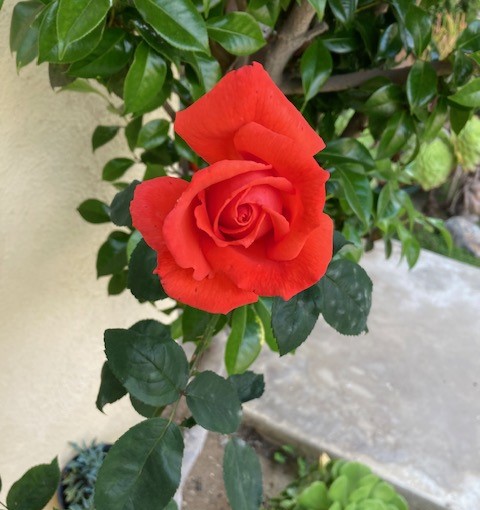
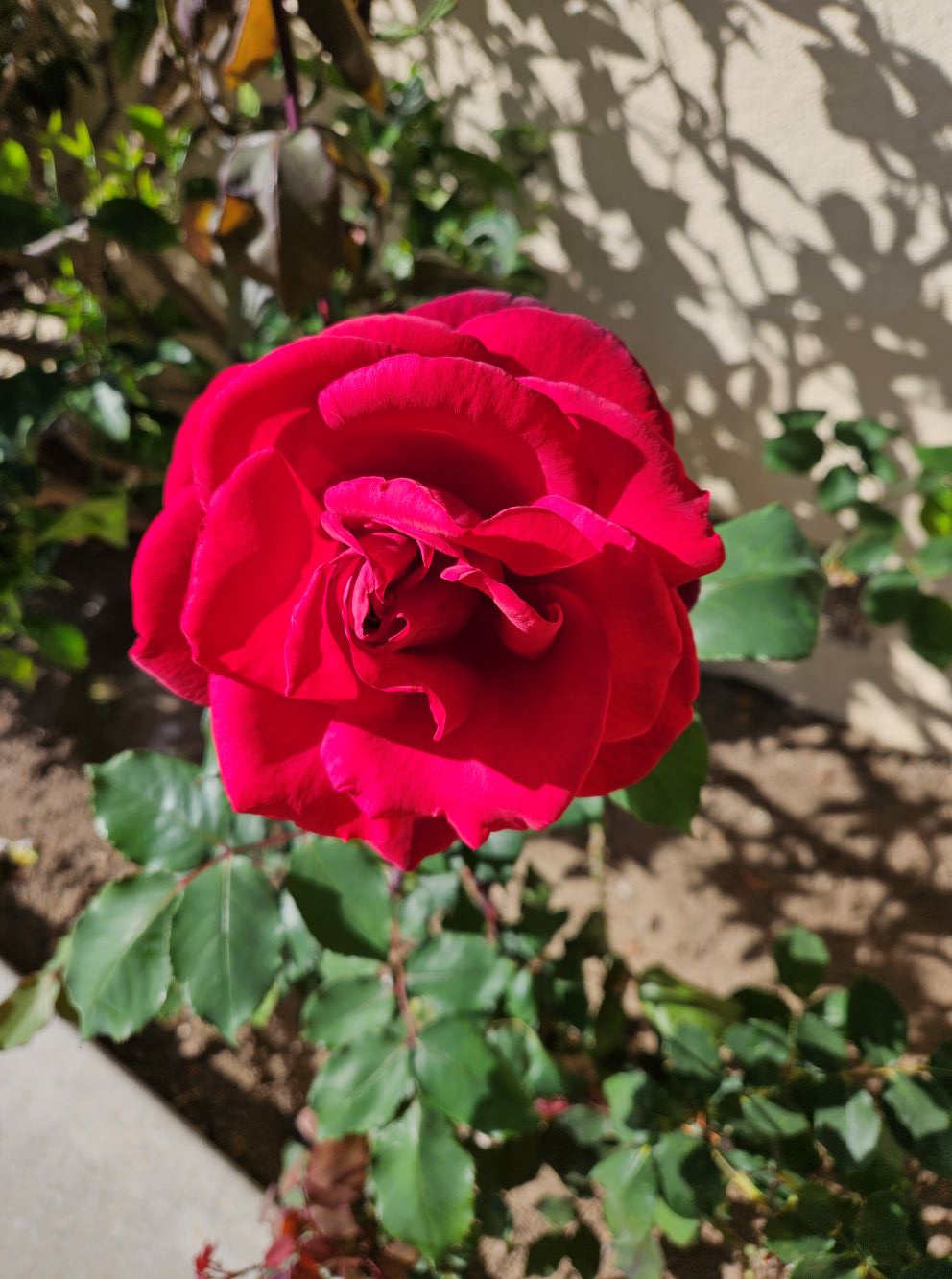
Fragrant Red Rosebush – Spring 2024 – Los Angeles – Southern California
With an ongoing global climate crisis, due to humanity’s addiction to fossil fuels, our weather swings from one extreme to the next. Heat domes. Prolonged drought. Rain bombs. Epic floods. We’re not the only ones impacted. So are the trees and plants. Unlike those of us who can find shelter, they must face the elements head-on. Some are resilient and adaptive. Others are not so fortunate.
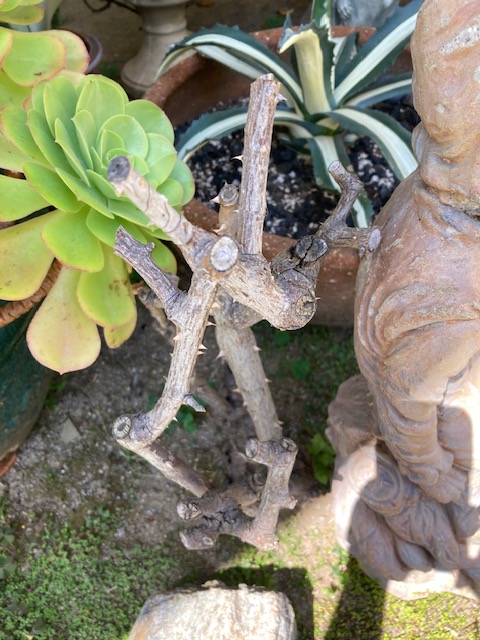
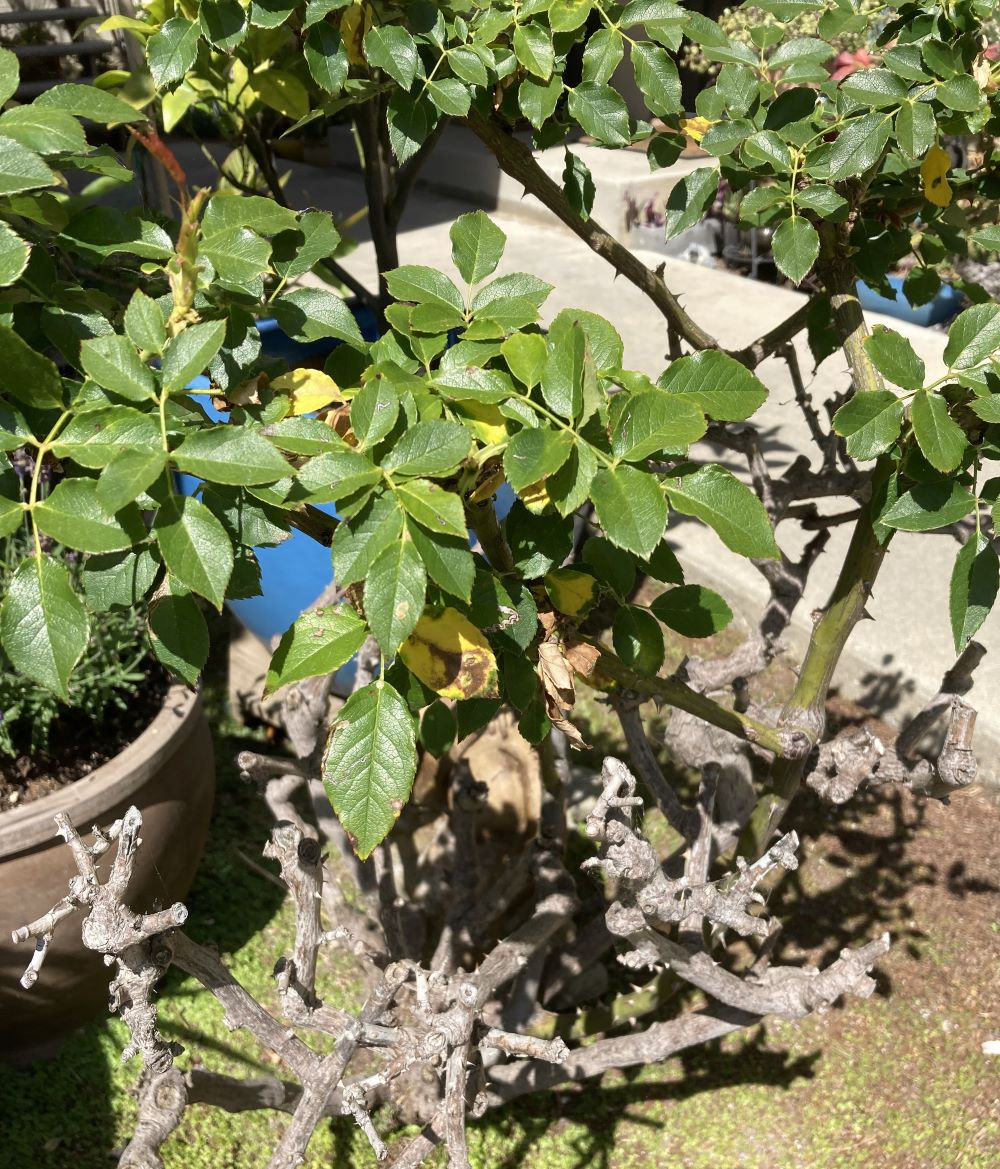
I’ve observed that the rosebushes in our communal garden are more sensitive to these extremes than my succulent plants. Over the years, we have lost 50 percent of our rosebushes, leaving only eight survivors. The two most recent losses, of the white Hedgerow variety, occurred after the Winter 2022-2023 heavy rains. Grown in an area fully exposed to the elements, their roots sat for three months underwater.
The photo on the left below shows one of them. I haven’t asked the gardener to uproot it in the hope that there may still be some lingering life. The photo on the right is also a white Hedgerow rosebush that stands at the other end of the same exposed plot. After standing for three months in the Winter 2023-2024 floodwater, it’s not doing well. In spring, it’s usually filled with lots of sprawling leaf-laden branches and roses. During our “gray May,” it produced only one tiny rose. I fear that it will not survive another wet winter.
Dead White Rosebush – Winter 2022-2023White Rosebush – Spring 2024
About seven years ago, I undertook to clean up the garden plot of a former neighbor and friend, a food stylist, who had moved back to her home state when her husband Benny took ill with lung cancer. He died months later in January 2016. In March the following year, my best friend and poet also died of lung cancer. Taking care of this plot became part of my grieving process.
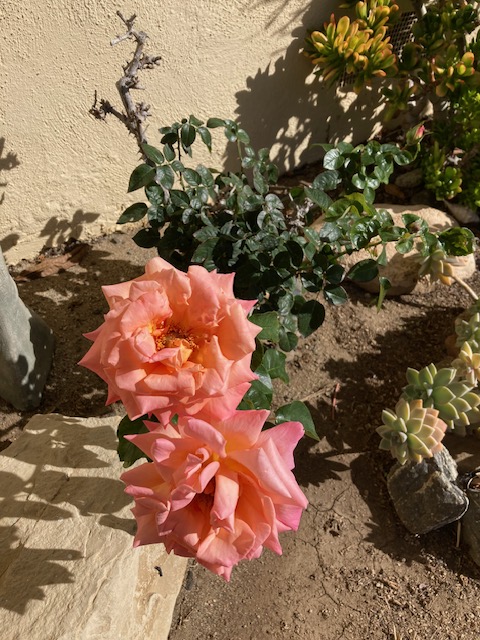
After clearing the dense overgrowth of cactus plants, I uncovered the stunted dead trunk and branches of what appeared to be a rosebush. The six-inch tall (15 cm) plant had been smothered by more aggressive plants. For two years I watered it without any sign of life. Then, wonders of wonders, a new branch appeared with tender baby leaves. My care and attention had paid off. The first and single stunning pink rose appeared a year later. Then in 2022, it thanked me with five roses (see photo on the left below). My Miracle Rosebush, as I call it, continued to produce up to six flowers each spring, but I’ve noticed a change in the color and shape, as shown in the photo on the right below. Resilience has its limits as we age.
Stunted Miracle Rosebush – Spring 2022Stunted Miracle Rosebush – Spring 2024
My former food stylist neighbor planted the captioned fragrant red rosebush. Then just a small potted plant used in one of her photo shoots, it has grown into the hardiest and most luxurious of our rosebushes that keeps on giving. It reminds me of our neighbor Benny who is no longer with us. Healing after loss can come in unexpected ways.
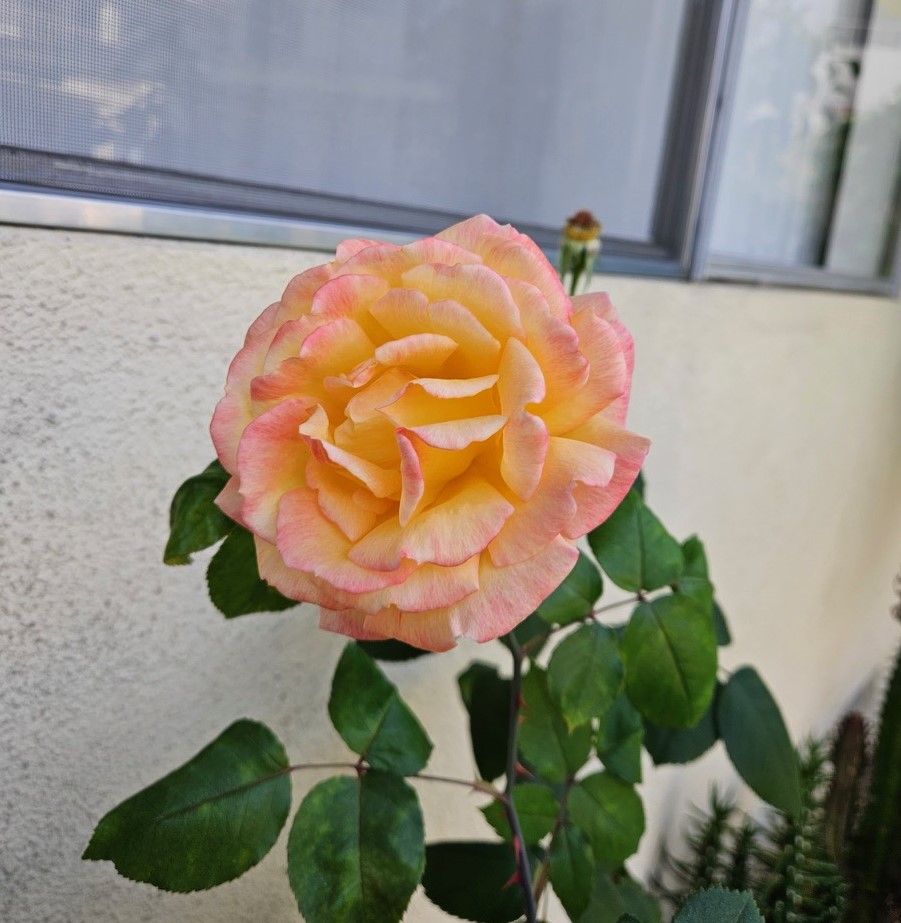
Three other rosebushes also brighten my days with their unique beauty and vibrancy, as pictured below. The two remaining rosebushes are not yet in bloom. Hopefully, with the “gray May” and early “June gloom” now behind us, they will awaken to the summer heat.
The photos below were taken by a neighbor and dear friend who, sad to say, has recently moved out-of-state. In the early spring, I also lost my young gardening enthusiast and companion who moved to another neighborhood, trading her garden space for a dog park and ocean-view. Our lives, like the weather and climate, are continually in motion. I adapt as best as I can and, like the rosebushes, bloom in due season.
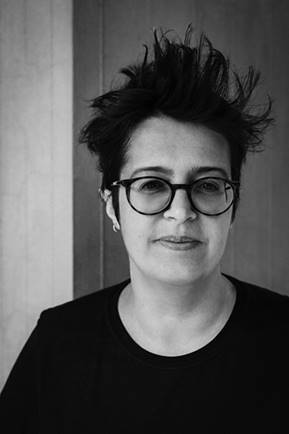
Brazilian Poet Angélica Freitas Photo Credit: Dirk Skiba / Companhia das Letras, Brazil
In my Poetry Corner June 2024, featuring a Brazilian poet, I would like to call attention to a climate change disaster that struck the people of Porto Alegre, capital of Brazil’s southernmost state of Rio Grande do Sul.
The contemporary poet and translator Angélica Freitas is no newcomer to my Poetry Corner. In May 2019, I featured her poem “the woman is a construction” from her poetry collection a uterus is the size of a fist / um útero é do tamanho de um punho (2012). This month’s featured poem “porto alegre, 2016” is from her third collection Songs of Torment /Canções de Atormentar (2020). In this collection, she takes a wider view of injustice, machismo, and her disillusion with the Brazilian dream that’s still out of reach for the majority.
Born in Pelotas, Rio Grande do Sul, in 1973, Angélica Freitas began writing poetry at the age of nine, but her journey to finding herself as a poet took a long and circuitous route. Her discovery, at fifteen years, that she was gay made it difficult to fit in with her peers. Bullies found her and easy target. Then, her father’s sudden death when she was eighteen upended her dream to study in Glasgow, where she spent six months with a Scottish girlfriend.
With her mother’s insistence that she earn a university degree, she opted to pursue a career in journalism at the Federal University of Rio Grande do Sul in Porto Alegre. She remained in the capital after graduation, where she could be invisible. In 2000, an unexpected acceptance as a trainee with O Estado de São Paulo, one of Brazil’s largest newspapers, led her to the metropolis of São Paulo.
Freitas confessed that she wasn’t a good reporter, but that the experience exposed her to the other realities of life. During a period of depression in 2005, she attended a poetry workshop conducted by Carlito Azevedo, a poet from Rio de Janeiro, that changed the course of her life. At 31 years old, she realized she was on the wrong path. During an interview for the Public Library of Paraná, she said:
“Okay, I want to write, but it’s not journalism, it’s poetry. You see, that was in my face the whole time. It was what I had been doing since I was little. So that’s it. Best to quit my job and dedicate myself to literature. I called my mother and said I was thinking about spending time in Pelotas. She supported me. Six months later, I resigned, handed over my apartment. Then I returned to Pelotas to organize and finish writing what became my first book, which was called Rilke shake.”
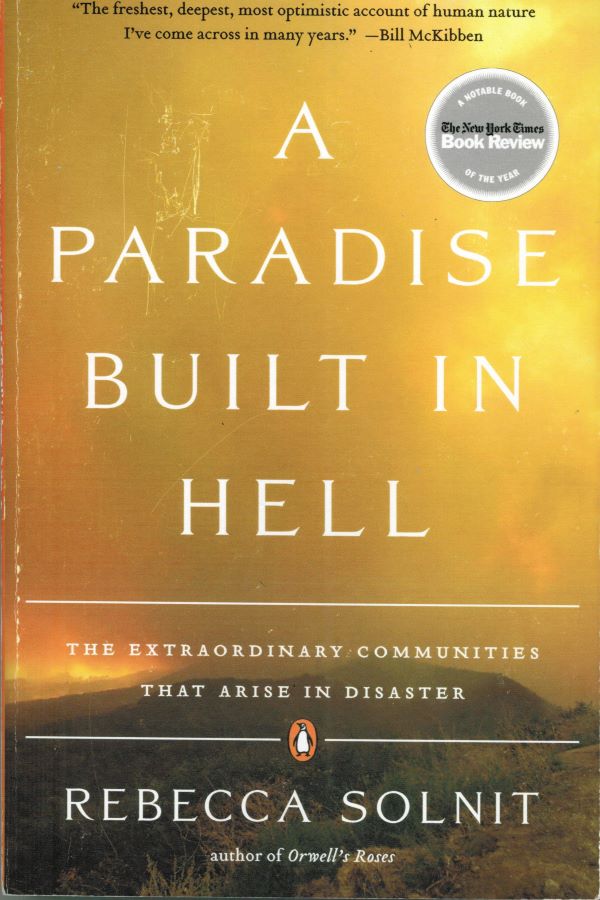
Front Cover: A Paradise Built in Hell: The Extraordinary Communities that Arise in Disaster by Rebecca Solnit Photo Credit: Penguin Books (USA, 2009)
Who are you? Who are we? The history of disaster demonstrates that most of us are social animals, hungry for connection, as well as for purpose and meaning. It also suggests that if this is who we are, then everyday life in most places is a disaster that disruptions sometimes give us a chance to change. They are a crack in the walls that ordinarily hem us in, and what floods in can be enormously destructive—or creative. Hierarchies and institutions are inadequate to these circumstances; they are often what fails in such crises. Civil society is what succeeds, not only in an emotional demonstration of altruism and mutual aid but also in a practical mustering of creativity and resources to meet the challenges.
Excerpt from “Epilogue: The Doorway in the Ruins,” A Paradise Built in Hell: The Extraordinary Communities that Arise in Disaster by Rebecca Solnit, Penguin Books, New York, USA, 2009 (p. 305).
The disasters covered in this book include: Earthquake San Francisco/California/USA (1906), Explosion Halifax/Nova Scotia/Canada (1917), The Blitz/London/UK (1940), Earthquake Mexico City/Mexico (1985), Bombing World Trade Center/New York/USA (2001), and Hurricane Katrina New Orleans/USA (2005).
REBECCA SOLNIT, writer, historian, and activist, is the author of more than twenty books on feminism, western and urban history, popular power, social change and insurrection, hope and catastrophe. Her books include Orwell’s Roses; Recollections of My Nonexistence; Hope in the Dark; Men Explain Things to Me; and A Field Guide to Getting Lost. A product of the California public education system from kindergarten to graduate school, she writes regularly for the Guardian, serves on the board of the climate group Oil Change International, and recently launched the climate project Not Too Late (nottoolateclimate.com).
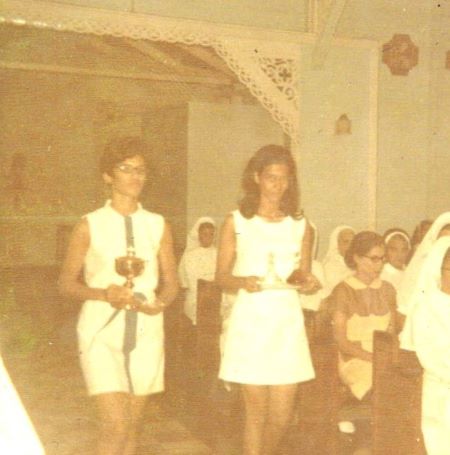
During Mass on Entrance Day – Convent Chapel – January 14, 1971
In Chapter Twelve of my work in progress, I share my experience of adjusting to convent life. The captioned photo was taken during Mass on our Entrance Day. That’s me on the left carrying the chalice. Celeste (fictitious name) served within the religious community until her death in November 2021. The laywoman with glasses, seated in the pew on the right, is my invitee and senior high school geography teacher, another influential woman during my adolescent years.
As far as I know [Celeste used to keep me up to date with news], only two nuns who welcomed the two of us into the community that day are still alive today. I honor the memory of the Sisters in Christ who, by their exemplary life, shaped my formation into the purpose-driven woman I still am today.
Instead of featuring the life of a particular nun, I decided to focus on adjusting to convent life (Chapter 12) and on the three religious vows of poverty, chastity, and obedience (Chapter 13) that define the life of the religious woman.
MyPoetry Corner May 2024 features the poem “To Enter My Mother’s House” from the debut poetry collection Doe Songs by poet and artist Danielle Boodoo-Fortuné, published by Peepal Tree Press (UK, 2018). The collection won the 2019 OCM Bocas Prize for Poetry.
Born in 1986 in the twin-island Caribbean nation of Trinidad & Tobago, Danielle Boodoo-Fortuné holds a Bachelor of Arts Degree in Literatures in English from the University of the West Indies, St. Augustine campus, where she later completed a Creative Writing Course in Poetry, taught by award-winning Trinidadian poet Jennifer Rahim (1963-2023).
Danielle was raised by her two grandmothers: Her maternal grandmother is of East Indian descent; her paternal grandmother is African and Chinese. One of her grandmothers was a secondary school English teacher who introduced her to reading and writing poetry at an early age. But it was not until joining Jennifer Rahim’s creative writing class that Danielle saw the power of poetry and committed to the craft.
“Poetry speaks not only of your brain and soul, but of your belly, your bones,” she said in a 2010 interview with Caribbean Literary Salon. “It is that bare truth and intensity that I love so much about poetry… the physicality of those simple words.”
The first indication that something was brewing came from a close friend in San Francisco. She called asking if I had just sent her an email inviting her to some special dinner event.
“No,” I told her, puzzled.
“I knew it!” she said. “I told [name of husband] not to click on the link.”
We chatted about this strange situation.
“A couple days ago, I received a dinner invitation on Facebook from a writing friend,” I told her. “It seemed odd; I didn’t click on the link.”
After ending our call, I accessed the said email account. I was surprised to see the warning: Your account may be compromised. We recommend that you change your password. I did so, immediately.
How had someone gained access to my email account without my knowledge? I prayed that no one on my contact list had fallen for the scam. Surely, they must know that I wouldn’t ask them for money.
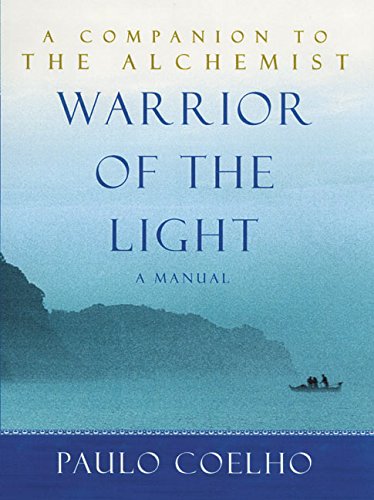
Front Cover – Warrior of the Light: A Manual by Paulo Coelho
“Hitler may have lost the war on the battlefield, but he ended up winning something too,” says Marek Halter, “because man in the twentieth century created the concentration camp and revived torture and taught his fellow men that it is possible to close their eyes to the misfortunes of others.”
Perhaps he is right: There are abandoned children, massacred civilians, innocent people imprisoned, lonely old people, drunks in the gutter, madmen in power.
But perhaps he isn’t right at all, for there are also Warriors of the Light.
And Warriors of the Light never accept what is unacceptable.
Excerpt from Warrior of the Light: A Manual by Paulo Coelho, Translated from the Portuguese by Margaret Jull Costa, HarperOne, New York, USA, 2003, p. 70.
PAULO COELHO, born in Rio de Janeiro in 1947, is a Brazilian lyricist and novelist, best known for his novel, The Alchemist (1988). His work has been published in more than 170 countries and translated into eighty languages. His books have had a life-enchanting impact on millions of people worldwide.
Barclays Bank DCO – Water Street Head Office – Georgetown – British Guiana – Circa 1950s
In Chapter Eleven of my work in progress, I share my experience of entering a male-dominated workforce at the age of eighteen years. It’s the period October 1969 to December 1970. The term “sexual harassment” was not yet in use to describe male sexual overtones and intimidation in the workplace. According to a Wikipedia article, the term was first used in May 1975.
In November 1969, while I entered a new phase in my life as a young woman, hundreds of thousands of protestors took to the streets across America to call for an end to the Vietnam War. In the United Kingdom, John Lennon of The Beatles rock band returned his MBE medal in protest to the British government’s support of the war. Richard Nixon’s inauguration as President of the United States in January 1970 eventually brought a withdrawal of all US troops in 1973.
On February 23, 1970, Guyana became the first Republic in the Commonwealth Caribbean. The country’s official name is the ‘Cooperative Republic of Guyana.’ Queen Elizabeth II, the Head of the British Commonwealth, entered her eighteenth year on the throne. Later in the year, Sir Edward Heath replaced Harold Wilson as Prime Minister of the United Kingdom.
On Guyana’s radio waves, Peter, Paul and Mary were “Leaving on a Jet Plane.” Simon & Garfunkel offered us a “Bridge Over Troubled Waters,” while The Beatles urged that we “Let It Be.” The Jamaican reggae artist Bob Marley & the Wailers released their first album “Soul Rebels.”
My Poetry Corner April 2024 features the poem “Earth Crisis” from the poetry collection We Are Poetry: Lessons I Didn’t Learn in a Textbook (USA, 2022) by Kym Gordon Moore, an African American poet and marketing communications professional. The following excerpts of poems are all sourced from this collection.
Moore earned a Bachelor’s Degree in Criminal Justice and a Master of Business Administration degree with a concentration in Marketing. Born and raised in South Carolina, she now lives in Charlotte, North Carolina.
With over four decades as a writer and public speaker in marketing communications, Moore has become an advocate of using poetry in the fight against illiteracy and aliteracy among children and adults. She also mentors young and aspiring poets by identifying commonalities in their personal stories while exposing them to diverse opportunities that transform their experiences into creative development.
Moore’s latest book is not your regular collection of poetry. As noted on the back cover: “This book contains several components that serve as an academic complement giving creative insight into the poetry revolutionary movement. It functions as a dialogue engineer, designed to build and employ the application of poetry in the fight against illiteracy, functional illiteracy, aliteracy, and disparity.”





 Three Worlds One Vision