“If I Had A Hammer” by Pete Seeger & Lee Hays

Tags

, , , , , , , ,

us-post-election-2016-stop-hate-crimes-against-muslims

U.S. Post-Election 2016 – Stop Hate Crimes – Muslim Lives Matter
Photo Credit: Quartz.com


In keeping with my end-of-year tradition, I feature a song on my Poetry Corner December 2016. Bob Dylan’s award of the 2016 Nobel Prize in Literature prompted my choice. In the uncanny way that our memory weaves songs and events into our lived experiences, the song “If I Had A Hammer” forced its way to the frontline and hammered for attention. I discovered that Bob Dylan didn’t write this song. We owe this tribute to America’s folk singers and social activists Pete Seeger and Lee Hays who wrote and recorded it in 1949.

If I had a hammer
I’d hammer in the morning
I’d hammer in the evening
All over this land
I’d hammer out danger
I’d hammer out a warning
I’d hammer out love between
My brothers and my sisters
All over this land

Owing to the political controversy surrounding the lyrics and Seeger’s connection with the Communist Party, the song disappeared from public radio and TV. But folk songs with an enduring message never die.

During the Civil Rights Movement and anti-Vietnam War rallies of the 1960s, the song surfaced anew. With a new melody and the harmonized voices of the folk singing trio, Peter, Paul & Mary, the song soared to the #10 position of the top charts in October 1962. Eleven months later, the Latin-tempo rendition by Trini Lopez catapulted the song to #3.

I was a kid when the song hit the top charts in my home-town Georgetown in what was then British Guiana. With its feisty beat and repetitive lyrics, the song became an instant hit among us kids. We banged out the rhythm with sticks on pots and other makeshift drums.

It’s the hammer of justice
It’s the bell of freedom
It’s a song about love between
My brothers and my sisters
All over this land

The years leading up to our country’s independence from Great Britain in May 1966 were dark days in our small world on the shores of South America. On winning the 1961 General Elections, the East Indian left-wing socialist party gained the right to lead the colony to independence. This development troubled Uncle Sam. After Fidel Castro had seized power in Cuba, the Americans feared the spread of communism in their backyard. Those were the days of Cold War I.

With financial support from Uncle Sam, the opposition parties incited demonstrations and strikes across the country. The fire that razed the capital’s commercial district on February 16, 1962, was just the beginning of the racial/ethnic struggle between the leadership of the majority black and East Indian populations for supremacy in the emerging nation.

Today in America, our President-elect has unleashed the demons of bigotry, misogyny, and xenophobia all over this land. The struggle continues. Once again, we must hammer out our need for justice, freedom, and love.

See the complete song “If I Had A Hammer,” learn more about Pete Seeger and Lee Hays, and listen to Trini Lopez’s rendition of the song at my Poetry Corner December 2016.

Our Sacred Responsibility as Human Beings

Tags

, , , , ,

protestors-at-standing-rock-north-dakota-access-pipeline-september-2016

Protesters demonstrate against the Dakota Access oil pipeline near the Standing Rock Sioux reservation
North Dakota – United States – September 9, 2016
Photo Credit: Andrew Cullen / Reuters


My third quote for the ‘Three Quotes for Three Days’ challenge – an invitation from British author and blogger Frank Parker – comes from Tom Goldtooth, a Native American environmental leader and executive director of the Indigenous Environmental Network (IEN) since 1996. It’s an excerpt from his keynote address, “The Sacredness of Mother Earth,” at the Bioneers National Conference held on October 18-20, 2013.

The European concept of the natural world which has become a dominant concept worldwide – where knowledge and culture are property, with the attitude that commodities are to be exploited freely and bought and sold at will – has resulted in disharmony between beings and the natural world, as well as the current environmental crisis threatening all life. This concept is totally incompatible with the traditional indigenous worldview… Our sacred responsibility is to safeguard and protect this world. Human beings are not separate from the natural world but were created to live in an integral relationship with it. That’s what we have to offer. Continue reading

On Gratitude by Brazilian Poet Maria Cristina Gama de Figueiredo

Tags

, , , ,

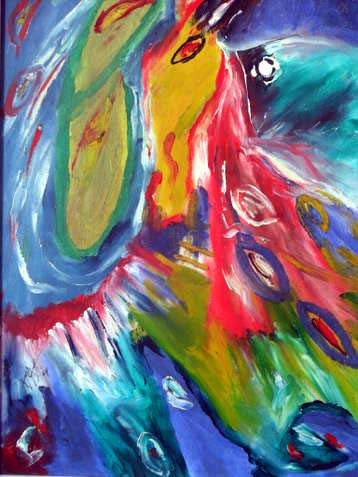
cavalo-pavao-oil-painting-by-maria-cristina-gama-de-figueiredo-1998

Cavalo Pavão (Peacock Horse) 1998
Oil Painting by Maria Cristina Gama de Figeiredo
Photo Credit: CristinaGamaEscritora Blogspot


My Poetry Corner November 2016 features a poem on gratitude by Brazilian poet, painter, and philosopher Maria Cristina Gama de Figueiredo (1964-2010), born in Aracaju, the capital of Sergipe in Northeast Brazil.

Very little about the life of the poet is available online. She died at the relatively young age of forty-six years. Newspaper articles about her passing don’t state the cause of death. Her producer for more than twelve years defined her “as a restless soul who managed to transform her pain into art.” Was her pain emotional, physical, or both? I don’t know.

The journalist and historian Luiz Antonio Barreto (Sergipe/Brazil, 1944-2012) noted that Maria Cristina Gama always stood out for her irreverent and strong personality revealed in her writings, by thinking of poetry “with reflection that goes beyond language to become an instrument that art brings to the cultural dialogue of peoples.”

Continue reading

Caught in a Storm Surge

Tags

, , , ,

hurricane-matthew-storm-surge-threatens-u-s-eastern-seaboard-october-2016

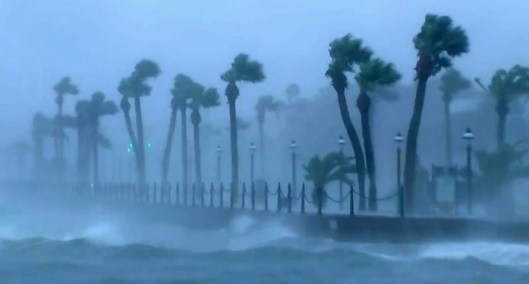
Hurricane Matthew – Storm Surge Threatens U.S. Eastern Seaboard – October 2016
Photo Credit: NBC Nightly News


Warmer oceans
Fearsome winds drive clouds of water bombs
Caught in a storm surge

In Aleppo
Lives mean nothing to take out Assad
Caught in a storm surge

Video tape
Unmasks groping billionaire
Caught in a storm surge

Hacked email files
Reveal deception of Favored One
Caught in a storm surge

U.S. & Russia
In stalemate over Syria
Caught in a storm surge

Temperatures rise
War drums roll between nuclear powers
Caught in a storm surge

Whatever our choice
Come November at the polls we are
Caught in a storm surge

Winds gather force
I hold onto Wisdom to save us
Caught in a storm surge

Paris Climate Change Agreement enters into force 4 November 2016

Tags

, ,

Secretary-General at Paris Agreement Ratification Ceremony.
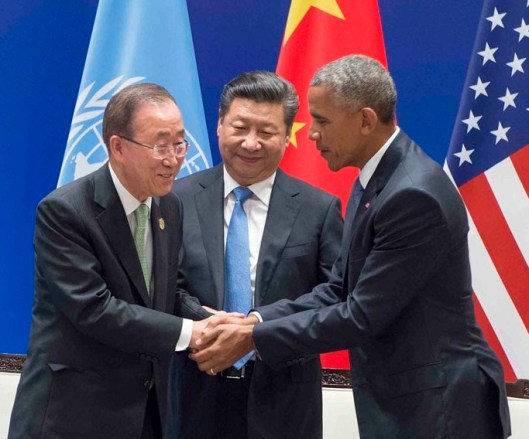
Secretary-General Ban Ki-moon at Paris Agreement Ratification Ceremony. From Paris to Hangzhou – Climate Response in Action. H.E. Mr. XI Jinping, President of the People’s Republic of China and H.E. Mr. Barack Obama, President of the United States of America present the instrument for the Paris Agreement to the Secretary-General.
Photo Credit: United Nations /Eskinder Debebe


On October 5, 2016, the U.N. Secretary-General Ban K-moon announced that the Paris Climate Change Agreement will enter into force on November 4, 2016.

Read his full statement.

“The Body Politic” – Poem by Caribbean Poet Nicholas Damion Alexander

Tags

, , , ,

racism-is-systemic

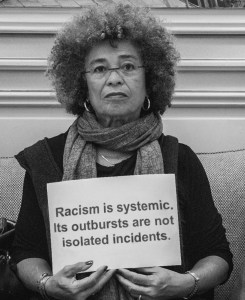
Systemic Racism
Source: Common Dreams


My Poetry Corner October 2016 features the poem “The Body Politic” by Nicholas Damion Alexander, poet and teacher of English and Philosophy from the Caribbean island of Jamaica.

Alexander’s work first caught my attention with “My Mother’s Salt” published in the anthology of 100 Calabash Poets, So Much Things To Say (Akashic Books, 2014). In the first of four stanzas, we learn that the poet is of mixed ethnicity – union of a black mother and white father that brought diversity to their lives.

My mother cooked with salt,
flavoring our lives
with the spice of her choice…
A white grain from the sea
that added new worlds of taste
to children made of mixed spices.

But the union of the poet’s parents did not endure. In “The Love of a Father,” Alexander confesses that, with the passage of time, he has come to love his father more. (In the excerpt below, her refers to the poet’s mother.) Continue reading

“Calling All Grand Mothers” – Poem by Alice Walker

Tags

, , ,

Hard-Times-Require-Furious-Dancing-Alice-Walker-Front Cover

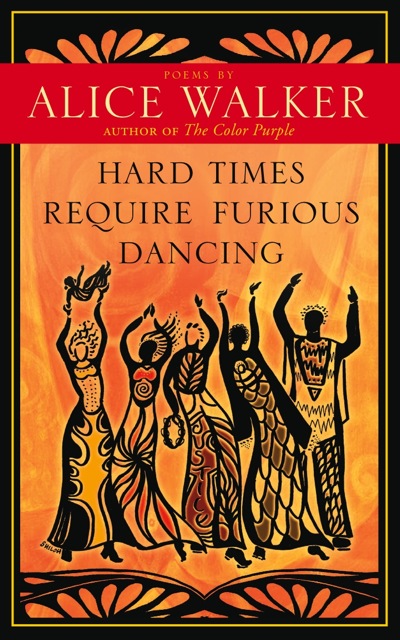
Hard Times Require Furious Dancing by Alice Walker
Photo Credit: New World Library


My Poetry Corner September 2016 features the poem “Calling All Grand Mothers” from the poetry collection, Hard Times Require Furious Dancing, by Alice Walker, an African American poet, writer, and activist.

Renowned for her Pulitzer Prize winning 1982 novel, The Color Purple, Alice Walker started her literary writing career as a poet at the age of seven or eight in the racially segregated southeastern state of Georgia. Her first poetry collection (1968) drew from her experiences in the Civil Rights Movement in the 1960s.

The title of Walker’s poetry collection caught my attention. She notes in the Preface: “I share losses, health concerns, and other challenges common to the human condition, especially in these times of war, poverty, environmental devastation, and greed that are quite beyond the most creative imagination… I have learned to dance… for maintaining balance.”

We have hardened towards violence at home and endless wars overseas. We have hardened towards the plight of refugees fleeing our bombs. We have hardened towards the destruction of our ecosystems and extinction of thousands of other species.

Walker reminds us that we are One Earth / One People / One Love.

In “Watching You Hold Your Hatred,” Walker observes:

There is no / graceful / way / to / carry / hatred.
While / hidden / it is / everywhere.

Walker dedicates “Loving Humans” to Aung San Suu Kyi, the then Burmese opposition activist under house arrest:

Loving humans / makes us / want / to invite / ourselves to tea / with rancid / dictators

~ Dictators who may be scheming how to poison, stone, or waterboard us to death.

Although I’m not a grandmother and have never known my grandmothers, the poem that most resonated with me was “Calling All Grand Mothers.” Fortunate to share time and space with the young kids in the apartment complex where I live, I consider myself as possessing the Grand Mother / spirit / of respect for / life / & / protection of / the young…

The poet rallies all grandmothers across our planet to rise and lead:

We have to live / differently / or we / will die / in the same / old ways…

To lead humanity / to health, happiness / & sanity…

The life of / our species / depends / on it.

In an interview with The Atlantic in March 2012, Walker talked about the need for elder women to be in more leadership positions. She noted that the voice of the grandmother has been silenced deliberately. “Clearly older women and especially older women who have led an active life or elder women who successfully maneuver through their own family life have so much to teach us about sharing, patience, and wisdom… Until women can lift their voices, take their rightful place, I don’t think we’re going to shift very much.”

To read the complete featured poem and learn more about Alice Walker and her work, go to my Poetry Corner September 2016.


“Sonnet of the Friend” by Brazilian Poet Vinicius de Moraes

Tags

, , , , ,

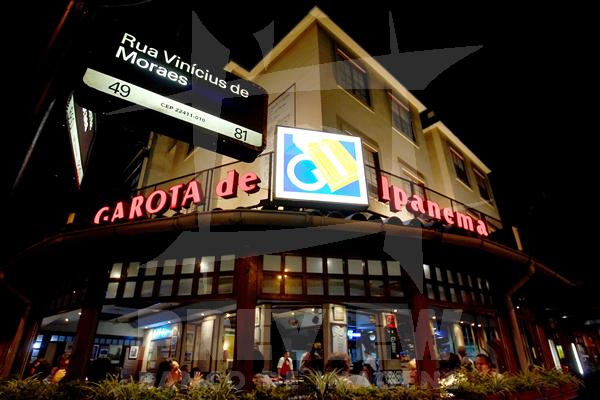
Garota de Ipanema Restaurant - Ipanema Beach - Rio de Janeiro - Brazil

Garota de Ipanema Restaurant – Ipanema Beach – Rio de Janeiro – Brazil
Photo Credit: The Real Rio de Janeiro Blog


My Poetry Corner August 2016, featuring the poem “Soneto do Amigo” (Sonnet of the Friend) by Brazilian poet Vinicius de Moraes (1913-1980), is dedicated to a dear friend who is facing a challenging period.

Born in the city of Rio de Janeiro, then the capital of Brazil until 1960, Vinicius de Moraes is the poet of love and passion. At twenty years, he published his first book of poetry. Two years later, his second collection won Brazil’s National Poetry Award. A diplomat during the period 1946 to 1969, he served in Los Angeles, Paris, and Montevideo. He married nine times and had five children.

Love is a memory
that time doesn’t kill,
the beloved song
happy and absurd…

[“A você, com amor” (To you, with love) by Vinicius de Moraes]

In the 1960s, Vinicius de Moraes contributed his talents as a lyricist and musician to the emergence of the bossa nova which incorporated elements of Brazilian samba and African American jazz. These musical collaborations gave birth to numerous classical Brazilian songs – the most famous being “Garota de Ipanema” (Girl from Ipanema) with Tom Jobim. Continue reading

“Mother in the Morning” – Poem by Caribbean Poet Danielle Boodoo-Fortuné

Tags

, , ,

Gardener of Small Joys - Painting by Danielle Boodoo-Fortune

“Gardener of Small Joys” – Painting by Danielle Boodoo-Fortuné
Source: Wings & Fire

My Poetry Corner July 2016 features the poem “Mother in the Morning” by Caribbean poet and artist, Danielle Boodoo-Fortuné, who lives in the twin island republic of Trinidad & Tobago. Raised by her two grandmothers, her maternal grandmother of East Indian descent and African-Chinese paternal grandmother, Boodoo-Fortuné’s creative work reflects their influence during her formative years.

In her poetry, Boodoo-Fortuné depicts the woman, the sacred feminine, as a hero in her own right regardless of her marital status. This shines through in her featured poem.

In the first stanza, the mother escapes from her morning chores for a moment of solitude.

Mother sips tea in her garden on mornings,
abandoning the kitchen that echoes with breakfast,
lunch kits, laces untied, and the dripping faucet…

The woman’s role as mother does not bind her to the home and caring for her children. She is also a woman who has an inner, separate self, grounded in Mother Earth. The “dripping faucet” suggests that there is no man in her life.

She sits on a cracked footstool in silence
as the heat from the teacup rises,
whispers warm, comforting secrets
only she can understand.

Not only is her life energy sapped daily like the “dripping faucet,” but her family’s future is also at risk of collapsing like the “cracked footstool.” Yet, she does not fall apart. Her inner strength helps her to face another new day.

The second stanza reveals the mother’s relationship with the world and its inherent dangers for a woman.

There are sharp things in the ground
and her hands are soft
but she never wears gloves…

She doesn’t shield herself from being hurt. In doing so, she would also lose the richness that life offers through human relationships.

She is not afraid of the damp, dark earth
with its shards of buried glass and crawling creatures.
She has planted hope,
seen it grown tall.

In her connection with the creative forces of Mother Earth, the mother knows the power of love and hope for the future that she carries deep within her womb.

In the third stanza, the mother becomes a new type of woman born of her pains and struggles as well as those of former generations of women.

When my mother’s hands are in the dew-damp earth
and she is fragile in the morning light,
sharp things are buried in her, …

Though a woman may appear fragile, she has grown strong through her daily struggles to rise above her subservient role in a violent and patriarchal world.

and I realize how the fluorescent kitchen light dims her,
hides the secret flower she is growing
that only blooms when she does.

Until the woman gains equal status with her male counterpart, her gift to the world remains diminished and suffocated. Without her voice in policy-making at all levels of society across our world, there can be no end to the violence she endures daily, the growing chaos, and endless wars.

To learn more about Danielle Boodoo-Fortuné and her work, go to my Poetry Corner July 2016.

Reflections: The Pyramid

Tags

, , , ,

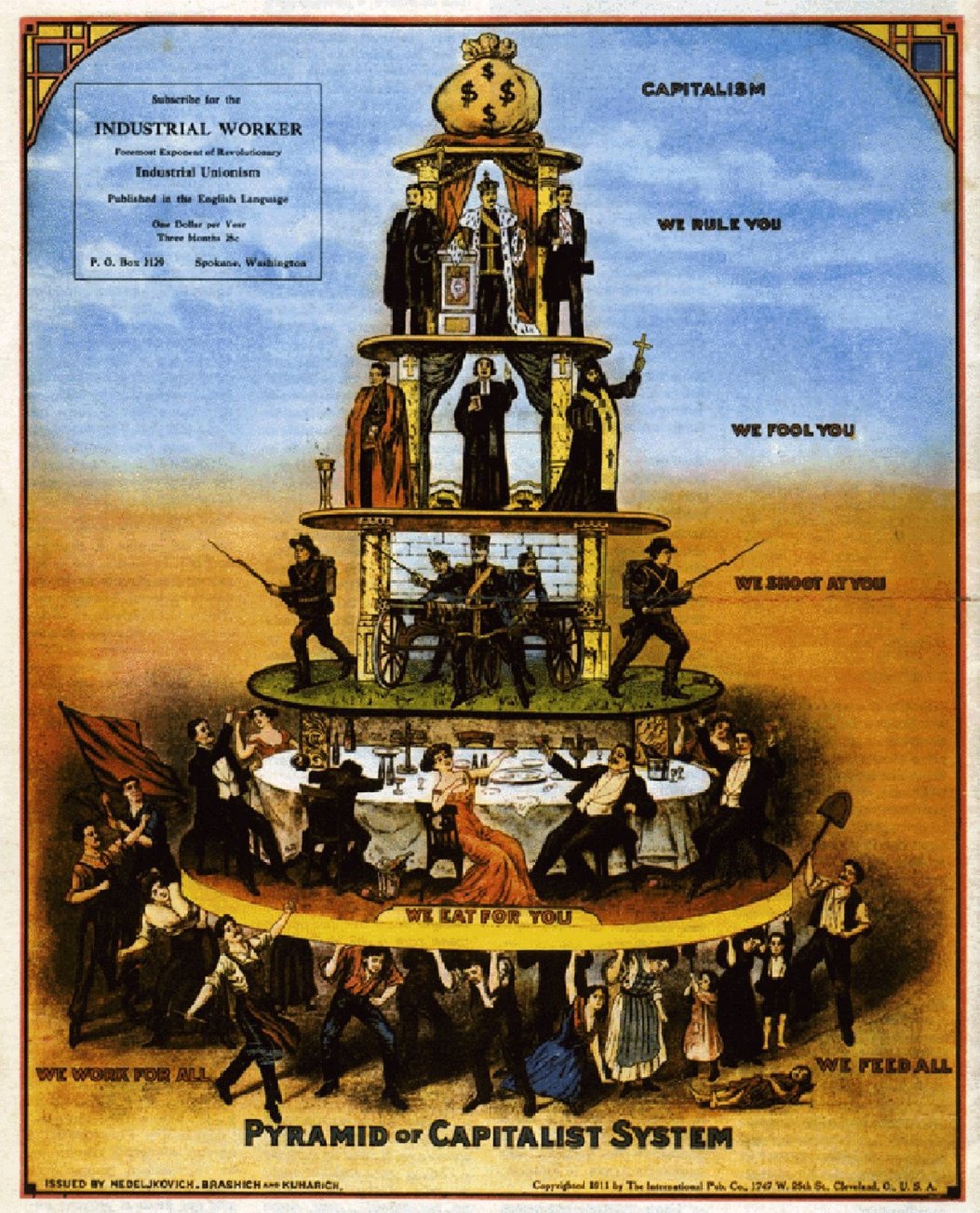
Pyramid of Capitalist System

The Pyramid of Capitalist System
Photo Credit: Evolutionary Economics


The pyramid
primordial mound
rising from the depths
ancient tomb of pharaohs
reflective sides mirroring the sun
gateway to the heavens beyond the earth
transforming the soul for its union with the gods.

The pyramid
tomb of the masses
forever trapped in its base
herded, cajoled & discarded
struggle, fight & kill each other
to sustain the few at the top of the pyre
bloated with their contempt, gorging on human flesh.

The pyramid
legacy of an ancient civilization
points to the heavens, the expanding universe
beyond the limits of our small finite world
to the full realization of our true being
a limitless spirit, capable of the impossible
together as one, sharing the gifts of the earth.