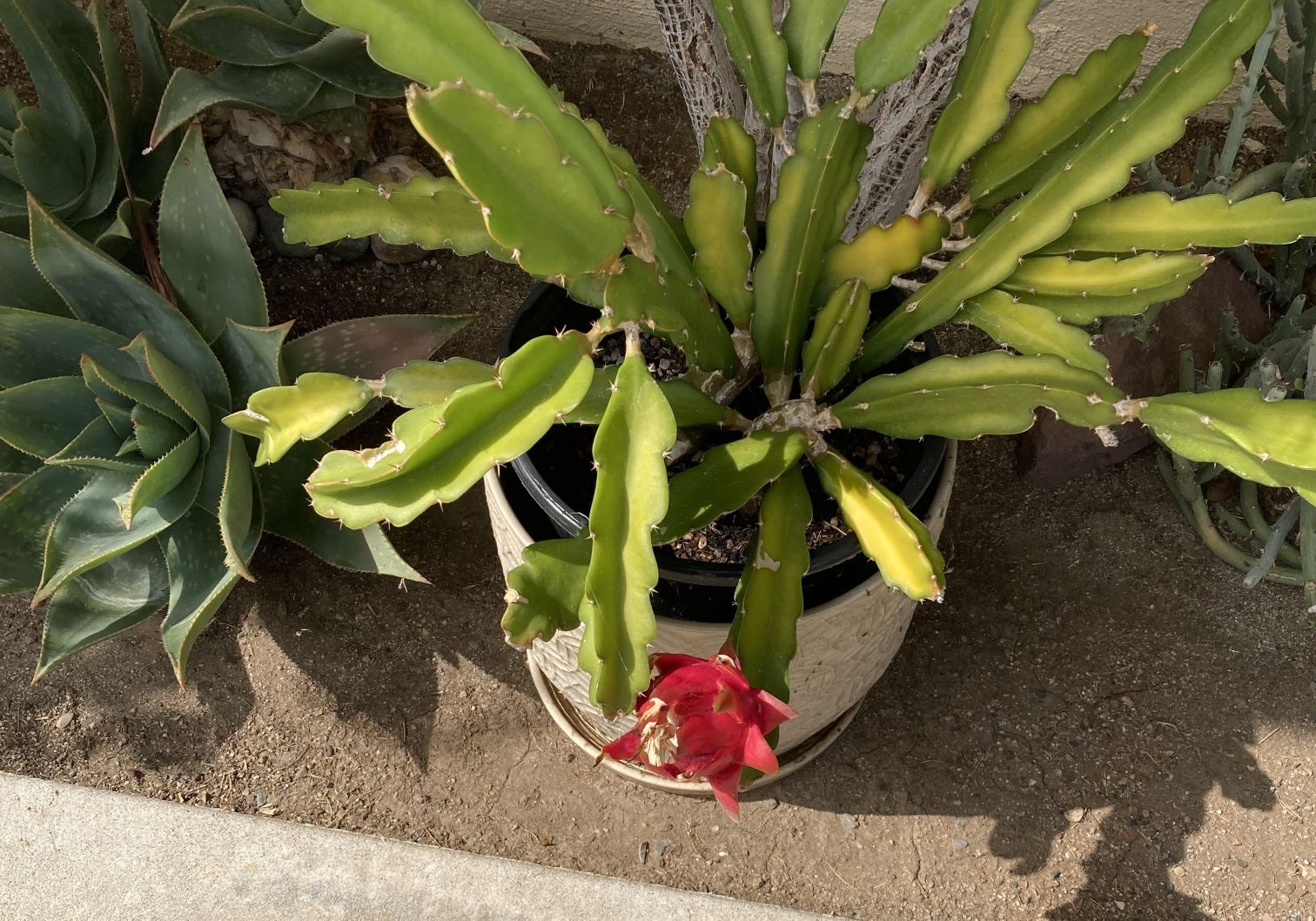
Dragon Fruit Cactus – Rosaliene’s Succulent Garden – September 27, 2025
Five weeks have passed since I last attempted to share my dilemma in adjusting to a new social-political environment. The assaults on our daily lives and livelihood, especially on black- and brown-skinned working-class people, have been relentless and vicious. The issue I had originally planned to address quickly lost importance with yet another issue demanding attention. This constant flogging by a vindictive patriarch is designed to overwhelm and traumatize us into a state of stupor.
I am currently reading Craft and Conscience: How to Write About Social Issues by Kavita Das (USA, 2022), a native New Yorker teacher, writer, and speaker. In Chapter 7: Ripple Effects of Making Waves, she raised the debate about moral clarity in journalism. At the time (August 2021), American journalists were “raising concerns about the recent tendency by journalism outlets to publish writing that is morally reprehensible under the misguided assumption that this is necessary in order to appear balanced by providing multiple perspectives on an issue” (p. 237).
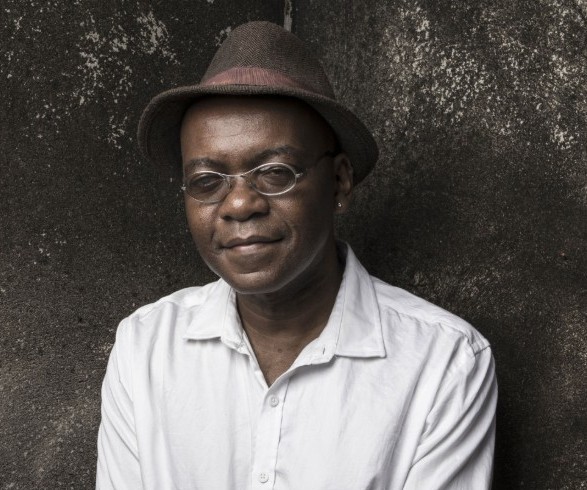
Brazilian Poet Ricardo Aleixo Photo by Rafael Motta for Culturadoria (2022)
My Poetry Corner September 2025 features the poem “I Know You by Your Scent / Conheço Vocês pelo Cheiro” from the poetry collection Too Heavy for the Wind: Poetic Anthology / Pesada Demais para a Ventania: Antología Poética (2018) by Ricardo Aleixo, Brazilian poet, essayist, and multimedia artist-performer.
Born in 1960 in Belo Horizonte, capital of the southeastern State of Minas Gerais, he is considered one of the most innovative Brazilian contemporary poets. His work is found in national and international collections. As a multimedia performer, he has presented his work across Brazil and overseas. He lives in Belo Horizonte and is a member of the Academy of Letters of Minas Gerais.
In his 2024 interview with Matheus Lopes Quirino for the Social Service of Commerce (SESC) of São Paulo, Aleixo credited his family as instrumental in shaping the person he is today. He describes his parents as two incredibly intelligent people, born in the early 1900s, not many years after the end of slavery in May 1888. Although his poor, working-class parents both lacked opportunities for furthering their education, they instilled in Ricardo and his older sister the value of education. His father, a soft-spoken man, sought to refine himself intellectually through reading Brazil’s great literary writers.
As a boy, Aleixo’s first love was music and later the visual arts in high school. He began writing his first poems and songs when he turned 17 and 18 years. As a soccer player at eighteen years, he wanted to become a professional. That dream ended when a ball struck and blinded him in his right eye. Poetry became his only option.
At nineteen years, he decided not to pursue a bachelor’s degree, after witnessing his sister’s disappointment in not graduating as a writer on completion of her BA in literature. Instead, he embarked on a self-study program through building a home library with his sister’s help. Around the age of 24 or 25, he studied literature, semiotics, music, visual arts, history, and philosophy.
His life change when the Belo Horizonte Public Library asked him to catalog 600 volumes of a private collection of books, covering African Brazilian culture and its transatlantic ramifications. He read them all. To him, this meant much more than an academic degree.
Rosaliene’s Garden Summer 2025 – Sons’ Garden Plot 2 – Los Angeles – California
I give thanks that, this summer, temperatures in West Los Angeles did not rise into the upper nineties (Fahrenheit) and more. While I enjoy the privilege of staying indoors during the hottest parts of the day, there were times I had to brave the heat for medical visits. On August 19th, I also began weekly sessions of physical therapy for what my young new doctor determined, after X-rays of my knees and ankles, is osteoarthritis. Thankfully, on my return trip home around 11:15 a.m. after my physical therapy session, I can take refuge from the heat under a tree near to the bus stop. What’s more, I stay hydrated with coconut water.
After a year of suffering with intense pain in my heels after an hour’s walk, I now know the cause and I’m getting help to strengthen the muscles in my hips, glutes, and thighs. Except for a setback after doing 30 repetitions of squats during my third session—now reduced to ten—I’m making progress. Last weekend, for the first time in a long while, I did not have to limp indoors with aching feet after just two hours of gardening.
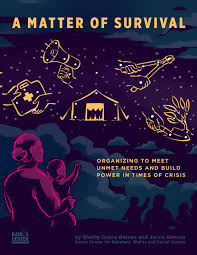
Cover of A Matter of Survival: Organizing to Meet Unmet Needs and Build Power in Times of Crisis by Shailly Gupta Barnes & Jarvis – PDF Publication March 5, 2025 Photo Credit: Kairos Center
Since the onset of the COVID-19 pandemic, survival organizing has continued en masse, in response to ongoing effects of the pandemic, as well as climate crisis, hunger, housing insecurity, the denial of health care, police violence, deportation defense, increasing militarism and other systemic failures of our society. As Vilchis from Union de Vecinos remarked, “Health crisis, housing crisis, all of these crises are still there. The material conditions have not changed, we just have less money and are more disorganized. The risk of losing your life to COVID is less, but your job doesn’t pay enough to cover rent or other costs of living. For many of us, life has gotten worse, but we’re not coughing as loud.”
This is particularly true for poor, low-income and marginalized communities. Cosecha will be “depending on projects of survival even more,” said Adorno, especially as it anticipates more intense attacks on undocumented people. Sycamore Collaborative is expecting hunger to continue to grow in its community. “We will hit the ‘million meal’ mark soon,” said Rev. Tañón-Santos, “and there has to be a way that we can foresee this happening and figure out how to prepare.” In Kansas City, the Bethel Neighborhood Center does not want to be “surprised…we need to be more prepared than ever,” said Sonna. Under a second Trump administration, these and other communities are also facing dramatic cuts to social welfare programs, precipitous climate breakdown, greater repression from militarized police and law enforcement and a regressive, anti-democratic political movement.
In this context, a vast network of projects of survival can play an increasingly essential role in keeping our communities safe, while politicizing and preparing grassroots communities to take coordinated action together as part of a broader social movement. Whether through mutual aid, ministry or community organizing, meeting material needs is an act of resistance in a society that punishes the poor for their poverty and misery — and prioritizes billionaires over the rest of us. If and when these efforts can be connected, scaled up and strategically organized, projects of survival can anchor the call for a society where all of our needs are met, today, tomorrow and for generations to come.
Excerpt from the Conclusion of A Matter of Survival: Organizing to Meet Unmet Needs and Build Power in Times of Crisis by Shailly Gupta Barnes & Jarvis Benson, PDF publication by The Kairos Center for Religions, Rights, and Social Justice, New York, USA, March 5, 2025, p. 73.
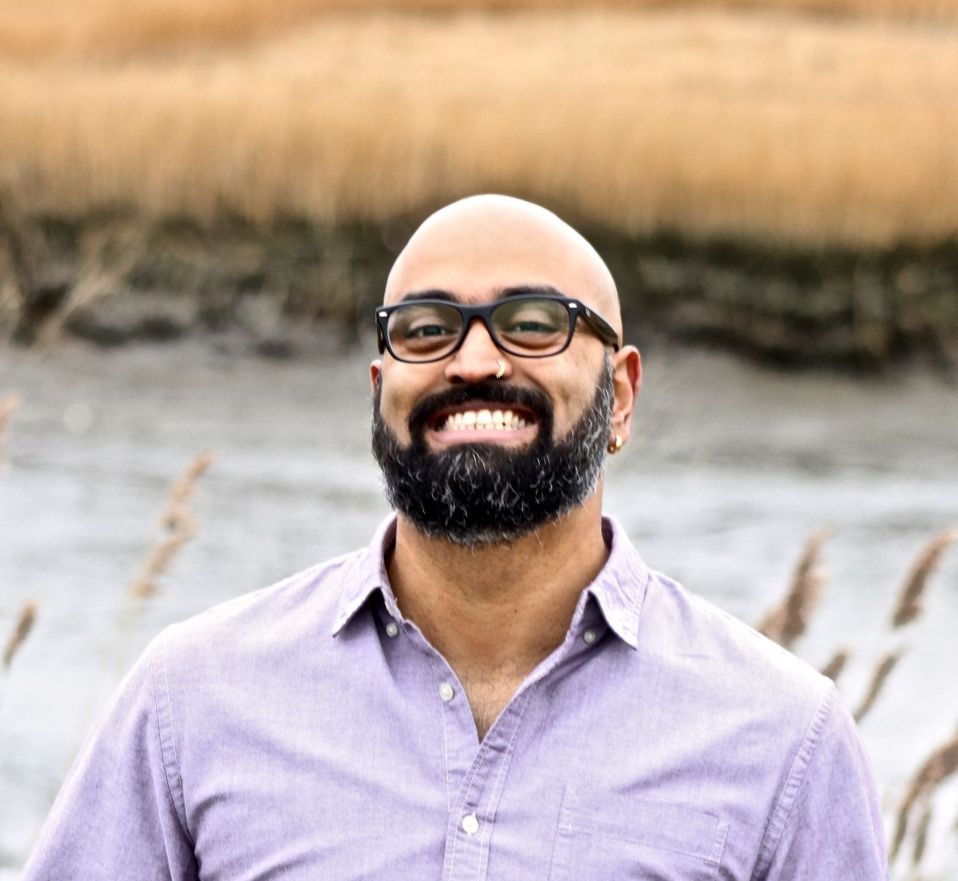
MyPoetry Corner August 2025 features the poem “Why Whales are Back in New York City” from the poetry collection Whale Aria by Rajiv Mohabir, published by Four Way Books (USA, 2023). His fourth book of poetry received the Gold Medal for Poetry from the Forward Indies, Bronze Medal from the Northern California Publishers and Authors, and finalist/Honorable Mention from the Eric Hoffer Award. All following excerpts of his poems are from this collection.
A queer poet, memoirist, and translator, Mohabir was born in London, England, to Indo-Guyanese parents: descendants of East Indian Indentured laborers to then British Guiana. Migrating to the USA as a kid, he grew up in New York City and Florida’s Greater Orlando Area. He holds a BA from the University of Florida in Religious Studies, an MSEd in TESOL from Long Island University of Brooklyn, and an MFA in Creative Writing and Literary Translation from Queens College of the City University of New York. He received his PhD in English from the University of Hawai‘i. He is currently an assistant professor of poetry in the Department of English at the University of Colorado Boulder.
“Submerged, I opened my eyes and felt the song move through me. What they communicated to one another was a mystery to me, as it is to scientists still, but felt familiar in that it was as if the vibrations stimulated the noise production mechanisms of my own body…. It felt holy, like the cetacean vibrations were sacralizing the space through sound. I wanted to hear the songs again and again and again.”
On that day in July at an auto dealership in Indiana, the Environmental Protection Agency (EPA) Administrator Lee Zeldin made the grand announcement. Also present were US Secretary of Energy Chris Wright, as well as several Indiana officials: the Governor, Attorney General, and Secretary of Energy and Natural Resources. If finalized, the proposal would repeal all greenhouse gas emissions regulations for motor vehicles and engines, and other sources.
“With this proposal, the Trump EPA is proposing to end sixteen years of uncertainty for automakers and American consumers,” said EPA Administrator Zeldin.“In our work so far, many stakeholders have told me that the Obama and Biden EPAs twisted the law, ignored precedent, and warped science to achieve their preferred ends and stick American families with hundreds of billions of dollars in hidden taxes every single year. We heard loud and clear the concern that EPA’s GHG [Greenhouse Gases] emissions standards themselves, not carbon dioxide which the Finding never assessed independently, was the real threat to Americans’ livelihoods. If finalized, rescinding the Endangerment Finding and resulting regulations would end $1 trillion or more in hidden taxes on American businesses and families.” [Emphasis is mine.]
[Note to readers: Carbon dioxide comprises over 79% of all greenhouse gas emissions.]
For their part, the auto industry promises to give us “more safe and affordable cars.” The American Trucking Association promises a decrease in “the cost of living on all products that trucks deliver.”
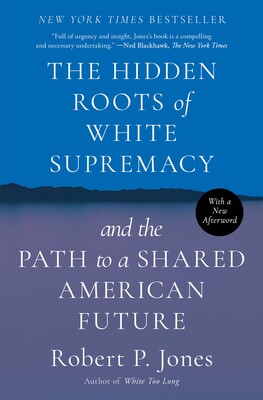
Front Cover The Hidden Roots of White Supremacy and the Path to a Shared American Future by Robert P. Jones (USA, 2023) Photo Credit: Simon & Schuster
Every US state contains similar legacies of white racial violence because every US state was built on the same foundation, anchored by the Doctrine of Discovery: the conviction that America was divinely ordained to be a new promised land for European Christians. In each of the thirteen original colonies and in eight additional slave states, this deep founding myth justified the enslavement and exploitation of Africans in pursuit of white flourishing. In all, it justified the killing and dispossession of Native Americans and the claiming of their lands by good white Christian people, who alone possessed the virtues necessary for sustaining “civilization.”
[…]
The Christian Doctrine of Discovery continues to cast a long shadow across America. After more than five centuries, we collectively continue to refuse to answer, once and for all, the fundamental question: Is America a divinely ordained promised land for European Christians, or is America a pluralistic democracy? The coexistence of these contradictory traditions has created fractures in our nation’s foundation that weaken the integrity of our laws, our culture, and our politics…
Excerpts from The Hidden Roots of White Supremacy and the Path to a Shared American Future by Robert P. Jones, published by Simon & Schuster, New York, USA, 2023, pp. 258 & 311.
The Doctrine of Discovery, 1493
The Papal Bull “Inter Caetera,” issued by Pope Alexander VI on May 4, 1493, played a central role in the Spanish conquest of the New World. The document supported Spain’s strategy to ensure its exclusive right to the lands discovered by Columbus the previous year. It established a demarcation line one hundred leagues west of the Azores and Cape Verde Islands and assigned Spain the exclusive right to acquire territorial possessions and to trade in all lands west of that line. All others were forbidden to approach the lands west of the line without special license from the rulers of Spain. This effectively gave Spain a monopoly on the lands in the New World.
The Bull stated that any land not inhabited by Christians was available to be “discovered,” claimed, and exploited by Christian rulers and declared that “the Catholic faith and the Christian religion be exalted and be everywhere increased and spread, that the health of souls be cared for and that barbarous nations be overthrown and brought to the faith itself.” This “Doctrine of Discovery” became the basis of all European claims in the Americas as well as the foundation for the United States’ western expansion. In the US Supreme Court in the 1823 case Johnson v. McIntosh, Chief Justice John Marshall’s opinion in the unanimous decision held “that the principle of discovery gave European nations an absolute right to New World lands.” In essence, American Indians had only a right of occupancy, which could be abolished.
Robert P. Jones, PhD is the president and founder of the Public Religion Research Institute (PRRI) and a leading scholar and commentator on religion and politics. He is the author of the New York Times bestseller The Hidden Roots of White Supremacy and the Path to a Shared American Future (USA, 2023), as well as White Too Long: The Legacy of White Supremacy in American Christianity, which won a 2021 American Book Award. He is also the author of The End of White Christian America, which won the 2019 Grawemeyer Award in Religion.
Jones writes a column on politics, culture, and religion for The Atlantic, Time, Religion News Service, and other media outlets. He is frequently featured in major national media, such as CNN, MSNBC, NPR, The New York Times, The Washington Post, and others. He holds a PhD in religion from Emory University and an MDiv from Southwestern Baptist Theological Seminary.
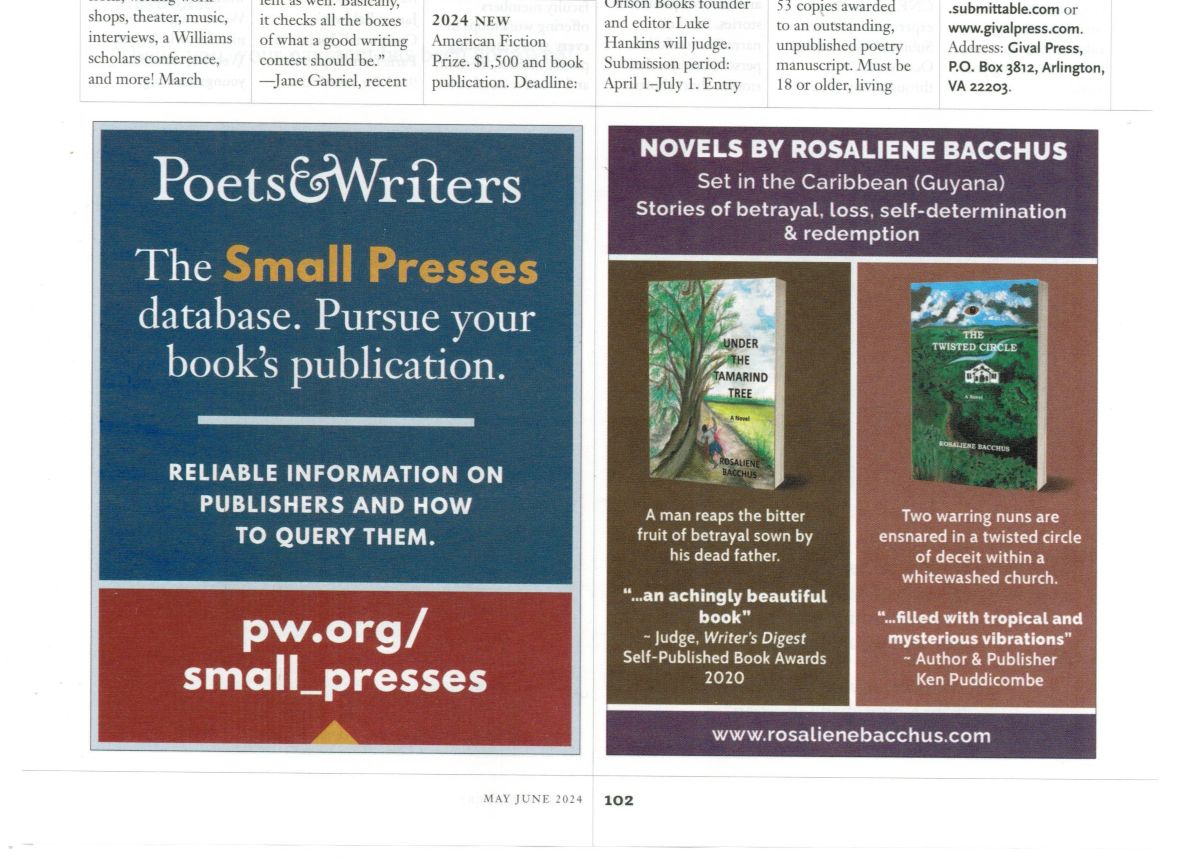
Ad for Novels by Rosaliene Bacchus designed by and published in Poets & Writers Magazine May-June 2024 Photo Credit: Poets & Writers Magazine
The creative process is the part of being a writer that I enjoy the most. Nothing beats when a character talks to me while I’m doing household chores. Alas, it’s another story when one’s creation is set free into the world. Getting my novels into the hands of readers is not easy. I’m a service-oriented person. Giving away stuff is much easier for me than selling stuff, even when it’s my own books. But, as I’m doing now, I do what I can to promote them. No pressure.
As depicted in the captioned ad, I also promote my books in the Poets & Writers Magazine. I set aside funds every year for advertising. Though I never recoup the cost through sales, it’s also my way of supporting my favorite poets/writers magazine. Our support has become even more critical with federal cuts in funding for the literary arts.
Judging from the length of time since I last received a royalty check from Lulu Press, my book printer and distributor, sales have been slow. Then again, it’s hard to say since Amazon and other major booksellers take their time in forwarding sales royalties to Lulu. My last “Unpaid Revenue Record” dated June 30, 2025, only covers receipts for sales January to November 2024. No sales since then?
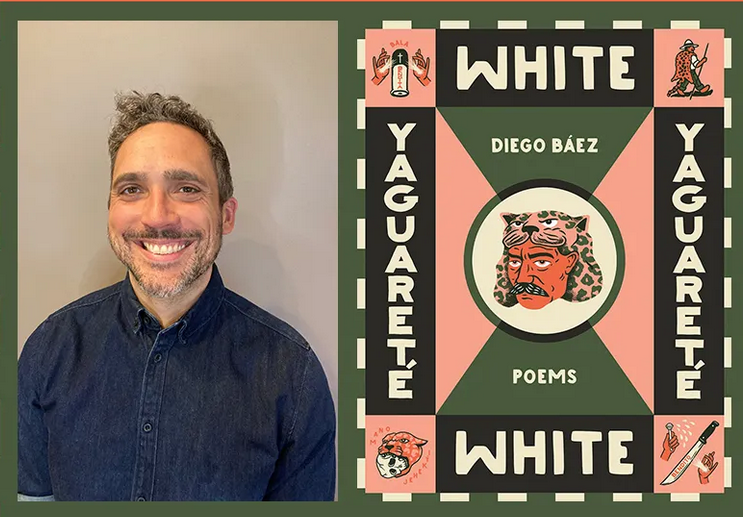
Paraguayan American Poet Diego Báez with Front Cover of Yaguareté White: Poems Photo Credit: The University of Arizona Press
My Poetry Corner July 2025 features the poem “Inheritance” from the debut poetry collection Yaguareté White (USA, 2024) by Paraguayan American poet Diego Báez. The collection was the finalist for The Georgia Poetry Prize and a semi-finalist for the Berkshire Prize for Poetry.
Son of a Paraguayan father and a white, Pennsylvanian mother, Báez grew up in Central Illinois in a community devoid of families that resembled his own. His brown skin betrayed his otherness to his classmates. On family visits to Paraguay, his broken Spanish marked him as a gringo. This reminder that he wasn’t quite Paraguayan or American infuses his poetry.
Báez lives in Chicago with his wife and daughter. He teaches poetry, English composition, and first-year seminars at the City Colleges, where he is an Assistant Professor of Multidisciplinary Studies.
Rigoberto González, an American poet, writer, and book critic, notes in his Foreword to Yaguareté White: “Diego Báez [is] the first Paraguayan American poet to publish a book originally in English in the United States.” He adds that Báez is transparent in his debut poetry collection about his struggles understanding his own dual identity. “[H]e didn’t grow up speaking Spanish; and the lack of connection to a Paraguayan community in the United States excludes him from the social and cultural foundations that other South American diasporas provide for their respective immigrant populations and subsequent generations.” His memories of his Paraguayan origin arise from visits to his abuelo’s farm outside the village of Villarrica.
Nevertheless, Paraguay is ever-present throughout the poetry collection in which Báez weaves its colonial history of violent militant whiteness together with its three languages: English, the language of US imperialists; Spanish, the language of the colonizers; and Guaraní, the dialect of the indigenous peoples. In combining the Guaraní word for jaguar, yaguareté, and white in the book’s title, the poet also hints at his dual identity.
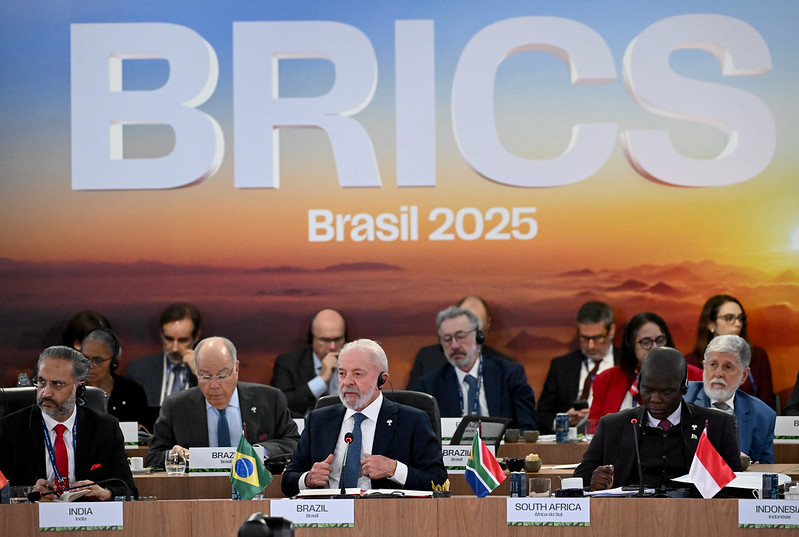
I’ve been so focused on our climate-ecological crises and other pressing issues of our lives in the United States that it has been years since I’ve covered news of the BRICS group of countries. The 17th BRICS Summit 2025, held in Rio de Janeiro, Brazil, on July 6th to 7th, caught my attention. After all, the emerging and developing economies of the Global South* must be facing additional challenges with America’s disengagement from international cooperation on global issues as well as our government’s unilateral stance on trade tariffs worldwide. And much more.
Why should the BRICS group matter? It’s not a formal organization. There’s no constitutional treaty, budget, or a permanent secretariat. Rather, it serves only as a forum for economic and diplomatic coordination in diverse areas of mutual interest. The group also aims to offer an alternative to Western-dominated economic models. The presidency rotates annually with the incumbent responsible for organizing and sponsoring the group’s activities.


 Three Worlds One Vision