Thought for Today: Have we all become “cloud serfs”?

Tags

, , ,

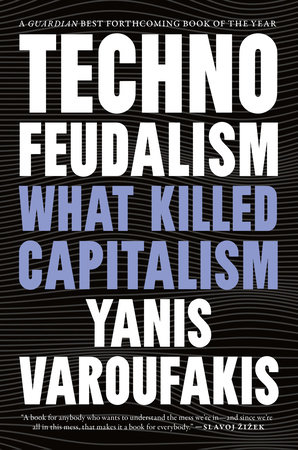
Front Cover Technofeudalism: What Killed Capitalism by Yanis Varoufakis (UK/USA, 2024)
Photo Credit: Melville House Publishing

The digital revolution may be turning waged workers into cloud proles, who live increasingly precarious, stressful lives under the invisible thumb of algorithmic bosses…. But that’s not the most significant fact about cloud capital…. The true revolution cloud capital has inflicted on humanity is the conversion of billions of us into willing cloud serfs volunteering to labour for nothing to reproduce cloud capital for the benefit of its owners.

[…]

Technofeudalism made things infinitely worse when it demolished the fence that used to provide the liberal individual with a refuge from the market. Cloud capital has shattered the individual into fragments of data, an identity comprised of choices as expressed by clicks, which its algorithms are able to manipulate. It has produced individuals who are not so much possessive as possessed, or rather persons incapable of being self-possessed.  

Excerpts from Technofeudalism: What Killed Capitalism by Yanis Varoufakis, published by Melville House Publishing, UK & USA, 2024, pp. 88 & 182.

Continue reading

“Jaguar Song” – Poem by Asian American Poet Laureate Arthur Sze

Tags

, , , ,

Asian American Poet Laureate Arthur Sze 2025-2026
Photo Credit: U.S. Library of Congress (Photo by Shawn Miller)

My Poetry Corner January 2026 features the poem “Jaguar Song” from the twelfth poetry collection Into the Hush by Arthur Sze, Poet Laureate of the United States 2025-2026. He is the first Asian American to serve in this position. The following excerpts of poems are all sourced from this collection which explores humanity’s impact on Mother Nature together with glimpses of her untouched beauty.

Listen—in an Anchorage night, / a crunching resembling cars colliding, / and, as the incoming tide slaps, / you will never forget inlet ice breakup; black spruce branches are etched / against the sky; far from a city lined / with fast-food spots, bars, and pawnshops, […] you marvel at the green translucency / of leaves, the mystery of photosynthesis; / as grief and joy well up, you step / into the vernal sharpening of the day— / apricot trees are the first to bloom. (Poem “Spring View” p. 5).

Born in 1950 in New York City to Chinese immigrants, Sze is an award-winning poet with twelve books of poetry published, a translator of classical Chinese poetry, and editor. His journey to becoming a poet began in 1968 during his first semester at the Massachusetts Institute of Technology (MIT) where he was pursuing a career in the sciences. As he tells it during an interview in 2025 with Jim Natal for Marsh Hawk Press:

“I sat in a large calculus class and felt increasingly bored by the lecture. I remember flipping to the back of a spiral notebook, and I started writing phrases to a poem. I was excited at what came to me, and, before the end of class, I had a rough draft…”

Continue reading

The Writer’s Life: New Monthly Series on the Changing Earth

Tags

, , , , , ,

Front Cover: We Are the Middle of Forever: Indigenous Voices from Turtle Island on the Changing Earth – Edited by Dahr Jamail and Stan Rushworth
Published by The New Press, New York, USA, 2022

During the COVID-19 pandemic and lockdown, Dahr Jamail – an American award-winning journalist and environmental advocate – and Stan Rushworth – an elder and retired teacher of Cherokee descent living in Northern California – interviewed several people from different North American Indigenous cultures and communities, generations, and geographic. Their featured collection of interviews offers us a wide variety of perspectives on a much more integrated relationship to Earth and all human and non-human beings.

Turtle Island is a term used by some Indigenous peoples, primarily those in North America, to refer to the continent. This name stems from various Indigenous creation stories which describe the landmass as being formed on the back of a giant turtle. The concept of Turtle Island is deeply significant in many Native American cultures as it reflects their spiritual beliefs and relationship with Mother earth.

As inhabitants of these lands for thousands of generations before the arrival of European conquistadores and colonizers, Native Americans carry in their ancestral memories the rise and fall of great civilizations before ours. They have much to teach us about surviving collapse and healing our broken relationship with Mother Earth.

Continue reading

Year 2025: Reflections

Tags

, , , , , , ,

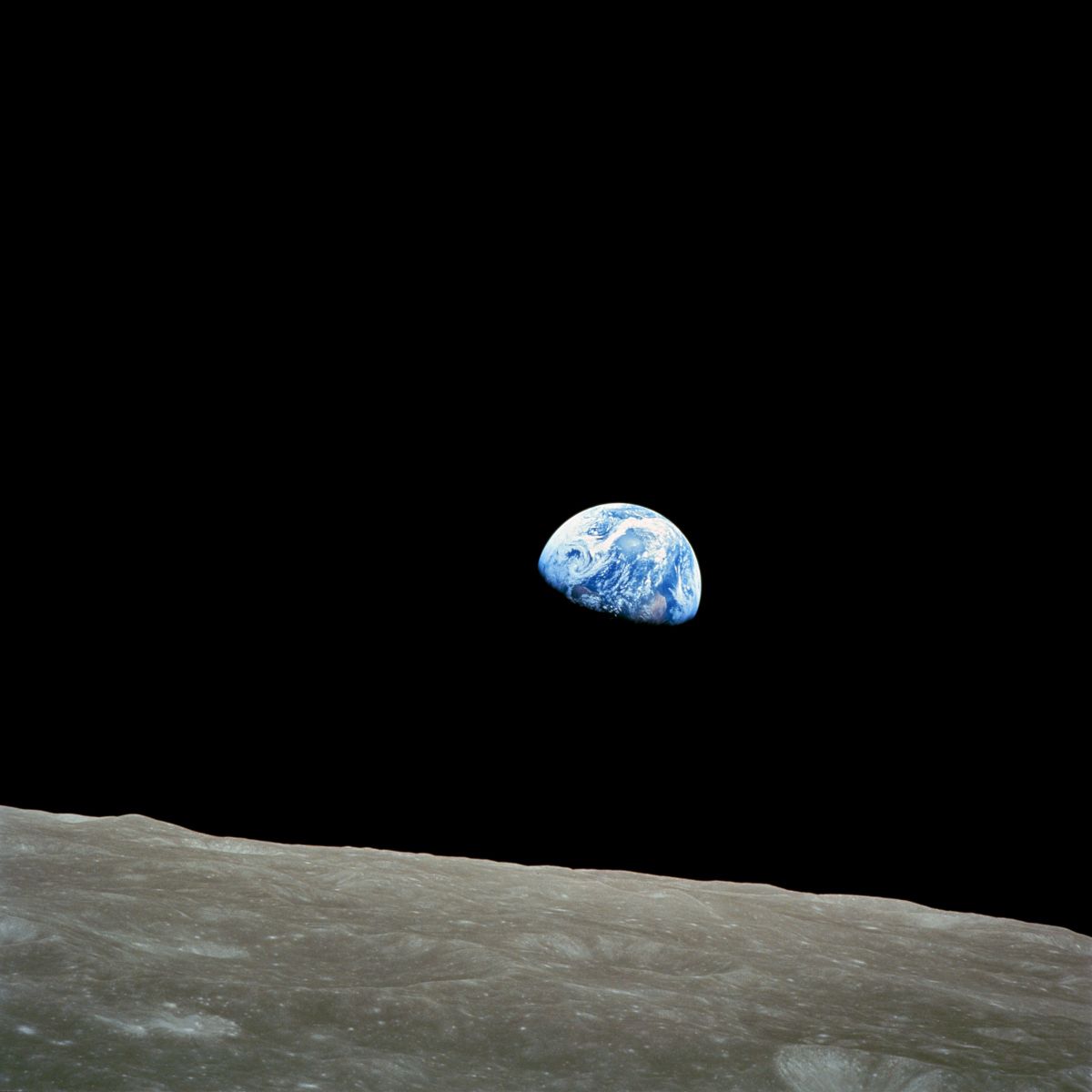
Earthrise – NASA Apollo 8 – December 24, 1968 – Photo by Astronaut William Anders
Source Credit – Wikipedia

I’m still trying to process everything that has happened since the Earthrise on January 20, 2025. The punches were fast, violent, and relentless. They upended the global order established at the end of World War II. European allies have been left out in the cold to face what was once our mutual Cold War adversary. North American allies are treated with contempt. Venezuela’s coveted vast oil reserves have transformed the Caribbean Sea into a danger zone. How did we get here?

Sorry Greenland. The sovereignty of nations be damned. Your rare-earth metals are essential to our technological advancement. Our Big Tech giants are in a race to colonize Mars and the vast expanse of space beyond. They need these metals to build and power their AI machines. They also need lots of energy (and water) to operate their vast AI data centers.

Continue reading

“The Day of Revolution” – Poem by Guyanese Poet Mahadai Das

Tags

, , , ,

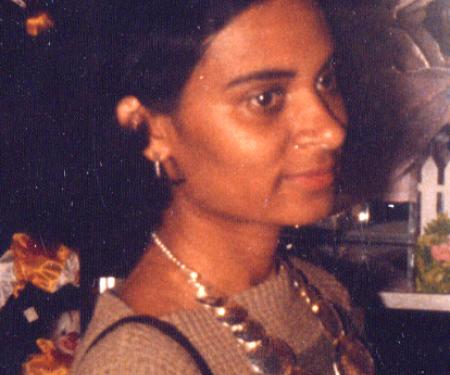
Guyanese Poet Mahadai Das (1954-2003)
Photo Credit: Peepal Tree Press (UK)

My Poetry Corner November 2025 features the poem “The Day of Revolution” from the poetry collection My Finer Steel Will Grow (1982) by Guyanese poet and teacher Mahadai Das; included in the posthumous publication of her work (1976-1994) A Leaf in His Ears: Collected Poems by Peepal Tree Press (UK, 2010). All excerpts of her poems are taken from the Peepal 2010 publication.

Born in 1954 in Eccles on the East Bank Demerara, Guyana, Mahadai’s father was a rice farmer. She attended the prestigious Bishops High School for girls in the capital, Georgetown, where she began writing poetry. Then in 1971, her mother died while giving birth to her tenth child, leaving Mahadai, then seventeen, with responsibility for her siblings. Later that year (November), she was crowned as the “Miss Diwali” beauty-queen. What a boost that must’ve been for the adolescent Mahadai!

In the early 1970s, while taking care of her siblings, Das earned her BA at the University of Guyana and became a volunteer member of the Guyana National Service.

Disillusioned with the corruption and authoritarianism of Burnham’s regime (1974-1985), she became involved with the Working People’s Alliance (WPA), co-founded by Walter Rodney (1942-1980), an African historian and political activist. In the poem “Militant” from her debut poetry collection I Want to be a Poetess of My People (1977), Das declares her commitment to joining the fight for change in Guyana (pp. 39-40):

Militant I am / Militantly I strive. / I want to march in my revolution, / I want to march with my brothers and sisters. / Revolution firing my song of freedom. / I want my blood to churn / Change! Change! Change!… // Child of the revolution! I want to grow… grow… grow! / I want to grow for my revolution. / I want to march for my country!

In her quest to grow professionally to better serve her country, Das left Guyana to obtain her MA at Columbia University, New York. After earning her MA, she began a doctoral program in Philosophy at the University of Chicago, Illinois. While there, she became critically ill and never completed the program.

Continue reading

Thought for Today: Tecno-dreams of Space Colonies

Tags

, , , , , ,

Front Cover More Everything Forever: AI Overlords, Space Empires, and Silicon Valley’s Crusade to Control the Fate of Humanity by Adam Becker (USA, 2025)
Photo Credit: Hachette Book Group

[Tech billionaires] will keep looking for ways to extend their control over the world unless they are curtailed. Their dreams are dreams of endless capitalism of the most brutal sort, because they know that such a system would allow them to win still more money and power. This is another reason it’s difficult to imagine a future other than the ones they promote: as the saying goes, it’s easier to imagine the end of the world than the end of capitalism….

This is why the tech billionaires tell us their futures are inevitable: to keep us from remembering that no human vision of tomorrow is truly unstoppable. They want to establish a permanent plutocracy, a tyranny of the lucky, through their machines. They are too credulous and short-sighted to see the flaws in their own plans, but they will keep trying to use the promise of their impossible futures to expand their power here and now….

Excerpt from More Everything Forever: AI Overlords, Space Empires, and Silicon Valley’s Crusade to Control the Fate of Humanity by Adam Becker, published by Hachette Book Group, New York, USA, 2025, pp. 288-289.

Continue reading

The Writer’s Life: Totally Spooked!

Tags

, , , ,

Internet Robots or Bots
Photo by Mohamed Nohassi on Unsplash

China
A pacing threat¹ to American hegemony
slashed with tariffs of 100 percent
—then not.

Chinese hackers
masters of Cyberwarfare
launched Salt Typhoon²
reported in October 2024
worst telecom hack in America’s history
at least eight telecom companies infiltrated.

My little WordPress blog
grabbed viewers from China
four on August 8 then
climbed to 96 by August 30.

Continue reading

“How It Goes” – Poem by Native American Poet Abigail Chabitnoy

Tags

, , ,

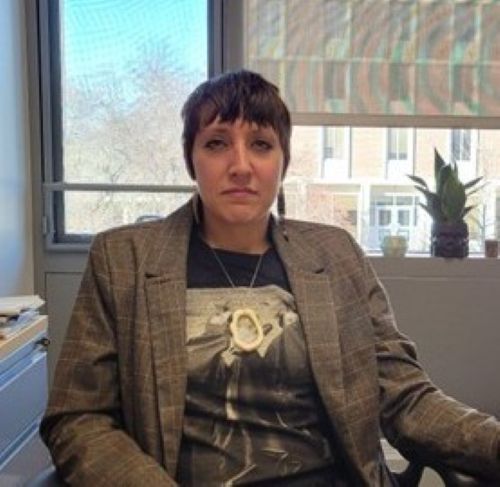
Native American Poet Abigail Chabitnoy
Photo by Kalana Amarasekara for Massachusetts Daily Collegian (2024)

My Poetry Corner October 2025 features an excerpt of the ten-part poem “How It Goes” from the poetry collection In the Current Where Drowning is Beautiful (USA, 2022) by Native American poet Abigail Chabitnoy. Of mixed race (Aleutian-German), she is a Koniag descendant and member of the Tangirnaq Native Village in Kodiak, Alaska. She grew up in Pennsylvania where she earned a BA in English and anthropology from Saint Vincent College. She later obtained an MFA in Creative Writing from Colorado State University where she was a Crow-Trembley Fellow, a 2016 Peripheral Poets Fellow, and received the John Clark Pratt Citizenship Award from the University.

In 1901, Chabitnoy’s great grandfather was separated from his family in Kodiak and sent to the Carlisle Indian Industrial School in Pennsylvania, the first federally funded boarding school established to assimilate Native American people into Euro-American culture. Their family’s Russian Chabitnoy surname is the legacy of Russian control of Alaska until the United States purchased the territory in 1867.

Chabitnoy describes her second poetry collection, In the Current Where Drowning is Beautiful, as “a poetic re-visioning of narratives of violence against women and nature.” In poems filled with imagery that moves in waves and use of Alutiiq language, she links the treatment of indigenous women in the United States with harm toward immigrant families and the environment.

Written during the first administration of our current president, “How It Goes” is the longest poem in the collection (pp. 51-56). In the book’s end notes (pp. 93-95), we learn that the title of the poem is taken from the words of a white teenage boy in a red hat during a protest on January 18, 2019, in the Capitol. Smirking in the face of a tribal elder, he reportedly shrugs and says: “Land gets stolen, that’s how it works.” To the poet’s dismay, the boy somehow becomes the victim in the media.

“While I am not convinced the boy meant no harm or disrespect,” Chabitnoy says in the end notes, “I can readily believe he didn’t know any better. After all, this country has fantastic powers of amnesia.”

Although the speaker in the featured poem questioned in earlier poems the wisdom of bringing children into this world, especially a girl child, we learn in the opening lines of Part I that she is open to the possibility: I’d want you to be a girl, even now. / Ashley-Olivia-Akelina-Nikifor—you would have / too many names to go missing. If only one’s name could work as a charm against evil!

Part II presents the numbers of the separated. / detained. / buried. / missing. murdered. prone / to be incorrectly labeled. / massacred  (p. 52). To achieve greater impact, the numbers stand on their own, with details provided in the footnotes. Numbered among them are Central American immigrant children forcibly separated from their families, many of whom are also indigenous.

John says he is listening to your concerns.

8-year-old Franklin of Guatemala was
reunited with his father and watching them
embrace right now it is possible to forget
the latest counts

250 or 559 or more than 400
at least 2,000¹				(maybe 14,000)²
186, or more than 10,000³
500 or 2,000			        as many as 15,000⁴
btw 200 or 300 and 500, or 2,000⁵

Jakelin-Albertha-Savanna-

colonies of birds are already in decline. cite predation.⁶

(alternatively, such facts vary—by the time you read this
we will have forgotten how many. the list grows. but who’s 
counting?)
_______________
¹ separated.
² detained.
³ buried.
⁴ missing. murdered. prone
⁵ to be incorrectly labeled.
⁶ massacred

After all, the speaker continues, this violence has been the American way since the European conquistadors’ first encounter with indigenous populations (p. 53):

This is America and it is (year-of-our-supposed-lord) ___.
This is America since 1492.
This is America, we were born taking children from their mothers and their fathers.
This is America and we’ve been taking babies from mothers with too many babies
(I.Y.O.) in your lifetime.
This is America and I want to tell you too it is beautiful
but
—vindictive or entombed—

Part IV quotes the smirking white teenager in a red hat, adding a footnote in tiny print (p. 53): “Yeah, well, [kids]* get stolen. That’s how it goes.”

*he might have said “land.” he might have said “women.” he might have been smiling respectfully to diffuse the situation.

Part VIII cites the ways in which indigenous women were killed (p. 55): “by fire, by water, by hanging in air, burying in earth, / by asphyxiation, penetration, striking, piercing, crushing / in a thousand / and one ways.” // You forgot exposure (which Patricia knows in Montana may include stabbing).

Part X gives voice to indigenous girls and women lost to violence:

Now you don’t see us
Now you don’t


I’m not going to play
your blackout games


but know:
my teeth still shine
in the dark.


a body buried still
speaks.


above or
below


don’t imagine there is nothing at the bottom.

Chabitnoy concludes in the end notes (p. 94): “The same narratives that facilitate violence against women facilitate violence against the landscape facilitate violence against indigenous people and other nonwhite populations. And the same hypocrisy, bureaucratic ineptitude, and cultural amnesia allow these violences to continue.”

Learn more about the “Missing and Murdered Indigenous People Crisis” at the official website of the U.S. Department of the Interior: Indian Affairs.

To read the complete excerpt (Parts II-III-IV) of the featured poem “How It Goes” and learn more about the work of Native American poet Abigail Chabitnoy, go to my Poetry Corner October 2025.

Thought for Today: Climate Migration is also a Domestic Issue

Tags

, ,

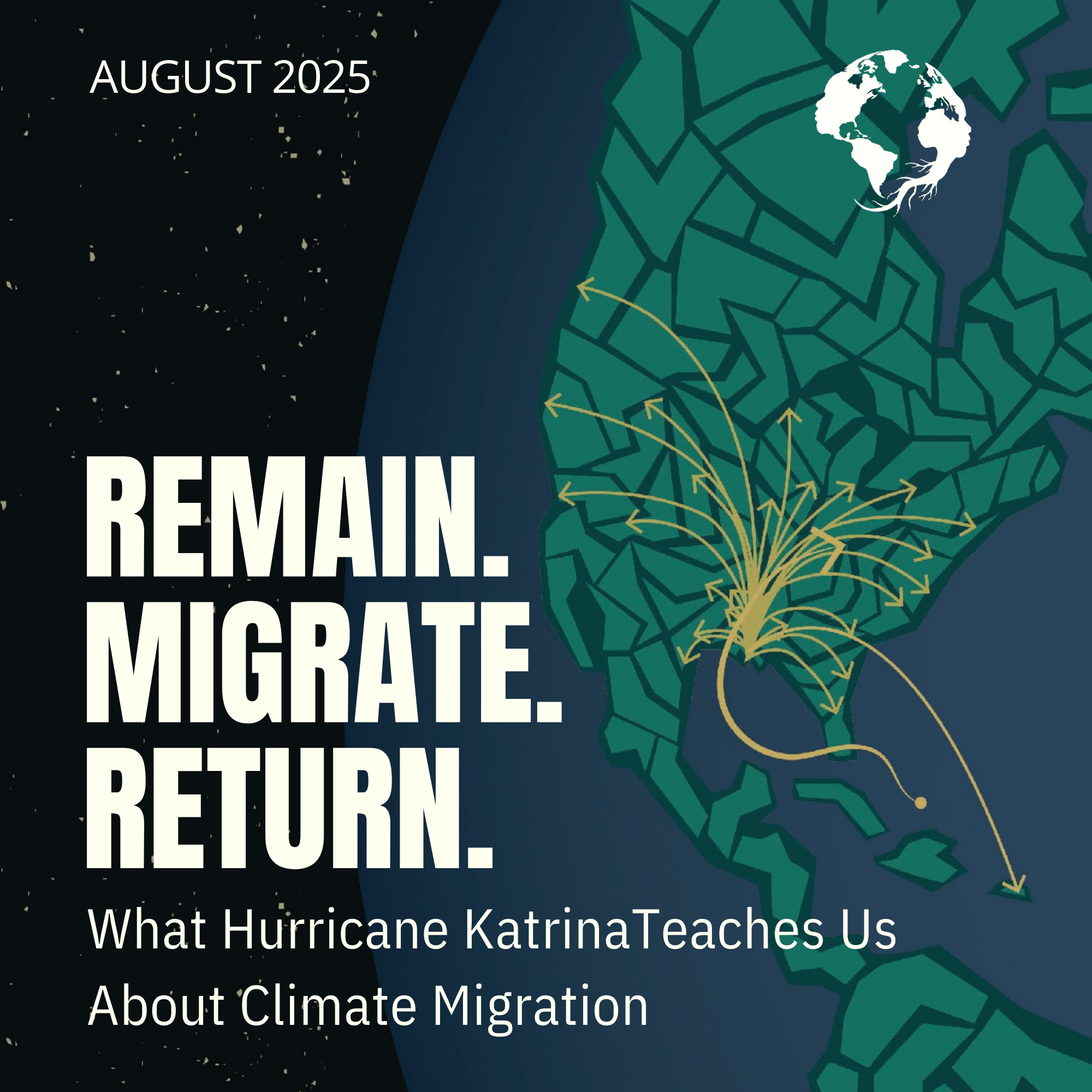
Cover of Remain. Migrate. Return.: What Hurricane Katrina Teaches Us About Climate Migration – PDF Publication August 22, 2025
Photo Credit: Taproot Earth

On August 29, 2005, Hurricane Katrina caused record-breaking devastation across a 144 mile swath of Louisiana, Mississippi, and Alabama. A less often told story is that Hurricane Katrina sparked a mass migration of people. More than 1.5 million Hurricane Katrina survivors evacuated to all 50 states representing one of the largest and most abrupt relocations of people in U.S. history. As of 2015, Center for American Progress reported that 40% of the 1.5 million evacuees, or 600,000 people, were not able to return home. While the idea of “climate migration” is often talked about as an issue that exists only outside of the United States, Hurricane Katrina teaches us that climate migration is also a domestic issue that is already underway.

Excerpt from Remain. Migrate. Return.: What Hurricane Katrina Teaches Us About Climate Migration, PDF publication by Taproot Earth, USA, August 22, 2025, p. 6.

In the featured 2025 Taproot Earth report, Remain. Migrate. Return.: What Hurricane Katrina Teaches Us About Climate Migration, the term “climate migration” refers broadly to the movement of people because of climate change—whether gradual or sudden, voluntary or involuntary, temporary or permanent (p. 8).

Community responses to Hurricane Katrina (2005) taught them that the standards for climate migration are rooted in the Right to Remain, the Right to Migrate, and the Right to Return.

The Right to Remain is grounded in the principle that people have self-determination, power, and resources to remain on their lands and in their communities (pp. 9-11).

The Right to Migrate includes the principles of cooperation and solidarity, as well as legal protections (pp. 12-13).

The Right to Return includes principles of reclaiming power and culture, repairing and restoring the land, plus re-awakening and repairing the spirit (pp. 14-15).


Taproot Earth is a nonprofit organization, registered in Slidell, Louisiana, USA. Their work is rooted in the community responses to Hurricane Katrina (2005), BP Deepwater Horizon Oil Drilling Disaster in the Gulf (2010), and Hurricane Ida (2021). They honor and build on the efforts of Black and Indigenous communities by invoking accountability, abundance, and justice. Together, they are forging connections that strengthen and sustain frontline climate leaders across the Gulf and Global South.

You look beautiful!

Tags

, ,

Rosaliene’s Outfit – Dress-Jacket-Hat – September 30, 2025

Since I had two medical appointments last week that consumed my writing time, I did not plan to publish a post today. I began writing this article in bed today at 7:11 a.m. As I stay up late on Saturday evenings for what I call my Movie Night, I usually sleep in until 9 o’clock on Sundays. Today, I woke up early and stayed in bed reflecting on life here in my adopted homeland. In my state of half-awake consciousness, I allowed my thoughts to flow freely. Incidents across space and time—spanning my life in Guyana, Brazil, and here in the United States—came and went.

I recalled shocking a group of black American businesswomen during a networking event held by the Black Business Association (BBA) in Los Angeles, of which I had been invited to become a member. At the time, I had just started my home-based, sole-proprietor business, promoting trade with Brazil. It was the year 2007. Not yet having lost my Brazilian jeito de ser or way of being, I was sharing with them the Brazilian way of doing business. I don’t recall what I said that day, but I remember well one of the women saying, with disdain in her voice: Are you trying to shock us?

Continue reading