The Writer’s Life: Difficulty in Telling True Stories of Women Close to My Heart

Tags

, , , , , , ,

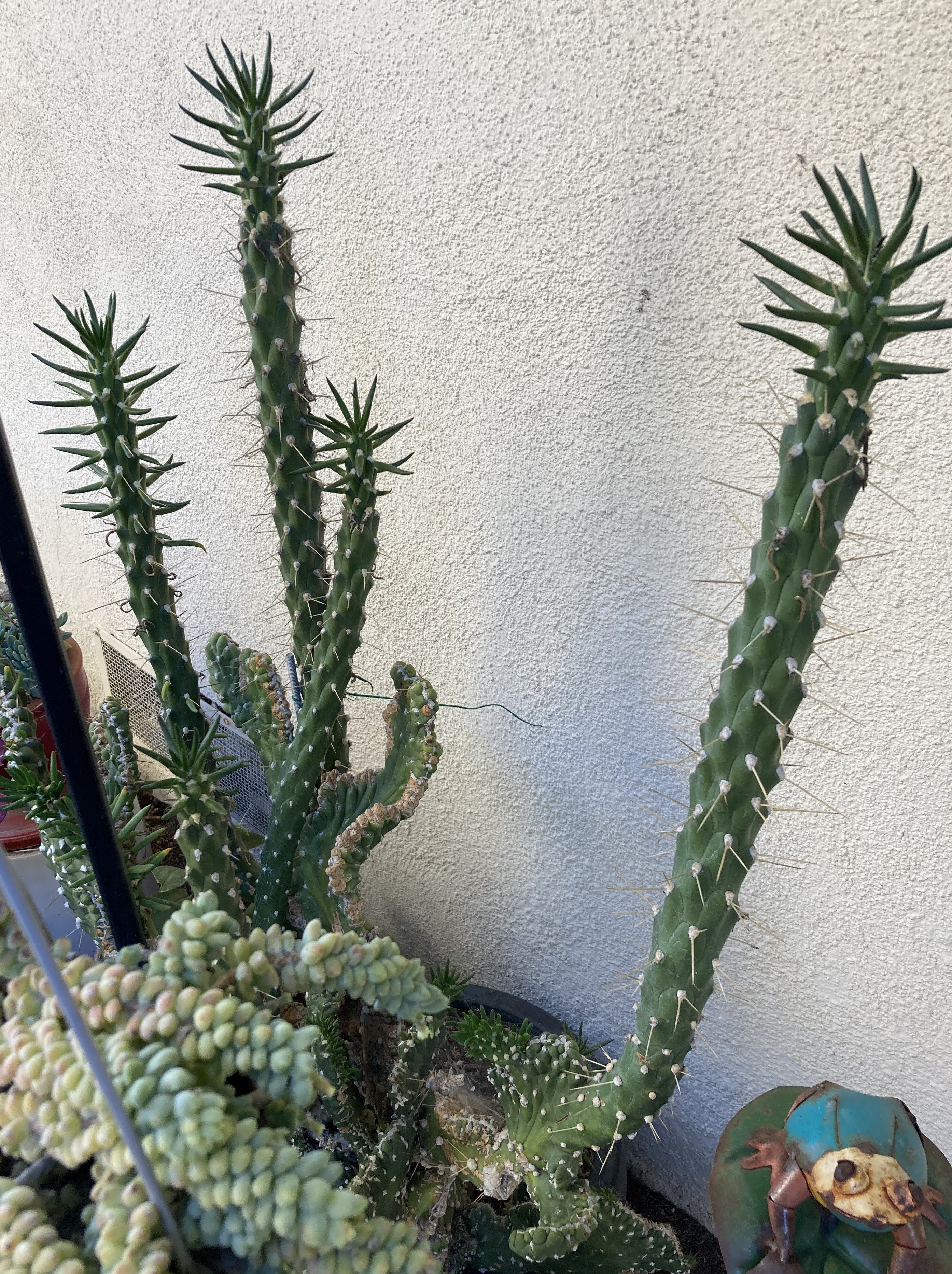
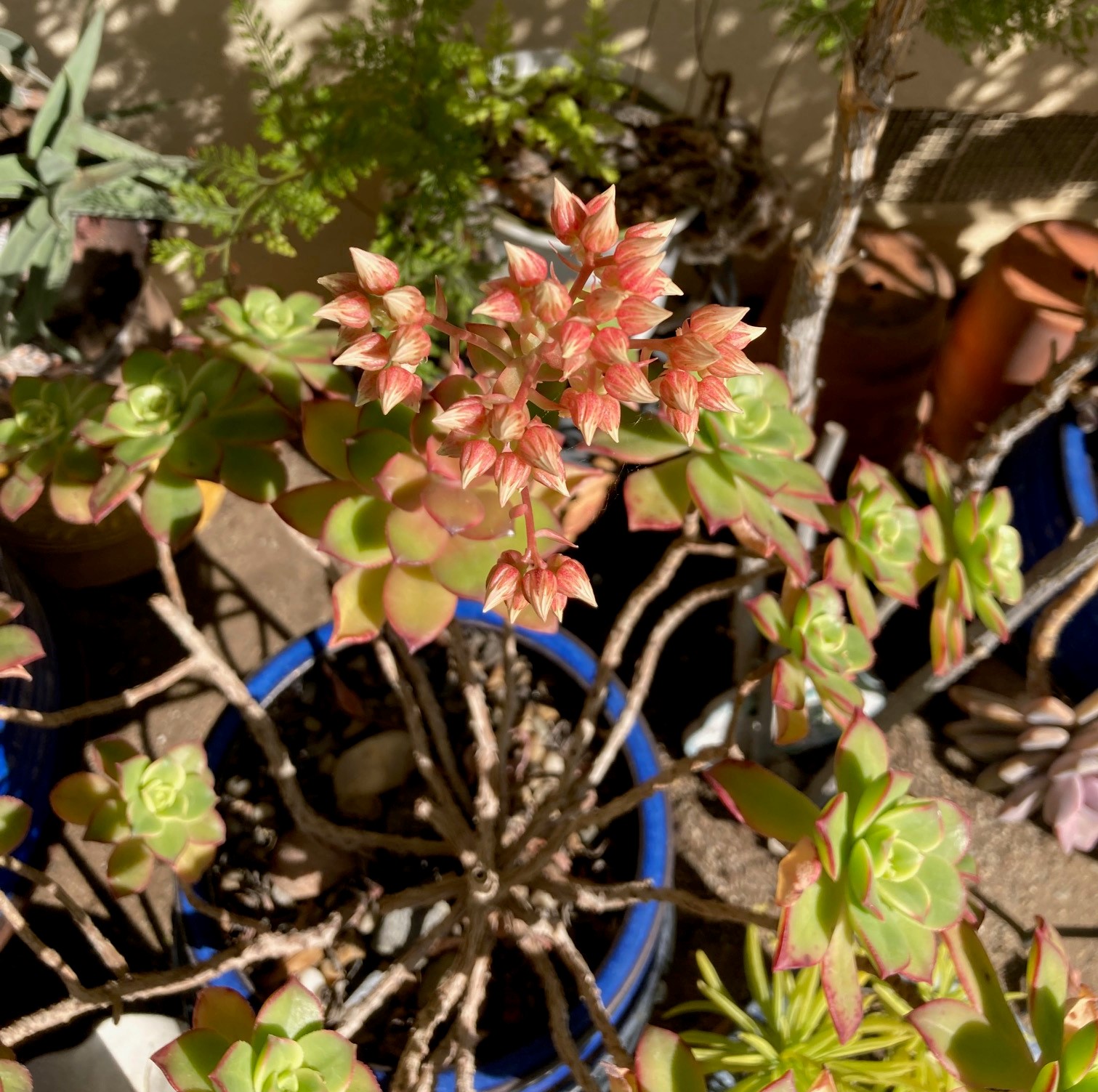
Cactus Plant – A Gift from Mother
Photo taken in Rosaliene’s Garden

Chapter Three of my work in progress presents the first portrait of a woman in my life: my mother. As the most influential person in shaping my self-identity and vision of the world, I could not neglect to tell her story. Moreover, given the current reality of our lives as women in 21st century America, where conservative legislators and the women who support them have forced us back into the 1950s and 1960s, my mother’s story becomes even more relevant.

The first draft of this chapter was written in February 2017, shortly after my mother disowned me as her daughter. In revising this chapter six years later during a period of grief, following her death a year ago on August 22nd, I’ve come to realize how much of my mother’s own pain and loss I’m still carrying.

Given my closeness to the subject, I found it difficult to tell her story without bias or judgement. My objective stance faltered during the narration of intense interactions cited in the portrait. Though I know very little of her life over the thirty years of our separation, my siblings have all shared stories of the terror they had endured. Despite my questions, none of them have been forthcoming about the incident or event that unleashed her rage against them and their spouses. My turn came later, following our reunion in 2003.

The story’s time frame is not linear. Prompted by Mother’s tendency to uproot the past during our conversations, the narrative moves back and forth between our time together in Guyana and in Los Angeles, Southern California. Do let me know if you find this confusing.

Continue reading
“Betty” – Poem by Caribbean Poet Ian McDonald

Tags

, , , , , , ,

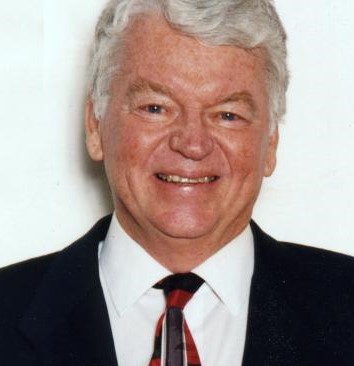
Caribbean (Trinidad/Guyana) Poet Ian McDonald
Photo Credit: Peepal Tree Press Ltd.

My Poetry Corner August 2023 features the poem “Betty” by Ian McDonald from his poetry collection New and Collected Poems 1957-2017 (UK, 2018). Born in the Caribbean Island of Trinidad in 1933, Ian McDonald is a poet, novelist, dramatist, and non-fiction writer. After moving to then British Guiana in 1955, he made his home there until his eighties when he migrated to Canada to be close to his children and grandchildren.

Born into a white family of power and privilege, the young Ian fell in love with literature and writing as a schoolboy. In 1955, after graduating from Cambridge University in England with a Bachelor of Arts Honors Degree in History, he began working with Bookers Ltd., then owners of the British Guiana sugar estates/plantations, where he rose to the position of Director of Marketing & Administration. When the company was nationalized in 1976, McDonald remained as the Administrative Director of the newly formed Guyana Sugar Corporation (GuySuCo) until his retirement in 1999. Following his retirement, he spent the next eight years (2000-2007) as the CEO of the Sugar Association of the Caribbean, located in Georgetown, Guyana.

McDonald’s contributions to the development and promotion of Guyanese and Caribbean literature, theater, and sports are impressive and memorable. How did he ever find time to write poetry? In an article “A Love of Poetry” for the Guyana Chronicle in September 2014, he said of his writing process: “Occasionally a poem emerges in the consciousness fully formed and can be dislodged from there onto paper with a shake of the pen. Mostly what occurs is a sense of something needing to be said, a couple of lines in the head, perhaps just a phrase, and the accumulation of a poem begins and goes on with many fits and starts and adjustments, abandonments and reformulations….”

Continue reading

Reflections on Mutuality

Tags

, , , ,

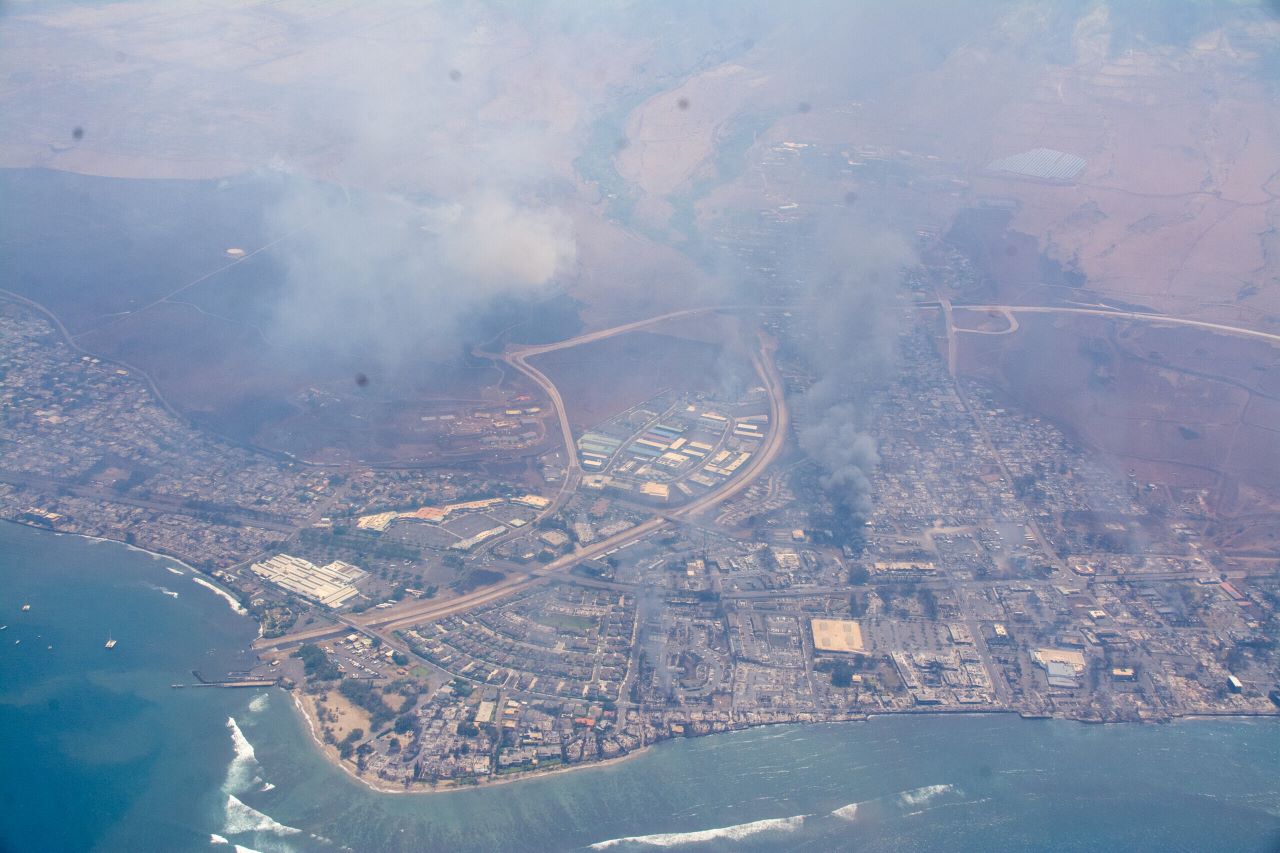
Maui Wildfires – Hawaii – August 8, 2023
Photo Credit – Meg Godlewski/Hawaii Civil Air Patrol

This is the fourth in my series of reflections on the “c-o-s-m-o-s remedy” proposed in opposition to the “ideology of e-s-c-a-p-e” by Jem Bendell in Deep Adaptation: Navigating the Realities of Climate Chaos (UK/USA 2021).

#1: Reflections on Compassion
#2: Reflections on Openness
#3: Reflections on Serenity

In contrast to the habit of Autonomy in e-s-c-a-p-e ideology, which involves thinking and feeling ‘I must be completely separate in my mind and being, because otherwise I would not exist…,’ Bendell proposes that Mutuality involves remembering ‘as this world has produced me and societies have shaped me, I will question all my understandings and ways of relating with others’ (p.146).

Mutuality is defined as a positive, interactive relationship between two or more individuals. There’s a sense of giving and receiving in a reciprocal way. It also involves acknowledging the sameness or equality in the other person, while appreciating the difference in the other’s experience. As Bendell notes, mutuality calls us to understand the other.

In his article “The Importance of Mutuality,” American psychotherapist Dr. Jason B. Fischer notes: “To cultivate mutuality in a relationship, we have two main choices. We can either transform the way another person feels about us (by relating to them in a new way) or we can transform the way we feel about them.”

Reflecting on my relationships over the years, including my failed marriage, I have not done so well when it comes to mutuality of shared feelings and wants. Only six relationships fall into that special category. Since I have no control over the way others feel or think of me, I worked at understanding the other’s position and needs. In the past, such relationships were only successful for as long as I was willing to give freely under the terms of the individual or group.

While relationships of mutuality are not common in my life, I have found other ways to collaborate with others who share mutual interests and goals. I struggle to understand the lack of respect, anger, hate, and violence towards the “other.” I struggle to understand the beliefs and stance of those who deny mounting evidence that humanity is facing a global climate and ecological existential crises.

Is understanding the “other” enough to narrow the divide?

Over twelve years ago—during a tough time juggling our family budget, following the 2007-2008 Global Financial Crisis—an angel entered my life. Angeletta (fictitious name), a neighbor’s eighteen-month-old daughter, came running towards me across the lawn with arms outstretched like a swan in flight. Without thinking, I dropped to my knees and held her to my heart, now light as a butterfly.

From a distance, Angeletta’s mother looked on without a word. During the month that followed, my little angel remained housebound. What had I done wrong? Had I overstepped my boundaries by hugging her child? Was the white American mother racist?

Distressed, I called my white American friend for counsel. “Take it easy,” my friend told me. “Some mothers are very possessive, especially with their first child.”

With respect for her mother’s stance, I never again hugged my darling Angeletta. From behind their closed grill door, she would call out to me by name every time she saw me. Over time, with mutual understanding and shared interests, her mother and I became friends. Angeletta became my gardening companion. I was saddened when they moved out-of-state. 


Thought for Today: Chemicals Wreaking Hormonal Havoc

Tags

, , ,

Front Cover: Count Down: How Our Modern World Is Threatening Sperm Counts, Altering Male and Female Reproductive Development, and Imperiling the Future of the Human Race by Shanna H. Swan, PhD with Stacey Colino
Photo Credit: Simon & Schuster, New York, USA

It’s not only that sperm counts have plummeted by 50 percent in the last forty years; it’s also that this alarming rate of decline could mean the human race will be unable to reproduce itself if the trend continues…. In animals there have been changes in mating behavior, with more reports of male turtles humping other male turtles, and female fish and frogs becoming masculinized after being exposed to certain chemicals.

How and why could this be happening? The answer is complicated. Though these interspecies anomalies may appear to be distinct and isolated incidents, the fact is that they all share several underlying causes. In particular, the ubiquity of insidiously harmful chemicals in the modern world is threatening the reproductive development and functionality of both humans and other species. The worst offenders: chemicals that interfere with our body’s natural hormones. These endocrine-disrupting chemicals (EDCs) are playing havoc with the building blocks of sexual and reproductive development. They’re everywhere in our modern world—and they’re inside our bodies, which is problematic on many levels.

Excerpt from Count Down: How Our Modern World Is Threatening Sperm Counts, Altering Male and Female Reproductive Development, and Imperiling the Future of the Human Race by Shanna H. Swan, PhD with Stacey Colino, Simon & Schuster, New York, USA, 2020 (Chapter One: Reproductive Shock, pp. 7 & 9).

Shanna H. Swan, PhD, is an award-winning scientist based at Mt. Sinai Medical Center, New York, and one of the world’s leading environmental and reproductive epidemiologists.

Stacey Colino is an award-winning writer specializing in health and environmental issues. Her work has appeared in such magazines as Newsweek, Time, Parade, National Geographic, and Good Housekeeping.

The Writer’s Life: Writing About Uncomfortable Subjects

Tags

, , , ,

Natasha Houston and her mother at home in Zeelgult. In 2013, Houston’s husband killed their two children, slashed her arm and hand, then died, apparently by suicide.
Photo Credit: KPBS (Williams Rawlins for NPR)

As I shared in my May 23rd post on getting my creative mojo back, I have resumed work on my writing project about women of agency. Revision of the completed draft of Part One, set in Guyana, is steadily moving forward. I struggled with Chapter Two: The Violence of Men.

When I first presented this chapter to my writers’ critique group in August 2019, I discovered that it was an uncomfortable subject for the male members of our group. I could see the rage in the eyes of my writing friend seated directly across from me on the other side of the table.

“I’m not a violent man,” he told me, struggling to restrain his anger. “I defended my mother against our psychotic father… I protected her.”

Taken aback, I said: “I’m speaking in general terms.”

Another male member of our group was more measured with his response: “Rough content, but so is life.”

Guyana’s First National Survey on Gender-Based Violence, launched in November 2019, revealed that more than half (55%) of all women experienced at least one form of violence. More than one in ten had experienced physical and/or sexual violence from a male partner in the previous 12 months. One in every two women in Guyana has or will experience Intimate Partner Violence (IPV) in their lifetime. Moreover, one in five (20%) women has experienced non-partner sexual abuse in their lifetime; thirteen percent (13%) experienced this abuse before the age of 18.

We live in a world still dominated by the heterosexual male. All men are not violent. All women are not nurturers. I’m considering changing the Chapter heading to “Violence as Humanity’s Default System.” What do you think?

Continue reading

“Broken Strings” – Poem by American Poet Mark Tulin

Tags

, , , ,

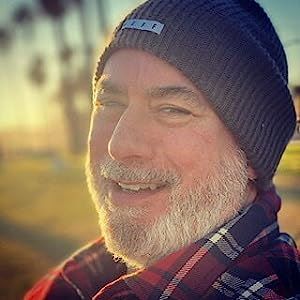
American Poet Mark Tulin
Photo Credit: Amazon Author Page


My Poetry Corner July 2023 features the poem “Broken Strings” from the poetry collection Awkward Grace: Poems (USA, 2019) by Mark Tulin, a poet, humorist, and short-story writer. The following excerpts of poems are all sourced from this collection.

Born in Philadelphia, Pennsylvania, he attended the Pennsylvania State University where he studied psychotherapy, specializing in family and sex therapy. In 2012, after practicing for over thirty years as a marriage and family therapist, he moved to Santa Barbara, Southern California. Today, he lives with his second wife, Alice, in Long Beach.

An only child, Tulin began writing poems as a teenager to cope with asthma and a dysfunctional family. His father, a fruit store owner, was charming, sociable, and rational. His mother was an independent-minded schizophrenic who “talked to herself and rarely filtered her words.” Because of his mother, he studied psychology and became a psychotherapist. “If I couldn’t fix my parents, I might be able to heal a family of strangers,” says Tulin in his author bio on Medium.

Continue reading

Reflections on Serenity

Tags

, , , , , ,

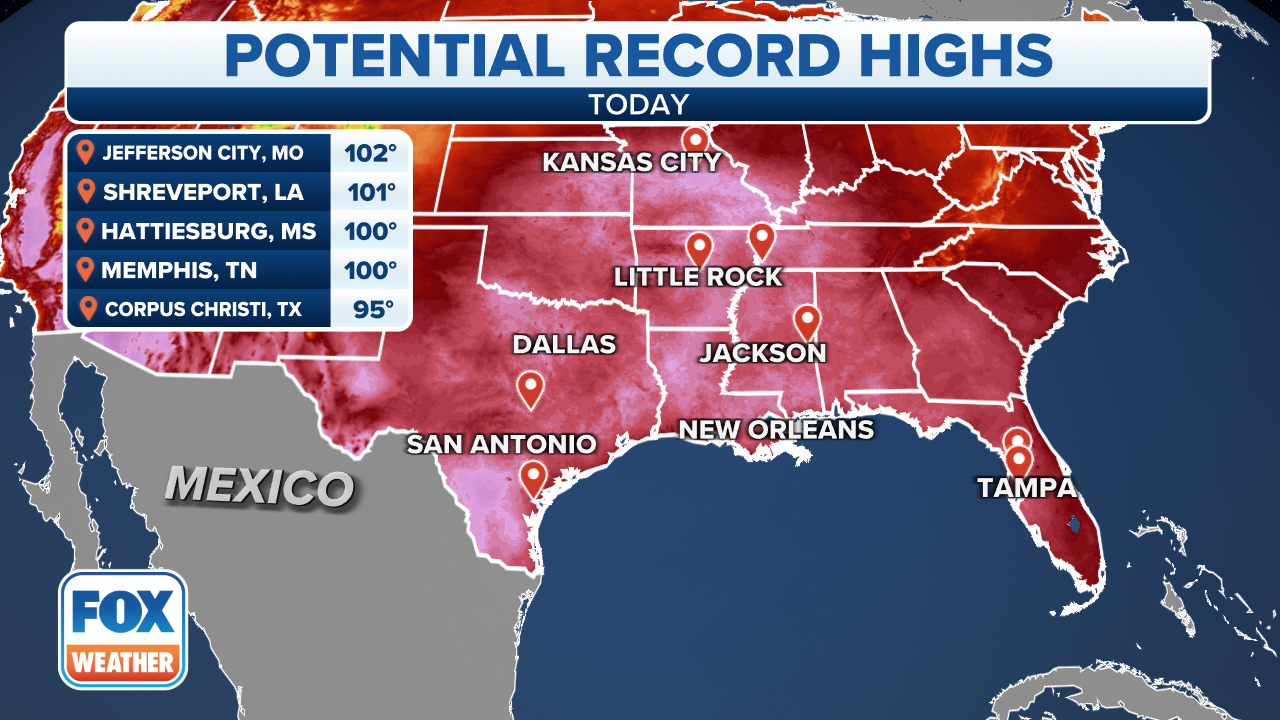
Potential Record High Temperatures Across the South & Southeast – United States – June 2023
Source Map: Fox Weather

This is the third in my series of reflections on the “c-o-s-m-o-s remedy” proposed in opposition to the “ideology of e-s-c-a-p-e” by Jem Bendell in Deep Adaptation: Navigating the Realities of Climate Chaos (UK/USA 2021).

#1: Reflections on Compassion
#2: Reflections on Openness

In contrast to the habit of Control in e-s-c-a-p-e ideology, which involves thinking ‘I will try to impose on you and everything, including myself, so I feel safer,’ Bendell proposes that Serenity involves the feeling that ‘I appreciate the dignity of you, myself and all life, however disturbing situations might seem’ (p.146).

Serenity is defined as the state of being calm, peaceful, and untroubled. A look at the day’s headlines suggest that we are more generally inclined to feel the very opposite: fear, dread, anguish, and anxiety. Desperate for control over our lives, we often place our faith in powerful men to save us from drowning. In America, we pass laws to restrict the rights of others for control over their bodies.

Since childhood, fear has been a constant companion. Such is the nature of domestic violence. All I could control was fear itself. In high school, I learned the “Serenity Prayer” asking God for the wisdom to know the difference between things I could and could not change, and the courage to change what was within my power to change. I did what I could to improve communication between my parents, with no observable change.

Continue reading

California – The Final Days of Spring

Tags

, ,

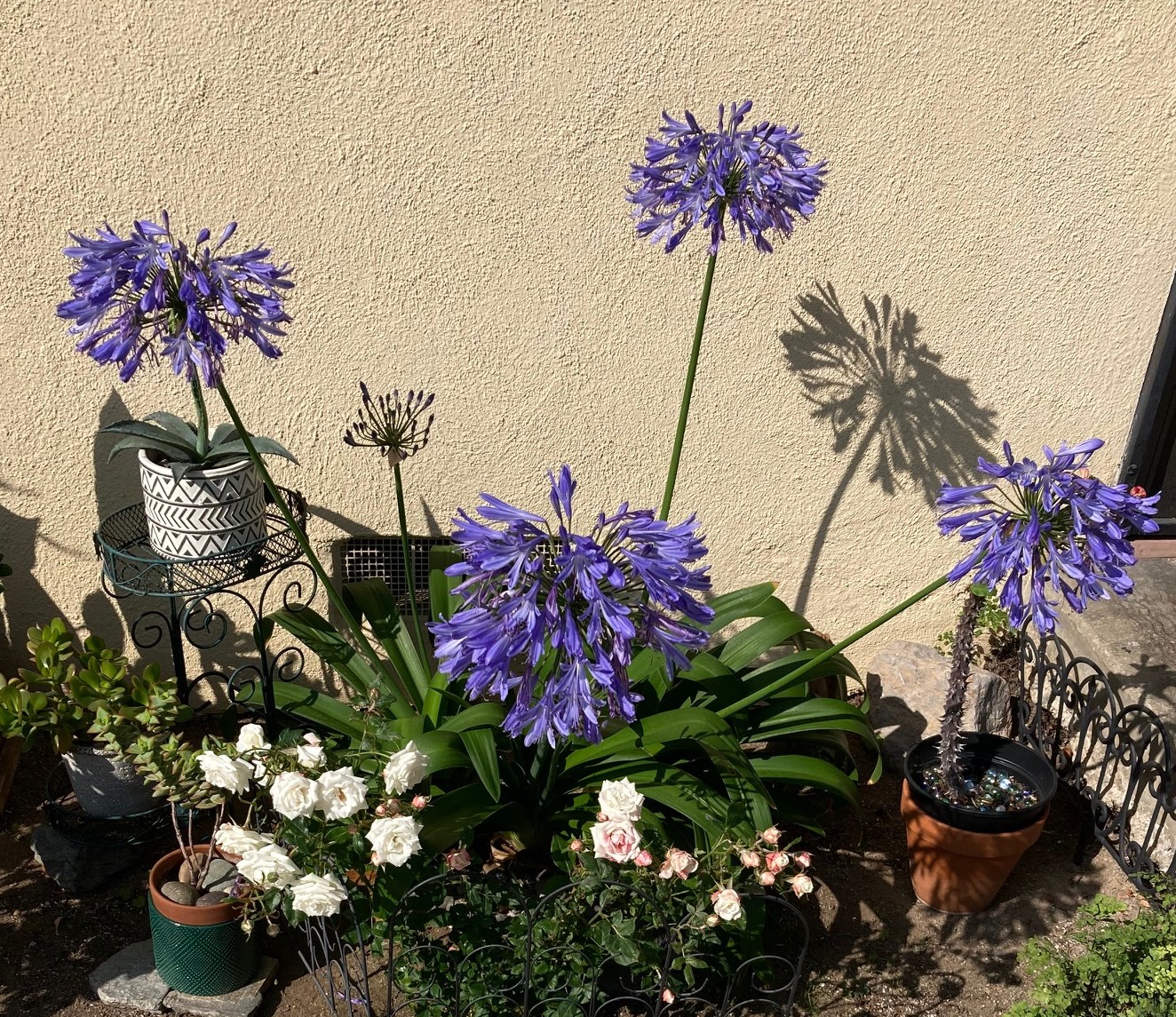
African ‘Lily of the Nile’ – Rosaliene’s Garden – Los Angeles – California – June 17, 2023

After an unusually wet and frigid winter, I was relieved that most of my plants had survived the deluge. A few, like the potted lime tree and croton bush, gained new life. Spring struggled to come into its own, remaining cooler than normal. The plants that flower in the spring are featured below. The captioned photo of the purple African ‘Lily of the Nile’ was the last plant to flower and is still in bloom.

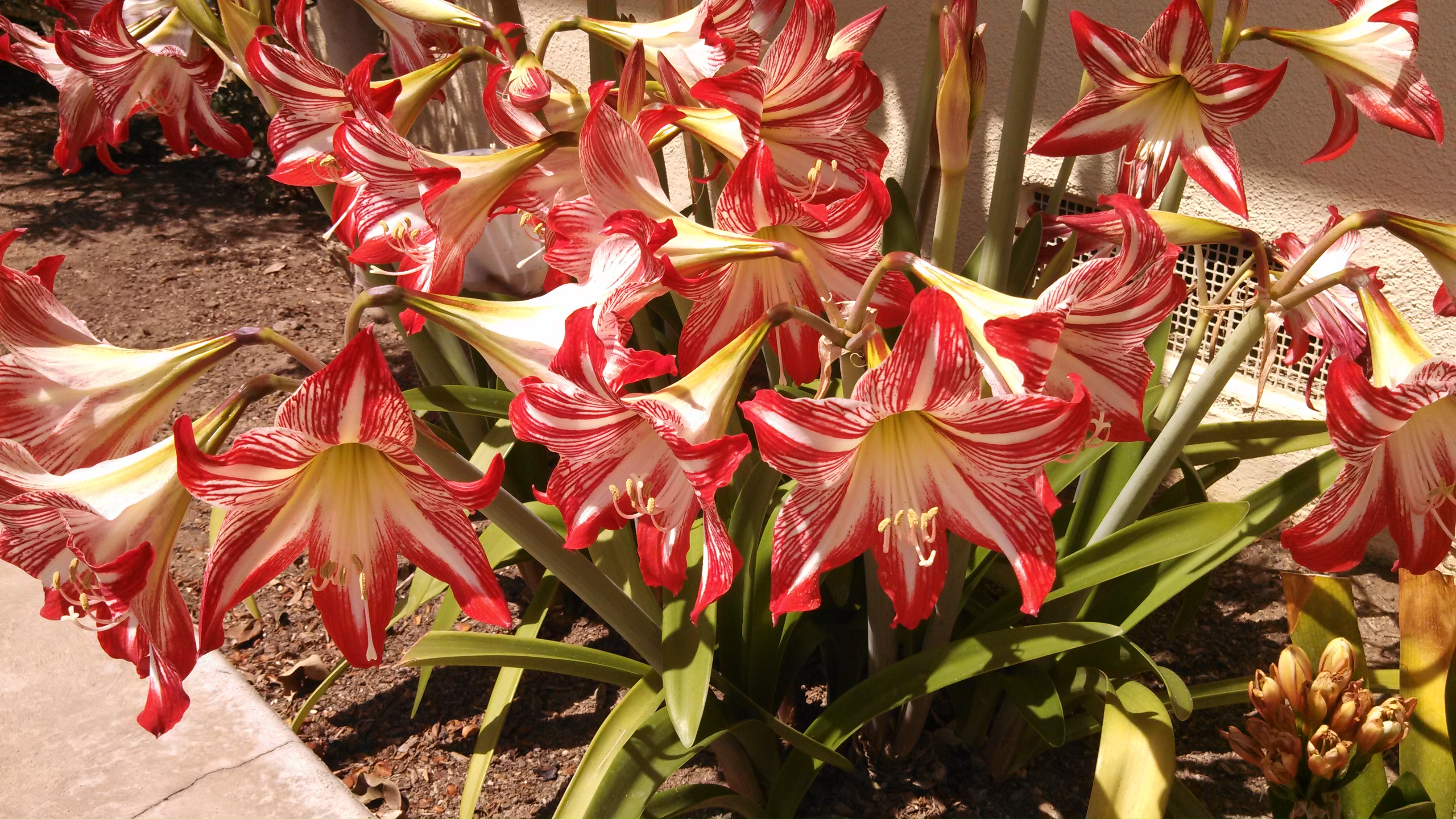
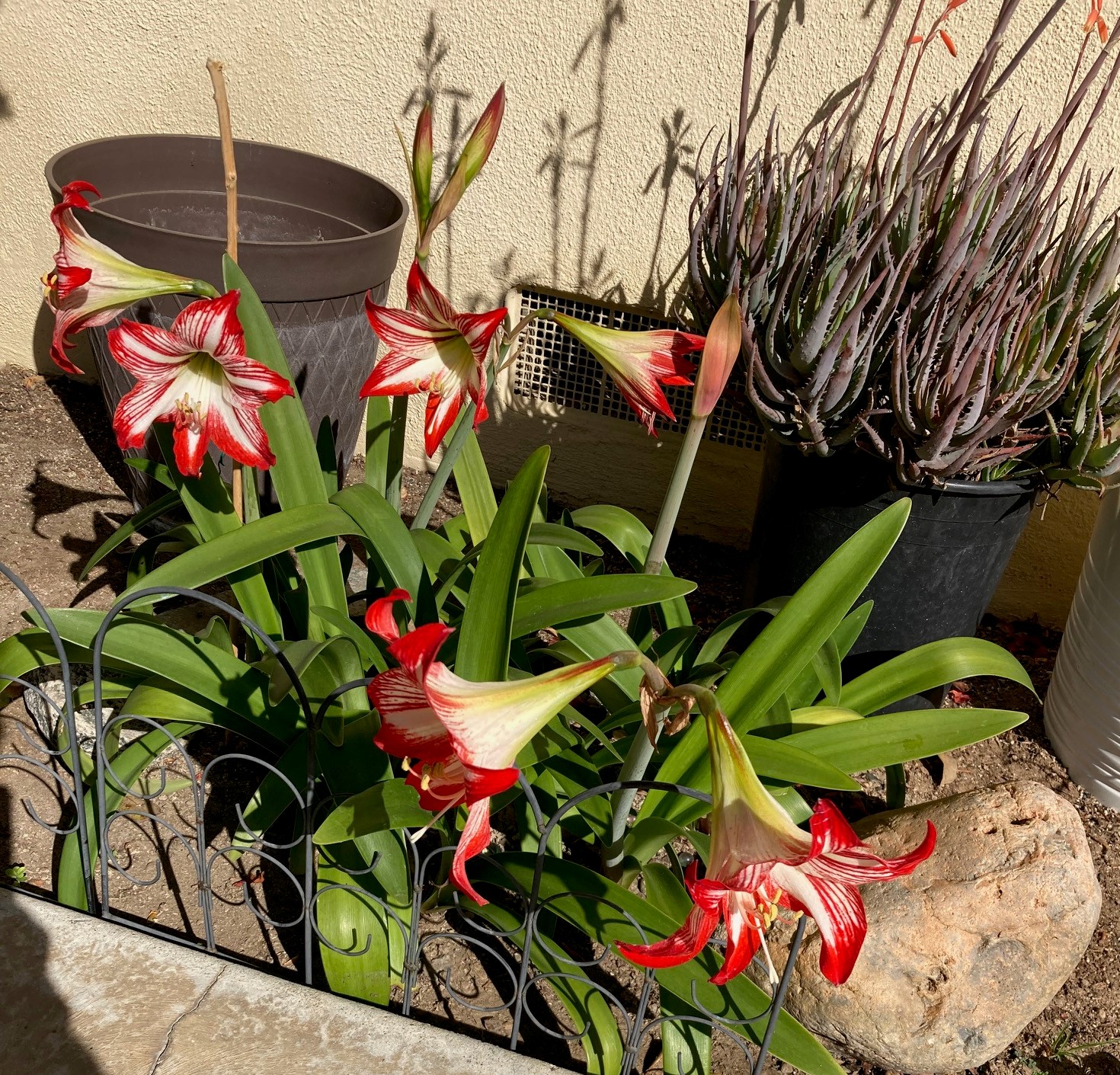
The drought took a toll on the Amaryllis lilies, as shown in the photos below. This is the first spring that the stems only produced two flowers instead of four.

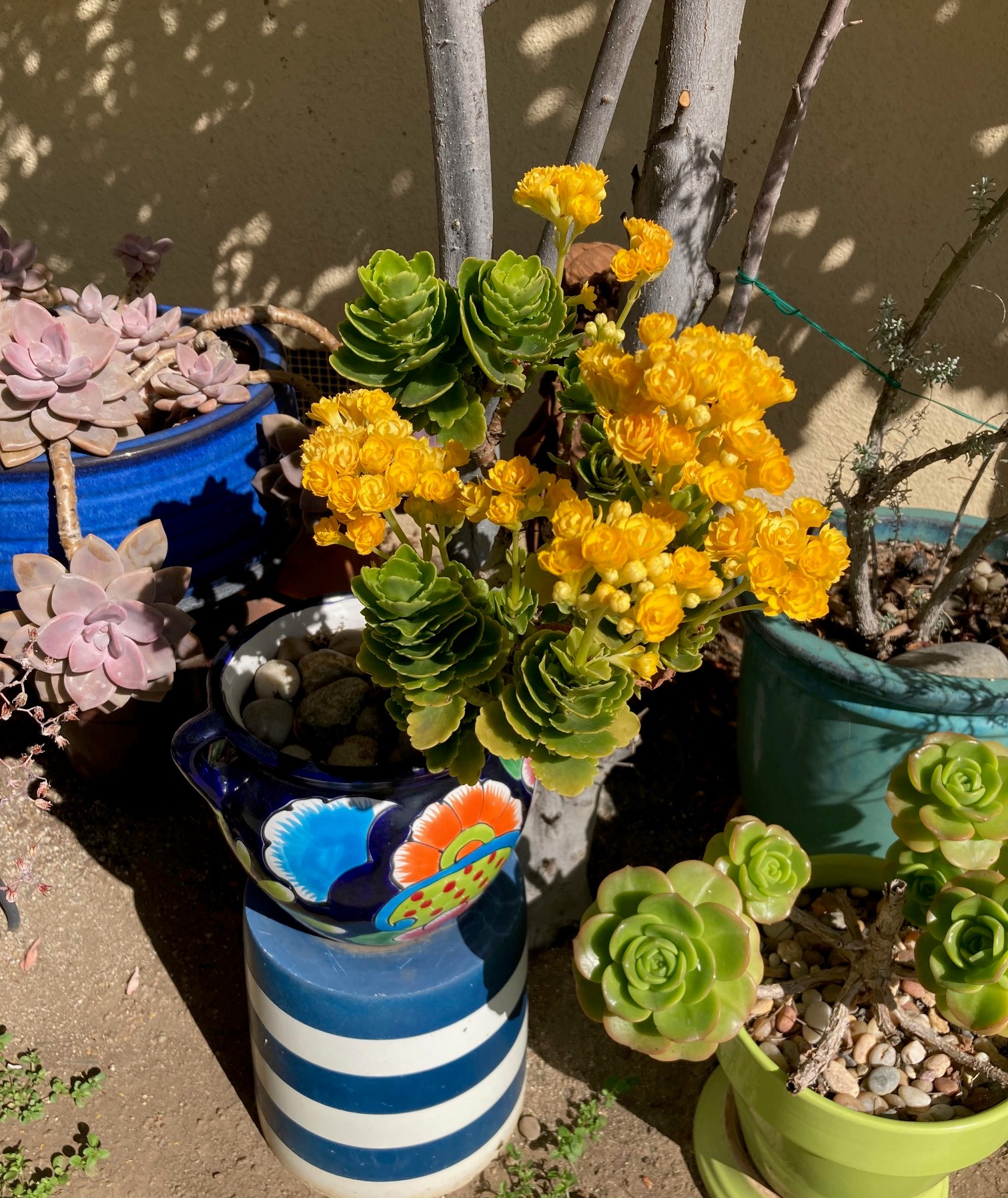
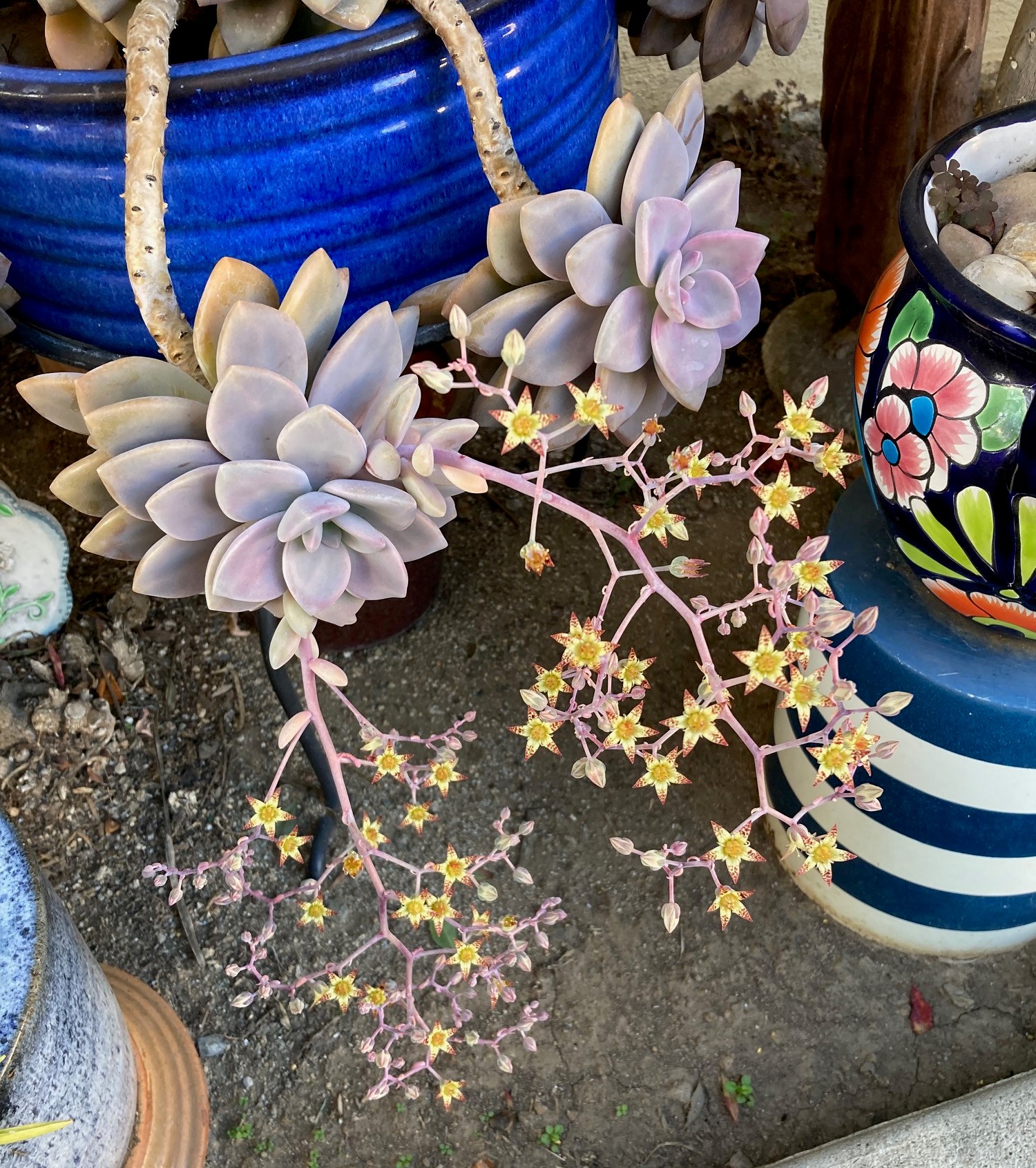
The yellow Calandivia succulent plant added much needed color to the garden plot in front of my apartment. I’ve had this plant for several years now and, despite the drought, it continues to bless my spring days with much needed joy. The adjacent plant pot with purple Graptoveria Debbie also added a touch of color with their star-shaped yellow mini-flowers.

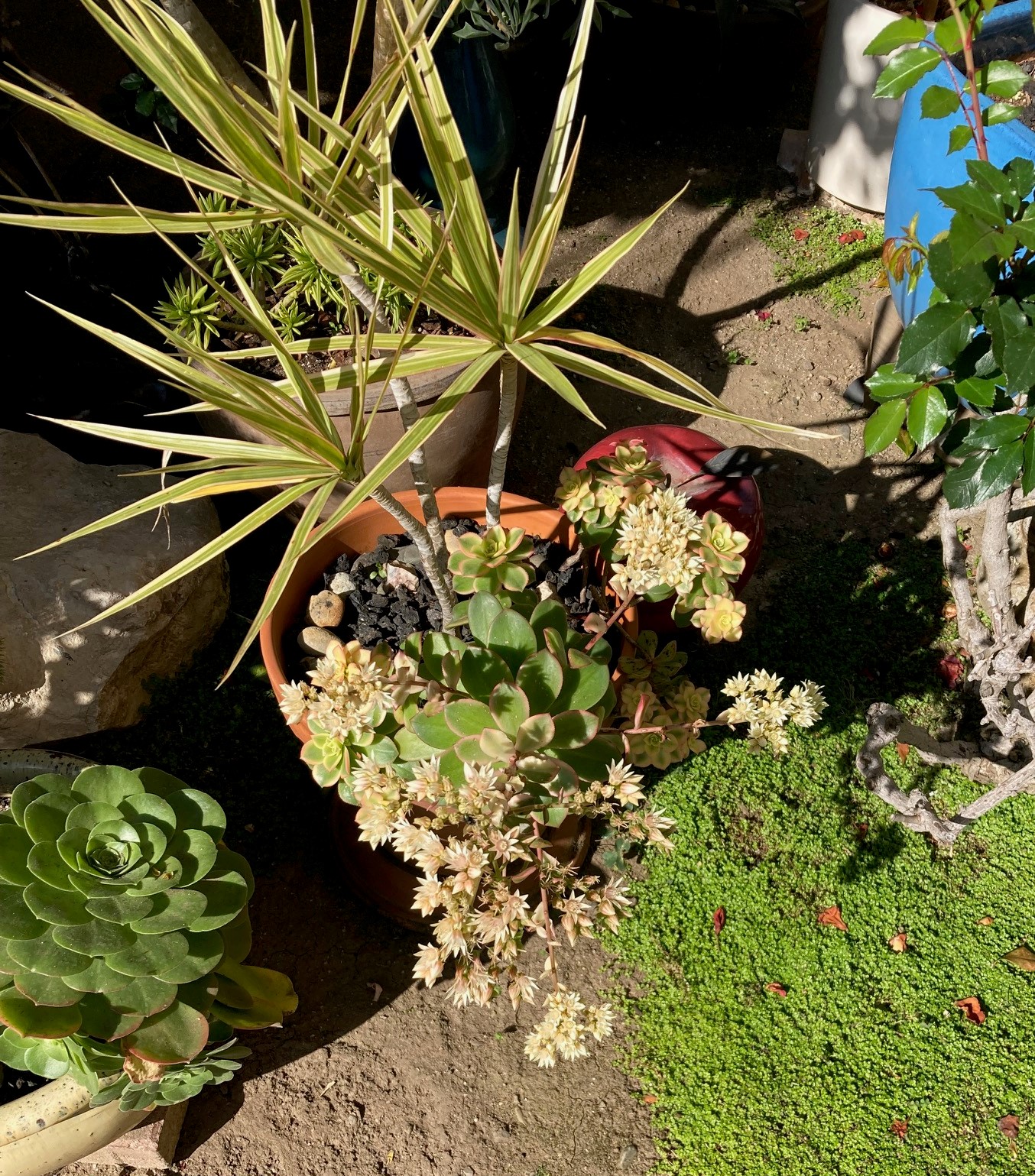
My favorite succulent rosettes, like the two plants below, all flowered this year. They have a strong not-so-pleasant scent that attracts the stray bees that visit my corner of the garden.

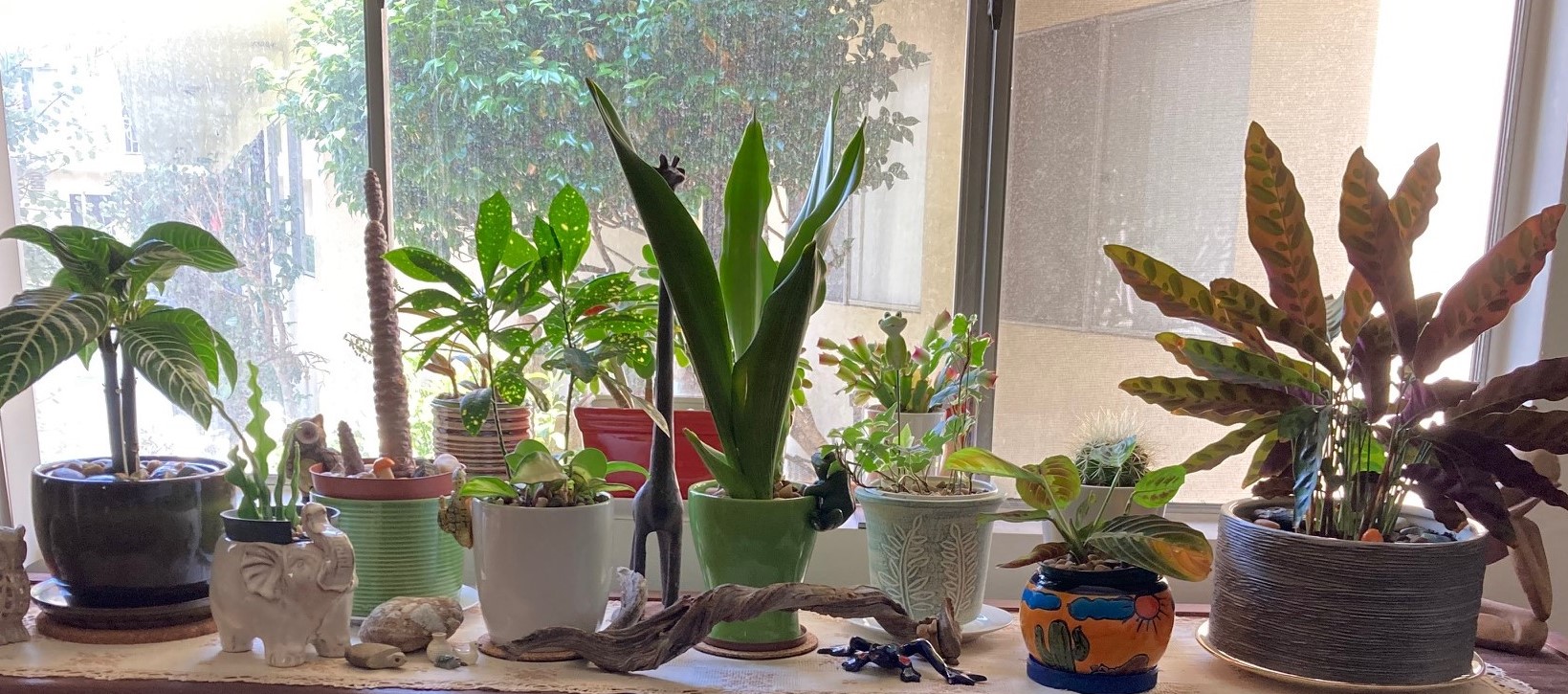
My indoor garden got a great boost this Mother’s Day with five new plants from my sons. So far, none of them have died. I keep them on top of the sideboard cupboard below my living room window where they enjoy the morning sunlight. As you will note in the photo, three of them are on the window ledge.

Temperatures are expected to rise this weekend. I’m brazing myself for the summer heat ahead. To my American readers, a Happy Independence Day!

Rosaliene’s Indoor Garden – Los Angeles – California – Spring 2023

“For Your Hypocrisy With a Kiss” by Brazilian Poet Eli Macuxi

Tags

, , , , , ,

Brazilian Poet Eli Macuxi
Photo Credit: Blog Elimacuxi, Pure Poetry

My Poetry Corner June 2023 features the poem “For Your Hypocrisy With a Kiss” (Pra Sua Hipocrisia Com Um Beijo) by Brazilian poet, photographer, historian, and teacher Elisangela Martins, who self-identifies as Eli Macuxi or Elimacuxi. She teaches History and Art Criticism in the Visual Arts Course at the Federal University of Roraima with special interest in feminism and gender identity/orientation. As a historian and photographer, she has partnered with the Association of Transvestites and Transexuals of Roraima in fighting for human rights.

Born in 1973 in the City of São Paulo, she grew up in a favela on the periphery where, for the first ten years of her life, she faced hunger and begged on the streets. Her semi-illiterate father, from the Northeastern State of Ceará, taught her to read and write. With a childhood fascination for verse and encouraged by a teacher, she began writing poetry in fifth grade. At fifteen, she dreamed of having her work read and studied by others:

“But the desire was totally blunted by the pessimistic awareness of reality,” confides the poet on her blog. “I was a skinny teenager, without luck of getting a job, studying at night school on the periphery, ‘daughter of a drunkie,’ with lots of younger siblings. To be a writer? Poet? It was laughable.”

In 1990, as a seventeen-year-old night school student and receptionist at a pharmacy during the day, she married a much older man. Giving birth to triplets soon after did not bode well for their marriage. Before the triplet’s second birthday, her husband had had enough and left them. A divorcee and back home with her parents, she worked for two years at several part-time jobs before securing a steady job as a waitress at a high-end restaurant. 

Continue reading

Reflections on Openness

Tags

, , , , , ,

New York City blanketed in smoke from Canadian wildfires – USA – June 7, 2023

This is the second in my series of reflections on the “c-o-s-m-o-s remedy” proposed in opposition to the “ideology of e-s-c-a-p-e” by Jem Bendell in Deep Adaptation: Navigating the Realities of Climate Chaos (UK/USA 2021).

#1: Reflections on Compassion

In contrast to the habit of Surety or Certainty in e-s-c-a-p-e ideology, which involves thinking ‘I will define you and everything in my experience so that I feel calmer,’ Bendell proposes that Openness wishes ‘I will keep returning to be curious about as much as I can, however unnerving’ (p.146).

What is the openness that Bendell refers to?

According to Psychology Today: “Openness to experience, or simply openness, is a basic personality trait denoting receptivity to new ideas and new experiences. It is one of the five core personality dimensions that drive behavior—known as the five-factor model of personality, or the Big 5. People with high levels of openness are more likely to seek out a variety of experiences, be comfortable with the unfamiliar, and pay attention to their inner feelings more than those who are less open to novelty. They tend to exhibit high levels of curiosity and often enjoy being surprised. People with low levels of openness prefer familiar routines, people, and ideas; they can be perceived as closed-minded.”

Continue reading