Camellia Trees – Winter 2024 – Los Angeles – Southern California
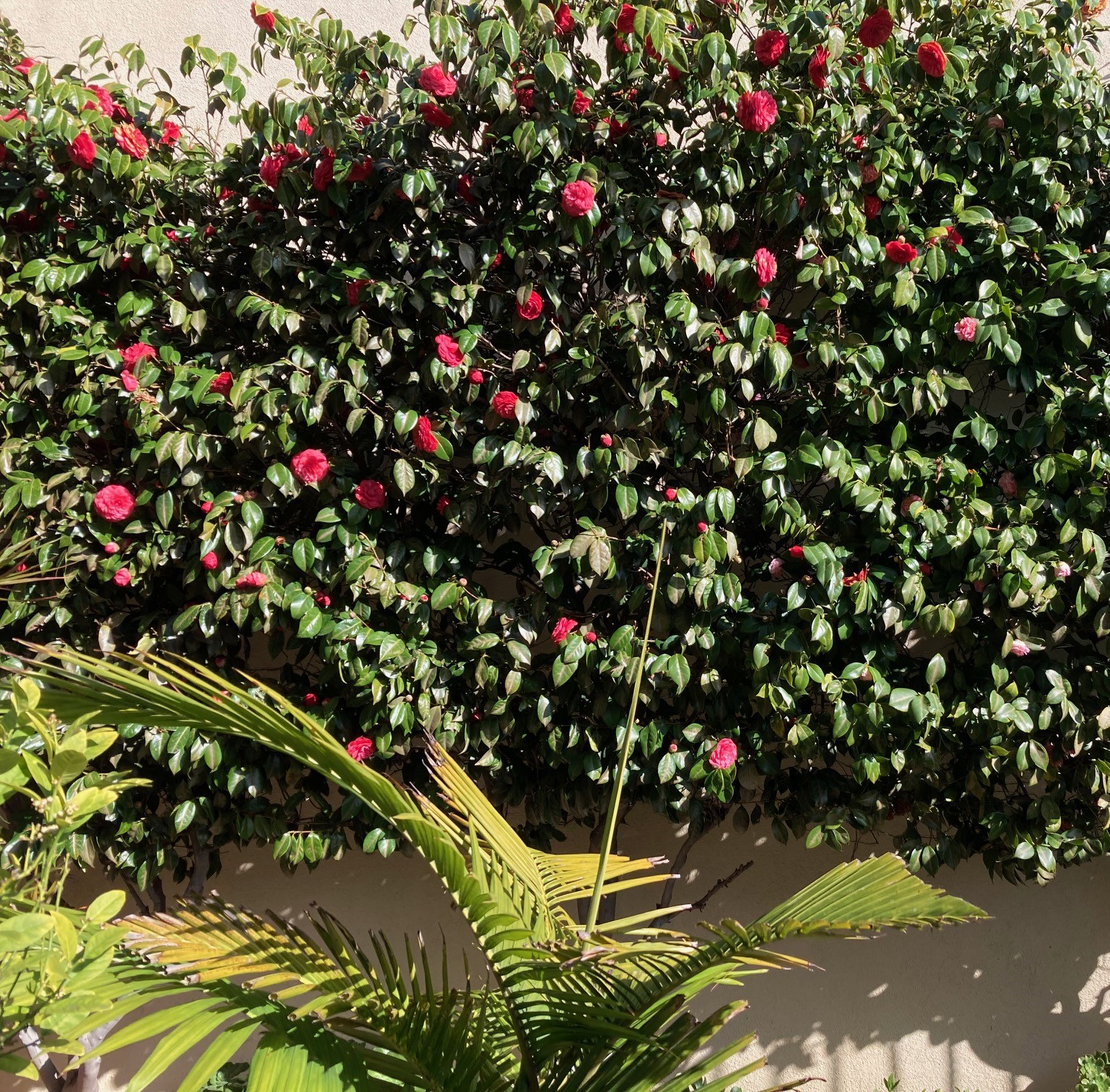
After the hottest year on record, we’ve had another unusually wet winter. Our garden turned a luxurious green with joy. Red camellias, in the captioned photo, blushed as we passed by on the way to and from the parking area. With a few exceptions, the succulent plants have also responded well to the soaking.
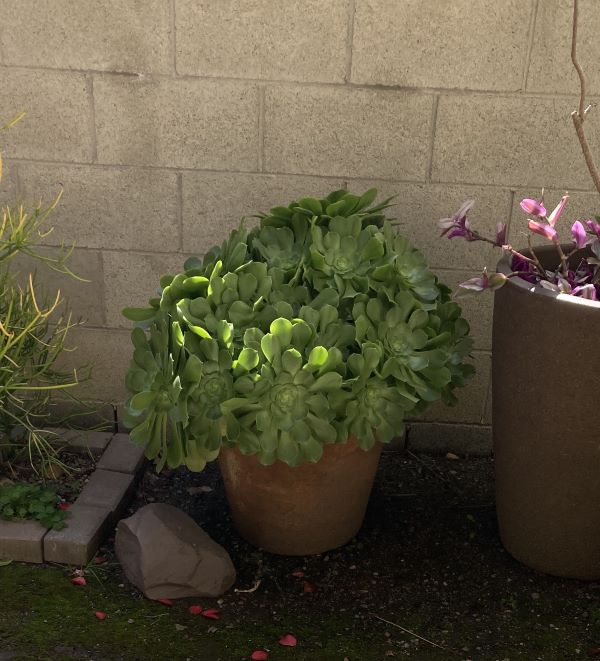
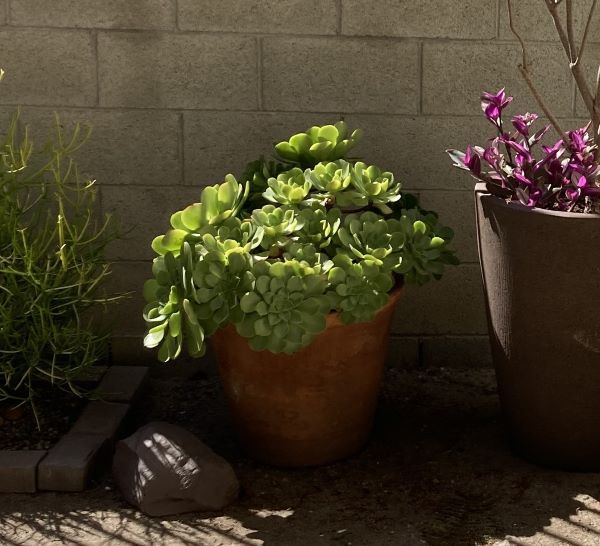
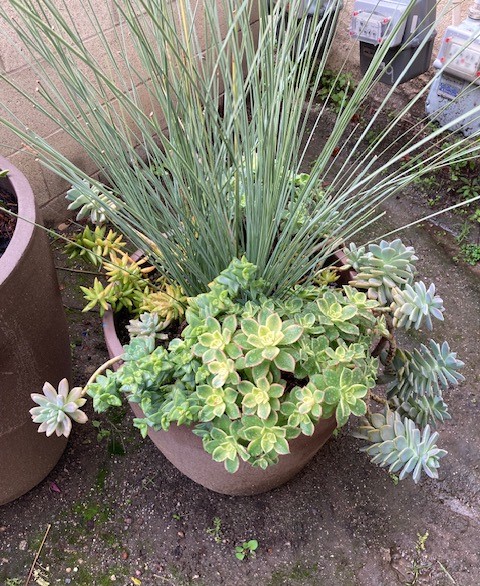
The growth of the potted Aeonium Mint, shown below, was impressive. Just two plants! Compare its growth since October 2023.
Aeonium Mint February 2024Aeonium Mint October 2023
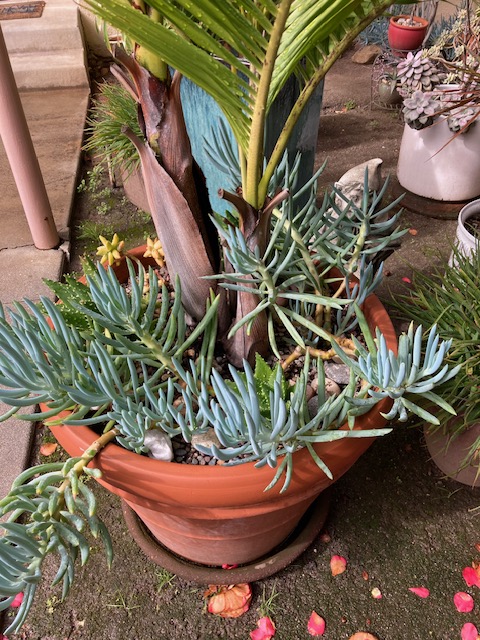
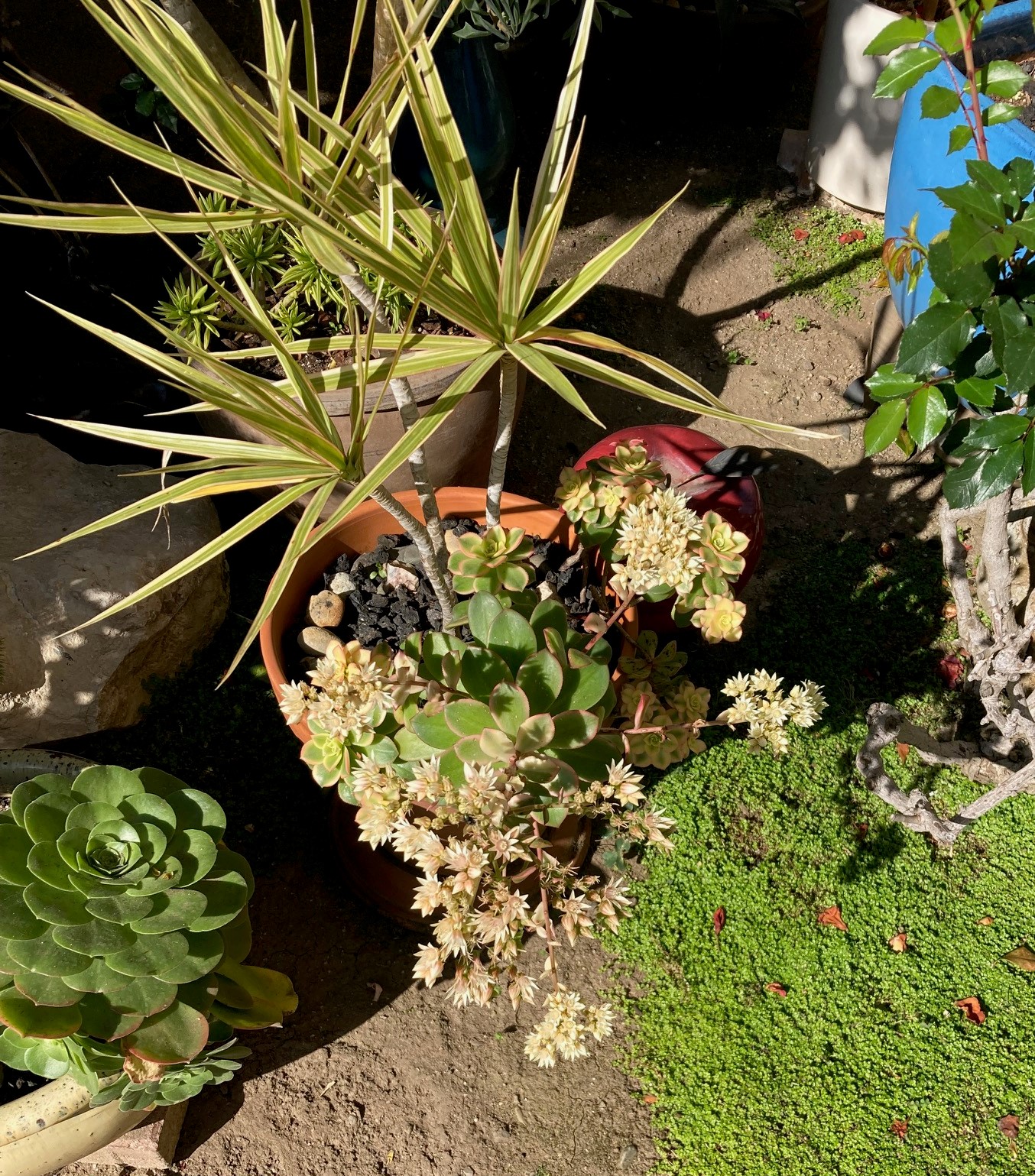
Other large potted plants in this open area, shown below, have also responded well to the drenching.
The Aeonium Kiwi, one of my favorite succulents, is also happy. Thankfully, the open area did not flood and drained well.
Neighbor’s Garden – Summer 2023 – Los Angeles – Southern California
Gone are the days when I could spend hours soaking up the summer heat at the beach. Nowadays, I risk suffering from heat stress, as occurred on two occasions during a heatwave in July. To get out for my weekly chores meant leaving home after 4 p.m. when temperatures became bearable. Mind you, even then, I couldn’t forget my hat and a bottle of lifesaving ice-cold water. Worse still, I had to reduce my weekend gardening hours to just two hours from 5 to 7 p.m.
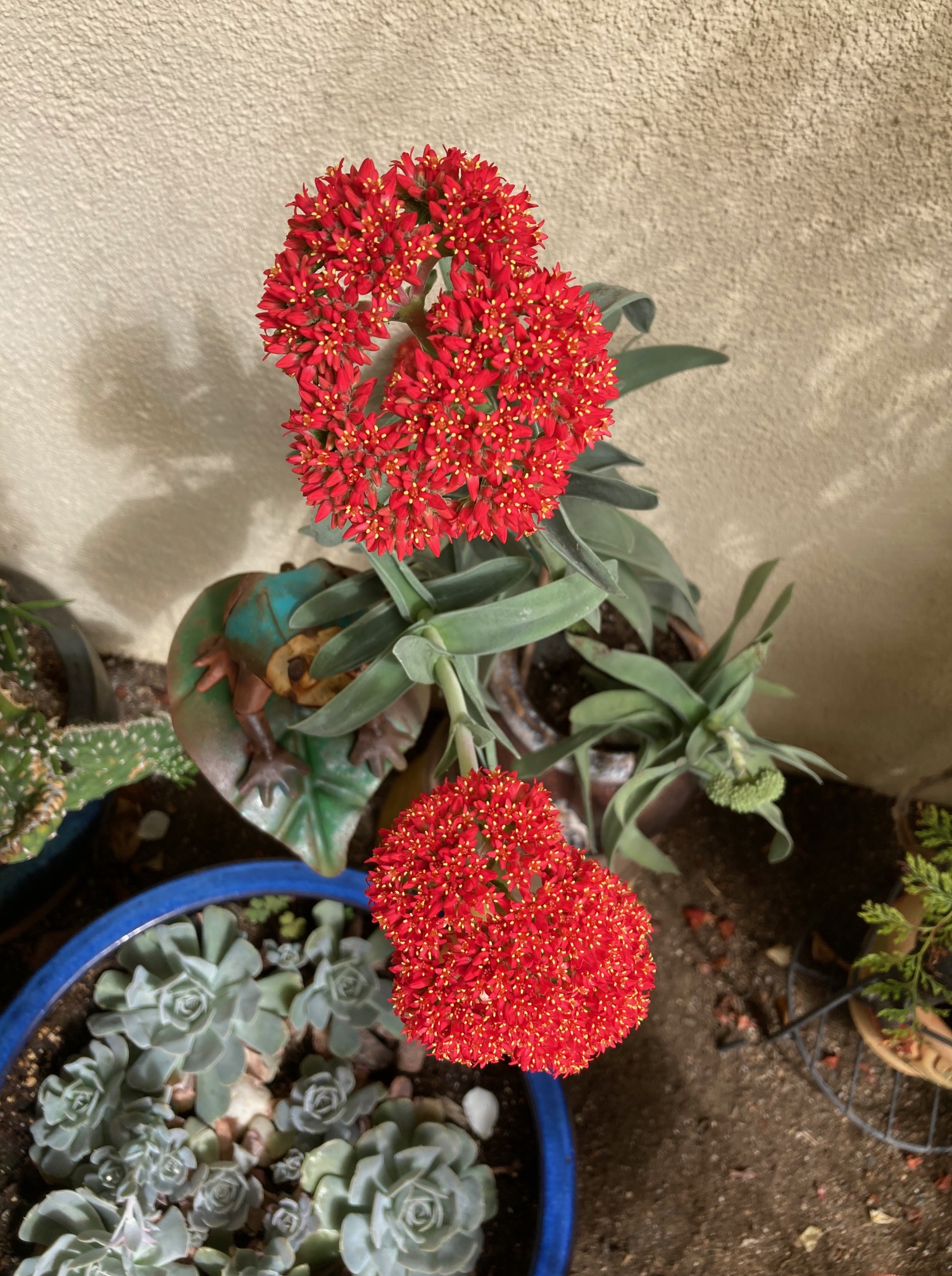
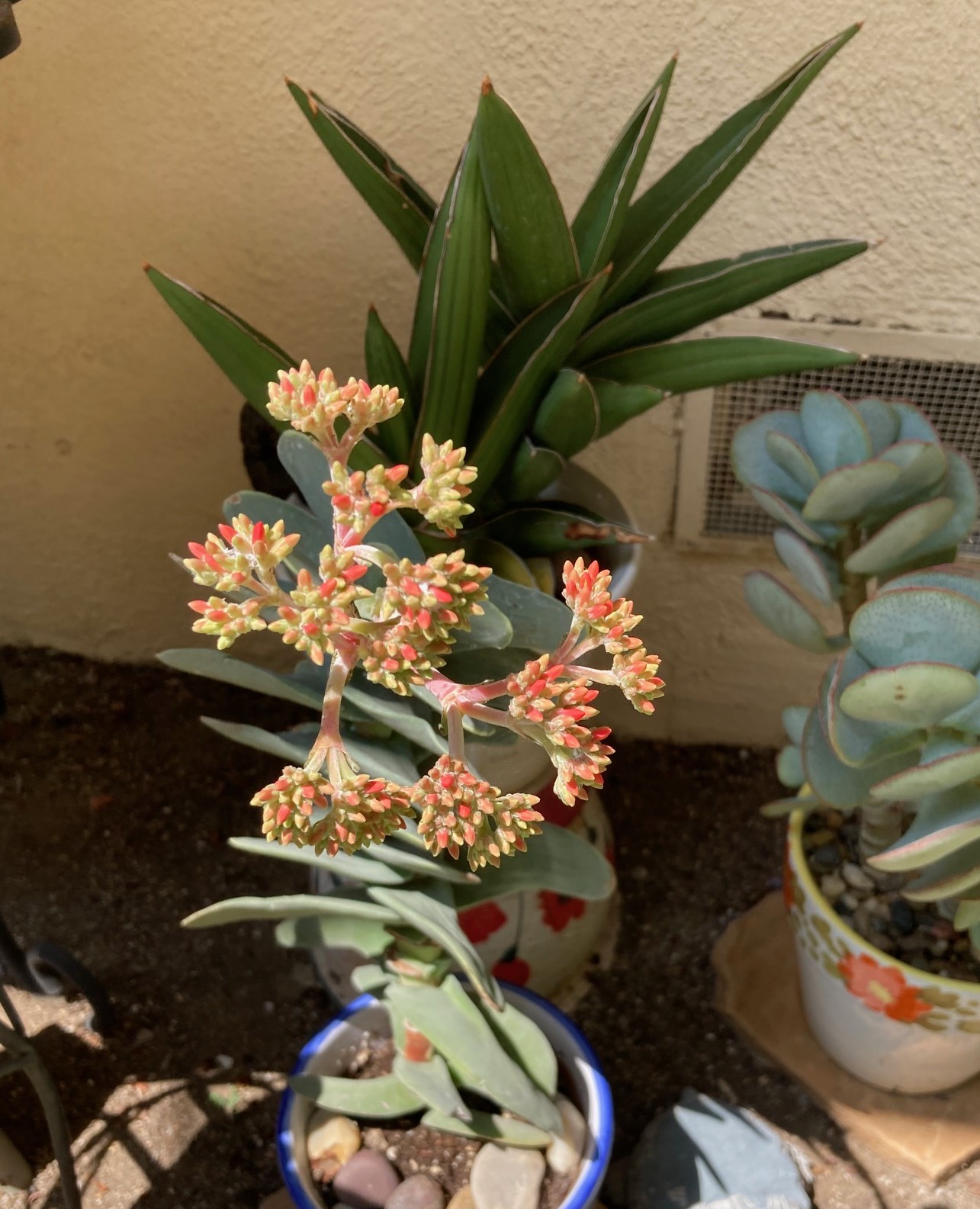
Thanks to an unusually wet winter, after several years of drought, our plants responded well to the excessive heat. In August, Tropical Storm Hilary also drenched us with two days of steady rainfall and cooled us down, if just for a while. The Propeller or Crassula Falcata succulent plant stole the show with its spectacular red blooms. A gift from a former neighbor who moved out last year, the plant (shown on the left) produced five blooms this year, compared to two last year. The Propeller plant, shown on the right in its early stage, is a young plant I bought last year that has flowered for the first time.
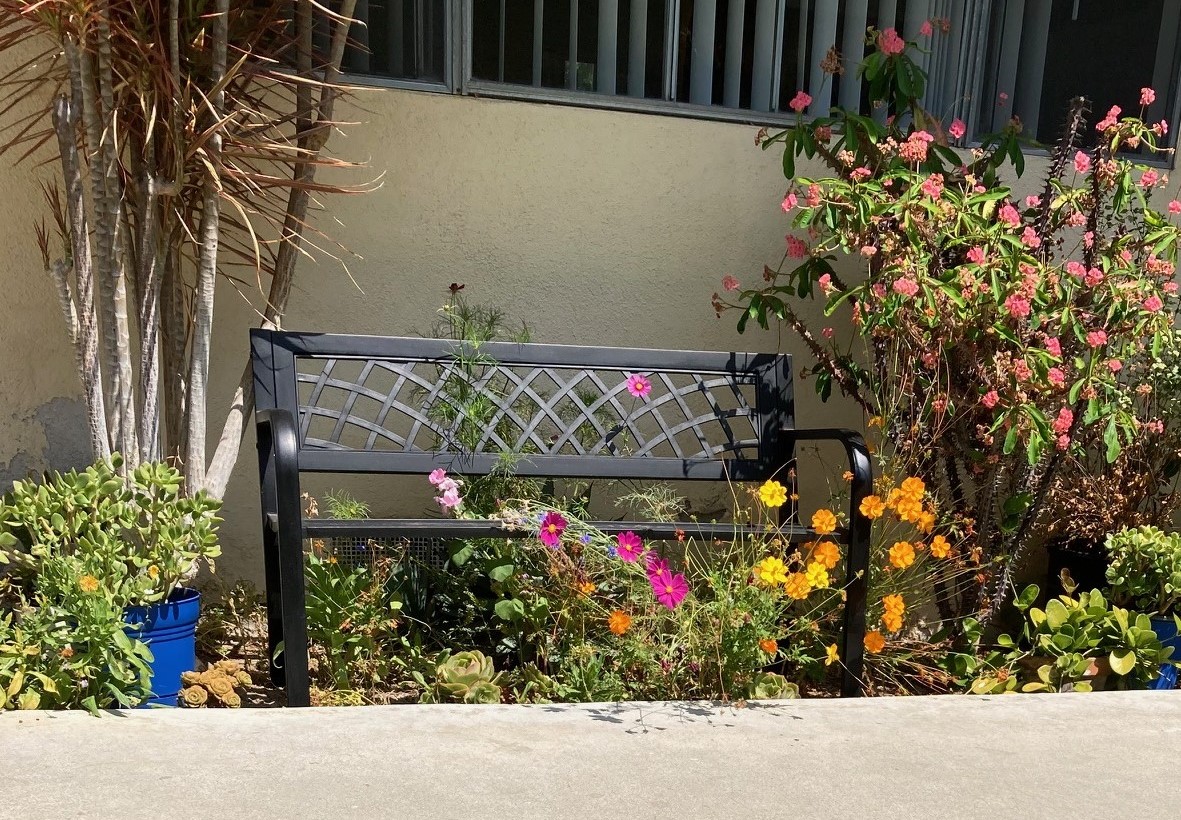
A new neighbor, who moved in last year, transformed his plot with a metal bench and added several potted plants. The flowers he planted for summer added joyful color to our garden. (See captioned photo.) How wonderful to have another garden enthusiast among us!
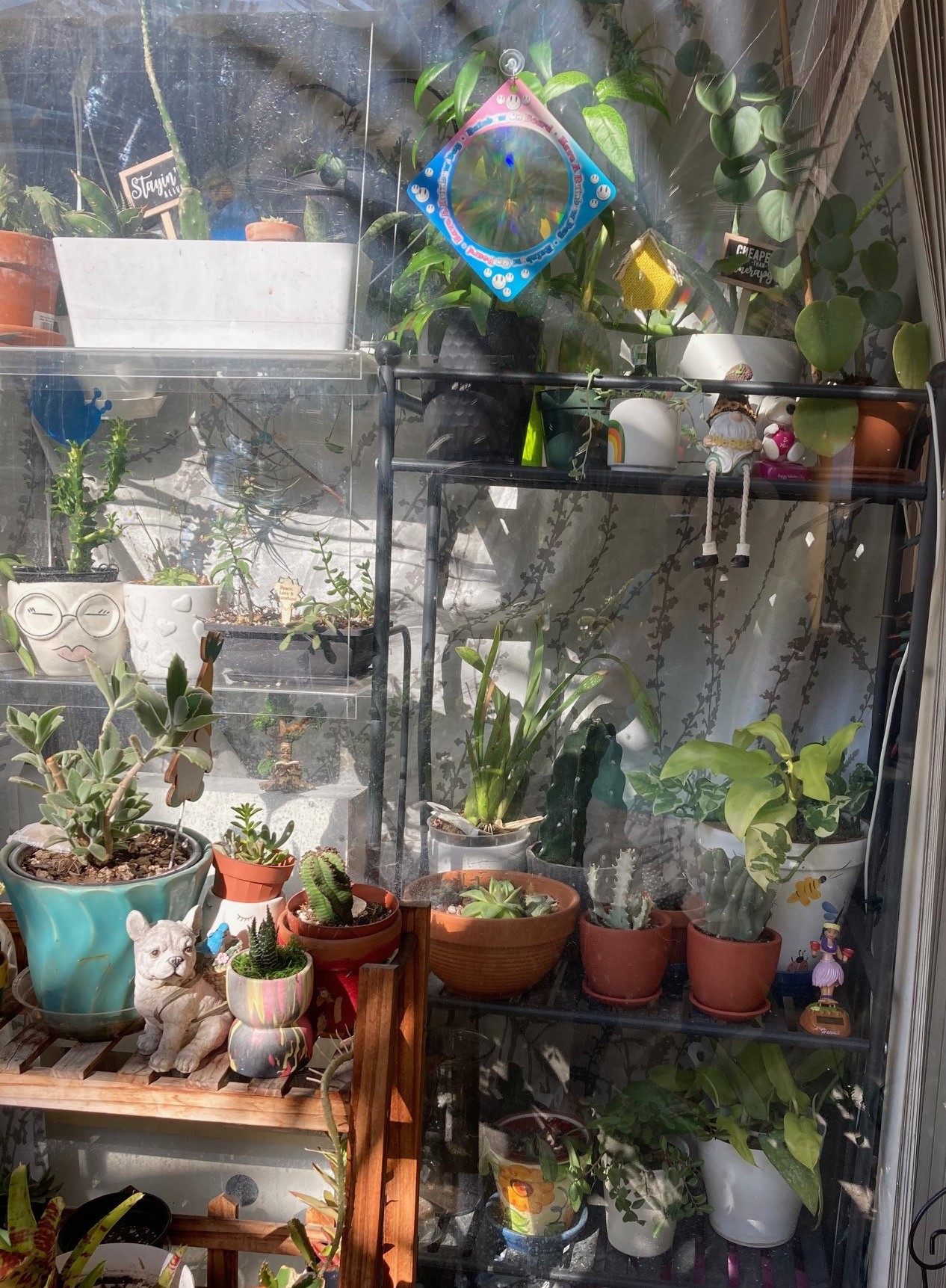
The garden featured below belongs to another neighbor and friend, a working mother of a seven-year-old daughter, who caught the gardening bug some years ago. In a once-neglected area of our courtyard, she has created a garden that changes colors with the seasons.
Located near the rear entrance/exit, her apartment is unique in having a two-panel glass wall, instead of a window, in her dining room area. As shown in the photo on the right below, she has taken advantage of the afternoon sunlight to set up an indoor garden. With its wide variety of plants, her garden is a delight to explore.
My Poetry Corner July 2023 features the poem “Broken Strings” from the poetry collection Awkward Grace: Poems (USA, 2019) by Mark Tulin, a poet, humorist, and short-story writer. The following excerpts of poems are all sourced from this collection.
Born in Philadelphia, Pennsylvania, he attended the Pennsylvania State University where he studied psychotherapy, specializing in family and sex therapy. In 2012, after practicing for over thirty years as a marriage and family therapist, he moved to Santa Barbara, Southern California. Today, he lives with his second wife, Alice, in Long Beach.
An only child, Tulin began writing poems as a teenager to cope with asthma and a dysfunctional family. His father, a fruit store owner, was charming, sociable, and rational. His mother was an independent-minded schizophrenic who “talked to herself and rarely filtered her words.” Because of his mother, he studied psychology and became a psychotherapist. “If I couldn’t fix my parents, I might be able to heal a family of strangers,” says Tulin in his author bio on Medium.
African ‘Lily of the Nile’ – Rosaliene’s Garden – Los Angeles – California – June 17, 2023
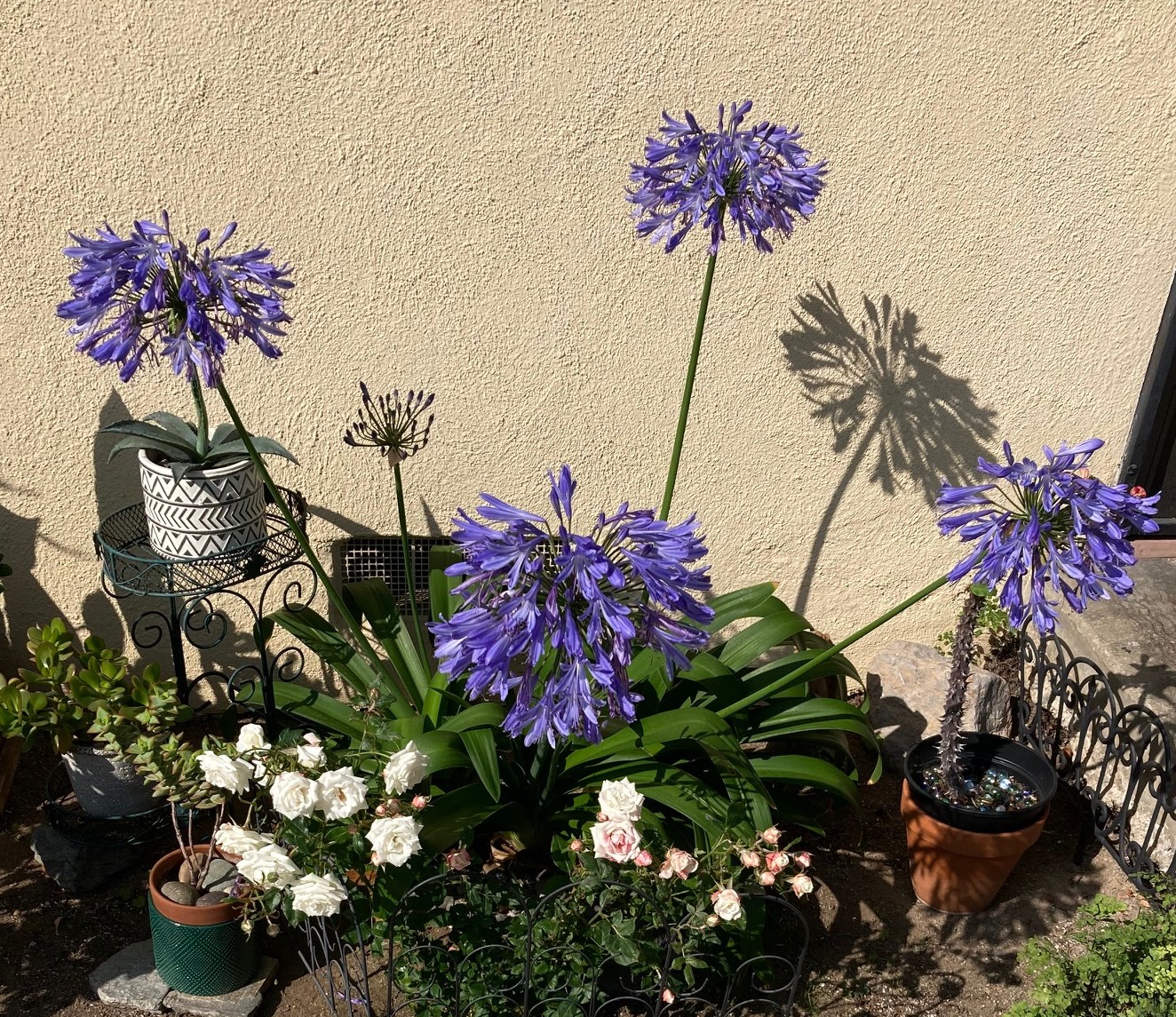
After an unusually wet and frigid winter, I was relieved that most of my plants had survived the deluge. A few, like the potted lime tree and croton bush, gained new life. Spring struggled to come into its own, remaining cooler than normal. The plants that flower in the spring are featured below. The captioned photo of the purple African ‘Lily of the Nile’ was the last plant to flower and is still in bloom.
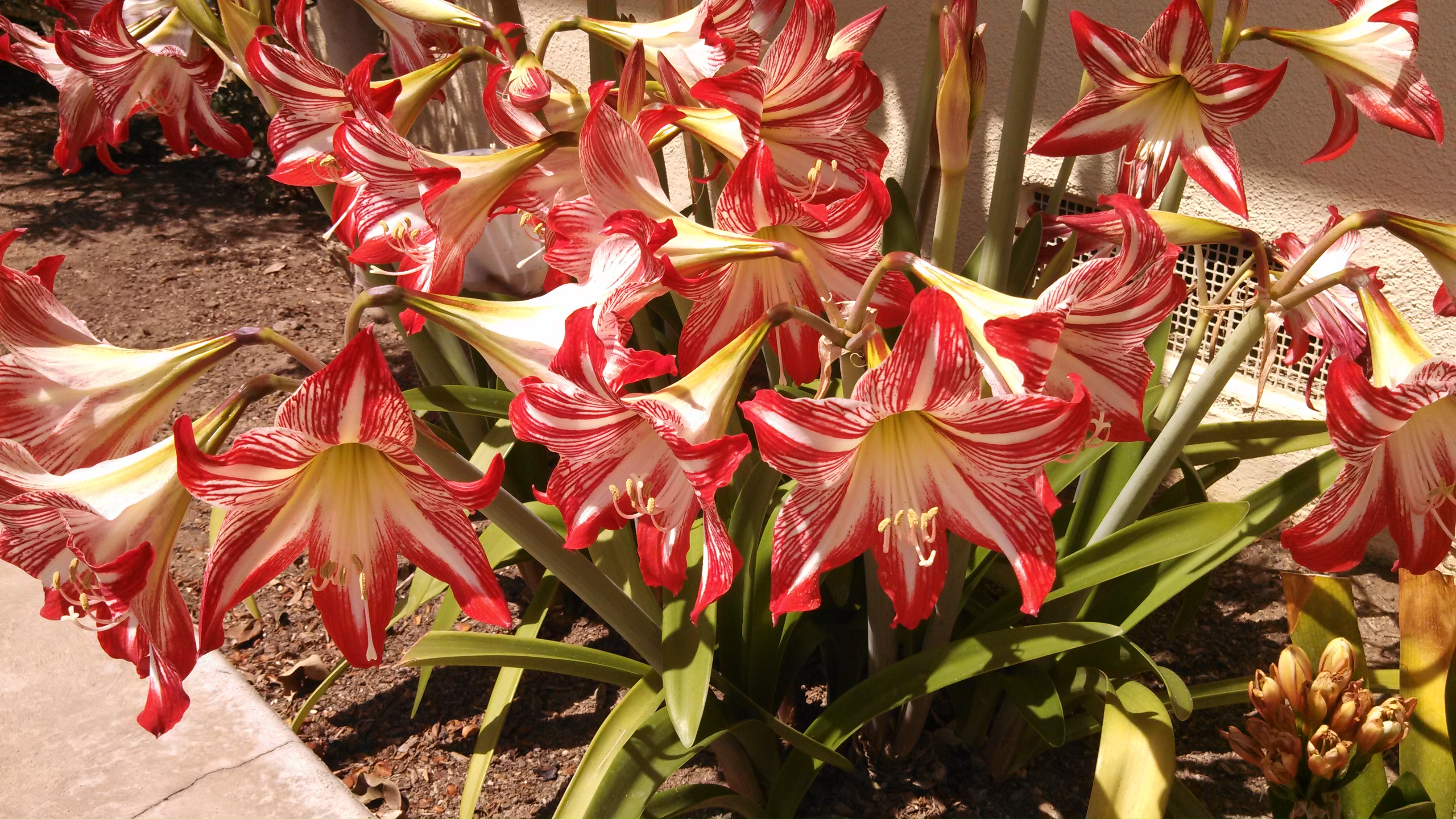
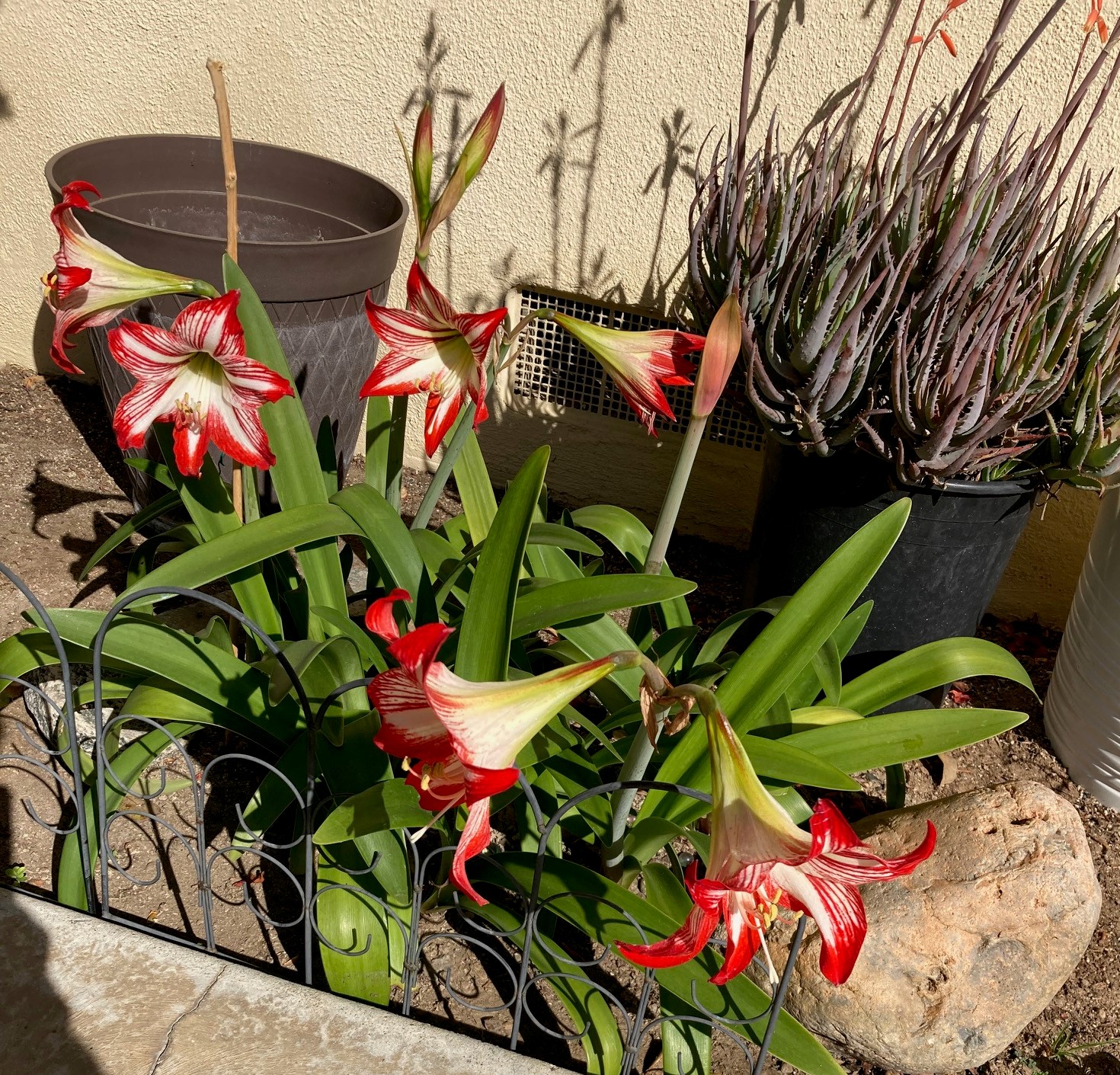
The drought took a toll on the Amaryllis lilies, as shown in the photos below. This is the first spring that the stems only produced two flowers instead of four.
Amaryllis – Spring 2014Amaryllis – Spring 2023
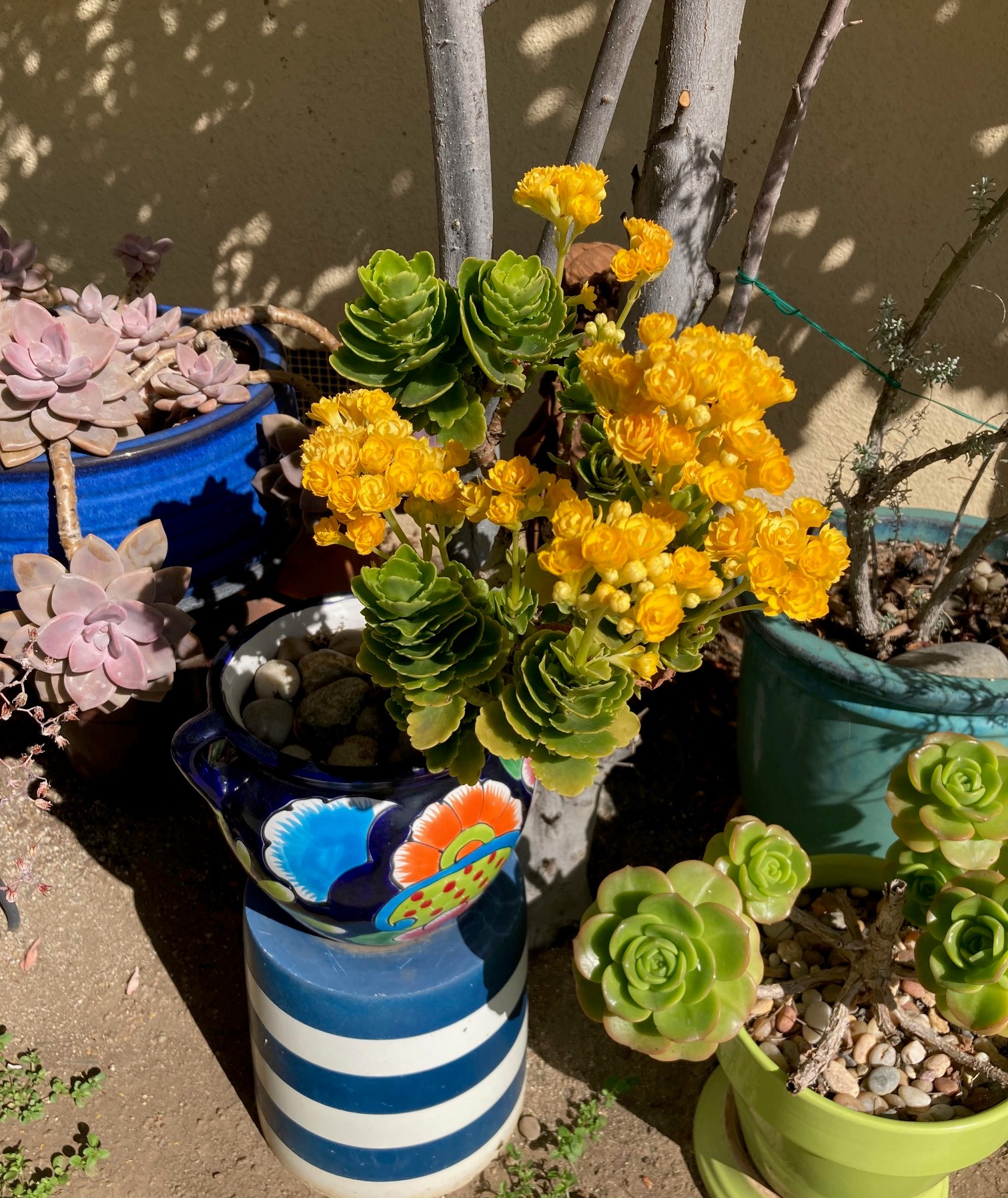
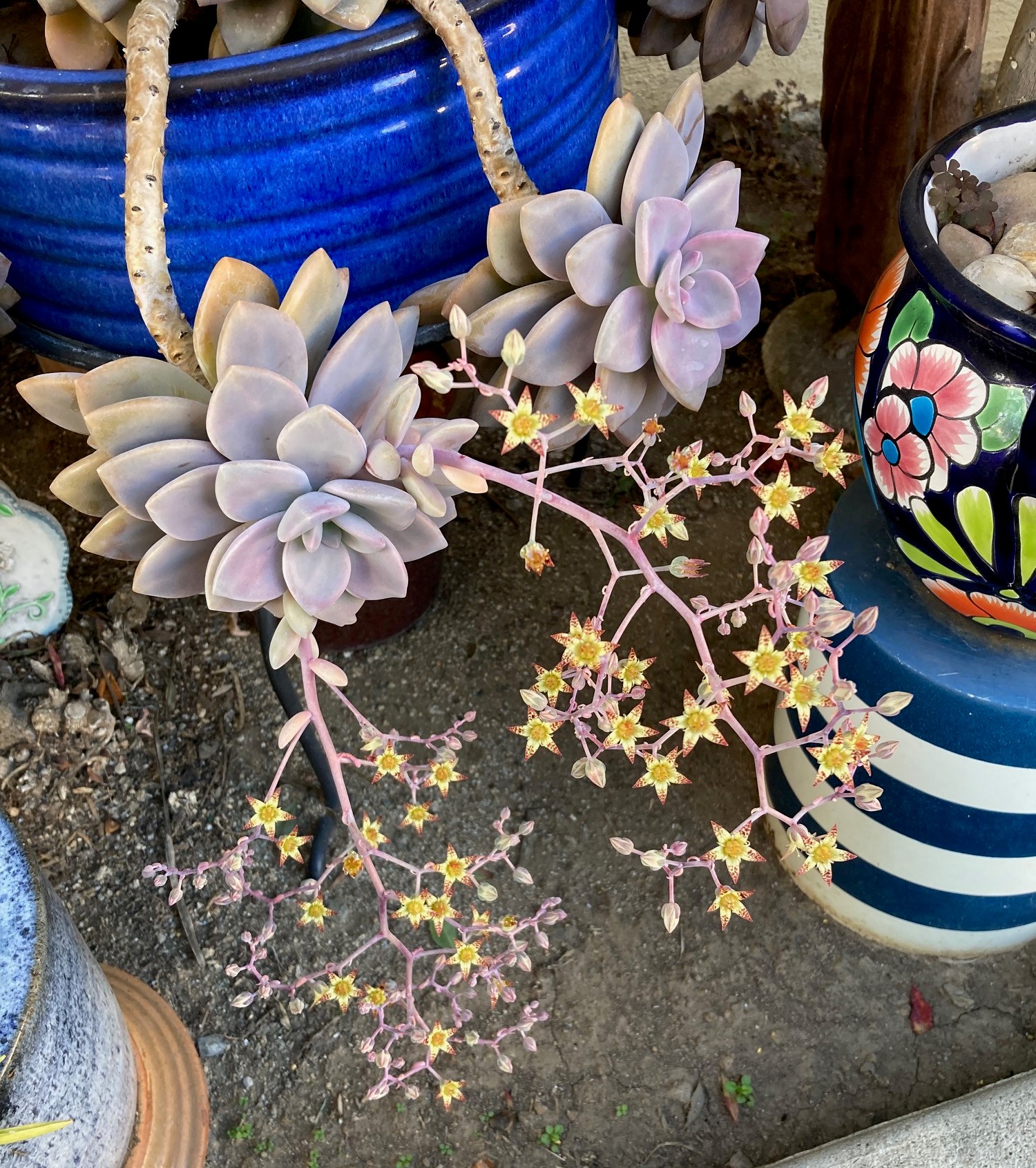
The yellow Calandivia succulent plant added much needed color to the garden plot in front of my apartment. I’ve had this plant for several years now and, despite the drought, it continues to bless my spring days with much needed joy. The adjacent plant pot with purple Graptoveria Debbie also added a touch of color with their star-shaped yellow mini-flowers.
Yellow Calandivia Succulent Plant – Spring 2023Purple Graptoveria Debbie – Spring 2023
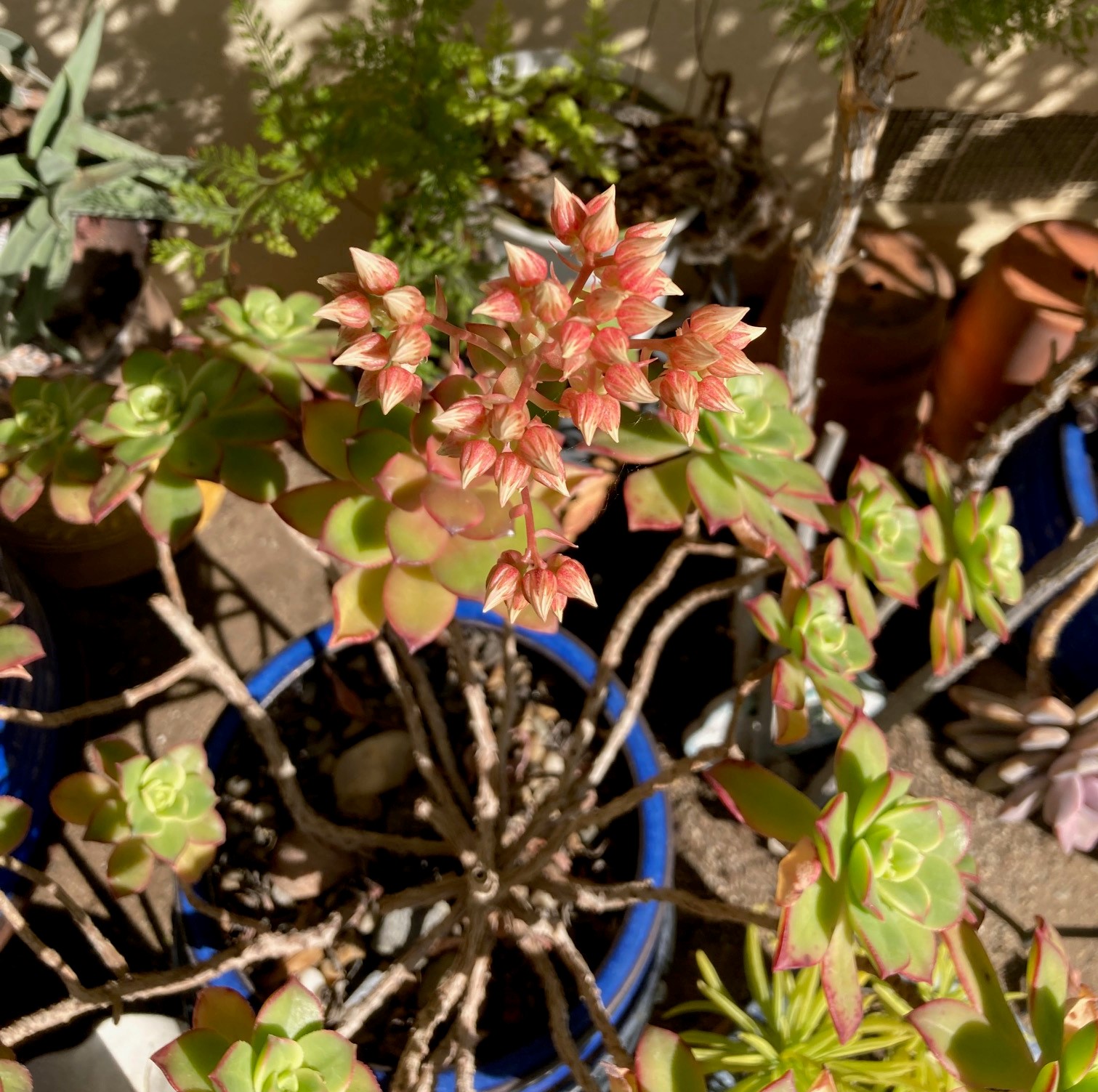
My favorite succulent rosettes, like the two plants below, all flowered this year. They have a strong not-so-pleasant scent that attracts the stray bees that visit my corner of the garden.
Aeonium ‘Kiwi’ – Spring 2023Aeonium ‘Kiwi’ – Spring 2023
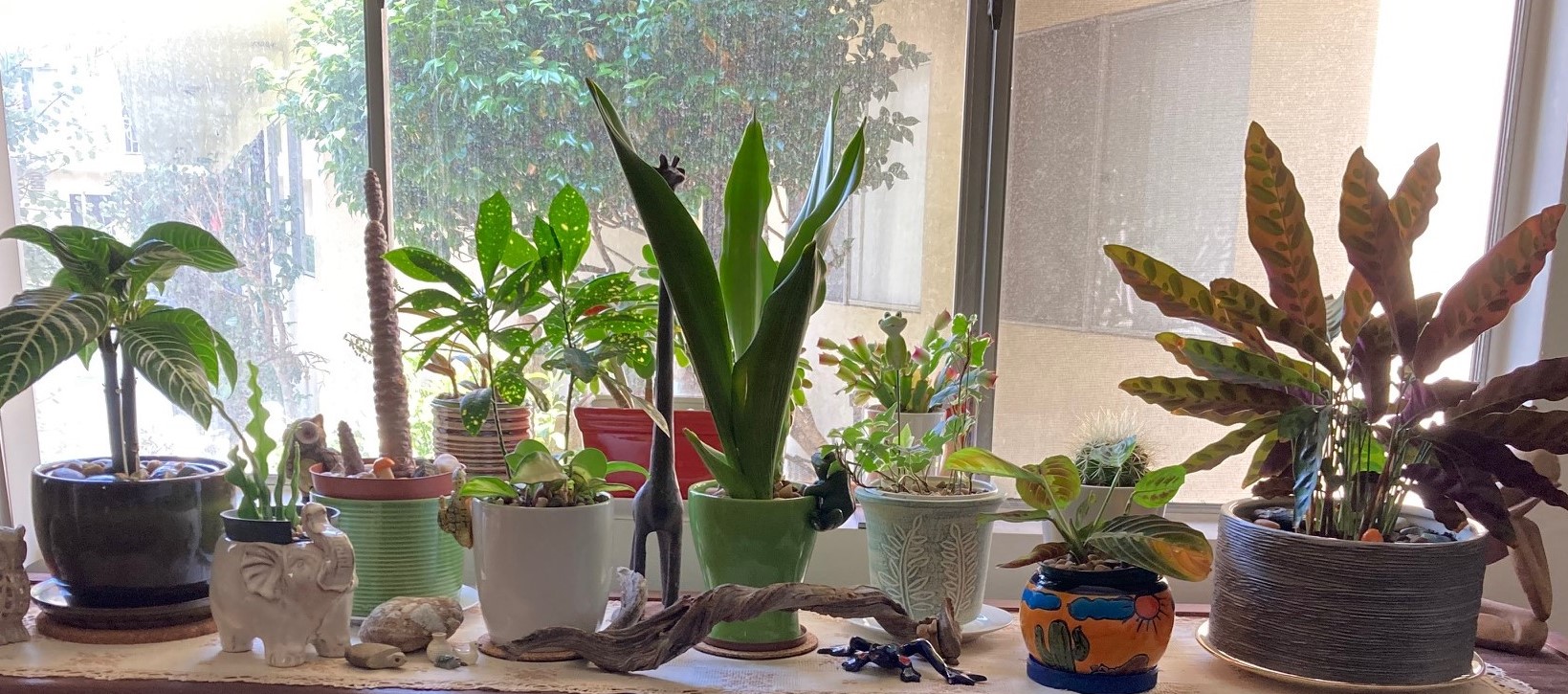
My indoor garden got a great boost this Mother’s Day with five new plants from my sons. So far, none of them have died. I keep them on top of the sideboard cupboard below my living room window where they enjoy the morning sunlight. As you will note in the photo, three of them are on the window ledge.
Temperatures are expected to rise this weekend. I’m brazing myself for the summer heat ahead. To my American readers, a Happy Independence Day!
Rosaliene’s Indoor Garden – Los Angeles – California – Spring 2023
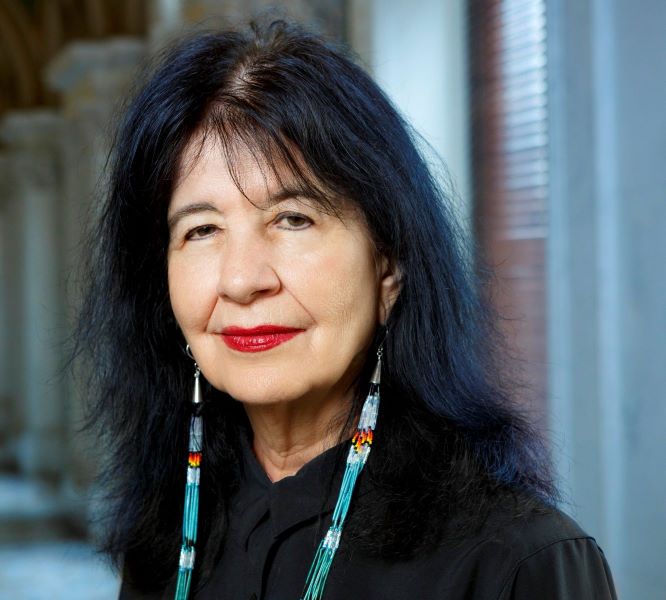
Native American Poet Laureate Joy Harjo 2019-2022 Photo Credit: Joy Harjo Official Website (Photo by Shawn Miller)
My Poetry Corner April 2023 features the poem “Bless This Land” from the poetry collection An American Sunrise by Joy Harjo, Poet Laureate of the United States 2019-2022. (The following excerpts of poems are all sourced from this collection.)
Born in 1951 in Tulsa, Oklahoma, the first of four siblings, Joy Harjo is a poet, musician, playwright, and author. Her father was Muscogee (Creek) Nation and her mother of mixed ancestry of Cherokee, French, and Irish. Her mother exposed her to poetry at an early age, but painting was her first love.
My mother was a songwriter and singer, Harjo relates in her poem “Washing My Mother’s Body.” My mother’s gifts were trampled by economic necessity and emotional imprisonment. // My father was a dancer, a rhythm keeper. His ancestors were orators, painters, tribal chiefs, stomp dancers, preachers, and speakers… All his relatively short life he looked for a vision or song to counter the heartache of history. Her father’s drinking and abuse ended their marriage.
At sixteen years of age, Harjo’s abusive and violent stepfather kicked her out of their home. She moved to Santa Fe, New Mexico, where she received her high school education at the Institute of American Indian Arts. After graduation, she returned to Oklahoma, gave birth to a son, and returned to New Mexico to pursue a life as an artist. After earning her BA at the University of New Mexico (UNM) in 1976, Harjo moved to Iowa where she completed an MFA in 1978 at the University of Iowa Writers’ Workshop.
In the midst of our Christmas Day preparations, local meteorologists warned that a severe winter storm brewing over the Pacific Ocean was headed towards the U.S. West Coast. They described it as a densely saturated atmospheric river. Thanks to advanced technological methods for studying our atmosphere, we now know that the atmosphere can hold an entire river of water vapor. These rivers in the sky are about 250 to 375 miles wide and can be more than 1,000 miles long. That is an awful lot of water vapor. Californians living in high-risk zones for flooding and mudslides were put on high alert.
After seven months of mandated water rationing, due to California’s three-year drought conditions, I was elated about the news. My water-deprived plants would be happy. But the Sky God can be merciless or overzealous when answering our prayers for rain. Beginning on December 27, 2022, California was hit by wave after wave of intense storms that dumped more water than our outdated water infrastructure could handle. In the first week of the New Year, I braced myself for what the meteorologists described as a “bomb cyclone,” as shown in the captioned photo, captured by the National Oceanic and Atmospheric Administration (NOAA).
Rosaliene’s Succulent Garden – Los Angeles – Southern California – December 8, 2022
In August, I shared my challenge of “Creating a drought-resistant garden in The City of Angels.” By October, I completed the painful task of uprooting the plants struggling to adapt to our extreme heat and drought. I’m happy to report that most of the plants have adjusted well to once-a-week watering, a fifty percent reduction.
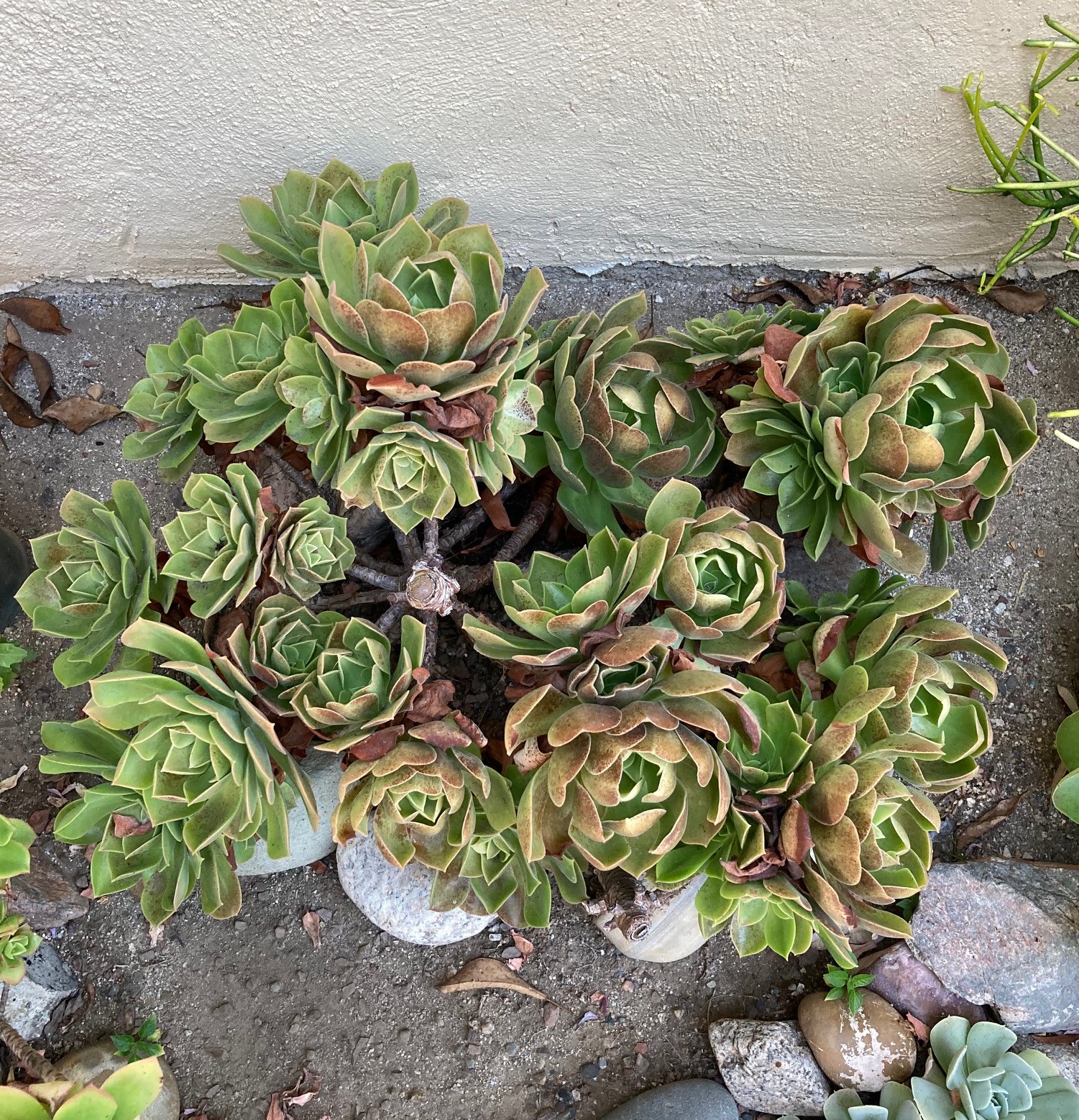
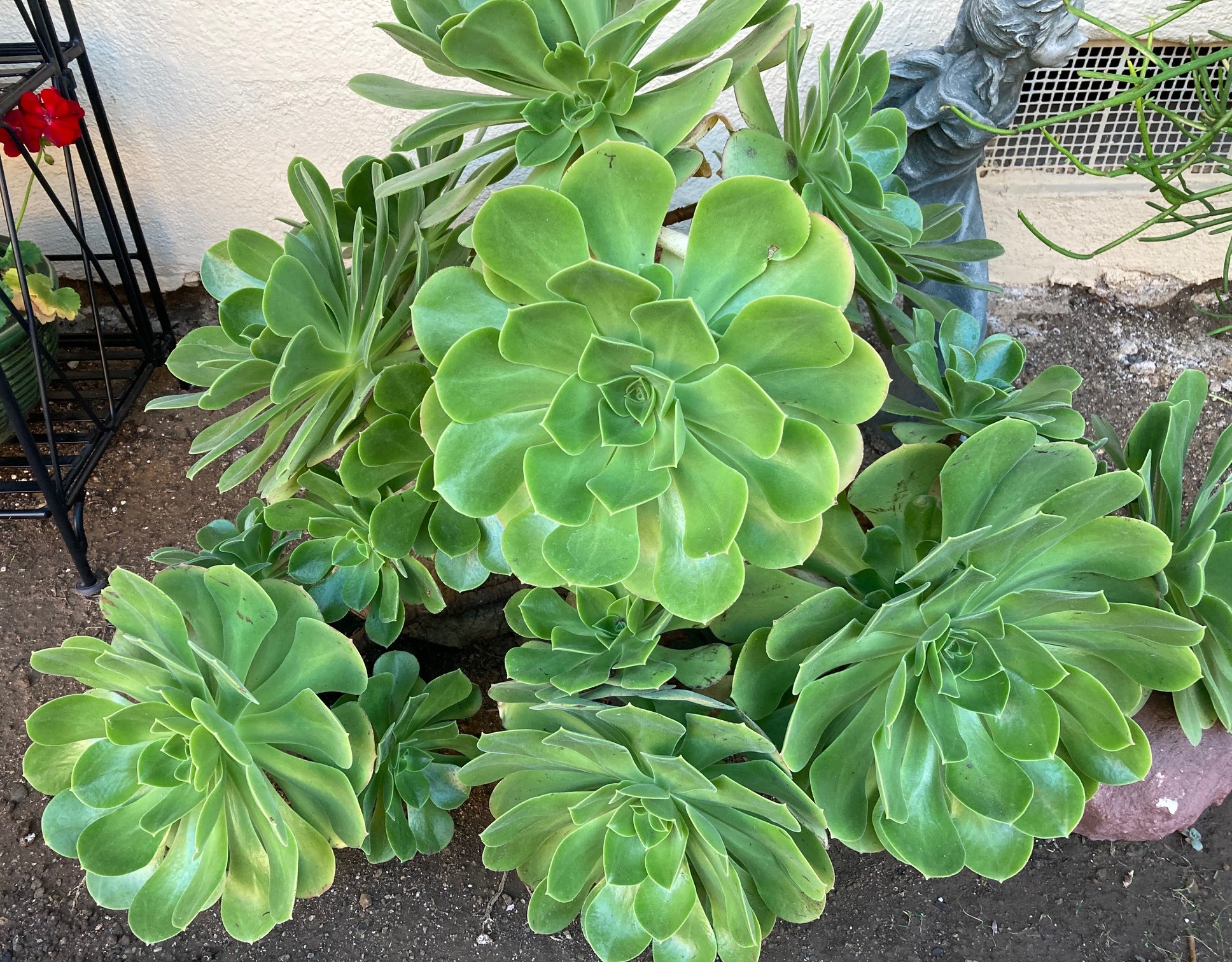
Not surprisingly, the Aeonium Mint succulent plants suffered the most. I uprooted three plants in areas where they faced over four hours of intense afternoon sunlight. What a difference from their cousin, shown on the right, that receives only a few hours of direct sun in the morning!
Aeonium Mint – Afternoon Sun – September 28Aeonium Mint – Morning Sun – September 28
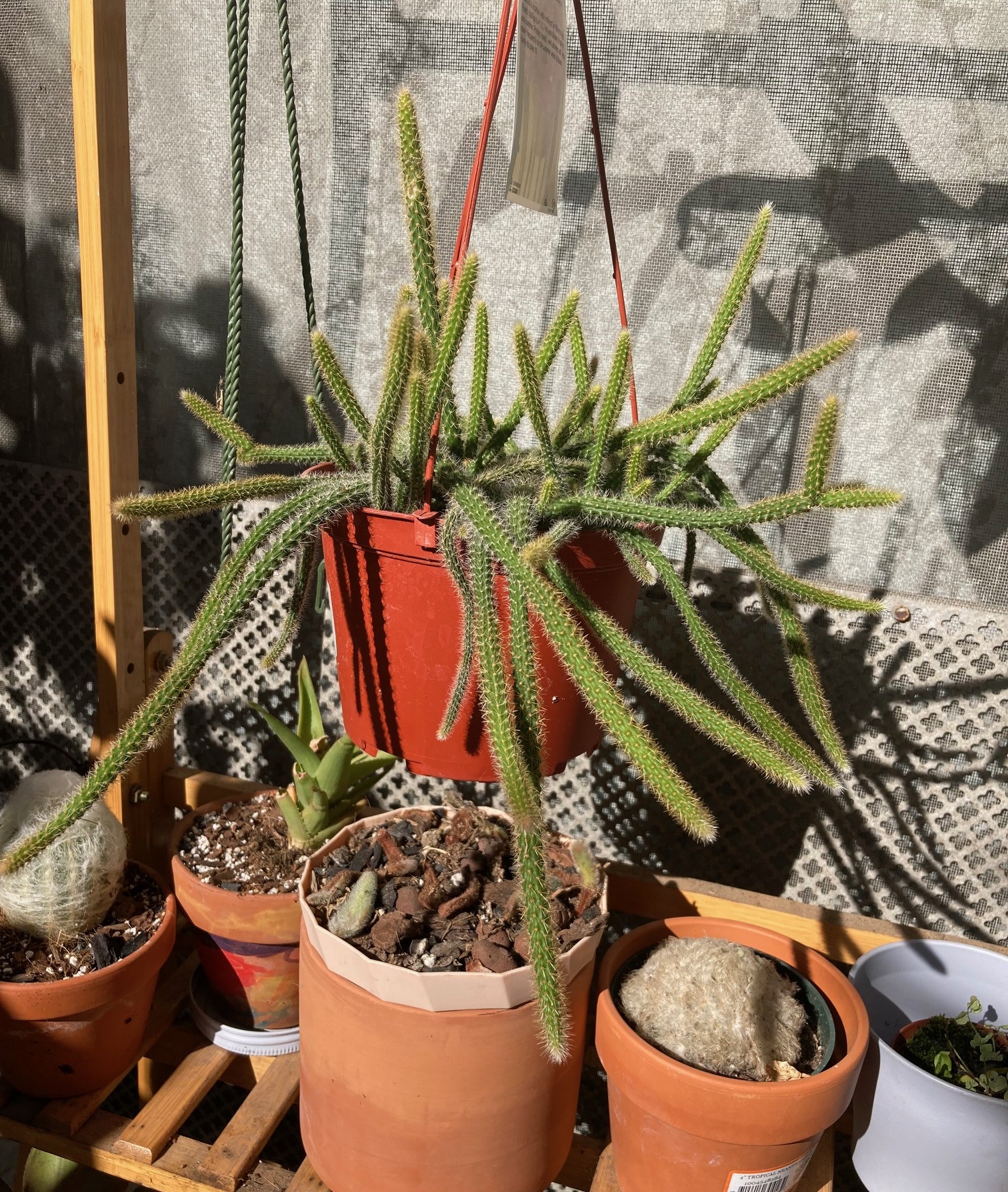
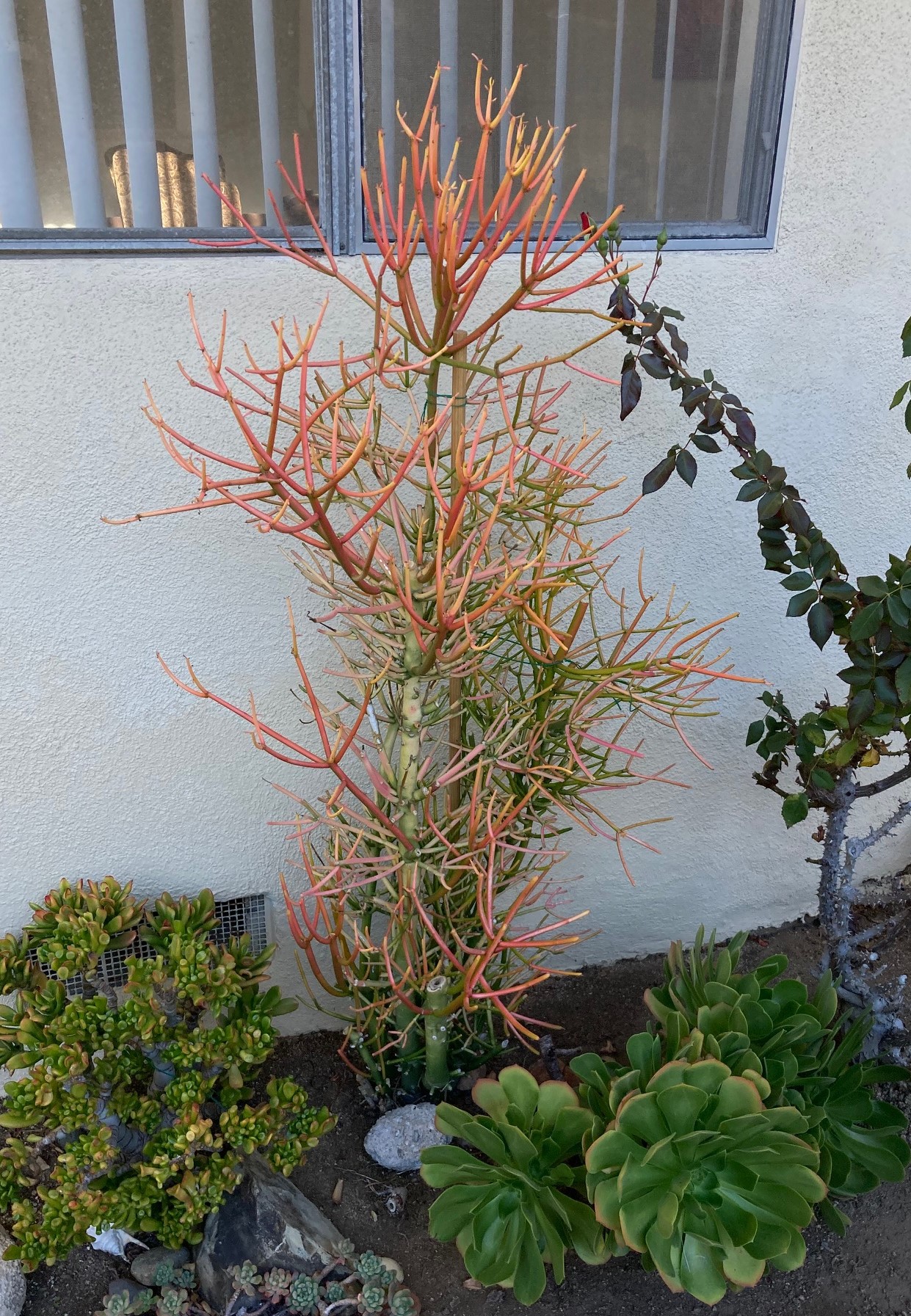
The expansive, five-foot-tall Pencil or Firestick plants have all partially collapsed. After cutting off the collapsed branches and trimming the fleshy stems, I fortified the remaining branches with wooden sticks, as shown in the photo below. The Firestick is my favorite succulent plant for adding height and color—red, orange, yellow, and green—to a succulent garden with few seasonal flowering plants.
Pencil or Firestick Succulent Plant – December 8
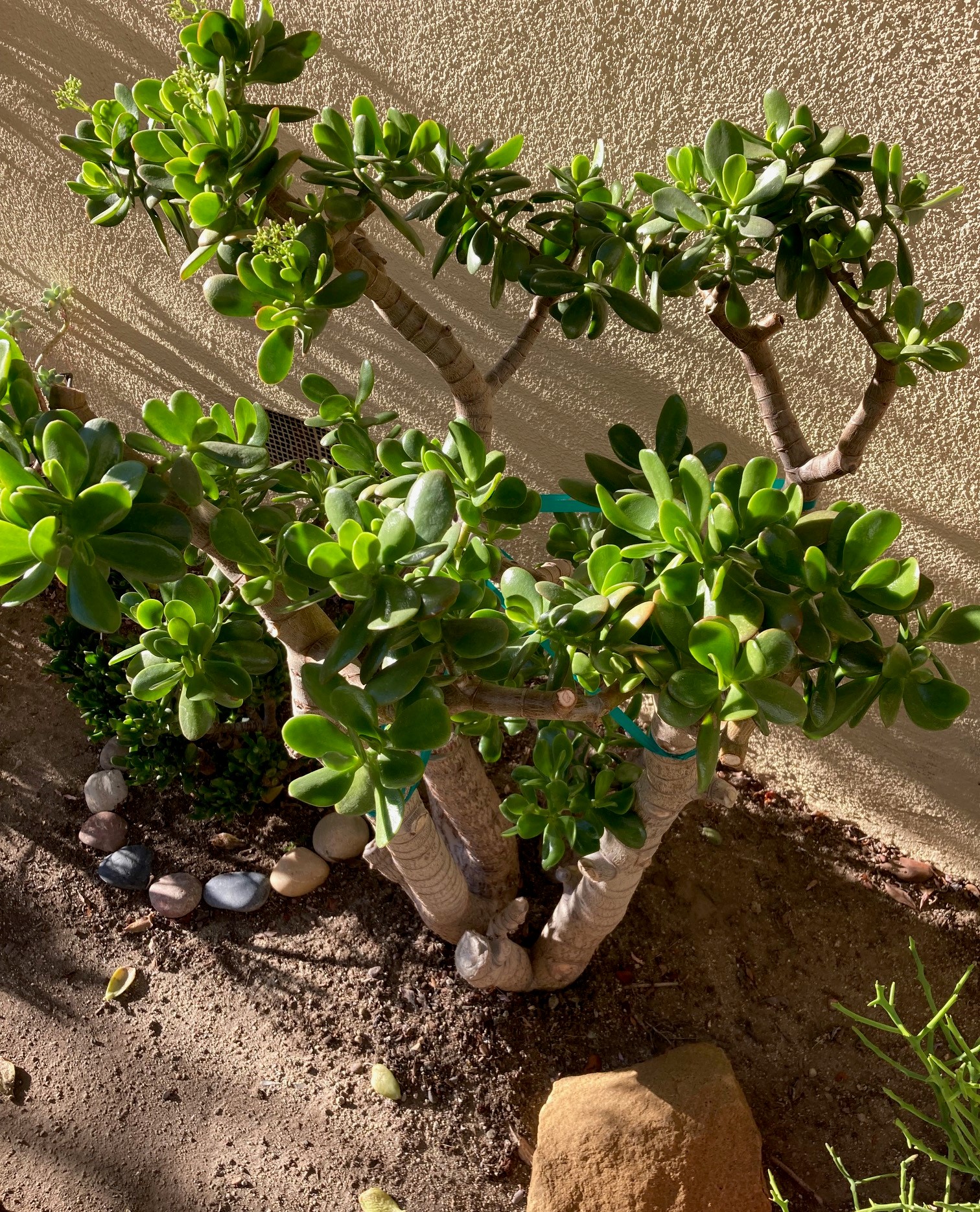
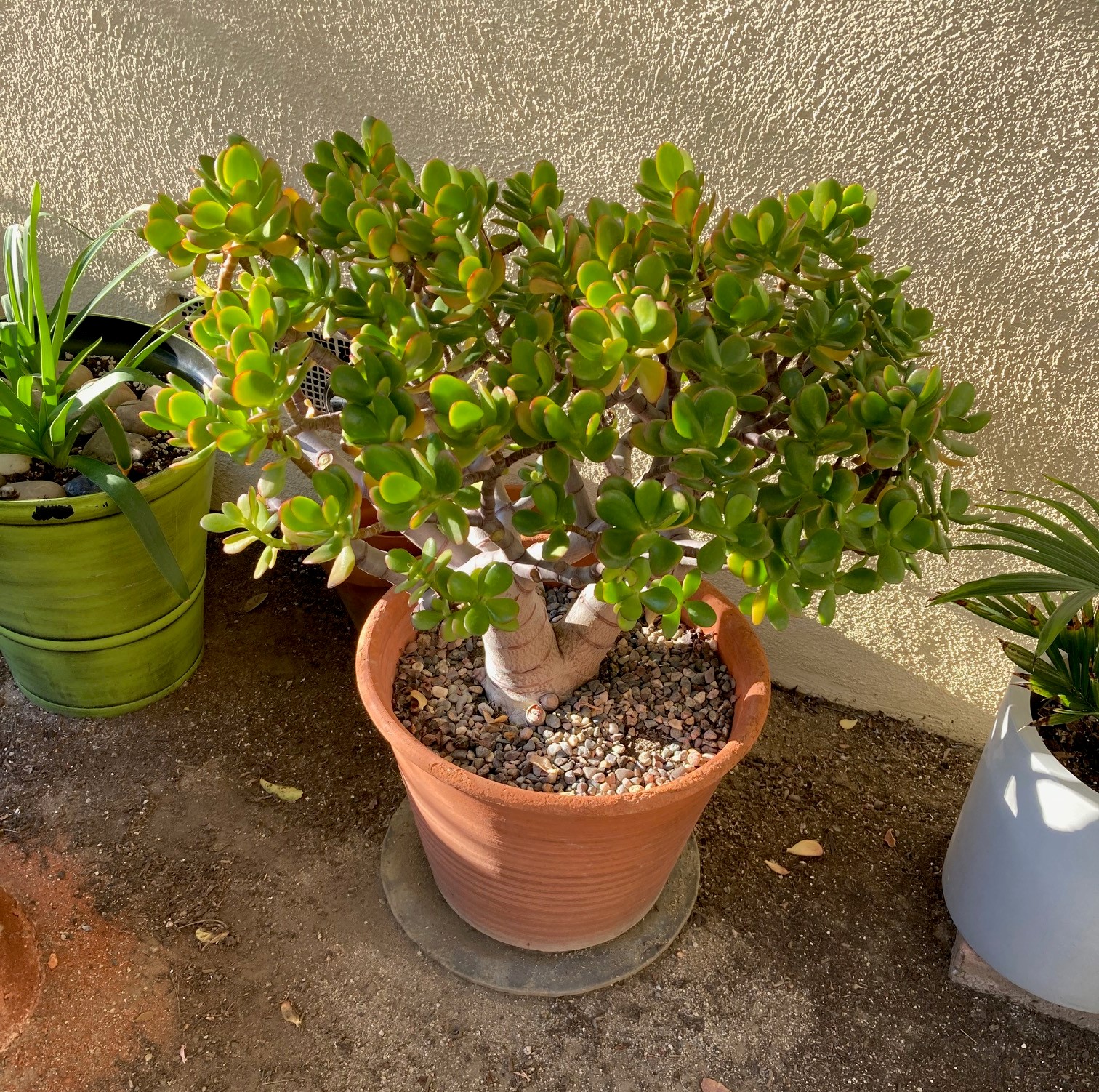
The ten-year-old, three-foot-tall jade plant, rooted in the ground, is also not happy with water rationing. On Thanksgiving Day, another branch collapsed. I sliced off the branch and did a general pruning to reduce the weight on the remaining branches. To prevent another collapse, I secured all the branches together with green ribbon, as pictured below. I’m considering the painful choice of cutting down the plant; I will wait and see if it recovers with less evaporation over the winter months.
The potted jade is doing very well. I marvel at the way plants adapt to the confining space. As shown in the photo to the right, the leaves with orange edges are much smaller than its all-green, earth-rooted relative.
Jade Plant – December 8Potted Jade Plant – December 8
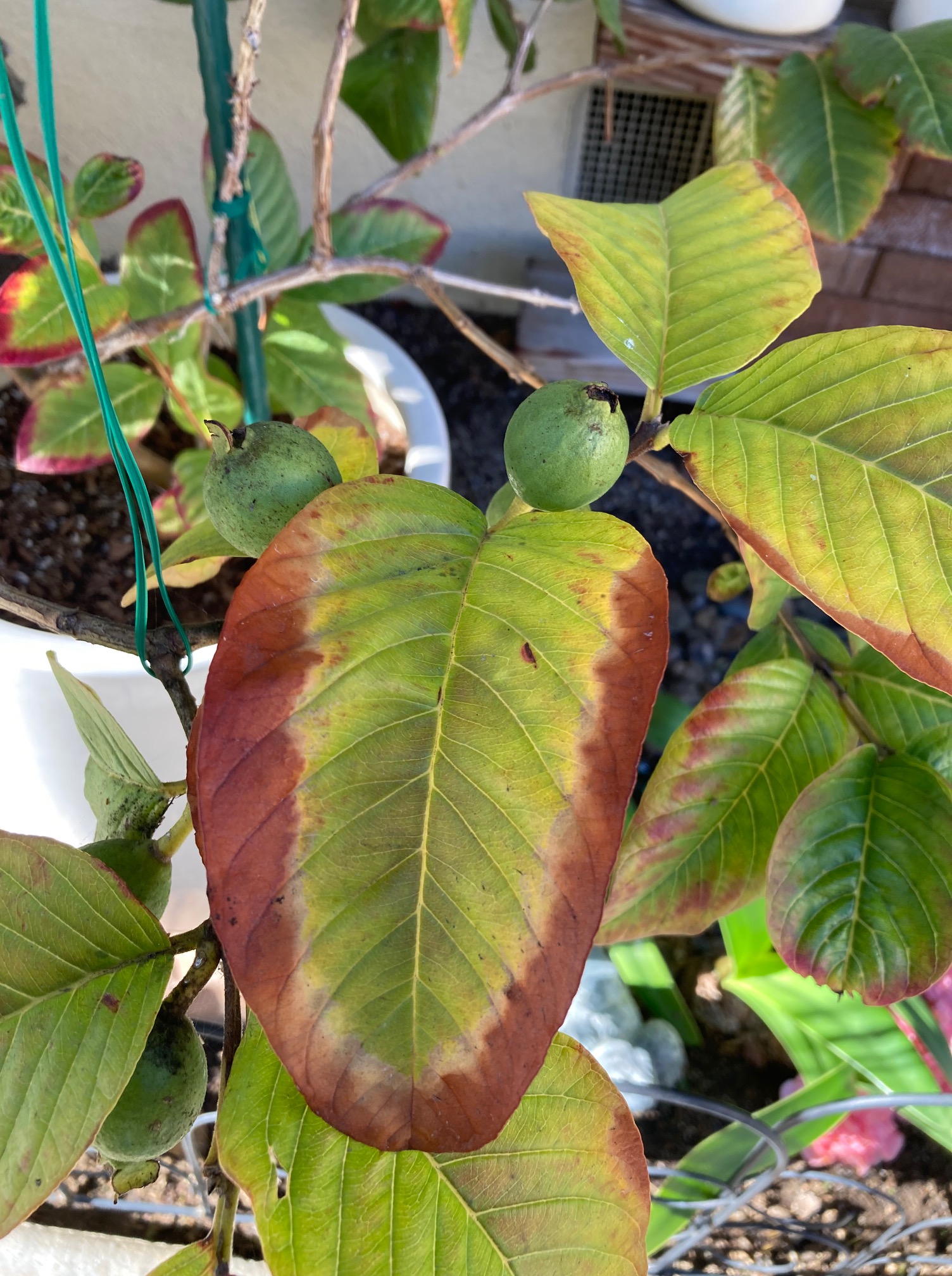
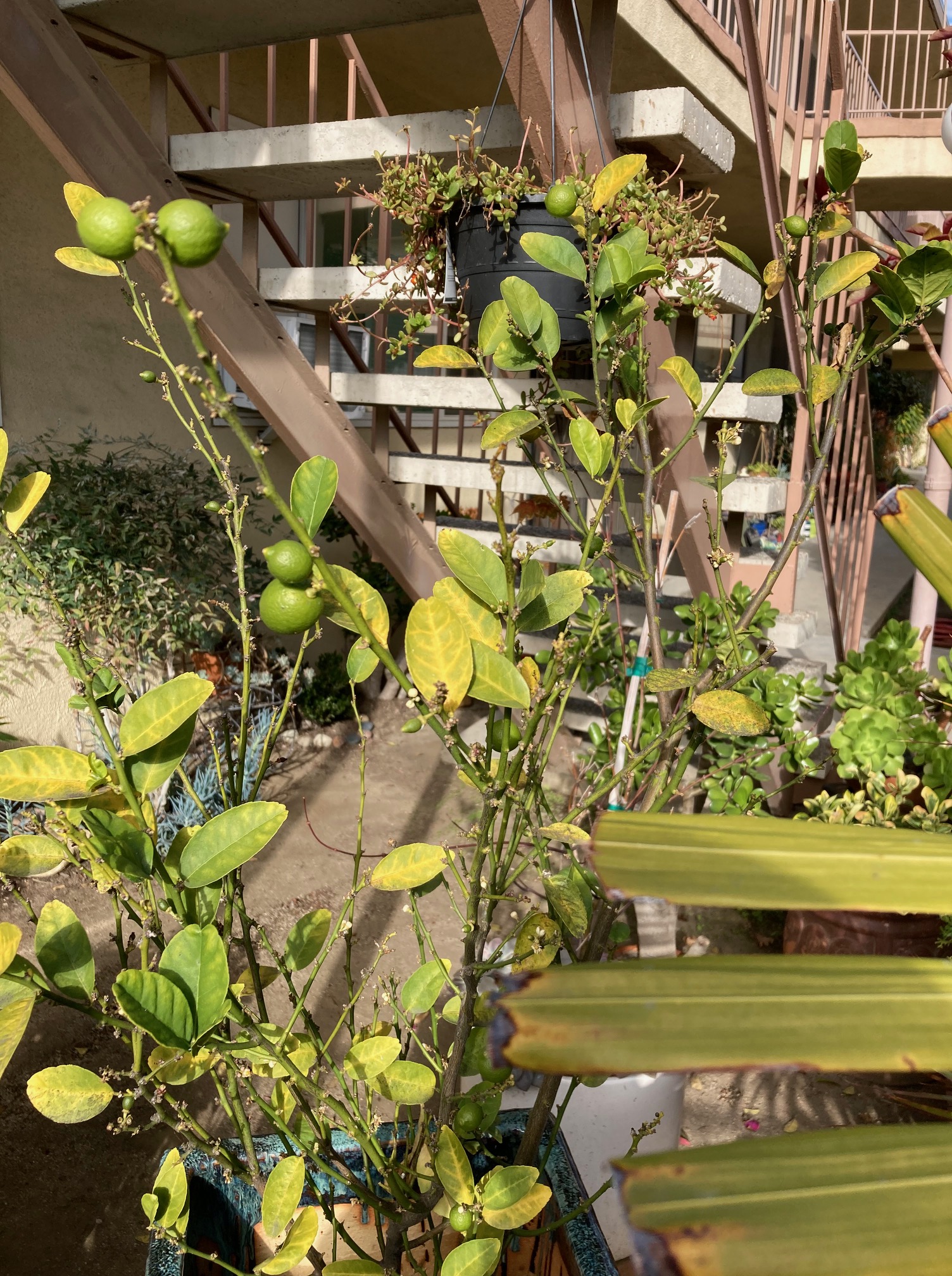
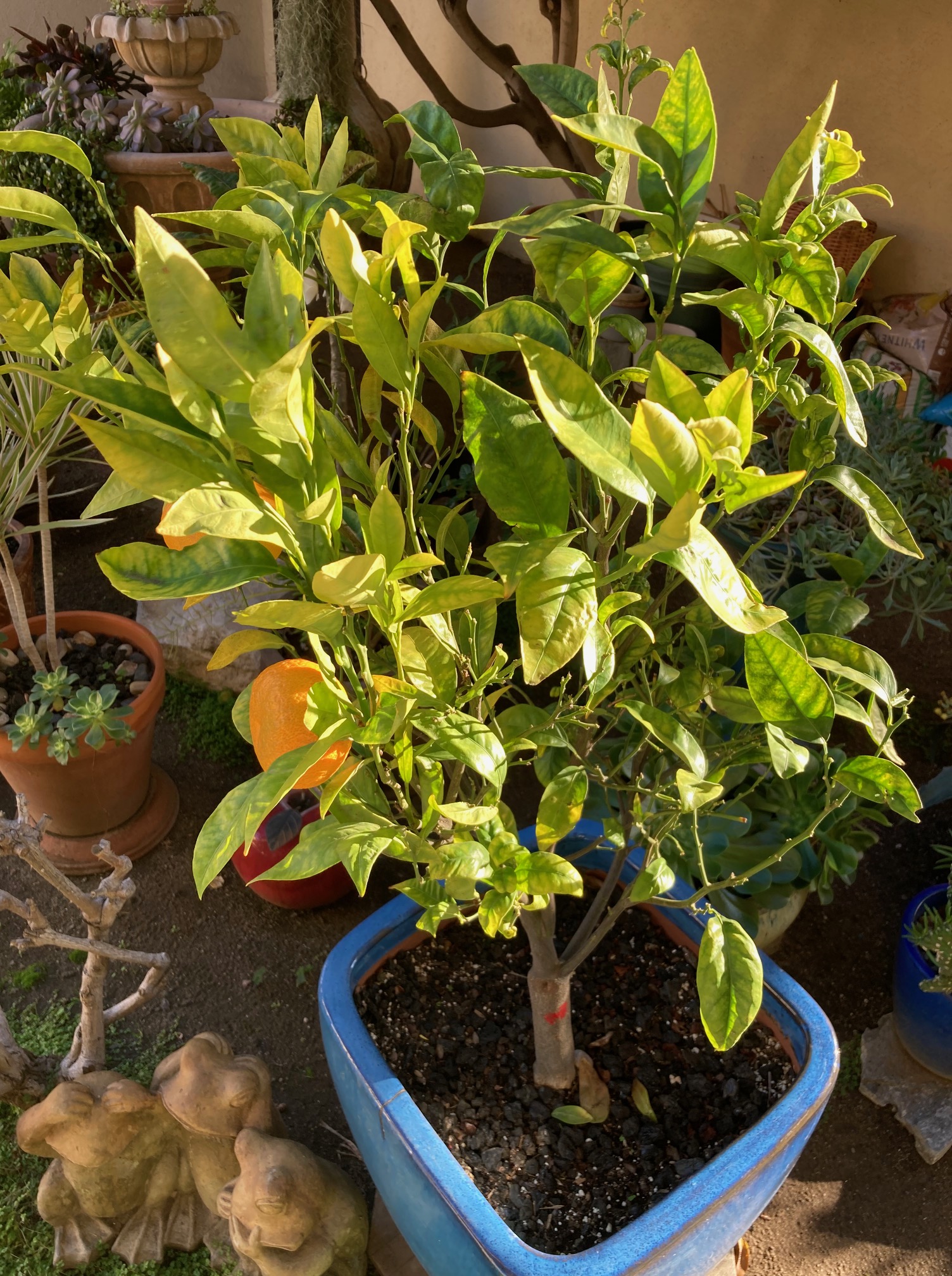
I reserve the gray water I save after domestic use for my son’s three potted fruit trees—guava, lime, and orange—as well as my vegetable plants. The infrequent visits of Mother Nature’s pollinators have been the greatest constraint for our dwarfed fruit trees. After several years of watching their blossoms fall from the stems, I was surprised this year to see the appearance of two oranges, five guavas, and several limes. The lime tree has shed most of its leaves following the drop in temperatures.
Potted Guava Tree – December 8Potted Lime Tree – December 8Potted Orange Tree – December 8
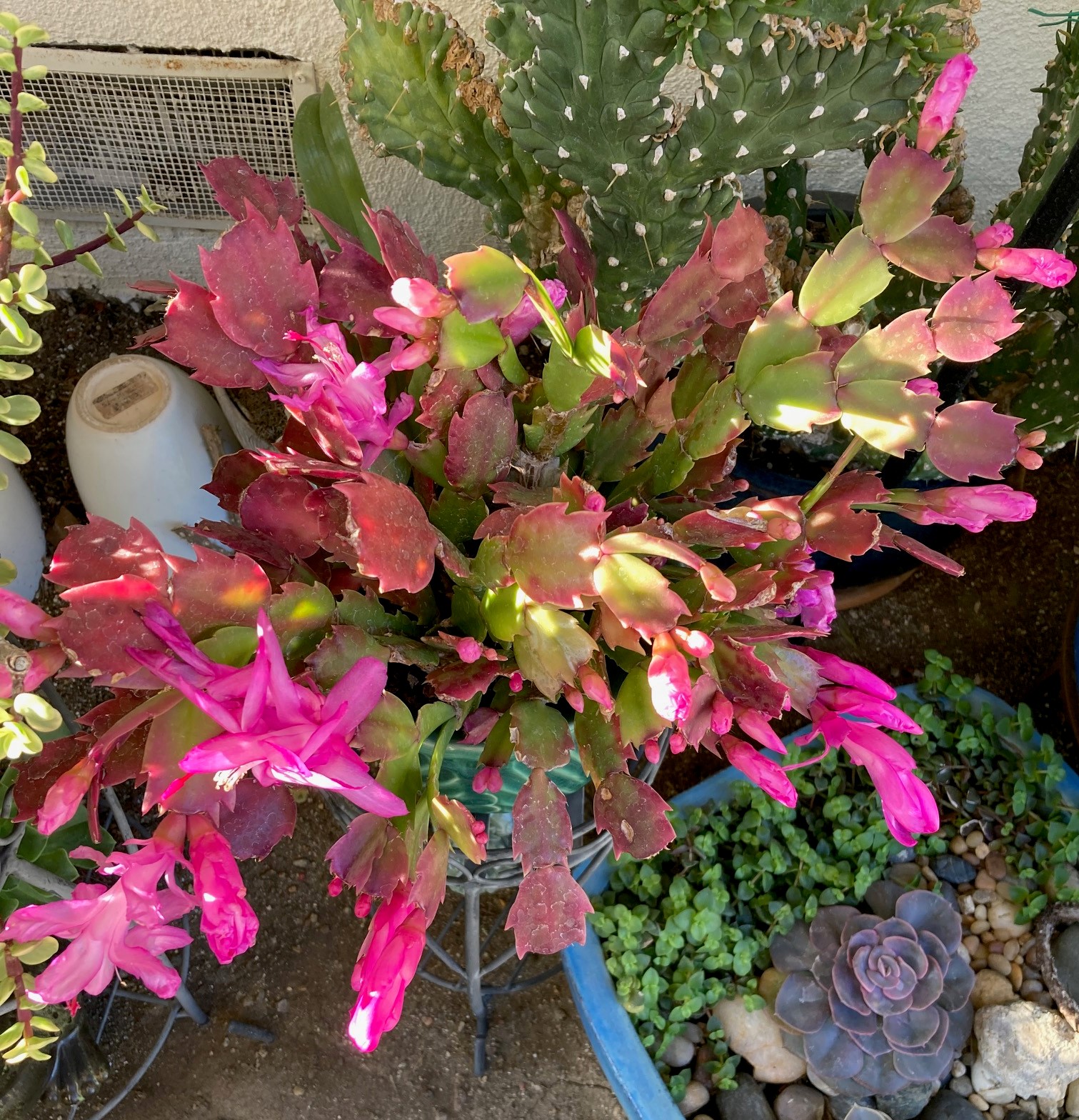
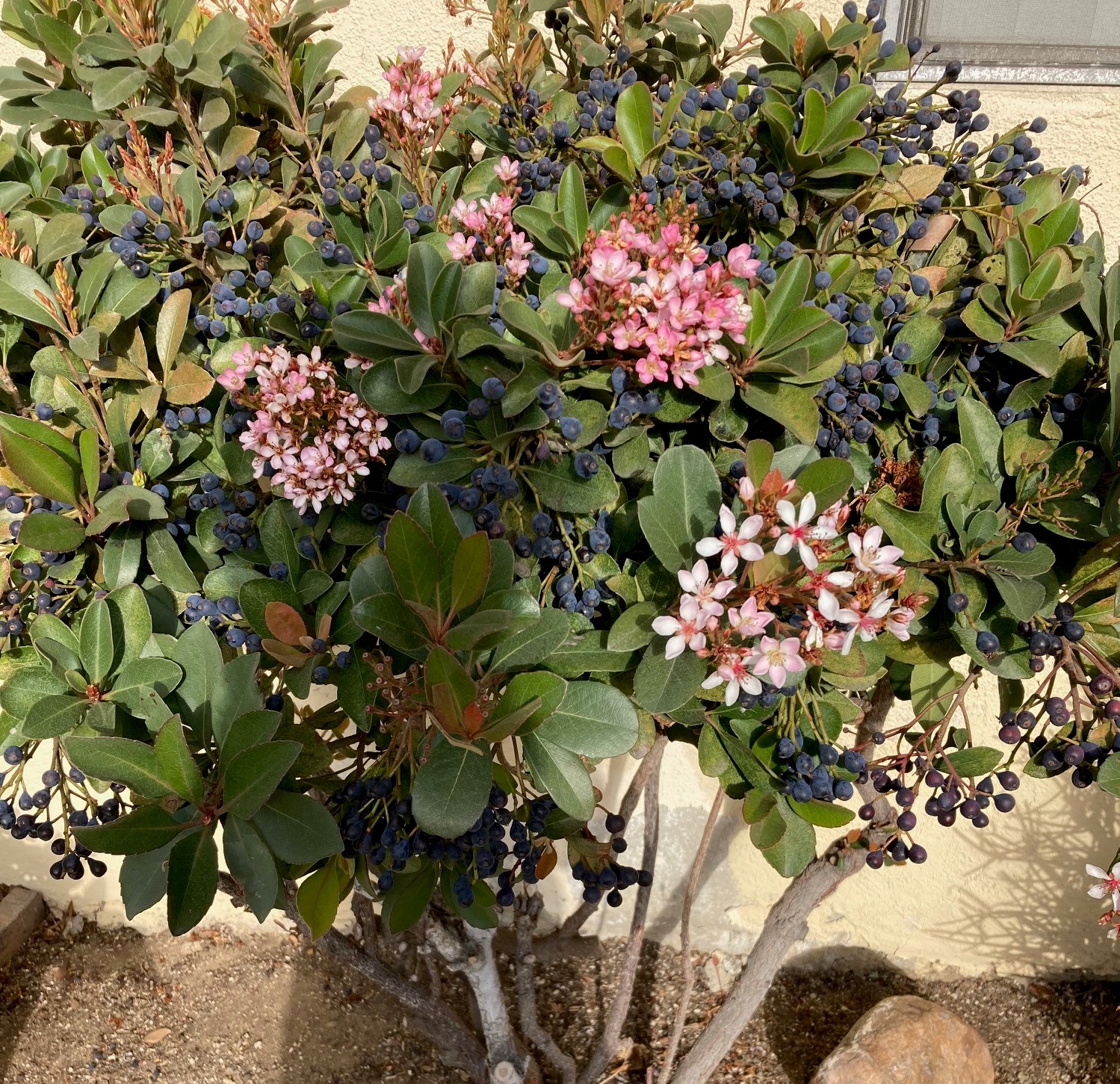
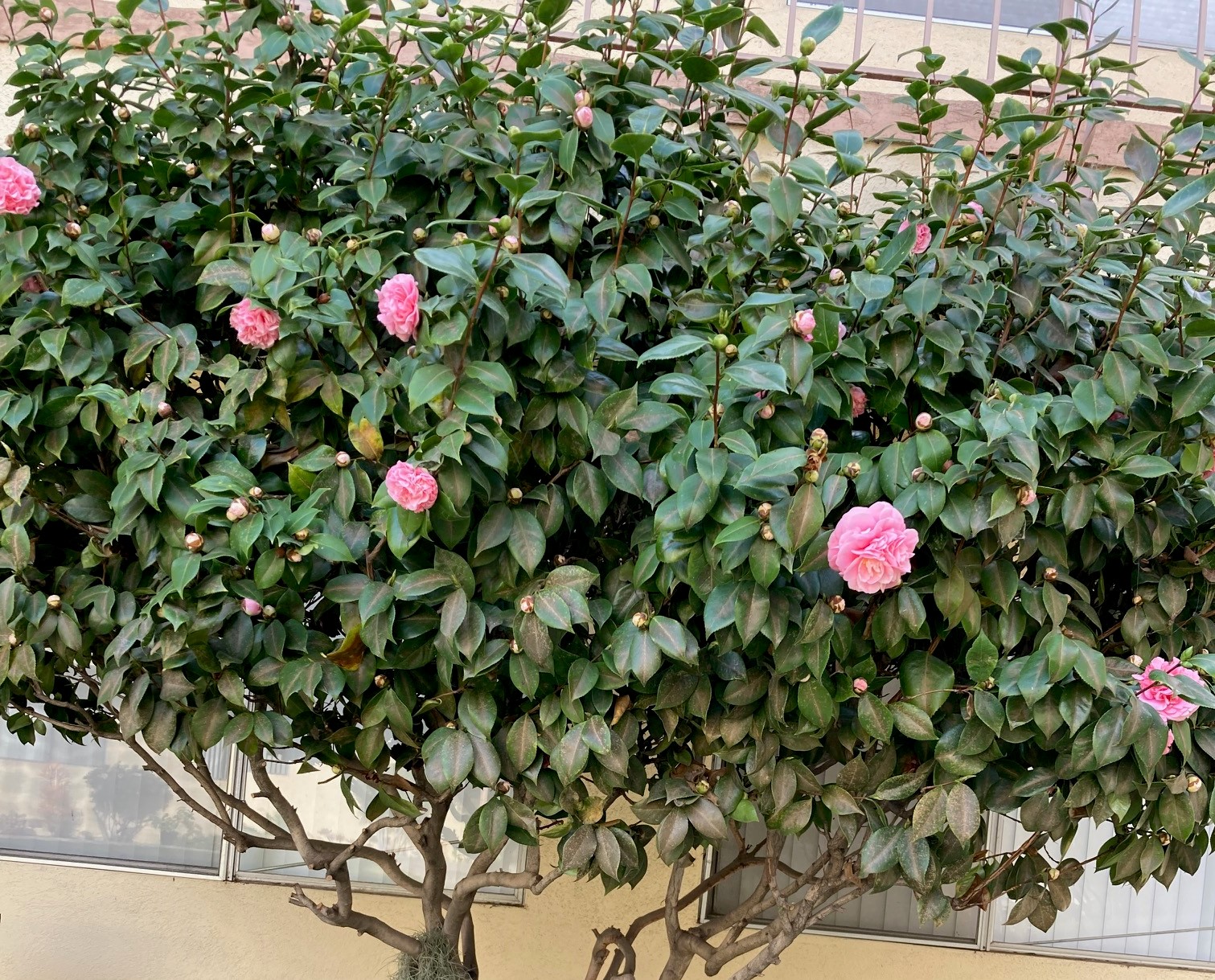
The Christmas Cactus is now in full bloom, adding color to my garden plot. But it’s the Camellia trees—now laden with buds and early flowers of pink, red and white—and an Indian Hawthorn shrub that steal the show at this time of the year. (All photos were taken on December 8.)
Christmas CactusIndian Hawthorn ShrubCamellia Tree
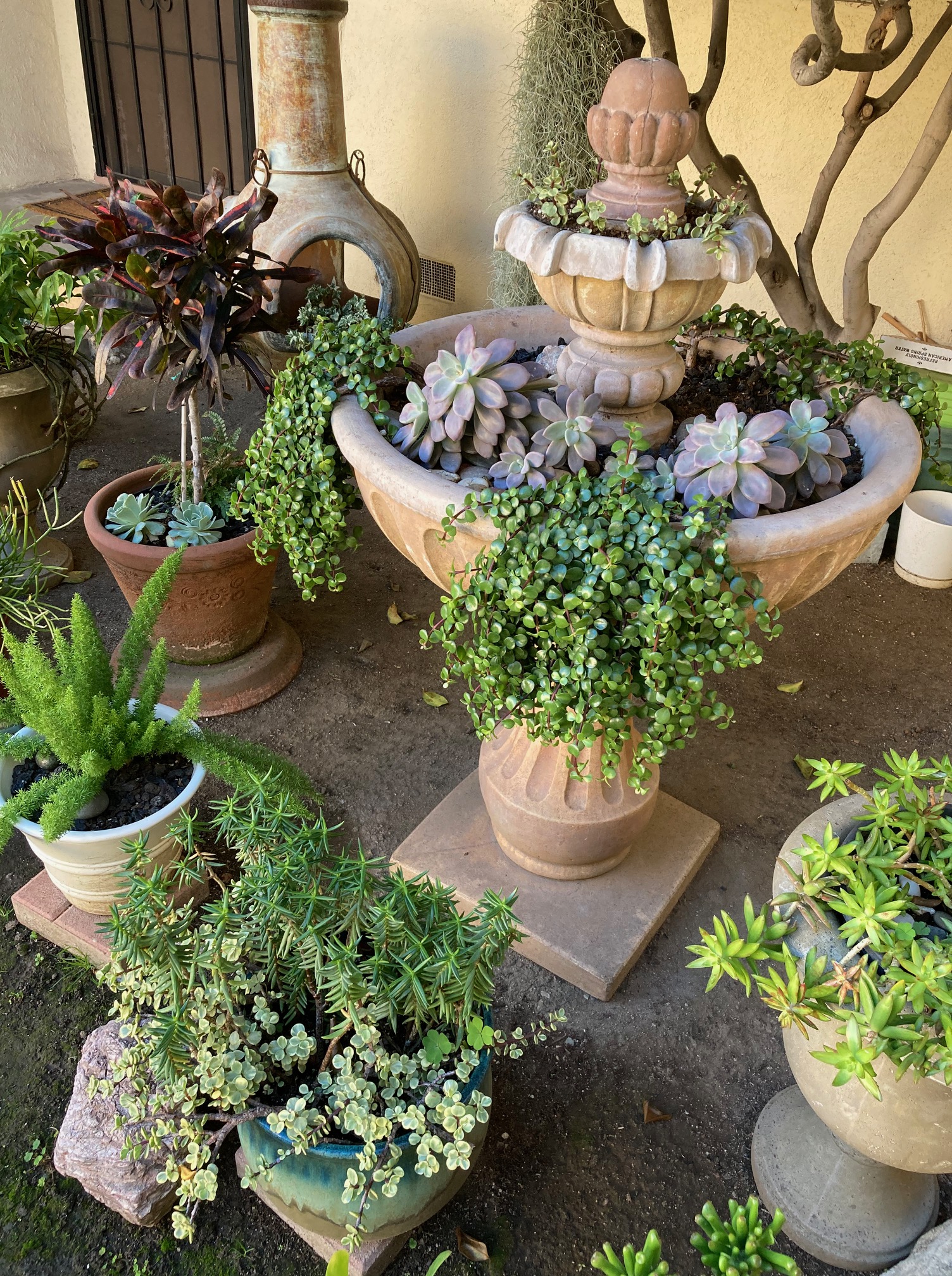
NOTE: The captioned photo is a section of our largest garden plot, located across from my apartment.
Rosaliene’s Succulent Garden – Los Angeles – Southern California – August 21, 2022
Eighty-one days have passed since emergency drought restrictions went into effect in Southern California. In an August 16th Press Release, Adel Hagekhalil, General Manager of the Metropolitan Water District of Southern California (MWD) that supplies our neighborhood with water, announced that discussions are in progress regarding the effort of the Colorado Basin States to develop “an aggressive but realistic plan to reduce demands” on the Colorado River by 2 to 4 million acre-feet. The MWD imports water from the Colorado River and Northern California to supplement local supplies.
“As these discussions continue, we urgently call on everyone who relies on Colorado River water, including communities across Southern California, to prepare for reduced supplies from this source, permanently,” Adel Hagekhalil said. “This is not simply a drought that will end, allowing reservoir levels to recover on their own – this is a drying of the Colorado River Basin. We are going to have to live with less. Working together, we know we can meet the challenge.” (Emphasis mine.)
So far, we have received no new directives from the Los Angeles Department of Water & Power (LADWP) regarding any further reduction in water allocation of about 80 gallons per person per day. Meanwhile, I have found ways of saving and reusing domestic usage for watering my small vegetable garden. Caring for my succulent and other ornamental plants remains a challenge.






 Three Worlds One Vision
