Front Cover: Zen and the Art of Saving the Planet by Thich Nhat Hanh Photo Credit: HarperCollins Publishers (USA, 2021)
If you want to save the planet and transform society, you need brotherhood and sisterhood; you need togetherness. Whenever we speak about the environment, or peace and social justice, we usually speak of non-violent actions or technological solutions, and we forget that the element of collaboration is crucial. Without it, we cannot do anything; we cannot save our planet. Technical solutions have to be supported by togetherness, understanding, and compassion.
In order to collaborate, we need to know how to listen deeply and how to speak skillfully, how to restore communication, and how to make communication easier so we can communicate with ourselves and with each other…. Restoring communication is an urgent practice. With good communication, harmony, understanding, and compassion become possible between individuals, different groups, and even nations.
Excerpt from Zen and the Art of Saving the Planet by Thich Nhat Hanh, Edited and With Commentary by Sister True Dedication, HarperCollins Publishers, New York, USA, 2021 (pp. 187-188).
THICH NHAT HANH (1926-2022) was a world-renowned Buddhist Zen master, poet, author, scholar, and activist for social change. He was nominated for the Nobel Peace Prize in 1967 by Dr. Martin Luther King Jr. He remains a preeminent figure in contemporary Buddhism, offering teachings that are both deeply rooted in ancient wisdom and accessible to all.
SISTER TRUE DEDICATION is a former journalist and monastic Dharma Teacher ordained by Thich Nhat Hanh.
Front Cover – From Loneliness to Love: Five Steps for Finding a Healthy Relationship by JoAnne Macco (USA, 2020)
With all the social distancing and lockdown during these uncertain times of a global pandemic, there is no reason for us to give up on finding the love of our life. In her self-help guide, From Loneliness to Love: Five Steps for Finding a Healthy Relationship, memoirist and former mental health therapist JoAnne Macco does not dillydally with meanderings. She presents each recommended step with clear and concise descriptions and exercises for realizing the change we seek in our lives.
Based on her own journey of finding a compatible partner, following her divorce and two rebound damaging relationships, Macco knows well the pitfalls that await us along the way. She believes that the steps she had taken for a successful outcome could also work for others.
Her first step is intuitive: “Clarify Your Heart’s Desire.” Yet, so many of us can stumble in defining exactly what we seek in a relationship. Tips and exercises help the lonely heart to zero in on the list of qualities that really matter, based on each person’s wants and needs.
Front Cover – The Future We Choose: Surviving the Climate Crisis by Christiana Figueres and Tom Rivett-Carnac Alfred A. Knopf – New York – USA – 2020
Based on NOAA’s 140-year climate record, 2019 is the second-hottest year on Earth, after 2016. In their book, The Future We Choose: Surviving the Climate Crisis (Knopf 2020), Christiana Figueres and Tom Rivett-Carnac, architects of the 2015 Paris Climate Agreement, remind us that we live in a critical decade. If we the people of Earth fail to attain our goal of halving our carbon emissions by 2030, it would be highly unlikely that we will attain net zero emissions by 2050. They invite us “to take part in creating the future of humanity, confident that despite the seemingly daunting nature of the challenge, collectively we have what it takes to address climate change now” (xxi).
To make clear the choices we face, Figueres and Rivett-Carnac devote two chapters to describe two possible worlds in 2050: the one we’re now creating and the one we must create. If we don’t limit our carbon emissions, extreme summer temperatures in the world we’re creating in 2050 force us to stay indoors. Working outdoors is a death sentence. Wearing a proper face mask is not an option, but a necessity for surviving in the hot, toxic air. Food and water shortages cause riots and wars. No wall is high or strong enough to deter the mass migrations worldwide. Economies are in free fall.
On the other hand, if we act now to reduce our carbon emissions to net zero and have avoided heating up our planet to no more than 1.5 degrees Celsius (34.7 degrees Fahrenheit), the authors note that, in 2050, we’re still dealing with the aftereffects of the record levels of carbon dioxide already in our atmosphere. Glaciers and Arctic ice are still melting. Sea levels are rising. Severe droughts and desertification are still occurring. But we enjoy a stable lifestyle. Our cities are greener and better places to live. Forest cover has expanded 50 percent worldwide. We no longer burn fossil fuels. Our energy now comes from renewable sources like wind, solar, geothermal, and hydro. All homes and buildings produce their own electricity. Food production and procurement become a communal effort.
As is already evident, Earth’s regenerative systems can no longer keep up with humanity’s exploitative mindset and consumption levels. To co-create a better world, the authors argue, we need both a systemic transformation and individual behavioral changes. They believe that this can be achieved with three mindsets: stubborn optimism, endless abundance, and radical regeneration. Considering the immensity of the task ahead of us, they admit that success is not guaranteed. But, for the future of humanity’s survival, failure is unthinkable. Stubborn optimism empowers us to create a new reality and energize all those with the same conviction. Creating endless abundance requires focusing on the benefits of limiting our carbon emissions. Radical regeneration bridges the gap between how nature works and how we humans have used extraction to organize our lives.
To achieve a regenerative future, Figueres and Rivett-Carnac set out ten necessary actions:
Action 1: Let Go of the Old World. We cannot go back to the way of life that created the climate emergency in the first place.
Action 2: Face Your Grief but Hold a Vision of the Future. The pain of loss should spur us to greater action rather than sink us into a pit of blame, despair, or hopelessness. Having a vision is essential to inspire the kind of commitment and energy we will need to get through the difficult years ahead.
Action 3: Defend the Truth. We must free our mind to new ways of thinking and learn to distinguish real science from pseudo-science.
Action 4: See Yourself as a Citizen – Not as a Consumer. Letting go means reclaiming our idea of a good life, becoming a better consumer, and dematerializing.
Action 5: Move Beyond Fossil Fuels. We must let go of the conviction that fossil fuels are necessary for humanity to thrive in the future and stand up for 100 percent renewable energy.
Action 6: Reforest the Earth. The future we must choose will require us to pay more attention to our bond with nature. We must plant trees, boycott products contributing to deforestation, and move to a plant-based diet.
Action 7: Invest in a Clean Economy. We will require a clean economy that operates in harmony with nature, repurposes used resources as much as possible, minimizes waste, and actively replenishes depleted resources.
Action 8: Use Technology Responsibly. We will need to be mindful of investments in AI: what it’s being used for and the regulatory systems in place.
Action 9: Build Gender Equality. Women are better at working collaboratively, with a longer-term perspective—traits essential to responding to the climate crisis.
Action 10: Engage in Politics. We must engage at all levels of government and elect only leaders who see far-reaching action on climate change as their absolute priority. At the same time, we can stop buying stocks, products, and services from corporations that fund and engage in political lobbying against citizen action on climate change.
Figueres and Rivett-Carnac conclude that meeting the challenge of climate change must become part of a new story of human striving and renewal. “This is not the quest of one nation. This time it’s up to all of us, to all the nations and peoples of the world. No matter how complex or deep our differences, we fundamentally share everything that is important: the desire to forge a better world for everyone alive today and all the generations to come” (161).
The time for doing what we can has passed. To survive, each one of us must now do everything that is necessary. Inciting hate, violence, and chaos is not the way forward to creating a better America today, in 2050, and beyond.
Christiana Figueres is a Costa Rican citizen and was the Executive Secretary of the United Nations Framework Convention on Climate Change from 2010 until 2016. During her tenure at the UNFCCC Ms. Figueres brought together national and sub- national governments, corporations and activists, financial institutions and NGOs to jointly deliver the historic Paris Agreement on climate change, in which 195 sovereign nations agreed on a collaborative path forward to limit future global warming to well below 2C.
Tom Rivett-Carnac is a Founding Partner of Global Optimism and works across the portfolio of engagements and initiatives. He has spent 20 years working at the intersections of international diplomacy, energy policy and climate change in business, non-profit, financial services and international institutions. Learn more at https://globaloptimism.com/about-us/
Front Cover: American Nightmare: Facing the Challenge of Fascism by Henry A Giroux
(City Lights/USA 2018)
American Nightmare: Facing the Challenge of Fascism by Henry A Giroux is a collection of essays that aim to shake up Americans to the growing threat of Trump’s authoritarianism to America’s democratic institutions. The author observes that “while the United States under Trump may not be an exact replica of Hitler’s Germany, the mobilizing ideas, policies, and ruthless social practices of fascism, wrapped in the flag and discourses of racial purity, ultra-nationalism, and militarism, are at the center of power in Trump’s United States.”
As defined by the Oxford Online Dictionary, fascism is “an authoritarian and nationalistic right-wing system of government and social organization.” To examine the echoes of fascism under Trump, Giroux refers to Robert O Paxton’s nine “mobilizing passions” of fascism described in his work, The Anatomy of Fascism (2004). These include:
sense of overwhelming crisis;
subordination of the individual to the group;
belief in victimization of one group to justify violence;
dread of group’s decline;
call for a purer community;
authority of a natural leader;
supremacy of leader’s instinct over reason;
beauty of violence and efficacy of the will for group’s success; and
right of chosen people to dominate others without restraint.
The End of Ice: Bearing Witness and Finding Meaning in the Path of Climate Disruption is a work of investigative journalism by Dahr Jamail, conducted during the period April 2016 to July 2017 on the front lines of human-caused climate disruption. Having lived in Alaska for ten years (1996-2006), Jamail had witnessed the dramatic impact of global warming on the glaciers there.
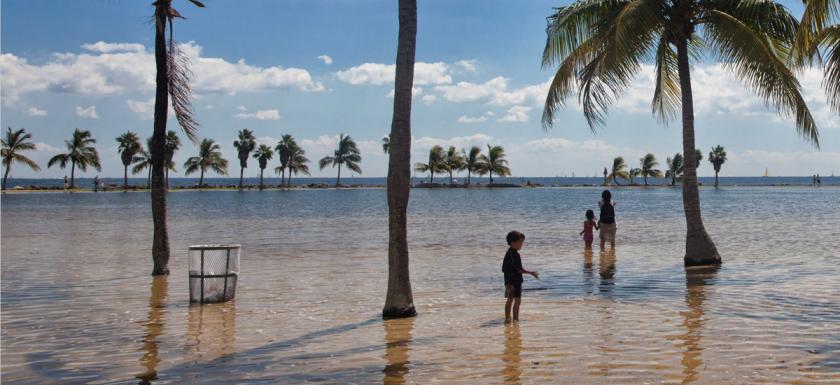
Jamail’s original aim was to alert readers about “the urgency of our planetary crisis through firsthand accounts of what is happening to the glaciers, forest, wildlife, coral reefs, and oceans, alongside data provided by leading scientists who study them.” His reporting took him to climate disruption hot spots in Alaska, California, Florida, and Montana in the United States; Palau in the Western Pacific Ocean; Great Barrier Reef, Australia; and the Amazon Forest in Manaus, Brazil. His grief at what was happening to nature made him realize that “only by having this intimacy with the natural world can we fully understand how dramatically our actions are impacting it.”
Below are excerpts of assessments expressed to the author by scientists and other professionals working on the front lines.
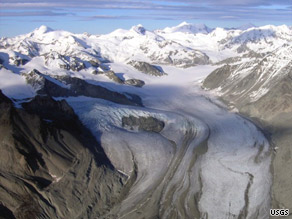
Gulkana Glacier – Alaska – USA Photo Credit: U.S. Geological Survey (USGS)
The magnitude of change in Alaska is easy to miss because Alaska is such
a massive state, and largely undeveloped. That is why you’ve had no idea that
Alaska’s glaciers are losing an estimated 75 billion tons of ice every year. ~ Dr. Mike Loso, a physical scientist
with the Wrangell-St. Elias National Park and Preserve, Alaska.
[The rate of melting of Montana’s glaciers]
is an explosion, a nuclear explosion of geologic change. This is unusual, it is
incredibly rapid and exceeds the ability for normal adaption. We’ve shoved it
into overdrive and taken our hands off the wheel.” ~ Dr. Dan
Farge, a U.S. Geological Survey (USGS) research ecologist and director of the
Climate Change in Mountain Ecosystems Project, Montana.
This last summer [2015], the Gulf [of Alaska]
warmed up 15℃ [59℉] warmer than normal in some areas… And it is now, overall,
5℃ [41℉] above normal in both the Gulf of Alaska and Bering Sea, and has been
all winter long. ~ Bruce
Wright, a senior scientist with the Aleutian Pribilof Islands Association
(APIA) and former section chief for the National Oceanic and Atmospheric
Administration (NOAA) for eleven years.
St. Paul Island – Pribilof Islands – Bering Sea – Alaska Photo Credit: St. Paul Island Tour
We hardly eat seals anymore, or the birds,
and people now get food stamps and social handouts and welfare and shop at the
store. When I grew up, we didn’t need any of that because we always had seals
and birds and fish to eat. If the fur seals aren’t here, neither will we be. ~Jason
Bourdukofsky Sr., the president of TDX, Alaska’s native corporation on St. Paul
Island, Pribilof Islands, Bering Sea.
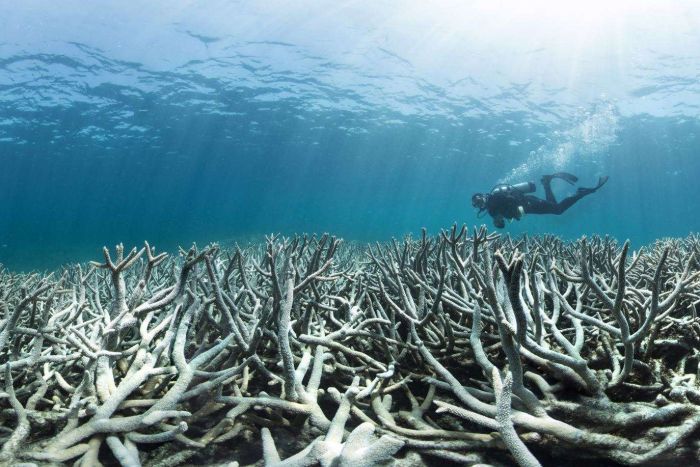
The warming [of the oceans] we’re seeing now
is happening far too fast to allow for [coral] evolution…. So what we’re seeing
now is death. That’s what [coral] bleaching is…. Right now the largest
ecosystem on Earth is undergoing its death throes and no one is there to watch
it. ~ Dr. Dean
Miller, a marine scientist and director of science and media for Great Barrier
Reef Legacy, Australia.
Even if your home [in South Florida] may be
elevated, all the infrastructure and freshwater and sewage treatment and
getting rid of the sewage…all of this infrastructure is critically vulnerable
to sea level rise. ~ Dr. Ben
Kirtman, one of the leading sea level experts in the world and program director
for the Climate and Environmental Hazards program at the University of Miami’s
Center for Computational Science.
Sea level rise is going to accelerate faster
than the models, and it’s not going to stop. So the government [of the State of
Florida] has to have a plan that includes buyouts. It’s cheaper to buy this
area [Coral Gables] out than it is to maintain the infrastructure. ~ Dr.
Harold Wanless, professor and chair of the Department of Geological Science,
University of Miami, Coral Gables campus.
You know what the burden is? It’s looking up
through the political hierarchy above me to the state legislature, to the
governor, U.S. Congress, U.S. Senate, the White House, and you ask, Who is
minding the shop? Who else knows what I know?… What kind of morality allows
them to ignore what is going to happen? ~ Dr.
Philip Stoddard, mayor of South Miami and a professor in the Department of
Biological Sciences, Florida International University.
We need to educate people about what is
really going on with climate disruption…. I made a personal decision to not
have kids, because I don’t have a future to offer them. I don’t think we are
going to win this battle. I think we are really done. ~ Dr. Rita
Mesquita, a biologist and researcher with Brazil’s National Institute of
Amazonian Research (INPA), Manaus, Amazonas.
The dire position we’re in now is solid
evidence of the fact that the predominant civilization does not have a handle
on all the interrelationships between humans and what we call the natural
world. If it did, we wouldn’t be facing this dire situation. ~ Stan
Rushworth, elder of Cherokee descent who has taught Native American literature
and critical thinking classes focused on Indigenous perspectives.
Jamail concludes that we are already facing mass extinction. We can’t remove the heat now stored in the oceans, yet we keep on pumping 40 billion tons of carbon dioxide into the atmosphere every year. Our future is uncertain. Writing this book was his attempt to bear witness to what we have done to the Earth. “I am committed in my bones to being with the Earth,” he writes, “no matter what, to the end.”
DAHR JAMAIL
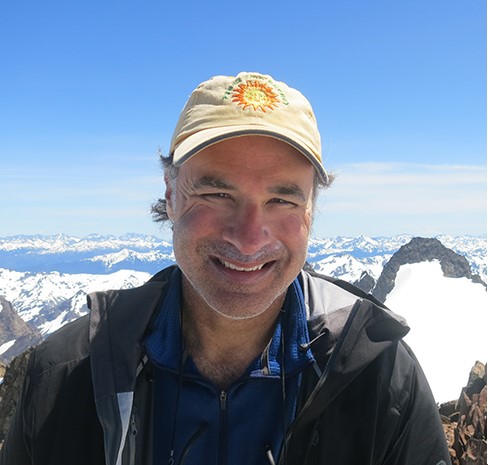
Dahr Jamail, a reporter for Truthout, is the author of Beyond the Green Zone: Dispatches from an Unembedded Journalist in Occupied Iraq, The Will to Resist: Soldiers Who Refuse to Fight in Iraq and Afghanistan, and The Mass Destruction of Iraq: Disintegration of a Nation (co-authored with William Rivers Pitt). Over the past fifteen years, Jamail has also reported from Lebanon, Syria, Jordan, and Turkey. An accomplished mountaineer who has worked as a volunteer rescue ranger on Denali, Alaska, he won the Martha Gellhorn Prize for Journalism and is a 2018 winner of the Izzy Award for excellence in independent journalism. Jamail is also the recipient of the James Aronson Award for Social Justice Journalism, the Joe A. Callaway Award for Civic Courage, and five Project Censored Awards.
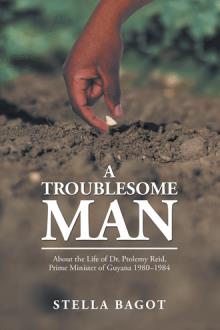
In her authorized biography, A Troublesome Man: About the life of Dr. Ptolemy Reid, Prime Minister of Guyana, 1980-1984, Stella Bagot records Dr. Reid’s account of his journey from childhood to his entrance into political life. It’s an engaging and inspiring story of a poor village boy who, with determination and persistence, overcame the obstacles along each step of his journey.
Ptolemy was born on May 8, 1918, the youngest of five siblings, in Dartmouth Village on the Essequibo Coast of then British Guiana. He lost his father to pneumonia when he was ten years old. To contribute to the family’s income, he worked on their farm plot, in the sugarcane fields, and with local fishermen. His school attendance suffered.
On completing primary school at sixteen, Ptolemy pursued employment as a pupil teacher. Five years later, he took two years off to earn his teacher’s certificate at the Government Training Center in Georgetown, the capital. Over the following eight years, he gained the reputation as a strict and proficient teacher at the Dartmouth Anglican village school. Continue reading →
United States Counterterror War Locations 2015-2017
Photo Credit: TomDispatch
Embarrassing spectacle. Treasonous. National security crisis. These are some of the reactions to the Helsinki Summit between Presidents Trump and Putin on July 16, 2018. Some among us believe that Trump is responsible for all that’s wrong with America. Not so, Tom Engelhardt reminds us in his latest book, A Nation Unmade by War (Haymarket Books, May 2018).
In A Nation Unmade by War, Engelhardt focuses on “a nation increasingly unsettled and transformed by spreading wars to which most of its citizens were, at best, only half paying attention.” He views Trump’s election as “part of the costs of those wars come home” and envisages that America’s 45th president “might preside over the most precipitous decline of a truly dominant power in history, one only recently considered at the height of its glory.”
When the Soviet Union imploded in 1991, the United States became the sole superpower. Dreams of creating a planetary Pax Americana led to the build-up of this country’s military might. The realization of that dream came on September 11, 2001, with al-Qaeda’s attack on the World Trade Center, and the subsequent launch of America’s Global War on Terror. This never-ending war has now consumed an estimated $5.6 trillion from September 2001 through fiscal year 2018 (Costs of War Project, Brown University, November 2017). Continue reading →







 Three Worlds One Vision