• About

Three Worlds One Vision

~ Guyana – Brazil – USA

Three Worlds One Vision

Category Archives: Anthropogenic Climate Disruption

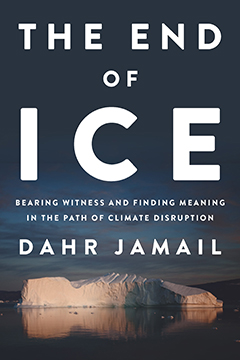
The End of Ice: Bearing Witness and Finding Meaning in the Path of Climate Disruption by Dahr Jamail

17 Sunday Mar 2019

Posted by Rosaliene Bacchus in Anthropogenic Climate Disruption, Recommended Reading

≈ 68 Comments

Tags

Brazil’s National Institute of Amazonian Research (INPA), Climate disruption, Coral Bleaching, Global warming, Great Barrier Reef, Great Barrier Reef Legacy, Melting Alaskan Glaciers, Sea level rise, The End of Ice by Dahr Jamail

The End of Ice: Bearing Witness and Finding Meaning in the Path of Climate Disruption is a work of investigative journalism by Dahr Jamail, conducted during the period April 2016 to July 2017 on the front lines of human-caused climate disruption. Having lived in Alaska for ten years (1996-2006), Jamail had witnessed the dramatic impact of global warming on the glaciers there.

Jamail’s original aim was to alert readers about “the urgency of our planetary crisis through firsthand accounts of what is happening to the glaciers, forest, wildlife, coral reefs, and oceans, alongside data provided by leading scientists who study them.” His reporting took him to climate disruption hot spots in Alaska, California, Florida, and Montana in the United States; Palau in the Western Pacific Ocean; Great Barrier Reef, Australia; and the Amazon Forest in Manaus, Brazil. His grief at what was happening to nature made him realize that “only by having this intimacy with the natural world can we fully understand how dramatically our actions are impacting it.”

Below are excerpts of assessments expressed to the author by scientists and other professionals working on the front lines.

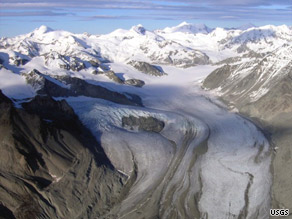
Gulkana Glacier – Alaska – USA
Photo Credit: U.S. Geological Survey (USGS)

The magnitude of change in Alaska is easy to miss because Alaska is such a massive state, and largely undeveloped. That is why you’ve had no idea that Alaska’s glaciers are losing an estimated 75 billion tons of ice every year.
~ Dr. Mike Loso, a physical scientist with the Wrangell-St. Elias National Park and Preserve, Alaska.

[The rate of melting of Montana’s glaciers] is an explosion, a nuclear explosion of geologic change. This is unusual, it is incredibly rapid and exceeds the ability for normal adaption. We’ve shoved it into overdrive and taken our hands off the wheel.”
~ Dr. Dan Farge, a U.S. Geological Survey (USGS) research ecologist and director of the Climate Change in Mountain Ecosystems Project, Montana.

This last summer [2015], the Gulf [of Alaska] warmed up 15℃ [59℉] warmer than normal in some areas… And it is now, overall, 5℃ [41℉] above normal in both the Gulf of Alaska and Bering Sea, and has been all winter long.
~ Bruce Wright, a senior scientist with the Aleutian Pribilof Islands Association (APIA) and former section chief for the National Oceanic and Atmospheric Administration (NOAA) for eleven years.

St. Paul Island – Pribilof Islands – Bering Sea – Alaska
Photo Credit: St. Paul Island Tour

We hardly eat seals anymore, or the birds, and people now get food stamps and social handouts and welfare and shop at the store. When I grew up, we didn’t need any of that because we always had seals and birds and fish to eat. If the fur seals aren’t here, neither will we be.
~Jason Bourdukofsky Sr., the president of TDX, Alaska’s native corporation on St. Paul Island, Pribilof Islands, Bering Sea.

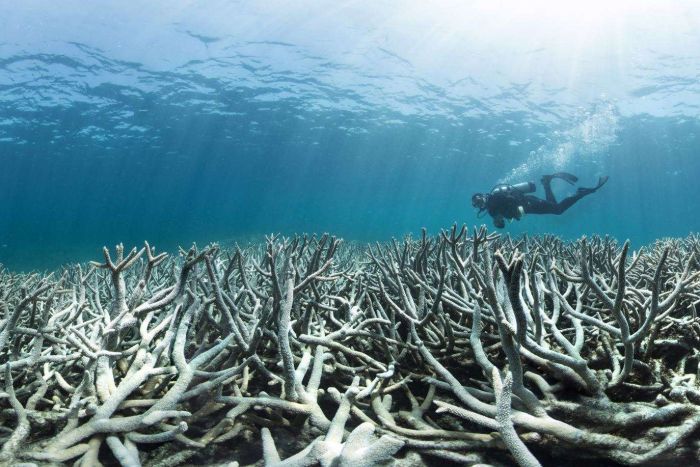
Bleached Coral – Great Barrier Reef – Australia
Photo Credit: Great Barrier Reef Legacy

The warming [of the oceans] we’re seeing now is happening far too fast to allow for [coral] evolution…. So what we’re seeing now is death. That’s what [coral] bleaching is…. Right now the largest ecosystem on Earth is undergoing its death throes and no one is there to watch it.
~ Dr. Dean Miller, a marine scientist and director of science and media for Great Barrier Reef Legacy, Australia.

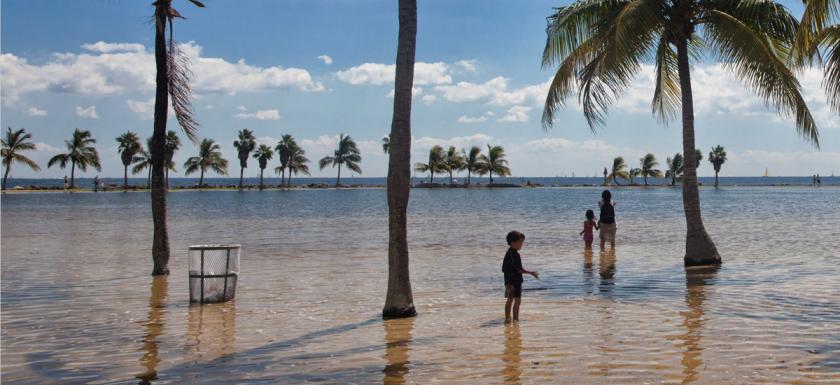
Even if your home [in South Florida] may be elevated, all the infrastructure and freshwater and sewage treatment and getting rid of the sewage…all of this infrastructure is critically vulnerable to sea level rise.
~ Dr. Ben Kirtman, one of the leading sea level experts in the world and program director for the Climate and Environmental Hazards program at the University of Miami’s Center for Computational Science.

Sea level rise is going to accelerate faster than the models, and it’s not going to stop. So the government [of the State of Florida] has to have a plan that includes buyouts. It’s cheaper to buy this area [Coral Gables] out than it is to maintain the infrastructure.
~ Dr. Harold Wanless, professor and chair of the Department of Geological Science, University of Miami, Coral Gables campus.

Sea Level Rise – Matheson Hammock Park – Coral Gables – Florida (2016)
Photo Credit: Union of Concerned Scientists (UCSUSA)

You know what the burden is? It’s looking up through the political hierarchy above me to the state legislature, to the governor, U.S. Congress, U.S. Senate, the White House, and you ask, Who is minding the shop? Who else knows what I know?… What kind of morality allows them to ignore what is going to happen?
~ Dr. Philip Stoddard, mayor of South Miami and a professor in the Department of Biological Sciences, Florida International University.

We need to educate people about what is really going on with climate disruption…. I made a personal decision to not have kids, because I don’t have a future to offer them. I don’t think we are going to win this battle. I think we are really done.
~ Dr. Rita Mesquita, a biologist and researcher with Brazil’s National Institute of Amazonian Research (INPA), Manaus, Amazonas.

The dire position we’re in now is solid evidence of the fact that the predominant civilization does not have a handle on all the interrelationships between humans and what we call the natural world. If it did, we wouldn’t be facing this dire situation.
~ Stan Rushworth, elder of Cherokee descent who has taught Native American literature and critical thinking classes focused on Indigenous perspectives.

Jamail concludes that we are already facing mass extinction. We can’t remove the heat now stored in the oceans, yet we keep on pumping 40 billion tons of carbon dioxide into the atmosphere every year. Our future is uncertain. Writing this book was his attempt to bear witness to what we have done to the Earth. “I am committed in my bones to being with the Earth,” he writes, “no matter what, to the end.”

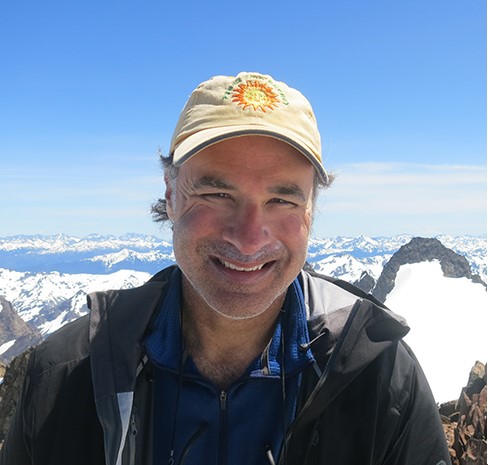
DAHR JAMAIL

Dahr Jamail, a reporter for Truthout, is the author of Beyond the Green Zone: Dispatches from an Unembedded Journalist in Occupied Iraq, The Will to Resist: Soldiers Who Refuse to Fight in Iraq and Afghanistan, and The Mass Destruction of Iraq: Disintegration of a Nation (co-authored with William Rivers Pitt). Over the past fifteen years, Jamail has also reported from Lebanon, Syria, Jordan, and Turkey. An accomplished mountaineer who has worked as a volunteer rescue ranger on Denali, Alaska, he won the Martha Gellhorn Prize for Journalism and is a 2018 winner of the Izzy Award for excellence in independent journalism. Jamail is also the recipient of the James Aronson Award for Social Justice Journalism, the Joe A. Callaway Award for Civic Courage, and five Project Censored Awards. 

The Green New Deal: Are Americans ready for bold action?

10 Sunday Feb 2019

Posted by Rosaliene Bacchus in Anthropogenic Climate Disruption, United States

≈ 50 Comments

Tags

Co-Sponsors of Green New Deal Resolution, Five goals of Green New Deal, Green New Deal Resolution, November 2018 Fourth National Climate Assessment: Volume II Impacts Risks and Adaptation in the United States, October 2018 Special Report on Global Warming of 1.5℃ by the Intergovernmental Panel on Climate Change (IPCC), Rep. Ocasio-Cortez (D-New York), Sen. Edward Markey (D-Massachusetts), Sunrise Movement

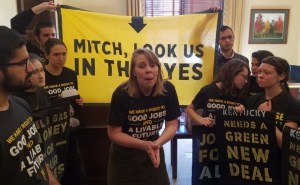
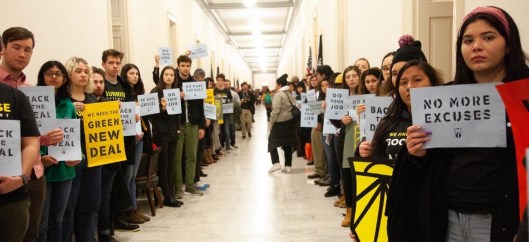
Sunrise Movement protesters outside then Rep. Nancy Pelosi’s Office – December 10, 2018
Photo Credit: Sunrise Movement


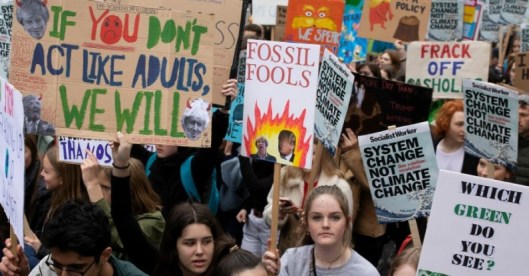
While our president is fixated on building a wall along our southern border to keep us safe from the invasion of “bad hombres,” he refuses to acknowledge our greatest existential threat: climate change disruption. Young climate change activists, clamoring for bold action, have found a champion in the newly elected Rep. Alexandria Ocasio-Cortez (D-New York). At twenty-nine years, she is the youngest member of the US House of Representatives.

On February 7, 2019, Rep. Ocasio-Cortez and Sen. Edward Markey (D-Massachusetts) introduced a nonbinding resolution that sets out the framework for the Green New Deal. The proposal has gathered 64 House and nine Senate Co-Sponsors, including presidential hopefuls Sen. Cory Booker, Sen. Kirsten Gillibrand, Sen. Kamala Harris, Sen. Bernie Sanders, and Sen. Elizabeth Warren. In an interview with Politico, House Speaker Nancy Pelosi (D-California), not present at the unveiling, referred to the proposal as a mere suggestion.

“It will be one of several or maybe many suggestions that we receive,” Pelosi said. “The green dream or whatever they call it, nobody knows what it is but they’re for it right?”

The Green New Deal Resolution – List of Co-Sponsors
Photo Credit: Sunrise Movement


In the preamble, the Green New Deal Resolution cites the critical findings of the October 2018 “Special Report on Global Warming of 1.5℃” by the Intergovernmental Panel on Climate Change (IPCC) and the November 2018 Fourth National Climate Assessment: Volume II Impacts, Risks, and Adaptation in the United States. Continue reading →

Why should I care about rising sea levels?

16 Sunday Sep 2018

Posted by Rosaliene Bacchus in Anthropogenic Climate Disruption, United States

≈ 49 Comments

Tags

Chronic coastal flooding, Coastal real estate market, Global warming, High-risk coastal cities, Sea level rise, Underwater: Rising Seas Chronic Floods and the Implications for US Coastal Real Estate June 2018

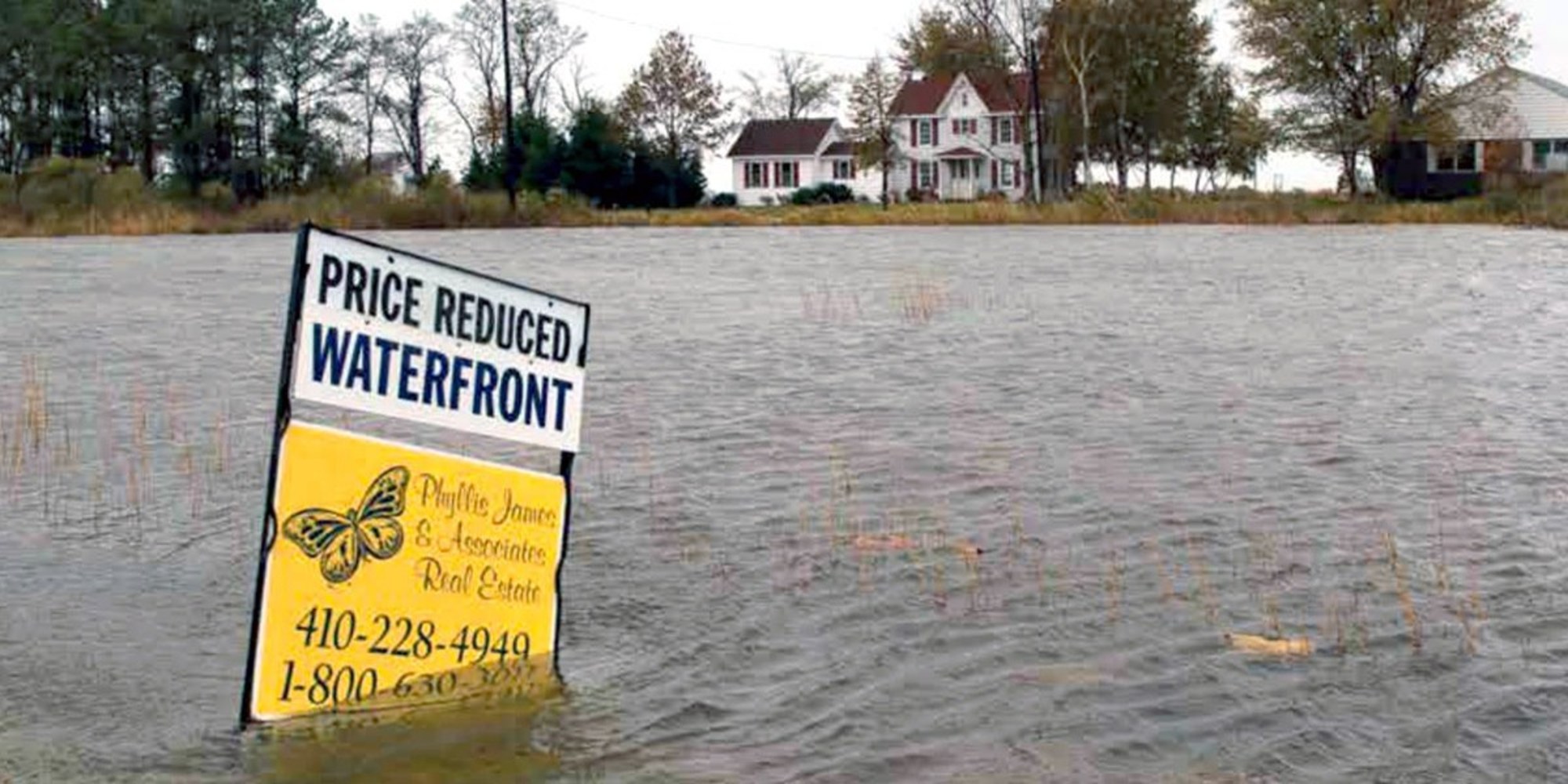
Price Reduced Waterfront Property

Price Reduced Waterfront Property – East Coast USA
Photo Credit: Union of Concerned Scientists (UCS) June 2018 Report


On September 14th, Hurricane Florence hit the North Carolina coast. With warmer oceans driven by climate change, the massive, slow-moving storm dumped more than 20 inches of rain on its arrival. The storm surge reached levels of 9 to 13 feet. Hundreds of inundated home owners may never recover from the damages.

Ten years ago, on September 15, 2008, another kind of disaster struck our nation with the collapse of Lehman Brothers and the insurance giant AIG. The worst financial crisis since the Great Depression sent rogue waves across our nation and worldwide. The fallout—foreclosures, shrinking home values, and millions of job losses—battered Americans.

With rising sea levels—the result of ongoing heating of our oceans and atmosphere—another massive, slow-moving crisis is brewing. Hundreds of thousands of coastal properties will increasingly face chronic high-tide flooding. Their falling property values will threaten local and regional real estate markets that could cascade nationwide into a coastal real estate bust. Continue reading →

“Hothouse Earth”

12 Sunday Aug 2018

Posted by Rosaliene Bacchus in Anthropogenic Climate Disruption

≈ 59 Comments

Tags

2018 Report: Indicators of Climate Change in California, California fire season, California wildfires, Carr and Mendocino Comples Fires in Northern California, Climate Change, Heat stress, Hothouse Earth, Report Indicators of Climate Change in California May 2018, Trajectories of the Earth System in the Anthropocene August 2018

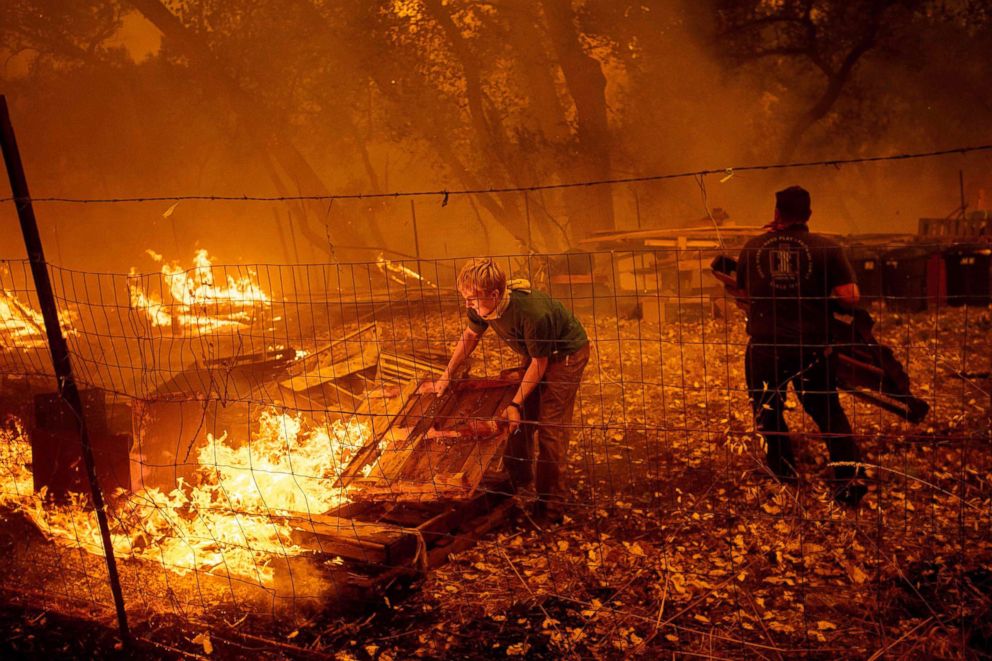
Mendocino Complex Fire August 2018 - Northern California - USA

Mendocino Complex Fire now largest fire in California history – August 2018 – California/USA
Photo Credit: ABC News (Noah Berger/AFP)


In Southern California, we’re experiencing temperatures of 88 to 98 degrees Fahrenheit. At our local garden center two Saturdays ago, around ten o’clock, I had to seek shelter from the Sun. Heat stress aborted my fun-time outdoors while selecting succulent plants. Then, the following week, I suffered another episode of heat stress at the hair salon. The air-condition system in the one-story, flat-roof building wasn’t up to the task.

The danger is far greater in areas where firefighters battle to contain ferocious wildfires. The Carr and Mendocino Complex Fires in Northern California have together burned more than 486,000 acres of land and destroyed 1,828 structures. Hundreds more structures are damaged or under threat. Only 51 percent of the wildfires is contained. The California Fire Department expects to contain the Mendocino Complex Fire by September 1st. Continue reading →

Extreme Weather and the Climate Crisis: What You Need to Know

20 Sunday May 2018

Posted by Rosaliene Bacchus in Anthropogenic Climate Disruption, United States

≈ 58 Comments

Tags

Climate Change, Climate Reality Project, Climate-related natural disasters, Extreme Weather & the Climate Crisis: What You Need to Know, Global warming, Jet Stream, NASA’s Carbon Monitoring System (CMS)

US 2017 Billion-Dollar Disaster Map - NOAA

U.S. 2017 Billion-Dollar Weather and Climate Disasters
Photo Credit: NOAA


Earlier this month, while the Trump administration quietly cancelled NASA’s Carbon Monitoring System (CMS), concentrations of carbon dioxide at the Mauna Loa Observatory averaged above 410 parts per million (ppm) throughout April. With such irresponsible action, we-the-people must prepare ourselves for more extreme weather.

Extreme Weather & the Climate Crisis: What You Need to Know, published by the Climate Reality Project (March 2018), helps us to understand the challenges we now face. As the captioned NOAA chart shows, climate-related and other natural disasters are costly. Total damages in 2017 left the U.S. with a bill of $306 billion. Families who were hit are still recovering from their loss. Families in poor communities may never recover.

Here’s what we need to know about our extreme weather and the climate crisis. Bear in mind that weather refers to short-term atmospheric changes in temperature, humidity, precipitation, wind, cloud cover, and visibility. Climate is the average of weather patterns over a longer period of 30 or more years.

Hurricanes – With average global sea surface temperatures becoming warmer, hurricanes can become more powerful. A warmer ocean also means an increase in evaporation, thereby feeding hurricanes with much more water to dump on those of us who live in their path. It gets worse. As melting ice caps and glaciers raise sea levels, storm surges caused by hurricanes will be stronger and carry water farther and farther inland.

Flooding – As air temperatures increase, more water evaporates into the atmosphere. Because warmer air holds more water vapor, some places get more rain and snow than their average annual amounts; other places may experience intense rainstorms. At the same time, rising sea levels are worsening coastal flooding worldwide.

Drought – Soils dry out when evaporation increases over land. When the rain comes, the hard, cracked ground absorbs little water. The run-off carries pollutants in the dry soil into our streams, rivers, and lakes. Drought also worsens forest fires.

Wildfires – Droughts kill plant life. Dried out, dead vegetation can ignite with a spark. Once started, these fires are harder to contain. With warm weather arriving earlier and extending further into the fall, we now face longer fire seasons. To make matters worse, pests like the mountain pine beetle thrive in the warm, dry weather. The dead trees dry out, adding to the fury of our forest fires.

Extreme Heat – Of the 18 hottest years on record, 17 have occurred this century. If we don’t reduce the greenhouse gases heating up our atmosphere, more and more of us will face the deadly threshold of extreme heat on our fragile human bodies.

Extreme Cold – As global temperatures rise and the Arctic continues to warm, the jet stream is slowing and becoming more wavy. This causes bone-chilling Arctic air to linger longer in northern regions and spread much farther south than usual.

While we cannot prevent climate-related natural disasters from occurring, it’s our responsibility to do everything we can to prevent the worst of it. And it certainly could get much worse.

Climate Science Special Report

21 Sunday Jan 2018

Posted by Rosaliene Bacchus in Anthropogenic Climate Disruption, United States

≈ 68 Comments

Tags

Climate Change, Climate Science Special Report November 2017 (CSSR), Global warming, U.S. Global Change Research Program

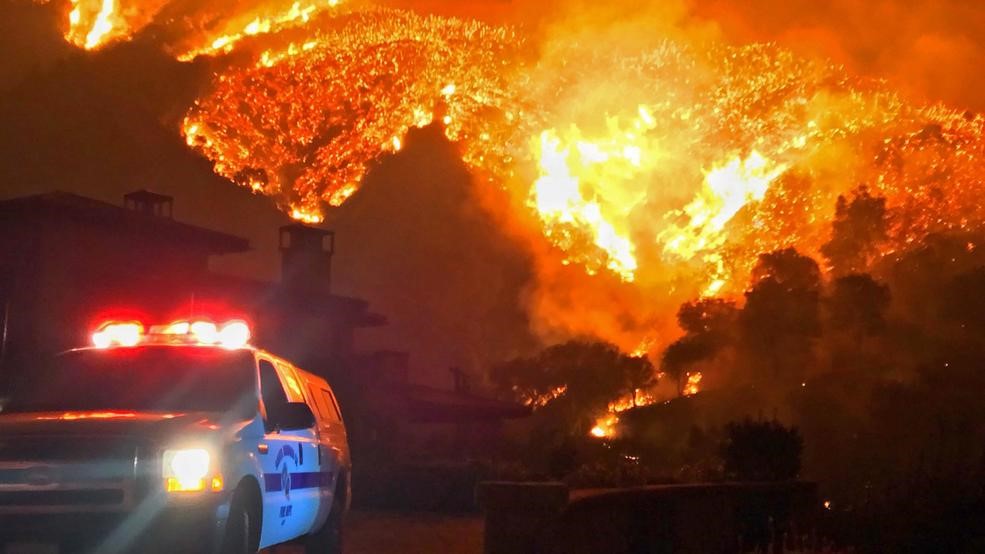
Thomas Fire - Santa Barbara County - Southern California - 12 December 2017

Thomas Fire – Santa Barbara County – Southern California – December 12, 2017
Photo Credit: Mike Eliason/Santa Barbara County Fire Department


Here in California, after years of drought, ferocious wildfires have consumed the tinder and everything in their path. Ignited on December 4, 2017, the Thomas Fire was not fully contained until January 12, 2018. Now ranked as the largest fire in California’s modern history, it burned about 281,900 acres, equivalent to the size of Dallas and Miami combined. It destroyed 1,063 structures and damaged another 280.

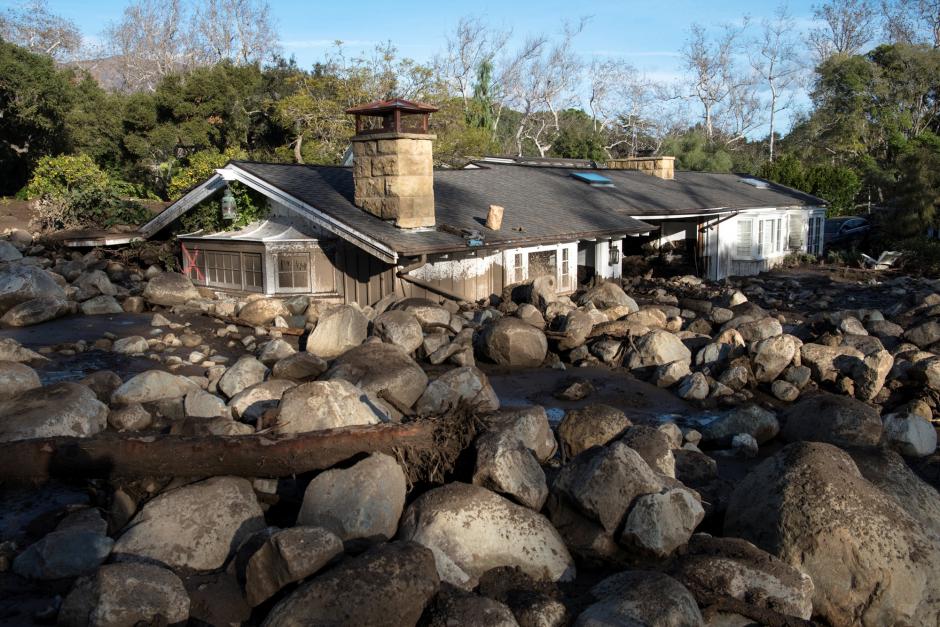
Torrential rainfall on January 9, a welcome respite for firefighters, brought more distress to residents in the area. Mudslides roared down fire scarred slopes, destroying and damaging hundreds of homes, as well as commercial property. Twenty people lost their lives; three are still missing.

A home on Glen Oaks Road damaged by mudslides in Montecito

Home damaged by mudslides – Montecido – Santa Barbara County – Southern California
January 10, 2018
Photo Credit: Kenneth Song/Santa Barbara News


Meanwhile, extreme winter weather on America’s East Coast provides vindication for climate change deniers. But, as world-renowned climate scientist Dr. Michael Mann explains, this is “an example of precisely the sort of extreme winter weather we expect because of climate change.” What’s happening is the collision of increasingly warm Atlantic Ocean waters with cold Arctic air masses. To make matters worse, the warmer oceans also mean more moisture in the atmosphere to fuel the storm and produce larger snowfalls.

Woman walks down street in East Boston - Massachusetts - 4 January 2018

Woman walks down street in East Boston – Massachusetts – January 4, 2018
Photo Credit: Michael Dwyer/AP


In November 2017, the U.S. Global Change Research Program released its 477-page Climate Science Special Report (CSSR), in compliance with regulations issued by the Department of Commerce/National Oceanic and Atmospheric Administration (NOAA). The CSSR is “designed to be an authoritative assessment of the science of climate change, with a focus on the United States, to serve as the foundation for efforts to assess climate-related risks and inform decision making about responses.”

Continue reading →

The Climate Swerve: Reflections on Mind, Hope and Survival with Robert Jay Lifton and Bill Moyers

24 Sunday Sep 2017

Posted by Rosaliene Bacchus in Anthropogenic Climate Disruption, United States

≈ 49 Comments

Tags

Environment, Global warming, Hiroshima/Japan, Hurricane Irma, Nagasaki/Japan, Nuclear weapons, Survival of Man, The Climate Swerve

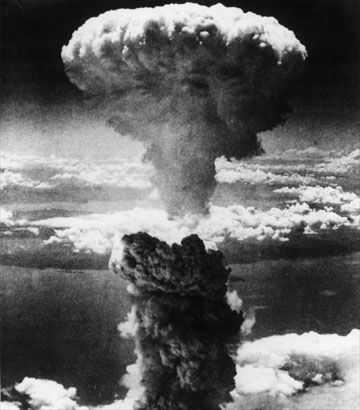
Atomic bomb mushroom cloud over Nagasaki - Japan

Dotard & Rocket Man
play nuclear war games
while Frankenstorms rage.


Bill Moyers, managing editor of Moyers & Company and BillMoyers.com, recently sat down with 91-year-old Robert Jay Lifton, a renowned American psychiatrist and historian. They talked about his just published book, The Climate Swerve: Reflections of Mind, Hope, and Survival. Lifton borrowed the term “swerve” from Harvard humanities professor Stephen Greenblatt who used the term to describe a major historical change in human consciousness. Lifton has turned his attention to climate change, which, he says, “presents us with what may be the most demanding and unique psychological task ever required of humankind.”

I share with you some excerpts from Lifton’s responses to Moyers during the interview. Continue reading →

America’s Clean Energy Momentum: How’s your state doing?

09 Sunday Jul 2017

Posted by Rosaliene Bacchus in Anthropogenic Climate Disruption, United States

≈ 53 Comments

Tags

America’s Clean Energy Momentum, Electric & plug-in hybrid vehicles, Reducing carbon emissions, Renewable energy capacity, Renewal energy jobs, Union of Concerned Scientists (UCS), US investments in energy efficiency, US wind & solar power generation

UCS - Clean Energy is Sweeping the Nation

The news is good. Despite our pro-fossil-fuel administration of climate change deniers, the use of renewal energy is growing across the United States. So says the Union of Concerned Scientists (UCS) in their report Clean Energy Momentum: Ranking State Progress released in April 2017.

Across America, the growth of wind and solar power generation is impressive. Over the past decade, wind power expanded more than tenfold, supplying energy to more than 20 million households in 41 states. Since 2011, solar power has sprinted ahead with more than 900 percent in growth. In 2016, two million more households now use solar-powered electricity.

That’s not all. Investments in energy efficiency, over the last 25 years, have reduced our need for constructing more than 300 large carbon-emitting power plants. Last year alone, we saved a year’s worth of electricity usage of 20 million households. Continue reading →

Climate Change & the Water Cycle

11 Sunday Jun 2017

Posted by Rosaliene Bacchus in Anthropogenic Climate Disruption

≈ 52 Comments

Tags

Climate Change, Climate change and the water cycle, Climate change education, Global warming, High school geography teacher, High school science teachers

The Water Cycle

As a geographer and former high school geography teacher, I must confess that I take some scientific facts for granted, such as climate and the water cycle. A recent post “Climate Science Meets a Stubborn Obstacle: Students” by fellow blogger Robert Vella brought to my attention the challenges some of our high school science teachers face in regions of America where climate change denial creates havoc in the minds of our youth.

When your father has raised you to believe that the coal they once mined, or still mine, can in no way affect our climate, it’s difficult to have an open mind to scientific consensus on the issue.

Geography lessons in high school expanded my curious mind to our relationship with our world: land, oceans, atmosphere, and all the in-between. When taking a climatology course at university, I found myself at a disadvantage for having chosen to study art instead of physics in high school. I had lots of catching up to do. Our course in biogeography alerted me to the ways that we humans are degrading our ecosystems. Those were the days before the Internet and Wikipedia. Continue reading →

Paris Climate Change Agreement enters into force 4 November 2016

05 Wednesday Oct 2016

Posted by Rosaliene Bacchus in Anthropogenic Climate Disruption

≈ 8 Comments

Tags

Climate Change, Climate disruption, Paris Climate Change Agreement

Secretary-General at Paris Agreement Ratification Ceremony.
Secretary-General Ban Ki-moon at Paris Agreement Ratification Ceremony. From Paris to Hangzhou – Climate Response in Action. H.E. Mr. XI Jinping, President of the People’s Republic of China and H.E. Mr. Barack Obama, President of the United States of America present the instrument for the Paris Agreement to the Secretary-General.
Photo Credit: United Nations /Eskinder Debebe


On October 5, 2016, the U.N. Secretary-General Ban K-moon announced that the Paris Climate Change Agreement will enter into force on November 4, 2016.

Read his full statement.

Newer posts →

Subscribe

  • RSS - Posts
  • RSS - Comments

Archives

  • November 2025
  • October 2025
  • September 2025
  • August 2025
  • July 2025
  • June 2025
  • May 2025
  • April 2025
  • March 2025
  • February 2025
  • January 2025
  • December 2024
  • November 2024
  • October 2024
  • September 2024
  • August 2024
  • July 2024
  • June 2024
  • May 2024
  • April 2024
  • March 2024
  • February 2024
  • January 2024
  • December 2023
  • November 2023
  • October 2023
  • September 2023
  • August 2023
  • July 2023
  • June 2023
  • May 2023
  • April 2023
  • March 2023
  • February 2023
  • January 2023
  • December 2022
  • November 2022
  • October 2022
  • September 2022
  • August 2022
  • July 2022
  • June 2022
  • May 2022
  • April 2022
  • March 2022
  • February 2022
  • January 2022
  • December 2021
  • November 2021
  • October 2021
  • September 2021
  • August 2021
  • July 2021
  • June 2021
  • May 2021
  • April 2021
  • March 2021
  • February 2021
  • January 2021
  • December 2020
  • November 2020
  • October 2020
  • September 2020
  • August 2020
  • July 2020
  • June 2020
  • May 2020
  • April 2020
  • March 2020
  • February 2020
  • January 2020
  • December 2019
  • November 2019
  • October 2019
  • September 2019
  • August 2019
  • July 2019
  • June 2019
  • May 2019
  • March 2019
  • February 2019
  • January 2019
  • December 2018
  • November 2018
  • October 2018
  • September 2018
  • August 2018
  • July 2018
  • June 2018
  • May 2018
  • April 2018
  • March 2018
  • February 2018
  • January 2018
  • December 2017
  • November 2017
  • October 2017
  • September 2017
  • August 2017
  • July 2017
  • June 2017
  • May 2017
  • April 2017
  • March 2017
  • February 2017
  • January 2017
  • December 2016
  • November 2016
  • October 2016
  • September 2016
  • August 2016
  • July 2016
  • June 2016
  • May 2016
  • April 2016
  • March 2016
  • January 2016

Categories

  • About Me
  • Anthropogenic Climate Disruption
  • Brazil
  • Economy and Finance
  • Family Life
  • Festivals
  • Guyana
  • Health Issues
  • Human Behavior
  • Immigrants
  • Nature and the Environment
  • People
  • Philosophy
  • Poetry
  • Poetry by Rosaliene Bacchus
  • Recommended Reading
  • Relationships
  • Religion
  • Religion & Spirituality
  • Reviews – The Twisted Circle: A Novel by Rosaliene Bacchus
  • Reviews – Under the Tamarind Tree: A Novel by Rosaliene Bacchus
  • Save Our Children
  • Social Injustice
  • Technology
  • The Twisted Circle: A Novel by Rosaliene Bacchus
  • The Writer's Life
  • Uncategorized
  • Under the Tamarind Tree: A Novel by Rosaliene Bacchus
  • United States
  • Urban Violence
  • Women Issues
  • Working Life

Blogroll

  • Angela Consolo Mankiewicz
  • Caribbean Book Blog
  • Dan McNay
  • Dr. Gerald Stein
  • Foreign Policy Association
  • Guyanese Online
  • Writer's Digest
  • WritersMarket: Where & How to Sell What You Write

Meta

  • Create account
  • Log in
  • Entries feed
  • Comments feed
  • WordPress.com

Enter your email address to subscribe to this blog and receive notifications of new posts by email.

Join 3,231 other subscribers

Blog at WordPress.com.

Privacy & Cookies: This site uses cookies. By continuing to use this website, you agree to their use.
To find out more, including how to control cookies, see here: Cookie Policy
  • Subscribe Subscribed
    • Three Worlds One Vision
    • Join 3,231 other subscribers
    • Already have a WordPress.com account? Log in now.
    • Three Worlds One Vision
    • Subscribe Subscribed
    • Sign up
    • Log in
    • Report this content
    • View site in Reader
    • Manage subscriptions
    • Collapse this bar
 

Loading Comments...