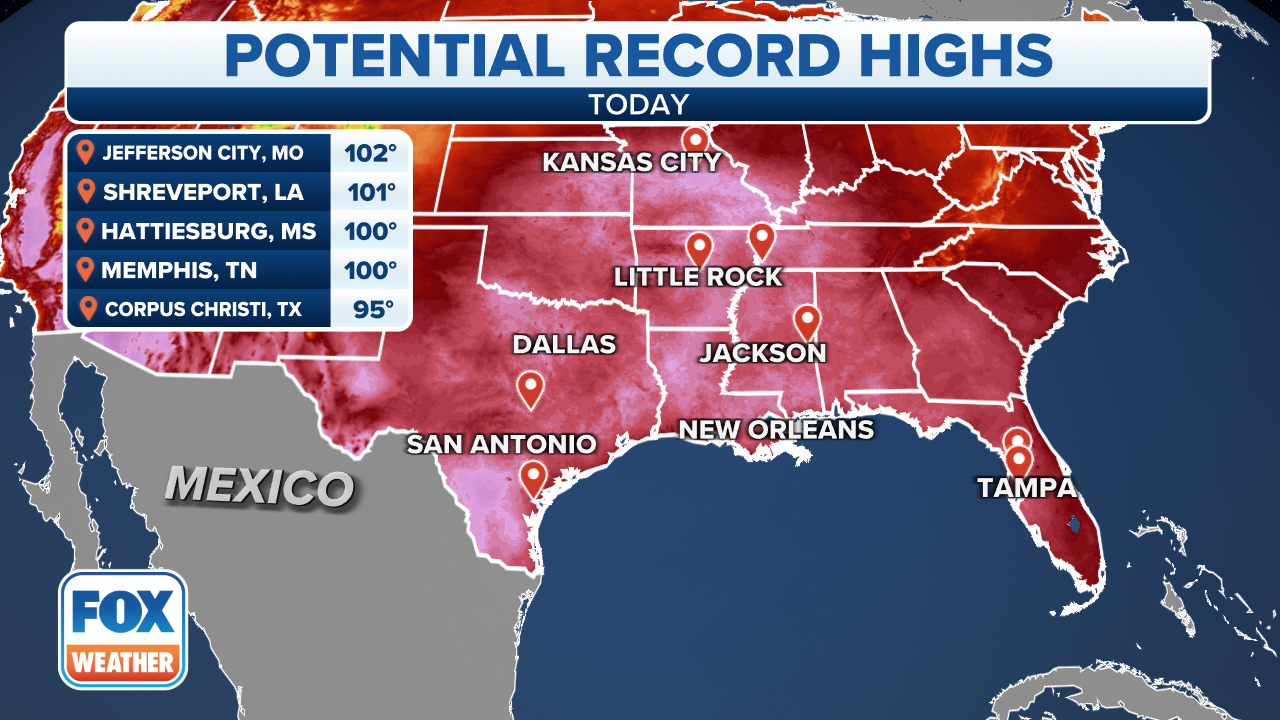
Potential Record High Temperatures Across the South & Southeast – United States – June 2023 Source Map: Fox Weather
This is the third in my series of reflections on the “c-o-s-m-o-s remedy” proposed in opposition to the “ideology of e-s-c-a-p-e” by Jem Bendell in Deep Adaptation: Navigating the Realities of Climate Chaos (UK/USA 2021).
In contrast to the habit of Control in e-s-c-a-p-e ideology, which involves thinking ‘I will try to impose on you and everything, including myself, so I feel safer,’ Bendell proposes that Serenity involves the feeling that ‘I appreciate the dignity of you, myself and all life, however disturbing situations might seem’ (p.146).
Serenity is defined as the state of being calm, peaceful, and untroubled. A look at the day’s headlines suggest that we are more generally inclined to feel the very opposite: fear, dread, anguish, and anxiety. Desperate for control over our lives, we often place our faith in powerful men to save us from drowning. In America, we pass laws to restrict the rights of others for control over their bodies.
Since childhood, fear has been a constant companion. Such is the nature of domestic violence. All I could control was fear itself. In high school, I learned the “Serenity Prayer” asking God for the wisdom to know the difference between things I could and could not change, and the courage to change what was within my power to change. I did what I could to improve communication between my parents, with no observable change.
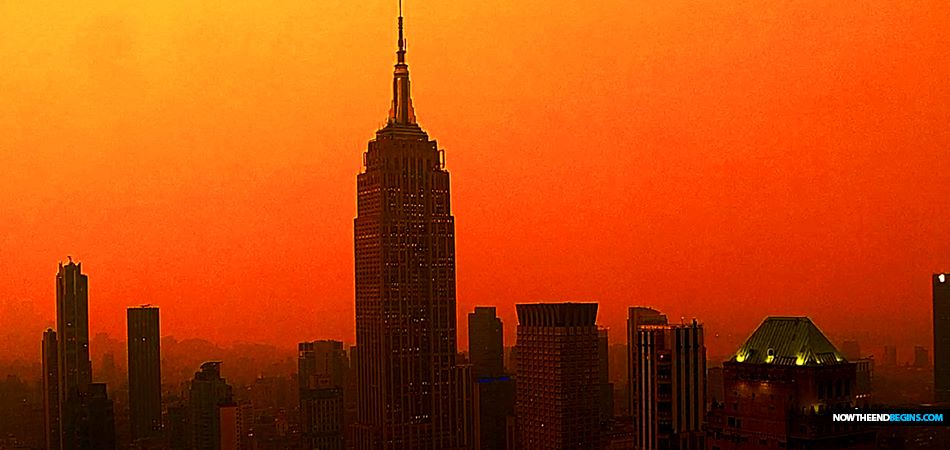
New York City blanketed in smoke from Canadian wildfires – USA – June 7, 2023
This is the second in my series of reflections on the “c-o-s-m-o-s remedy” proposed in opposition to the “ideology of e-s-c-a-p-e” by Jem Bendell in Deep Adaptation: Navigating the Realities of Climate Chaos (UK/USA 2021).
In contrast to the habit of Surety or Certainty in e-s-c-a-p-e ideology, which involves thinking ‘I will define you and everything in my experience so that I feel calmer,’ Bendell proposes that Openness wishes ‘I will keep returning to be curious about as much as I can, however unnerving’ (p.146).
What is the openness that Bendell refers to?
According to Psychology Today: “Openness to experience, or simply openness, is a basic personality trait denoting receptivity to new ideas and new experiences. It is one of the five core personality dimensions that drive behavior—known as the five-factor model of personality, or the Big 5. People with high levels of openness are more likely to seek out a variety of experiences, be comfortable with the unfamiliar, and pay attention to their inner feelings more than those who are less open to novelty. They tend to exhibit high levels of curiosity and often enjoy being surprised. People with low levels of openness prefer familiar routines, people, and ideas; they can be perceived as closed-minded.”
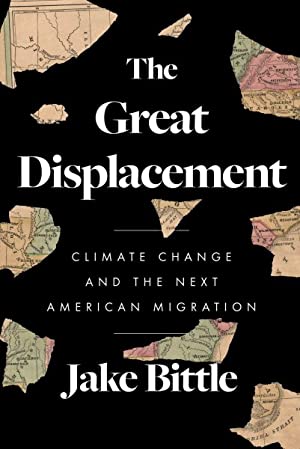
Front Cover: The Great Displacement: Climate Change and The Next American Migration by Jake Bittle Photo Credit: Simon & Schuster (USA, 2023)
At the most fundamental level, displacement begins when climate change makes it either too risky or too expensive for people to stay somewhere. The disasters discussed in this book bear little resemblance to each other on the surface, but they all exert pressure on governments and private markets, whether through the financial costs of rebuilding or the strain of allocating scarce resources. As this pressure builds, it starts to push people around, changing where they can live or where they want to live. Sometimes this looks like the government paying residents of flood-prone areas to leave their homes; sometimes it looks like fire victims getting priced out of an unaffordable state; other times it looks like fishermen going broke as the wetlands around them erode. It may seem reductive to think about a planetary crisis in terms of financial risk rather than human lives, but that is how most people in this country will experience it—through the loss of their most valuable assets, or the elimination of their job, or a shift in where they can afford to live.
Excerpt from The Great Displacement: Climate Change and The Next American Migration by Jake Bittle, Simon & Schuster, New York, USA, 2023 (Introduction, p. xvii).
Note: The title of the book is an oblique reference to the Great Migration in American history (1920s to 1970s) when more than six million Black people left the South and moved to northern cities like New York and Chicago, fleeing an economic and humanitarian crisis.
JAKE BITTLE, a journalist based in Brooklyn, New York, is a staff writer at Grist, where he covers climate impacts and adaptation. His work has appeared in The New York Times, The Guardian, Harper’s Magazine, and a number of other publications.
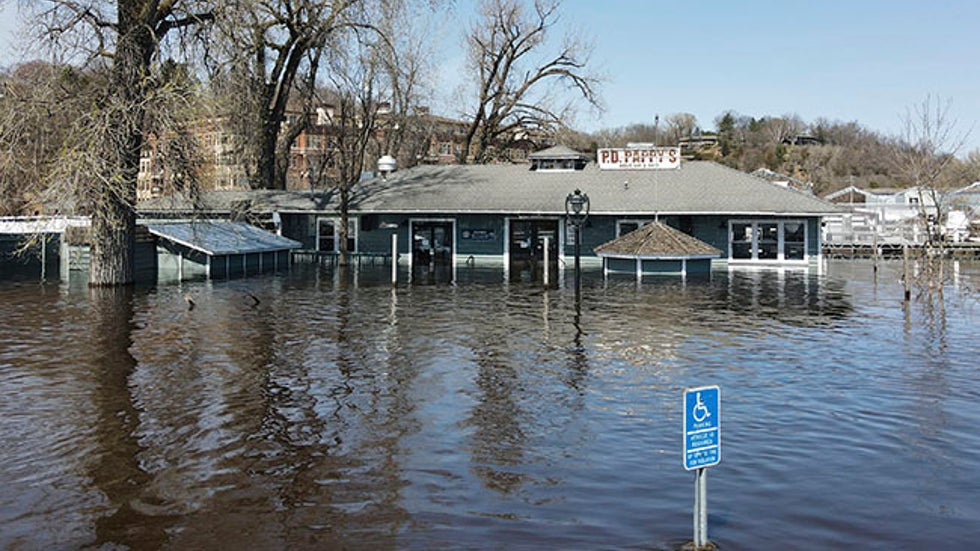
Flooding in the Upper Mississippi Valley – Stillwater – Minnesota – USA – April 18, 2023 Photo Credit: Weather Underground
This is the first in my series of reflections on the “c-o-s-m-o-s remedy” proposed in opposition to the “ideology of e-s-c-a-p-e” by Jem Bendell in Deep Adaptation: Navigating the Realities of Climate Chaos (UK/USA 2021).
In contrast to the habit of Entitlement in e-s-c-a-p-e ideology, which involves thinking ‘I expect more of what I like and to be helped to feel fine,’ Bendell proposes that Compassion, in this context, involves sensing that ‘I feel an active responsibility for any of my contribution to your suffering, without expecting to feel right, better or worse’ (p.146).
What is compassion?
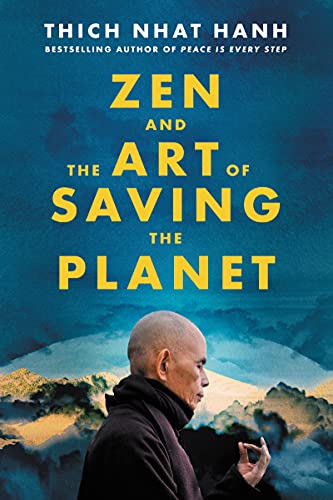
In her book Atlas of the Heart: Mapping Meaningful Connection and the Language of Human Experience (USA 2021), American research professor Brené Brown defines compassion as “the daily practice of recognizing and accepting our shared humanity so that we treat ourselves and others with loving-kindness, and we take action in the face of suffering” (p. 118). Buddhist Zen Master Thich Nhat Hanh (1926-2022) describes it simply in Zen and the Art of Saving the Planet (USA 2021, p. 109): “Compassion is a powerful energy that allows us to do anything we can to help reduce the suffering around us.”
Front Cover: Zen and the Art of Saving the Planet by Thich Nhat Hanh Photo Credit: HarperCollins Publishers (USA, 2021)
If you want to save the planet and transform society, you need brotherhood and sisterhood; you need togetherness. Whenever we speak about the environment, or peace and social justice, we usually speak of non-violent actions or technological solutions, and we forget that the element of collaboration is crucial. Without it, we cannot do anything; we cannot save our planet. Technical solutions have to be supported by togetherness, understanding, and compassion.
In order to collaborate, we need to know how to listen deeply and how to speak skillfully, how to restore communication, and how to make communication easier so we can communicate with ourselves and with each other…. Restoring communication is an urgent practice. With good communication, harmony, understanding, and compassion become possible between individuals, different groups, and even nations.
Excerpt from Zen and the Art of Saving the Planet by Thich Nhat Hanh, Edited and With Commentary by Sister True Dedication, HarperCollins Publishers, New York, USA, 2021 (pp. 187-188).
THICH NHAT HANH (1926-2022) was a world-renowned Buddhist Zen master, poet, author, scholar, and activist for social change. He was nominated for the Nobel Peace Prize in 1967 by Dr. Martin Luther King Jr. He remains a preeminent figure in contemporary Buddhism, offering teachings that are both deeply rooted in ancient wisdom and accessible to all.
SISTER TRUE DEDICATION is a former journalist and monastic Dharma Teacher ordained by Thich Nhat Hanh.
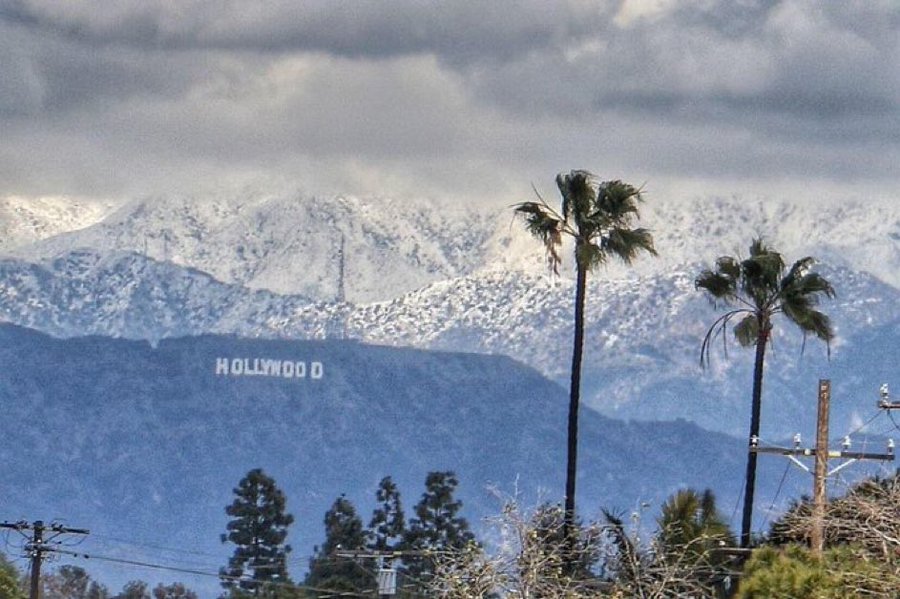
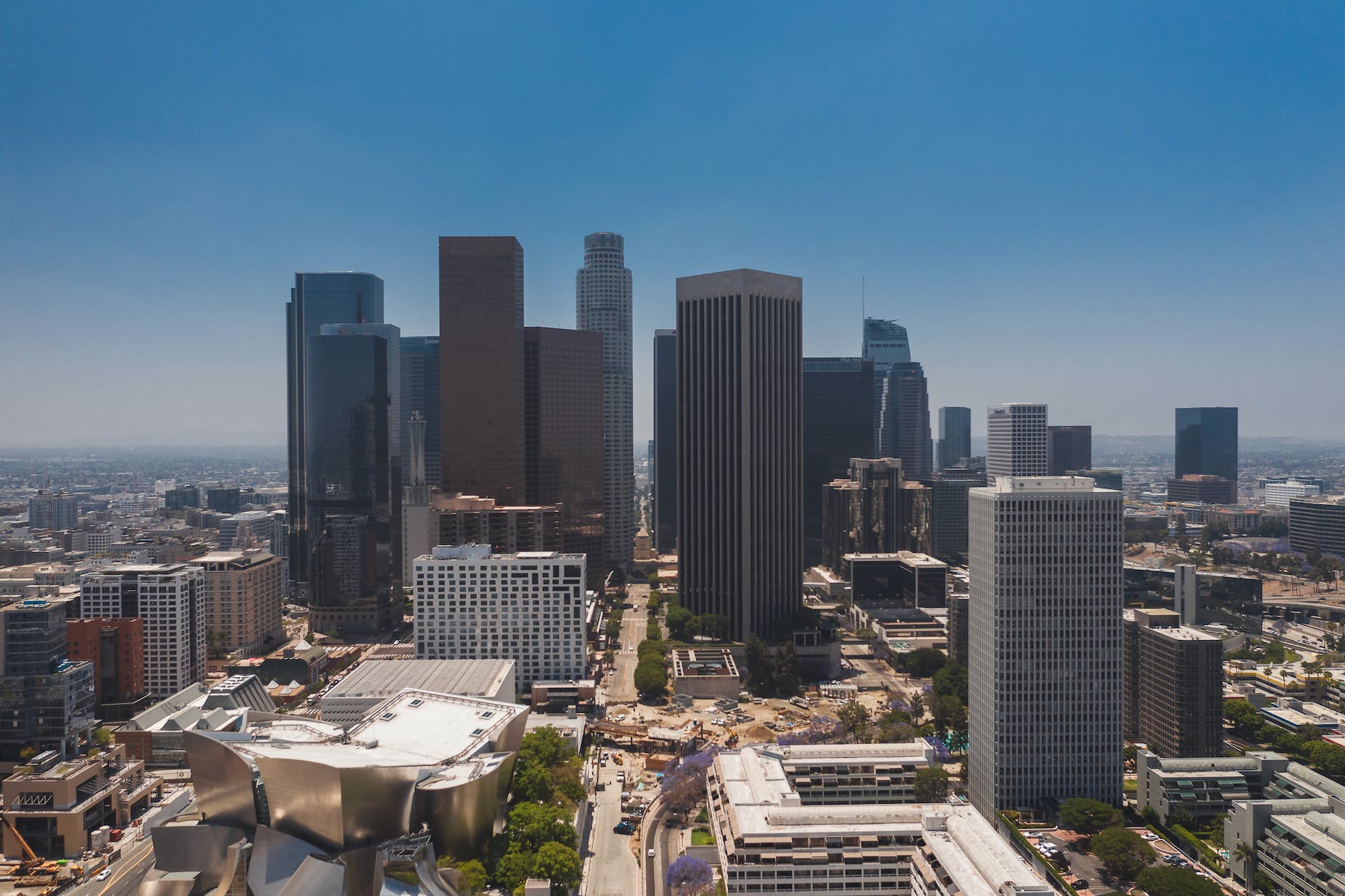
Snow-capped Santa Monica Mountains – Los Angeles – March 2, 2023 Photo Credit: Citizen Free Press
Forgive me, Mother Gaia. I come before you with my head bent in shame. How could I ever believe that it was okay for humanity to destroy so much life and treat Earth’s oceans and atmosphere as dumping grounds? I have pondered our beliefs that have brought our species to a global climate and ecological catastrophe: entitlement, surety or certainty, control, autonomy, progress, and exceptionalism. Jem Bendell refers to these assumptions as humanity’s e-s-c-a-p-e ideology. Our great human enterprise stands on pillars of The Dead. I share in the plunder. I must also share the guilt.
I hear you, Mother Gaia. Your signs of distress are everywhere, even in my home state of California. I admit that my way of being is detrimental to the preservation of our planet’s web of life. I know that a shift of being is essential. Am I up to the task? Destructive practices and attitudes have become second nature to me. Beliefs have become sacrosanct.
I have begun the work of letting go of my sense of entitlement and exceptionalism. I acknowledge that I hold no divine right of dominion over the non-human lives with whom I share this planet. As you have made clear, Mother Gaia, my well-being depends upon their well-being. When I harm the condor, the Monarch butterfly, and the great forests, I harm myself.
Through my succulent and vegetable garden, I work at reconnecting with other threads in nature’s web of life. In our chaotic world of conflicting interests and desires, the flowering trees and plants, birds, and butterflies bring joy to each new day. Not so, the caterpillars that gorged on the leaves of my young cucumber plants. My inner conflict got intense: This year, I will not be planting cucumbers. Then, there is a wild cat that roams our apartment complex at night, leaving unwelcome mounds of poop in my garden beds. I know, Mother Gaia, you never promised it would be easy.
When it comes to my consumption of durable and disposal goods, I adhere to a simple and frugal lifestyle. With adult children, I no longer contend with pressure to buy the latest stuff that kids and teenagers crave. Plastic products remain a challenge. They are everywhere, cajoling me with their convenience, durability, and usefulness. I struggle, in vain, for control, Mother Gaia.
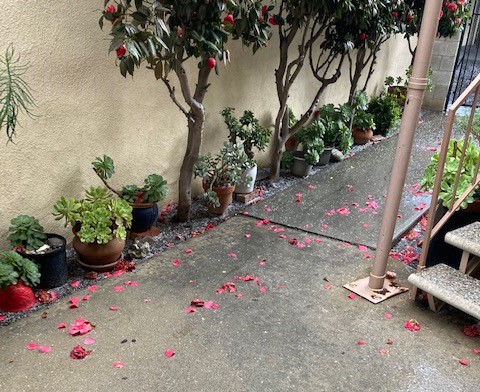
Our mistaken belief that humankind could control Nature and carve it into our own image has led us to existential crises. Extreme weather has become my new reality. Beginning on February 23rd, record-breaking severe winter storms struck our state. That afternoon shortly after 4:00 p.m., I was seated at my desk when I heard a strange pounding on the windowpane. Outside, hailstones the size of green peas littered the ground. I rushed outdoors to witness and record the rare event (see my photo below). Is this yet another sign of more extreme weather to come, Mother Gaia?
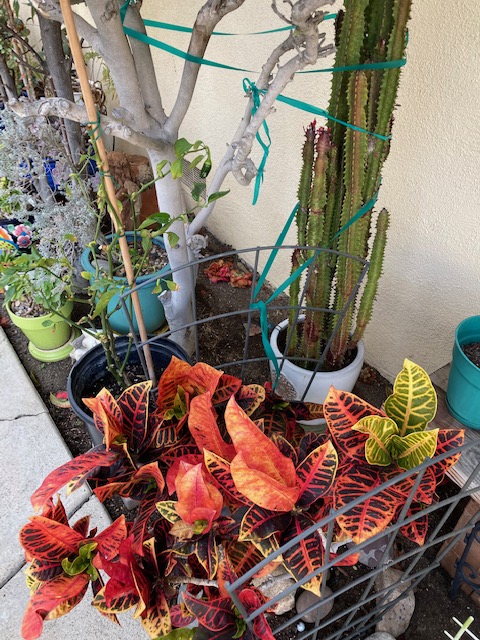
The storm brought destructive winds, much-needed rainfall, blizzards, and heavy snowfall, including low-elevation snow to areas unaccustomed to snow, like the Hollywood Sign on Mount Lee in the Santa Monica Mountains overlooking the City of Los Angeles. I give thanks that my garden suffered minor damage. The wind knocked over the potted Red Cactus and partly uprooted the Petra Croton plant from the ground. With warnings of another storm on the way, I secured both plants as best as I could (see photo below). Our apartment complex got off easy with just a little flooding. For how much longer will we escape Nature’s wrath, Mother Gaia?
Towns in the mountain regions have been hit hardest with record levels of up to ten feet deep of snowfall, trapping people in their homes. On March 1st, Governor Gavin Newsom declared a state of emergency in thirteen counties, including Los Angeles County. As temperatures have dropped by ten to twenty degrees Fahrenheit below normal for our area, I must be diligent in staying warm while still conserving on energy and gas usage. We have only ourselves to blame, Mother Gaia. We ignored your early warning signs of distress. We thought that we could keep on pumping our carbon waste into the atmosphere without adverse consequences.
Our destructive e-s-c-a-p-e narrative no longer works in favor of humankind, except for a tiny minority who profit from disaster and chaos. Until the day that they, too, will perish. We need a new narrative that recognizes our oneness with Nature’s web of life and with each other. Jem Bendell has proposed the c-o-s-m-o-s remedy: compassion, openness, serenity, mutuality, oneness, and solidarity. I will explore his proposed remedy over the next six months. I invite you to join me.
Jem Bendell uses the word “exceptionalism” in e-s-c-a-p-E ideology to describe two kinds of exceptionalism that cause him concern: firstly, that we and our kin are different and better, or at least more entitled than others and their kin; secondly, that humans are an exceptional species in natural history (Bendell, p. 135). He notes that, throughout history, we humans have acted as though our family, community, country, race, or religion are more important than others outside our sphere. These assumptions continue to create conflicts between us at home and worldwide. We rarely question our participation in systems of oppression and our complicity in the suffering they inflict on others. The degradation and destruction under colonialism of ‘ordinary’ humans and non-human lifeforms persist to this day.
Bendell observes that this exceptionalism also manifests in another detrimental way when people think that their difference as ‘exceptional’ beings will spare them from suffering the same fate as the rest of humanity. They act as though building bunkers, moving to New Zealand, buying farmlands, and such like, will give them an edge over the rest of us when catastrophe strikes. In this way, they lose opportunities for collaboration with ‘ordinary’ humans for solutions to our shared predicament.
The grandest exceptionalismis our story of humanity being separate, and completely different, from the natural world (Bendell, p. 137). This assumption is evident in some religions and in secular cultures. When we believe this to be true, we open the door to the destruction of non-human lifeforms and the natural world. Bendell invites us to answer the question ‘Why did humanity destroy so much life on earth?’
In the midst of our Christmas Day preparations, local meteorologists warned that a severe winter storm brewing over the Pacific Ocean was headed towards the U.S. West Coast. They described it as a densely saturated atmospheric river. Thanks to advanced technological methods for studying our atmosphere, we now know that the atmosphere can hold an entire river of water vapor. These rivers in the sky are about 250 to 375 miles wide and can be more than 1,000 miles long. That is an awful lot of water vapor. Californians living in high-risk zones for flooding and mudslides were put on high alert.
After seven months of mandated water rationing, due to California’s three-year drought conditions, I was elated about the news. My water-deprived plants would be happy. But the Sky God can be merciless or overzealous when answering our prayers for rain. Beginning on December 27, 2022, California was hit by wave after wave of intense storms that dumped more water than our outdated water infrastructure could handle. In the first week of the New Year, I braced myself for what the meteorologists described as a “bomb cyclone,” as shown in the captioned photo, captured by the National Oceanic and Atmospheric Administration (NOAA).
Jem Bendell uses the word “progress” in e-s-c-a-P-e ideology to describe the assumption that material progress is possible and good for the advancement of human civilization. This assumption or narrative of progress, he argues, means that new technologies and ideas are given the benefit of the doubt, and the hidden or unforeseen costs of those ideas tend to be downplayed or fixed with even less tested ideas (Bendell, pp. 134-135). In prioritizing our drive for progress, we humans push ahead to use technologies that disrupt Earth’s natural systems and unravel the Web of Life upon which human societies depend. The Men of Progress reject any alternative way of organizing society that does not guarantee them material or financial gains. Capital accumulation reigns.
Without a doubt, I have benefited from humanity’s technological progress. Thanks to this progress, I enjoy a comfortable life with all my needs met for energy, food, shelter, and water. With just a click, I can connect with others worldwide. Motor vehicles, trains, and planes make getting together with loved ones so much easier and less time-consuming. Advances in medicine lengthen my lifespan. What is there not to love about human progress?
Jem Bendell uses the word “autonomy” in e-s-c-A-p-e ideology to describe the idea among the modern dominant culture that each of us is the separate autonomous origin of our awareness, values and decisions, and that it is good to become more autonomous (Bendell, p. 133). He asserts that this assumption is false. Instead, our ability to conceptualize, communicate, and perceive stimuli are built on social constructs and conditioning of our culture and upbringing. Even our free will is socially conditioned. We also cannot ignore the influence of human physiology in defining our nature of being.
I am one of those individuals who believe that I have the right to personal autonomy or self-determination, as I prefer to call it. Over the years, I have discovered that achieving self-determination has its limitations based not only on where one lives on this planet, but also on one’s gender, religion, race, income, and social status.
Earlier this year, millions of American women of childbearing age have lost their right to decide when to start a family, the spacing and size of their family, or not to have children at all. More recently in September, Iranian women took to the streets to protest morality police enforcement of hijab rules that endanger the lives of women who dare to expose their hair in public spaces.
Autonomy based on developing one’s own individual self is a more complex concept that I have yet to fully grasp. This emphasis on individualism goes against my own view of our interdependence as a species within the web of life and dependence upon the contributions of others within society. On the other hand, I have learned from living within three distinct cultures—Guyanese (British Caribbean), Brazilian, and American—that social constructs and conditioning of our culture and upbringing do, indeed, influence our self-awareness and vision of the world.


 Three Worlds One Vision
