• About

Three Worlds One Vision

~ Guyana – Brazil – USA

Three Worlds One Vision

Author Archives: Rosaliene Bacchus

Climate Crisis Update – Part Two: NOAA National Climate Report 2020 & UNEP Emissions Gap Report 2020

07 Sunday Feb 2021

Posted by Rosaliene Bacchus in Anthropogenic Climate Disruption, United States

≈ 33 Comments

Tags

Global climate crisis, Net-zero emission goals by 2050, NOAA National Climate Report 2020, Paris Climate Agreement, U.S. 2020 Billion-Dollar Weather and Climate Disasters, UNEP Emissions Gap Report 2020

Continued from Part One: U.S. Re-engagement in a Warming World.

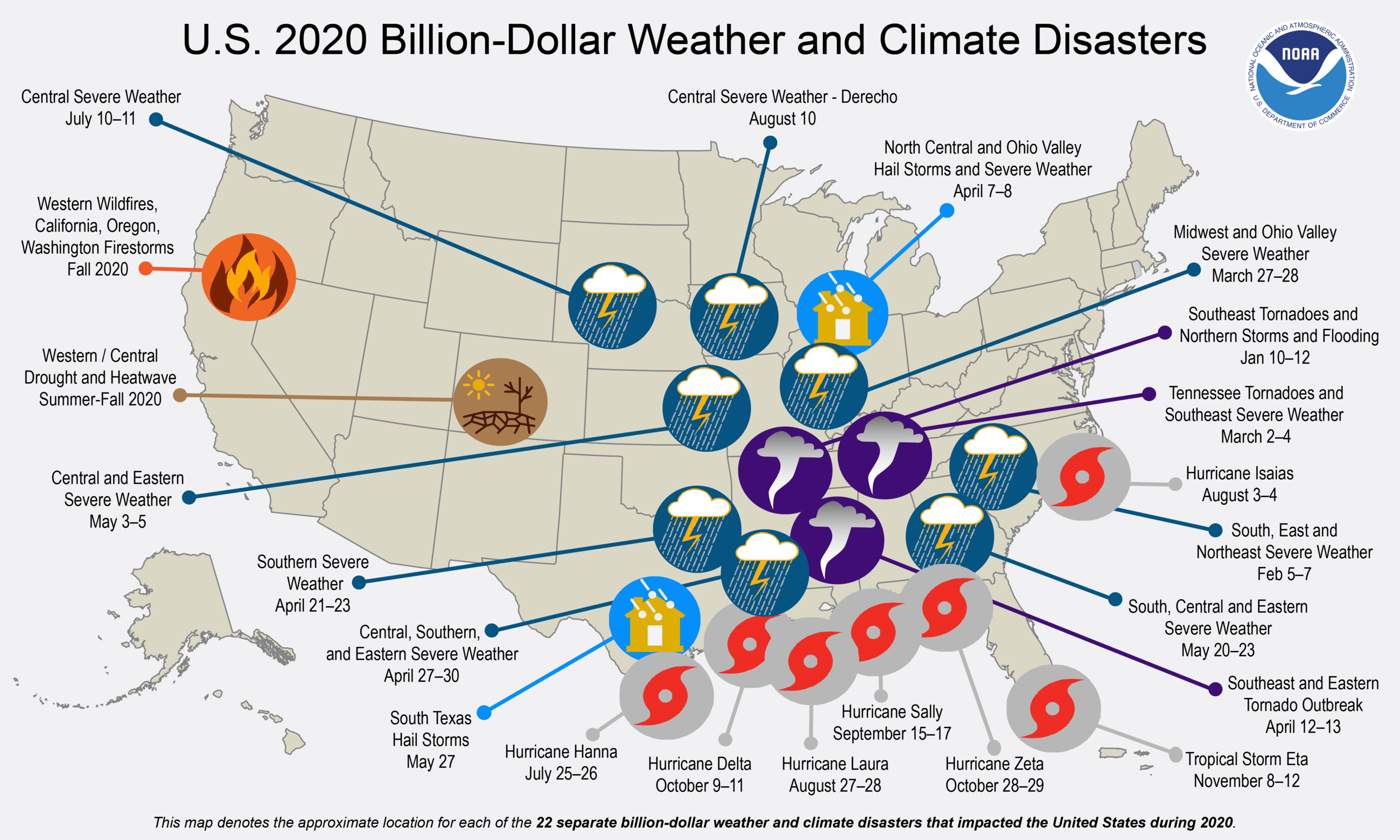
Map of U.S. 2020 Billion-Dollar Weather and Climate Disasters
Source: National Centers for Environmental Information – NOAA

According to the NOAA National Climate Report 2020, issued on January 12, 2021, last year was the most active wildfire year on record across the West. In California, thousands of firefighters battled five of the six largest wildfires in our state’s history. Nearly 10,000 fires burned over 4.2 million acres. The August Complex fire alone burned over 1 million acres, an area larger than the state of Rhode Island. In Colorado, three extensive wildfires, burning over 500,000 acres, also broke the state’s historical record.

For 2020, the average temperature of 54℉ (12.2℃) for the contiguous U.S. (CONUS) ranks as the fifth warmest year in the last 126 years on record. On August 16th, temperatures soared to 130℉ (54.4℃) in California’s Death Valley—the hottest CONUS temperature recorded in 2020. Most of the contiguous U.S. experienced above average temperatures. Ten states across the Southwest, Southeast, and East Coast had their second-warmest year on record.

East Coast residents also faced several record-breaking storm events. Thirty named storms formed in the Atlantic Ocean, breaking the record of 28 set in 2005. Tropical storms Cristobal, Marco, Laura, Delta, and Zeta made landfall in Louisiana, the most storms on record for any state in one year. Hurricane Laura generated a storm surge of over 17 feet (5.16 meters) above ground level, which would be the largest on record for Louisiana.

The Midwest was not spared. In August 2020, the region was hit by a historic derecho, a destructive thunderstorm complex. The derecho raced across the Central States, causing damages estimated at $11 billion, the costliest to hit the region in four decades.

Perhaps, like me, you have not yet experienced loss of property, livelihood, or a loved one due to some climate disaster. Yet, we the working people all suffer the consequences of the economic costs of these weather and climate disasters. America’s annual loss in 2020 exceeded $95 billion, the fourth highest cost on record. Twenty-two of these events caused losses amounting to more than $1 billion each, shattering yet another annual record of 16 events made in 2011 and 2017. The total cost of U.S. billion-dollar weather and climate disasters over the last five years (2016-2020) exceeds a record $600 billion.

Unless we change the way we live and work, these weather and climate disaster events will continue to intensify and cripple our state and local economies, already under stress due to the global COVID-19 pandemic. On the upside, the lockdown and reduced economic activities in the U.S. and worldwide have led to a drop in global greenhouse gas (GHG) emissions. But, it is just a short-term reduction.

At the time of completing their Emissions Gap Report 2020, released on December 9, 2020, the United Nations Environment Programme (UNEP) reported that 126 countries, covering just 51 percent of global GHG emissions have net-zero goals that are formally adopted, announced, or under consideration. If the U.S. adopts a net-zero GHG target, as announced by the Biden Administration, the share would increase to 63 percent.

Apart from the USA, only ten other G20 members have set net-zero emission goals by 2050: Argentina, Canada, China (before 2060), European Union, France, Japan, Mexico, South Africa, South Korea, and the United Kingdom. Based on pre-COVID-19 projections, only nine G20 members are on track to achieve their unconditional nationally determined contributions (NDCs).

Without a firm commitment to significantly reduce GHG emissions, as set out in the Paris Climate Agreement, we the people of Earth will face a temperature increase of at least 3℃ (37.4℉) by the end of this century.

As at October 2020, global COVID-19 fiscal spending continued to promote high-carbon economic production. In planning the recovery from COVID-19, governments worldwide have an opportunity to catalyze low-carbon lifestyle changes by disrupting entrenched practices. (Clearing forests to rear cattle for beef consumption comes to mind.) Based on UNEP’s consumption-based accounting, around two-thirds of global emissions are linked to private household activities. Moreover, the richest One Percent of the world’s population account for more than twice the combined share of emissions of the poorest 50 percent. The report further notes that our participation as members of civil society is essential to bring about wider changes in the social, cultural, political, and economic systems in which we live. We have to change our lifestyles if we are to bridge the emissions gap. (Emphasis is mine.)

Watch the UNEP’s video, “Emissions Gap: A Turning Point,” released on December 9, 2020 (duration 1:35 minutes):

Change is inevitable. More so when we set the change into motion. In 2020, COVID-19 forced us into lockdown mode, bringing the global economy to a standstill. In the USA, our inability as a nation to agree on a strategy to combat a highly contagious, mutating, deadly foe will cost us more lives. Our economic recovery will take longer. Meanwhile, time is running out on tackling a global climate crisis that is gathering force with each passing day. Staying safe in place may not be an option.

CLIMATE CRISIS UPDATE – PART ONE: U.S. RE-ENGAGEMENT IN A WARMING WORLD

31 Sunday Jan 2021

Posted by Rosaliene Bacchus in Anthropogenic Climate Disruption

≈ 42 Comments

Tags

Antarctic Thwaites Glacier, Arctic Sea Ice Year 2020 in Review, Climate Adaptation Summit (CAS) 2021, Global average surface temperature 2020, Global climate crisis, Global Landscapes Forum 2020, US President Biden’s Executive Order on Tackling the Climate Crisis at Home and Abroad, Year of Fire 2020

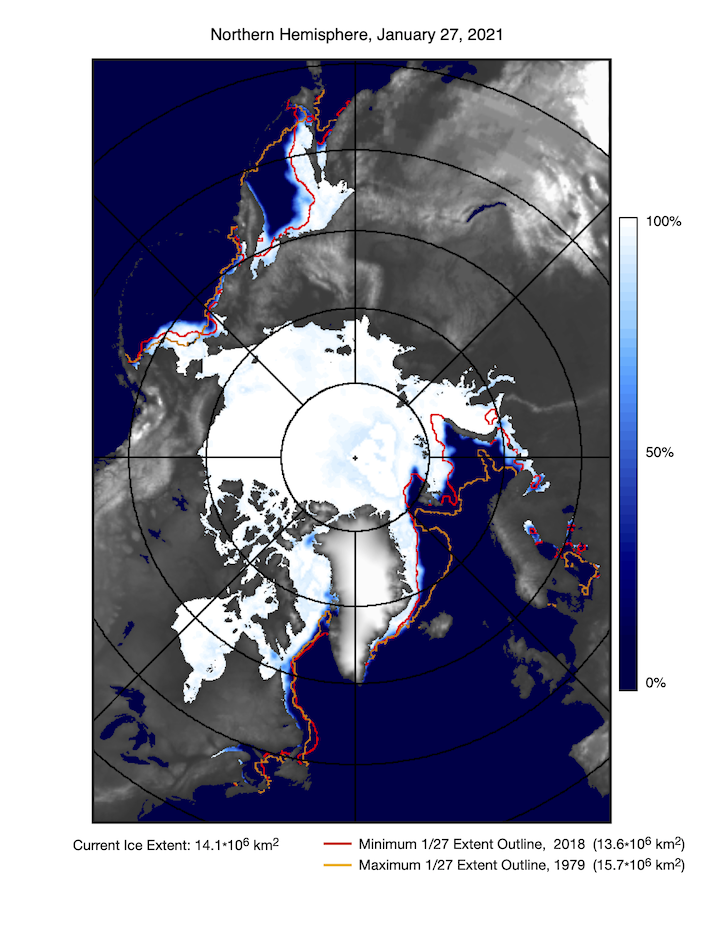
Source: NASA Goddard Earth Science Research

News from the White House made my day on Wednesday, January 27. Acknowledging that climate change is an existential threat, our President Joseph Biden signed an Executive Order on Tackling the Climate Crisis at Home and Abroad.

“It is the policy of my Administration that climate considerations shall be an essential element of United States foreign policy and national security,” said President Biden.

In his Administration’s commitment to addressing the global climate crisis, he also confirmed the appointment of former Secretary of State John Kerry as America’s first Special Presidential Envoy for Climate.

Another first will be the establishment of the White House Office of Domestic Climate Policy within the Executive Office of the President. Headed by the Assistant to the President and National Climate Advisor, the Climate Policy Office will coordinate the domestic policy-making process and monitor its implementation nationwide. The National Climate Adviser will also chair the National Climate Task Force that will be comprised of twenty-one members from across federal agencies and departments. With the creation of a Civilian Climate Corps Initiative, our youth—who were clamoring for urgent action before the pandemic drove them off the streets—will have the opportunity for training in conservation and climate resilience.

At last, a government-wide approach to addressing the climate crisis!

To achieve a sustainable clean energy economy and meet our commitment of net-zero carbon emissions by no later than 2050, our nation will need millions of construction, manufacturing, engineering, and skilled-trades workers to build new infrastructure.

President Biden noted: “Such jobs will bring opportunity to communities too often left behind—places that have suffered as a result of economic shifts and places that have suffered the most from persistent pollution, including low-income rural and urban communities, communities of color, and Native communities.”

It is my hope that the escalating evidence of Mother Nature’s fury will silence the voice of climate change deniers within the Biden Administration.

Continue reading →

“No Island Is an Island, & So Forth” by American Poet John Sibley Williams

17 Sunday Jan 2021

Posted by Rosaliene Bacchus in Poetry, United States

≈ 40 Comments

Tags

America’s violent history, As One Fire Consumes Another by John Sibley Williams, Racism in America, Storming of the United States Capitol 2021, White Privilege, White supremacists and white nationalists

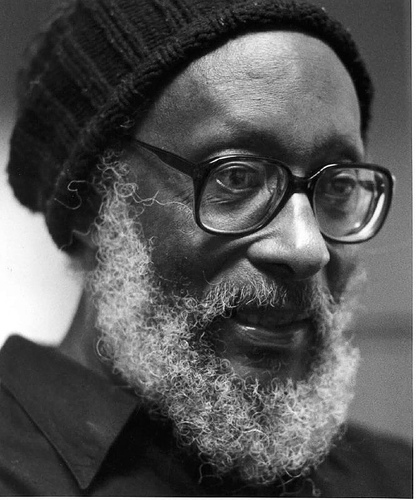
American Poet John Sibley Williams
Photo Credit: Poet’s Website

My Poetry Corner January 2021 features the poem “No Island Is an Island, & So Forth” from the poetry collection As One Fire Consumes Another (2019) by John Sibley Williams, an award-winning poet, educator, and literary agent. Born in 1978 in Massachusetts, Williams earned his bachelor’s degree at the University at Albany in New York in 2003. Then in 2005, he received a Master of Fine Arts in Creative Writing from Rivier University in New Hampshire. He moved to Portland, Oregon, in 2009 where he earned a Master of Arts in Book Publishing from Portland State University. He lives in Portland with his partner and twin toddlers.

Williams’ poetry collection As One Fire Consumes Another comes at a critical time in American history with the empowerment of white supremacist and white nationalist groups. Framing his poems in column-like boxes, resembling coffins, the poet confronts the violent side of American history and bears witness as one fire consumes an unending series of fires in our homeland, on our southern border, and in distant lands. In an interview with Jeanne Huff of Idaho Press, Williams confessed that he struggled in exploring the extent of his “personal privilege as a white, CIS, able-bodied male whose labors and strains are so trifling compared to others.”

In the poem, “Everything Must Go,” a house is portrayed with ghost-white covering sheets and that new coffin smell. Its mossed gables are weighed down by a full century. Out-of-synch always with the dark drift of history, and hopeful that these are not self-repeating tragedies, the poet proposes that we must sell off what we fear owning. To remain silent is not atonement for our dark history.

We have become so numb to the cruelty we inflict on others with our unending wars that nothing stirs the / birds from our oak when we learn that six children were killed in Kabul, the poet observes in “When instinct matures into will.” The horizon sits / precisely where we left it. Fat with / faith. Fat, faithful, choosing what to / feel, feeling nothing.

Fire also rages in the homeland. The poem “A Gift of Violence,” in memory of the Charlottesville riots in August 2017, speaks of the racist hatred still alive across generations.

 Memories of burning buildings raw
 & righteous. A grandfather’s flames
 passed down, undimmed. A full set
 of knives in the drawer without time
 to blunt from underuse. A city never
 quite white enough. A city furiously
 lit by misremembered histories… 

Even Noah’s ark would not be big enough to un- / ruin, no flood more violent than our / own, the poet laments in “Dear Noah.” Like a ghost haunted by itself, / we move along old scars terrified of / what would happen if left to heal.

As a nation, we remain disunited and self-destructive. Call it by its true name: schism, the poet declares in “The Bones of Us.” Before we were a country of / burning buildings & protest & want, / we were the same. A shining city on / a shining hill raised on the silenced / bones of others.

In the featured poem, “No Island Is an Island, & So Forth,” the poet calls on white Americans to consider the role they all play in the hate and violence permeating our society. Holding on to illusions of bygone glories serve only to sever our body politic.

 Sign your name to ruined Civil War
 forts. Next time, use a Sharpie when
 listing your demands to god. Instead
 of touching forehead to ground as if
 in supplication/ecstasy/grief, set fire
 to the old battlefield & let the winds
 unsever your strings to the past. In
 dust & degrees, redraw boundaries.
 This is what happened & this might
 be what we let happen again… 

When Williams penned these words, did he envisage white insurrectionists carrying the Confederate Flag while they stormed Capitol Hill on January 6, 2021? They fashioned their strings to the past into a Jim Crow-styled noose to hang our Vice President who, they believed, had sold out their cause to hold onto political power.

 
 No island is an island; no body just a
 body, & so forth. When the South
 rises again, carry your father with the
 rebel flag tattoo to the window to
 watch the burning. Let the world
 laugh at itself. Break from tradition.
 To men who want & want & want,
 admit you’ve tried so hard not to be
 one of them.

Emboldened and incited by their leader in the White House, white supremacists and white nationalists among us have risen to prominence. To men who want & want & want there is no end to the burning. Fire consumes lives and livelihoods—black, brown, and white alike. No island is an island; no body just a / body, & so forth.

Only we can set ourselves free from the coffins, filled with hate and fear, that imprison our bodies and souls. Are we up to the task?

To read the complete featured poem, “No Island Is an Island, & So Forth,” and learn more about the work of the poet John Sibley Williams, go to my Poetry Corner January 2021.

Thought for Today: A call to heed our own history

10 Sunday Jan 2021

Posted by Rosaliene Bacchus in United States

≈ 31 Comments

Tags

2021 Storming of the United States Capitol, “The American Abyss” by Timothy Snyder, Trump’s Big Lie, Trump’s Coup Attempt 2020-2021

America will not survive the big lie [that Trump had won the election] just because a liar is separated from power. It will need a thoughtful repluralization of media and a commitment to facts as a public good. The racism structured into every aspect of the coup attempt is a call to heed our own history. Serious attention to the past helps us to see risks but also suggests future possibility. We cannot be a democratic republic if we tell lies about race, big or small. Democracy is not about minimizing the vote nor ignoring it, neither a matter of gaming nor of breaking a system, but of accepting the equality of others, heeding their voices and counting their votes.

~ Excerpt from the Essay, “The American Abyss,” by Timothy Snyder, The New York Times, January 9, 2021.


Timothy Snyder is the Levin professor of history at Yale University and the author of Our Malady, On Tyranny, The Road to Unfreedom, Black Earth, and Bloodlands. He has received the literature award of the American Academy of Arts and Letters, the Hannah Arendt Prize, and the Leipzig Book Prize for European Understanding.

“Christmas Poem” by Brazilian Poet Vinicius de Moraes

20 Sunday Dec 2020

Posted by Rosaliene Bacchus in Brazil, Poetry

≈ 62 Comments

Tags

Birth of Jesus, Brazilian Poet Vinicius de Moraes, Christmas Poem, COVID-19 deaths, Reflections on Human Mortality, Rio de Janeiro/Southeast Brazil

Brazilian Poet and Lyricist Vinicius de Moraes (1979-1980)
Photo Credit: Vinicius de Moraes Official Website

My Poetry Corner December 2020, featuring the poem “Poema de Natal” (Christmas Poem) by Brazilian poet and lyricist Vinicius de Moraes (1913-1980), is dedicated to those among us who have lost a loved one this year to COVID-19.

Born in the city of Rio de Janeiro, in Southeast Brazil, Vinicius de Moraes is the poet of love and passion. At twenty years old, he published his first book of poetry. Two years later, his second collection won Brazil’s National Poetry Award. He served as a diplomat during the period 1946 to 1969. His first diplomatic post was as Vice-Consul in Los Angeles (1946-1950) where he immersed himself in North American cinema and jazz.

His featured poem, “Christmas Poem,” written in 1946, appears unconnected with the Christmas story of the birth of Jesus in Bethlehem in Judea. Instead, as the title suggests, the poem is more like reflections on the passing year. The poet ponders over death and what is truly essential to our lives. Why such somber thoughts during the Christmas festivities? Had the sudden death of a great friend, the year before, unsettled his life? The loss of a loved one has a way of giving us a new perspective of human existence.

Continue reading →

Thought for Today: On Giving

13 Sunday Dec 2020

Posted by Rosaliene Bacchus in Human Behavior, Philosophy

≈ 42 Comments

Tags

On giving, The Prophet by Kahlil Gibran

You give but little when you give of your possessions. / It is when you give of yourself that you truly give. // There are those who give little of the much which they have—and they give it for recognition and their hidden desire makes their gifts unwholesome. / And there are those who have little and give it all. / These are the believers in life and the bounty of life, and their coffer is never empty. // All you have shall some day be given; / Therefore give now, that the season of giving may be yours and not your inheritors’.  

Excerpt from “On Giving” from The Prophet by Kahlil Gibran, first published 1923, reprinted edition by Alfred A Knopf, New York, USA, 2005.

Kahlil Gibran (1883-1931), a poet, philosopher, and artist, was born in Lebanon. At twelve years old, he migrated to the United States with his mother and siblings. The Prophet, written in English, is Gibran’s masterpiece and has become one of the beloved classics of our time. It is considered an expression of the deepest impulses of the human heart and mind.

Update: The Writer’s Life Under the COVID-19 Pandemic Lockdown

06 Sunday Dec 2020

Posted by Rosaliene Bacchus in The Writer's Life

≈ 56 Comments

Tags

28th Annual Writer’s Digest Self-Published Awards 2021, California’s Stay at Home Order December 2020, Coronavirus death toll in California & the United States, COVID-19 pandemic, Elegy for Guyana, Praise for Under the Tamarind Tree: A Novel

Seven months have now passed since I first posted about life during the COVID-19 pandemic. At that time in May, more than 67,000 of our loved ones were taken from us. With our collaboration, this formidable foe continues to contaminate, maim, and kill. According to the Centers for Disease Control and Prevention (CDC), as at December 5, 2020, a total of 277,825 Americans have lost their lives. Their grieving families are devastated.

Here in California, America’s most populous state, we now rank in top place with more than 1.2 million infected individuals. Over 19,400 people have died. A recent surge in new infections have heightened the threat. In just 24 hours last week, 18,591 people were infected. COVID-19 does not suffer from battle fatigue. Our weapon to counter this coronavirus will soon be deployed. Relief is on the horizon, but, until then, we must counter its rapid spread.

Concerned that our hospitals would be overwhelmed, putting more lives at risk, Governor Gavin Newsom announced on December 3rd a Regional Stay at Home Order, to take effect on December 5th. Another three weeks! Severity of the lock-down will depend about the capacity of Intensive Care Units (ICU) in each region. On Friday, ICU capacity in Southern California dropped to 13.1 percent.

“By invoking a Stay at Home Order for regions where ICU capacity falls below 15 percent,” said Governor Newsom, “we can flatten the curve as we’ve done before and reduce stress on our health care system…. If we stay home as much as possible, and wear masks when we have to go to the doctor, shop for groceries or go for a hike, California can come out of this in a way that saves lives and puts us on a path toward economic recovery.”

Continue reading →

Reflections: America Divided against Itself

22 Sunday Nov 2020

Posted by Rosaliene Bacchus in United States

≈ 58 Comments

Tags

Capitalist economic system, COVID-19 pandemic, Divisive racist politics

I am no stranger to divisive racist politics. My lived experience as a former British subject in what was then British Guiana provides the setting for my debut novel, Under the Tamarind Tree. I witnessed the effectiveness of divisiveness as a weapon for maintaining minority control of a population. When deployed across a nation, it threatens and destroys our relationships with co-workers, neighbors, friends, and even family members. It is now happening within my own nuclear family.

We the people are led—perhaps, brainwashed would be a better word—to believe that our differences as individuals are liabilities for the well-being of our nation. A homogeneous population—in our case, preferably white—would make America great again. What we are never told is that our capitalist economic system thrives on the subjugation of black bodies and those of women, of all colors, making the black woman doubly oppressed.

Of greater import is capital’s subjugation of non-human life—caught and sold, cut and re-shaped and sold, habitats burned for expansion, killed to extinction. Mother Nature is now under great stress; breakdown across numerous ecosystems is underway. Even the overheated heavens lash out with fire and fury.

Bloated from insatiable greed with the spoils of nations worldwide, now depleted, and struggling to breathe, capital returns home for its last stand. Those standing in the way of its recovery must be silenced or crushed. Divisiveness works well as a vaccine to subdue growing opposition to capital’s lethal venom and demands for equality and justice for all.

Capital does not care about our financial distress, pain, and losses. Capital does not care that we are losing our loved ones in the battle against the coronavirus. Capital only cares about its own survival. Capital never concedes. “Liberate the economy!” is its call to arms.

On this Thanksgiving Day, I give thanks to my American brothers and sisters who risk their lives on the frontlines to care for our loved ones infected with Covid-19. While we the people are divided about the sacrifices essential to combat this invisible enemy, those on the frontlines are battered and exhausted, physically and emotionally. Many have lost their lives.

May your Thanksgiving Day be the best it can be during a pandemic.

“Mother, the Great Stones Got to Move” – Poem by Jamaica’s Poet Laureate Lorna Goodison

15 Sunday Nov 2020

Posted by Rosaliene Bacchus in Poetry

≈ 34 Comments

Tags

Caribbean Poetry, Drug addiction and gang violence, Jamaica/Caribbean Region, Jamaica’s Poet Laureate Lorna Goodison, Poem “Mother the Great Stones Got to Move” by Lorna Goodison, Poetry Collection To Us All Flowers Are Roses by Lorna Goodison, Save our Children

Jamaica’s Poet Laureate Lorna Goodison (2017-2020)
Photo Credit: Pan American World Magazine (Photo by Hugh Wright)

My Poetry Corner November 2020 features the poem “Mother, the Great Stones Got to Move” from the 1995 poetry collection, To Us, All Flowers Are Roses, by Jamaica’s second Poet Laureate Lorna Goodison (2017-2020) and the first female to receive this honor. The eight of nine children, six boys and three girls, she was born in 1947 in Kingston, capital of the Caribbean island nation of Jamaica. She grew up in a lower-middle-class family on a noisy street with concrete yards. No roses grew in the neighborhood gardens of potted plants, so the people gave the name roses to all their flowers.

The hymns the young Lorna sang during Sunday Mass at the Anglican Church laid the foundation for her poetry. In her interview with Pádraig Ó Tuama for the Image Journal, Goodison recalled that her mother sung hymns as she did her household chores. “In the Jamaica I grew up in,” she told him, “it seemed to me that women sang hymns all the time—washing, doing chores, working—so it was all around me, that language.”

That language of the great composers of Anglican hymns shines through in the opening poem of her third book of poetry, Heartease (1988), in which the persona declares:

 I shall light a candle of understanding in thine heart
 which shall not be put out.
 […]
 By the illumination of that candle
 exit death and fear and doubt
 here love and possibility
 within a lit heart, shining out. 

Goodison’s trips in her youth to the lush rural landscapes, to visit her extended family, shaped her imagination for the rest of her life. Though she began writing poems from seven or eight years old, she kept them a secret. Growing up in the shadow of her oldest sister who excelled in writing, she questioned her poetic gift and opted instead to focus on painting, her other passion. Then, at fifteen years old, tragedy struck. Her father, who had brought humor and laughter into their lives, passed away.

“It was terrible watching him die of stomach cancer, and maybe brought on a loss of faith, but that was when I really turned to painting and reading and writing poetry,” Goodison told Tuama. “So I guess the arts became my religion, and I’d consider that good religion because I felt connected, I felt cleansed and healed by poetry and painting and music.”

On completing high school, she worked for a year as a bookmobile trainee librarian with the Jamaica Library Service. She traveled deep into rural areas, where small humble places like Heartease, became mythic and real, strengthening her connection with place that runs through her poetry. Deciding to pursue a career in art, she studied painting at the Jamaica School of Art (1967-1968), and then moved to New York City to attend the Art Students’ League (1968-1969).

Her poem “Who Was the Mother of Jamaican Art?” from her 2005 poetry collection, Controlling the Silver, was inspired by an article about enslaved women making carvings of human figures representing their children sold to other plantation slave owners.

 She was the first nameless woman who created
 images of her children sold away from her.
 She suspended those wood babies from a rope
 round her neck, before she ate she fed them,
 touched bits of pounded yam and plantains
 to sealed lips; always urged them to sip water.
 She carved them of heartwood, teeth and nails
 were her first tools, later she wielded a blunt blade.
 Her spit cleaned face and limbs, the pitch oil
 of her skin burnished. When the woodworms
 bored into their bellies, she warmed castor oil;
 they purged. She learned her art by breaking
 hard rockstones. She did not sign her work. 

While Goodison considered herself as an artist, she never stopped writing poetry. But poetry chose her. “It’s a dominating, intrusive tyrant,” she said in an interview for the Guardian newspaper, as quoted in The Walrus Magazine. “It’s something I have to do—a wicked force.”

Many of Goodison’s poems speak of ordinary women, their struggles and the many roles they play. Her country’s traumatic past of colonialism and slavery permeates the people and the landscape. The featured poem “Mother, the Great Stones Got to Move” addresses Jamaica’s violence and poverty, legacy of empire. In the first of her six-stanza poem, the poet invokes the untold stories of slavery, kept hidden by empire, that need to be told.

 Mother, one stone is wedged across the hole in our history
 and sealed with blood wax.
 In this hole is our side of the story, exact figures,
 headcounts, burial artifacts, documents, lists, maps
 showing our way up through the stars; lockets of brass
 containing all textures of hair clippings.
 It is the half that has never been told,
 and some of us must tell it. 

These untold stories, she writes in the second stanza, live on through generations, like the stone on the hearts of some women and men, preventing the small / dreamers of this earth from healing. But there is yet another obstacle destroying their future, raised in the third stanza, that mothers want removed as we think of our children and the stones upon their future. In the following fourth stanza, the poet describes the poisonous stone, born of hunger, that drives the violence in their communities and kill their children.

 
 For the year going out came in fat at first
 but toward the harvest it grew lean,
 and many mouth corners gathered white
 and another kind of poison, powdered white
 was brought in to replace what was green,
 And death sells it with one hand
 and with the other death palms a gun
 then death gets death’s picture
 in the paper’s asking
 “where does all this death come from?” 

Driven by the drug trade, death comes to a people already broken by the legacy of slavery and colonialism. As the poet notes in the fifth stanza, narcotics become the soup and meat for its users, leaving the homeless to sleep on concrete sheets. In her call to action in the final stanza, the poet links the great stones of the past with the present and the future.

 
 Mother, the great stones over mankind got to move,
 It’s been ten thousand years we’ve been watching them now
 from various points in the universe.
 From the time of our birth as points of light
 in the eternal coiled workings of the cosmos.
 Roll away stone of poisoned powders come
 to blot out the hope of our young.
 Move stones of the sacrificial lives we breed
 to feed to suicide god of tribalism.
 From across the pathway to mount morning
 site of the rose quartz fountain
 brimming anise and star water
 bright fragrant for our children’s future
 Mother these great stones got to move. 

Poverty, drug addiction, gang violence, and homelessness are not just the scourges of the Jamaican people. They afflict all humans worldwide. For the sake of our children’s future, mothers must remain vigilant and work tirelessly to remove these scourges from our communities.  

To read the complete featured poem and learn more about the work of Lorna Goodison, go to my Poetry Corner November 2020.

Time to Heal

08 Sunday Nov 2020

Posted by Rosaliene Bacchus in Poetry by Rosaliene Bacchus, United States

≈ 39 Comments

Tags

Cooperation, National healing, Social & Political Change, USA Presidential Elections 2020

Photo by Karolina Grabowska on Pexels.com

Our differences
magnified & distorted
warped realities.

Fear hate & despair
weaken the foundations of
our democracy.

Let’s cooperate
together we can achieve
a great life for all.

Let’s take down the walls
separating you and me
now it’s time to heal.

← Older posts
Newer posts →

Subscribe

  • RSS - Posts
  • RSS - Comments

Archives

  • March 2026
  • February 2026
  • January 2026
  • November 2025
  • October 2025
  • September 2025
  • August 2025
  • July 2025
  • June 2025
  • May 2025
  • April 2025
  • March 2025
  • February 2025
  • January 2025
  • December 2024
  • November 2024
  • October 2024
  • September 2024
  • August 2024
  • July 2024
  • June 2024
  • May 2024
  • April 2024
  • March 2024
  • February 2024
  • January 2024
  • December 2023
  • November 2023
  • October 2023
  • September 2023
  • August 2023
  • July 2023
  • June 2023
  • May 2023
  • April 2023
  • March 2023
  • February 2023
  • January 2023
  • December 2022
  • November 2022
  • October 2022
  • September 2022
  • August 2022
  • July 2022
  • June 2022
  • May 2022
  • April 2022
  • March 2022
  • February 2022
  • January 2022
  • December 2021
  • November 2021
  • October 2021
  • September 2021
  • August 2021
  • July 2021
  • June 2021
  • May 2021
  • April 2021
  • March 2021
  • February 2021
  • January 2021
  • December 2020
  • November 2020
  • October 2020
  • September 2020
  • August 2020
  • July 2020
  • June 2020
  • May 2020
  • April 2020
  • March 2020
  • February 2020
  • January 2020
  • December 2019
  • November 2019
  • October 2019
  • September 2019
  • August 2019
  • July 2019
  • June 2019
  • May 2019
  • March 2019
  • February 2019
  • January 2019
  • December 2018
  • November 2018
  • October 2018
  • September 2018
  • August 2018
  • July 2018
  • June 2018
  • May 2018
  • April 2018
  • March 2018
  • February 2018
  • January 2018
  • December 2017
  • November 2017
  • October 2017
  • September 2017
  • August 2017
  • July 2017
  • June 2017
  • May 2017
  • April 2017
  • March 2017
  • February 2017
  • January 2017
  • December 2016
  • November 2016
  • October 2016
  • September 2016
  • August 2016
  • July 2016
  • June 2016
  • May 2016
  • April 2016
  • March 2016
  • January 2016

Categories

  • About Me
  • Anthropogenic Climate Disruption
  • Brazil
  • Economy and Finance
  • Family Life
  • Festivals
  • Guyana
  • Health Issues
  • Human Behavior
  • Immigrants
  • Nature and the Environment
  • People
  • Philosophy
  • Poetry
  • Poetry by Rosaliene Bacchus
  • Recommended Reading
  • Relationships
  • Religion
  • Religion & Spirituality
  • Reviews – The Twisted Circle: A Novel by Rosaliene Bacchus
  • Reviews – Under the Tamarind Tree: A Novel by Rosaliene Bacchus
  • Save Our Children
  • Social Injustice
  • Technology
  • The Twisted Circle: A Novel by Rosaliene Bacchus
  • The Writer's Life
  • Uncategorized
  • Under the Tamarind Tree: A Novel by Rosaliene Bacchus
  • United States
  • Urban Violence
  • Women Issues
  • Working Life

Blogroll

  • Angela Consolo Mankiewicz
  • Caribbean Book Blog
  • Dan McNay
  • Dr. Gerald Stein
  • Foreign Policy Association
  • Guyanese Online
  • Writer's Digest
  • WritersMarket: Where & How to Sell What You Write

Meta

  • Create account
  • Log in
  • Entries feed
  • Comments feed
  • WordPress.com

Enter your email address to subscribe to this blog and receive notifications of new posts by email.

Join 3,232 other subscribers

Blog at WordPress.com.

Privacy & Cookies: This site uses cookies. By continuing to use this website, you agree to their use.
To find out more, including how to control cookies, see here: Cookie Policy
  • Subscribe Subscribed
    • Three Worlds One Vision
    • Join 3,232 other subscribers
    • Already have a WordPress.com account? Log in now.
    • Three Worlds One Vision
    • Subscribe Subscribed
    • Sign up
    • Log in
    • Report this content
    • View site in Reader
    • Manage subscriptions
    • Collapse this bar
 

Loading Comments...