
Tags
Indie-Author Rosaliene Bacchus, Newbie writer, West Hollywood/Los Angeles County/California, Writers Club, Writers Critique Group, Writing First Draft of Novel, Writing Guides Pearl S Buck/Toni Morrison/VS Naipaul
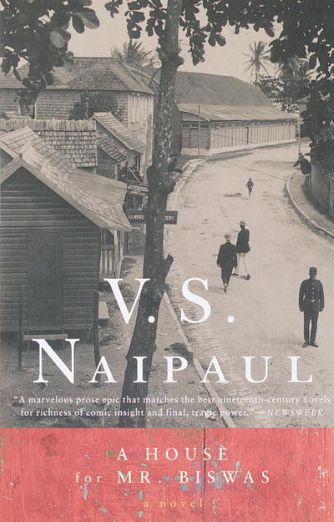
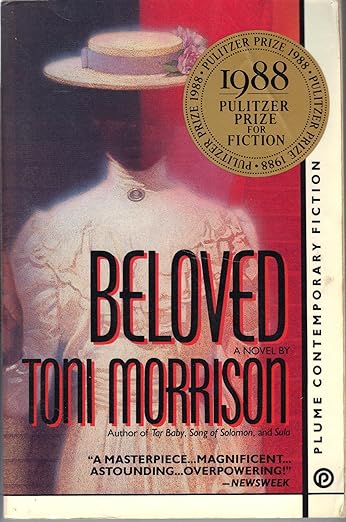
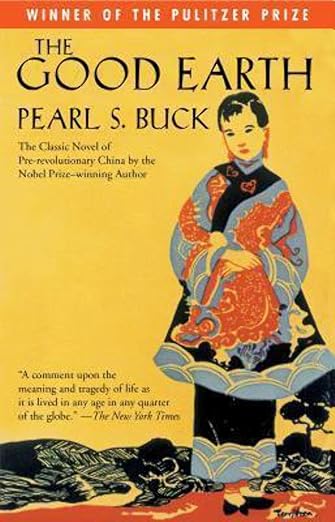
The three stories that illuminated my path to completing my first novel: A House for Mr. Bismas, Beloved, and The Good Earth
When we migrated to the United States from Brazil in October 2003, I had hoped that, with fourteen years of experience in international trade, I would have no problem in finding work in my area of expertise. That proved more difficult than I had imagined. Instead, there I was in West Hollywood, working as a salesperson in the jewelry department of a large retail store. We do what we must to pay the bills. Unknowingly, we find ourselves where we’re meant to be.
At the retail store, I worked with and attended to creative artists of all kinds. Some worked in commercial productions. Others played extras in movies or TV shows. Many others struggled to grasp opportunities for getting into the movie industry.
The creative pulse of the heartland of Hollywood was infectious. Becoming a writer was not just a dream. It was within reach. But it would take training in the craft of writing to bring my story of Richard Cheong to life on the pages. With a crazy work schedule and limited funds, I opted for a correspondence course by snail mail. Those were the days before online courses. The Creative Writing course at the Stratford Career Institute in Vermont guided me from writing my first scene of up to 500 words to finding my writer’s voice in a 3000-word short story. Working at my own pace, I completed the writing course within two years (2004-2006).
The amazing thing about starting out in a new direction in our life is that we set events in motion, propelling us towards our goal or destination. One day, a new staff member assigned to the jewelry department introduced me to her husband—a writer for the National Geographic magazine. Imagine that! After telling him about my baby steps to become a writer of fiction, he sent me an issue of the Writer’s Digest. My subscription to the magazine, maintained to this day,became a great investment in improving my craft and keeping abreast with the evolving business of book publication and marketing.
In April 2006, I attended my first Los Angeles Times Festival of Books, at the time held on the campus of the University of California, Los Angeles (UCLA). An exhilarating experience for a newbie in the world of book publishing. On visiting the booth of the California Writers Club (CWC)—one of America’s oldest professional clubs for writers, founded in 1909—I learned that CWC was considering chartering a branch in the City of Los Angeles. I signed up.
Four months later, I was one of eleven interested writers gathered in the cafeteria of the Barnes & Noble Bookstore at The Grove shopping mall for the inaugural meeting chaired by the CWC’s newly elected President. After he asked me to take the Minutes of the meeting, I fell into the role of secretary of the newly formed Mid-Wilshire Branch of the California Writers Club.
By then, I had completed my Creative Writing course and was working on my first short story, “The Jumbie Tree,” part of my self-imposed training for the marathon of writing my first novel. During the two-plus years (Aug 2006 to Dec 2008) I was a member of the Mid-Wilshire Branch, I wrote five short stories which were published in the now defunct New York-based Guyana Journal magazine (both print and online editions).
At the Mid-Wilshire writers club, I met the poet Angela Consolo Mankiewicz. Our unlikely friendship—I’m an ex-nun; she was atheist—grew and lasted until her death in March 2017. She and her husband, Richard, became my greatest supporters along my journey to becoming a writer and novelist.
In January 2009, I became a chartered member of the Greater Los Angeles Writers Society (GLAWS)—the former Venice Branch of CWC, initiated a month after the Mid-Wilshire Branch—that was closer to home. It was a much larger and more dynamic group, comprised of several published authors of all genres, as well as writers with novels in progress. Each monthly meeting strengthened my writing muscles for the marathon ahead. Writers mentoring writers. I was not alone.
When I joined the GLAWS Literary and Mainstream Fiction Critique Group, started on April 4, 2009, I was working on my sixth and final long-short story, “Sly Mongoose: Caught in the Jim Jones Web of Deceit,” published in the Guyana Journal November 2009 issue. During the introductions that first meeting, I perked up when another writer, Rich Samson, mentioned the People’s Temple. What a weird coincidence!
In response to my first email on April 16th, Rich wrote: “I was moved by your reference to the Jonestown Massacre… Obviously, those tragedies from 30 plus years ago touched us both.” In San Francisco, where he lived at the time, he had followed media reports about Jim Jones’ rise to power in California.
Our first critique group meeting in May was a disaster. Our female group leader—a corporate copywriter in her thirties, working on a short story—criticized my use of Caribbean Creole English for dialogue between characters.
“No one can understand such bad English,” she told me. “You should read Mark Twain for guidance when using colloquial speech.”
I swallowed the humiliation.
Rich came to my rescue after the meeting. Together, we worked at simplifying the creole English for a better reading experience. When writing the first draft of the Prologue for my novel in July, I applied his suggestions to the dialogue between Richard and his wife, Gloria.
Someone must’ve reported the incident at our May meeting. In June, we had a new critique group leader. The copywriter had dropped out of the group.
As I moved forward with each new chapter of my novel, I found guidance in reading the 1961 novel A House for Mr. Biswas by V.S. Naipaul (1932-2018), set in the author’s Caribbean homeland of Trinidad & Tobago. The Trinidadian British author of Indian descent was winner of the 2001 Nobel Prize in Literature.
After learning about Toni Morrison (1931-2019), the first Black American author to receive the Nobel Prize in Literature in 1993, she, too, became my guide. I was immediately captivated by her 1987 novel, Beloved, winner of the 1988 Pulitzer Prize for Fiction.
Since Richard Cheong’s story is a family saga, covering three generations of the Cheong family and twenty years of Richard’s life, I re-read the 1931 novel The Good Earth by Pearl S. Buck (1892-1973). Her novel won the 1932 Pulitzer Prize for Fiction. In 1938, she was the first American woman to receive the Nobel Prize in Literature.
How could I go wrong with the guidance of such award-winning master storytellers?
Apart from the official critique group, Rich and I began sharing and critiquing each other’s earlier work via email. After reading my five short stories published by the Guyana Journal, he wrote: “Generally speaking, I really enjoy your writing style and feel that your stories are a good influence on me and my writing aspirations.”
What a boost for my confidence as a newbie writer! The way forward became less obscure.
On May 5th, we met at a neighborhood Starbucks to discuss his novella, Eight Months in the Haight. It was set in the Haight-Ashbury district of San Francisco during the period January to September 1972, when, as an aspiring young actor, he had joined the hippie community. He wanted direction for the revision process.
Rich submitted Chapter One of his Haight novella for critique at our September group meeting. On October 5th, he forwarded Chapter Two for our group meeting later that month. When he did not show up, I followed up with an e-mail on October 25th. No reply. So unlike him. As the weeks went by, I knew that something was amiss. My affliction grew. On awakening November 18th, the anniversary of the Jonestown Massacre, I googled his name. The news report stung.
RICH SAMSON: OBITUARY
SAMSON, Rich. West Hollywood resident Rich Samson died unexpectedly in his sleep at his home on October 7, 2009. He was 57. He graduated from Palm Springs High School in 1970 and attended Cal State LA and Foothill College. During the past seven years he worked in the real estate business in Los Angeles. Mr. Samson, who was married twice, is survived by three siblings and five nephews.
Rich left unexpectedly. During the short time we worked together, we shared a common dream of sharing our stories with readers. My hope is that the time he spent writing brought him moments of joy and clarity towards the end of his journey. He remains close to my heart. In his memory, my fictional character, Richard Cheong, is called Rich by his family and friends.
With the continued support of my writers’ critique group, I completed the first draft of Under the Tamarind Tree in January 2013, with a total word count of 114,368. After four years of immersing myself in the world of the Cheong family, I completed the marathon. When I shared the good news with the Vice-President of GLAWS, a successful author of a fantasy trilogy, her response was disheartening.
“It’s too long,” she told me. “Eighty thousand words is the acceptable limit for an unknown author.” I was no Toni Morrison or Pearl S. Buck.
Eighty thousand words! I would have to shred the story to the bone. I had only completed the first lap of the marathon. It would take another four years of several revisions of the plot to make it leaner. The final manuscript for publication in April 2019 contains 88,544 words.
 Three Worlds One Vision
This is fascinating to me because of my own journey to writing two memoirs (one about refugees arriving in Greece and one about a family in Louisiana who has suffered racially-based injustice for 100 years). My first mistake was to think my 35 years of professional technical writing meant I could write a book! We learn. xoox
LikeLiked by 2 people
Kim, congrats on writing two memoirs! Professional technical writing is indeed different from creative writing. As I see it, learning a new craft requires the humility of accepting that we don’t know it all.
LikeLiked by 1 person
Very interesting article, Rosaliene! Yes, life writes its own story. So often it’s circumstances or “coincidences” that lead us in a certain direction. How we deal with them shapes our personality.
LikeLiked by 2 people
Thanks very much, Friedrich. Openness to new possibilities is key.
LikeLiked by 1 person
You persisted, Rosaliene, as you have in many other non-writing circumstances. Rejection is no small part of the business, especially today. You have a great heart. I enjoyed the background you offered. Bring it on.
LikeLiked by 2 people
Thanks very much, Dr. Stein. With this new series about writing my first novel, I hope to inspire/motivate writers with unfinished manuscripts to get moving again.
LikeLiked by 1 person
A very interesting look at your writing “journey,” Rosaliene! You obviously worked really hard, and found all kinds of ways to seek advice and gain knowledge.
LikeLiked by 1 person
Thanks very much, Dave. It was, for sure, hard work, but I connected with so many great people along the way. The creative process is also lots of fun, as I plan to share in future posts.
LikeLiked by 1 person
Thanks for sharing your story Rosaliene. None of us can ever know how the actions and words of others will encourage or discourage us in our progress towards our dream or craft, unless we pause to look back. Congratulations on your journey. Allan
LikeLiked by 2 people
Thanks very much, Allan. In sharing my journey, I hope to inspire other newbie writers to keep moving forward towards the finish line.
LikeLiked by 1 person
What a wonderful story of perseverance and staying true to your craft and journey, Rosaliene ❤️💕❤️
LikeLiked by 1 person
Thanks very much, Cindy ❤
LikeLiked by 1 person
My pleasure always!!
💕
LikeLiked by 1 person
I enjoyed reading this. You’ve had quite a journey in becoming a writer.
LikeLiked by 1 person
Neil, I’m so glad that you enjoyed reading my article. Thanks very much.
LikeLiked by 1 person
This is a wonderful story, on its own…you’ve always been a storyteller! 👏👏👏🤗💐👏
LikeLiked by 1 person
Thanks very much, Ashley. Much appreciated 🙂 ❤
LikeLiked by 1 person
My compliments, Rosaliene, for your perseverance in becoming a successful writer, despite the many difficulties! 🙂
LikeLiked by 1 person
Thanks very much, Martina 🙂
LikeLiked by 1 person
Your evolution is rich and fascinating, Rosaliene. I’m sorry for the loss of your friend and mentor along the way. He left too young.
LikeLiked by 1 person
Thanks very much, Mary. I was blessed to have met Rich during the final months of his short life. I had no inkling that he was facing any serious health issue. Since then, I’ve learned to treasure the time I spend with the people who enter my life.
LikeLiked by 1 person
That was inspirational hard work, Rosaliene. Very well done
LikeLiked by 1 person
Thanks very much, Derrick.
LikeLiked by 1 person
The title of this post reminds us that writing a book usually is a long process and much of life is training. I greatly appreciated reading these interesting details about your dedicated writing journey. I’m thankful for your friendship with Angela and her husband and love that an ex-nun and atheist can be good friends. It shows how social and emotional intelligence combined with recognizing common ground deeply enriches our lives. The critique of the language in your novel draft was delivered poorly to say the least, and I’m thankful your friendship with Rich helped. His sudden death was a terrible loss and I’m sorry it happened. In reading your first novel, I initially found the language a bit of a challenge but that was because it was unfamiliar. I soon got used to it and realized the language made the story more real. Getting to know the characters and their experiences opened my eyes and my heart.
LikeLiked by 1 person
JoAnna, I appreciate your kind comments. I was blessed to have had Angela and Richard in my life. My friendship with Angela developed after reading her poetry about her strained relationship with her mother (long deceased when we met). Before our religion (or lack thereof) or our politics, we shared a common humanity as daughters, women, and wives. (Though Richard had a child from his first marriage, he and Angela never had children.) As you express it so beautifully: “It shows how social and emotional intelligence combined with recognizing common ground deeply enriches our lives.”
For believers, Rich was one of those “heaven-sent” individuals who come into our lives at a crucial moment.
Thanks for sharing your initial experience in reading my simplified version of Caribbean Creole English. My aim was authenticity. Caribbean Creolese, in all of its forms across the region, is a language in its own right.
LikeLiked by 1 person
Your aim of authenticity was achieved with grace.
LikeLiked by 1 person
I appreciate your kind comment, JoAnna 🙂 ❤
LikeLiked by 1 person
Your perseverance is inspiring especially in such a tough field, Rosaliene! I can see how important it is to have friends in the field and Los Angeles sounds like the right place for you. I too loved Toni Morrison’s book, Beloved.
LikeLiked by 1 person
Thanks very much, Mara. It’s the allure of the City of Los Angeles. Screenwriters formed the largest group at GLAWS, each one hoping to get a breakthrough into the movie industry. So glad that you also enjoyed reading Beloved 🙂
LikeLiked by 1 person
Thanks for sharing your stories of critique groups, both positive and not so much. This is a lovely tribute to your friend Rich who was taken so suddenly and so early. I like how you list three influential authors who inspired you to tell your story.
LikeLiked by 1 person
My pleasure in sharing, Rebecca. Not all critique groups are created equally. I found that smaller groups of four to six members were the best in getting one’s work read and critiqued. Reading great books, especially in our genre, are vital to improving our craft.
LikeLiked by 1 person