
Tags
Brutality of War, Failed expectations, Fractured Immigrant Families, Georgetown/British Guiana 1950, Indie-Author, Loss and Abandonment, Prologue of Debut Novel: Under the Tamarind Tree, Storytelling
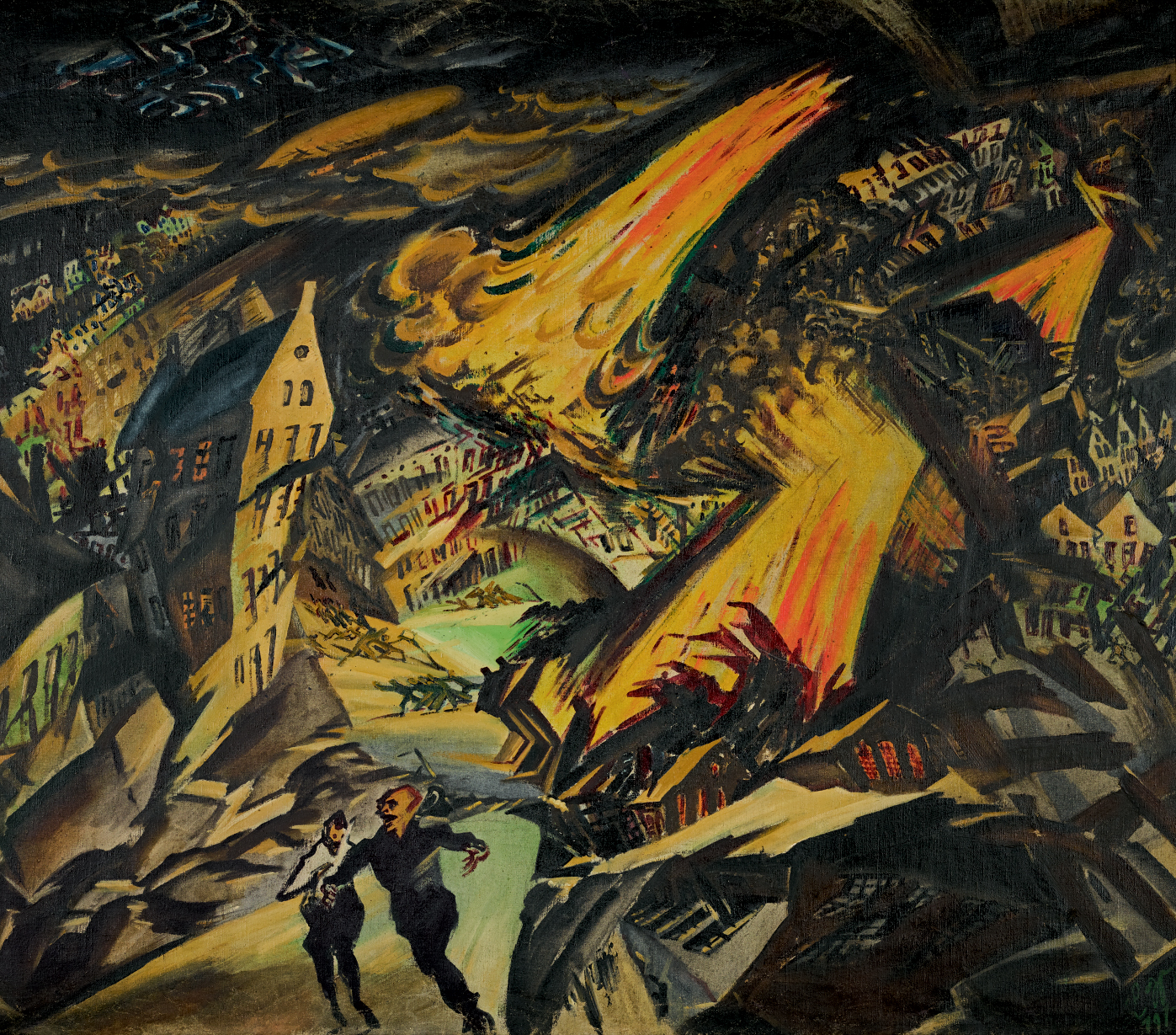
Painted in 1912 on the brink of World War I
Photo Credit: Sotheby’s
What stories will we tell of these crazy times as the USA ventures into yet another war in the Middle East? So much has changed since arrival in my adopted homeland in October 2003. My collective American family has fractured, just like my own birth family. My heart aches for other immigrant families that have fractured with the government’s policy to arrest, detain, or deport family members who are undocumented.
We are told that they are animals, criminals, and rapists. They are eating our pets. They steal our jobs: jobs we don’t want, by the way. The stories we tell ourselves. Such separation and loss are devastating and traumatic for our immigrant families under attack. Their stories will haunt us in years to come.
The loss and abandonment I’ve suffered over the course of my life have shaped the stories I tell. What had I done wrong to be abandoned by the nuns, my husband, and my mother? Was I such a bad person? As a believer in reincarnation after death, I considered the possibility that I must’ve committed a grave sin in a former life. The kernel for the plot of my debut novel, Under the Tamarind Tree, came to life in my imagination.
The stories we tell ourselves.
Many questions about this fictitious former life came to mind. Had I abandoned my family in this former life? What were the circumstances surrounding the event? Who suffered the most with this irresponsible and selfish act? How could I make recompense to that person? What would be my fate after rebirth?
I couldn’t tell this story from the child’s point of view. After all, for the most part, the newly reborn soul doesn’t remember anything about its former life. The fictional son, Richard Cheong, an orphan and only surviving son, is the best person to tell the story.
Richard’s firstborn has his mother’s olive-green eyes. He sees this as a sign that he’s doing something right in his life. With his wife’s approval, he names her Elizabeth—his mother’s middle name. Lizzie, as she is later called, is destined to become a blessing in his life as he struggles to provide for and protect his family during their country’s turbulent years in fighting for independence from Great Britain.
“It’s fantasy,” my mother told me when I described the plot of my novel in progress. “This so-called Richard is nothing like your good-for-nothing father.”
“It’s a story, Mom. It’s not about Father.” It was pointless arguing with Mother. So what if my story is about my father? A daughter can dream, can’t she?
The stories we tell ourselves.
Sometime during the four years I worked at bringing Richard Cheong’s story to life on the pages, I had an epiphany about the cause of my affliction. I had failed the expectations of the nuns, my husband, mother, and siblings because I dared to say No. I lost my value or usefulness to them. This realization hurt. I forgive them and hold no animosity towards those who have already passed on and those still among the living. Being true to who we are as individuals with self-respect and self-determination can come at a steep price.
The Prologue of Under the Tamarind Tree: A Novel, which I share with you below, describes Elizabeth’s birth on June 16, 1950. Whether or not you believe in reincarnation matters not. What matters in the story I tell, about our lives as former British subjects, is the way in which Richard reshapes his life after being orphaned and abandoned at thirteen years old.
The stories we tell ourselves that make sense of our loss and pain.
* * * * * *
Georgetown, British Guiana, June 16, 1950
Richard Cheong cradled his first-born in his arms. He had hoped for a boy-child but would have to wait until next time. He was the only surviving son of seven children. Two boys had died of malaria soon after birth. Two months after his eighth birthday, Edward, the youngest, was found dead under the tamarind tree on the sugar estate road in the neighboring village. His passing had drained their mother’s energies. Her death shortly thereafter had changed their lives forever. Richard had been thirteen.
He had failed his mother in not keeping his little brother safe. A son would atone for Edward’s murder.
Cradling his daughter’s head in his cupped hands, Richard lifted her up to face him. She puckered her miniature lips, sucking on an imaginary nipple. Thick straight dark-brown hair covered her oversized head. He pushed aside the thought of the stretching pains needed for her head to push out into the light. His daughter’s large eyes focused on him. Was that normal for a newborn? Could she see him?
The hairs bristled on the back of his neck. A chill penetrated his muscles and bones. His mother’s olive-green eyes, legacy of a white father who had denied her his name and inheritance, fixated on him. Only Edward had their mother’s cat eyes. Maybe that was why she had loved Edward more than the rest of them.
His East Indian mother, who had passed away a year after his Chinese father, haunted him. Sometimes, she called out his name in the quiet of the night while he stretched out in his Berbice-chair listening to music. She often visited him in his dreams, drenched and shivering. Her chocolate-brown hair, caked with mud, draped down her back to her waist. She drowned him in her grief.
Rum numbed the guilt he bore for Edward’s death. Books immersed him in worlds where weaknesses were overcome and sins were forgiven. Music muffled the sound of his mother’s sobs. Entwined with his wife, Gloria, in the dark nights, he was no longer alone.
His mother’s eyes probed his soul, unsettling him.
“Why you staring at her so?” Gloria said, seated at the edge of the hospital bed. “Something wrong with her?”
“She get my mother eyes.”
“Everybody in the ward say she is a Chinese baby. Look at her slant eyes. Her hair sticking up on top of her head. She don’t look nothing like me.”
“She just a baby. Is too soon to tell who she look like.”
There must have been traces of his half-Portuguese, half-African wife. But that did not matter. His daughter would grow up to be a beauty, like her mother, or her East Indian grandmother, Vijaya Elizabeth Cheong.
“Lewwe name she Elizabeth,” he said. “Like Princess Elizabeth, King George daughter.”
“You forget you did agree to name our first girl-baby, Mary?”
He had not forgotten. His nineteen-year-old Roman Catholic church-going wife had a special devotion for Mother Mary.
“Mary Elizabeth Cheong. How that sound?”
“Mary Elizabeth.” Gloria tilted her head upwards as though conferring with the saints. “You know…that sound good.”
After visiting his wife and baby daughter, Richard made a hasty getaway from the room full of suckling women, fleeing the hospital compound like a parrot released from its cage.
Was he wrong in wanting a boy to carry on his father’s lineage? After all, he was James Cheong’s only surviving son. His father had two sisters in Georgetown, but no brothers—at least not here in British Guiana. He never spoke about the family he had left behind, or of his birthplace in China.
Exiting through the Middle Street gateway on his bicycle, Richard headed downtown to the hardware store where he worked for his father’s younger sister, Bernice Lee-A-Shoo.
Today, he had just cause to celebrate, the right to get drunk. He was a father.


This was a welcome insight into your novel, Rosaliene. We may not be around to tell stories of the USA today.
LikeLiked by 4 people
Thanks very much, Derrick. It’s a real possibility, considering that those in charge appear to enjoy blowing things up like it’s some video game without real-life consequences.
LikeLiked by 2 people
Exactly
LikeLiked by 2 people
“Apocalyptic Landscape” is sadly an appropriate painting for 2026, Rosaliene. 😦 And your very well-written “Under the Tamarind Tree” excerpt is really compelling. Sorry about the difficult family issues you have faced.
LikeLiked by 3 people
Dave, I thought the painting, a commentary on World War I, would be a reminder that those in charge are playing with our lives. I’m so glad that you found my Prologue a compelling read. Thanks for caring. It’s through adversity that we become resilient.
LikeLiked by 4 people
The characters in the book seem to play out some of the questions you ask yourself, Rosaliene. The novel will draw the interest of anyone who knows this, and knows a bit about you.
LikeLiked by 4 people
It’s my hope, Dr. Stein. It’s a challenge to engage readers while promoting my novels. My intention is also to share the writing process with readers who are considering or embarking on their first novel.
LikeLiked by 4 people
I think I did a blog post during Covid with a similar theme. I have often used the phrase The Stories We Tell Ourselves to signify that not all propaganda, reasoning, political statements, and even our wildest imaginings are wholly or even partly true. We all need to be more discerning in what we believe these days and do our research Rosaliene, rather than listening to the ramblings of a wild man talking of Sharpies, ballroom drapes and taking Elvis in a fight. How odd it all seems to us outside the sphere of his influence. In any case, I just purchased your E-book Under the Tamarind Tree and will be reading it soon, once I get through my current read. As always Rosaliene, I love your thoughtful posts. 🤗 Allan
LikeLiked by 3 people
Allan, all the propaganda we’re hearing nowadays got me thinking about the stories we tell ourselves. The latest story about how much we’re winning really got to me. You might be outside the sphere of his influence, but by no means safe from the actions of a wild man who enjoys blowing things up and controls nuclear weapons.
Thanks so much for your support in buying my novel and your kind closing remarks ❤ I hope that you find it an enjoyable read.
If you're like me and have trouble remembering who is who in a story with lots of characters, I would recommend that you print a copy of "The Characters in Under the Tamarind Tree" available on my author website at https://www.rosalienebacchus.com/the-characters-of-under-the-tamarind-tree1.html.
LikeLiked by 3 people
The excerpt of your book seems to read like the wishes and hopes of many people. Very gritty, yet connecting.
The vilified immigrants now bear the same name-calling and scapegoating that so many previous waves of immigrants bore. Hatred of one another is cultivated and nourished. The sense of superiority and entitlement that in turn nourishes is heart-rending
LikeLiked by 3 people
Thanks very much, Tamara. Feedback about my writing are always most welcome. Gritty, eh? Love that 🙂
It’s incredible how vilified immigrants change with the times. The length of time one has been living here and the contributions made to one’s community appear to make no difference.
LikeLiked by 2 people
So true, unfortunately.
LikeLiked by 2 people
My heart breaks for you, and for fictional Richard. I can’t imagine how difficult things are for you now. Maggie
LikeLiked by 2 people
Thanks for caring, Maggie ❤
LikeLiked by 1 person
Frightening painting.
Will this world ever get its act together? So sad.
LikeLiked by 2 people
Ilsa, for now, there’s far too much money to be made from warfare.
LikeLiked by 1 person
Ugh. What a tragic, tragic truth. If only greed could be eliminated from this world. (Along with quite a few other things I could name.)
LikeLiked by 2 people
What a wonderful world that would be, Ilsa.
LikeLiked by 2 people
You often express deep insights in your articles. This is one of them: “Being true to who we are as individuals with self-respect and self-determination can come at a steep price.”
LikeLiked by 3 people
Neil, thanks very much for your kind comment.
LikeLiked by 2 people
Richard’s reflections on his family staring at his baby daughter are so well portrayed. So rich in cultural details.
LikeLiked by 2 people
Thanks very much, Rebecca. Cultural details are essential when a story is set in a country, period, and culture not familiar to readers.
LikeLiked by 2 people
It’s heartbreaking to think of families, already struggling to fit in, in a land that is not their original home, being broken up by authorities pushing an inhumane agenda. Thank you for sharing your journey and the tribulations you depicted in fiction, Rosaliene.
LikeLiked by 3 people
It is, indeed, heartbreaking, Steve. Hopefully, the stories we tell will help to bring understanding and appreciation for the diversity of human experience across our nation and worldwide.
LikeLiked by 2 people
Here’s to hope, Rosaliene.
LikeLiked by 2 people
For me it’s a big tragedy to be abandoned at that early age, Rosaliene and it may make us suffer a whole life long! Many thanks for your insightful post:)
LikeLiked by 2 people
My pleasure in sharing, Martina. I would like to clarify that it’s my fictional character who was abandoned at an early age.
LikeLiked by 2 people
Good morning, Rosaliene, and many thanks for your clarifying words. You know, your post made me also think about my own childhood! All the best:)
LikeLiked by 2 people
Martina, I give thanks for the hard lessons learned during those formative years that shape our lives. Enjoy your garden! Blessings ❤
LikeLiked by 1 person
♥️
LikeLiked by 2 people
Thanks for sharing the prologue to your book, Rosaliene. I can’t stop trying to figure out our crazy western culture these days. Your story brings insights such as your characters naming their daughter after Queen Elizabeth, a figure that epitomizes colonialism. In that series, The Crown, she was made out to be such a nice lady and yet she represented what I believe are the worst traits of our society.
LikeLiked by 2 people
My pleasure in sharing, Mara. As a British colonial subject, I had a love-hate relationship towards the Queen. I wrote about this in a blog post following her death.
LikeLiked by 2 people
Your post says it all. I suppose if you’re going to have a queen, she’s the one for the job.
LikeLiked by 2 people
This is so heart wrenching, Rosaliene. You bring honest accounts so hard to tell and so well written during a time where nothing makes sense. 💔
LikeLiked by 2 people
Cindy, thanks very much for your kind comments. The hateful stories we tell ourselves about others we don’t like or understand only serve the interests of the minority power elite who seek to maintain their dominance over the masses of humanity at home at worldwide.
LikeLiked by 1 person
If there is one thing consistent about history, it’s “the stories we tell ourselves…” Beautiful writing, as always, Rosaliene. Honest accounts are always hard to tell and to hear, but important things often are.
LikeLiked by 2 people
Thanks very much for your kind comments, Randall ❤
LikeLiked by 1 person
It’s lovely Rosaliene. Struggle, separation, abandonment, poverty, persecution, and death, each is a seed of a powerful story. Those who rise from them become living stories themselves; those who can understand them, even from a distance, become compelling storytellers. Thank you for sharing.
LikeLiked by 2 people
Thanks very much, Chetna.
LikeLiked by 1 person
Thanks for sharing some of your background and process, Rosaline.
Looks like we are both thinking about our books right now 🙂
Maybe it’s spring optimism!
James
LikeLiked by 2 people
James, I wish it were simply spring optimism. As an indie-author, I’m always looking for ways to promote my novels.
I wish you success in finding an agent/publisher for your book.
LikeLiked by 2 people
Yeah – I hear you, Rosaline… Best of luck to you too!
J
LikeLiked by 2 people
You are a wonderful storyteller, Rosaliene, with rich details of imagery and thought that make your characters real. I’m thankful for your epiphany and that you dared to say no, to people who wanted you to behave a certain way. Instead, you had the courage to be who you are, real.
LikeLiked by 2 people
JoAnna, thanks very much for your kind and supportive comments. Much appreciated ❤
LikeLiked by 2 people
You are welcome! ❤
LikeLiked by 2 people
Wonderful insight on your novel, Rosaliene. Definitely a tough subject. What’s happening in the country, especially with the war with Iran, is going to be studied a lot, kind of like Vietnam, but I don’t think this one will last long. It wasn’t well thought out, and the administration is already setting things up to change course and pull out.
LikeLiked by 3 people
Thanks very much, Edward. With so many conflicting messages from the administration, it’s difficult to know when and how this war will end.
LikeLiked by 2 people
You’re very welcome. Honestly, I think the narrative is more about manipulating the market for the benefit of a few than anything else. His war plan looks worse with each passing day, and his party is losing credibility. They’re going to pay dearly in the midterms.
LikeLiked by 2 people
Edward, it does appear that they’re also manipulating the market.
LikeLiked by 2 people
Definitely!
LikeLiked by 2 people
What a tell-telling story and lived from experience to talk about Rosaliene. Thank you for the insights and sharing of yourself and fictional characters from your book that is so revealing. Heartbreaking ❤️🩹
LikeLiked by 2 people
Thanks very much, Cindy. Our lives are filled with lots of heartbreak. It’s what we do with our heartbreak that makes a difference.
LikeLiked by 1 person
This sounds like a very poignant and compelling story.
LikeLiked by 2 people
Thanks very much, Brad.
LikeLiked by 2 people
You’re most welcome.
LikeLiked by 2 people
Your posts always gets me thinking, Rosaliene. I also feel so sorry for immigrant families and angry on their behalf. My parents were both immigrants to the UK, so this awful treatment really hits home for me. I love the way you write from your own experience, and I enjoyed hearing where the inspiration for your plot in Under the Tamarind Tree came from!
LikeLiked by 2 people
Thanks very much, Ada.
LikeLiked by 2 people
Heartbreaking questions asked, though they reveal a deep level of self-reflection and need to understand. Being true to ourselves and saying no do have a cost, yes, and a reward.
LikeLiked by 2 people
Michele, thanks for sharing your thoughts. The reward can be elusive.
LikeLiked by 2 people
Yes, this is true, and continual effort required. You’re very welcome, Rosaliene.
LikeLiked by 2 people
🙂 ❤
LikeLiked by 2 people
America was supposed to be the country open to all different cultures. I will read further about your books, Rosaliene.
LikeLiked by 2 people
Mary, it’s very disturbing how much we have changed course…in so many different ways. You can find more information about my two novels published to date on my author’s website at http://www.rosalienebacchus.com. I appreciate your interest. I wish you all the best with a full recovery ❤
LikeLiked by 2 people
Ros, this is such a fascinating, poignant discussion. It reminds me so much of my own experiences as I struggled to figure out who I was and why I seemed to be so different from my family, others my age, and colleagues, especially those who thought they knew everything.
It does hurt when someone you believe should love and support you just can’t because they carry unhealed wounds from their own traumatic lives and the historic trauma they inherited from theirs.
I love the story about your father. It holds your truth which is such a powerful foundation for meaningful authenticity and it’s a gift for those who read your work. 💜🪶
LikeLiked by 2 people
Carol, thanks very much for your kind comments. Thanks, too, for sharing your wisdom and insights, from your own lived experience, of the trauma so many of us carry that affect our relationships with those we love. ❤
LikeLiked by 2 people
💜🪶
LikeLiked by 4 people