
Tags
Ancestral trauma, Awareness, Indigenous knowledge and wisdom, Indigenous Voices, The Changing Earth
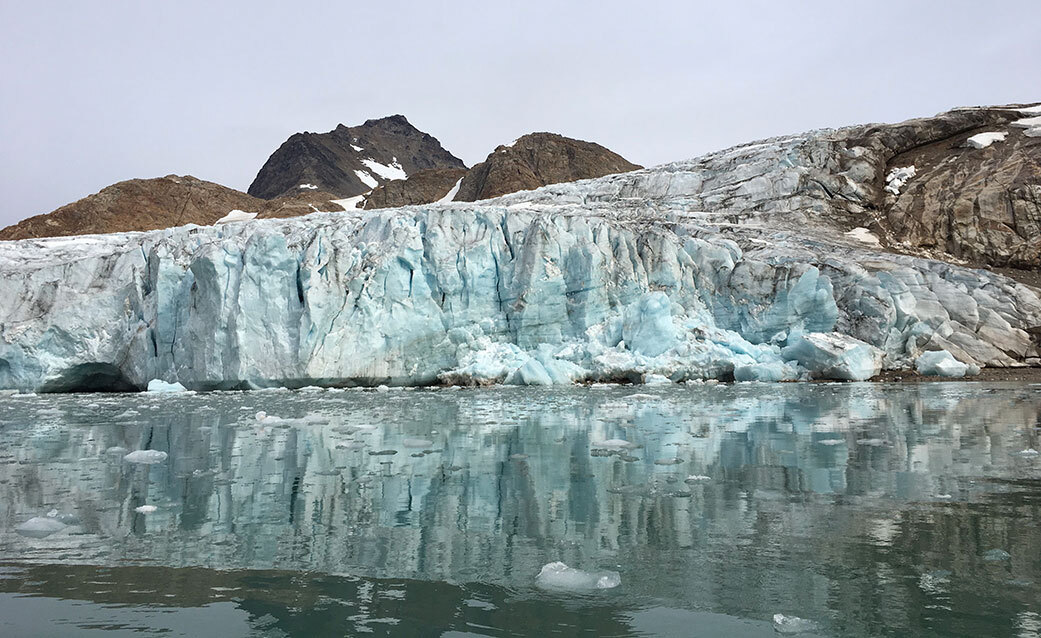
Photo Credit: NASA Sea Level Change: Observations from Space
This is the first article in my series about our changing Earth from interviews with Native Americans shared in We Are the Middle of Forever: Indigenous Voices from Turtle Island on the Changing Earth, edited by Dahr Jamail and Stan Rushworth (USA 2022). My presentation does not follow the order of the interviews.
# 1: Raquel Ramirez (Ho-Chunk, Ojibwe, Lenca) – Awareness
(Chapter 4, pp. 48-60)
Born on that memorable day of September 11, 2001, Raquel Ramirez is the youngest participant interviewed via Skype during the pandemic lockdown in midsummer 2020. She defines herself as an urban Native American, Ho-Chunk and Ojibwe, and other strong Native family roots. Growing up in California, she’s greatly influenced by the state’s indigenous cultures.
In addressing the crises we face on our changing Earth, Raquel considers awareness as a challenge to confront and overcome. Breaking free of ignorance in society and our own ignorance is, she acknowledges, an emotional and difficult process.
Awareness doesn’t just mean listening or hearing or recognizing. It is very much being present and being conscious of people beyond you!
Considering that our approach to living on Earth may be the problem, she posits that changing how we see things – our mindset – may pave the way to addressing the crises we face.
This lack of awareness is the reason why we are destroying Mother Earth. We don’t see our place in the world, our place within the system. Our purpose is to function within this space because we are of this Earth, and so not being aware of what our place really is, has resulted in us being able to disrespect, to desecrate, to harm the land.
Raquel also questions the perplexing, escapism phenomenon of people planning to colonize Mars within a hundred years. Are they giving up? Is that an easier way of solving our problems? It says something about us that leaving Earth is easier than changing the way that [we] think about the world.
Outreach to Indigenous peoples about how to take care of the world is a sore point for Raquel. This involves an insensitivity on our part that goes beyond an openness to listen and learn.
It can be very frustrating when a White person will come and ask for Indigenous wisdom that can solve climate change. There’s a certain kind of conversation out there that really just disregards how you’re asking people to just keep on giving you more and more, and you’re not taking into account that they’ve given so much.
She further expresses her frustration that Indigenous peoples have not been allowed to grow and heal from everything that has happened to them. The White person seeks their wisdom, while ignoring their pain and trauma.
If you can listen to the pain of Indigenous people, you’ll be better able to understand the pain of Mother Earth! The pain we’re carrying is not only the pain of our ancestors and the pain of genocide. We’re carrying the pain of our home being destroyed. And now we are expected to try to save the world?!
She believes that we can grow as individuals, if we are also open to feeling their pain. In doing so, we would work towards ending this broken cycle of life on Turtle Island.
There’s an awesome power that binds us all together. My actions are not independent to me. We’re obsessed with individualism and independence, but we’re not independent of one another.
Raquel describes how the current economic model is based on the narrative of the colonist and pioneer that’s all about conquering people and land. And if you can’t be aware of that, you’re going to continue to exacerbate those practices. She calls on us to examine our perceptions, the colonial legacy that still controls our lives, and its influence on our mindsets. Such work demands courage.
She acknowledges that our obsession with comfort and ease makes it difficult for a lot of people to address our collective trauma as a nation. Nevertheless, it’s a painful process that we must undergo. She’s glad that more people have become aware of what’s going on with our changing Earth and are getting out of a place of emotional numbness. With healing comes meaningful change.
When addressing human obligations within collapsing systems, ongoing and in the coming years, she frames obligations as human rights that come from our capacity to love ourselves and others, including people we’ve never met, as well as love for our planet. She emphasizes that the absence of love is destroying our planet.
We have to love our children better and love ourselves better. We have to love our communities better and we have to love this Earth better… and we have to learn how to do it… and we have to want to do it…. That’s how we can change the Earth.
* * * * * *
I share Raquel’s view that awareness is an essential first step in changing our mindset and relationship with our changing planet. But the awareness she speaks of demands that we also acknowledge the pain and trauma inflicted upon our indigenous peoples. This will not be easy for some of the white members of my collective American family.
Bear in mind that awareness is grounded in knowledge of the truth. Since my limited knowledge of Native American history was based on Hollywood narratives, I have been slow-reading Ned Blackhawk’s book The Rediscovery of America: Native Peoples and the Unmaking of U.S. History (USA, 2023). In erasing the cultures of these great indigenous nations, no more savages than the invaders/occupiers, humanity has lost centuries of knowledge and wisdom about living in harmony with Mother Earth.
Right now, our political leaders are undertaking another erasure of people across Turtle Island. This time, it is the deportation/detention of black and brown illegal immigrants, demonized as animals and criminals, who have made this land their home. Due to the indiscriminate manner of forceful arrest/abduction, Native Americans have also been caught up in this purge. The might-is-right mindset does not engender the changes we truly need.
As someone working on healing from the trauma of abandonment and loss, I can empathize with Raquel’s ancestral pain and trauma of genocide. It is a long and painful process. I cannot give back to Raquel and indigenous peoples across Turtle Island their ancestral homelands. I can only do my part in caring for the small space upon which I live and move. I can learn to better respect, protect, and love this land with all its creatures. I can do whatever is within my power to stop inflicting harm on Mother Earth.
In the spirit of awareness about which Raquel speaks, I will strive to be present and conscious of people beyond myself.
 Three Worlds One Vision
Such wisdom from Raquel and from you. If we have more young people like her maybe there could be some hope
LikeLiked by 5 people
Thanks very much, Derrick. Raquel is truly a remarkable young woman.
LikeLiked by 1 person
Thank you for passing on these important insights, Rosaliene. Our post-settler/conqueror society desperately needs to change its perspective.
LikeLiked by 4 people
You’re welcome, Mitch. As Raquel notes, such a change will require much courage. A time is soon coming when we humans will have no other option but to change our ways or perish with the new reality of an inhospitable/uninhabitable Earth.
LikeLiked by 1 person
Much wisdom in this post, Rosaliene. Thank you for your views and those of Raquel Ramirez.
LikeLiked by 4 people
Thanks very much, Dave. You’re welcome.
LikeLiked by 1 person
I think awareness is the problem in today’s crisis for sure. If we only believe the stories told from the point of view of those who have money to lose, if raiding the Earth for her wealth is not slowed or stopped, then we won’t know what hit us when reality lands. After years of forward progress, this is all being set back more than 50 years, with the drill, baby drill, and increased coal use mantras of today. Have a good Sunday Rosaliene. Allan
LikeLiked by 3 people
So true, Allan. We’ve got to change the narratives of the minority elite if we are to save ourselves. We bought into their stories of continual growth, that puts money in their pockets, and must now face real-life consequences.
LikeLiked by 1 person
I couldn’t agree more with Raquel Ramirez and thank you for introducing her as well as these two valuable books, Rosaliene! I’ve already put them on my library wish list and will check them out as soon as I finish, “A People’s History of the United States” by Howard Zinn.
LikeLiked by 3 people
You’re welcome, Mara. I read Zinn’s book several years ago. For several years now, I’ve been buying books so that I can read at my own pace.
LikeLiked by 1 person
Hi. You see things quite clearly. And, in my opinion, quite accurately.
LikeLiked by 3 people
Thanks very much, Neil, for your kind feedback.
LikeLiked by 1 person
Sistah Rosaliene, yes ma’am I agree that we have to be present in order to be clear with our mindsets and motives! 💖 Love this:
Awareness doesn’t just mean listening or hearing or recognizing. It is very much being present and being conscious of people beyond you!
Erasure is happening in stolen lands, but honey, we are still here! Money, greed, and power is why this BS is still going on. We may not be able to stop this nonsense and criminal activity, but we can sure put a huge dent in it…together! Thank you for continuing to help keep our awareness “keen!” 😊🙏🏽🥰
LikeLiked by 4 people
Raquel would be happy to know that we’re on the same page, Kym. The struggle is ongoing but, “we shall overcome some day.” 🙂 ❤
LikeLiked by 1 person
Yes girl, you got that one right. We can’t let these crazy distractions distract us, but we know that they are there and we got our eyes on them! Hugs sis! 😍🙏🏼😉
LikeLiked by 1 person
Thank you for an illuminating essay, Rosaliene. One thing that really jumped out for me was your highlighting the hypocrisy in seeking the advice of those whose very existence has been threatened by the ongoing genocidal practices of colonialist culture. Adding to that tragedy, being swept up in the current immigration enforcement. My admiration of and respect for the First Peoples of Turtle Island continue to grow.
LikeLiked by 3 people
You’re welcome, Steve. Thanks for reading and sharing your thoughts. Our First Peoples are truly resilient.
LikeLiked by 1 person
You’re welcome, Rosaliene. 🙏🏼
LikeLiked by 1 person
I don’t understand anyone who doesn’t show gratitude and respect for natural resources. We are blessed on this planet yet destroying every inch of it. Excellent topic, Rosaliene.
LikeLiked by 3 people
Thanks very much, Mary. In my view, those who lack gratitude and respect for the gifts of Mother Earth are disconnected from the reality of our place within the planetary Web of Life.
LikeLiked by 1 person
Well stated Mary K. Doyle, I was thinking the very same thoughts.
LikeLiked by 2 people
I’m thankful that Rachel acknowledges that breaking free of ignorance is an emotional and difficult process and how well she clarifies: “If you can listen to the pain of Indigenous people, you’ll be better able to understand the pain of Mother Earth! ….” We already have enough knowledge and information to save the world, but compassion and empathy are key skills sadly lacking in some people, including many who are supposed to be our leaders. To me, it’s natural to feel compassion and empathy for animals, oppressed people, and mother earth. Sometimes those feelings can be overwhelming. It’s easier not to feel. But we have to find a way to balance empathy with self care. I discovered a related post re-blogged by Brad at Writing to Freedom about eco-anxiety as a signal and how to cope, that I plan to share later this week. https://ecowellco.com/2026/01/30/eco-anxiety-is-a-signal-not-something-to-be-cured/
Outgrowing the colonial legacy and growing our capacity to love ourselves and others… is way overdue. Thank you for the call to do what we can to respect, protect and love this land with all its creatures – human and non-human.
LikeLiked by 2 people
JoAnna, thanks so much for sharing your own experience and view of humanity’s predicament. Thanks for sharing the link to the illuminating article on eco-anxiety. I draw attention to their somatic approaches that recognize “before we can act wisely, we must be able to stay present. Regulation is not about calming ourselves into complacency. It’s about building the capacity to feel, sense, and respond without collapsing.”
Despite my own dread, I know from my lived experiences in dealing with adversity that we have to stay engaged. In this way, we can build resilience. The article on eco-anxiety also mentions stewardship as a response. I’ll consider featuring the chapter on “Stewardship” by Native American Alexii Sigona as the second topic of the series.
LikeLiked by 1 person
Thank for clarifying these important, helpful points. Staying present and engaged is hard. It helps to remember that, with balanced self are, staying present can build resilience.
LikeLiked by 1 person
Another great and important article full of wisdom. The main question remains: will we ever listen and learn?
LikeLiked by 1 person
Thanks very much, Friedrich. That is, indeed, the crucial question. Changes are underway, but they’re not fast and widespread enough to slow down the tipping points of total collapse of Earth’s operational systems.
I forgot to draw attention to the featured photo with link to the NASA/Greenland study that warns about the risk to all coastal cities with the complete melting of the Greenland ice sheet.
LikeLiked by 1 person
Too little, too slow. It’s too hesitant because billionaires and corporations aren’t paying their taxes. Not only do the oil giants have too much power, but certain politicians aren’t even ashamed of taking bribes anymore. “Drill, baby, drill, and stay away from wind turbines, or there will be even higher punitive tariffs.”
LikeLiked by 1 person
It’s insanity on full display 😦
LikeLiked by 1 person
*sigh* We still have so much to learn, and so much to unlearn.
LikeLiked by 3 people
So tragically true, Tamara. You also know well from your journey of deep healing from trauma what a long and difficult process that is.
LikeLiked by 1 person
Yes, so true. It can’t be rushed, it takes the time it needs.
LikeLiked by 2 people
Thank you for this, Rosaliene. So many profound pieces within, but this part really resonated:
If you can listen to the pain of Indigenous people, you’ll be better able to understand the pain of Mother Earth! The pain we’re carrying is not only the pain of our ancestors and the pain of genocide. We’re carrying the pain of our home being destroyed. And now we are expected to try to save the world?!
I appreciate you offering this space for us to learn and look within.
LikeLiked by 3 people
You’re welcome, Tracy. That part also resonated with me. For those of us who have a false notion of our place on Mother Earth, we sure have a lot to learn.
LikeLike
The meaning of life is different between the Indigenous People and the whites who saw them as competition and objects to be disposed of.
A tragedy for the former has become an ironic tragedy of the latter, who now destroy themselves and their home. Awareness indeed, Rosaliene. Thank you
LikeLiked by 2 people
Expressed in these terms, Dr. Stein, it is indeed an ironic tragedy. There are consequences for all our bad actions. While some may occur within our lifetime, others may take centuries to unfold, thereby affecting generations to come.
LikeLiked by 1 person
I think the asking for Native wisdom before reforming ourselves is an abusive way of going about it. If we made ourselves aware of the harm each one of us is causing, we would find some of the answers of how to solve the environmental crisis. We can no longer be selfish. As. you quoted, the “absence of love is destroying our planet.”
LikeLiked by 2 people
Rebecca, I assume that those seeking Native wisdom are, like Dahr Jamail, fully aware of what is happening but are yet unable to change the dominant narrative leading to collapse.
LikeLiked by 1 person
THIS part: planning to colonize Mars within a hundred years. Are they giving up? Is that an easier way of solving our problems? It says something about us that leaving Earth is easier than changing the way that [we] think about the world.
What an excellent point.
LikeLiked by 2 people
I agree, Ilsa, that Raquel makes an excellent point. It’s heartening to know that young people are not falling for our techno-billionaires’ futuristic vision.
LikeLiked by 1 person
Agreed.
LikeLiked by 1 person
Rosaliene, this is truly eye-opening. The irony you’ve unveiled is striking: seeking guidance from communities that colonialism has systematically tried to erase. That contradiction needed to be named, and you’ve done so with clarity and courage.
LikeLiked by 2 people
Thanks very much, Ravindra. The clarity and courage must go to then 18-year-old Native American Raquel Ramirez.
LikeLike
As always, you’ve written a really thought provoking article, especially for these days when the desecration of the environment is all around us. The colonization of Mars is so offensive to me. It’s as if we’re saying, “It doesn’t matter what we wreck here, we’ll just move on to somewhere else.” Where is a sense of responsibility these days?
Thank you for posting this, Rosaliene.
J-ulie
LikeLiked by 2 people
Thanks very much, Julie. I agree that such an attitude is irresponsible. I think that there’s also a sense of entitlement of the privileged who feel free to wreck a place and have someone else take care of the clean-up.
LikeLiked by 1 person
In one conversation that lead up to the program that I’ve been facilitating for three years,,the comment was made regarding reconciliation with Indigenous Peoples. It will require a change of heart for justice to happen. Justice for Indigenous people and justice for the land.
The lake just 4 km north of where I live has been given legal personhood status. If corporations can be given rights like people (which I think should never have been approved) then certainly different “member” which make up Mother Earth should have legal rights and be protected.
This initiative was initiated by Alderville First Nation’s council lead by Tanner Simpson.
LikeLiked by 2 people
Thanks for sharing, Jasper. I’ve read about other cases of personhood requested/granted for lakes, rivers, and trees.
LikeLiked by 1 person