
Tags
Alienation, Caribbean Identity, End to US Soft Power, Masks we wear, Poem “Who made me a stranger in my world?” by John Robert Lee, Poetry Collection Pierrot by John Robert Lee (UK 2020), Saint Lucia/Caribbean, Saint Lucian Poet John Robert Lee
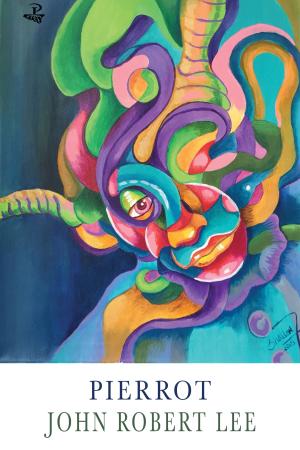
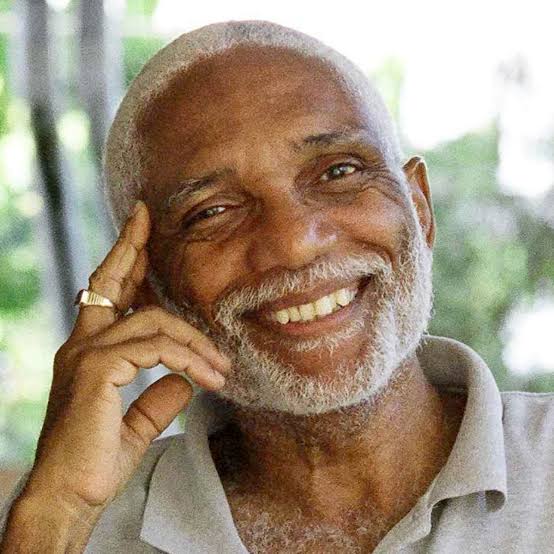
My Poetry Corner February 2025 features the poem “Who made me a stranger in my world?” from the poetry collection Pierrot by poet, preacher, and retired teacher and librarian John Robert Lee, published by Peepal Tree Press (UK, 2020). Born in 1948 in the Caribbean Island nation of Saint Lucia, he majored in English and French Literature, including Caribbean Literature, at the University of the West Indies in Barbados (Cave Hill Campus) and Jamaica (Mona Campus) in the early 1980s.
His main interests and occupations include teaching, library service, literature, theatre, literary journalism, and media (print and electronic). Ordained in 1997 as an Elder of Calvary Baptist Church, he preaches at his local Baptist Church and teaches the Adult Sunday School Class. Father of three children, he lives with his wife in Saint Lucia.
During the poet’s 2020 interview with Adam Lowe of Peepal Tree Press, when asked what drew him to the image of the Pierrot as a core motif for this collection and why now, Lee said:
“In the Pierrot cover…the eyes and mouth seemed to reveal the person beneath the costume, the actor under the masquerade, with all his heart pain, bewilderment and anguish…. I also saw in that face, under the harlequin’s colors, a Christ figure, the Man of Sorrows…
“Why now? Perhaps the times we live in call for masking and unmasking, speaking plainly or through various aliases, pseudonyms, characterizations—which perhaps is a device for speaking truth to power and to each other and to ourselves, and that, self-protectively.”
None of the poems in this collection speaks more truth to power than the featured poem, “Who made me a stranger in my world?” It’s a long poem comprised of 24 three-line stanzas. In the first fourteen stanzas, Elder Lee raises 15 questions about the disrupters of our world. These questions force the reader to consider who the true criminal elements are within our diverse societies.
Who made me a stranger in my world?
Who determined I was a minority?
Who made my skin a boundary and barrier
to negotiate at immigration counters?
Who are the traffickers and traders
of bodies and souls and sex of the inheritors of the earth?
Stanzas 3 to 6 raise more questions about whothe perpetrators are of theft of land and waterways, lynching, raping, and decimation of nations and continents of citizens… of this denuding blue-green planet angling around our sun.
Whose fingers are on every coup d’état,
regime-change manipulations,
behind caravans of refugees, over tent-cities,
on bleeding children in the streets of Herat,
rubble cities of Syria, atrocities in Sudan
charity scams and child abuse in Haiti?
Stanza 9 recalls a few of the names of all those neighborhood assassinations: Trayvon Martin (2012), Tamir Rice (2014), Charleston Church mass shooting (2015), Sandra Bland (2015), Botham Jean in Texas (2018), and Jamal Khashoggi (2018). [I’ve added the dates for time reference.] The poet makes it clear in the following 10th stanza that he’s not mixing murders and metaphors. He’s aware of the history of these conflicts. He’s not disregarding tribal warfares, who sold who, / crusades, ancestral hatreds.
Costumes and masquerades evolve
but who are Babylon, Egypt and Rome today?
Who threatens and invades?
Who buys and sells house-slave leaders,
infiltrates democracies
interferes with elections?
Who spies and kills with drones
lies as a matter of policy,
hacks your private conversations?
Who arrogantly calls themselves super-powers,
whose lackeys insult you in the visa office,
whose police and soldiers shoot citizens with impunity?
[It’s worth noting that this collection was compiled during the first presidency of Donald Trump (January 2017 – January 2021).]
The next ten stanzas praise those individuals, over the years, who have stood up against discrimination and tyranny to claim the right to a decent life, without fear. These include Rosa Parks, Nelson Mandela, Bob Marley, Toussaint L’Ouverture, Tiananmen Square tank-confronter, Palestinian sling-shot warriors, Malala Yousafzai, Liu Xiaobo, Mahatma Gandhi, and all those who in the belly of the beasts / walk with disenfranchised coalitions, / raising blood-stained placards, berth-rights, / rainbow passports of citizenship,…
Lee’s featured poem “Who made me a stranger in my world?” offers us a window through which to see ourselves as a superpower and the harm we continue to inflict upon citizens worldwide, as well as our neighbors nationwide. Under our current Musk-Trump presidency, we are undergoing a regime transformation that will be traumatic for the working-class and the most vulnerable among us. What new masks will we have to wear to counter and survive this ongoing assault on our constitutional rights?
At the same time, America’s closest allies now stand on shifting sands. Old masks have been discarded. New masks have been deployed. No more soft power. Only threats and coercion.
To read the complete featured poem “Who made me a stranger in my world?” and learn more about the work of Saint Lucian poet John Robert Lee, go to my Poetry Corner February 2025.
 Three Worlds One Vision
Wonderful ♥️
LikeLiked by 1 person
Thanks very much, Caleb.
LikeLike
Wonderful post 🌅🌅
LikeLiked by 1 person
Thanks very much, Satyam.
LikeLike
Such very powerful questions
LikeLiked by 1 person
They are, indeed, Derrick.
LikeLiked by 1 person
I always look forward to your “Poetry Corner,” Rosaliene! John Robert Lee’s “Who made me a stranger in my world?” is a powerful, truth-telling poem.
LikeLiked by 2 people
Dave, I appreciate your feedback about my Poetry Corner. So glad that you also find Lee’s poem powerful.
LikeLiked by 1 person
“Who made me a stranger in my world?” is such a powerful, truth-proclaiming poem. Thanks for the introduction to this talented poet!
LikeLiked by 2 people
You’re welcome, Ada. Thanks for dropping by and adding your thoughts 🙂
LikeLike
Powerful words that those in charge always seem to ignore, Rosaliene. Is what is happening today very different than the old divine right of kings ideology? As long as anyone believe they are better than someone because of status, race, creed or belief. strife will continue. Now, we can all see the pitfalls of party before people. Thanks for sharing. Happy Sunday. Allan
LikeLiked by 2 people
So true, Allan. How fast we forget the lessons of history.
LikeLiked by 1 person
I have never heard of Lee. His words are eloquent and are a good description of our crazy world. As always I appreciate your discussion and interpretation. Maggie
LikeLiked by 2 people
Thanks very much, Maggie. Thanks to the British publisher, Peepal Tree Press, I’m discovering lots of great poetic voices in/from the Caribbean.
LikeLiked by 1 person
Powerful indeed. At this point, the questions raised almost seem rhetorical, for we already know the answers, but in this current climate, to speak openly about such things feels dangerous, as though we could be discovered and then punished.
LikeLiked by 2 people
Tamara, you’re so right about them being rhetorical questions. I think it’s his device of calling attention to the continued ills affecting the citizens of our world without calling out names. Your concern about our current climate is well-founded. We live in perilous times.
LikeLiked by 1 person
How true indeed!
LikeLiked by 1 person
While reading this poetry I felt like a kid in a classroom who raises their hand and says “ooo, ooo, pick me!” It took me a half a century to figure it out and now that I know the answer, I’m too scared to say. At least I know I’m not the only one…
LikeLiked by 1 person
Mara, I know that fear of speaking the truth about those who have the power to silence our voice. Isn’t it ironic that the X-man who insists on freedom of speech also cancels those who express different viewpoints and beliefs?
LikeLiked by 1 person
Ironic indeed. Master manipulators at work.
LikeLiked by 1 person
Trump is a horror. He’s worse than ever. And the fools and jerks of the USA put Trump in power. They are happy to aid in the stripping of freedoms and in the destabilizing of democracy.
LikeLiked by 1 person
Neil, they know not what they have done to America and our allies in the West.
LikeLiked by 1 person
I think that most of them know, and that they support Trump’s policies. How could they NOT know –that is, he previously served four years as president, and his policies and beliefs and intents were clear as day during those four years.
LikeLiked by 1 person
Neil, they believe that his actions will not affect them or their loved ones.
LikeLiked by 1 person
Powerful questions that have applied to this country since its colonizing and genociding inception. Thank you for sharing this, Rosaliene.
LikeLiked by 1 person
You’re welcome, Tracy. It’s a disease that has infected peoples worldwide.
LikeLiked by 1 person
Truly
LikeLiked by 1 person
Our moment is well-captured by the poet. It is the job of everyone to do his or her part in repairing our world. Thank you, Rosaliene.
LikeLiked by 1 person
You’re welcome, Dr. Stein. Our strength to endure will be severely tested in the days and months ahead. We will need to support each other more than ever.
LikeLiked by 1 person
Such a powerful question: Who made me a stranger in my world? thanks for the introduction to John Robert Lee.
LikeLiked by 1 person
My pleasure, Rebecca. That question is, indeed, a powerful one. It contains the truth of our existence in an unequal and unjust world.
LikeLiked by 1 person
Such powerful words here! Just the first line resonates completely with my own bewilderment of this current world.
LikeLiked by 1 person
Very powerful, for sure, Ashley! In that first line, and title of the poem, the poet expresses our shared bewilderment of the world we live in since the days of the Conquistadors.
LikeLiked by 1 person
The changes that have occurred in our lives are massive and now so frequent, that dealing with the past is made even more difficult. I hear a lot of young people say “it is what it is” and I suppose that is one way of coping with this technology driven way of life. 🙏
LikeLiked by 1 person
As I understand it, Ashley, this is capitalism’s endgame.
LikeLiked by 1 person
Thank you for helping us face these hard questions, including the one about “what new masks will we have to wear to counter and survive this ongoing assault on our constitutional rights?” What roles will we each play? What actions will we each take? It’s very important that John Robert Lee gives us examples in those “who have stood up against discrimination and tyranny to claim the right to a decent life….” I can imagine standing up, but not without at least a little fear. I know fear can be faced with courage. Thank you for the inspiration.
LikeLiked by 1 person
JoAnna, I’m glad that you find Lee’s poem helpful in reflecting where you stand during this time of immense disruption. I’ve learned that we never know our strength and courage until faced with the critical moment or event demanding our stand.
LikeLiked by 1 person
True.
LikeLiked by 1 person
These are powerful and timely words, Rosaliene. Thank you for this though-provoking introduction into a courageous man who, as you say, speaks truth to power – and does so eloquently.
LikeLiked by 1 person
I read the full poem in your poetry corner; mind-blowing honesty and facts upon facts to awaken the most sleepy of souls…
LikeLiked by 1 person
Thanks for reading the complete poem, Steve. As I see it, those who live in an alternate reality have a distorted vision of humanity’s past and the forces at play in our world today.
LikeLiked by 1 person
My pleasure, Rosaliene. Yes, I believe you see it very clearly – and you speak it the same way.
LikeLiked by 1 person
You’re welcome, Steve. I’m glad that Lee’s poem resonates with you.
LikeLiked by 1 person
Oh my gosh Rosaliene, what a powerful and eye-opening review of John Robert Lee. Who Made Me a Stranger in My World? We ask that very same question and more now in my lifetime than ever before. For those who expose and stand up to discrimination like Rosa Parks, Nelson Mandela, Bob Marley, Toussaint L’Ouverture, Malala Yousafzai, Liu Xiaobo, Mahatma Gandhi and so many others is true heroism.
I searched for his book, but was unable to find it. The connection of the poetry you spotlighted hits home and is very real. What power and courage! 🤗🙏🏼😊💖💪🏼
LikeLiked by 1 person
Thanks very much, Kym. I’m glad that the featured poem has resonated with you. I can only imagine that Elder Lee must be concerned with the latest developments under the new Musk-Trump government and its implications for the Caribbean Region.
The poetry collection Pierrot by John Robert Lee is available on Amazon at https://www.amazon.com/Pierrot/dp/1845234782. You can also obtain a copy directly from the British publisher Peepal Tree Press at https://www.peepaltreepress.com/books/pierrot.
For several years now, Peepal Tree Press has been my go-to bookstore for works of Caribbean poets and writers (fiction and non-fiction). To maximize shipment costs, I purchase four to five books for each order placed. Poetry collections are usually light-weight, which helps 🙂
LikeLiked by 1 person
Oh Rosaliene, thank you so much for sharing these links. I know now why I couldn’t find the book. 😝 I will definitely get my hands on a copy. You did the book justice through your wonderful review. Thank you again for sharing this part of your poet’s corner sis! 😊🙏🏼🤗 And girl, the daily developments with the government are designed to frustrate us. We won’t give them the satisfaction of worrying, because that’s what they want…panic and fear, not wasteful spending! 😡
LikeLiked by 1 person
You’re welcome, Kym 🙂 Based on the pain they have inflicted, so far, on thousands of Americans and legal immigrants with illegal family members, we have real cause to be afraid. This is just the beginning of a regime change. Stay alert, my friend.
LikeLiked by 1 person
Rosaliene it’s insane from so many angles. The rhetoric is fast and furious in order to seek, kill and destroy. We must not be distracted by the diabolical distraction. And I agree, we must stay alert and remain vigilant sistah. 🤗💖🥰 I’m glad this message resonated with you! 🙏🏼
LikeLiked by 1 person
Civilizations have been pushed out of their own habitats and/or made to feel insignificant in their town of choice since creation. Superiority and greed is a destroyer of all that is good. Wonderful poet and poem, Rosaliene. Thank you for this post.
LikeLiked by 1 person
Very true, Mary. Over the millennia, we humans have just found more effective ways of marginalizing and destroying each other.
LikeLike
Looks like my first comment disappeared… take two:
A powerful poet who is walking with giants. Thank you for sharing, Rosaliene. 🙏🏻
LikeLiked by 1 person
My pleasure, Michele 🙂 So glad that you like my poetic choice.
Sorry to hear that you’ve had difficulty in leaving a comment. WordPress can be quite frustrating at times 😦
LikeLiked by 1 person
Thank you and yes, it can be. We keep rolling along. 😊
LikeLiked by 1 person
I learned a lot from this. And I had never heard (or seen) the term Pierrot before. (I googled it for more info.)
LikeLiked by 1 person
Ilsa, I’m glad that you found my post informative. Since his early appearances in Italy and France in the late 17th century, Pierrot, the sad-face clown, has become a part of the arts across Europe and their former colonies. As a former French colony, later conquered by Britain in 1814, Saint Lucia has not lost its French cultural heritage. While English is their official language, a French-based Creole dialect is widely spoken.
LikeLiked by 1 person
Very interesting. I actually had a close college friend in Ohio who was from St. Lucia.
LikeLiked by 1 person
Small world 🙂
LikeLiked by 1 person
Hi, Rosaliene, you have once again showcased a poet whose work is in-your-face powerful & really makes you think. Hope all is well with you. ☀️
LikeLiked by 1 person
Lisa, thanks for dropping by and sharing your thoughts 🙂
LikeLiked by 1 person
I feel like this all the time lately, Rose. A stranger in my own land.
LikeLiked by 1 person
Welcome to the world of the marginalized, Pam.
LikeLiked by 1 person
It’s a place no one wants to be, Rose. :o(
LikeLiked by 1 person
Thank for sharing this, R.
Hope you are doing well,
J
LikeLike
You’re welcome, J. I’m doing well, thank you 🙂 Hope you are, too. We live in interesting times.
LikeLike
Yes we do 🙂 😦 :O 😛
LikeLiked by 1 person