
Tags
AB-2013 Generative Artificial Intelligence: Training Data Transparency, AI Licensing, ChatGPT, Copyright and Artificial Intelligence, Craft of writing fiction, Created by Humans licensing platform, Creative Writing Course, Database for Large Language Models (LLMs), Dataset Providers Alliance (DPA), Generative AI Companies, Generative AI Copyright Disclosure Act of 2024, Generative Artificial Intelligence (GAI), Human Authored Certification, OpenAI, Technology, The Authors Guild (AG), UK AI Opportunities Action Plan 2025, Writers Guild of America West (WGA West)
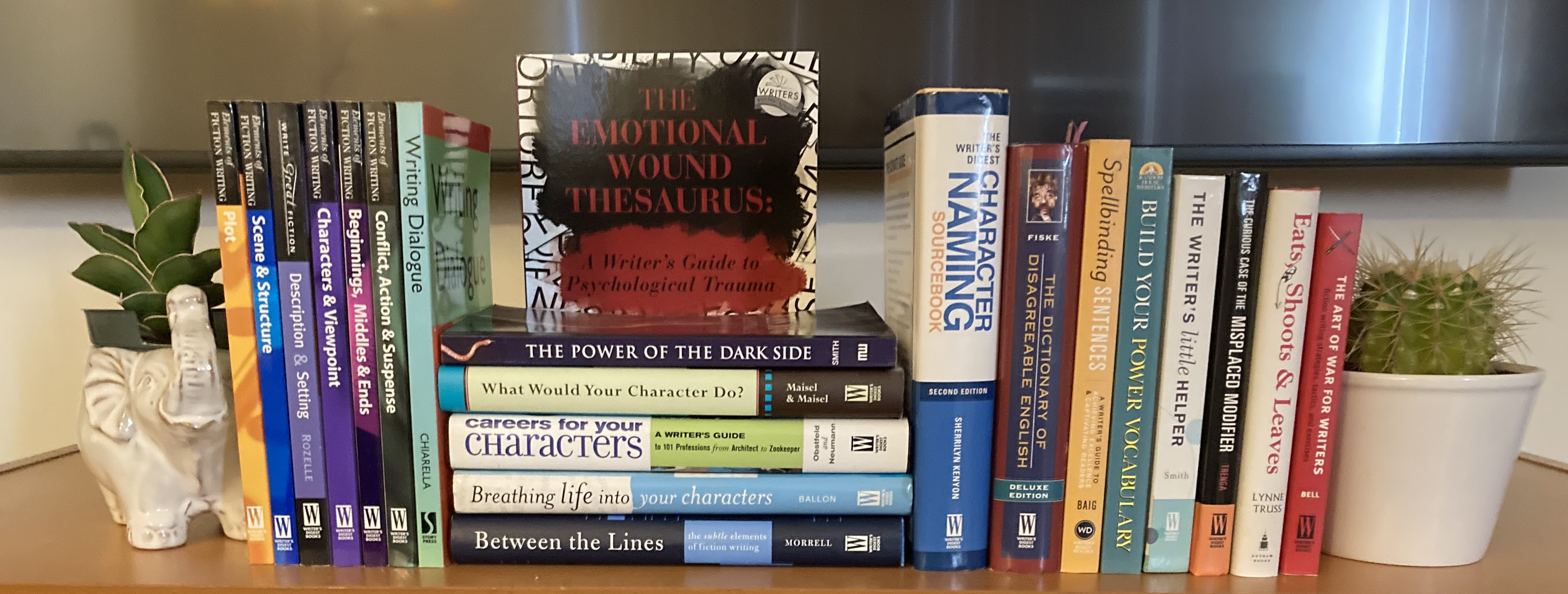
In 2004, when I decided to share my story of overcoming abandonment and loss, it became imperative to learn the craft of writing fiction. With limited funds and a crazy work schedule at a large department store in West Hollywood, I opted for a correspondence course. Through an ad in a magazine, I found the Stratford Career Institute (Vermont, USA). Their Creative Writing Course guided me from crafting my first scene of up to 500 words to finding my voice in a 3000-word short story. Working at my own pace, I completed their writing course within two years. On the left in the captioned photo, the five books on the “Elements of Fiction Writing,” all published by Writer’s Digest Books (Ohio, USA), comprised the reading materials for their course study.
After obtaining my Creative Writing Diploma from the Stratford Career Institute in February 2006, I spent four years writing short stories to develop my craft. At the same time, I began working on my writing project: research for the historical setting, the plot, and character development. I completed the first manuscript of Under the Tamarind Tree: A Novel in 2012. Several revisions followed over subsequent years. Believing in the value of my book, despite several rejections from literary agents and publishers, I finally self-published my novel with Lulu Press in 2019.
After years of developing and honing our writing craft, writers are now being ripped off by AI. Without consent from authors or publishers, generative artificial intelligence (GAI) companies have been illegally using copyrighted materials to develop and train their large language models (LLMs) that power chatbots like ChatGPT. Worse still, writers receive no compensation for the copycat books, mimicking or incorporating an author’s work, generated by these LLMs.
Continue reading Three Worlds One Vision